
| DATOS TÉCNICOS | TECHNICAL DATA |
| TIPO:Hidrocanoa de reconocimiento | TYPE:Reconnaissance flying boat. |
| TRIPULANTES:2 | CREW:2 |
| ENVERGADURA:12 m. | SPAN:39.4 ft. |
| LONGITUD:10,50 m. | LENGTH:34.5 ft. |
| ALTURA:4,05 m. | HEIGHT:13.3 ft. |
| SUPERFICIE ALAR:25,5 m². | WING AREA:274 ft². |
| PESO EN VACÍO:2.082 kg. | EMPTY WEIGHT:4,590 lb. |
| MOTOR:Un motor radial Shvetsov M-62 de 1.000 hp. (746 kW). | ENGINE:One Shvetsov M-62 radial engine developing 1,000 hp. (746 kW). |
ARMAMENTO:
|
ARMAMENT:
|
| VELOCIDAD MÁX.:356 km/h. | MAX. SPEED:221 mph. |
| TECHO:8.100 m | CEILING:26,575 ft. |
| ALCANCE:1.150 km. (622 mil. náut.) | RANGE:716 ml. (622 nmi.) |
| PRIMER VUELO:21 de octubre de 1940. | FIRST FLIGHT:21 October 1940. |
| VERSIONES:1 | VERSIONS:1 |
| CONSTRUIDOS:Alrededor de 47. | BUILT:Around 47. |
En 1936-37, la Unión Soviética desarrolló un programa de cinco años para la construcción de lo que oficialmente se llamó una «Gran Flota Marítima y Oceánica». La primera versión del programa de construcción naval apareció en 1937 y luego fue revisada y corregida constantemente. La escala de la construcción prevista era muy ambiciosa. El plan establecía que para 1946, la Unión Soviética tendría no menos de 15 acorazados, 16 cruceros pesados y 28 ligeros, dos portaaviones, 144 destructores, 96 patrulleros, 204 dragaminas, 28 minadores, 6 monitores y cañoneras, 348 torpederos, 115 cazasubmarinos y 336 submarinos. La base de esta futura flota serían los acorazados y los cruceros pesados, que requerían hidroaviones de reconocimiento a bordo.
El objetivo principal de un avión de este tipo era realizar reconocimiento y ayudar en el fuego directo de artillería, además, debían usarse como aviones antisubmarinos, así como iluminadores de objetivos y plataformas de puntería auxiliares al disparar artillería naval por la noche. Volando desde bases costeras, podrían realizar misiones antisubmarinas y de rescate, así como realizar reconocimientos marítimos cercanos.
El hidroavión KOR-1, adoptado en ese momento, no resultaba satisfactorio por lo que fue necesario crear un nuevo hidroavión en paralelo con la construcción de barcos. A fines de 1938 G. M. Beriev presentó los primeros diseños de una prometedora hidrocanoa lanzada desde catapulta, en cuya idea también trabajaron los diseñadores I.V. Chetverikov, V. V. Nikitin y V. B. Shavrov. La experiencia adquirida con el hidroavión KOR-1 sugirió transferir la tarea de diseñar y construir el KOR-2 a la Oficina Central de Diseño de Construcción de Aeronaves Navales (TsKB MS) dirigida por el propio Beriev.
De acuerdo con los requisitos tácticos y técnicos, el KOR-2 debía tener una longitud total de no más de 9,5 m. y una envergadura no mayor de 11,0 m. (4,5 m. plegado). El peso en vuelo no debía exceder los 2.600 kg. y la autonomía debería alcanzar los 1.200 km. El borrador del diseño se desarrolló en dos versiones, una hidrocanoa y un hidroavión, pero la Armada rusa eligió la primera opción.
Cuando el diseño preliminar fue aprobado por la Armada, los planes para el hidroavión KOR-2 llegaron a Taganrog, en el Mar de Azov, el 31 de julio de 1939. El desarrollo y la construcción del avión, que recibió la designación interna TsKB MS-9, iba a buen ritmo. El 7 de agosto se presentó un anteproyecto y el 21 de enero de 1940 se completó la construcción del trazado. Los contornos del barco se refinaron en el hidrocanal TsAGI de enero a marzo de 1940.
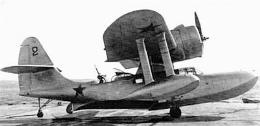
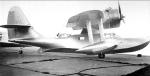
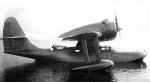
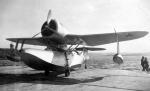
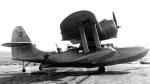
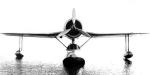
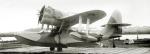
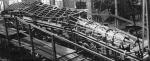
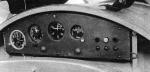
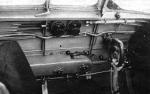
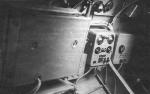
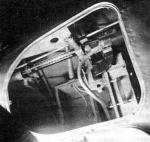
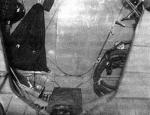
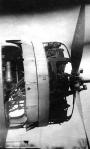
En su versión final, el KOR-2 era un hidroavión totalmente metálico con un ala de parasol. El ala constaba de una sección central y el motor elegido fue el M-63 de 1.100 hp. de una corona provisto de un sobrealimentador de dos velocidades. La tripulación estaba formada por dos, un piloto y un navegante. La aeronave tenía controles duales ubicados en la cabina, pero tanto los controles como los pedales del lado derecho podían retirarse. El armamento constaba de una ametralladora fija ShKAS de 7,62 mm. en la proa y un arma similar en la torreta MV-5 ubicada en la zona dorsal. El avión podía transportar hasta 200 kg. de bombas.
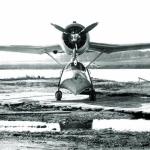
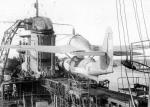
El objetivo principal del KOR-2 era el reconocimiento naval de corto alcance, el ajuste del fuego de artillería naval y costera, la protección de buques de guerra pesados frente a los submarinos enemigos, la búsqueda antisubmarina, así como la lucha contra pequeños buques de guerra y barcos. A petición del mando militar, fue necesario instalar un tren de aterrizaje no retráctil con ruedas en el primer avión de producción.
En el otoño de 1940, se presentó el primer prototipo del KOR-2 para pruebas de fábrica. El 21 de octubre, el piloto de pruebas N.P. Kotyakov realizó el primer vuelo del KOR-2, que duró 11 minutos. El 30 de noviembre despegó el segundo prototipo y el 8 de diciembre ambos aviones volaron a Sebastopol, donde continuaron las pruebas de fábrica. Después de las pruebas, ambos KOR-2 pasaron las pruebas estatales en Sebastopol en febrero de 1941.
La decisión de cambiar el nombre del KOR-2 a Be-4 coincidió con los próximos cambios organizativos en la industria aeronáutica soviética. Se decidió concentrar la construcción de aeronaves navales al norte de Moscú, en el área del sistema de embalses artificiales (el Mar de Moscú) y el canal Moscú-Volga. Por lo tanto, en marzo de 1941, la Oficina Central de Diseño se transfirió a la Planta de Construcción de Maquinaria Savelovsky No. 288 (Kimry, Región de Kalinin).
Las pruebas de lanzamiento en catapulta comenzaron en julio de 1941. A pesar del comienzo de la guerra con Alemania, la construcción del avión de reconocimiento en serie estaba en marcha en la planta No. 288. El primer avión en serie, con el número de serie No. 28801, estaba listo en agosto. 11, 1941. A diferencia de los aparatos experimentales, estaba equipado con un motor menos potente (1.000 hp.). Además, se realizaron algunas mejoras en el diseño y equipamiento de la aeronave. En particular, se introdujo un mecanismo de reinicio de emergencia para la cabina, se reemplazó la radio por una RSBM-bis y se instaló una nueva cámara de reconocimiento AFA-27T. Este avión se estrelló a principios de septiembre, pero las pruebas de vuelo continuaron con un segundo Be-4 (número de serie 28802) hasta octubre de 1941.
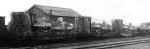
Para el otoño de 1941, la oficina de diseño y la planta no estaban a la altura de la construcción y prueba sistemáticas de hidroaviones. Kimry se convirtió en primera línea del frente bélico y la evacuación se hizo inevitable. El 13 de octubre de 1941, Beriev y el director de la planta fueron convocados al Comité de Defensa del Estado y se les ordenó evacuar la planta en los siguientes tres días. Los escalones fueron cargados el 15 y 16 de octubre de 1941, ya bajo bombardeo, ya que el 14 de octubre los alemanes habían ocupado la ciudad de Kalinin, que se encontraba a tan solo 90 km. de distancia. Al principio, se planeó trasladar la planta No. 288 junto con el departamento de diseño a Chkalovsk, pero la situación cambiaba tan rápidamente que se alteró el destino y los trenes se dirigieron más hacia el Este. A principios de diciembre, el primer escalón (con personal) llegó a Omsk y el 25 de diciembre un segundo grupo transportó el equipo y un lote de aviones.
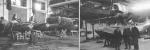
Una vez que la planta se instaló en Omsk, compartiendo las instalaciones con las oficinas de diseño de Myasishchev y Tomashevich, en la primavera de 1942 se construyó una catapulta hidráulica primitiva en la margen izquierda del río Irtysh, donde se realizaron vuelos de prueba. Las pruebas de vuelo de fábrica fueron realizadas por el piloto de pruebas N.P. Kotiakov. Hubo cambios en el diseño inicial y se reforzó el armamento de los aviones ensamblados en Omsk. La ametralladora fija ShKAS fue reemplazada por dos UBK de 12,7 mm.. El número de soportes de bombas debajo de las alas se incrementó a cuatro. Ahora el avión podría levantar una carga de bombas de 400 kg. (4 bombas de alto explosivo FAB-100 o 4 bombas antisubmarinas PLAB-100). Los Be-4 ensamblados en Omsk también tenían cambios en el diseño del fuselaje, que fue parcialmente modificado, y en la disposición de varios sistemas.
En ese momento, era obvio que el uso del Be-4 para su propósito previsto como avión de reconocimiento embarcado estaba fuera de discusión. Por lo tanto, el hidroavión tuvo que aprender nuevos roles militares. En junio de 1942 se practicó la técnica del bombardeo en picado a petición del mando militar.
En 1943, la oficina de diseño de Beriev se reubicó una vez más en la planta No. 477 de Krasnoyarsk. A partir de julio de 1943, la planta No. 477 comenzó la producción en masa del Be-4 y, a principios de noviembre, salió de la fábrica el primer hidroavión.
En Krasnoyarsk continuó la mejora del Be-4. La instalación de cohetes RS-82 aumentó significativamente su potencia de fuego. La máquina con el número de serie 28807 tenía cuatro lanzacohetes RO-82 debajo de cada ala, pero en todos los posteriores su número se redujo a dos.
También se mejoró el sistema de combustible. Desde 1943, a partir del avión No. 4770202, el Be-4 pasó a incluir dos depósitos adicionales de 300 l., además de los dos tanques en la góndola del motor que llevaban 408 y 120 l. respectivamente. Se agregó otro enfriador de aceite ubicado en la superficie inferior de la sección central del ala, a la izquierda de la góndola del motor. Una vez más, se aumentó el armamento. En lugar de una torreta dorsal con ShKAS, se instaló una torreta VUB-3 con una ametralladora UBT de 12,7 mm. Sin embargo, como el peso total de despegue excedía las tres toneladas, se tuvo que retirar una ametralladora UBK proel.
Todas estas mejoras y cambios se implementaron completamente en el Be-4 No. 4770305, que fue probado por el piloto de prueba N.P. Kotyakov del 11 de agosto al 7 de octubre de 1944, después de lo cual se adoptó como referencia para la serie. De esta forma, el Be-4 fue construido por la planta No. 477 hasta el final de la producción de aviones en 1945.
Se produjeron un total de 45 Be-4 (sin contar dos prototipos). De estos, 12 fueron enviados a la Flota del Mar Negro, 12 a la Flota del Báltico y 4 a la Flota del Pacífico durante la guerra. El resto llegó a las unidades después del final de las hostilidades.
La Fuerza Aérea de la Flota del Mar Negro fue la primera en recibir el Be-4 en el verano de 1942. Fueron utilizados exclusivamente como aviones básicos de reconocimiento naval de corto alcance, escaneando sistemáticamente la franja costera de 40 millas y realizando misiones antisubmarinas dentro de la límites de las bases navales.
El Be-4 no sirvió en la Flota del Norte, que no tuvo barcos más grandes que los destructores durante casi toda la guerra. Sin embargo, en el Ártico, los hidroaviones de Beriev todavía tenían que luchar. En 1943, los submarinos alemanes comenzaron operaciones activas en las comunicaciones del Ártico. Las fuerzas disponibles del Destacamento Norte de la Flotilla del Mar Blanco no eran suficientes para luchar contra los submarinos alemanes, por lo que se decidió enviar dos Be-4 a la Isla Dixon. Los aviones volaron desde Krasnoyarsk a Dixon y el 2 de agosto de 1943 comenzaron las patrullas antisubmarinas. Como armas se utilizaron bombas antisubmarinas PLAB-100. El único combate tuvo lugar el 28 de agosto, cuando los Be-4 bombardearon la zona en la que un transporte había sido hundido por un submarino alemán. Los pilotos no observaron los resultados del ataque.
Los Be-4 aparecieron en el Báltico en 1944, cuando los primeros 9 aviones pasaron a formar parte del 29º Escuadrón de Reconocimiento Independiente. A principios de 1945, incluía 10 Be-4 utilizados en patrullas antisubmarinas, así como en el rescate de tripulaciones de aeronaves derribadas.
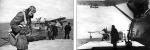
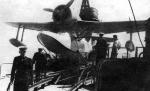
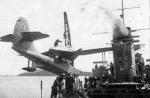
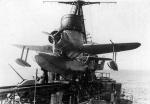
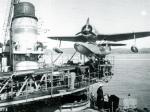
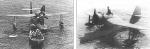
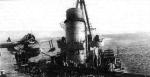
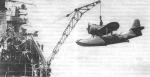
A partir del 1 de enero de 1945, el 115º Regimiento de Reconocimiento naval de corto alcance de la Fuerza Aérea de la Flota del Pacífico incluía cuatro Be-4. No participaron en las hostilidades contra Japón pero, tras terminar estas, sirvieron como aviones de reconocimiento embarcados volando desde las catapultas de los cruceros Kalinin y Kaganovich.
Sin embargo, el servicio de posguerra del Be-4 no fue largo. Con la llegada de las estaciones de radar a los buques de guerra, los aviones de reconocimiento embarcados perdieron rápidamente su importancia anterior. En octubre de 1947, las catapultas se desmantelaron en todos los cruceros, y en diciembre de 1950, el nuevo crucero Máximo Gorky realizó pruebas en el mar con un helicóptero Ka-10 de un solo asiento.
Comparado con su predecesor KOR-1, el KOR-2 (Be-4) fue un importante paso adelante en la industria de hidroaviones soviética y se convirtió en el único modelo doméstico producido en masa durante los años de la guerra.
In 1936-37 the Soviet Union developed a five-year program for the construction of what was officially called a «Large Sea and Ocean Fleet». The first version of the shipbuilding program appeared in 1937 and then it was constantly revised and corrected. The scale of the planned construction was very ambitious. The plan stated that by 1946, the Soviet Union would have no less than 15 battleships, 16 heavy and 28 light cruisers, two aircraft carriers, 144 destroyers, 96 patrol ships, 204 minesweepers, 28 minelayers, 6 monitors and gunboats, 348 torpedo boats, 115 submarine chasers and 336 submarines. The basis of this future fleet was to be battleships and heavy cruisers, which required shipborne reconnaissance seaplanes.
The main purpose of such an aircraft was to conduct reconnaissance and direct artillery fire, in addition, they were to be used as anti-submarine aircraft, as well as target illuminators and auxiliary aiming platforms when firing naval artillery at night. Flying from coastal bases, they could perform anti-submarine and rescue missions, as well as conduct close sea reconnaissance.
The KOR-1 floatplane, adopted by that time, was not satisfactory so it was necessary to create a new flying boat in parallel with the construction of ships. In late 1938, the first designs to develop a promising catapult seaplane, which received the designation KOR-2, were presented by G. M. Beriev, who worked with designers I.V. Chetverikov, V.V. Nikitin and V.B. Shavrov. Experience acquired with the KOR-1 floatplane suggested transferring the task of designing and building the KOR-2 to the Central Design Bureau of Naval Aircraft Building (TsKB MS) headed by G.M. Beriev.
According to the tactical and technical requirements, the KOR-2 should have a total length of no more than 9.5 m. and a wingspan of no more than 11.0 m. (4.5 m. folded). Flight weight should not exceed 2600 kg. and the range should reach 1200 km. The draft design was developed in two versions, a flying boat and a floatplane, but the Russian Navy chose the first option.
When the preliminary design was approved by the Navy, plans for the KOR-2 flying boat arrived in Taganrog in the Azov Sea, on July 31, 1939. The development and construction of the aircraft, which received the internal designation TsKB MS-9, went at a good pace. On August 7, a preliminary design was presented and on January 21 1940, the construction of the layout was completed. The contours of the boat were refined in the TsAGI hydrochannel from January to March 1940.
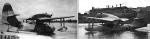
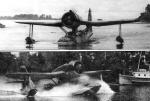
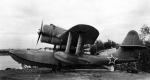
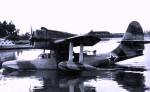
In its final version, the KOR-2 was an all-metal flying boat with a parasol wing. The wing consisted of a center section and the chosen powerplant was the 1100hp. single-row M-63 engine provided with a two-speed supercharger. The crew consisted of two, a pilot and a navigator. The aircraft had dual controls located in the cockpit, with the right handle and pedals being removable. The armament consisted of one fixed 7.62mm. ShKAS machine gun in the bow and a similar weapon on the MV-5 turret located in the middle part of the boat. The aircraft could carry up to 200 kg. of bombs.
The main purpose of the KOR-2 was close-range naval reconnaissance, the adjustment of naval and coastal artillery fire, the protection of heavy warships from enemy submarines, anti-submarine search, as well as the fight against small warships and boats. At the request of the military, it was necessary to install a non-retractable wheeled landing gear on the first production aircraft.
In the fall of 1940, the first prototype of the KOR-2 was presented for factory testing. On October 21, test pilot N.P. Kotyakov made the KOR-2 first flight, which lasted 11 minutes. On November 30, the second prototype took off, and on December 8, both aircraft flew to Sevastopol, where factory tests continued. After tests, both KOR-2s passed state tests in Sevastopol in February 1941.
The decision to rename the KOR-2 as Be-4 coincided with the next organizational changes in the Soviet aircraft industry. It was decided to concentrate marine aircraft construction north of Moscow, in the area of the system of artificial reservoirs (the Moscow Sea) and the Moscow-Volga canal. Therefore, in March 1941, the Central Design Bureau of MS was transferred to the Savelovsky Machine-Building Plant No. 288 (Kimry, Kalinin Region).
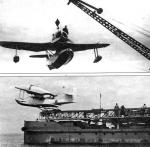
Launch tests in a catapult started in July 1941. Despite the beginning of the war with Germany, the construction of serial reconnaissance aircraft was underway at the plant No. 288. The first serial aircraft, with serial number No. 28801, was ready on August 11, 1941. In contrast to the experimental machines, it was equipped with a less powerful (1000hp.) engine. In addition, some improvements were made to the design and equipment of the aircraft. In particular, an emergency reset mechanism for the cockpit canopy appeared, the radio was replaced with an RSBM-bis, and a new AFA-27T camera for reconnaissance was fitted. This aircraft crashed in early September but flight tests continued with a second Be-4 (serial number 28802) until October 1941.
By the autumn of 1941, the design bureau and the plant were not up to the systematic construction and testing of flying boats. Kimry became a front line, and evacuation became inevitable. On October 13, 1941, Beriev and the director of the plant were summoned to the State Defense Committee and ordered to evacuate the plant within three days. The echelons were loaded on October 15 and 16, 1941, already under bombardment, since on October 14 the Germans had occupied the city of Kalinin, which was only 90 km. away. At first, it was planned to relocate plant No. 288 together with the design bureau to Chkalovsk, but the situation changed so rapidly that the destination was changed and the trains went further to the East. In early December, the first echelon (with personnel) arrived in Omsk and on December 25 a second group carried the equipment and a batch of aircraft.
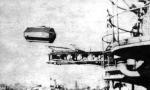
Once the plant was set up in Omsk, sharing the premises with Myasishchev’s and Tomashevich’s design bureaus, a primitive hydraulic catapult was built on the left bank of the Irtysh river in the spring of 1942, where test flights were made. Factory flight tests were carried out by test pilot N.P. Kotyakov. The armament of the machines assembled in Omsk was strengthened, the ShKAS machine gun was replaced by two 12.7mm. UBK machine guns. The number of underwing bomb racks was increased to four. Now the aircraft could lift a bomb load of 400 kg. (4 FAB-100 high-explosive bombs or 4 PLAB-100 anti-submarine bombs). The Be-4s assembled in Omsk also had a partially changed design of the boat and the arrangement of a number of aircraft systems.
By this time, it was obvious that the use of the Be-4 for its intended purpose as a shipborne reconnaissance aircraft was out of the question. Therefore, the flying boat had to learn new military roles. In June 1942, the technique of dive bombing was practiced at the request of the military.
In 1943, Beriev’s design bureau was once again relocated in Krasnoyarsk plant No. 477. From July 1943, plant No. 477 began mass production of the Be-4, and in early November the first mass-produced flying boat rolled out of the factory.
In Krasnoyarsk, the improvement of the Be-4 continued. The installation of RS-82 rockets significantly increased its firepower. The machine with serial number 28807 had four RO-82 rocket guns under each wing, but on all subsequent ones their number was reduced to two.
The fuel system was also improved. Since 1943, starting from aircraft No. 4770202, the Be-4 started to include two extra 300l. tanks in addition to the two tanks in the engine nacelle that carried 408 and 120 l. respectively. Another oil cooler located on the lower surface of the wing center section to the left of the engine nacelle was added. Once again, armament was increased. Instead of a dorsal turret with ShKAS, a VUB-3 turret with a 12.7mm. UBT machine gun was installed. However, as the overall take-off weight exceeded three tons, one UBK machine gun had to be removed.
All these improvements and changes were fully implemented on the Be-4 No. 4770305, which was tested by test pilot N.P. Kotyakov from August 11 to October 7, 1944, after which it was adopted as the reference for the series. In this form, the Be-4 was built by plant No. 477 until the end of the aircraft production in 1945.
A total of 45 Be-4 aircraft were produced (not counting two prototypes). Of these, 12 machines were sent to the Black Sea Fleet, 12 to the Baltic Fleet and 4 to the Pacific Fleet during the war. The rest of the aircraft arrived to the combat units after the end of hostilities.
The Air Force of the Black Sea Fleet was the first to receive the Be-4 in the summer of 1942. They were used exclusively as basic short-range naval reconnaissance aircraft, systematically scanning the 40-mile coastal strip and performing ASW missions within the boundaries of naval bases.
The Be-4 did not serve in the Northern Fleet, which had no ships larger than destroyers for almost the entire war. However, in the Arctic, Beriev’s seaplanes still had to fight. In 1943, German submarines began active operations on the Arctic communications. The available forces of the Northern Detachment of the White Sea Flotilla were not enough to fight the German U-boats, therefore it was decided to send two Be-4 aircraft to Dixon Island. The planes flew from Krasnoyarsk to Dixon and on August 2, 1943 they began anti-submarine patrols. PLAB-100 anti-submarine bombs were used as weapons. The only combat took place on August 28, when the Be-4s bombed the area (20 miles from the Sterligov metro station), in which the Dikson transport was sunk by a German submarine. The pilots did not observe the results of the attack.
Be-4s appeared in the Baltic in 1944, when the first 9 aircraft became part of the 29th Independent Reconnaissance Squadron. At the beginning of 1945, it included 10 Be-4s used in anti-submarine patrols, as well as in the rescue of crews from downed aircraft.
As of January 1, 1945, the 115th naval short-range Reconnaissance Aviation Regiment of the Pacific Fleet Air Force included four Be-4s. They did not participate in the hostilities against Japan, but after these ended they serviced as shipborne reconnaissance aircraft by flying from the catapults of the Pacific cruisers Kalinin and Kaganovich.
However, the post-war service of the Be-4 was not long. With the advent of radar stations on warships, shipborne reconnaissance aircraft quickly lost their former importance. In October 1947, the catapults were dismantled on all cruisers, and in December 1950, the new cruiser Maxim Gorky, carried sea tests with a single-seat Ka-10 helicopter.
Compared with its predecessor KOR-1, the KOR-2 (Be-4) was a significant step forward in the Soviet hydroplane industry and it became the only domestic seaplane mass-produced during the war years.
FUENTES Y REFERENCIA – SOURCES & REFERENCE
Ugolok Neba
aviadejavu.ru
©jmodels.net
 jmodels.net
Debe estar conectado para enviar un comentario.