

| DATOS TÉCNICOS (S.510) |
TECHNICAL DATA (S.510) |
| TIPO:Caza biplano. | TYPE:Biplane fighter. |
| TRIPULANTES:1 | CREW:1 |
| ENVERGADURA:8,84 m. | SPAN:29.0 ft. |
| LONGITUD:7,46 m. | LENGTH:24.6 ft. |
| ALTURA:3,72 m. | HEIGHT:12.2 ft. |
| SUPERFICIE ALAR:22 m². | WING AREA:237 ft². |
| PESO EN VACÍO:1.250 kg. | EMPTY WEIGHT:2,756 lb. |
| MOTOR:Un motor V-12 Hispano-Suiza 12Xbrs de 690 hp. (510 kW). | ENGINE:One Hispano-Suiza 12Xbrs V-12 liquid-cooled piston engine providing 690 hp. (510 kW). |
ARMAMENTO:
|
ARMAMENT:
|
| VELOCIDAD MÁX.:370 km/h. a 5.000 m. | MAX. SPEED:230 mph. at 16,400 ft. |
| TECHO:10.100 m. | CEILING:33,100 ft. |
| ALCANCE:875 km. | RANGE:544 ml. |
| PRIMER VUELO:6 de enero de 1933. | FIRST FLIGHT:6 January 1933. |
| VERSIONES:3 | VERSIONS:3 |
| CONSTRUIDOS:61 | BUILT:61 |
El Blériot-SPAD 510 fue el último caza biplano de la Fuerza Aérea Francesa. Era un avión obsoleto cuando llegó al final de su carrera. Fue André Hébermont, ingeniero de la firma Blériot, quien diseñó este avión en respuesta al programa de 1930 para renovar los aviones del Ejército del Aire. El prototipo nº 1 no se completó hasta 1932 debido a las dificultades financieras que atravesaba la empresa desde hacía varios años. En el programa, fue el único biplano que compitió contra cazas monoplanos, como el Loire 43, ANF-les Mureaux 170, el Morane-Saulnier 325, el Gourdou Lesseur 482, el Nieuport Delage 121/122, el Wibault 313, el Hanriot Biche 110 y el Dewoitine D.500.
El avión, de construcción totalmente metálica (acero y duraluminio), disponía de un fuselaje cuya parte trasera, de una sola pieza de duraluminio, podía sustituirse fácilmente en caso de avería o mantenimiento. Las alas y la cola todavía estaban cubiertas con lona. El avión estaba equipado con un motor Hispano Suiza de 12 cilindros en V refrigerado por líquido y con una potencia de 690 CV. El tren de aterrizaje original, sin eje, causó muchos problemas durante las primeras pruebas y fue sustituido en las primeras entregas de serie. El avión estaba equipado con cuatro ametralladoras MAC 1934, colocadas en el ala inferior.
Fue en Buc donde el avión realizó su primer vuelo, el 6 de enero de 1933. Luego alcanzó una altitud de 10.600 metros, en 29 minutos, y una velocidad de 360 km/h. Después de estas pruebas, se realizaron cambios. La parte central del fuselaje se alargó 40 cm. Para contrarrestar la falta de estabilidad longitudinal, se aumentó la superficie de la cola vertical. También estaba equipado con un sistema de navegación para vuelos nocturnos y equipo de radio. La Armada también se interesó por el avión y pidió a André Hébermont que considerara la posibilidad de equipar el avión con flotadores y un sistema de flotabilidad Lux, pero este proyecto quedó en un simple estudio.
Durante las pruebas, un malentendido estuvo a punto de suponer el fin del avión. El piloto de pruebas notó que el avión mostraba tendencia a entrar en barrena, pero al transcribir el informe este dato se mencionó como “el avión es peligroso”. Incluso antes de que se aclarara este punto, se realizó un pedido anticipado de la serie a Dewoitine. Para demostrar que este avión no era peligroso, el piloto realizó una serie de 78 giros sin ningún incidente el 12 de marzo de 1935. El Blériot-SPAD rehabilitado fue luego trasladado a Reims donde se enfrentó al Dewoitine D .500.
Un informe favorable dio lugar a un pedido de producción de 60 ejemplares el 30 de agosto de 1935. El primer avión de producción se entregó a principios de 1936. El 15 de abril de 1937, el 2.º escuadrón del GC II/7 recibió el primer avión. El inventario del 7º escuadrón de cazas se completó en julio. El comandante del CG II/7 realizó una gira de presentación del Blériot-SPAD 510 por toda Francia en la que participaron 21 aviones, esta agrupación fue conocida como Patrulla Weiser.
Dos aviones fueron equipados experimentalmente con cañones H.S. 12 Xcrs. El 1 de noviembre de 1938, el inventario era de 52 SPAD, 37 de ellos estaban realmente disponibles. Tras la puesta en servicio del caza MS.406, la 7ª Ala transfirió cada vez más sus SPAD a unidades de segunda línea o escuelas de vuelo. En septiembre de 1939, 49 todavía permanecían en servicio, 5 en el 7º escuadrón, 31 en el escuadrón de caza regional y 13 en varias escuelas. Durante el periodo denominado Guerra Falsa, se formaron dos escuadrones de cazas regionales: el ERC 4/561, responsable de proteger las instalaciones portuarias en Le Havre, y el ERC 3/561 en Villacoublay, responsable de proteger la capital. El valor militar de estas dos unidades era casi insignificante.
El 10 de mayo de 1940, quedaban 42 SPAD, 21 de los cuales todavía prestaban servicio en la escuela del ERC 572, con sede en Bizerta Sidi-Ahmed (Norte de África). Ninguno de estos aviones obsoletos recibió bautismo de fuego. Después del Armisticio, los 14 aviones supervivientes fueron desguazados. Algunos desarrollos derivados del 510 permanecieron en forma de borrador, como el SPAD 510-J2, 510-J3 y 511.


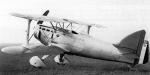
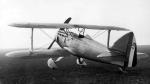

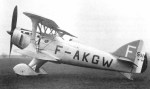

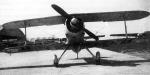
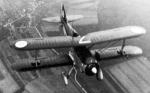

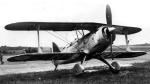
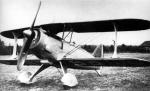

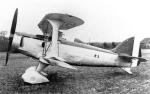
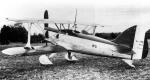

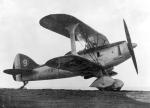
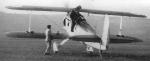


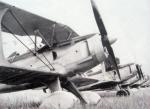

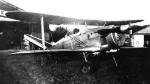
The Blériot-SPAD 510 was the last biplane fighter biplane in service with the French Air Force. It was an obsolete aircraft when it reached the end of its career. It was André Hébermont, an engineer from the Blériot firm, who designed this aircraft in response to the 1930 program to renew Air Force aircraft. Prototype No. 1 was only completed in 1932 due to the financial difficulties the firm had been experiencing for several years. In the program, it was the only biplane competing against monoplane fighters, such as the Loire 43, ANF-les Mureaux 170, the Morane-Saulnier 325, Gourdou Lesseur 482, Nieuport Delage 121/122, Wibault 313, Hanriot Biche 110 and the Dewoitine D.500.
The aircraft of all-metal construction (steel and duralumin) had a fuselage whose rear part, a single piece of duralumin, could be easily replaced in case of damage or maintenance. The wings and tail were still covered with canvas. The aircraft was equipped with the liquid-cooled Hispano Suiza 12-cylinder V engine with a power of 690 hp. The original landing gear, without an axle, caused many problems during the first tests, and it was replaced in the first series deliveries. The plane was equipped with four MAC 1934 machine guns, placed in the lower wing.
It was in Buc that the aircraft made its first flight, on January 6, 1933. It then reached an altitude of 10,600 meters, in 29 minutes, and a speed of 360 km/h. Following these tests, changes were made. The central part of the fuselage was lengthened by 40 cm. in order to counteract the lack of longitudinal stability, the vertical tail had its surface area increased in order to improve behavior. It was also equipped with a navigation system for night flight and radio equipment. The Navy was also interested in the aircraft and asked André Hébermont to consider the possibility to equip the aircraft with floats and a Lux buoyancy system, but this project remained as a simple study.
During tests, again, a misunderstanding came very close to signing the end of the aircraft. The test pilot noticed that the plane showed a tendency to go into a flat spin, but when transcribing the report, it was mentioned that “the aircraft is dangerous”. Even before this point was clarified, a series pre-order was placed at Dewoitine. To prove that this aircraft was not a dangerous aircraft, the pilot made a series of 78 spins without any incident on March 12, 1935. The rehabilitated Blériot-SPAD was then transferred to Reims where it was opposed to the Dewoitine D .500.
A favorable report led to a production order for 60 examples on August 30, 1935. The first production aircraft was delivered at the beginning of 1936. On April 15, 1937, the 2nd squadron of GC II/7 received the first aircraft. The inventory of the 7th fighter squadron was complete in July. The Commander of GC II/7 carried out a presentation tour of the Blériot-SPAD 510 throughout France in which 21 aircraft, known as the Weiser Patrol took part.
Two aircraft were experimentally equipped with H.S. 12 Xcrs cannons. On November 1, 1938, 52 SPADs were listed and 37 actually available. Following the commissioning of the MS.406, the 7th Wing increasingly transferred their SPADs to second-line units or flight schools. In September 1939, 49 still remained in service, 5 in the 7th squadron, 31 in the regional fighter squadron and 13 in several schools. During the Phoney War, two regional fighter squadrons were formed: ERC 4/561 responsible for protecting port installations in Le Havre, and ERC 3/561 in Villacoublay responsible for protecting the capital. The military value of these two units was almost insignificant.
As of May 10, 1940, there remained 42 SPADs, 21 of those still serving in schools were operated by ERC 572, based in Bizerte Sidi-Ahmed (North Africa). None of these outdated devices had a baptism of fire. After the Armistice, the 14 surviving aircraft were scrapped. A few developments derived from the 510 remained in draft form, such as the SPAD 510-J2, 510-J3 and 511.
FUENTES Y REFERENCIA – SOURCES & REFERENCE
avionslegendaires.net
©jmodels.net
 jmodels.net
Debe estar conectado para enviar un comentario.