

| DATOS TÉCNICOS (Boeing 747-8) |
TECHNICAL DATA (Boeing 747-8) |
| TIPO:Avión de línea de fuselaje ancho. | TYPE:Wide-body jet airliner. |
| TRIPULANTES:2 (+467 pasajeros) | CREW:2 (+467 passengers) |
| ENVERGADURA:68,5 m. | SPAN:224.7 ft. |
| LONGITUD:76,25 m. | LENGTH:250.2 ft. |
| ALTURA:19,4 m. | HEIGHT:63.6 ft. |
| SUPERFICIE ALAR:554 m². | WING AREA:5,960 ft². |
| PESO EN VACÍO:220,1 toneladas | EMPTY WEIGHT:485,300 lb. |
| MOTOR:Cuatro motores turboventiladores General Electric GEnx de 296 kN. | ENGINE:Four General Electric GEnx developing 66,500 lbf. |
| VELOCIDAD CRUC.:933 km/h. | CRUS. SPEED:580 mph. |
| TECHO:13.100 m. | CEILING:43,100 ft. |
| ALCANCE:14.320 km (7.730 mil náut) | RANGE:9,900 ml (7,730 nmi) |
| PRIMER VUELO:9 de febrero de 1969. | FIRST FLIGHT:9 February 1969. |
| VERSIONES:20 | VERSIONS:20 |
| CONSTRUIDOS:1.574 (Todos los modelos) | BUILT:1,574 (All variants) |
A mediados de la década de 1960 estaba en marcha una carrera entre los constructores de aviones por producir aparatos con una capacidad cada vez mayor de pasajeros. Algunos aviones existentes, como el Boeing 707, estaban perdiendo fuerza, por lo que los planes se orientaban hacia nuevos diseños de mayor escala.
Presionada por Pan American Airlines, Boeing comenzó los estudios de un gran avión de pasajeros a principios de 1966, y en marzo de ese año se concedió el visto bueno formal para el desarrollo del 747. Los motores del nuevo avión de pasajeros eran un problema, ya que los turboventiladores existentes eran inadecuados para un avión tan grande, pero tanto Pratt & Whitney (P&W) como General Electric (GE) estaban trabajando en un motor turbofán de tamaño apropiadamente grande para el CX- de la Fuerza Aérea de EE.UU. (USAF), por lo que los motores adecuados estarían disponibles cuando fuera necesario. Boeing había diseñado un candidato para el concurso CX-HLS, pero Lockheed ganó con el C-5 Galaxy.
Boeing utilizó su diseño presentado al concurso del CX-HLS como punto de partida para el nuevo avión, considerando docenas de configuraciones posibles, pero finalmente se decidió por una disposición de fuselaje ancho, con más de un pasillo de pasajeros. Irónicamente, se eligió la configuración de fuselaje ancho porque la expectativa era que el 747 sólo sería un modelo provisional como transporte de pasajeros, para ser reemplazado luego por los aviones de transporte supersónico (SST) que entonces estaban en la mesa de diseño, por lo que el 747 sería más útil como avión de carga.
Junto con la configuración de fuselaje ancho, se consideraron múltiples cubiertas de pasajeros, pero la idea fracasó debido a las dificultades de organizar la salida de los pasajeros desde la cubierta superior en caso de una emergencia. Sin embargo, la cubierta superior volvió al diseño cuando Pan Am sugirió que los aviones de carga 747 tuvieran la opción de poder abrir el morro hacia arriba para cargar. Eso implicaba situar la cabina por encima de la línea superior del fuselaje. Los ingenieros de Boeing decidieron extender el abultamiento de la cabina hacia atrás para proporcionar un área de descanso a la tripulación. Pan Am, sin embargo, quería utilizar el máximo de asientos de primera clase, por lo que dio su aprobación a este diseño, que originalmente estaba previsto para acomodar ocho asientos de primera clase. La protuberancia se convertiría en el rasgo más distintivo del 747.
Boeing había sido diligente en abordar las preocupaciones de Pan Am, por lo que en abril de 1966 Pan Am hizo un pedido de 25 747 con un coste de más de 500 millones de dólares, en ese momento una compra récord. El programa se lanzó formalmente en junio de ese año, cuando Boeing construyó una nueva y enorme fábrica en Everett, justo al norte de Seattle, para construir el nuevo modelo y creó una extensa red de subcontratistas. La inversión de Boeing en el 747 fue de tal magnitud que si el avión fracasaba, la empresa con casi seguridad iría a la quiebra.
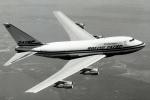
El prototipo del 747 salió de la planta de Everett el 30 de septiembre de 1968, momento en el que Boeing tenía más de 200 pedidos de 26 aerolíneas. El vuelo inicial se realizó el 9 de febrero de 1969. La tripulación del avión incluía al piloto Jack Waddell, el copiloto Brien Wyglie y el ingeniero de vuelo Jess Wallick.
No hubo problemas durante el vuelo y cuatro aviones más se unieron al programa de pruebas. Un 747 realizó una actuación en el Salón Aeronáutico de París en 1969, se concedió la certificación estadounidense el 30 de diciembre de 1969 y se entregaron los primeros aviones 747-100 en 1970. Pan Am realizó el primer vuelo de servicio, desde Nueva York a Londres, el 22 de enero de 1970.
La configuración básica era similar a la iniciada por el Boeing 707: un avión de ala baja de construcción totalmente metálica y con todas las superficies de vuelo en flecha, con cuatro motores turboventiladores montados sobre soportes debajo de las alas y tren de aterrizaje de tipo triciclo. El 747 era un avión completamente nuevo y de una escala sustancialmente mayor que el 707.
Las alas tenían un retroceso de 35,5 grados, con un diedro de 7 grados y una incidencia de 2 grados. Había un flap de triple ranura en el interior de cada ala, seguido de un alerón de alta velocidad, luego un flap de triple ranura en el exterior y un alerón de baja velocidad cerca de la punta. Llevaba un flap Krueger de tres segmentos en el borde de ataque de cada ala entre el fuselaje y el motor interior. La cola era de configuración convencional, con timón y alerones; la incidencia del plano de cola también podría ajustarse para el vuelo. Todos los controles de vuelo eran accionados hidráulicamente.
El 747-100 estaba propulsado por turbofanes de alto índice de derivación Pratt & Whitney (PW) JT9D. El JT9D resultó problemático al principio; El 747 había sufrido un aumento de peso durante el desarrollo, y los inmaduros motores JT9D utilizados en el desarrollo del prototipo y en la producción inicial sólo podían generar 173,5 kN (17.690 kgp / 39.000 lbf) de empuje, dejando al avión con poca potencia. Peor aún, estos motores eran muy poco fiables, los grandes turbofanes de alto índice de derivación eran una tecnología nueva, y también sufrían problemas imprevistos, como la distorsión térmica de los capotajes, que provocaba que las puntas de la turbina y las palas del compresor se rayaran contra las paredes, además de dificultades para arrancar el motor con viento cruzado debido al gran tamaño del ventilador.
Los peores problemas se resolvieron y el 747-100 entró en servicio con cuatro motores de la variante JT9D-3A, que proporcionaba 204 kN (20 770 kgp / 45 800 lbf) de empuje cada uno. Se instaló una unidad de potencia auxiliar (APU) Garrett para proporcionar arranque al motor y potencia en tierra. Había un tanque de combustible en la sección central del ala, además de tres tanques de combustible en cada ala, dando una capacidad total de 178.702 litros. Había un punto de reabastecimiento de combustible en cada ala.
El tren de aterrizaje delantero era único, con dos ruedas que se plegaban hacia adelante, y cuatro conjuntos en el tren principal, cada uno con cuatro ruedas en una disposición de bogie 2×2. Dos de los conjuntos estaban montados debajo del fuselaje a lo largo de la línea del borde de salida de las alas y se plegaban hacia adelante; los otros dos estaban montados bajo las alas, entre el fuselaje y el motor interior, y se retraían hacia el interior del fuselaje. El tren principal estaba destinado a soportar el enorme peso del 747 y garantizar que el avión no dañara la pista.
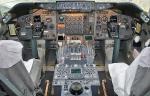
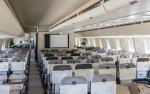
La aviónica era convencional para la época, con radios, ayudas a la navegación, transpondedor de identificación y un radar meteorológico en el morro. Tenía una tripulación de vuelo de tres personas, con capacidad para uno o dos observadores. Se podían acomodar hasta 500 pasajeros en la configuración de más capacidad. Las configuraciones más usuales eran 447 asientos, nueve asientos a lo ancho, o 385 pasajeros, incluidos 337 pasajeros de clase económica y 48 pasajeros de primera clase, 16 de ellos sentados en el piso superior. Por supuesto, el avión estaba presurizado y climatizado. Había cinco puertas a cada lado del avión. Tenía bodega de carga delantera y trasera debajo de la cubierta, con puertas en el lado derecho, una puerta en la bodega delantera y dos en la bodega trasera.
Aunque hubo problemas iniciales al inicio del servicio, el 747-100 adquirió fama de ser seguro y fiable. También era sorprendentemente fácil de volar, aunque manejar una máquina tan grande en tierra presentaba desafíos, sobre todo por el hecho de que la tripulación de la cabina estaba muy elevada del suelo durante el rodaje por la pista.
Al principio, en gran parte debido a la crisis energética mundial y la desaceleración económica, las aerolíneas tuvieron problemas para encontrar suficientes pasajeros para llenar el 747 en cada vuelo, por lo que durante unos años las ventas del 747 disminuyeron en favor de aviones más pequeños de fuselaje ancho. como el Douglas DC-10. Las aerolíneas no vieron ninguna razón para apiñar a los pasajeros, por lo que desde el principio, la disposición de asientos de baja densidad fue la norma para el 747. Afortunadamente para Boeing, pero no tanto para los pasajeros, las ventas finalmente aumentaron. y la disposición de asientos de alta densidad se tornó más común.
Los primeros motores de la serie JT9D del 747-100 todavía dejaban mucho que desear, pero P&W continuó trabajando en el diseño, dando lugar a la primera variante realmente satisfactoria, la serie JT9D-7. La variante inicial sólo se mejoró gradualmente, con un empuje de 213 kN (21.725 kgp / 47.900 lbf), pero proporcionaría una base para sucesores de bastante mayor potencia. Dichos motores dieron como resultado modelos del 747 con mayores pesos al despegue. No todas estas variantes tenían designaciones distintas, pero sí dieron origen, poco a poco, al 747-100B y luego al 747-200B, con mayor capacidad y refuerzos en el fuselaje.
El 747-200B se introdujo a principios de 1971. El 747-200B era casi idéntico externamente al 747-100, la única diferencia notable eran diez ventanas para pasajeros a cada lado del piso superior en el 747-200. Junto con los nuevos motores y otros ajustes, el 747-200B también tenía un depósito de combustible más grande en el centro del ala, lo que proporcionaba aproximadamente un 9% más de capacidad de combustible, con un total de 194.680 litros.
Con la serie 747-200, Boeing diversificó la oferta del 747, y los clientes podían elegir el turbofán GE CF6 o el Rolls-Royce RB211, así como el P&W JT9D, todos ellos con idéntico rango de potencia. Boeing también presentó el 747-200M («M» de «Mixto»), aparato destinado a llevar pasajeros y carga («combi«), con una puerta de carga lateral (SCD) con apertura hacia arriba en el fuselaje trasero izquierdo, el 747-200C convertible en combi, con una puerta de carga frontal y SCD opcional y el carguero 747-200F, nuevamente con una puerta de carga frontal y SCD opcional.
Se desarrolló un 747-100SR especial para prestar servicio en Japón. Esta variante era para rutas de corta distancia, podía transportar hasta 528 pasajeros a expensas de la autonomía y presentaba un fuselaje reforzado para manejar el doble de ciclos de presurización-despresurización. El 747-100SR entró en servicio con Japan Air Lines (JAL) en 1973, y se construyeron siete. A estas máquinas les siguió el 747-100BSR, con mayor peso al despegue, del que se construyeron 20 unidades, y luego dos 747-100BSR (SUD) con el piso superior alargado (SUD) desarrollado para el Boeing 747-300. Eso dio un total de 29 747 Serie 100 de corto alcance, de un total de 205 aparatos Serie 100 fabricados. Se construyeron casi el doble de aviones de la Serie 200 que de la Serie 100, con un total de 393.
En 1973, Boeing anunció el desarrollo de un derivado del 747-100 para rutas intercontinentales de baja densidad y largo alcance, denominándose 747 Special Performance (747SP). Boeing simplemente optó por reducir la longitud del 747-100 a 56,31 metros, lo que resultó ser más complicado de lo aparente. Alargar un avión añadiendo secciones de fuselaje no es nada particularmente inusual, pero no es frecuente cortar secciones de un avión de referencia y, en este caso, se requirieron ciertos cambios en el fuselaje para que funcionara.
El fuselaje más corto afectó a la estabilidad lateral, por lo que al 747SP se le dio una aleta trasera más alta. La envergadura del plano de cola también se incrementó y los flaps de triple ranura se cambiaron por flaps de ranura simple. La capacidad de pasajeros era de hasta 360 asientos, aunque 305 era más común. Tenía cuatro puertas a cada lado en lugar de cinco. La capacidad de combustible era la misma que la del 747-100. El alcance se incrementó en aproximadamente un 9%.
Desde mediados de la década de 1970, la economía global comenzó a recuperarse y las ventas del 747 aumentaron con ella. Las aerolíneas tuvieron menos problemas para llenar asientos y, de hecho, necesitaban más capacidad para las principales rutas de larga distancia. Boeing consideró ampliar el 747, pero decidió agrandar la cubierta superior en 7,1 metros, y esto aumentó el alojamiento de los pasajeros en la parte superior en la configuración económica de 32 a 91 pasajeros. El alargado piso superior también podía albergar 26 asientos-cama en una configuración de primera clase. Disponía de salidas de emergencia a ambos lados.
Por lo demás, el nuevo 747-300 era similar al 747-200 y, de hecho, ciertas fuentes afirman que algunas de las primeras máquinas con el piso superior más largo se vendieron en realidad como aviones de pasajeros 747-200. Varios 747-200 en servicio fueron actualizados con este piso, lo que hace muy difícil distinguirlas de las máquinas 747-300.
El 747-300 se anunció en 1980, y su certificación y entregas iniciales tuvieron lugar en 1983. También se vendió un carguero combinado 747-300M. Algunos aviones 747-300 retirados también se convirtieron a configuraciones de carga. Sin embargo, las ventas del 747-300 fueron lentas y acabó siendo una especie de modelo provisional, con sólo 81 unidades construidas.
Ante las bajas ventas, Boeing decidió utilizar el 747-300 como base para un 747 de segunda generación, el 747-400, con motores turboventiladores actualizados P&W PW4056, o las últimas variantes del CF6 y RB211 con un parecido empuje de 258 kN (26.300 kgp / 58.000 lbf) junto con una nueva APU Pratt & Whitney Canada (PWC). El modelo incorporaba el uso de materiales compuestos y aleaciones de aluminio avanzadas para ahorrar peso en la estructura del avión, un tramo añadido de 1,8 metros en cada ala con aletas compuestas de 1,8 metros de altura en los extremos, lo que lograba un vuelo más eficiente, y una nueva plataforma digital de vuelo en la cabina y tanques de combustible en el plano de cola.
El 747-400 se anunció en 1985 y la primera máquina se entregó a principios de 1989. Resultó muy popular y Boeing también produjo una variante de carga, 747-400F, que carecía del piso superior alargado, pero aún era reconocible por sus aletas. Reemplazó al 747-200F en la producción en 1991, ofreciendo sustancialmente más capacidad de carga útil y alcance. Se fabricó también un modelo combinado 747-400M y un 747-400D de corto alcance / alta densidad («D» de Domestic, “Nacional») para el mercado japonés, con un máximo de 568 plazas.
En 2000, la empresa se centró en un 747-400ER, originalmente se trataba simplemente de un 747-400 con mayor autonomía. Boeing inició la producción de este modelo a principios de 2002. El 747-ER tenía un ala reforzada y un tren de aterrizaje más resistente, heredado del 747-400F, y una cabina de vuelo modernizada con pantallas planas multifunción. El avión podría transportar hasta 416 pasajeros en una disposición de asientos más espaciosa y con mayor capacidad en el compartimento superior, con una autonomía ampliada en aproximadamente un 6%. También se construyó un carguero 747-400ERF.
Los últimos pedidos de un avión de la serie 747-400 se recibieron en el verano de 2006. La última de las 694 máquinas Serie 400 se entregó en 2009. Eso dio un total de 1.419 747 de primera y segunda generación construidos, casi la mitad de ellos 747-400.
La producción del 747 Serie 400 se interrumpió para dar paso a un avión de tercera generación, el 747-8, que Boeing anunció a finales de 2005. Después de aproximadamente una década de darle vueltas a las variantes del 747 de la siguiente generación, Boeing hubo de aclarale a la industria de que en esta ocasión se tomaba el 747-8 en serio.
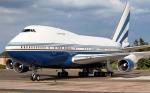
Se desarrollaron dos variantes, el 747-8 Passenger o 747-8 Intercontinental (747-8I) y 747-8 Freighter (747-8F). El 747-8 tenía 3,6 metros más de largo en comparación con el 747. Solo se ofertaron con motores General Electric Genx-2B67 de 296 kN (30,160 kgp / 66,500 lbf) de empuje cada uno. Este motor fue desarrollado para el Boeing 787. Los motores presentaban capotajes dentados para reducir el ruido ya empleados en el 787.
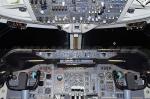
El 747-8 llevaba una cabina y un ala modernizados. El ala conservaba el mismo retroceso y disposición general, pero tenía una envergadura mayor. Tenía puntas de alas inclinadas en lugar de aletas. Los flaps eran de doble ranura en el interior junto con flaps de ranura simple en el exterior, en lugar de los flaps de triple ranura de sus predecesores directos.
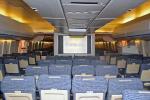
La capacidad máxima de pasajeros del 747-8I era de 605 asientos, o 467 en una configuración de tres clases. La cubierta superior se alargó para permitir una mayor capacidad de pasajeros en la parte superior. El interior se modernizó, siguiendo la línea desarrollada para el 787, con el mismo esquema de iluminación LED con control de colores, así como ventanas más grandes. El 747-8F tenía una capacidad de carga de 140 toneladas, un 16% más que el 747-400F. Tenía puertas de carga delanteras y laterales, pero no tenía la cubierta superior alargada.
El 747-8F fue el primero en entrar en servicio en 2010 y las entregas iniciales a clientes tuvieron lugar en 2011. Según los estándares de la industria, entregar una variante de carga antes que una de pasajeros suponía un retroceso, pero no es tan sorprendente en este caso dada la popularidad del 747-400F. Tras su introducción, se mejoró el 747-8. En el momento de su presentación, el avión estaba ligeramente por debajo de sus especificaciones de consumo eficiente de combustible, pero gracias a las mejoras en los motores GEnx-2B67 terminó superando ligeramente estas especificaciones.
El 747-8 no tuvo grandes ventas, en 2018 había menos de 50 pedidos del 747-8I y poco más de 100 pedidos del 747-8F. Las escasas ventas se toparon luego con la pandemia de COVID-19 de 2020, que afectó duramente al transporte aéreo. En 2020 Boeing anunció que la producción del 747 finalizaría en 2022, después de medio siglo. El último, un 747-8F, se entregó a principios de 2023.
El 747 ha tenido uso militar, siendo los más conocidos dos aviones basados en el modelo VC-25A 747-200B utilizadas por la USAF para transportar al Presidente de los Estados Unidos (PEU) y su séquito. Por lo general, se les conoce como Air Force One, pero en realidad, ese indicativo es el de cualquier aeronave que lleve al Presidente.
El programa de obtención de los dos aparatos se inició en 1985, durante la Administración Reagan. El primero de ellos realizó su primer vuelo el 16 de mayo de 1987, seguido del segundo el 23 de octubre de 1987. Los aviones fueron entregados en la década de los años 1990. Están propulsados por motores GE CF6.
El VC-25 externamente se parece a un 747-200B, la diferencia más notable es un bulto en el morro que contiene un receptáculo de reabastecimiento de combustible en vuelo. También tienen depósitos de combustible de largo alcance y un mayor suministro de aceite al motor para permanecer en el aire durante largos períodos, al parecer hasta seis días. Por supuesto, cuenta con un amplio conjunto de antenas que permiten comunicaciones globales seguras.
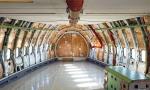
Internamente, el VC-25 fue equipado con un interior VIP personalizado. Las bodegas de carga inferiores incluyen congeladores para almacenar comidas. Un VC-25A en vuelo lleva suficientes provisiones para mantener alimentados a todo el personal a bordo durante la duración de un viaje. La cubierta superior detrás de la cabina incluye un área de descanso para la tripulación y un centro de comunicaciones. La cubierta principal ofrece instalaciones para los pasajeros, que incluyen, de adelante hacia atrás: vivienda para el PEU en la proa, con dos camas individuales y baño con ducha; un Despacho Oval; una sección de personal superior; sala de conferencias y comedor; sección general de personal; sección de invitados VIP; sección de seguridad; y asientos para la prensa y el personal de apoyo en la parte trasera.
Lleva también aseos y lo que parece una pequeña cocina secundaria en la parte trasera. Los VC-25A también cuentan con un sistema de contramedidas defensivas. Los observadores han notado un sistema de alerta de misiles AN/AAR-54 en la cola y torretas gemelas de contramedidas infrarrojas dirigidas (DIRCM) AN/AAQ-24 Némesis para desviar a los misiles buscadores de calor. Los sistemas de aviónica están reforzados contra el pulso electromagnético (EMP) de una explosión nuclear.
Los 747 presidenciales tienen ahora más de un cuarto de siglo y no han tenido mucho uso, ya que sus horarios de vuelo son mucho menos intensos que los de un 747 comercial a tiempo completo. Cada VC-25 solo registra alrededor de 360 horas de vuelo al año, pero en 2015, la Fuerza Aérea anunció que el 747-8 se adquiriría como reemplazo. Se compraron dos 747-8 a Boeing, originariamente encargados por una aerolínea rusa que quebró. La modificación comenzó en 2019 y se pondrá en servicio a partir de 2024.
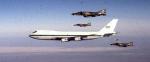
La Fuerza Aérea también utiliza cuatro 747-200B configurados como puestos de mando aerotransportado avanzado E-4. Se solicitaron a principios de la década de 1970 para reemplazar los entonces puestos de mando volantes EC-135J. El modelo E-4A, con especificaciones provisionales, fue entregado en 1973, dos E-4A más se entregaron en 1975 y un E-4B con especificaciones completas en 1979. Los tres E-4A se actualizaron a las especificaciones E-4B en 1985.
Los aviones E-4B están destinados a ser utilizados como puestos de mando volantes por el presidente y otros altos funcionarios en caso de una guerra total. Al igual que los VC-25A, tienen una toma de reabastecimiento de combustible a bordo en el morro, un interior personalizado con habitaciones, salas de conferencias y centros de control y aviónica de comunicaciones integral. El E-4B tiene una característica de reconocimiento distintiva en la forma de un carenado para una antena de comunicaciones por satélite (SATCOM) detrás de la cubierta superior. También posee varias antenas más, incluida una antena de cable largo que se puede desenrollar de la cola para comunicaciones de baja frecuencia con submarinos. El carenado no se instaló en los E-4A, que tenían sistemas menos sofisticados en general.
Al parecer el VC-25A también puede desempeñar la función de puesto de mando volador, dejando a los E-4B algo infrautilizados. Como resultado, los aviones E-4B también terminaron siendo puestos de mando voladores para operaciones de socorro en casos de desastre. Los E-4B en servicio se han actualizado. La Fuerza Aérea está buscando reemplazarlos actualmente, ya que se acercan al final de su vida útil.
Los únicos 747 operativos empleados por el ejército de EE. UU. fueron alrededor de 18 o 19 747 de diversas descripciones, modificados a partir de 1985 con una puerta de carga lateral y un equipo de manejo de carga por Boeing para operaciones combinadas como parte de la Flota Aérea de Reserva Civil (CRAF). Se trataba de un acuerdo por el que las compañías civiles operaban el avión, pero la Fuerza Aérea los tenía en reserva en caso de emergencia. Estos aviones recibieron la designación de C-19A. Su estado actual no está claro. Boeing impulsó el 747 para otras funciones militares, incluido el transporte de carga militar, varias configuraciones de lanzadores de misiles, una configuración de patrulla marítima y un avión cisterna KC-747.
Irán adquirió varios 747 de uso militar antes de la caída del Sha. Los detalles de estos aviones son muy confusos y contradictorios. Parece que se entregaron 16 aviones usados, que en general se utilizaron como transportes combinados. Sin embargo, dos o tres de ellos fueron equipados con plataformas de reabastecimiento de combustible en vuelo por Boeing, lo que los convierte en los únicos 747 cisterna de reabastecimiento de combustible en vuelo del mundo. El estado de vuelo de estos aviones no está claro.
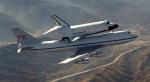
Ha habido muchas modificaciones civiles de los 747, algunas de ellas exóticas. Entre las más familiares se encontraban dos Shuttle Carrier Aircraft (SCA), utilizados por la Administración Nacional de Aeronáutica y del Espacio (NASA) de EE. UU. para transportar el transbordador espacial orbital de la NASA por el país, generalmente desde la Base de la Fuerza Aérea Edwards en California.
Los SCA eran aviones usados de la serie 747-100, adquiridos a mediados de la década de 1970, equipados con puntales en la parte posterior para montar el transbordador mediante una grúa especial. Se montaron grandes aletas en las puntas del plano de cola para compensar la interferencia aerodinámica del transbordador. La voluminosa carga útil reducía en demasía el alcance del 747, lo que hacía que el viaje transcontinental consumiera mucho tiempo ya que requería múltiples paradas para repostar combustible. Fueron retirados al final del programa del transbordador en 2012.
Boeing produjo varios Large Cargo Freighter (LCF), basados en 747-400 usados, para apoyar el programa 787 de la compañía. Los LCF o Dreamlifters cuentan con un fuselaje «guppy» agrandado, con una cola que se divide en el mamparo de presión de popa y gira hacia la izquierda. El volumen de carga es tres veces mayor que el de un 747-400 estándar y, de hecho, tiene más volumen de carga que cualquier otro avión jamás volado. El LCF puede transportar cargas útiles voluminosas, con un radio máximo de 3,76 metros. La carga transportada es relativamente liviana, por lo que no se consideró la necesidad de modificar un carguero 747, que tiene mayor capacidad de carga.




















In the mid-1960s, a race was underway between jetliner builders for ever more passenger capacity. Stretches of existing jetliners, such as the Boeing 707, were running out of steam, and so there was a drive towards new designs that were simply on a larger scale.
Under prodding by Pan American Airlines, Boeing began studies for a big jetliner in early 1966, with the formal go-ahead for development of the 747 granted in March of that year. Powerplants for the new upsized jetliner were an issue, existing turbofans being inadequate for such a big aircraft, but both Pratt & Whitney (P&W) and General Electric (GE) were working on appropriately oversized turbofans for the US Air Force’s (USAF) CX-HLS requirement for a heavy cargolifter, and so the appropriate engines would be available when needed. Boeing had designed a candidate for the CX-HLS competition, though it was won by Lockheed with the C-5 Galaxy.
Boeing used their CX-HLS concept as a starting point for the new jetliner, considering dozens of possible configurations, but finally decided on a widebody arrangement, with more than one passenger aisle. Ironically, the widebody scheme was chosen because the expectation was that the 747 would only be an interim type in the passenger liner role, to be quickly replaced by the supersonic transport (SST) jetliners then on the drawing board, and so the 747 would be most useful as an air freighter.
Along with the widebody configuration, there was consideration of multiple passenger decks, but that idea foundered on the difficulties of arranging passenger escape from the upper deck in case of an emergency. However, an upper deck crept back into the design when Pan Am suggested that the 747 air freighters have the option of a tilt-up nose for cargo loading. That meant placing the cockpit in a bump above the topline of the fuselage. As long as the bump was there, Boeing engineers decided to extend it backward to provide a crew rest area. Pan Am, however, wanted to use the bump for first-class seating, and so it was committed to passenger space, originally envisioned as accommodating eight first-class seats. The bump would become the 747’s most distinctive recognition feature.
Boeing had been diligent in addressing Pan Am’s concerns, and so in April 1966 Pan Am placed an order for 25 747s at a cost of over a half-billion dollars, at the time, a record buy. The program was formally launched in June of that year, with Boeing constructing a vast new factory at Everett, just north of Seattle, to build the new jumbo jet, and lining up an extensive network of subcontractors. Boeing’s investment in the 747 was of such magnitude that if the 747 failed, the company would certainly go bankrupt.
The 747 prototype was rolled out from the Everett plant on 30 September 1968, by which time Boeing had over 200 orders from 26 airlines. Initial flight was on 9 February 1969, the aircraft crew including pilot Jack Waddell, copilot Brien Wyglie, and flight engineer Jess Wallick.
There were no problems on the flight, with four more machines joining the test program. A 747 put on a performance at the Paris Air Show in 1969, with US certification being granted on 30 December 1969, and the first 747-100 jetliners being delivered in 1970. Pan Am performed the first service flight, from New York City to London, on 22 January 1970.
The basic configuration was that pioneered by the Boeing 707: a low-wing aircraft of all metal construction and all swept flight surfaces, with four turbofan engines mounted on pylons under the wings, and tricycle landing gear. Of course, the 747 was an entirely new aircraft, and on a substantially larger scale than the 707.
The wings had a sweepback of 35.5 degrees at quarter chord, with a dihedral of 7 degrees and an incidence of 2 degrees. There was a triple slotted flap inboard on each wing, followed by a high-speed aileron, then a triple slotted flap outboard, and a low-speed aileron near the tip. There were four flight spoilers ahead of the outboard flap and two ground spoilers / lift dumpers ahead of the inboard flap. There was a three-segment Krueger flap on the leading edge of each wing between the fuselage and the inboard engine, plus a drooping leading-edge flap in ten segments along the leading edge of the rest of the wing. The tail unit was of conventional configuration, with rudder and ailerons; the incidence of the tailplane could also be adjusted for flight trim. All flight controls were hydraulically powered.
The 747-100 was powered by Pratt & Whitney (PW) JT9D high-bypass turbofans. The JT9D proved troublesome at the outset; the 747 had undergone weight creep during development, and the immature JT9D engines used in prototype development and early production could only generate 173.5 kN (17,690 kgp / 39,000 lbf) thrust, leaving the aircraft underpowered. Worse, these engines were very unreliable, big high-bypass turbofans being a painfully new technology, and were also afflicted by unforeseen problems, such as thermal distortion of the cowlings that led to scratching of the tips of the turbine and compressor blades against the walls, plus difficulties with engine starting in crosswinds due to the oversized fan.
The worst problems were worked out, with the 747-100 going into service with the JT9D-3A variant, providing 204 kN (20,770 kgp / 45,800 lbf) thrust each. A Garrett auxiliary power unit (APU) was fitted to provide engine starting and ground power. There was a fuel tank in the wing center section, plus three fuel tanks in each wing, giving a total fuel supply of 178,702 liters (47,210 US gallons). There was a refueling point on each wing.
There was a single nose gear assembly, with two wheels and retracting forward, and four main gear assemblies, each with four wheels in a 2×2 bogie arrangement. Two of the main gear assemblies were mounted under the fuselage along the line of the trailing edge of the wings, and retracted forward; the other two were mounted forward, in the wings between the fuselage and inboard engine, and retracted inward toward the fuselage. The busy main gear was intended to support the 747’s massive weight, and ensure that the aircraft didn’t damage the tarmac.
Avionics were conventional for the era, with radios, navigation aids, identification transponder, and a weather radar in the nose. There was a flight crew of three, with provision for one or two observers. Up to 500 passengers could be accommodated in a ten-across «cattle car» configuration; more reasonable accommodations were 447 seats, nine across, or 385 passengers, including 337 economy passengers and 48 first-class passengers, 16 of them seated in the upper deck. Of course, the aircraft was pressurized and climate-conditioned. There were five doors on each side of the aircraft. There were fore and aft cargo holds under the floor, with doors on the right side of the aircraft, with one door on the forward hold, two on the rear hold.
Although there were teething problems early in service the 747-100 became known as a safe and reliable aircraft. It was also surprisingly easy to fly, though handling such a huge machine on the ground presented challenges, most particularly from the fact that the cockpit crew were perched so high off the ground during taxi.
At the outset, in good part because of a global energy crisis and economic slowdown, airlines had trouble finding enough passengers to fill up the 747 every flight, and so for a few years sales of the 747 went soft in favor of smaller widebody jets, such as the Douglas DC-10. In some compensation for passengers, airlines didn’t see any reason to cram passengers in, and so early on, low-density seating arrangements were the norm for the 747. Fortunately for Boeing but not so much for passengers, sales eventually picked up, and high-density seating arrangements became more common.
The 747-100’s early JT9D-series engines still left something to be desired, but P&W continued to work on the design, leading to the first really satisfactory variant, the JT9D-7 series. The initial variant was only incrementally uprated, with 213 kN (21,725 kgp / 47,900 lbf) thrust, but it would provide a basis for substantially more powerful successors. More powerful engines resulted in 747 variants with increased take-off weights. Not all these variants had distinct designations, but they did lead, by steps, to the 747-100B and then the 747-200B, with greater capacity and airframe reinforcements.
The 747-200B was introduced in early 1971. The 747-200B was almost identical externally to the 747-100, the only noticeable difference being ten passenger windows on each side of the upper deck on the 747-200. Along with the new engines and other tweaks, the 747-200B also featured a bigger center wing section fuel tank, giving about 9% greater fuel capacity, for a total of 194,680 liters (51,430 US gallons).
With the 747-200 series, Boeing diversified the 747 product offering, with customers able to select GE CF6 or Rolls-Royce RB211 turbofans, as well as the P&W JT9D, all engines being in the same thrust class. Boeing also introduced the 747-200M («M» for «Mixed») combination passenger-cargo («combi») machine, with an upward-hinging side cargo door (SCD) on the left rear fuselage, the 747-200C convertible combi machine, with a nose loading door and optional SCD and the 747-200F dedicated freighter, again with a nose loading door and optional SCD.
A specialized 747-100SR was developed for service in Japan; this variant was for short-haul routes, able to carry up to 528 passengers at the expense of range, and featured a reinforced fuselage to handle twice the number of pressurization-depressurization cycles. The 747-100SR went into service with Japan Air Lines (JAL) in 1973, with seven built; these machines were followed by the 747-100BSR featuring higher take-off weight, with 20 built; and then two 747-100BSR (SUD) with the stretched upper deck (SUD) developed for the Boeing 747-300. That gave a total of 29 Series 100 short-range 747s, out of a total of 205 Series 100 machines built. Almost twice as many Series 200 machines were built as Series 100s, that total running to 393.
In 1973, Boeing announced development of a derivative of the 747-100 for low-density / long-range intercontinental routes, this new machine being designated the 747 Special Performance (747SP). Boeing simply chose to reduce the length of the 747-100 to 56.31 meters (184.9 feet), which turned out to be trickier than it sounds. Stretching a jetliner by adding fuselage sections is nothing particularly unusual; cutting out sections of a baseline aircraft is not often done, and in this case it required certain changes to the airframe to get it to work.
The shorter fuselage affected lateral stability, so the 747SP was given a taller tailfin; tailplane span was also increased, and the triple slotted flaps were traded for single slotted flaps. Passenger capacity was up to 360 seats, though 305 was more reasonable; there were four doors on each side instead of five. Fuel capacity was the same as for the 747-100. Range was increased by about 9%.
From the mid-1970s, the global economy began to pick up, and sales of the 747 picked up with it. Airlines had less trouble filling seats, and in fact wanted more capacity for primary long-haul routes. Boeing considered stretching the 747, but decided instead to extend the upper deck by 7.1 meters (23.4 feet), with the stretched upper deck increasing passenger topside accommodations in all-economy configuration from 32 to 91 passengers. The stretched upper deck could also accommodate 26 sleeper seats in a first-class configuration. The SUD featured an emergency exit on both sides.
Otherwise, the new 747-300 was similar to the 747-200, and in fact some sources claim a few early machines with the SUD were actually sold as 747-200 jetliners. It is established that a number of 747-200 machines in service were updated with the SUD, making them very hard to distinguish from 747-300 machines.
The 747-300 was announced in 1980, with certification and initial deliveries in 1983. A 747-300M combi freighter was also sold. Some retired 747-300 jetliners were converted to freight configurations as well. Sales of the 747-300 were sluggish, however, and it ended up being something of an interim type, with only 81 built.
In the face of slow sales, Boeing decided to use the 747-300 as the basis for a second generation 747, the 747-400, featuring updated turbofan engines, P&W PW4056, or the latest variants of the CF6 and RB211 in the thrust range of 258 kN (26,300 kgp / 58,000 lbf) along with a new Pratt & Whitney Canada (PWC) APU: the use of composite materials and advanced aluminum alloys to save airframe weight: a 1.8-meter (6-foot) stretch of each wing, with composite winglets 1.8 meters (6 feet) tall at the ends resulting in more efficient cruise: a new digital flight deck and fuel tanks in the tailplane.
The 747-400 was announced in 1985, with the first machine delivered in early 1989. It proved very popular, with Boeing also producing a 747-400F freighter variant, which lacked the SUD, but still recognizable by its winglets. It replaced the 747-200F in production in 1991, offering substantially more payload capacity and range, a 747-400M combi variant and a short-range / high-density 747-400D («D» for «Domestic») for the Japan market, with a maximum of 568 seats.
In 2000, the company focused on an extended range 747-400ER, originally simply the Longer Range 747-400, a slightly updated version of the original 747-400. Boeing initiated production of the type in early 2002. The 747-ER had a reinforced wing and stronger landing gear, inherited from the 747-400F, and a modernized flight deck with multifunction flat-panel displays. The aircraft could carry up to 416 passengers in a more spacious seat layout and with greater overhead bin capacity, with range extended by about 6%. A 747-400ERF freighter was also built.
The last orders for a 747-400-series aircraft were taken in the summer of 2006; the last of 694 Series 400 machines were delivered in 2009. That gave a total of 1,419 first and second generation 747s built, almost half of them being 747-400 machines.
Production of the 747 Series 400 was shut down to make way for a third generation aircraft, the 747-8, which Boeing announced in late 2005. After about a decade of tapdancing around on next-generation 747 variants, Boeing officials had to make it very clear to the industry that the 747-8 was for real.
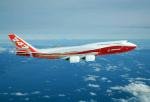
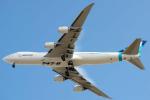
Two variants were developed, including a 747-8 Passenger or 747-8 Intercontinental (747-8I) and 747-8 Freighter (747-8F) cargolifter. The 747-8 was stretched 3.6 meters (11 feet 8 inches) compared to the 747. They were only offered with General Electric GEnx-2B67 engines, with 296 kN (30,160 kgp / 66,500 lbf) thrust each. This engine was developed for the Boeing 787. The turbofans featured the serrated noise-reducing cowlings introduced on the 787.
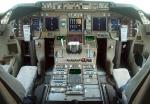
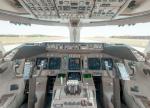
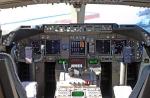
The 747-8 featured a modernized glass cockpit and wing. The wing retained the same sweep and general arrangement, but was reprofiled, and featured increased span; it had raked wingtips instead of winglets. It had double slotted flaps inboard along with single slotted flaps outboard, instead of the triple slotted flaps of its direct predecessors.
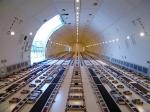
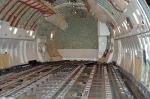
Maximum passenger capacity for the 747-8I was 605 seats, or 467 in a three-class arrangement; the upper deck was stretched to allow more passenger capacity topside. The interior was modernized, along the lines of that developed for the 787, with the same color-controlled LED lighting scheme, as well as bigger windows. The 747-8F had a cargo capacity of 140 tonnes (154 tons), 16% more than the 747-400F. It had both nose and side cargo doors, but did not have the stretched upper deck.
The 747-8F was the first into service, with initial flight in 2010 and initial customer deliveries in 2011. By industry standards, shipping an air freighter variant before shipping an airliner variant was backwards, but not so surprising in this case given the popularity of the 747-400F. Following introduction, the 747-8 was improved; at introduction, the aircraft was slightly under its fuel efficiency specs, but thanks to refinements to the GEnx-2B67 engines it ended up slightly exceeded specs.
The 747-8 was not a big seller; by 2018, there had been less than 50 orders for the 747-8I, a bit over 100 orders for the 747-8F. Weak sales then encountered the COVID-19 pandemic of 2020, which hit air transport very hard. In 2020, Boeing announced that 747 production would end in 2022, after a half-century run. The last one, a 747-8F, was delivered in early 2023.
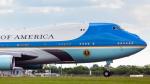
The 747 has seen some military use, the best-known being two VC-25A 747-200B-based machines used by the USAF to fly the President of the United States (POTUS) and his entourage around. They are usually referred to as «Air Force One», but strictly speaking, that’s the callsign for any aircraft carrying the POTUS.
The program to obtain the two machines was begun in 1985, during the Reagan Administration, with the first performing its initial flight on 16 May 1987, followed by the second on 23 October 1987. The aircraft were delivered in the 1990s. They are powered by GE CF6 engines.
The VC-25 externally looks generally like a stock 747-200B, the most noticeable difference being a bump on the nose for an inflight refueling receptacle, they also have a long-range fuel tank configuration, and an augmented engine oil supply to allow the aircraft to stay in the air for long periods, it seems up to six days. Of course, it features an extensive farm of antennas for secure global communications.
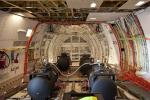
Internally, the VC-25 has been fitted with a custom VIP interior. The bottom cargo holds include freezers for storing meals; a VC-25A on a mission carries enough provisions to keep all on board fed for the duration of a mission. The upper deck behind the cockpit includes a crew rest area and a communications center. The main deck provides passenger facilities, including, from front to back: living quarters for the POTUS in the nose, with twin beds and bathroom with shower: a flying Oval Office; a Senior staff section; conference and dining room; general staff section; VIP guest section; security section; and seats for press and support staff at the very rear.
There are of course toilets, and it appears a small secondary galley in the rear. The VC-25A machines also feature a defensive countermeasures system. Observers have noted an AN/AAR-54 missile warning system on the tail and twin AN/AAQ-24 Nemesis directed infrared countermeasures (DIRCM) turrets to dazzle heat-seeking missiles. The avionics systems are hardened against the electromagnetic pulse (EMP) of a nuclear blast.
The presidential 747s are now over a quarter century old; they haven’t seen much hard use, their flight schedules being far less burdensome than those of a 747 in full-time commercial service, each VC-25 only logging about 360 flight hours a year, but in 2015, the Air Force announced that the 747-8 would be acquired as a replacement platform. Two 747-8s were purchased from Boeing, being machines ordered by a Russian airline that went broke. Modification started in 2019, with fielding from 2024.
Four customized 747-200B machines are also used by the Air Force as the E-4 Advanced Airborne Command Post. They were ordered in the early 1970s to replace current EC-135J flying command posts, with one interim-spec E-4A delivered in 1973, two more E-4A machines delivered in 1975, and a full-spec E-4B delivered in 1979. The three E-4A machines were all updated to E-4B spec by 1985.
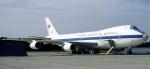
The E-4B aircraft are intended to be used as flying command posts for the POTUS and other senior officials in case of all-out war. Like the VC-25A machines, they have an inflight refueling socket in the nose; a custom interior with quarters, conference rooms, and control centers; comprehensive communications avionics; and EMP hardening. The E-4B has a distinctive recognition feature in the form of a fairing for a satellite communications (SATCOM) antenna behind the upper deck; it has a farm of other antennas, including a long wire antenna that can be reeled out from the tail for low frequency communications with submarines. The fairing was not fitted to the E-4A machines, which had less sophisticated systems in general, and it seems weren’t EMP hardened.
It seems that the VC-25A aircraft can also perform the flying command post role, leaving the E-4B machines somewhat underutilized. As a result, the E-4B aircraft have ended up being flying command posts for disaster relief operations on occasion as well. The E-4Bs have been updated in service; the Air Force is now looking to replace them, as they are nearing the end of their flight lives.
The only other operational 747 aircraft associated with the US military were about 18 or 19 747s of various descriptions, modified from 1985 with a side cargo door and cargo handling kit by Boeing for combi operations as part of the Civil Reserve Air Fleet (CRAF), that being an arrangement in which civil companies operated the aircraft, but the Air Force had them on call in an emergency. These aircraft were given the designation of C-19A; their current status is unclear. Boeing did push the 747 for a number of other military roles, including military cargolifter, various missile launcher configurations, a maritime patrol configuration, and a KC-747 tanker.
Iran acquired a set of 747s for military use before the fall of the Shah. Details of these aircraft are very unclear and contradictory; it appears that 16 used aircraft were obtained, and generally operated as combi transports. However, two or three of them were fitted with inflight refueling booms by Boeing, making them the only 747 inflight refueling tankers on the planet. The flight status of these aircraft is unclear.
There have been plenty of civil modifications of 747 aircraft, some of them exotic. Among the more familiar were two Shuttle Carrier Aircraft (SCA), used by the US National Aeronautics & Space Administration (NASA) to haul the NASA space shuttle orbiter cross-country, most typically from Edwards Air Force Base in California.
The SCAs were both used 747-100-series machines, acquired in the mid-1970s, fitted out with struts on the back for mounting the orbiter, with the orbiter mounted by a special crane fixture. Large endplate fins were mounted on the tips of the tailplane to compensate for the aerodynamic interference of the shuttle. The bulky payload cut badly into the 747’s range, making the transcontinental trip time-consuming since it required multiple fuel stops. They were retired at the end of the shuttle program in 2012.
Boeing created a set of Large Cargo Freighter (LCF) aircraft, based on used 747-400 airframes, for support of the company’s 787 program. The LCF or Dreamlifters feature an enlarged «guppy» fuselage, with a tail assembly that breaks at the aft pressure bulkhead and swings to the left. Cargo volume is three times that of a standard 747-400 air freighter, and in fact it has more cargo volume than any other aircraft ever flown. The LCF can carry bulky payloads, with a maximum radius of 3.76 meters (12 feet 4 inches); the assemblies carried are relatively lightweight, and so no need was seen to modify a freighter 747, which has greater load capacity.
FUENTES Y REFERENCIA – SOURCES & REFERENCE
airvectors.net
Ugolok Neba
©jmodels.net
 jmodels.net
Debe estar conectado para enviar un comentario.