
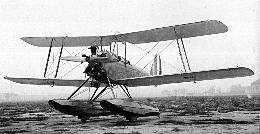
| DATOS TÉCNICOS (Motor Gipsy) |
TECHNICAL DATA (Gipsy engine) |
| TIPO: Entrenador. | TYPE: Trainer. |
| TRIPULANTES: 2 | CREW: 2 |
| ENVERGADURA: 10 m. | SPAN: 32.10 ft. |
| LONGITUD: 7,30 m. | LENGTH: 23.11 ft. |
| ALTURA: 2,75 m. | HEIGHT: 9 ft. |
| SUPERFICIE ALAR: 24,4 m². | WING AREA: 263 ft². |
| PESO EN VACÍO: 400 kg. | EMPTY WEIGHT: 882 lb. |
| MOTOR: Un motor en línea de 4 cilindros de Havilland Gipsy de 85 hp (63 kW). | ENGINE: One de Havilland Gipsy 4-cylinder air-cooled upright inline developing 85 hp (63 kW). |
| VELOCIDAD MÁX.: 165 km/h. | MAX. SPEED: 102 mph. |
| TECHO: 4.000 m. | CEILING: 13,125 ft. |
| ALCANCE: 700 km (401 m. náút.). | RANGE: 462 mi (401 nmi). |
| PRIMER VUELO: 1928 | FIRST FLIGHT: 1928 |
| VERSIONES: 5 | VERSIONS: 5 |
| CONSTRUIDOS: Alrededor de 700. | BUILT: Around 700. |
El nombramiento de Italo Balbo como subsecretario de aviación el 6 de noviembre de 1926 supuso un fuerte impulso para la aeronáutica italiana, tanto militar como civil. Balbo quería desarrollar una auténtica mentalidad aeronáutica en Italia promoviendo la aviación de turismo para la formación de nuevos pilotos. Para ello, necesitaba un avión adecuado.
En enero de 1928, el Ministerio de Aviación convocó un concurso para adoptar un avión de turismo y de entrenamiento. Se presentaron numerosas empresas italianas: Piaggio con el P.9, IMAM con el Romeo Ro.5, Macchi con el M.70, Fiat con el AS.1, Caproni Aeronautica Beramasca (CAB) con el C.4, Breda con el Ba.15, CRDA con el Cant 26, Gabardini con el G.7, Bonomi con el B-2 y Caproni con el Ca.100. Este último derivado del excelente biplano inglés De Havilland DH.60 Cirrus Moth, del que Gianni Caproni había adquirido una licencia de producción. La diferencia más notable con su pariente del otro lado del Canal fue la adopción de una nueva ala típica de Caproni, caracterizada por un ala inferior más grande que el ala superior.
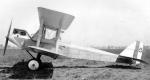
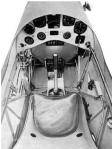
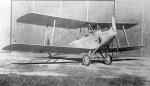
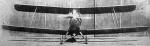
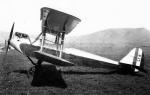
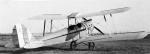
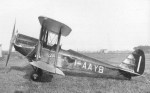
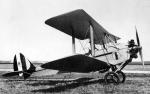
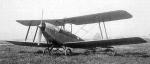
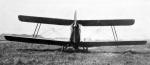
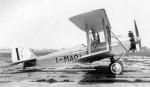
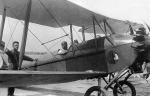
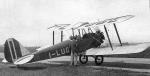
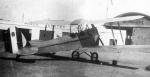
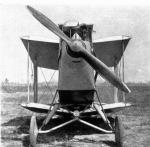
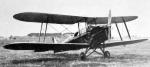
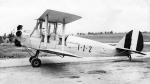
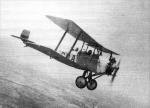
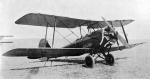
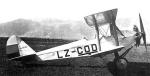
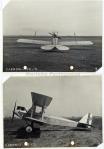
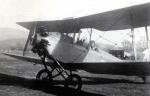
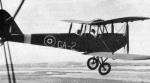
El Caproni Ca.100 era un biplano para turismo y escuela con una estructura mixta. Las alas arriostradas estaban conectadas entre sí por puntales tubulares y tirantes de alambre de acero. Su estructura de doble larguero era de madera, recubierta de lona. En algunos aviones se montaron aletas de dirección Handley-Page. El plano de cola también tenía una estructura de madera de lona. El fuselaje consistía en una estructura de madera recubierta de madera contrachapada entrelazada y pintada. Las cabinas en tándem eran de mandos dobles para el alumno piloto en la parte delantera y para el instructor en la parte trasera.
El motor llevaba una hélice de madera. El depósito principal de combustible, con una capacidad de 89 litros, estaba situado en la sección central del ala superior. Llevaba un depósito auxiliar de 36 litros en el fuselaje, entre el motor y la cabina. El tren de aterrizaje principal estaba equipado con ruedas independientes con frenos. El patín de cola, equipado con un amortiguador, era orientable.
El prototipo del Ca.100, matrícula MM.110 y propulsado por un motor inglés De Havilland Gipsy One, fue volado por el piloto de pruebas Domenico Antonini en Milán-Taliedo a finales de 1928. En junio de 1929, fue exhibido en la primera feria de aviación turística en el recinto de Roma-Urb. Al mismo tiempo se dieron a conocer los prototipos del AS.1, M.70, Cant 26, Ro.5 y Ba.15, junto con los motores de baja potencia Fiat A.50 y Colombo S.53. Pilotos de prestigio los presentaron en vuelo y se hizo hincapié en el hecho de que el coste de adquisición y el consumo de combustible eran comparables a los de un automóvil.
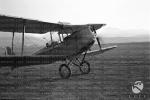
En julio de 1929, Mario de Bernardi realizó una gira de demostraciones acrobáticas en un Ca.100 en Budapest, Belgrado, Bucarest y Sofía. Italo Balbo, entonces ministro del Aire, encargó a Arturo Ferrarin en Turín y a De Bernardi en Roma-Centocelle la formación de dos patrullas acrobáticas de los Ca.100 para presentarlos en las Giornate dell’Ala. Durante el entrenamiento del 28 de mayo de 1930, los Ca.100 de Antonio Lovadina y De Bernardi colisionaron en pleno vuelo, provocando la muerte del primero mientras que el segundo pudo saltar en paracaídas. Unos días más tarde, De Bernardi participó en una gran demostración en Roma-Urb. En 1930, el Ca.100 tomó la salida de la ruta aérea italiana y realizó numerosos espectáculos aéreos en versión acrobática, sin el depósito en el ala superior y con sólo 40 litros de combustible en el fuselaje.
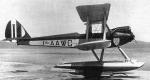
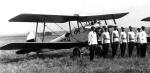
Los primeros Ca.100 llegaron a las escuelas de vuelo civiles en 1930: el aeroclub de Milán recibió el primero en mayo y luego tres en julio-agosto y la Escuela Caproni de Vizzola Ticino cuatro en agosto. En diciembre de 1930, el Ca.100 idro I-AAWE, prototipo de la versión hidroavión, fue aprobado y comenzó su actividad en la base de hidroaviones de Milán-Linate. El 27 de febrero de 1931, Antonini y Spartaco Trevisan lograron un récord de altitud (5.324 m) en un Ca.100 idro propulsado por un motor Cirrus Hermes en la categoría de biplano con un peso de menos de 680 kg.
En julio de 1931, un Ca.100 pilotado por el teniente Igino Mencarelli participó en la 2ª Ruta Aérea de Italia. En la primavera de 1933, el profesor Beonio Brocchieri realizó un vuelo de ida y vuelta de Milán a Bagdad en un Ca.100 equipado con un motor Walter checoslovaco. Entre el 1 de octubre y el 14 de noviembre de 1933, el mismo piloto recorrió 18.000 km en la ruta Milán-Túnez-Libia-Egipto-Etiopía-Somalia-Sudán-Roma. Del 20 de julio al 10 de septiembre de 1934, el mismo Beonio Brocchieri voló de Roma a Irkutsk, un trayecto de 17.000 km.
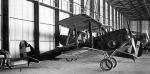
El Ca.100 gozó así de una gran popularidad, que se basaba tanto en expediciones de alto nivel como en su actividad diaria en los aeroclubs del país. Entre 1930 y 1937 se fabricaron un total de 680 ejemplares del «Caproncino» (apodo del Ca.100) en todas sus versiones. La producción del avión estuvo a cargo de las fábricas Caproni Taliedo (235 unidades), Breda (158 unidades), CNA (150 unidades), Caproni Aeronautica Bergamasca (CAB) (101 unidades) y Macchi (36 ejemplares).
Para propulsar el Ca.100 se utilizaron numerosos motores, tanto radiales como en línea. Una lista exhaustiva incluye el Alfa Romeo 6CA (80 CV), el Cirrus Hermes (105 CV), el Colombo S.53 (90 CV), el Colombo S.63 (130 CV), el De Havilland Gipsy One (100 CV), el De Havilland Gipsy Major (130 CV), el Farina T58 (130 CV), el Fiat A.50 (85 CV), el Fiat A.53 (110 CV), el Fiat A.54 (110 CV), el Fiat A.60 (140 CV), el Isotta Fraschini Asso 80R (105 CV), el Isotta Fraschini 100R y el Walter (110 y 130 CV).
Además de los diversos motores utilizados, el Ca.100 estaba disponible en muchas variantes. El Ca.100 T (Turismo) tenía alas plegables a lo largo del fuselaje, una disposición que limitaba el espacio frontal a 3 m para facilitar el almacenamiento. El Ca.100 bis era una versión de turismo con cabina cerrada y el extremo de las alas redondeado.
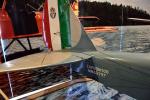
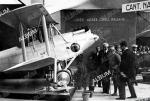
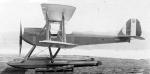
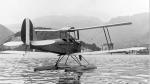
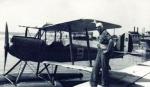
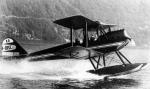
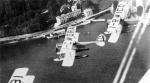
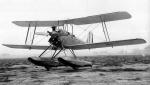
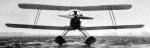
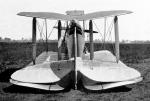
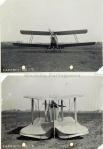
El Ca.100 idro era la versión hidroavión del Caproncino, equipado con dos flotadores de madera o duraluminio. Para aumentar la maniobrabilidad del avión en el agua, los flotadores estaban equipados en la parte trasera con un timón cuyo movimiento estaba acoplado al del timón de dirección. Además del prototipo MM.288, las fábricas Macchi y CAB construyeron 61 ejemplares del Ca.100 idro. Otra versión hidroavión, conocida como Ca.100 anfibia, integraba una rueda retráctil en cada flotador.
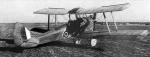
El primer ciclo de formación de pilotos se impartió hasta 1934 en escuelas de vuelo civiles, tras lo cual la Regia Aeronautica tomaba el relevo gradualmente, dependiendo en gran medida del Ca.100. Una de las primeras escuelas de vuelo militares se estableció en Siena en 1934. En marzo de 1937, dos Ca.100 propulsados por el motor Colombo S.63 fueron enviados a España, donde se utilizaron como aviones de enlace y luego como aviones escuela a partir de mayo de 1937. Fueron utilizados por el Ejército del Aire hasta mediados de la década de 1940.
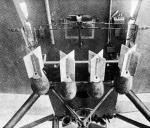
Los Ca.100 se utilizaron principalmente en la Regia Aeronautica (Fuerza Aérea Italiana) como entrenadores primarios, aunque algunos realizaron trabajos de enlace y un ejemplar equipado con un motor Walter fue probado con cuatro bombas bajo el fuselaje como entrenador de bombardeo. En enero de 1938, el mando de la Regia Aeronautica decidió reemplazar gradualmente el Ca.100 por el Breda 25 en las escuelas de pregrado. La llegada del Ba.25 idro a las escuelas de hidroaviones permitió disponer de unos 30 Ca.100 idro, propulsados por motores Colombo S.63. Se propuso entonces convertir unos 20 de ellos en aviones terrestres para unidades aéreas y mandos.
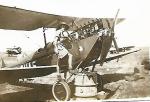
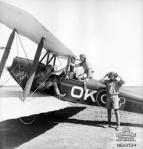
Durante la guerra, los Ca.100 se utilizaron para la preselección, el entrenamiento militar y en funciones de enlace. Eran apreciados por su sencillez, fiabilidad y muy bajo consumo de combustible. El 31 de mayo de 1940, la Regia Aeronautica contaba con 64 Ca.100 con motores Fiat A.50, 187 propulsados por el Colombo S.63, 28 con el Colombo S.53 y 14 Ca.100 idro. El 31 de diciembre de 1941, el número de Ca.100 con ruedas disponibles había aumentado a 237. Finalmente, el 31 de julio de 1943, había 153 Ca.100 propulsados por el Colombo S.63, 49 por el Fiat A.50 y 24 por el Colombo S.53. El 5 de agosto, los aliados capturaron 5 Ca.100 del aeroclub de Catania (Sicilia). Fueron utilizados como aviones de enlace en la RAF y la RAAF.
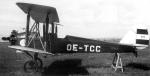
El Ca.100 fue probado por Portugal (un avión) y exportado a varios países, entre ellos Austria. El Ca.100 también fue producido por la filial búlgara de Caproni con el nombre de KB-1 Peperuda (Mariposa), con siete aviones propulsados por motores Walter NZ 120 de 120 hp (89 kW) construidos en 1932, y otros dos hidroaviones de fabricación búlgara donados al gobierno búlgaro por Gianni Caproni.
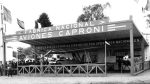
Tras la donación de Giovanni Caproni de tres Ca.100 propulsados por el motor Colombo S.63 a Perú en 1934, doce Ca.100PR, un derivado con estructura totalmente metálica, propulsado por un motor radial Kinner B-5 de 125 hp (93 kW) fueron construidos bajo licencia por la Fábrica Nacional de Aviones Caproni Perú, una subsidiaria peruana de Caproni desde 1937. Los Ca.100PR permanecieron en servicio con la Fuerza Aérea Peruana hasta 1946, cuando los cuatro aviones restantes fueron transferidos a la Escuela de Aviación Civil del Perú, donde permanecieron en uso hasta 1956.
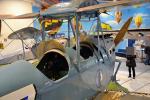
Cuando terminó la Segunda Guerra Mundial en Europa en la primavera de 1945, alrededor de 150 Ca.100 todavía volaban en Italia. Varios de ellos incluso conservaban su Gipsy Mk-I original. Hoy en día, algunos Caproni Ca.100 permanecen en condiciones de vuelo, incluido un hidroavión. Otros ejemplos se conservan en varios museos italianos, incluido el de Vigna di Valle.




The appointment of Italo Balbo to the undersecretariat for aviation on 6 November 1926 gave a strong impetus to Italian aeronautics, both military and civilian. Balbo wanted to develop a real aeronautical mentality in Italy by promoting tourism aviation to train new pilots. To do this, he needed a suitable aircraft.
In January 1928, the Ministry of Aviation announced a competition for a tourist and training aircraft. Many Italian companies answered: Piaggio with P.9, IMAM with Romeo Ro.5, Macchi with M.70, Fiat with AS.1, Caproni Aeronautica Bergamasca (CAB) with C.4, Breda with Ba.15, CRDA with Cant 26, Gabardini with G.7, Bonomi with B-2 and Caproni with Ca.100. The latter derived from the excellent English biplane De Havilland DH.60 Cirrus Moth of which Gianni Caproni had acquired a production licence. The most notable difference with its cousin from across the Channel was the adoption of a new typical Caproni wing, characterized by a lower wing larger than the upper wing.
The Caproni Ca.100 was a biplane for tourism and school with a mixed structure. The braced wings were connected to each other by tubular struts and steel wire tie rods. Their bilongeron structure was wooden, covered with canvas. Handley-Page leading slats were mounted on some aircraft. The tailplane also had a canvas wooden structure. The fuselage consisted of a wooden structure coated with entwined and painted plywood. The tandem cockpits were dual controls for the pilot student in the front and for the instructor at the rear.
The engine led to a wooden propeller. The main fuel tank, with a capacity of 89 litres, was located in the central section of the upper wing. A 36-litre auxiliary tank was in the fuselage, between the engine and the cockpit.The main landing gear was equipped with independent wheels with brakes. The tail skid equipped with a shock absorber was orientable.
The prototype of the Ca.100, registration MM.110 and powered by an English engine De Havilland Gipsy One, was flown by test pilot Domenico Antonini to Milan-Taliedo in late 1928. In June 1929, it was exhibited at the first tourist aviation fair on the grounds of Rome-Urb. The prototypes of the AS.1, M.70, Cant 26, Ro.5 and Ba.15 were unveiled at the same time, along with the low-power engines Fiat A.50 and Colombo S.53. Prestigious pilots presented them in flight and the emphasis was on the fact that the cost of purchasing and fuel consumption were comparable to those of a car.
In July 1929, Mario de Bernardi conducted a tour of acrobatic demonstrations in a Ca.100 in Budapest, Belgrade, Bucharest and Sofia. Italo Balbo, now Minister of Air, commissioned Arturo Ferrarin in Turin and De Bernardi in Rome-Centocelle to form two acrobatic patrols of Ca.100s to present them to the Giornate dell’Ala. During training on 28 May 1930, the Ca.100 of Antonio Lovadina and De Bernardi crashed in flight, resulting in the death of the former while the second was able to jump in a parachute. A few days later, De Bernardi participated in a large demonstration in Rome-Urb. In 1930, the Ca.100 took the start of the Italian air route and showed up many aerial shows in acrobatic version, without the tank in the high wing and with only 40 liters of fuel in the fuselage.
The first Ca.100s arrived in civilian flight schools in 1930: the Milan aeroclub received the first in May and then three in July-August and the Caproni School in Vizzola Ticino four in August. In December 1930, the Ca.100 idro I-AAWE, a prototype of the seaplane version, was approved, and began its activity on the Milan-Linate seaplane base. On 27 February 1931, Antonini and Spartaco Trevisan achieved an altitude record (5,324 m) on a Ca.100 idro powered by a Cirrus Hermes engine in the biplane category with a weight of less than 680 kg.
In July 1931, a Ca.100 flown by the ten. Igino Mencarelli participated in the 2nd Air Route of Italy. In the spring of 1933, Professor Beonio Brocchieri made a round-trip flight from Milan to Bagdad in a Ca.100 equipped with a Czechoslovak Walter engine. Between 1 October and 14 November 1933, the same pilot travelled 18,000 km along the Milan-Tunisia-Libya-Egypt-Ethiopia-Somalia-Sudan-Rome course. From 20 July to 10 September 1934, the same Beonio Brocchieri flew from Rome to Irkutsk, a journey of 17,000 km.
The Ca.100 therefore enjoyed popularity, which was based on both high-profile expeditions and its daily activity in the aeroclubs of the country. Between 1930 and 1937, a total of 680 copies of the «Caproncino» (nickname of the Ca.100) was produced in all versions. The production of the aircraft was entrusted to the Caproni Taliedo factories (235 units), Breda (158 units), CNA (150 units), Caproni Aeronautica Bergamasca (CAB) (101 units) and Macchi (36 copies).
Many engines were used to power the Ca.100, both radial and inline. An exhaustive list includes Alfa Romeo 6CA (80 hp), Cirrus Hermes (105 hp), Colombo S.53 (90 hp), Colombo S.63 (130 hp), De Havilland Gipsy One (100 hp), De Havilland Gipsy Major (130 hp), Farina T58 (130 hp), Fiat A.50 (85 hp), Fiat A.53 (110 hp), Fiat A.54 (110 hp), Fiat A.60 (140 hp), Isotta Fraschini Asso 80R (105 hp), Isotta Fraschini 100R and Walter (110 hp and 130 hp).
In addition to the various engines used, the Ca.100 was available in many variants. The Ca.100 T (for Turismo) had folding wings along the fuselage, a layout that limited frontal space to 3 m to facilitate storage. The Ca.100 bis was a tourist version with a closed cabin and the end of the wings was rounded.
The Ca.100 idro was the seaplane version of the Caproncino, equipped with two wooden or duralumin floats. To increase the maneuverability of the aircraft on the water, the floats were equipped at the rear with a rudder whose movement was coupled with that of the rudder. In addition to the MM.288 prototype, the Macchi and CAB factories built 61 examples of the Ca.100 idro. Another seaplane version, known as Ca.100 anfibia, integrated a retractable wheel into each float.
The first training cycle of pilots was provided until 1934 by civilian flight schools, after which the Regia Aeronautica gradually took over by relying heavily on the Ca.100. One of the first military flight schools to be established was Siena in 1934. In March 1937, two Ca.100s powered by Colombo S.63s were sent to Spain where they were used as liaison and then school planes from May 1937. They were used by the Ejército del Aire until the mid-1940s.
The Ca.100s were mostly used in the Regia Aeronautica (Italian Air Force) as primary trainers, though some undertook liaison work and one example fitted with a Walter engine was tested with four bombs under the fuselage as bomber trainer. In January 1938, the staff of the Regia Aeronautica decided to gradually replace the Ca.100 with the Breda 25 in undergraduate schools. The arrival of the Ba.25 idro in seaplane schools made available some 30 Ca.100 idro, powered by Colombo S.63 engine. They then proposed to convert some 20 of them into landplanes for air units and commands.
During the war, the Ca.100 was used for military pre-selection and training and in the liaison role. They were appreciated for their simplicity, reliability and very low fuel consumption. By 31 May 1940, the Regia Aeronautica had 64 Ca.100s with Fiat A.50 engines, 187 powered by Colombo S.63, 28 by Colombo S.53 and 14 Ca.100 idro. By 31 December 1941, the number of wheeled Ca.100 available had increased to 237. Finally, by 31 July 1943, there were 153 Ca.100 powered by Colombo S.63, 49 by Fiat A.50 and 24 by Colombo S.53. On August 5, the Allies captured 5 Ca.100 of the Catania aeroclub (Sicily). They were employed as liaison aircraft in the RAF and RAAF.
The Ca.100 was tried by Portugal (one aircraft) and exported to several countries, including Austria. The Ca.100 was also produced by Caproni’s Bulgarian subsidiary as the KB-1 Peperuda (Butterfly), with seven aircraft powered by 120 hp (89 kW) Walter NZ 120 engines built in 1932, and a further two Bulgarian-built floatplanes donated to the Bulgarian government by Gianni Caproni.
Following Giovanni Caproni’s donation of three Ca.100s powered by the Colombo S.63 engine to Perú in 1934, twelve Ca.100PRs, a derivative with all-metal structure, powered by a 125 hp (93 kW) Kinner B-5 radial engine were built under licence by Fábrica Nacional de Aviones Caproni Perú, a Peruvian subsidiary of Caproni from 1937. The Ca.100PRs remained in service with the Peruvian air force until 1946, when the remaining four aircraft were transferred to the Peruvian Civil Aviation School, where they remained in use until 1956.
When the Second World War ended in Europe in the spring of 1945 about 150 Ca.100s were still flying in Italy. Several of them had even retained their original Gipsy Mk-I. Today, a few Caproni Ca.100s remain in flight condition including a seaplane. Other examples are preserved in various Italian museums, including that of Vigna di Valle.
FUENTES Y REFERENCIA – SOURCES & REFERENCE
italie1935-45.com
avionslegendaires.net
laahs.com
wikipedia.org
Ugolok Neba
©jmodels.net
 jmodels.net
Debe estar conectado para enviar un comentario.