

| DATOS TÉCNICOS (Cessna 185 II) |
TECHNICAL DATA (Cessna 185 II) |
| TIPO:Avión utilitario ligero. | TYPE:Light utility aircraft. |
| TRIPULANTES:1 (+5 pasajeros). | CREW:1 (+ 5 passengers). |
| ENVERGADURA:10,92 m. | SPAN:35.10 ft. |
| LONGITUD:7,85 m. | LENGTH:25.9 ft. |
| ALTURA:2,36 m. | HEIGHT:7.9 ft. |
| SUPERFICIE ALAR:16,2 m². | WING AREA:174 ft². |
| PESO EN VACÍO:793 kg. | EMPTY WEIGHT:1,748 lb. |
| MOTOR:Un motor en línea de 6 cilindros opuestos Continental IO-520-D de 300 hp. (220 kW). | ENGINE:One 6 cylinder Continental IO-520-D inline engine developing 300 hp. (220 kW). |
| VELOCIDAD MÁX.:287 km/h. | MAX. SPEED:178 mph. |
| TECHO:5.230 m. | CEILING:17,150 ft. |
| ALCANCE:1.330 km. (720 mil. náut.). | RANGE:830 ml. (720 nmi ). |
| PRIMER VUELO:Julio de 1960. | FIRST FLIGHT:July 1960. |
| VERSIONES:11 | VERSIONS:11 |
| CONSTRUIDOS:Más de 4.400. | BUILT:Over 4,400. |
En julio de 1960, Cessna voló el prototipo del Modelo 185 Skywagon, más tarde designado Skywagon 195. El nuevo modelo era similar al Modelo 180, pero presentaba un fuselaje estirado y un tren de aterrizaje optimizado para operar desde áreas sin pavimentar. La principal diferencia externa era la horquilla, agrandada para una mejor estabilidad direccional cuando se opera con flotadores. El modelo 185 estaba equipado con un motor de 260 hp. IO-470-F. El número de ventanas a los lados de la cabina de seis plazas se incrementó de dos a tres. Era posible instalar ruedas, esquís, flotadores o una combinación de ruedas y flotadores. El avión se fabricó en la versión básica del Model 185 Skywagon y en el más avanzado Model 185 Skywagon II.
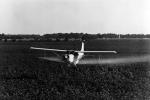
El lanzamiento del Modelo 185 (275 aviones) comenzó en 1960, seguido del Modelo 185A (275 aviones), que preveía la instalación de un depósito de combustible adicional. Posteriormente, se lanzaron versiones mejoradas: Modelo 185B (78 aviones), Modelo 185C (89), Modelo 185D (108) y Modelo 185E (110). En 1971 se inició la producción de la versión universal del Modelo 185E, el Modelo A185E Agcarryall, del que se construyó un total de 723 unidades. Fue diseñado principalmente como una máquina agrícola, pero con la capacidad de realizar la más amplia gama de tareas: rociar agentes químicos, transportar personas y carga, y entrenar pilotos agrícolas. Para el transporte de mercancías, se planeó equipar el avión con una puerta corredera. El modelo A185E estaba equipado con el motor IO-520-D. Desde 1972, se ha construido una variante optimizada para pulverizar productos químicos con un tanque ventral para reactivos. La última variante fue el Modelo 185F Agcarryall, del cual se produjeron 2.538.
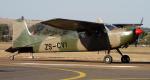
En 1962, la Fuerza Aérea de EE.UU. comenzó a seleccionar un avión ligero multipropósito adecuado para entregas a otros países con programas de asistencia militar. La elección recayó en el avión Modelo 185, que recibió la designación militar U-17. Se construyeron un total de 465 aviones en dos versiones: U-17A (262 aviones) basados en el Modelo 185C con motor IO-470-F de 260 hp., y U-17B mejorado (205 aviones) con motor IO-520-D de 300hp. También se construyeron siete U-17C basados en el Modelo 180H con O-470-L de 230 hp.

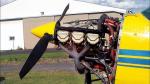

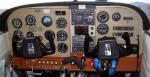

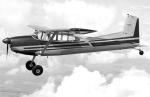
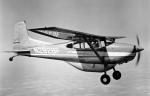


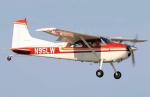
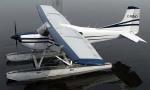




In July 1960, Cessna flew the prototype of the Model 185 Skywagon, later designated the Skywagon 195. The new model was similar to the Model 180, but featured a stretched fuselage and landing gear optimized for operation from unpaved areas. The main external difference was the forkil, enlarged for better directional stability when operating with a float chassis. The Model 185 was equipped with a 260hp. IO-470-F engine. The number of windows on the sides of the six-seater cabin was increased from two to three. It was possible to install wheels, skis, floats or a combination of wheels and floats. The aircraft was produced in the basic version of the Model 185 Skywagon and in the more advanced Model 185 Skywagon II.
The release of the Model 185 (275 aircraft) began in 1960, followed by the Model 185A (275 aircraft), which provided for the installation of an additional fuel tank. Subsequently, improved versions were launched into the series: Model 185B (78 aircraft), Model 185C (89), Model 185D (108) and Model 185E (110). In 1971, the production of the universal version of the Model 185E – Model A185E Agcarryall began and a total of 723 of this aircraft was built. It was designed primarily as an agricultural machine, but with the ability to perform the widest range of tasks: spraying chemical agents, transporting people and cargo, and training agricultural pilots. For the transportation of goods, it was planned to equip the aircraft with a sliding door. The Model A185E was equipped with the IO-520-D engine. Since 1972, a variant optimized for spraying chemicals has been built with a ventral tank for reagents. The last variant was the Model 185F Agcarryall, of which 2538 were produced.
In 1962, the US Air Force began to select a light multi-purpose aircraft suitable for deliveries to other countries under military assistance programs. The choice fell on the Model 185 aircraft, which received the military designation U-17. A total of 465 aircraft were built in two versions: U-17A (262 aircraft) based on the Model 185C with a 260hp. IO-470-F engine, and an improved U-17B (205 aircraft) with a 300hp. IO-520-D powerplant. Seven U-17Cs were also built based on the Model 180H with a 230hp. O-470-L engine.
FUENTES Y REFERENCIA – SOURCES & REFERENCE
Ugolok Neba
©jmodels.net
 jmodels.net
Debe estar conectado para enviar un comentario.