
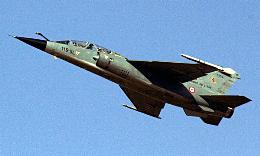
| DATOS TÉCNICOS (Mirage F1) |
TECHNICAL DATA (Mirage F1) |
| TIPO: Avión de caza. | TYPE: Fighter aircraft. |
| TRIPULANTES: 1 | CREW: 1 |
| ENVERGADURA: 8,4 m. | SPAN: 27.7 ft. |
| LONGITUD: 15,3 m. | LENGTH: 50.2 ft. |
| ALTURA: 4,5 m. | HEIGHT: 14.9 ft. |
| SUPERFICIE ALAR: 25 m². | WING AREA: 270 ft². |
| PESO EN VACÍO: 7.400 kg. | EMPTY WEIGHT: 16,314 lb. |
| MOTOR: Un motor turbojet SNECMA 9K-50 de 49.03 kN (11,020 lbf) en seco y 70.6 kN (15,900 lbf) con posquemador. | ENGINE: One SNECMA Atar 9K-50 afterburning turbojet engine, 49.03 kN (11,020 lbf) thrust dry and 70.6 kN (15,900 lbf) with afterburner. |
ARMAMENTO:
|
ARMAMENT:
|
| VELOCIDAD MÁX.: 2.338 km/h a 11.000 m. | MAX. SPEED: 1,453 mph at 36,000 ft. |
| TECHO: 20.000 m. | CEILING: 66,000 ft. |
| ALCANCE: 425 km (229 mil. náut.) | RANGE: 264 ml (229 nmi) |
| PRIMER VUELO: 23 de diciembre de 1966. | FIRST FLIGHT: 23 December 1966. |
| VERSIONES: 27 | VERSIONS: 27 |
| CONSTRUIDOS: 726 (Todos los modelos). | BUILT: 726 (All variants). |
A principios de la década de 1960, la fuerza aérea francesa, el Armée de l’Air (AA), buscaba un sucesor del caza de alas delta Dassault Mirage III, imaginando tanto un interceptor de alta velocidad como un avión de ataque a baja cota, o posiblemente uno que pudiera cumplir ambas misiones.
El resultado fue una confusa oleada de prototipos por parte de la firma Dassault, incluido un caza Mirage IIIT de alas delta con un nuevo motor turborreactor de derivación sustancialmente mejorado; el caza de despegue vertical Mirage IIIV, un derivado del ala delta del Mirage III con no menos de ocho propulsores Rolls-Royce montados sobre un motor turborreactor de derivación; y el caza de geometría variable Mirage G8, con un fuselaje parecido al de un Mirage III ampliado, pero con superficies de cola en flecha convencionales y un ala oscilante montada en alto.
Aunque el AA se había centrado en el Mirage G8, también había apostado por una solución más sencilla, el Mirage F2 (originalmente Mirage IIIF2), que era esencialmente el G8 sin ala oscilante, sino que presentaba un ala en flecha montada en alto. El vuelo inicial se realizó el 12 de junio de 1966, con Jean Coreau a los mandos. El Mirage F2 era algo así como la respuesta francesa al BAC TSR.2 británico, entonces en desarrollo, pero no tan vanguardista. Estaba propulsado por un turborreactor de poscombustión P&W TF30 construido en Estados Unidos, que proporcionaba un empuje de poscombustión de 82,4 kN (8.400 kgp).
Dassault también apostaba por el diseño de una versión interceptora algo reducida del F2, el Mirage F3, y una versión ligera y polivalente, el Mirage F1. Dassault financió la construcción de un prototipo inicial del F1, que realizó su primer vuelo el 23 de diciembre de 1966 con René Bigand a los mandos. Superó Mach 2 a principios de enero de 1967.
En ese momento, los altos mandos del AA habían decidido que tenía muchos aviones de ataque y no necesitaba el F2, pero había una gran necesidad de un interceptor. A primera vista, se podría haber pensado que el Mirage F3 era la solución adecuada, pero en febrero se tomó la decisión de adquirir cien F1, asunto formalizado en marzo y luego anunciado a finales de mayo en el Salón Aeronáutico de París. Desafortunadamente, Dassault no pudo mostrar el prototipo del F1 en la exhibición aérea, ya que había sido destruido en una prueba realizada el 18 de mayo en la que Bigand perdió la vida. La tragedia no retrasó mucho el programa, y en septiembre se adjudicó un contrato para tres F1 de preproducción.
El primero de los tres aviones de preserie, denominado «Super Mirage F1», realizó su vuelo inicial el 20 de marzo de 1968, con Jean-Marie Saget a los mandos. El segundo despegó el 18 de septiembre de 1969, seguido del tercero el 17 de junio de 1970. La primera máquina de preserie se encuentra ahora en el Museo del Aire de Le Bourget.
El AA realizó un pedido de producción para el modelo interceptor Mirage F1C en 1969, la C significa chasse (caza). El modelo inició su servicio en 1974. Aunque estaba pensado principalmente como interceptor, tenía capacidad secundaria de ataque a tierra.
El AA finalmente adquirió 162 F1C. El aparato 71.º introdujo un receptor de alerta de radar (RWR) Thomson-CSF BF con antenas en la cola, mientras que el 84.º introdujo un acoplamiento de 8 cm en el fuselaje delantero para acomodar una sonda de reabastecimiento de combustible fija extraíble en el aire. Los F1C con sonda de repostaje fueron denominados Mirage F1C-200 y estaban destinados a despliegues en el exterior.
El AA también compró 64 aparatos de reconocimiento Mirage F1CR, que entraron en servicio en 1983, y 20 entrenadores Mirage F1B con asientos en tándem. La B significa biplace (biplaza).
El Mirage F1C estaba construido principalmente con una aleación de aluminio para aviones, un uso sustancial de construcción alveolar tipo sándwich y algo de acero y titanio. Estaba propulsado por un único turborreactor de postcombustión SNECMA Atar 09K50, derivado del Atar 09K utilizado en el bombardero bimotor Dassault Mirage IV. El Atar 09K50 proporcionaba un empuje máximo de 49,03 kN (5.000 kgp) en seco y un empuje con postcombustión de 70,21 kN (7.160 kgp). Era más fiable y tenía un empuje y economía de combustible cada vez mejores que los motores de la serie Atar 09C utilizados en el Mirage III/5.
Las entradas del motor tenían una configuración en D, con los característicos medios conos de entrada móviles conocidos como souris (ratones) que se encuentran en otros modelos del Mirage y que proporcionan un funcionamiento variable en la toma. Había una pequeña entrada auxiliar con resorte debajo de cada toma del motor. Alrededor del compartimento del motor se dispusieron depósitos de combustible internos.
El F1C presentaba un ala en flecha de doble viga montada en alto con alerones, flaps de borde de ataque divididos de envergadura completa, flaps de borde de salida divididos con doble ranura y spoiler gemelos perforados en la parte superior del ala, delante de los flaps del borde de fuga. Los flaps de vanguardia podían usarse para mejorar la agilidad en combate, así como para reducir la velocidad en los despegues y aterrizajes. Las alas presentaban depósitos de combustible internos, lo que ayudaba a aumentar la capacidad de combustible. La cola poseía configuración convencional, con planos de cola móviles, además de dos aletas ventrales fijas debajo de la cola. Las aletas ventrales no se instalaron en el desafortunado primer prototipo ni, inicialmente, en la primera máquina de preserie.
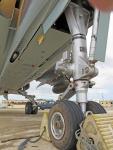
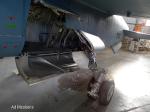
Llevaba frenos de aire gemelos perforados accionados hidráulicamente debajo de las tomas del motor. Había un paracaídas de freno en un carenado en la base de la aleta trasera. El tren de aterrizaje delantero se retraía hacia atrás mientras que el tren principal se retraía hacia adelante, girando para encajar perfectamente en el fuselaje, y todos ellos tenían ruedas dobles, lo que le daba al F1C una buena capacidad en terrenos difíciles.
La cubierta de la carlinga se abría hacia atrás. El asiento eyectable Martin-Baker Mark 4 de fabricación francesa podía operar a nivel del suelo pero requería una velocidad mínima de 167 km/h para ser expulsado con seguridad. Los Mark 4 se actualizarían posteriormente al estándar Mark 6 mediante la instalación de un sistema de propulsión con cohetes para proporcionar una verdadera capacidad «cero-cero» (altitud cero, velocidad cero), o fueron reemplazados por el asiento eyectable Mark 10 cero-cero. La vista delantera desde la cabina era adecuada, pero la vista trasera dejaba mucho que desear.
La aviónica de la cabina era primitiva para los estándares modernos. El equipo básico incluía un sistema de navegación por baliza TACAN, un altímetro de radar, un enlace de datos simple para intercepciones controladas desde tierra, un sistema de aterrizaje por instrumentos, una radio VHF-UHF y un transpondedor de identificación amigo o enemigo (IFF). Se instaló un radar monopulso multimodo Thomson-CSF Cyrano IV, una versión mejorada del Cyrano II utilizado en el Mirage III, con aproximadamente el doble de alcance. La variante Cyrano IV-0 instalada inicialmente en el F1C era únicamente un radar de combate aéreo, con capacidad de ataque a un solo objetivo, pero se actualizó sucesivamente a otras variantes mejoradas.
Al principio no se incluyeron sistemas de contramedidas incorporados, pero podía llevar un dispensador de bengalas Phimat debajo de un ala, con una cápsula de emisión activa debajo de la otra ala. La cápsula de bengalas Phimat podría ser reemplazada, y aparentemente a menudo lo fue, por un dispensador de bengalas Lacroix instalado en el carenado del paracaídas de freno, reemplazando al paracaídas. Se introdujeron dispensadores de bengalas mejorados, sobre todo el dispensador Matra Corail, en forma de góndola que podía instalarse debajo del ala al lado del fuselaje.
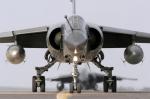
El armamento consistía en dos cañones tipo revólver DEFA de 30 mm, que disparaban desde el vientre justo detrás de las tomas del motor, cargados con un máximo de 135 disparos por arma. Había un soporte de almacenamiento en la línea central con una capacidad de 2.100 kg y un soporte debajo de cada ala con una capacidad de 1.300 kg cada uno. Estos tres soportes permitían el transporte de depósitos externos. Se podía instalar un soporte corto con un peso de 550 kg debajo de la parte externa de las alas. Estos soportes a menudo llevaban cápsulas de contramedidas, y también podía transportar rieles de lanzamiento con un peso de 150 kg para el misil aire-aire (AAM) Matra 550 Magic en las puntas de las alas, lo que daba un total de siete soportes de almacenamiento. Se podían instalar múltiples bastidores eyectores en la zona ventral y en los soportes del ala principal para aumentar la cantidad de municiones transportadas.
La carga externa máxima era de 4.000 kg. Las cargas típicas incluían depósitos de combustible externos ventrales o bajo las alas de 1.200 litros, o bien un depósito ventral de 2.200 litros; dos Matra 550 Magic AAM, uno en cada riel de punta de ala; dos AAM de largo alcance (originalmente Matra 530, pero luego Matra Super 530); una serie de municiones de ataque terrestre no guiadas (cohetes SNEB de 68 mm, varias tipos de bombas convencionales, bombas de racimo Belouga retardadas con paracaídas, bombas rompepistas Durandal, etc.); armas inteligentes, como el misil antirradar AS-37 ARMAT o las bombas guiadas por láser (LGB) o el misil guiado por láser AS-30L; cápsulas de reconocimiento ventral.
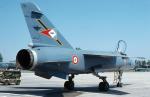
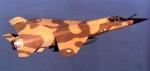
El F1C fue diseñado para ser fácil de mantener y rápido de reponer entre salidas. Inicialmente, las tasas de disponibilidad de vuelos no eran impresionantes, pero los errores se resolvieron en unos pocos años y el tipo adquirió una buena reputación por su fiabilidad. En el AA, el F1C generalmente estaba pintado en un esquema de color de superioridad aérea, con azul grisáceo oscuro en la parte superior y gris claro en la parte inferior. Durante los despliegues en África, el gris azulado oscuro se cambió por un patrón disruptivo de arena/chocolate en la parte superior, conservando el gris claro en la parte inferior.
El Mirage F1 era muy superior al Mirage III, poseía mejor maniobrabilidad, un recorrido de despegue un 30% más corto y una velocidad de aproximación un 25% más lenta. El F1 tenía un 43% más de capacidad interna de combustible y 2,5 toneladas más de peso máximo al despegue.
El Mirage F1CR era parecido a una configuración tardía del F1C-200, con sonda de reabastecimiento de combustible, BF RWR y asientos eyectables cero-cero Martin Baker Mark 10 instalados de serie. Presentaba una escotilla con un puerto debajo del morro para llevar una cámara panorámica o vertical, y un generador de escaneo de imágenes infrarrojas (IRLS) SAT SCM2400 Super Cyclop, instalado en la parte inferior de la góndola del motor derecho; Uno de los cañones DEFA tuvo que ser retirado para acomodarlo. A partir de 1984, todos las escuadrillas de F1CR estaban equipados con la estación de análisis terrestre transportable SARA (Système Aerotransportable de Reconnaissance Aérienne).
El Mirage F1CR a menudo llevaba una cápsula pare el radar de visión lateral (SLAR) Thomson-CSF RAPHAEL-TH (RAdar de Photographie Aeriénne ELectrique a Transmission Hertzienne) en el soporte ventral. El F1CR estaba originalmente equipado con un radar Cyrano IVM, que luego se actualizó a la variante Cyrano IVMR y un sistema de navegación inercial (INS) SAGEM ULISS 47. Los sistemas mejorados de ataque y navegación le dieron al F1CR una capacidad de ataque terrestre secundario bastante potente, que el AA empleó ampliamente.
Los F1CR volaron originalmente con un patrón de camuflaje disruptivo verde oscuro/gris oscuro en la parte superior y gris claro en la parte inferior, aunque para los despliegues en África fueron repintados con los colores de camuflaje del desierto aplicados al F1C.
El entrenador de conversión Mirage F1B tenía asientos en tándem. El fuselaje se estiró 30 cm para dar cabida a la segunda cabina. También se redujo el depósito de combustible del fuselaje y se eliminó el armamento de los cañones, aunque los cañones Dassault CC-420, con un cañón DEFA de 30 mm y 180 proyectiles podían transportarse en almacenes debajo de las alas. Estaba equipado con un radar Cyrano IV y asientos eyectables cero-cero Martin-Baker Mark 10. El modelo se consideraba apto para el combate.
El Mirage F1B no tenía capacidad de reabastecimiento de combustible en el aire, pero podía equiparse con una sonda simulada para el entrenamiento de aviones cisterna. Los F1B parecen haber estado siempre pintados en el esquema de superioridad aérea azul oscuro/gris claro.
Dado que Dassault había hecho tan buenos negocios de exportación con la serie Mirage III/5, por supuesto también se ofrecieron variantes de exportación del Mirage F1. Las ventas fueron respetables, pero no en la escala de la serie Mirage III/5. El Mirage F1 era un buen avión a un precio atractivo, pero fue seguido demasiado rápido por el Dassault Mirage 2000, que era claramente superior en muchos aspectos y por eso se convirtió en el preferido de los clientes. Los Mirage F1 de exportación incluían variaciones del interceptor Mirage F1C estándar y del biplaza F1B, así como del caza de ataque diurno Mirage F1A y del avión multiusos Mirage F1E.
El F1A estaba destinado a climas tropicales soleados donde el tiempo rara vez era un obstáculo para volar misiones de combate. Presentaba un morro esbelto y un radar ligero Dassault Electronique Aida II, una sonda retráctil de reabastecimiento de combustible y un Système d’Attaque au Sol (Sistema de ataque terrestre) para condiciones climáticas despejadas que integraba un telémetro láser Thomson-CSF TMV-630. También llevaba un carenado debajo del morro con aviónica de navegación inercial, procesadores digitales, además de pantalla frontal (HUD) en la cabina y visualización de mapas en movimiento.
Como el F1 había sido diseñado originalmente como caza polivalente, no había mucha diferencia entre las variantes F1C y F1E, excepto por el radar Cyrano IVMR mejorado instalado en la variante de reconocimiento F1CR. De hecho, algunos países adquirieron de hecho el F1E, pero recibieron la confusa designación de F1C y F1A. Algunos países también compraron biplazas F1D que se parecían mucho al F1B, pero equipados con el radar Cyrano IVMR.
Ecuador adquirió 16 F1JA polivalentes más 3 F1JE biplaza. Los F1JA ecuatorianos eran en realidad una variante del F1E, no del F1A. Las entregas se realizaron de 1978 a 1980. Los F1 ecuatorianos estaban pintados con un disruptivo esquema de camuflaje marrón oscuro/verde oscuro, con vientres grises. Los F1JA fueron mejorados con ayuda israelí a finales de los 80 y principios de los 90, y llevaban armamento israelí. Fueron retirados en 2011.
Grecia compró 40 F1CG. Los Mirage F1CG griegos se entregaron entre 1975 y 1978. Se obtuvieron con urgencia debido a las tensiones con Turquía, y algunos Mirage F1C destinados al AA fueron desviados a Grecia. Los griegos no tuvieron ningún biplaza. Los últimos F1 griegos se retiraron en 2003.
Irak tenía 93 F1EQ polivalentes y 15 F1BQ biplaza. Estos aviones fueron entregados entre 1980 y 1988 para ser utilizados en la guerra contra Irán. Se encargaron más, pero no se entregaron porque los iraquíes no tenían el dinero en ese momento, y estas unidades no entregadas fueron embargadas tras la Guerra del Golfo de 1990-1991.
Los F1EQ se entregaron en cinco bloques y no todos tenían una especificación común. Los dos primeros bloques, 32 aviones, no disponían de sondas de repostaje en vuelo, mientras que el resto, 61 aviones, sí las tenían. Las últimas 38 máquinas fueron configuradas para transportar el misil antibuque francés Aerospatiale AM39 Exocet.
Todos los Mirage F1 iraquíes, incluidos los biplaza, tenían el filete de aleta trasera para una antena HF y, en general, estaban pintados con un disruptivo camuflaje color arena y chocolate en la parte superior y gris claro en la parte inferior. Sin embargo, los F1EQ compatibles con el Exocet fueron una excepción, ya que presentaban una elegante combinación de colores marítimos de azul pizarra en la parte superior y gris claro en la parte inferior.
Los Mirage F1 iraquíes generalmente llevaban armamento francés, como el Matra Magic y el Super 530, cápsulas de cohetes de 68 y 100 mm, misiles Exocet y ARMAT y el misil AS-30L, junto con el módulo de puntería ATLIS. Los F1EQ acabaron en manos de los iraníes en 1991.
Jordania adquirió 17 F1CJ, 17 F1EJ polivalentes y 2 F1BJ biplaza. Todos fueron financiados por Arabia Saudita, siendo entregados entre 1981 y 1983. Los F1CJ estaban pintados en un esquema de dos tonos de gris de superioridad aérea, mientras que los F1EJ estaban pintados en un disruptivo patrón de camuflaje del desierto de tres tonos. Junto con los AAM Matra Magic y Super 530, Jordania también adquirió el misil guiado por láser AS-30L. Fueron retirados en 2010.
Kuwait adquirió 27 F1CK polivalentes más 6 F1BK biplaza. Los Mirage F1 kuwaitíes se entregaron en dos lotes, uno con entregas iniciales en 1977 tras un choque fronterizo con Irak en 1973, y el segundo con entregas iniciales en 1983. Los aparatos del primer lote estaban pintados con un esquema de camuflaje del desierto, con un patrón de camuflaje disruptivo arena/marrón claro en la parte superior y gris claro debajo, mientras que el segundo lote estaba en colores grises de superioridad aérea. Los F1CK kuwaitíes eran básicamente F1E, no F1C. Los F1 kuwaitíes fueron retirados después de la Guerra del Golfo para ser reemplazados por el McDonnell Douglas F/A-18 Hornet.
Libia consiguió 16 cazas diurnos F1AD, 16 F1ED polivalentes y 6 F1DD biplaza. Fue una de las dos únicas naciones, junto con Sudáfrica, en obtener el caza diurno F1A. Todos los F1 libios se entregaron en 1978-1979 y estaban pintados con un camuflaje disruptivo de color tostado/verde en la parte superior y gris claro en el vientre. Todos quedaron inmovilizados en 2011 por falta de mantenimiento después de la revolución libia, pero posteriormente comenzaron a estar en servicio.
Marruecos compró 30 F1CH y 20 F1EH multiusos. Las entregas se realizaron entre 1977 y 1980. Presentaban un camuflaje desértico verde y arena en un patrón disruptivo en la parte superior, con gris claro en la parte inferior. Marruecos no adquirió ningún biplaza. Los F1 marroquíes generalmente estaban armados con municiones y misiles franceses, pero tenían cargas subalares únicas, como una cápsula de reconocimiento ventral desarrollada en el país y una cápsula lanzagranadas con 152 proyectiles, transportada en un almacén externo. Fueron equipados con lanzadores de bengalas AN/ALE-40. Han sido actualizados para mantenerlos en servicio.
Catar obtuvo 13 F1EDA polivalentes y 2 F1DDA biplaza. Estas máquinas se entregaron en la década de 1980 y presentaban un esquema de camuflaje desértico de arena oscura y verde oscuro en la parte superior en un patrón disruptivo, con azul claro en la parte inferior. Su armamento era francés, como las cápsulas de reconocimiento COR. La mayoría fueron revendidos a España a mediados de la década de 1990.
Sudáfrica adquirió 32 cazas diurnos F1AZ más 16 F1CZ. Junto con Libia, Sudáfrica fue la única nación que obtuvo la variante de caza diurno multiusos F1A. Los 48 Mirage F1 sudafricanos se entregaron entre 1974 y 1976 y presentaban un camuflaje disruptivo de color verde oliva/tostado en la parte superior y gris claro en la parte inferior. No se compraron biplazas.
El armamento incluía los AAM Magic franceses y, probablemente, municiones de ataque terrestre israelíes o sudafricanas. Los F1 sudafricanos definitivamente llevaban el Armscor Kukri V3 AAM de fabricación nacional, muy similar al Matra Magic, y el Armscor Darter AAM mejorado. También llevaron dispensadores de bengalas y cápsulas inhibidoras de fabricación propia. Fueron retirados en 1997.
España adquirió 45 F1CE, 22 F1EE polivalentes y 6 F1BE biplazas. Las entregas de los Mirage F1 españoles se realizaron entre 1975 y 1983, y se incorporaron en tres lotes separados. En el Ejército del Aire los F1CA fueron designados C-14A, los F1EE C-14B y los F1BE CE-14.
Los F1CE se entregaron originalmente con un camuflaje disruptivo color arena/marrón/verde en la parte superior y gris claro debajo, mientras que los F1EE (y, al parecer, los F1BE) se entregaron con azul medio en la parte superior y gris claro en la parte inferior. Posteriormente, la flota española de F1 estandarizó el color gris claro envolvente.
Todos tenían el BF RWR. Los F1EE presentaban un conjunto de ataque de navegación y sondas de reabastecimiento de combustible. Los F1 españoles llevaban misiles Matra Super 530 y Sidewinder, cañones CC-420 de 30 mm, bombas guiadas por láser y el módulo Syrel ELINT. Se les añadieron cambios durante su servicio, como contramedidas defensivas mejoradas.
A los españoles les gustaron mucho sus F1 y, como se mencionó anteriormente, a mediados de la década de 1990 obtuvieron diez monoplazas más y dos biplazas de Catar (F1EDA y F1DDA respectivamente). También obtuvieron cinco F1C de segunda mano del AA.
Los últimos Mirage F1 se fabricaron en 1990. Muchos Mirage F1 han recibido actualizaciones desde entonces para mantenerlos en servicio. En 1991, se inició un programa para convertir 55 Mirage F1C-200 del AA en cazas de ataque Mirage F1CT modernizados, concebidos como cazas de ataque provisionales hasta que el retrasado caza Dassault Rafale entrara en pleno servicio. El F1CT comenzó a operar en 1992.
El cambio externo más notable del F1CT era el telémetro láser Thomson-TRT TMV630A en un pequeño carenado debajo del morro. También se instaló el RWR digital SHERLOC y se colocaron dispensadores de bengalas Matra Corail debajo de las raíces de las alas. Algunos F1CT también estaban equipados con una cámara oblicua. Internamente, se renovó y reforzó la estructura del avión y se actualizó la aviónica con un nuevo procesador digital SAGEM ULISS 47 INS y una radio segura. El cañón izquierdo tuvo que ser retirado para acomodar la nueva aviónica. Los F1CT fueron repintados con un esquema de camuflaje disruptivo general de color verde oscuro y gris oscuro.
Los Mirage F1CR del AA recibieron actualizaciones similares a principios de la década de 1990 para mantenerlos en servicio, y se les equipó con un generador de imágenes infrarrojas (FLIR) en una cápsula montada debajo de la góndola izquierda del motor, desplazando el cañón DEFA restante y mostrando imágenes en un nuevo HUD. Se instalaron dispensadores de bengalas Matra Corail y la cápsula de inteligencia electrónica (ELINT) Thomson-CSF ASTAC (Analyseur de Signal TACtiques). También se introdujeron cápsulas RAPHAEL-HT mejoradas.
El número de F1 del AA comenzó a disminuir desde finales de la década de 1980, pero gracias a las actualizaciones se mantuvo hasta bien entrado el siglo siguiente. Se retiró por completo en 2014. En 2017, se vendieron 63 a la firma estadounidense ATAC, una subsidiaria de Textron Corporation. que tiene un contrato militar para emplear sus aviones en el rol de agresores en entrenamientos. Un buen número de ellos se emplearon como repuestos, y los empleados en entrenamientos recibieron aviónica modernizada.
Thomson Detexis actualizó un total de 53 F1 españoles, 49 monoplazas y 4 biplazas, al estándar Mirage F1M modernizado, con entregas entre 1997 y 2001. La actualización incluyó mejoras en el radar Cyrano IVM, una nueva pantalla HUD, una pantalla plana para el radar, un sistema de navegación GPS-INS, iluminación de cabina compatible con gafas de visión nocturna, controles «manos en el acelerador y la palanca (HOTAS)», radios seguras Have Quick II, un procesador de datos MILSTD-1553B y contramedidas mejoradas.
Las mejoras mantuvieron al Mirage F1 español durante una década más. Los últimos Mirage F1 en el Ejército del Airel se retiraron en 2013. En 2017, 22 Mirage F1 españoles, 20 F1M monoplaza y 2 F-1BM biplaza fueron vendidos a Draken International, otra empresa estadounidense que vuela aviones con contrato militar. Se vendieron cuatro biplaza del AA a Paramount Aerospace Systems de Sudáfrica, para ser revendidos a Draken, mientras que Draken también adquirió al menos cinco Mirage F1 jordanos.
Sagem y Thales implementaron un programa de actualización del Mirage F1 para Marruecos como paso para una oferta de actualización global, así como la reventa de Mirage F1 retirados del AA. El programa de actualización marroquí afectó a 27 aviones, a los que se les renovó y actualizó el motor.
Aunque las ventas del Mirage F1 fueron modestas en comparación con otros cazas Mirage, el modelo fue muy empleado en combate. Esto no fue un accidente: una buena proporción de los clientes que compraron el F1 estaban involucrados o a punto de verse involucrados en conflictos, y algunas entregas se aceleraron para que el avión pudiera llegar a primera línea lo más rápido posible. En tales casos, los operadores a menudo estaban bajo embargos internacionales de armas, pero los franceses no eran selectivos sobre quién compraba sus armas, siempre que el crédito del comprador fuera bueno, y estaban perfectamente dispuestos a venderlas a la Sudáfrica del apartheid y al Irak de Saddam Hussein.
El primer despliegue en combate de los Mirage F1 del AA fue en 1983 durante la Operación Manta. Cuatro SEPECAT Jaguars y cuatro Mirage F1C-200 fueron enviados a Chad, que entonces luchaba contra la insurgencia respaldada por Libia. Los Jaguars se utilizaron para el ataque, mientras que los F1C-200 se utilizaron para cobertura aérea. Un Jaguar fue derribado y un F1C-200 dañado a principios de enero de 1984. El despliegue terminó en septiembre de 1984, pero el AA volvería.
Los Jaguars y Mirage F1 fueron enviados de nuevo a África en 1986, y el número de F1 involucrados varió durante los siguientes años, pero alcanzó un máximo de 12 F1C-200 y dos F1CR. Los aparatos del AA adoptaron una actitud más agresiva hacia los libios en este segundo despliegue, lanzando dos ataques contra el aeródromo libio de Wadi Doum, en el norte de Chad en febrero de 1984. Como antes, los Jaguars fueron el elemento de ataque y los F1C-200 proporcionaron cobertura aérea, mientras que los F1CR proporcionaban reconocimiento antes y después del ataque.
Los Mirage F1 de la Fuerza Aérea Libia volaron en misiones sobre el norte de Chad, pero nunca hubo enfrentamientos entre los F1 libios y los del AA. Estados Unidos tuvo enfrentamientos intermitentes con los libios durante la década de 1980, y aparentemente los Mirage F1 libios se cruzaron en ocasiones con los Grumman F-14 Tomcat de la Armada estadounidense, pero nunca dispararon.
Mientras tanto, los Mirage F1EQ iraquíes se mantuvieron muy ocupados luchando contra los iraníes durante la guerra Irán-Irak de la década de 1980, y los F1EQ lograron destruir al menos 35 aviones iraníes, en su mayoría McDonnell F-4 Phantom y Northrop F-5E Tiger II. pero también un Grumman F-14 Tomcat, derribado el 22 de noviembre de 1982. Siete F1EQ se perdieron en combate y varios fueron devueltos a Francia en transportes iraquíes Ilyushin Il-76 para reparar grandes daños en combate.
Además, los F1EQ iraquíes realizaron ataques terrestres contra fuerzas iraníes y lanzaron grandes cantidades de misiles Exocet contra petroleros que navegaban en el Golfo Pérsico. El Exocet resultó algo decepcionante. Era preciso, pero carecía del poder de impacto necesario para hundir un gran petrolero, y los hundimientos fueron de embarcaciones pequeñas. Aún así, podría causar bastante daño: el 17 de mayo de 1987, en un caso de error de identidad, los Mirage F1EQ iraquíes atacaron la fragata Stark de la Marina estadounidense con dos Exocet matando a 37 marineros. Los iraquíes rápidamente se disculparon por la acción.
La Guerra del Golfo fue el punto culminante de la carrera bélica del Mirage F1, ya que fue empleado por ambos bandos en el conflicto. Varios Mirage F1CK de Kuwait fueron destruidos en la invasión inicial, pero 15 escaparon. Ninguno se perdió en los combates.
Los Mirage F1EQ iraquíes participaron en muchos combates. Tres F1EQ fueron derribados por F-15 Eagle de la Fuerza Aérea de EE. UU. (USAF) el 17 de enero de 1991, y uno más se perdió en un accidente al interceptar a un avión de ataque F-111 Aardvark de la USAF el mismo día. El Mirage F1EQ fue el primer avión iraquí que se perdió en combate aéreo durante la guerra.
Dos F1EQ más fueron derribados por F-15 de la USAF el 19 de enero, y otros dos se perdieron ante un solo F-15 saudita el 24 de enero. Un F-15 de la USAF anotó un último derribo de un F1EQ el 27 de enero. Eso dejó una puntuación final de 8 a 0 a favor del F-15, sin contar el F1EQ perdido en accidente. La contienda fue claramente desigual, pero la gestión iraquí del combate aéreo en el conflicto fue increíblemente tímida, y los F1EQ podrían haberlo hecho un poco mejor de haber tenido un liderazgo y un pilotaje más inspirados.
A finales de mes, en una medida que aún sigue siendo desconcertante, la mayor parte de la Fuerza Aérea iraquí, incluidos 24 Mirage F1, huyó a Irán, el enemigo acérrimo de Irak. Los Mirage F1 languidecieron en el servicio iraní, pero alrededor de 2007 se inició un programa de renovación y actualización llamado Proyecto Habibi, y varios de estos aviones volvieron a estar plenamente operativos.
En lo que respecta al AA, el Mirage F1 no estuvo a la vanguardia de la acción en la Guerra del Golfo. Se enviaron ocho F1C-200 a los Emiratos Árabes Unidos para mejorar la defensa aérea, tarea que realizaban tres escuadrillas del AA de forma rotatoria. Complementaron a los Mirage F1EDA de Qatar que también volaban en la función de defensa aérea.
Los F1CR del AA se han utilizado en operaciones de reconocimiento sobre Afganistán, operando desde Tayikistán, y tanto los F1CR como los F1CT prestaron servicio en la Guerra de los Balcanes.
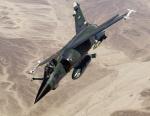
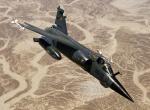
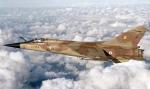
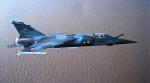

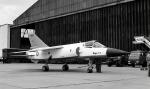
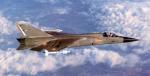
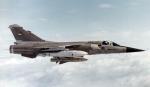
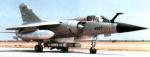
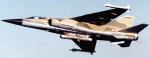
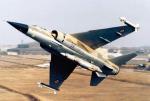
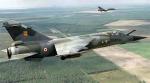
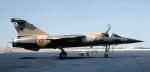
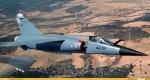
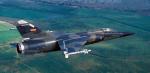
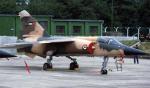
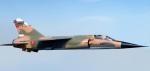
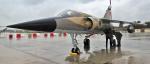
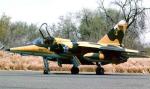
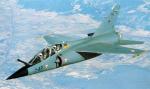
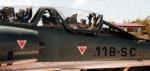
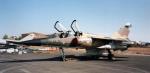
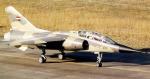
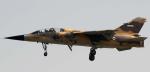
In the early 1960s, the French air force, the Armee de l’Air (AA), was casting about for a successor to the Dassault Mirage III delta-winged fighter, envisioning both a high-speed interceptor and a low-level tactical strike aircraft, or possibly one that could do both jobs.
The result was a confusing flurry of prototype construction by the Dassault firm, including a Mirage IIIT delta-winged fighter with a new, substantially uprated bypass turbojet engine; the Mirage IIIV vertical take-off fighter, a Mirage III delta-wing derivative with no less than eight Rolls-Royce liftjets straddling a bypass turbojet engine; and the Mirage G8 variable geometry fighter, with a fuselage something like that of a scaled-up Mirage III, but conventional swept tail surfaces and a high-mounted swing wing.
Although the AA had focused on the Mirage G8, the service had also hedged bets on a simpler solution, the Mirage F2 (originally Mirage IIIF2), which was essentially the G8 without a swing wing, instead featuring a high-mounted swept wing with high-lift devices. Initial flight was on 12 June 1966, with Jean Coreau at the controls. The Mirage F2 was something of the French answer to the British BAC TSR.2, then in development, but not quite as leading-edge. It was powered by a US-built P&W TF30 afterburning bypass turbojet, providing 82.4 kN (8,400 kgp / 18,520 lbf) afterburning thrust.
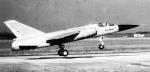
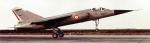
Dassault was hedging bets of their own as well, designing a somewhat scaled-down interceptor version of the F2, the Mirage F3, and a lightweight multirole version, the Mirage F1. Dassault funded construction of an initial F1 prototype, which performed its first flight on 23 December 1966 with Rene Bigand at the controls. It broke Mach 2 in early January 1967.
By that time, AA brass had decided that the service had plenty of strike aircraft and no need for the F2, but there was an outstanding need for an interceptor. On the face of it, the Mirage F3 might have been thought to be the appropriate solution, but in February the decision was made to obtain a hundred F1s, with the matter formalized in March and then announced in late May at the Paris Air Show. Unfortunately, Dassault was unable to show off the F1 prototype at the airshow, since it had broken up in flight due to flutter on 18 May, Bigand being killed. The tragedy did not delay the program much, with a contract for three F1 preproduction machines awarded in September.
The first of the three preproduction machines, marked «Super Mirage F1», performed its initial flight on 20 March 1968, with Jean-Marie Saget at the controls. The second took to the air on 18 September 1969, with the third following on 17 June 1970. The first preproduction machine now resides in the Musee de l’Air at Le Bourget.
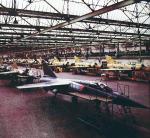
The AA placed a production order for the Mirage F1C interceptor variant in 1969, the «C» standing for «chasse (fighter)». The type reached initial operating service in 1974. Although the AA F1C was primarily intended as an interceptor, it did have a secondary ground-attack capability.
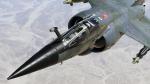
The service eventually obtained 162 F1Cs. The 71st introduced a Thomson-CSF BF radar warning receiver (RWR) with antennas in the tail, while the 84th introduced an 8-centimeter (3.15-inch) forward fuselage plug directly in front of the cockpit to accommodate a removeable fixed midair refueling probe, offset to the right. The F1Cs with the refueling probe were designated Mirage F1C-200; they were intended for expeditionary deployments.
The AA also obtained 64 Mirage F1CR reconnaissance machines, with the type entering service in 1983, and 20 tandem-seat Mirage F1B trainers, with the «B» standing for «biplace (two-seater)».
The Mirage F1C was built mostly from aircraft aluminum alloy, with substantial use of honeycomb sandwich construction, and some use of steel and titanium. It was powered by a single SNECMA Atar 09K50 afterburning turbojet, derived from the Atar 09K used on the twin-engine Dassault Mirage IV bomber. The Atar 09K50 provided a maximum dry thrust of 49.03 kN (5,000 kgp, 11,025 lbf) and an afterburning thrust of 70.21 kN (7,160 kgp, 15,785 lbf); it was more reliable and had incrementally better thrust and fuel economy than the Atar 09C series engines used on the Mirage III/5.
Engine intakes were of «dee» configuration, with the distinctive moveable inlet half-cones known as «souris (mice)» found on other Mirage types to provide variable inlet operation. There was a small spring-loaded auxiliary inlet under each engine intake. Sets of internal fuel tanks were arranged around the engine bay.
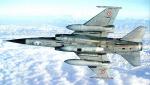
The F1C featured a high-mounted twin-spar swept wing with ailerons, full-span split leading-edge flaps, split double slotted trailing edge flaps, and twin perforated spoilers on the top of the wing forward of the trailing edge flaps. The leading-edge flaps could be used to improve combat agility, as well as to lower speed on take-offs and landings. The wings featured internal fuel tanks, helping to increase fuel capacity. The tail assembly was of conventional configuration, with all-moving tailplanes, plus twin fixed ventral fins under the tail. The ventral fins were not fitted to the ill-fated first prototype or, initially, to the first preproduction machine.
There were twin perforated, hydraulically-actuated airbrakes under the engine intakes. There was a brake parachute in a bullet fairing at the base of the tailfin. The nose landing gear assembly retracted backwards while the main gear assemblies retracted forward, rotating to tuck neatly into the fuselage, and all had dual wheels, giving the F1C good rough-field capability.
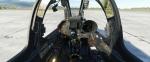
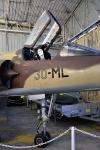
The pilot sat under a clamshell canopy that hinged up towards the rear, on a French-built Martin-Baker Mark 4 ejection seat, which could operate at ground level but required a minimum aircraft speed of 167 km/h (90 kn) for a safe ejection. The ejection seat fired through the canopy. The Mark 4s would later be upgraded to Mark 6 standard by installation of a rocket boost system to provide true «zero-zero» (zero altitude, zero speed) capability, or were replaced by the zero-zero Mark 10 ejection seat. Forward view from the cockpit was adequate, but the rear view left much to be desired.
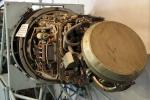
Cockpit avionics were primitive by modern standards. Basic kit included a TACAN beacon-navigation system, a radar altimeter, a simple datalink for ground-controlled interceptions, an instrument landing system, a VHF-UHF radio, and identification friend or foe (IFF) transponder. A Thomson-CSF Cyrano IV multimode monopulse was fitted, the Cyrano IV being an improved version of the Cyrano II used in the Mirage III, with about twice the range. The Cyrano IV-0 variant initially fitted to the F1C was solely an air combat radar, with a single-target engagement capability, but it was successively upgraded to other improved variants.
No built-in countermeasures systems were included at the outset, but a Phimat chaff-flare dispenser could be carried under one wing, with an active jammer pod carried under the other wing. The Phimat chaff-flare pod could be, and apparently often was, replaced by a Lacroix flare dispenser fitted into the brake parachute fairing, replacing the parachute. Improved chaff-flare dispensers were introduced, most significantly the Matra Corail dispenser, in the form of a gondola that could be fitted conformally under the wing next to the fuselage.
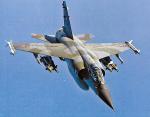
Built-in armament consisted of twin DEFA 30mm revolver-type cannon, firing out the belly just aft of the engine intakes, loaded with a maximum of 135 rounds per gun. There was a centerline stores pylon rated at 2,100 kg (4,630 lb), and a pylon under each wing rated at 1,300 kg (2,865 lb) each, with all three of these pylons being «wet» to permit carriage of external tanks. A short «dry» pylon rated at 550 kg (1,215 lb) could be fitted under each outer wing, with these pylons often carrying countermeasures pods, and there were launch rails rated at 150 kg (330 lb) for Matra 550 Magic heat-seeking air-to-air missiles (AAMs) on the wingtips, giving a total of seven stores attachments. Multiple ejector racks could be fitted to the centerline and main wing pylons to increase the number of munitions carried.
Maximum external load was 4,000 kg (8,800 lb). Typical stores included 1,200-liter (317 US gallon) wing / centerline external fuel tanks, or a 2,200-liter (580 US gallon) centerline tank; two Matra 550 Magic AAMs, with one on each wingtip rail; two long-range AAMs (originally Matra 530, but then the Matra Super 530); an array of unguided ground-attack munitions (SNEB 68mm rocket pods, various «iron» bombs, parachute-retarded Belouga cluster bombs, Durandal runway breaker bombs, etc); smart weapons, such as the AS-37 ARMAT anti-radar missile or laser guided bombs (LGBs) or the AS-30L laser-guided missile; reconnaissance pods and a centerline tow target pod.
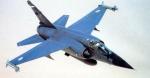
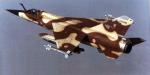
The F1C was designed to be easy to maintain and quick to turn around between sorties. Initially, flight availability rates were unimpressive, but the bugs were worked out in a few years, and the type acquired a good reputation for reliability. In AA service, the F1C was generally painted in an air superiority color scheme, with dark blue-gray on top and light gray on the bottom. During Africa deployments, the dark blue-gray was traded for a sand / chocolate disruptive pattern on top, retaining the light gray on the bottom.
The Mirage F1 could literally fly rings around the Mirage III, with better maneuverability, 30% shorter take-off run, and 25% slower approach speed. The F1 had 43% more internal fuel capacity and 2.5 tonnes (5,510 lb) greater maximum take-off weight.
The Mirage F1CR was generally along the lines of a late configuration F1C-200, with refueling probe, BF RWR, and Martin Baker Mark 10 zero-zero ejection seats fitted from the outset. It featured a hatch with a port under the nose for a panoramic or vertical film camera, and an SAT SCM2400 Super Cyclope infrared linescan (IRLS) imager, fitted into the bottom of the right engine nacelle; one of the DEFA cannon had to be removed to accommodate it. From 1984, all AA F1CR squadrons were equipped with the transportable SARA (Systeme Aerotransportable de Reconnaissance Aerienne) ground analysis station, consisting of eight shelters.
The Mirage F1CR often carried a Thomson-CSF RAPHAEL-TH (RAdar de Photographie Aerienne ELectrique a Transmission Hertzienne) side-looking airborne radar (SLAR) pod on the centerline pylon. The F1CR was originally fitted with Cyrano IVM radar, which was then upgraded to the Cyrano IVMR variant and a SAGEM ULISS 47 inertial navigation system (INS). The improved attack and navigation systems gave the F1CR a fairly potent secondary ground attack capability, which the AA would make good use of.
F1CRs were originally flown with a dark green / dark gray disruptive camouflage pattern on top and light gray on the bottom, though for Africa deployments they were repainted with the desert camouflage colors applied to the F1C.
The Mirage F1B conversion trainer had tandem seats, each under its on rear-hinging clamshell canopy; the fuselage was stretched 30 cm (1 ft) to accommodate the second cockpit. Fuselage fuel tankage was reduced as well, and cannon armament was deleted, though Dassault CC-420 cannon pods, with a DEFA 30mm cannon and 180 rounds, could in principle be carried on underwing pylons; it was fitted with Cyrano IV radar and the type was regarded as combat-capable. The aircrew sat on Martin-Baker Mark 10 zero-zero ejection seats.
The Mirage F1B did not have midair refueling capability, but it could be fitted with a dummy probe for tanker training. F1Bs seem to have always been painted in the dark blue / light gray air superiority scheme.
Since Dassault had done such a good export business with the Mirage III/5 series, of course export variants of the Mirage F1 were offered as well. Sales were respectable, but not on the scale enjoyed by the Mirage III/5 series. The Mirage F1 was a good aircraft at an attractive price, but it was followed a bit too quickly by the Dassault Mirage 2000, which was clearly superior in most respects, and so became preferred by customers. Export Mirage F1s included variations on the standard Mirage F1C interceptor and F1B two-seater, as well as the Mirage F1A day attack fighter and the Mirage F1E multirole aircraft.
The F1A was intended for sunny tropical climates where weather was rarely any obstacle to flying combat missions. It featured a slender nose and a lightweight Dassault Electronique Aida II radar, a retractable inflight refueling probe and a clear-weather «Système d’Attaque au Sol (Ground Attack System)» integrating a Thomson-CSF TMV-630 laser rangefinder in a neat fairing under the nose with inertial navigation avionics, digital processors, plus cockpit head-up-display (HUD) and head-down moving map display.
Since the F1 had originally been designed as a multirole fighter, there wasn’t much difference between the F1C and the F1E series, except for the enhanced Cyrano IVMR radar fitted to the F1CR reconnaissance variant. In fact, some export users obtained F1Es that were designated F1Cs, and to be even more confusing, some export machines with an F1A designation were F1Es as well. A few users also obtained F1D two-seaters that were much like the F1B, but fitted with Cyrano IVMR radar.
Ecuador procured 16 F1JA multirole plus 3 F1JE two-seaters. The Ecuadorian F1JAs were actually a variant of the F1E, not the F1A; initial deliveries were in 1978, with final deliveries in 1980. Ecuadorian F1s were painted in a dark brown / dark green disruptive camouflage scheme, with gray bellies. The F1JAs were upgraded with Israeli assistance in the late 1980s and early 1990s, and carried Israeli attack stores. They were withdrawn in 2011.
Greece bought 40 F1CG. The Greek Mirage F1CGs were delivered in 1975-1978. They were obtained on an urgent basis because of high tensions with Turkey, some Mirage F1Cs intended for the AA being diverted to Greece instead. The Greeks did not obtain any two-seaters. The last Greek F1s were withdrawn in 2003.
Iraq had 93 F1EQ multirole and 15 F1BQ two-seaters (total 108). These aircraft were delivered from 1980 into 1988, for use by the Iraqis in the Iran-Iraq war. More were on order but were not delivered because the Iraqis didn’t have the money at the time, with these undelivered machines embargoed in the aftermath of the 1990:1991 Gulf War.
The F1EQs were delivered in five blocks and were not all to a common specification. The first two blocks, 32 aircraft, did not have inflight refueling probes, while the rest, 61 aircraft, did. The last 38 machines were configured to carry the French Aerospatiale AM39 Exocet antiship missile.
All Iraqi Mirage F1s, including the two-seaters, had the tailfin fillet for an HF antenna, and were generally painted in sand-chocolate disruptive camouflage on top, with light gray on the bottom. The Exocet-compatible F1EQs were exceptions, however, featuring a neat maritime color scheme of slate blue on top and light gray on bottom.
The Iraqi Mirage F1s generally carried French stores, such as the Matra Magic and Super 530; 68-millimeter and 100-millimeter rocket pods; Exocet and ARMAT missiles; and the AS-30L missile, along with the ATLIS targeting pod. The F1EQ force ended up in the hands of the Iranians in 1991.
Jordan procured 17 F1CJ, 17 F1EJ multirole and 2 F1BJ two-seaters. All were funded by Saudi Arabia, with initial deliveries in 1981 and final deliveries in 1983. The F1CJs were painted in a two-tone air superiority gray scheme, while the F1EJs were painted in a three-tone disruptive desert camouflage pattern. Along with the Matra Magic and Super 530 AAMs, Jordan also obtained the AS-30L laser-guided missile. They were retired in 2010.
Kuwait obtained 27 F1CK multirole plus 6 F1BK two-seaters. The Kuwaiti Mirage F1s were provided in two batches, one with initial deliveries in 1977 following a border clash with Iraq in 1973, and the second with initial deliveries in 1983. The machines in the first batch were painted in a desert camouflage scheme, with a sand / light brown disruptive camouflage pattern on top and light gray underneath, while the second batch were in tidy overall gray air-superiority colors. The Kuwaiti F1CKs were basically F1Es, not F1Cs. The Kuwaiti F1s were withdrawn from service after the Gulf War, to be replaced by the McDonnell Douglas F/A-18 Hornet.
Libya had 16 F1AD day fighters, 16 F1ED multirole and 6 F1DD two-seaters. Libya was one of the only two nations, along with South Africa, to obtain the F1A day fighter. All Libyan F1s were delivered in 1978-1979, and they were painted in tan / green disruptive camouflage on top and light gray on the belly. They were all grounded in 2011 from lack of maintenance after the Libyan revolution, but they have more recently begun to be returned to service.
Morocco bought 30 F1CH and 20 F1EH multirole. Deliveries were from 1977 into 1980, with the aircraft featuring desert camouflage of green and sand in a disruptive pattern on top, with light gray on the bottom. Morocco did not obtain any two-seaters. Moroccan F1s were generally armed with French munitions and missiles, but they did have unique stores, including a locally developed centerline reconnaissance pod, and a grenade launcher pod with 152 rounds, carried in an external tank. They were fitted in service with AN/ALE-40 chaff-flare dispensers. They’ve been upgraded to keep them in service.
Qatar obtained 13 F1EDA multirole and 2 F1DDA two-seaters. These machines were delivered in the 1980s and featured a desert camouflage scheme of dark sand and dark green on top in a disruptive pattern, with light blue on the bottom. They were armed with French stores, including the COR reconnaissance pods. Most were resold to Spain in the mid-1990s.
South Africa procured 32 F1AZ day fighter plus 16 F1CZ. Along with Libya, South Africa was the only nation to obtain the F1A multirole day fighter variant. All 48 South African Mirage F1s were delivered in 1974-1976 and featured olive drab / tan disruptive camouflage on top, with light gray on the bottom. No two-seaters were obtained.
Stores included French Magic AAMs and, probably, Israeli or South African ground-attack munitions. South African F1s definitely carried the locally-built Armscor Kukri V3 AAM, very similar to the Matra Magic, and the improved Armscor Darter AAM. Locally-developed chaff-flare dispensers and jammer pods were also carried. They were withdrawn in 1997.
Spain obtained 45 F1CE, 22 F1EE multirole and 6 F1BE two-seaters. Deliveries of the Spanish Mirage F1s were from 1975 into 1983, with the machines obtained in three separate batches. In Spanish service, the F1CAs were designated C-14A, the F1EEs C-14B, and the F1BEs CE-14.
The F1CEs were originally delivered with sand / brown / green disruptive camouflage topside and light gray underneath, while the F1EEs (and, it appears, the F1BEs) were delivered with medium blue on top and light gray on the bottom. Later the Spanish F1 fleet standardized on wraparound light gray, with a fake cockpit painted on the bottom.
All had the BF RWR. The F1EEs featured a nav-attack suite and refueling probes. The Spanish F1s carried Matra Super 530s and Sidewinders, and they also carried the CC-420 30mm cannon pod, LGBs, and the Syrel ELINT pod. They were given upgrades in service, such as improved defensive countermeasures.
The Spaniards liked their F1s a good deal, and as mentioned above in the mid-1990s obtained ten more single-seaters and two two-seaters from Qatar (F1EDAs and F1DDAs respectively). They also obtained five hand-me-down F1Cs from the AA.
The last Mirage F1s were rolled out in 1990. Many Mirage F1s have received upgrades since then to keep them in service. In 1991, a program was initiated to convert 55 AA Mirage F1C-200 machines into modernized Mirage F1CT strike fighters, intended as an interim strike fighter until the delayed Dassault Rafale fighter enters full service. Initial redeliveries were in 1992.
The most noticeable external change of the F1CT fit was of the Thomson-TRT TMV630A laser rangefinder in a small fairing under the nose. The SHERLOC digital RWR was also fitted, and Matra Corail chaff-flare dispensers were attached under the wing roots. Some F1CTs were also fitted with an oblique film camera. Internally, the airframe was refurbished and strengthened, and avionics were updated with a new digital processor, a SAGEM ULISS 47 INS, and a secure radio. The left cannon had to be removed to accommodate the new avionics. The F1CTs were repainted in an overall dark green / dark gray disruptive camouflage scheme.
AA Mirage F1CRs were similarly given updates in the early 1990s to keep them in service, being fitted with a forward-looking infrared (FLIR) imager in a pod mounted under the left engine nacelle, displacing the remaining DEFA cannon and displaying imagery on a new HUD. Matra Corail chaff-flare dispensers were fitted, and the Thomson-CSF ASTAC (Analyseur de Signal TACtiques) electronic intelligence (ELINT) pod was qualified for centerline carriage. Upgraded RAPHAEL-HT pods were introduced as well.
The numbers of AA F1s began declining since the late 1980s, but thanks to upgrades it lingered well into the next century, the type finally being fully withdrawn in 2014. In 2017, 63 were sold to the US ATAC firm, a subsidiary of Textron Corporation that flies warbirds under military contract for use in aggressor training. A good number of these machines were for use as spares hulks; those put to training service were given modernized avionics.
A total of 53 Spanish F1s, 49 single-seaters and 4 two-seaters, were updated by Thomson Detexis to modernized Mirage F1M standard, with redeliveries from 1997 to 2001. The upgrade featured enhancements to the Cyrano IVM radar, a new HUD and a flat-panel display for the radar, a GPS-INS navigation system, cockpit lighting compatible with night vision goggles, «hands on throttle and stick (HOTAS)» controls, Have Quick II secure radios, a MILSTD-1553B databus, and improved defensive countermeasures.
The upgrades kept the Mirage F1 flying for Spain for a decade more, but that was the end of the matter. The last Mirage F1 in Spanish service were retired in 2013. In 2017, 22 Spanish Mirage F1s, 20 single-seat F1Ms and 2 twin-seat F-1BMs were sold to Draken International, another US company that flies warbirds under contract to the military. Four AA two-seaters were sold to Paramount Aerospace Systems of South Africa, to be resold to Draken, while Draken also obtained at least five Jordanian Mirage F1s. Draken updated the F1s not being looted for spares to more modern avionics.
Sagem and Thales implemented a Mirage F1 upgrade program for Morocco as a step towards a global upgrade offering, as well as resale of Mirage F1s retired from the AA. The Moroccan upgrade program involved 27 machines and featured engine refurbishment & upgrade.
Although sales of the Mirage F1 were modest compared to other Mirage fighter subfamilies, the type seemed to have an inclination to get into scraps, seeing combat with many of the air arms that adopted it. That wasn’t an accident by any means: a good proportion of the customers who bought the F1 were engaged in or about to be engaged in conflicts, and some deliveries were expedited so that the aircraft could be rushed into frontline service as fast as possible. In such cases, the customers were often under international arms embargoes, but the French were not choosy about who bought their weapons, as long as the buyer’s credit was good, and were perfectly willing to sell to apartheid South Africa and Saddam Hussein’s Iraq.
The first combat deployment of the AA’s Mirage F1s was in 1983 under Operation Manta, with four SEPECAT Jaguars and four Mirage F1C-200s sent to Chad, which was then fighting a Libyan-backed insurgency. The Jaguars were used for attack while the F1C-200s were used for air cover. One Jaguar was shot down and an F1C-200 damaged in early January 1984. The deployment ended in September 1984, but the AA would be back.
Jaguars and Mirage F1s were redeployed to Africa in 1986, with the number of F1s involved varying over the next few years but reaching a peak of 12 F1C-200s and two F1CRs. The AA took a more aggressive attitude towards the Libyans on this second deployment, launching two strikes on a Libyan-built airfield at Wadi Doum in northern Chad in February 1984. As before, Jaguars were the strike element and the F1C-200s provided air cover, while F1CRs provided pre-strike and post-strike reconnaissance.
Libyan Air Force Mirage F1s flew missions over northern Chad, but there were never any confrontations between Libyan and AA F1s. The US was having intermittent confrontations with the Libyans during the 1980s, and apparently Libyan Mirage F1s crossed paths with US Navy Grumman F-14 Tomcats on occasions, but they never shot it out.
In the meantime, Iraqi Mirage F1EQs were keeping very busy fighting the Iranians during the Iran-Iraq War of the 1980s, with the F1EQs claiming destruction of at least 35 Iranian aircraft, mostly McDonnell F-4 Phantoms and Northrop F-5E Tiger IIs, but also one Grumman F-14 Tomcat, shot down on 22 November 1982. Seven F1EQs were lost in combat, and a number were flown back to France in Iraqi Ilyushin Il-76 transports for repair of extensive battle damage.
In addition, Iraqi F1EQs performed ground attacks on Iranian forces, and launched large numbers of Exocet missiles at tankers steaming in the Persian Gulf. The Exocet proved somewhat disappointing; it was accurate, but lacked the hitting power needed to sink a large tanker, and the maritime «kills» were of small vessels. It could still do quite a bit of damage: on 17 May 1987, in a case of mistaken identity, Iraqi Mirage F1EQs hit the US Navy frigate Stark with two Exocets, killing 37 American sailors. The Iraqis quickly apologized for the action.
The Gulf War was the high point of the Mirage F1’s combat career, with the type operated by both sides in the conflict. A number of Kuwait’s Mirage F1CKs were destroyed in the initial invasion, but 15 escaped. None were lost in the fighting.
The Iraqi Mirage F1EQs saw a good deal of combat. Three F1EQs were shot down by US Air Force (USAF) F-15 Eagles firing AIM-7 Sparrow AAMs on 17 January 1991, with one more lost in an accident while mixing it up with a USAF F-111 Aardvark strike aircraft on the same day. The Mirage F1EQ was the first Iraqi aircraft to be lost in air combat in the war.
Two more F1EQs were shot down by USAF F-15s on 19 January, with another two lost to a single Saudi F-15 on 24 January; there were USAF aircraft that could have been vectored against the two F1EQs, but the decision was made that it would be good for Saudi morale if a Saudi pilot did the job. One final kill on an F1EQ was scored by a USAF F-15 on 27 January. That left the final score of F1EQ versus F-15s as 0:8, not counting the F1EQ lost in an accident. The contest was clearly unequal, but Iraqi handling of air combat in the conflict was unbelievably timid, and the F1EQs might have done a bit better for themselves with more inspired leadership and piloting.
At the end of the month, in a move that still remains baffling, most of the Iraqi Air Force, including 24 Mirage F1s, fled to Iran, Iraq’s bitter enemy. The Mirage F1s languished in Iranian service — but a refurbishment and upgrade program named Project Habibi was begun in 2007 or so, with a number of these machines having been redelivered.
As far as the AA went, the Mirage F1 was not on the leading edge of the action in the Gulf War. Eight F1C-200s were sent to the United Arab Emirates for enhanced air defense, the duty being performed by three different AA squadrons on a rotational basis. They complemented Qatari Mirage F1EDAs also flying in the air defense role.
AA F1CRs have been used for reconnaissance operations over Afghanistan, operating from Tajikistan, and both F1CRs and F1CTs performed service in the Wars of the Yugoslav Succession of the 1990s.
FUENTES Y REFERENCIA – SOURCES & REFERENCE
airvectors.net
Ugolok Neba
aviadejavu.ru
©jmodels.net
 jmodels.net
Debe estar conectado para enviar un comentario.