

| DATOS TÉCNICOS (DHC-5D) |
TECHNICAL DATA (DHC-5D) |
| TIPO: Avión de transporte. | TYPE: Utility aircraft. |
| TRIPULANTES: 3 | CREW: 3 |
| ENVERGADURA: 29,26 m. | SPAN: 96.0 ft. |
| LONGITUD: 24,08 m. | LENGTH: 79.0 ft. |
| ALTURA: 8,74 m. | HEIGHT: 28.8 ft. |
| SUPERFICIE ALAR: 87,8 m². | WING AREA: 945 ft². |
| PESO EN VACÍO: 11.412 kg. | EMPTY WEIGHT: 25,160 lb. |
| MOTOR: Dos turbohélices General Electric CT64-820-4 de 3.133 sph (2.336 kW) cada uno con hélices tripalas Hamilton Standard 63E60-25 reversibles. | ENGINE: Two General Electric CT64-820-4 turboprop engines developing 3,133 shp (2,336 kW) each driving 3-bladed Hamilton Standard 63E60-25 fully-feathering reversible-pitch propellers. |
| VELOCIDAD MÁX.: 420 km/h a 3.000 m. | MAX. SPEED: 261 mph at 10,000 ft. |
| TECHO: 9.400 m. | CEILING: 31,000 ft. |
| ALCANCE: 1.100 km (600 mil. náut.) a 3.048 m con carga máxima. | RANGE: 690 ml (600 nmi) at 10,000 ft with maximum payload. |
| PRIMER VUELO: 22 de septiembre de 1961. | FIRST FLIGHT: 22 September 1961. |
| VERSIONES: 14 | VERSIONS: 14 |
| CONSTRUIDOS: 122 (Todos los modelos) | BUILT: 122 (All variants) |
El Buffalo surgió de un requerimiento del Ejército de los Estados Unidos en 1962 para un transporte STOL capaz de llevar la misma carga útil que el helicóptero Chinook CH-47A. De Havilland Canada basó su diseño para cumplir con el requerimiento en un derivado alargado y propulsado por turbohélice del DHC-4 Caribou; de hecho, originalmente se lo conocía como Caribou II, y se empleó como prototipo un Caribou equipado con turbohélices, realizando su vuelo inicial el 22 de septiembre de 1961. El desarrollo fue financiado mediante una colaboración del Ejército de los Estados Unidos y el gobierno canadiense, con la contribución de DHC también.
El Ejército de los Estados Unidos encargó cuatro aparatos de evaluación. El primero despegó el 9 de abril de 1964. Aunque el Ejército inicialmente quería darle al Buffalo la designación de YAC-2, cuando el servicio tuvo en sus manos los aparatos, ya estaba vigente el nuevo sistema de designaciones de 1962, por lo que se los denominó CV-7A.
El Buffalo se parecía en general al Caribou, excepto en los motores turbohélice, una cola en T, las alas de nuevo diseño con una envergadura ligeramente mayor y un fuselaje alargado en un 10% aproximadamente. El DHC-5 estaba propulsado por turbohélices General Electric (GE) T64-GE-10 que proporcionaban 2135 ekW (2850 ehp). La carga útil alternativa era de 41 soldados, 35 paracaidistas, 24 literas y seis heridos o asistentes sentados, o bien 4.820 kg de carga.
El ejército de los EE. UU. evaluó el Buffalo en Vietnam, pero no hubo más pedidos estadounidenses. Los Buffalo fueron transferidos a la Fuerza Aérea en 1967 junto con los Caribou, que los designó Caribou C-8A. Se utilizaron principalmente en pruebas y ensayos para otras agencias del gobierno de los EE. UU. Aparentemente, la presión política para «comprar productos estadounidenses» y el desinterés de la USAF en el modelo tuvieron su influencia en el hecho de que no se realizaran nuevas adquisiciones tras la compra de evaluación inicial.
La RCAF compró 15 DHC-5A, a los que se les dio la designación de servicio CC-115. Tenían turbohélices CT64-810-1 de 2.280 ekW (3.055 ehp) y una carga útil aumentada a 6.280 kg. Al menos una parte de la flota canadiense fue modificada en una configuración de carga/búsqueda y rescate (SAR). Estos aviones SAR solo se diferenciaban visiblemente por tener ventanas de observación abultadas en las puertas traseras de la tripulación.
Uno de los Buffalo canadienses, que operaba con los colores de la ONU, fue derribado por un misil tierra-aire sirio sobre el Líbano en 1974, matando a los nueve ocupantes que iban a bordo. Los CC-115 continuaron en servicio entrado el siglo XXI, aunque en 2016 se seleccionó el Airbus C295W como sustituto.
Se construyeron 24 DHC-5 más para Brasil, que estuvieron en servicio hasta su retiro en 2008, y luego 16 para Perú, cuya producción se detuvo en 1972. Sin embargo, todavía había demanda del Buffalo, por lo que DHC reinició la producción en 1974, lanzando el DHC-5D, con turbohélices CT64-820-4 que proporcionaban 2.335 ekW (3.130 ehp) y una capacidad de carga aumentada a 8.165 kg. El DHC-4B y el DHC-4C eran variantes con diferentes opciones de motor (motores T64-P4C y Rolls-Royce Dart RDa.12) que nunca se construyeron.
El último de los 126 Buffalo fue entregado en 1986. Además de Canadá, Brasil y Perú, otros usuarios de las nuevas máquinas de producción fueron Egipto, Kenia, Ecuador, México, Tanzania y Zambia, entre otros.
Hubo algunos usuarios civiles. Al igual que con el Caribou, hubo algunos negocios con el Buffalo en el mercado de segunda mano; por ejemplo, los Emiratos Árabes Unidos entregaron su flota a Indonesia en 1995. En general, las ventas del Buffalo no estuvieron a la altura del éxito del Caribou. DHC voló un demostrador del DHC-4E que era similar al DH4-4D, pero tenía un interior de «cambio rápido» que le permitía convertirse rápidamente de un carguero a un avión de pasajeros o a una configuración VIP, o configuraciones «combinadas» de pasajeros y carga. No hubo compradores.
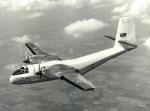

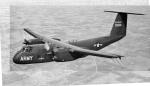


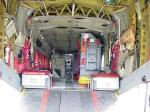


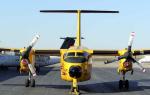
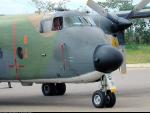
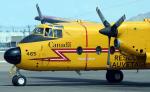
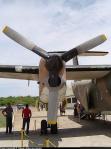


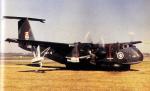

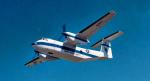

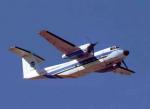

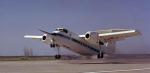


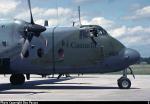


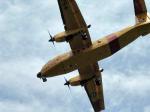
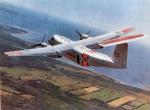


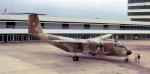
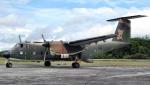
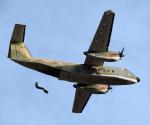

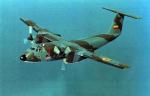

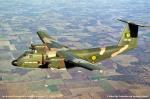
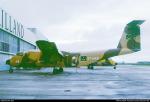

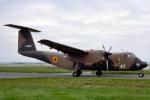
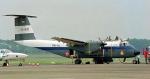
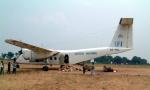
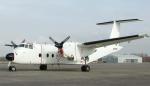

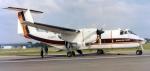

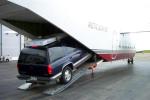
The Buffalo arose from a 1962 United States Army requirement for a STOL transport capable of carrying the same payload as the CH-47A Chinook helicopter. De Havilland Canada based its design to meet the requirement on a stretched and turboprop-powered derivative of the DHC-4 Caribou, in fact, it was originally known as the Caribou II, with the original Caribou prototype fitted with turboprops as a prototype, performing its initial flight on 22 September 1961. Development was funded by a collaboration of the US Army and the Canadian government, with DHC also contributing funding.
Four evaluation machines were ordered by the US Army, with the first taking to the air on 9 April 1964. Although the Army initially wanted to give the Buffalo the designation of YAC-2, by the time the service got its hands on the machines, the 1962 redesignation effort had taken place, and so they were known by the designation of CV-7A.
The Buffalo looked generally like the Caribou, except for the turboprop powerplants; a tee tail; a reprofiled wing with slightly greater span; and a fuselage stretch of about 10%. The DHC-5 was powered by General Electric (GE) T64-GE-10 turboprops providing 2,135 ekW (2,850 ehp). Payload was 41 troops; 35 paratroops; 24 litters and six seated casualties or attendants; or 4,820 kg (10,630 lb) of cargo.
The US Army evaluated the Buffalo in Vietnam, but there were no further US orders. The Buffalos were passed on to the Air Force in 1967 along with the Caribous, with the Air Force designating the Caribous C-8A. They were used mostly in test and trials by other US government agencies. Apparently political pressure to «buy American», and USAF disinterest in the type, played roles in not following up the initial evaluation buy.
The RCAF obtained 15 DHC-5A machines, which were given the service designation of CC-115; they featured CT64-810-1 turboprops with 2,280 ekW (3,055 ehp) and payload increased to 6,280 kg (13,845 lb). At least part of the Canadian fleet was modified to a cargo / search and rescue (SAR) configuration, the SAR machines only being visibly different in having bulged observation windows on the rear crew doors.
One of the Canadian Buffalos, operating in UN colors, was shot down by a Syrian surface-to-air missile over Lebanon in 1974, killing all nine on board. Thw CC-115s have been still in service in the 21st century, though in 2016 the Airbus C295W was selected as a replacement.
24 more DHC-5s were built for Brazil, serving until retirement in 2008, and then 16 for Peru, with production halted in 1972. However, there was still demand for the Buffalo, and so DHC restarted production in 1974, rolling out the DHC-5D, with CT64-820-4 turboprops providing 2,335 ekW (3,130 ehp) and cargo load raised to 8,165 kg (18,000 lb). The DHC-4B and DHC-4C, incidentally, were variants with different powerplant options (T64-P4C and Rolls-Royce Dart RDa.12 engines) that were never built.
The last of 126 Buffalos was delivered in 1986. Along with Canada, Brazil, and Peru, other users of new production machines included Egypt, Kenya, Ecuador, Mexico, Tanzania and Zambia, among others.
There were a few civil users. As with the Caribou, there were some used-market dealings with the Buffalo, for example Abu Dhabi handed on their fleet to Indonesia in 1995. Overall, sales of the Buffalo were not up to the success of the Caribou. DHC flew a demonstrator of a DHC-4E that was similar to the DH4-4D, but had a «quick-change» interior to allow it to be swiftly converted from a cargolifter to an airliner or VIP configuration, or «combi» passenger-freight configurations. There were no buyers.
FUENTES Y REFERENCIA – SOURCES & REFERENCE
airvectors.net
Ugolok Neba
dhc4and5.org
©jmodels.net
 jmodels.net
Debe estar conectado para enviar un comentario.