

| DATOS TÉCNICOS (Do 17 Z-2) |
TECHNICAL DATA (Do 17 Z-2) |
| TIPO:Bombardero y avión de reconocimiento. | TYPE:Bomber and reconnaissance aircraft. |
| TRIPULANTES:4 | CREW:4 |
| ENVERGADURA:18 m. | SPAN:59.1 ft. |
| LONGITUD:15,8 m. | LENGTH:51.10 ft. |
| ALTURA:4,56 m. | HEIGHT:15.0 ft. |
| SUPERFICIE ALAR:55 m². | WING AREA:590 ft². |
| PESO EN VACÍO:5.210 kg. | EMPTY WEIGHT:11,486 lb. |
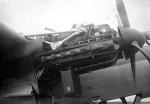
| MOTOR:Dos motores radiales de 9 cilindros Bramo 323P de 986 hp. (736 kW) al despegue con hélices tripalas de paso variable. | ENGINE:Two Bramo 323P 9-cylinder air-cooled radial engines providing 986 hp. (736 kW) for take-off, driving 3-bladed variable-pitch propellers. |
ARMAMENTO:
|
ARMAMENT:
|
| VELOCIDAD MÁX.:410 km/h. a 5.000 m. | MAX. SPEED:255 mph. at 16,404 ft. |
| TECHO:8.200 m. | CEILING:26,900 ft. |
| ALCANCE:660 km. con 1.540 litros de combustible y 1.000 kg. de bombas. | RANGE:410 ml. with 339 imp. gal. of fuel and 2,205 lb. of bombs. |
| PRIMER VUELO:23 de noviembre de 1934. | FIRST FLIGHT:23 November 1934. |
| VERSIONES:23 (Do 17), 10 (Do 215). | VERSIONS:23 (Do 17) , 10 (Do 215). |
| CONSTRUIDOS:2.139 (Do 17), 105 (Do 215). | BUILT:2,139 (Do 17), 105 (Do 215). |
El Dornier Do 17 fue diseñado como un avión puramente comercial, principalmente un avión correo de alta velocidad pero capaz de transportar seis pasajeros. De esta forma, el Dornier Do 17 V1 voló por primera vez a finales de 1934 y fue cedido a Lufthansa para su evaluación junto con el segundo y tercer prototipo en 1935. La aerolínea encontró el alojamiento para los pasajeros (una cabina individual de dos asientos detrás de la cubierta de vuelo y un cabina igualmente estrecha por detrás del ala) completamente impracticable, por tanto los prototipos fueron devueltos a Dornier. El modelo fue salvado de lo que parecía un olvido seguro gracias a un piloto de Lufthansa, un ex piloto de pruebas de Dornier que actuaba como enlace entre la aerolínea y el Ministerio del Aire, que probó el avión y sugirió que tenía potencial como bombardero, aunque en su opinión carecía de volumen en el fuselaje. Se encargó un cuarto prototipo con un compartimento para bombas en la parte inferior del fuselaje y nuevos timones y aletas gemelas en la cola. Le siguieron cinco prototipos similares, a tres de los cuales se les instaló un morro y una parte inferior acristalados, mientras que los tres últimos tenían un puesto artillado detrás de la cabina de vuelo con una única ametralladora MG 15 de 7,9 mm. manejada por el operador de radio. Los aviones séptimo y noveno también tenían el morro acortado, pero con más acristalamiento, tal y como aparecieron en las versiones de producción.
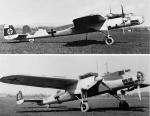
El modelo de producción inicial fue el Do 17E-1, que se produjo junto con el casi idéntico Do 17F-1, que era un aparato especializado en el reconocimiento de largo alcance. Ambos aviones tenían afustes para llevar para una MG 15 que disparaba hacia abajo en una escotilla situada justo delante de la bodega de bombas. El E-1 podía transportar hasta 850 kg. de bombas, aunque la carga más habitual era de 500 kg., mientras que el F-1 llevaba un par de cámaras. Para que el avión fuera apto para la fabricación con licencia y la producción estuviese distribuida, el Do 17 se diseñó en componentes modulares, lo que tenía el beneficio adicional de permitir que los elementos principales se pudieran reemplazar en las propias unidades.
La Luftwaffe rápidamente formó cuatro nuevos Kampfgeschwader con el nuevo avión y un Aufklärungsgruppe con los Do 17F-1. Los Do 17F-1 fueron enviados a España con la Legión Cóndor en la primavera de 1937, 15 aviones del Aufkl.Gr. (F)/122 se sumaron al 1.A/88. Demostraron ser capaces de evadir a los cazas enemigos, al igual que los 20 Do 17E-1 que se integraron en el 2.K/88 en España.
El Do 17M y el Do 17P se desarrollaron en paralelo como reemplazos de los anteriores Do 17E-1 y Do 17 F-1. Los motores BMW V1 7,2 de 12 cilindros y 562kW. (750 CV.) debían haber sido sustituidos por los mismos Daimler-Benz DB 600A de 746 kW. (1.000 CV.) que propulsaban al Do 17 V8. Este avión participó en la Competición Internacional de Aviones Militares de 1937 en Zúrich, superando a todos los cazas presentes. Desafortunadamente, la producción del DB 600A era lenta y los motores se reservaron para la producción de cazas, por lo que el bombardero Do 17M llevó los motores radiales Bramo 323A-1 Fafnir de 675 kW. (900 hp.) de nueve cilindros refrigerados por aire, mientras que el Do 17P llevaba dos BMW 132N de 648 kW. (865 CV.), que le daba a este modelo de reconocimiento el alcance necesario. El armamento se incrementó con la adición de una MG 15 proel que el piloto podía apuntar con una mira de anillo, o ser empleada por el navegante/apuntador de bombas. A los Do 17M y Do 17P que todavía estaban en servicio en 1940 a menudo se les agregaba un par adicional de ametralladoras MG 15. Ambas versiones tenían un compartimento para bombas que se extendía hacia popa y albergaba hasta 1.000 kg. de ellas. La provisión de una balsa de salvamento auxiliar dio origen a la variante Do 17M/U1, mientras que la incorporación de filtros tropicales originaron los modelos Do 17M-1/Trop y Do 17P-1/Trop.
Los Dornier Do17M se exportaron a Yugoslavia como bombarderos (Do 17Kb-1) y aviones de reconocimiento (Do 17Ka-2 y Ka-3). Todos estaban propulsados por radiales Gnome-Rhône 14 Na/2 y tenían ametralladoras FN-Browning (algunos también llevaban cañones Hispano-Suiza 404 de 20 mm) como armamento defensivo. También tenían el morro largo y acristalado original de los prototipos del Do 17. Se suministraron veinte aviones construidos en Alemania y la producción con licencia comenzó en la Fábrica Estatal de Aviones en 1939. Cuando las fuerzas alemanas invadieron el país en 1941, Yugoslavia tenía 70 Do 17K, 26 de los cuales fueron destruidos en el ataque inicial. Algunos aviones supervivientes huyeron a Egipto (dos de ellos entraron brevemente en servicio en la RAF) y otros fueron cedidos por Alemania a su nuevo aliado, la fuerza aérea croata, junto con algunos Do 17E-1 excedentes. La designación Do 17L se asignó a un modelo equivalente al Do 17M del que tan sólo se fabrico el prototipo.
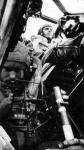
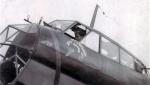
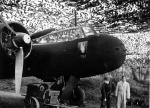
La Guerra Civil Española demostró que el Do 17 era vulnerable desde abajo y que la cabina resultaba demasiado estrecha. El Do 17S (un avión de reconocimiento de alta velocidad que no pasó de la etapa de prototipo) y el Do 17U (una versión de reconocimiento de la que se completaron tres prototipos denominados Do 17U-0 más 12 Do 17U-1 de producción) introdujeron un fuselaje delantero modificado que aumentó la altura de la cabina, permitió llevar una tripulación de cinco hombres (dos operadores de radio en el Do 17U) y una nueva ametralladora en la zona inferior en un montaje giratorio que disparaba desde el escalón donde se unía la nueva cabina más profunda al fuselaje original. El Do 17S y el Do 17U estaban propulsados por el motor DB 600, pero el bombardero Do 17Z-1, que compartía el mismo fuselaje delantero, mantuvo los radiales Bramo 323A-1 Fafnir. Poco potente cuando iba a plena carga de bombas, el avión se perfeccionó hasta convertirlo en el Do 17Z-2 mediante la introducción de motores Bramo 323 de 746 kW. (1.000hp.) con sobrealimentadores de dos velocidades. Otros modelos fabricados fueron el Do 17Z-3, un bombardero de reconocimiento de doble función con capacidad para una cámara en la escotilla de entrada, el Do 17Z-4, una versión de entrenamiento con controles dobles y el Do 17Z-5, una versión de reconocimiento marítimo de largo alcance que llevaba bolsas de flotación y equipo de supervivencia extra.
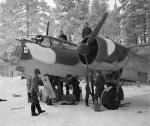
Unos 212 de los 370 bombarderos Do 17 en servicio al estallar la guerra entre Gran Bretaña y Alemania eran Do 17Z-1 y Z-2, el resto eran Do 17M-1 y un puñado de Do 17E-1. Estos aviones equiparon nueve Kampfgruppen con cuatro Kampfgeschwader. También había 217 Do 17 sirviendo en 23 Staffeln en la función de reconocimiento de largo alcance. Un puñado de Do 17M sirvieron con otras varias unidades, tres de ellos en el Stab de cada Stukagruppe, por ejemplo. El Do 17 participó en la invasión de Polonia y Francia (pero no de Noruega) y jugó un papel importante en la Batalla de Inglaterra, donde demostró ser capaz de dejar atrás a la mayoría de cazas en un picado poco profundo. No obstante, las pérdidas fueron cuantiosas y el armamento defensivo resultaba inadecuado. Los Do 17 realizaron espectaculares incursiones masivas a baja cota, pero varias unidades comenzaron a equiparse con el muy superior Ju 88 incluso antes de que terminara la lucha sobre Inglaterra y, cuando Hitler lanzó la Operación Barbarroja, sólo el KG 2 permanecía completamente dotado con el Do 17. Tres Gruppen volaron inicialmente el Do 17 en el frente oriental, el último fue el III/KG 3, que cedió sus aviones a la unidad croata IV/KG 3 (una unidad del tamaño de un Staffeln), que continuó operando el avión hasta que fue transferido a misiones antipartisanas en Croacia en noviembre de 1942. Otro «operador extranjero» fue Finlandia, que recibió 15 Do 17Z-2 a principios de 1942, utilizando el avión para reemplazar a los Blenheim y manteniéndolo operativo hasta mediados de 1944.
La producción del Do 17Z, que carecía de la velocidad del Ju 88 o de la carga de bombas del He 111, finalmente terminó en 1940, después de que se entregaran 522 Do 17Z. Sin embargo, el fin de la producción no significó el fin del Do 17. El único Do 17Z-6 Kauz era un avión de intrusión nocturna especializado creado al combinar el morro artillado de un Ju 88C-2 con la estructura del Do 17Z-3. Esto le dio al avión un armamento proel compuesto por tres ametralladoras MG 15 y un cañón MG FF de 20 mm. El Do 17Z-10 Kauz II similar tenía un morro completamente nuevo y diseñado específicamente con cuatro MG 15 y un par de MG FF, así como un detector de infrarrojos Spanner Anlage. La tripulación del modelo Z-6 y Z-10 se redujo a tres hombres, siendo el ingeniero el encargado de los MG FF, mientras que el operador de radio disparaba las ametralladoras orientadas a popa. Los últimos nueve Do 17Z-3 en la línea de producción se completaron según los estándares del Do 17Z-10 y se asignaron al 4/NJG 1 en Deelen (Holanda). Esta unidad anotó su primer derribo con un Wellington que envió al Zuiderzee (Mar del Sur) el 18 de octubre de 1940. La unidad también tuvo cierto éxito al infiltrarse en los circuitos de los aeródromos de la RAF cuando los bombarderos regresaban a la base. El pequeño número de aviones producidos permaneció activo hasta principios de 1942.
La designación Do 215 se aplicó al Do 17Z por orden del Reichsluftfahrtministerium para cubrir una versión de exportación para Yugoslavia. Se demostraron prototipos con motores Gnome-Rhône (Do 215 V2) y DB 601A (Do 215 V3). La versión propulsada por el motor DB 601 atrajo un pedido de la fuerza aérea sueca con la denominación de Do 215A-1. Embargados antes de la entrega, los 18 aviones fueron modificados en la línea de producción para la función de reconocimiento de largo alcance y fueron entregados a la Luftwaffe como Do 215B-0 y Do 215B-1. Se ordenó a Dornier que continuara la producción del avión para la Luftwaffe y se fabricaron una sucesión de modelos derivados. El Do 215B-2, que no se llegó a producir, era un bombardero, mientras que la designación Do 215B-3 cubría dos aparatos suministrados a Rusia. El Do 215B-4 tenía un equipo de cámara diferente y se convirtió a la configuración de intrusión nocturna con la denominación de Do 215B-5. A diferencia del Kauz II original, el Do 215B-5 fue adaptado para llevar el radar FuG 202 Lichtenstein BC AI, allanando el camino para la instalación del radar en los cazas nocturnos Bf 110 y Ju 88. El Do 215 había desaparecido del servicio en primera línea a mediados de 1942, aunque cuatro fueron transferidos a Hungría, donde sirvieron hasta finales de año.
Los últimos Do 17 de la Luftwaffe sirvieron como remolcadores de planeadores DFS 230 hasta los últimos días de la guerra, a pesar de su constante sustitución por He 111 más potentes que remolcaban planeadores Gotha Go 242 más grandes. Participaron en una de las últimas operaciones del Schleppgruppen, el reabastecimiento de Budapest a principios de 1945. A principios de 1943, estos remolcadores tuvieron su mejor etapa cuando operaron con los DFS 230 del I/Luftlandegeschwader 1 para reabastecer y eventualmente evacuar a las fuerzas alemanas en la cabeza de puente de Kuban. Sin embargo, al final de la guerra, su número habían disminuido hasta el punto de que los Aliados solo pudieron evaluar un único Do 17 capturado.
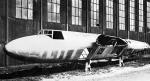


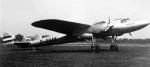
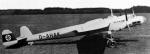



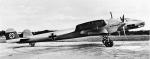






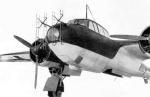
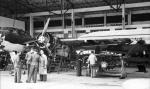

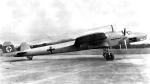


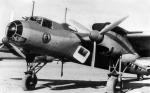


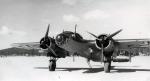


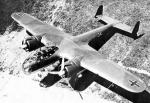
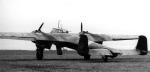
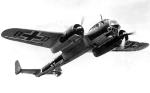
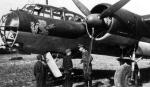


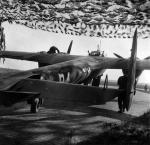
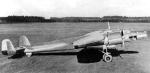




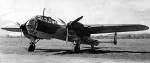
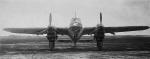
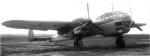

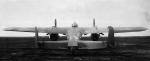
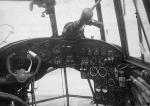
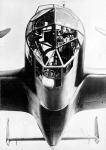
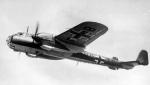


The Dornier Do 17 was designed as a purely commercial aircraft, primarily a high-speed mailplane but capable of carrying six passengers. In this guise, the Dornier Do 17 V1 first flew in late 1934, being passed to Lufthansa for evaluation with the second and third prototypes in 1935. The airline found the passenger accommodation (a single two-seat cabin behind the flight deck, and an equally cramped cabin behind aft of the wing) completely impractical, and the prototypes were returned to Dornier. The type was saved from what seemed certain oblivion by a Lufthansa pilot, a former Dornier test pilot acting as a liaison between airline and air ministry, who flew the aircraft and suggested it had potential as a bomber, although he felt it lacked keel area. A fourth prototype was commissioned with a bomb bay in the lower fuselage and with new twin endplate fins and rudders. This was followed by five similar prototypes, three of which introduced a glazed tip and bottom to the standard long nose and the last three of which had an aft-facing gun position, with a single 7.9mm. (0.31in.) MG 15 fired by the radio-operator, behind the flight deck. The seventh and ninth aircraft also had shortened, but more extensively glazed nose, which was adopted on production versions.
The initial production model was the Do 17E-1, which was produced alongside the almost identical Do 17F-1, which was a dedicated long-range reconnaissance aircraft. Both aircraft had provision for a downward-firing MG 15 in a hatch just ahead the bomb bay. In the E-1 this could accommodate up to 850 kg. (1,650 lb.) of bombs, although 500 kg. (1,100 lb.) was a more usual load, while in the F-1 it carried a pair of cameras. To make tha aircraft suitable for licensed manufacture and dispersed production, the Do 17 was designed in modular components, which had the added benefit of allowing major items to be replaced at unit level.
The Luftwaffe rapidly formed four new Kampfgeschwader with the new type, and Do 17F-1s equipped an Aufklärungsgruppe. Do 17F-1s were sent to Spain with the Legión Cóndor in the spring of 1937, 15 aircraft from Aufkl.Gr. (F)/122 joining 1.A/88. They proved able to evade enemy fighters, as did the 20 Do 17E-1s which joined them in Spain with 2.K/88.
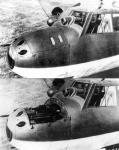
The Do 17M and Do 17P were developed in parallel as replacements for the earlier Do 17E-1 and Do 17 F-1. The 562kW. (750hp.) BMW V1 7,2 12-cylinder engines were to have been replaced by the same 746kW. (1,000hp.) Daimler-Benz DB 600As that powered the Do 17 V8 which participated in the 1937 International Military Aircraft Competition at Zürich, outrunning all the fighters present. Unfortunately, production of the DB 600A were slow and engines were reserved for fighter production, so the Do 17M bomber emerged with 675kW. (900hp.) Bramo 323A-1 Fafnir nine-cylinder air-cooled radials, while the Do 17P had the 648kW. (865hp.) BMW 132N, which gave the reconnaissance aircraft the required range. Armament was increased by the addition of a forward-firing MG 15, which could be clamped fore-and-aft and aimed by the pilot using a ring-and-bead sight, or used as a free gun by the navigator/bomb-aimer. Do 17Ms and Do 17Ps still in service in 1940 often had an extra pair of MG 15s added. Both version had a bomb bay that was extended aft and housed up to 1,000 kg. (2,205 lb.) of bombs. The provision of a dinghy resulted in a change of designation to Do 17M/U1, while tropical filters resulted in the Do 17M-1/Trop and Do 17P-1/Trop.
Dornier Do17M were exported to Yugoslavia as Do 17Kb-1 bombers and Do 17Ka-2 and Ka-3 reconnaissance aircraft. All were powered by Gnome-Rhône 14 Na/2 radials and all had FN-Browning machine-guns (and some also had 20mm. Hispano-Suiza 404 cannon) as defensive armament. They also had the original long glazed nose of the Do 17 prototypes. Twenty German-built aircraft were supplied, and license-production began at the State Aircraft Factory in 1939. When German forces invaded in 1941, Yugoslavia had 70 Do 17Ks on strength, 26 being destroyed in the initial assault. Some survivors fled to Egypt (two briefly entering RAF service) and others were passed to Germany new-formed ally, the Croatian air force, along with some surplus Do 17E-1s. The Do 17L designation was allocated to a pathfinder equivalent to the Do 17M, which only reached prototype status.
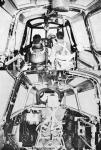
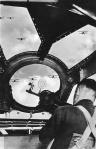
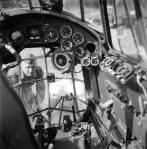
The Spanish Civil War showed that the Do 17 was vulnerable from below, and the cockpit had proved too cramped. The Do 17S (a high-speed reconnaissance aircraft that did not go beyond the prototype stage) and the Do 17U (a pathfinder version of which three prototypes Do 17U-0s and 12 production Do 17U-1s were completed) introduced a redesigned forward fuselage which increased the height of the cockpit, allowed the carriage of a five-man crew (two radio operators in the Do 17U) and a new lower-hemisphere machine-gun in a flexible mounting firing back from the step where the new deep cockpit met the original shallow fuselage. The Do 17S and Do 17U were powered by the DB 600, but the Do 17Z-1 bomber, which shared the same forward fuselage, retained Bramo 323A-1 Fafnir radials. Underpowered with its full bomb load, the aircraft was refined into the Do 17Z-2 by the introduction of 746kW. (1,000hp.) Bramo 323 engine with two-speed superchargers. The Do 17Z-3 was a dual-role reconnaissance bomber, with provision for a camera in the entry hatch, while the Do 17Z-4 was a dual control trainer version, and the Do 17Z-5 a long-range over-water reconnaissance aircraft with flotation bags and extra survival equipment.
Some 212 of the 370 Do 17 bombers on stength on the outbreak of war between Britain and Germany were Do 17Z-1s and Z-2s, the rest being Do 17M-1s and a handful of Do 17E-1s. These aircraft equipped nine Kampfgruppen with four Kampfgeschwader. There were also 217 Do 17s serving with 23 Staffeln in the long-range reconnaissance role. A handful of Do 17Ms served with a variety of other units, three being on charge with the Stab of each Stukagruppe, for example. The Do 17 participated in the invasion of Poland and France (but not of Norway), and played a major part in the Battle of Britain, where it proved able to outrun most fighters in a shallow dive. Nonetheless, losses were heavy and defensive armament proved inadequate. The Do 17s made a number of spectacular low-level terrain-following mass raids, but several units began converting to the much superior Ju 88 even before the battle was over and, by the time Hitler launched Operation Barbarossa, only KG 2 remained fully equipped with the Do 17. Three Gruppen initially flew the Do 17 on the Eastern Front, the last being III/KG 3 which handed its aircraft on to the Croatian IV/KG 3 (a Staffeln-strength unit), which continued to operate the type until transferred to anti-Partisan duties in Croatia in November 1942. Another ‘foreign operator’ was Finland, which received 15 Do 17Z-2s in early 1942, using the aircraft to replace Blenheims and keeping them operational until mid-1944.
Production of the Do 17Z, which lacked the speed of the Ju 88 or the bomb load of the He 111, had finally been terminated in 1940, after 522 Do 17Zs had been delivered. The end of production did not spell the end of the Do 17, however. The single Do 17Z-6 Kauz was a dedicated night intruder created by grafting the cannon-nose of a Ju 88C-2 to the airframe of a Do 17Z-3. This gave the aircraft a forward-firing armament of three MG 15 machine-guns and a 20mm. MG FF cannon. The similar Do 17Z-10 Kauz II had an entirely new, purpose-designed nose with four MG 15s and a pair of MG FFs, as well as a Spanner Anlage IR detector. The crew of the Z-6 and Z-10 was reduced to three, with the engineer loading the MG FFs and the radio-operator firing the aft-facing machine-guns. The last nine Do 17Z-3s on the production line were completed to Do 17Z-10 standards and were allocated to 4/NJG 1 at Deelen (Holland), which scored its first kill by dispatching a Wellington into the Zuyder Zee on 18 October 1940. The unit had also some success in infiltrating RAF airfield circuits as bombers returned to base. The small number of aircraft produced remained active until early 1942.
The Do 215 designation was applied to the Do 17Z on the orders of the Reichsluftfahrtministerium to cover a proposed export version for Yugoslavia. Prototypes were demonstrated with Gnome-Rhône (Do 215 V2) and DB 601A (Do 215 V3) engines, the DB 601-powered version attracting a Swedish air force order as the Do 215A-1. Embargoed before delivery, the 18 aircraft were modified on the production line for the long-range reconnaissance role and were delivered to the Luftwaffe as Do 215B-0s and Do 215B-1s. Dornier was ordered to continue production of the aircraft for the Luftwaffe, and produced a succession of sub-variants. The unbuilt Do 215B-2 was a bomber, while the Do 215B-3 designation covered two aircraft supplied to Russia. The Do 215B-4 had different camera equipment and was converted to night-intruder configuration as the Do 215B-5. Unlike the original Kauz II, the Do 215B-5 was adapted to carry the FuG 202 Lichtenstein BC AI radar, paving the way for the fitting of radar to the Bf 110 and Ju 88 night-fighters. The Do 215 had disappeared from front-line service by the middle of 1942, although four were transferred to Hungary, serving on until the end of the year.
The last Luftwaffe Do 17s served as glider tugs for the DFS 230 until the last days of the war, despite steady replacement by more powerful He 111s towing larger Gotha Go 242 gliders. They participated in one of the Schleppgruppen’s final operations, the resupply of Budapest in early 1945. In early 1943, the Do 17 glider tugs had enjoyed their finest hour towing DFS 230 gliders of I/Luftlandegeschwader 1 (I Gruppe of Air-Landing Group 1) to resupply and eventually evacuate German forces in the Kuban bridgehead. By the end of the war, however, numbers had dwindled to the extent that only one captured Do 17 was taken on charge by the Allies for evaluation.
FUENTES Y REFERENCIA – SOURCES & REFERENCE
David Donald, Warplanes of the Luftwaffe. Combat Aircraft of Hitler’s Luftwaffe 1939-1945, Barnes & Noble Books, 1994.
©jmodels.net
 jmodels.net
Debe estar conectado para enviar un comentario.