

| DATOS TÉCNICOS (Do J Wal motores RR Eagle) |
TECHNICAL DATA (Do J Wal RR Eagle engines) |
| TIPO:Hidrocanoa. | TYPE:Flying boat. |
| TRIPULANTES:3 (+8-10 pasajeros). | CREW:3 (+8-10 passegers). |
| ENVERGADURA:22 m. | SPAN:72.2 ft. |
| LONGITUD:17,25 m. | LENGTH:56.7 ft. |
| ALTURA:5,62 m. | HEIGHT:18.5 ft. |
| SUPERFICIE ALAR:96 m². | WING AREA:1,030 ft². |
| PESO EN VACÍO:3.630 kg. | EMPTY WEIGHT:8,0003 lb. |
| MOTOR:Dos motores en línea Rolls-Royce Eagle IX V-12 de 355 hp. (265 kW) cada uno. | ENGINE:Two Rolls-Royce Eagle IX V-12 water-cooled piston engines developing 355 hp. (265 kW) each. |
ARMAMENTO: (Do 16 Luftwaffe)
|
ARMAMENT:(Do 16 Luftwaffe)
|
| VELOCIDAD MÁX.:185 km/h. | MAX. SPEED:115 mph. |
| TECHO:3.500 m. | CEILING:11,500 ft. |
| ALCANCE:800 km. (430 mil. náut.) | RANGE:500 ml. (430nml.) |
| PRIMER VUELO:6 de noviembre de 1922. | FIRST FLIGHT:6 November 1922. |
| VERSIONES:27 | VERSIONS:27 |
| CONSTRUIDOS:Más de 250. | BUILT:More than 250. |
El Dornier Do J Wal («Ballena«) fue un hidroavión alemán bimotor de la década de 1920 diseñado por Dornier Flugzeugwerke. El Do J fue denominado Do 16 por el Ministerio del Aire del Reich (RLM) con su sistema de designación de aviones de 1933.
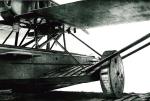
El Do J tenía un ala de parasol reforzada con puntales de montaje alto y dos motores de pistón instalados en tándem en una góndola central sobre el ala. Un motor impulsaba una hélice tractora y el otro impulsaba una hélice de empuje. El casco empleaba flotadores patentados de Claudius Dornier en los costados del casco, ya usados por primera vez en el anterior hidroavión Zeppelin-Lindau Rs.IV diseñado por Dornier a fines de la Primera Guerra Mundial. El Do J realizó su vuelo inaugural el 6 de noviembre de 1922. El vuelo, así como la mayor parte de la producción hasta 1932, se realizó lugar en Italia debido a las restricciones a la aviación en Alemania después de la Primera Guerra Mundial según los términos del Tratado de Versalles. Dornier comenzó a producir el Wal en Alemania en 1931. La producción continuó hasta 1936.
En la versión militar (Militärwal), una tripulación de dos a cuatro personas viajaba en una cabina abierta cerca de la proa del casco. Había un puesto de ametralladora en la proa frente a la cabina y una o dos en medio del casco. Comenzando por España, se entregaron versiones militares a Argentina, Chile y Holanda para uso en sus colonias. También se enviaron ejemplares a Yugoslavia, la Unión Soviética y al final de la producción a Italia y Alemania. Los principales usuarios militares, España y Holanda, fabricaron sus propias versiones bajo licencia. Varios países, en particular Italia, Noruega, Portugal, Uruguay y Alemania, emplearon el Wal en versiones militares.
La versión civil (Kabinenwal o Verkehrswal) tenía una cabina en la proa, que ofrecía espacio para 12 pasajeros, mientras que la cabina abierta se movió más hacia la popa. Los principales usuarios de esta versión fueron Alemania, Italia, Brasil y Colombia.
El Do J estaba propulsado inicialmente por dos motores Rolls-Royce Eagle IX de 265 kW (355 hp). Las versiones posteriores utilizaron casi todos los motores disponibles en el mercado de fabricantes como Hispano-Suiza, Napier & Son, Lorraine-Dietrich, BMW e incluso el motor Liberty V-12 fabricado en EE.UU. El Wal utilizado por Deutsche Lufthansa para su servicio de correo a través del Atlántico Sur desde 1934 hasta 1938 tenía un alcance de 3.600 km. y un techo de 3.500 m.
CMASA y Piaggio en Italia, CASA en España, Kawasaki en Japón, Aviolanda en los Países Bajos y Dornier en Alemania construyeron más de 250 Wal.
Numerosas aerolíneas operaron el Wal en servicios regulares de pasajeros y correo con gran éxito, como SANA y Aero Espresso de Italia, Aero Lloyd y Deutsche Luft Hansa de Alemania, SCADTA de Colombia, Syndicato Condor de Brasil o Nihon Koku Yuso Kaisha de Japón.
El explorador polar noruego Roald Amundsen acompañado por Lincoln Ellsworth, el piloto Hjalmar Riiser-Larsen y otros tres miembros del equipo utilizaron dos hidroaviones Dornier en su fallido intento de llegar al Polo Norte en 1925. Sus dos aviones, el N-24 y el N-25, amerizaron a 87° 44′ norte. Fue la latitud más septentrional alcanzada por un avión hasta ese momento.
En 1926 el Capitán Ramón Franco se convirtió en héroe nacional español al pilotar el Plus Ultra en un vuelo transatlántico, siguiendo el recorrido que hicieron los aviadores portugueses Sacadura Cabral y Gago Coutinho en el primer vuelo que cruzó el Atlántico Sur en 1922. Su copiloto era Julio Ruiz de Alda Miqueleiz. Los otros tripulantes eran el Teniente de Navio Juan Manuel Durán y el mecánico Pablo Rada. El Plus Ultra partió de Palos de la Frontera, (Huelva, España), el 22 de enero y llegó a Buenos Aires (Argentina) el 26 de enero. Hizo escala en Gran Canaria, Cabo Verde, Pernambuco, Río de Janeiro y Montevideo. Los 10.270 km. del viaje se completaron en 59 horas y 39 minutos. El evento apareció en la mayoría de los principales periódicos del mundo.
En 1929 Franco intentó otro vuelo transatlántico, esta vez estrellando el avión en el mar cerca de las Azores. La tripulación fue rescatada días después por el portaaviones HMS Eagle de la Royal Navy británica.
El mayor aviador militar portugués Sarmento de Beires y su tripulación (el Capitán Jorge de Castilho como navegante y el Teniente Manuel Gouveia como ingeniero de vuelo) realizaron la primera travesía aérea nocturna del Océano Atlántico en un Dornier J bautizado Argos. La travesía se realizó la noche del 16 al 17 de marzo de 1927 desde el archipiélago de Bijagós en la Guinea portuguesa hasta la isla Fernando de Noronha en Brasil.
El 18 de agosto de 1930, Wolfgang von Gronau inició un vuelo transatlántico en el mismo Dornier Wal (D-1422) en el que Amundsen había volado, estableciendo la ruta aérea del norte sobre el Atlántico, volando desde Sylt (Alemania) a Nueva York (7.520 km.) en 47 horas de vuelo. En 1932, von Gronau voló un Dornier Wal (D-2053) llamado «Grönland Wal» (Ballena de Groenlandia) en un vuelo alrededor del mundo.
Dos Dornier Wal (D-ALOX Passat y D-AKER Boreas) también jugaron un papel importante en la Tercera Expedición Antártica Alemana de 1939.
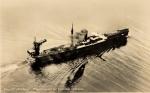
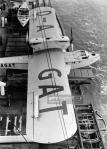
Las versiones más grandes y últimas del Wal, las variantes de ocho y diez toneladas (ambas versiones también conocidas como Katapultwal), fueron operadas por Lufthansa en su servicio de correo aéreo del Atlántico Sur desde Stuttgart (Alemania) a Natal (Brasil). En vuelos de prueba de ruta en 1933, y un servicio programado que comenzó en febrero de 1934, los Wal realizaban la etapa transoceánica de la ruta, entre Bathurst (Gambia) en África occidental y Fernando de Noronha, un grupo de islas frente a América del Sur. Al principio, había una parada de reabastecimiento de combustible en medio del océano. El hidroavión aterrizaba en mar abierto, cerca de un barco mercante reconvertido. Este buque estaba equipado con una «vela remolcada» sobre la que se embarcaba la aeronave. Desde allí era subido a bordo por una grúa, repostado y luego lanzado por catapulta de nuevo al aire. Sin embargo, amerizar en las grandes olas oceánicas tendía a dañar el casco de los hidroaviones, especialmente el Wal más pequeño de 8 toneladas. A partir de septiembre de 1934 estuvo disponible un segundo buque mercante, por lo que Lufthansa disponía ahora de un buque de apoyo en cada extremo de la etapa transoceánica, proporcionando señales de radionavegación y lanzamientos de catapultas. Cuando no tenían que despegar del agua por sus propios medios, los hidroaviones podían llevar más combustible. Una vez que el correo entrante de Europa llegaba a África Occidental (también por Wal desde las Islas Canarias), el barco de apoyo se hacía a la mar en dirección a América del Sur durante 36 horas antes de usar su catapulta para lanzar el avión. En el viaje de regreso, un Wal volaba la etapa de Natal a Fernando de Noronha, y luego era llevado al mar durante la noche. Luego, el mismo avión era catapultado para volar a África Occidental a la mañana siguiente, es decir, después de doce horas de viaje en el barco. A partir de abril de 1935, los barcos ya no llevaban los hidroaviones al mar. El Wal se lanzaba mar adentro y realizaba toda la distancia a través del océano. Esto redujo el tiempo que tardaba el correo en llegar de Alemania a Brasil de cuatro a tres días.
El primer barco empleado para el reabastecimiento de combustible en el Atlántico fue el SS Westfalen, un transatlántico de carga y pasajeros que quedó obsoleto para transportar correo y pasajeros poco después de la Primera Guerra Mundial debido a su pequeño tamaño y baja velocidad de crucero. El segundo buque fue el MS Schwabenland. En 1936 entró en servicio un nuevo barco de apoyo, el MS Ostmark, que Lufthansa había construido especialmente como barco auxiliar para hidroaviones.
Los Wal realizaron más de 300 cruces del Atlántico Sur en el servicio de correo regular. El Wal de 8 toneladas no fue un éxito en esta tarea, ya que solo se construyeron dos. Los seis Wal de 10 toneladas sobrevolaron el Atlántico Sur desde 1934 hasta finales de 1938, aunque aviones de diseño más moderno comenzaron a reemplazarlos a partir de 1937.
El Do J construido por CASA tuvo un papel activo durante la Guerra Civil Española, la mayoría de los Wal fueron utilizados por los nacionalistas desde bases en Mallorca y el norte de África para hostigar a la Armada Republicana. Diez aviones formaron el Grupo 1G70. En noviembre de 1937 fueron modificados con motores con Isotta-Fraschini Asso de 500 hp., reemplazando a los motores Napier menos potentes. Fueron provistos de soportes para transportar cargas de profundidad para misiones antisubmarinas. En marzo de 1940 había 14 Wal en el inventario de la Armada Española que formaban dos escuadrillas. La Escuadrilla nº 51 tenía su base en Puerto de la Luz (Islas Canarias) y la nº 52 en Melilla (Norte de África). Ambas se disolvieron en 1946 y 1950 respectivamente.
El Do 16 de la Luftwaffe surgió del Militärwal de 8 toneladas. Tenía una envergadura de 23,2 m. con puntas ligeramente redondeadas y motores BMW VIE 7.3. El armamento de la aeronave, que recibió la designación inicial de DoJ II d, constaba de tres ametralladoras MG15 de 7,9 mm., una de las cuales estaba instalada sobre el compartimiento del morro y las otras dos, cada una en su propia torreta, en la sección de cola. Las torretas traseras se colocaron asimétricamente, lo que permitía enfocar el fuego de ambos cañones en un solo objetivo. Dado que el objetivo principal del Do 16 era el reconocimiento de largo alcance, su carga de bombas no excedía los 200 kg. La tripulación estaba formada por cuatro personas (dos pilotos, navegante y operador de radio). El primer vuelo del Do 16 tuvo lugar el 3 de mayo de 1933.
Desde finales de 1933, el nuevo hidroavión comenzó a llegar (por entonces sin armas) al centro de pruebas de Travemünde. A fines de 1934, el número de Do 16 alcanzó las 16 unidades y, en febrero del año siguiente, G. Göring anunció oficialmente el restablecimiento de la aviación militar en Alemania. En septiembre, la Luftwaffe formó un escuadrón de reconocimiento de largo alcance integrado por estas hidrocanoas. En julio de 1936, esta unidad pasó a llamarse 2/Ku.Fl.Gr.106, es decir, la 2ª Escuadrilla del 106º Grupo Costero. En total, la Luftwaffe recibió treinta Do 16, después de lo cual se detuvo la producción de aviones Dornier Wal en Manzel.
Los Do 16 permanecieron en servicio con la escuadrilla hasta 1938, cuando comenzaron a ser reemplazados por Do 18 más modernos, pero algunos aviones aún llegaron a ver el estallido de la Segunda Guerra Mundial. Como avión de entrenamiento y auxiliar, el Do 16 permaneció en la Luftwaffe hasta finales de 1940.
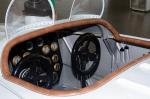

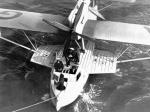

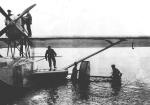


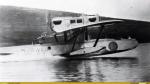

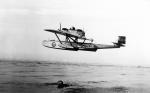


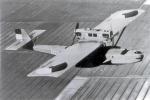
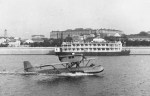
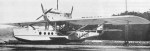


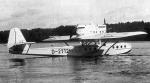
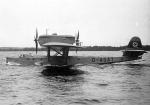





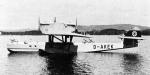

The Dornier Do J Wal («Whale«) was a twin-engine German flying boat of the 1920s designed by Dornier Flugzeugwerke. The Do J was designated the Do 16 by the Reich Air Ministry (RLM) under its aircraft designation system of 1933.
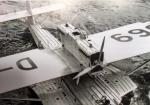
The Do J had a high-mounted strut-braced parasol wing with two piston engines mounted in tandem in a central nacelle above the wing; one engine drove a tractor and the other drove a pusher propeller. The hull made use of Claudius Dornier’s patented sponsons on the hull’s sides, first pioneered with the earlier, Dornier-designed Zeppelin-Lindau Rs.IV flying boat late in World War I. The Do J made its maiden flight on 6 November 1922. The flight, as well as most production until 1932, took place in Italy because of the restrictions on aviation in Germany after World War I under the terms of the Treaty of Versailles. Dornier began to produce the Wal in Germany in 1931. Production went on until 1936.
In the military version (Militärwal), a crew of two to four rode in an open cockpit near the nose of the hull. There was one machine gun position in the bow in front of the cockpit and one or two amidships. Beginning with Spain, military versions were delivered to Argentina, Chile and the Netherlands for use in their colonies; examples were also sent to Yugoslavia, the Soviet Union and to the end of production Italy and Germany. The main military users, Spain and the Netherlands, manufactured their own versions under licence. Several countries, notably Italy, Norway, Portugal, Uruguay and Germany, employed the Wal for military tasks.
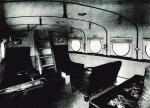
The civil version (Kabinenwal or Verkehrswal) had a cabin in the nose, offering space for up to 12 passengers, while the open cockpit was moved further aft. Main users of this version were Germany, Italy, Brazil and Colombia.
The Do J was first powered by two 265 kW (355 hp.) Rolls-Royce Eagle IX engines. Later versions used nearly every available engine on the market from makers like Hispano-Suiza, Napier & Son, Lorraine-Dietrich, BMW, and even the US-built Liberty V-12 engine. The Wal used by Deutsche Lufthansa for their mail service across the South Atlantic from 1934 to 1938 had a range of 3,600 km. (2,200 mi.), and a ceiling of 3,500 m. (11,480 ft.).
Over 250 Wals were built by CMASA and Piaggio in Italy, CASA in Spain, Kawasaki in Japan, Aviolanda in the Netherlands and Dornier in Germany.
Numerous airlines operated Wals on scheduled passenger and mail services with great success, such as SANA and Aero Espresso of Italy; Aero Lloyd and Deutsche Luft Hansa of Germany; SCADTA of Colombia; Syndicato Condor of Brazil or Nihon Koku Yuso Kaisha of Japan.
The Norwegian polar explorer Roald Amundsen accompanied by Lincoln Ellsworth, pilot Hjalmar Riiser-Larsen, and three other team members used two Dornier seaplanes in his unsuccessful attempt to reach the North Pole in 1925. His two aircraft, N-24 and N-25, landed at 87° 44′ north. It was the northernmost latitude reached by any aircraft up to that time.
In 1926 the Captain Ramón Franco became a national Spanish hero when he piloted the Plus Ultra on a trans-Atlantic flight, following the route made by the Portuguese aviators Sacadura Cabral and Gago Coutinho in the first flight across the South Atlantic in 1922. His co-pilot was Julio Ruiz de Alda Miqueleiz; the other crew members were Teniente de Navio (Navy Lieutenant) Juan Manuel Durán and the mechanic Pablo Rada. The Plus Ultra departed from Palos de la Frontera, (Huelva, Spain), on 22 January and arrived in Buenos Aires, Argentina, on 26 January. It stopped over at Gran Canaria, Cape Verde, Pernambuco, Rio de Janeiro and Montevideo. The 10,270 km. journey was completed in 59 hours and 39 minutes. The event appeared in most major newspapers worldwide.
In 1929 Franco attempted another trans-Atlantic flight, this time crashing the airplane in the sea near the Azores. The crew was rescued days later by the aircraft carrier HMS Eagle of the British Royal Navy.
The Portuguese military aviator major Sarmento de Beires and his crew (Captain Jorge de Castilho as navigator and Lieutenant Manuel Gouveia as flight engineer) made the first aerial crossing of the Atlantic Ocean by night in a Dornier J named Argos. The crossing was made on the night of the 16 to 17 March 1927, from the Bijagós Archipelago in Portuguese Guinea to Fernando de Noronha island in Brazil.
On 18 August 1930, Wolfgang von Gronau started on a transatlantic flight in the same Dornier Wal (D-1422) Amundsen had flown, establishing the northern air route over the Atlantic, flying from Sylt (Germany) to New York (4,670 mi., 7,520 km.) in 47 flight hours. In 1932 von Gronau flew a Dornier Wal (D-2053) called the «Grönland Wal» (Greenland Whale) on a round-the-world flight.
Two Dornier Wals (D-ALOX Passat and D-AKER Boreas) also played an important role in the Third German Antarctic Expedition of 1939.
The biggest and last versions of the Wal, the eight and ten tonne variants (both versions also known as Katapultwal), were operated by Lufthansa on their South Atlantic airmail service from Stuttgart, Germany to Natal, Brazil. On route proving flights in 1933, and a scheduled service beginning in February 1934, Wals flew the trans-ocean stage of the route, between Bathurst (Gambia) in West Africa and Fernando de Noronha, an island group off South America. At first, there was a refueling stop in mid-ocean. The flying boat would land on the open sea, near a converted merchant ship. This vessel was equipped with a «towed sail» onto which the aircraft taxied. From there it was winched aboard by a crane, refueled, and then launched by catapult back into the air. However, landing on the big ocean swells tended to damage the hull of the flying boats, especially the smaller 8-tonne Wal. From September 1934 a second merchantman was available, so that Lufthansa now had a support ship at each end of the trans-ocean stage, providing radio navigation signals and catapult launchings. When they did not have to take off from the water under their own power, the flying boats could carry more fuel. Once the incoming mail from Europe had arrived in West Africa (also by Wal from the Canary Islands), the support ship would steam out to sea in the direction of South America for 36 hours before using its catapult to launch the airplane. On the return trip a Wal would fly the stage from Natal to Fernando de Noronha, and then be carried out to sea overnight. The same airplane was then catapulted off to fly to West Africa the following morning, i.e., after twelve hours travel on the ship. From April 1935 the ships no longer carried the flying boats out to sea. The Wal was launched offshore, and flew the entire distance across the ocean. This cut the time it took for mail to get from Germany to Brazil from four days down to three.
The first ship converted to a mid-Atlantic refueling stop was the SS Westfalen, a freight and passenger liner that became out-dated for carrying mail and passengers shortly after World War I due to its small size and low cruising speed. The second vessel was the MS Schwabenland. In 1936 a new support ship went into service, the MS Ostmark, which Lufthansa had purpose-built as a seaplane tender.
Wals made over 300 crossings of the South Atlantic in regular mail service. The 8-tonne Wal was not a success, only two being built. The six 10-tonne Wals flew the South Atlantic from 1934 until late 1938, although aircraft of more recent design began replacing them from 1937.
The CASA-built Do J had an active role during the Spanish Civil War, most of the Wals being used by the Nationalists from bases in Majorca and North Africa to harass the Republican Navy. Ten aircraft formed Group 1G70. In November 1937 they were re-engined with 500hp. Isotta-Fraschini Asso powerplants replacing the less powerful Napier engines. They were provided with racks to carry depth charges for the antisubmarine role. In March 1940, there were 14 Wals in the Spanish Navy inventory which formed two squadrons. No. 51 Squadron was based in Puerto de la Luz (Canary Islands) and No. 52 in Melilla (North Africa). Both were disbanded in 1946 and 1950 respectively.
The German Luftwaffe Dornier Do 16 arose from the 8-tonne Militärwal. It had a wing span of 23.2 m. with slightly rounded tips and BMW VIE 7.3 engines. The armament of the aircraft, which received the early designation Do J II d, consisted of three 7.9 mm. MG15 machine guns, one of which was installed above the nose compartment, and the other two, each on its own turret, in the tail section. The rear turrets were placed asymmetrically, which made it possible to focus fire from both barrels on one side. Since the main purpose of the Do 16 was long-range reconnaissance, its bomb load did not exceed 200 kg. The crew consisted of four people (two pilots, navigator and radio operator). The first flight of the Do 16 took place on May 3, 1933.
From the end of 1933, the new seaplane began to arrive (so far without weapons) at the Travemünde test center. By the end of 1934, the number of Do 16s reached 16 units, and in February of the following year, G. Göring officially announced the re-establishment of military aviation in Germany. By September, the Luftwaffe formed a long-range reconnaissance squadron armed with Dornier flying boats. In July 1936, this squadron was renamed 2/Ku.Fl.Gr.106, i.e. the 2nd squadron of the 106th coastal group. In total, the Luftwaffe received thirty Do 16s, after which the production of Dornier Wal aircraft in Manzel was stopped.
Do 16s remained in service with the squadron until 1938, when they began to be replaced by more modern Do 18s, but some aircraft still saw the outbreak of World War II. As training and auxiliary aircraft, the Do 16 remained in the Luftwaffe until the end of 1940.
FUENTES Y REFERENCIA – SOURCES & REFERENCE
Wikipedia
Ugolok Neba
luftwaffe-zur-see.de
cmpr.it
©jmodels.net
 jmodels.net
Debe estar conectado para enviar un comentario.