

| DATOS TÉCNICOS (F-111F) |
TECHNICAL DATA (F-111F) |
| TIPO: Avión de ataque y guerra electrónica y bombardero estratégico. | TYPE: Attack, strategic and electronic warfare aircraft. |
| TRIPULANTES: 2 | CREW: 2 |
| ENVERGADURA: 19 m. | SPAN: 63 ft. |
| LONGITUD: 22,40 m. | LENGTH: 73.6 ft. |
| ALTURA: 5,22 m. | HEIGHT: 17.15 ft. |
| SUPERFICIE ALAR: 61,07 m². | WING AREA: 657.4 ft². |
| PESO EN VACÍO: 21,410 kg. | EMPTY WEIGHT: 47,200 lb. |
| MOTOR: Dos motores turbofán con posquemador de 17.900 lbf (80 kN) en seco cada uno. | ENGINE: Two Pratt & Whitney TF30-P-100 afterburning turbofan engines, 17,900 lbf (80 kN) thrust each dry. |
ARMAMENTO:
|
ARMAMENT:
|
| VELOCIDAD MÁX.: 2.656 km/h. | MAX. SPEED: 1,650 mph. |
| TECHO: 20.000 m. | CEILING: 66,000 ft. |
| ALCANCE: 5.940 km. (3.210 mil. náut.). | RANGE: 3,960 ml (3,210 nmi) |
| PRIMER VUELO: 21 de diciembre de 1962. | FIRST FLIGHT: 21 December 1964. |
| VERSIONES: 9 | VERSIONS: 9 |
| CONSTRUIDOS: 563 (Todos los modelos). | BUILT: 563 (All variants). |
En junio de 1960, la Fuerza Aérea de los EE.UU. (USAF) emitió el Requisito Operacional Específico (SOR) 183, definiendo un nuevo caza táctico para la función de ataque nuclear. SOR 183 especificaba un avión que podría operar desde aeródromos avanzados no preparados y tendría un alcance sin repostar de 6.100 km (3.100 millas náuticas). Debería poder alcanzar a Mach 1,2 de forma continua durante 740 km (400 mn).
Una de las principales características del avión especificado en SOR 183 fue que se concibió con geometría variable o alas oscilantes, en las que las alas giraban hacia afuera en una configuración recta para vuelos a baja velocidad y giraban hacia atrás en forma de delta para vuelos de alta velocidad. Este esquema había sido probado por los aviones experimentales Bell X-5 y Grumman XF10F-1 Jaguar en la década de 1950, y en ese momento era un concepto de vanguardia en el diseño de aviones.
Aproximadamente en paralelo con el requisito SOR 183 de la USAF, la Marina de los EE. UU. había estado tratando de obtener un interceptor con una gran carga de misiles aire-aire (AAM) de largo alcance para proteger a la flota de ataques aéreos. Douglas había estado trabajando en un diseño de un avión de este tipo, el Douglas F6D, pero resultó insatisfactorio y fue cancelado a finales de 1960. De acuerdo con su presión por lograr elementos comunes, el 14 de febrero de 1961 McNamara, el secretario de Defensa que había asumido el cargo en la nueva administración Kennedy, inició un estudio para determinar si un solo avión podría desempeñar ambas funciones, además de la función de Apoyo Aéreo Cercano (CAS).
El estudio demostró que no era práctico construir un solo avión que pudiera realizar las tres tareas, y en mayo de 1961 la especificación CAS se dividió en un programa separado, que se materializaría en el excelente Vought A-7 Corsair. II. Sin embargo, el estudio concluyó que era posible, al menos en principio, fusionar las funciones de ataque táctico e interceptor naval, por lo que, el 7 de junio de 1961, McNamara ordenó el desarrollo del Caza Táctico Experimental (TFX) para cumplir con esos requisitos. La USAF estaría a cargo del programa.
Aunque algunos de los esfuerzos de McNamara para promover elementos comunes funcionaron bien, siendo uno de los más significativos la adopción del McDonnell F-4 Phantom por la Armada y la USAF, otros fueron problemáticos desde el principio. No se trataba sólo de un caso de rivalidades entre armas, aunque eso podría influir. Se trataba de la simple evidencia que las dos ramas de las fuerzas armadas tenían diferentes necesidades y requisitos.
En septiembre de 1961 se emitió una solicitud de propuestas, y el avión entraría en funcionamiento en octubre de 1965. Nueve fabricantes presentaron diseños y los de Boeing y General Dynamics fueron seleccionados como finalistas. La Fuerza Aérea y la Armada preferían la propuesta de Boeing, pero el contrato se adjudicó a General Dynamics (GD) el 24 de noviembre de 1962. McNamara argumentó que el diseño de GD sería más rentable. El avión se denominó F-111, la variante de la Fuerza Aérea fue designada F-111A y la variante de la Armada F-111B.
Grumman iba a trabajar en subcontrato con GD para trabajar en la versión de la Armada, desarrollando el sistema de aviónica del F-111B y realizando la integración y prueba final del F-111B. Grumman también construiría algunos de los ensamblajes para el F-111A de la Fuerza Aérea. El F-111B iba a estar armado con el misil aire-aire (AAM) Hughes AIM-54 Phoenix de largo alcance, controlado por un potente sistema de radar de largo alcance AN/AWG-9.
El contrato inicial especificaba la entrega de 23 aparatos de desarrollo, incluidos 17 aviones de desarrollo F-111A de la USAF, un avión de desarrollo para el bombardero estratégico FB-111A, posteriormente fueron más aviones, y cinco aviones de desarrollo de interceptores de la Armada F-111B.
El vuelo inicial del primer F-111A de la USAF fue el 21 de diciembre de 1964, desde la planta de GD en Fort Worth, Texas. El vuelo inicial del Navy F-111B fue el 18 de mayo de 1965, desde las instalaciones de Grumman en Bethpage, Nueva York. El programa de desarrollo del F-111A resultó problemático, afectado por problemas de peso, fiabilidad, los motores gemelos Pratt & Whitney (P&W) TF30 y, lo más importante, las entradas del motor.
El programa de desarrollo del F-111B salió aún peor. La Armada nunca se entusiasmó mucho con el F-111B. Las primeras pruebas de vuelo de este modelo dieron lugar a un informe de la Marina en octubre de 1965 que concluía que el F-111B tenía un gran sobrepeso y era totalmente insatisfactorio. Se hicieron intentos para solucionar los problemas, lo que tuvo como efecto principalmente reducir la compatibilidad con el F-111A de aproximadamente el 80% a sólo el 30%.
El Congreso recortó los fondos para el F-111B en mayo de 1968, el trabajo se detuvo en julio y el programa fue formalmente cancelado en diciembre, después de la construcción de un total de siete F-111B, incluidos los cinco aviones de desarrollo y dos máquinas de producción. Luego, Grumman ofreció un nuevo diseño alternativo, con alas oscilantes, dos motores TF30, misiles Phoenix AAM y el radar AN/AWG-9, que eventualmente daría como resultado como el F-14 Tomcat. En cualquier caso, la Marina de los EE.UU. finalmente salió del programa del F-111. Se utilizaron varios fuselajes del F-111B en pruebas. Tres se perderían en accidentes y cuatro tripulantes morirían, antes de que la pequeña flota fuera retirada en 1971.
Mientras tanto, el desarrollo del F-111 de la Fuerza Aérea parecía ir de una dificultad a otra. Todo el esfuerzo fue uno de los programas de desarrollo de aeronaves más controvertidos de todos los tiempos. Sin embargo, la USAF persistió con el F-111A, realizándose las primeras entregas de aviones de producción en octubre de 1967. Fue el primer avión de ala oscilante que entró en servicio operativo completo en una fuerza aérea.
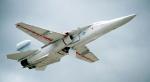
El F-111A era un avión grande, con alas oscilantes montadas sobre el fuselaje, un plano de cola convencional con planos de cola horizontales totalmente móviles, aletas ventrales gemelas y dos motores a reacción de derivación con postcombustión P&W TF30-P-3 con 82,3 kN (8.390 kgp) cada uno.
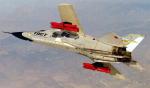
Las alas oscilantes podrían extenderse hasta un barrido mínimo de 16 grados y un barrido máximo de 72,5 grados, pero también podrían colocarse en posiciones intermedias. La posición del ala era controlada manualmente por el piloto utilizando un controlador en forma de empuñadura de pistola. Un sistema de control de vuelo automático compensaba los cambios en el ajuste de vuelo a medida que las alas cambiaban de posición. Las alas tenían flaps de borde de ataque de envergadura completa y flaps de doble ranura de envergadura completa, ambos en cuatro secciones. No había alerones, y el control de balanceo se realizaba mediante spoilers dobles en la parte superior de cada ala, delante de las dos secciones de flaps intermedias. Los spoilers también servían como elevadores para los aterrizajes. Las alas tenían bisagras dentro de extensiones de raíz fijas del borde de ataque, cuyo segmento superior exterior giraba hacia arriba a bajas velocidades como una paleta para controlar el flujo de aire a baja velocidad.
Los motores TF30-P-3 estaban montados uno al lado del otro en la parte trasera del fuselaje. El F-111 no tenía una unidad de potencia auxiliar (APU), por lo que el arranque se realizaba mediante un carro neumático terrestre o mediante cartuchos pirotécnicos. Los tanques de combustible estaban distribuidos por el fuselaje y las alas, proporcionando una carga total de combustible de más de 19.000 litros.
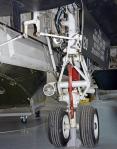
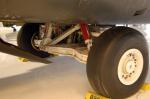
El F-111A presentaba un tren de aterrizaje triciclo, con el tren de morro orientable de dos ruedas que se plegaban hacia adelante y el tren principal de una sola rueda que se plegaba lateralmente hacia el interior del fuselaje. La única compuerta del tren principal también actuaba como freno de aire. Debajo de la cola se instaló un parachoques hidráulico para proteger el avión de golpes durante el despegue. En la parte trasera del avión, a la izquierda detrás del piloto, había una toma de repostaje en vuelo.
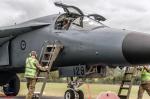
Los dos tripulantes se sentaban uno al lado del otro, el piloto a la izquierda y el oficial del sistema de armas a la derecha, bajo una cubierta enmarcada. La tripulación entraba y salía por las ventanas laterales, cada una de las cuales se abría desde el marco central. La visión delantera era buena, la visión trasera era muy pobre. La tripulación no tenía asientos eyectables, toda la sección de la cabina se liberaba del avión como una cápsula de escape. La cápsula salía disparada del avión utilizando un cohete propulsor de combustible sólido con aletas para evitar que cayera sin control.
La cápsula de escape resultó problemática. En principio, permitía escapes seguros a velocidades que habrían desmembrado a la tripulación que intentara salir en asientos eyectables convencionales, y no sólo flotaba, gracias a flotadores inflables y bolsas amortiguadoras de impacto, sino que llevaba un equipo de supervivencia relativamente completo para mantener a la tripulación hasta que fuera rescatada. La tripulación también tenía pequeños equipos de supervivencia que podían llevarse si caían en territorio hostil y debían huir.
La combinación de asientos uno al lado del otro y las entradas de aire retrasadas llevaron a uno de los peores problemas de desarrollo del F-111, ya que su configuración tendía a estancar el flujo de aire hacia los motores, lo que provocaba incendios. El diseño de la entrada resultaría ser una especie de cruz para los ingenieros de GD y se cambió repetidamente en un esfuerzo por solucionar los problemas de flujo de aire.
También se consideró que los primeros motores TF30 padecían un empuje inadecuado. Aparentemente, el F-111, que no necesitaba hacer muchas maniobras, sufrió mucho menos por las peculiaridades del motor que el caza F-14 Tomcat también propulsado por el TF30. Incluso con los primeros motores, el F-111A todavía podía volar a velocidades supersónicas a gran altitud con las alas hacia atrás.
El F-111A fue diseñado para la función de ataque a baja cota. Presentaba un sistema de radar de seguimiento del terreno (TFR) que le permitía acercarse el suelo y llegar al objetivo con poca o ninguna advertencia al enemigo. Era muy eficaz, pero tomaba un tiempo acostumbrarse a él.
Había cuatro soportes de carga subalar en cada ala, pero en la práctica lo habitual eran cuatro soportes. El par interior de soportes de almacenamiento se ajustaba al barrido con el ala, el par exterior no, lo que significa que el ala no podía ser barrida en vuelo si los soportes exteriores estaban instalados. También había un compartimento de armas debajo del fuselaje, detrás de la cabina, que tenía varios usos en diferentes variantes del F-111. En el F-111A, podría usarse para acomodar un cañón Gatling M61 Vulcan de 20 mm, con un tambor con más de 2.000 cartuchos de munición. También podría usarse para almacenar tanques de combustible gemelos de largo alcance con una capacidad total de 2.214 litros, aunque rara vez se usaban.
El conjunto de aviónica Mark I del F-111A incluía como sensor principal el radar General Electric (GE) AN/APQ-113, un sistema multimodo con cierta capacidad de defensa aire-aire. Compartía el radomo del morro con un sistema TFR AN/APQ-110 de Texas Instruments, con dos pequeñas antenas hemisféricas que flanqueaban la base del plato del radar AN/APG-113. El sistema de navegación principal era un sistema inercial (INS) AN/AJQ-20A, complementado por un receptor de radiobaliza de navegación TACAN. Las contramedidas defensivas incluían dispensadores de bengalas, un receptor de alerta de radar (RWR) y un bloqueador de ruido/engaño. Por supuesto, el conjunto de aviónica también incluía radios y un sistema de identificación amigo o enemigo (IFF).
Los soportes podían llevar cada uno una carga máxima de 2.265 kg, pero eso en realidad no implicaba una carga de armamento de 9.070 kg en la práctica. En las acciones operativas iniciales del F-111, una carga típica para una misión de corto alcance era de seis bombas de uso general de 225 kg en cada soporte utilizando múltiples bastidores eyectores (MER), con un total de 24 bombas, y una carga total de 5.400 kg. en una misión de ataque de largo alcance con una carga típica de doce bombas de 340 kg en los soportes interiores, posiblemente con depósitos externos en los soportes exteriores. Se podían transportar bombas de racimo en lugar de bombas de uso general. El F-111A también podría transportar armas nucleares, normalmente el arma nuclear táctica B61, por ejemplo dos de ellas en el compartimento de armas.
Todos los soportes eran capaces de transportar depósitos externos, que invariablemente eran aerodinámicos de baja resistencia de 2.271 litros. En realidad, es un poco inusual, aunque no raro, encontrar fotografías de F-111 con depósitos externos, ya que la gran capacidad de combustible del avión le daba un alcance bastante bueno sin ellos.
El F-111A no tenía un exceso de potencia del motor, pero volar en altitud en una configuración limpia con las alas hacia atrás era muy rápido, por encima de Mach 2. La velocidad máxima estaba más limitada por la tolerancia del fuselaje que por la propulsión y la aerodinámica. Operativamente, el F-111A generalmente no sobrepasaba Mach 1, navegaba con las alas extendidas y luego las barría hacia atrás para el recorrido a bajo nivel a alta velocidad subsónica, volando a altitudes inferiores a 300 m (1000 pies) y volando hacia el área objetivo a altitudes inferiores a 100 m. De hecho, el F-111A podría superar Mach 1 a bajo nivel, produciendo una onda de choque que dejaría la ruina a su paso, una táctica que nunca se adoptó debido a su total falta de discriminación.
Se construyeron 141 F-111A, sin contar las 18 aeronaves de desarrollo, para el Comando Aéreo Táctico (TAC) de la USAF, siendo la entrega final en agosto de 1969. 42 F-111A se convirtieron posteriormente en aviones de contramedidas EF-111A. Se enviaron seis F-111A a la Base de la Fuerza Aérea de Takhli en Tailandia dentro del programa Combat Lancer para comenzar misiones de combate en marzo de 1968. Los colores adoptados para el avión consistieron en un patrón disruptivo de marrón y dos tonos de verde en la parte superior, con blanco en la inferior. Más tarde, la parte inferior se pintaría de negro, lo que se consideró más adecuado porque el F-111 era generalmente empleado en misiones nocturnas Los F-111 servirían en variaciones de esquemas de camuflaje disruptivos durante la mayor parte de su carrera en la Fuerza Aérea.
Combat Lancer no fue bien. Tres F-111A se perdieron en misiones en cuatro semanas. A finales de abril de 1968 el avión había sido retirado del combate a la espera de que se investigara y resolviera los problemas que habían provocado las pérdidas. Los problemas se solucionaron mediante un programa de modificación con el nombre en código Harvest Reaper, y en septiembre de 1972 se enviaron al combate 48 F-111A como parte de las campañas aéreas Linebacker y Linebacker II. A pesar de todas las dificultades, el modelo finalmente parecía estar alcanzando su potencial, realizando ataques precisos a baja cota contra objetivos fuertemente defendidos. Los F-111A realizaron más de 4.000 incursiones en siete meses, con la pérdida de seis aviones, una tasa de pérdidas aceptable. Volaban tan rápido que el enemigo no sabía que estaban bajo ataque hasta que estallaban las bombas.
Varias modelos siguieron al F-111A, presentando una secuencia confusa de denominaciones. El F-111E, que a pesar de su designación era el sucesor directo del F-111A, era básicamente similar al F-111A, con el sistema de aviónica Mark I y los motores TF30-P-3, pero presentaba tomas de aire significativamente mejoradas, con más área de entrada y más separación del fuselaje. Se construyeron 94 F-111E, la mayoría de ellos realizaron su servicio volando para el TAC desde Upper Heyford AFB en el Reino Unido.
El F-111D fue, en principio, un paso adelante respecto al F-111E, contando con motores TF30-P-9 mejorados con un empuje de postcombustión de 87,2 kN (8.900 kgp), un tren de aterrizaje más fuerte y un sistema de aviónica revisado. Se construyeron 96 F-111D, pero el modelo resultó demasiado ambicioso e intentaba lograr hazañas que estaban una generación por delante de su tiempo. De hecho, el motivo de la producción fuera de secuencia del F-111E fue que el desarrollo del F-111D se prolongó mucho, por lo que la Fuerza Aérea adquirió los F-111E como solución provisional. El F-111D también resultó problemático en funcionamiento. Los sistemas de aviónica recibieron actualizaciones en servicio para mejorar la fiabilidad operativa. La mayoría de los F-111D sirvieron en la 27ª Ala de Cazas Tácticos de la USAF en Cannon AFB, Nuevo México, hasta su retiro a finales de 1992.
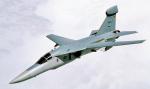
El último y más satisfactorio de los Aardvark tácticos de la USAF fue el F-111F, que contaba con motores TF30-P-100 con 111,2 kN (11.335 kgp) de empuje cada uno, aproximadamente un tercio más potente que los primeros TF30-P-3 y una de aviónica Mark IIB derivada del FB-111A. Los TF30-P-100 fueron considerados como las primeras variantes realmente aceptables del motor, ya que no solo proporcionaban mucho empuje sino que también eran más fiables que las variantes anteriores. El F-111F fue el único modelo del F-111 de la USAF en llevar la cápsula de puntería AN/AVQ-26 Pave Tack, instalada en el compartimiento de armas. Se utilizaba para apuntar bombas guiadas por láser. El F-111F también podría transportar dos bombas GBU-15 de 900 kg.
Se construyeron 106 F-111F, el último entregado en 1976, siendo los últimos F-111 de nueva construcción. Las entregas iniciales del F-111F se realizaron en la base Mountain Home (Idaho), pero de 1977 a 1992 estos aviones operaron desde Lakenheath en el Reino Unido. Por lo general, estaban preparados para el ataque llevando la cápsula Pave Tack, cuatro bombas guiadas por láser (LGB) Paveway de 900 kg o más pequeñas en los soportes subalares y dos AAM AIM-9 Sidewinder para autodefensa, montados en el costado del soporte de almacenamiento principal externo de cada ala. El cañón Vulcan fue retirado de los F-111 que todavía lo llevaban.
Los F-111 con base en el Reino Unido sirvieron con distinción en la Operación Cañón El Dorado, el ataque de represalia de Estados Unidos en Libia por el atentado en una discoteca de Berlín por parte de agentes libios. La operación tuvo lugar los días 14 y 15 de abril de 1986, realizando ataques de precisión con LGB. 20 F-111E, 24 F-111F y cinco EF-111A fueron empleados en la operación. Los F-111E se mantuvieron en reserva. Los F-111F alcanzaron sus objetivos justo después de la medianoche y arrojaron un total de 54 toneladas de bombas. Un F-111F se perdió frente a las defensas aéreas libias durante el ataque.
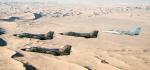
Los F-111 también desempeñaron un papel importante en la primera Guerra del Golfo de 1991, con el despiegue de tres escuadrillas de F-111F y partes de un cuarto desplegados en la Base Aérea de Taif en Arabia Saudita, además de varios F-111E enviados para operar desde Incirlik en Turquía. También se enviaron cuatro EF-111A a Taif. Los Aardvark realizaron un gran número de incursiones y se les atribuyó la destrucción de cientos de vehículos y piezas de artillería iraquíes. También llevaban la nueva LGB GBU-28 «destructora de búnkeres», que resultó devastadora en ataques selectivos contra centros de mando iraquíes. Ninguno de los F-111 se perdió en combate.
Después del conflicto, los F-111 finalmente fueron repintados en colores grises, más típicos de aparatos de la Fuerza Aérea como el F-15 Eagle, pero en ese momento el F-111 se acercaba al final del camino. Dada la reducción de los gastos en defensa a principios de la década de 1990 tras el fin de la Guerra Fría, el F-111 fue considerado redundante para las necesidades después de la primera Guerra del Golfo, y los aviones de ataque se retiraron en 1995.
El FB-111A, mencionado anteriormente, era la variante del Mando Aéreo Estratégico (SAC) de la USAF. La Fuerza Aérea había estado buscando un sucesor del Boeing B-52, y finalmente surgió como el Rockwell B-1B, pero el camino era complicado y prolongado, por lo que el F-111 se consideró una solución provisional para el bombardero estratégico. Tras considerar las propuestas presentadas desde 1963, el SAC autorizó el desarrollo del FB-111A como una versión mínimamente modificada del F-111A en 1965.
La única aeronave de desarrollo FB-111A realizó su vuelo inicial en 1967, lo que llevó al vuelo inicial de un FB-111A de producción el 13 de julio de 1968 y a su introducción en servicio operativo en 1972. El FB-111A era difícil de distinguir de otras variantes del F-111, diferenciándose más visiblemente en el uso de alas de gran envergadura como las que empleaba la versión naval F-111B. Sin embargo, hubo muchas diferencias menos visibles, incluido un tren de aterrizaje más fuerte como el del F-111D, así como frenos mejorados exclusivos y motores TF30-P-7 mejorados de 89,6 kN (9.140 kgp) cada uno.
El FB-111A estaba equipado para la misión de ataque nuclear estratégico, utilizando armas nucleares de caída libre o el misil de ataque de corto alcance (SRAM) Boeing AGM-69. Para misiones de corto alcance, el FB-111A podría llevar cuatro SRAM, uno en cada soporte debajo de las alas, pero para misiones de largo alcance, el FB-111A llevaba dos SRAM en el compartimiento de armas y usaría los cuatro soportes de las alas para depósitos externos.
El FB-111A presentaba aviónica Mark IIB con algunos elementos específicos agregados para respaldar la misión estratégica, como un sistema de navegación estelar, un receptor de comunicaciones por satélite y un sistema de liberación automática de carga, que reemplazó al sistema de liberación manual utilizado en otras variantes del F-111.
Se construyeron un total de 76 FB-111A de serie, sin contar el único avión de desarrollo. La introducción del bombardero Rockwell B-1B a finales de la década de 1980 eliminó la necesidad del FB-111A, por lo que 51 de ellos fueron modificados para manejar armas convencionales en operaciones de combate táctico, siendo designados F-111G. El programa de modificación incluyó un grado de mejora general de la aviónica. Las reentregas iniciales de los F-111G se realizaron en 1989 y en la práctica, se utilizaron principalmente para entrenamiento. Todos habían sido finalmente retirados del servicio de la USAF en 1995.
Si bien la Fuerza Aérea de EE.UU. fue la única en operar activamente el F-111, el F-111 también fue empleado por la Administración Nacional de Aeronáutica y del Espacio (NASA) de EE.UU. Al menos seis aparatos volaron desde el Centro Dryden de la NASA en California. desde 1967 hasta aproximadamente 1990.
Durante la Guerra de Vietnam, el Mando Aéreo Táctico había confiado en el Douglas EB-66 Skywarrior para la función de guerra electrónica (EW), pero a principios de la década de 1970 los EB-66 estaban claramente demasiado usados para continuar por mucho más tiempo. Las terribles pérdidas sufridas por los israelíes durante la Guerra de Yom Kippur de 1973 a causa de la última generación de misiles tierra-aire soviéticos (SAM) fueron una llamada de atención para el TAC. Había que adquirir un nuevo avión EW lo antes posible.
El excelente EA-6B Prowler de la Armada y su sistema Eaton/AIL AN/ALQ-99 EW representaban una solución bien desarrollada, pero el TAC consideró que la velocidad y el alcance del Prowler eran inadecuados y no quería respaldar un tipo de avión que no estuviera en el inventario de la USAF. Entonces surgió la idea de que los F-111A retirados podrían equiparse con el sistema AN/ALQ-99. Algunos análisis y pruebas demostraron que la idea era práctica, y el 26 de diciembre de 1974 la Fuerza Aérea otorgó a Grumman un contrato para modificar dos F-111A como aviones EF-111A.
Un F-111A equipado con un carenado ventral para pruebas aerodinámicas realizó el primer vuelo de prueba del programa el 15 de diciembre de 1976. El primer prototipo realizó su vuelo inicial desde las instalaciones de Grumman en Long Island el 10 de marzo de 1977, equipado con todos los carenados para el aviones de serie. Se produjeron un total de 42 EF-111A Raven, también conocidos como Spark Vark, mediante modificaciones de F-111A retirados, que se pusieron en servicio a finales de 1981. El último se entregó en diciembre de 1985. El total incluía las dos aeronaves utilizadas para el desarrollo, que luego fueron actualizadas a las especificaciones operativas y puesto en servicio.
Los Raven originalmente conservaron los viejos motores TF30-P-3 del F-111A, pero presentaban un radar de ataque AN/APQ-160 mejorado y un radar de seguimiento del terreno AN/APQ-110 en el morro para la navegación en vuelo. El verdadero cambio, por supuesto, fue el Sistema de Interferencia Táctica (TJS) AN/ALQ-99E. El TJS incluía diez módulos de interferencia y cinco receptores de señales sintonizados digitalmente, todos transportados en el compartimiento de armas, con un carenado largo en forma de canoa en la parte inferior para acomodar las antenas transmisoras de interferencia.
Se montó un carenado prominente en la parte superior de la aleta trasera para acomodar las antenas receptoras (la disposición de la antena proporciona un campo de visión sobre los cuatro cuadrantes alrededor del avión) complementada por una antena de pala a cada lado del fuselaje debajo del ala. También había una pequeña antena receptora en forma de lágrima montada en la parte superior de cada extensión de raíz de ala para el sistema de advertencia de amenazas AN/ALR-64(V)-4. Se eliminaron todos los sistemas de armas y aviónica. El peso en vacío aumentó aproximadamente un 10%, pero no era importante ya que el EF-111A no llevaba bombas o misiles. Los depósitos de combustible externos y las cápsulas de enlace de datos podían transportarse en las torres de almacenamiento.
La mayoría de los EF-111A tenían su base en Mountain Home (Idaho), sirviendo en la 390ª (anteriormente 388ª) Escuadrilla de Contramedidas Electrónicas (ECS), pero 13 aparatos de la 42ª ECS tenían su base en Upper Heyford (Reino Unido). La unidad operaba F- 111 generalmente pintados en colores grises claros. A partir de 1986, los EF-111A fueron reacondicionados con motores TF30-P-9 más potentes. A partir de 1989, fueron equipados con nueva aviónica, incluidos sistemas de radar mejorados, capacidad para admitir un receptor de navegación por satélite con Sistema de Posicionamiento Global y nuevos procesadores digitales, pantallas de cabina y equipo de comunicaciones.
La Fuerza Aérea esperaba mantener el EF-111A en servicio hasta bien entrado el siglo XXI. En 1991 se inició un programa para actualizar los sistemas de interferencia, pero los recortes de financiación durante la década de 1990 obligaron a la USAF a cambiar de planes, y los últimos EF-111A se retiraron el 1 de abril de 1998.
Estados Unidos se mostró entusiasmado con las perspectivas del F-111 en los primeros años de desarrollo, teniendo en cuenta las ventas de exportación. El gobierno británico estaba lo suficientemente interesado en el concepto como para descartar el desarrollo de su propio avión de ataque de baja cota, el BAC TSR-2, que se consideraba demasiado caro, y encargó una versión británica del F-111 para la Royal Air Force. (RAF) designado F-111K. La RAF iba a adquirir 50 unidades, incluidos 4 entrenadores TF-111K. Desafortunadamente, los cronogramas se retrasaron, los costos se dispararon y el F-111K gradualmente también se volvió demasiado caro, lo que llevó a la cancelación del programa. La RAF terminó conformándose con una versión del avión de ataque embarcado Blackburn Buccaneer de la Royal Navy, que en cierta compensación brindó un servicio sobresaliente durante una carrera que duró décadas.
Como resultado, el único usuario exterior del F-111 fue Australia, que necesitaba un reemplazo para su envejecido avión de ataque English Electric Canberra. El primero de un lote inicial de 24 F-111C se entregó en 1973. El F-111C era una solución costosa, pero la Real Fuerza Aérea Australiana (RAAF) necesitaba un avión de ataque altamente capaz de operar en las largas extensiones del Sur. Pacífico y el F-111 cumplía los requisitos.
El F-111C era esencialmente un F-111A equipado con las alas más largas del FB-111A y el tren de aterrizaje más resistente del F-111D. Posteriormente, Australia adquirió cuatro F-111A de la USAF como reemplazos de desgaste, siendo reacondicionados y actualizados al estándar F-111C. En la década de 1990 la RAAF también adquirió 15 F-111G retirados para mantener su flota en buen estado. La flota australiana de F-111 recibió importantes mejoras durante su servicio.
Si bien los F-111C se entregaron en disruptivos colores de «camuflaje de selva», a principios de la década de 1990 fueron repintados en un color gris general. Los F-111 australianos tenían armas únicas, incluidos el misil antibuque AGM-84 Harpoon y la bomba planeadora israelí Popeye.
Cuando Australia lideró una fuerza de mantenimiento de la paz en Timor Oriental en 1999 para restablecer el orden después de una votación de independencia conflictiva, la RAAF utilizó sus RF-111C para seguir los movimientos de las Fuerzas de Defensa de Indonesia y localizar grupos de refugiados escondidos en las colinas. Los últimos F-111 australianos fueron finalmente retiradas a finales de 2010.
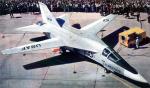



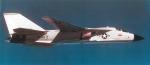

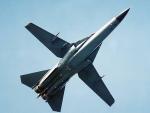

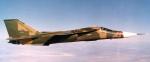


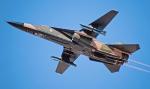




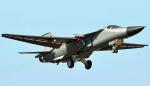







In June 1960, the US Air Force (USAF) issued Specific Operational Requirement (SOR) 183, defining a new tactical fighter for the nuclear strike role. SOR 183 specified an aircraft that could operate from unprepared forward airfields and would have an unrefueled range of 6,100 km (3,800 mi / 3,100 nmi). It would be able to fly at Mach 1.2 continuously for 740 km (460 mi / 400 nmi).
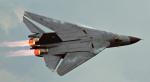
One of the major features of the aircraft specified under SOR 183 was that it was envisioned as having variable geometry or swing wings, in which the wings pivoted out in a straight-wing configuration for low-speed flight and pivoted back into a delta-like configuration for high-speed flight. This scheme had been tested by the Bell X-5 and Grumman XF10F-1 Jaguar experimental aircraft in the 1950s, and was at the time a leading-edge concept in aircraft design.
Roughly in parallel with the USAF SOR 183 requirement, the US Navy had been trying to obtain a fleet interceptor with a heavy load of long-range air-to-air missiles (AAM) to protect fleets from air attack. Douglas had been working on a design for such an aircraft, the Douglas F6D Missileer, but it had proven unsatisfactory and was canceled in late 1960. In keeping with his push for commonality, on 14 February 1961 McNamara, the defense secretary who had taken office in the new Kennedy administration, initiated a study to determine if a single aircraft could perform both roles, as well as the Close Air Support (CAS) role.
The study showed that it wasn’t practical to build a single machine that could do all three tasks, and in May 1961 the CAS requirement was split off into a separate program, which would materialize in the form of the excellent Vought A-7 Corsair II. However, the study did conclude that it was possible, at least in principle, to merge the tactical strike and fleet interceptor roles, and so, on 7 June 1961, McNamara accordingly ordered development of the Tactical Fighter Experimental (TFX) to fulfill those requirements. The USAF was to be in charge of the program.
Although some of McNamara’s efforts to promote commonality worked out well, one of the most significant being the USAF’s adoption of the Navy McDonnell F-4 Phantom, others were troublesome from the outset. It wasn’t just a case of interservice rivalries, though that could play a part; it was a simple fact that the different services had different needs and requirements.
A request for proposals (RFP) was issued in September 1961, with the aircraft to go into operation in October 1965. Nine manufacturers submitted designs, with those of Boeing and General Dynamics being selected as finalists. The Air Force and Navy preferred the Boeing design, but the contract was awarded to General Dynamics (GD) on 24 November 1962, McNamara arguing that the GD design would be more cost-effective. The aircraft was to be designated the F-111, with the Air Force variant to be designated F-111A and the Navy variant the F-111B.
Grumman was to work under subcontract to GD to work on the Navy version, developing the F-111B’s avionics system and performing final integration and test of the F-111B; Grumman would also build some of the assemblies for the Air Force F-111A. The F-111B was to be armed with the long-range Hughes AIM-54 Phoenix air-to-air missile (AAM), controlled by a powerful AN/AWG-9 long-range radar system.
The initial contract specified development of 23 development machines, including 17 USAF F-111A development aircraft, one developmental machine for an FB-111A strategic bomber, more later, and five F-111B Navy fleet interceptor development aircraft.
Initial flight of the first USAF F-111A was on 21 December 1964, from the GD plant in Fort Worth, Texas. The initial flight of the Navy F-111B was on 18 May 1965, from the Grumman facility in Bethpage, New York. The development program of the F-111A turned out to be troublesome, afflicted by problems with weight, reliability, the twin Pratt & Whitney (P&W) TF30 engines, and most significantly the engine inlets.
The development program for the F-111B went even more badly. The Navy never became very enthusiastic about the F-111B. Early flight trials of the type led to a Navy report in October 1965 that concluded the F-111B was highly overweight and entirely unsatisfactory. Attempts were made to fix the problems, which had the effect mostly of reducing compatibility with the F-111A from about 80% to only 30%.
Congress cut funds for the F-111B in May 1968, work was halted in July, and the program was formally axed in December, after the construction of a total of seven F-111Bs, including the five development aircraft and two production machines. Grumman then offered an alternative new design, featuring swing wings, two TF30 engines, Phoenix AAM armament, and the AN/AWG-9 radar, which would eventually emerge as the F-14 Tomcat. In any case, the US Navy had finally got out of the F-111 program. A number of F-111B airframes were put to use in trials; three would be lost in accidents, with four aircrew killed, before the little fleet was retired in 1971.
In the meantime, development of the Air Force F-111 seemed to be going from one hardship to another. The whole effort was one of the most controversial and painful aircraft development programs ever. However, the USAF persisted with the F-111A, with first deliveries of production aircraft to the Air Force service in October 1967. It was the first swing-wing aircraft to go into full operational service with any air force.
The F-111A was a big aircraft, with shoulder-mounted swing wings, a conventional tailplane assembly with all-moving horizontal tailplanes, twin ventral fins, and twin P&W TF30-P-3 afterburning bypass jet engines with 82.3 kN (8,390 kgp / 18,500 lbf) afterburning thrust each.
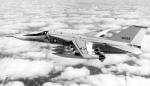
The swing wings could extend to a minimum sweep of 16 degrees and a maximum sweep of 72.5 degrees but they could also be set to intermediate positions. The wing position was manually controlled by the pilot using a pistol-grip style controller; an automatic flight control system compensated for shifts in flight trim as the wings changed position. The wings had full-span leading-edge flaps and full-span double slotted flaps, both in four sections. There were no ailerons, with roll control performed by dual spoilers on top of each wing, in front of the two middle flap sections, the spoilers also serving as lift dumpers for landings. The wings hinged inside fixed leading-edge root extensions, the outer upper segment of which hinged upward at low speeds as a vane to control low-speed airflow.
The TF30-P-3 engines were mounted side-by-side in the rear fuselage. The F-111 didn’t have an auxiliary power unit (APU), so starting was either by a ground pneumatic cart, or by pyrotechnic cartridges. Fuel tanks were distributed through the fuselage and in the wings, providing a total fuel load of over 19,000 liters (5,000 US gallons).
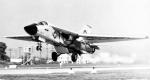
The F-111A featured tricycle landing gear, with the twin-wheel steerable nose gear retracting forward and the single-wheel main gear retracting sideways into the fuselage. The single main gear door also acted as an airbrake. A hydraulically-extended bumper was fitted under the tail to protect the aircraft from scrapes on take-off. There was a midair refueling socket on the back of the aircraft, on the left behind the pilot.
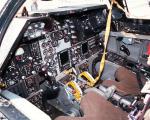
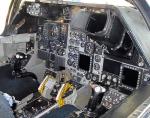
The two crew sat side-by-side, with the pilot on the left and the weapons system officer on the right, under a framed canopy. The crew got in and out via the side windows, each of which hinged up from the center frame. Forward vision was good, rear vision was very poor. The crew did not have ejection seats, with the entire cockpit section breaking free of the aircraft as an escape capsule. The capsule blasted out of the aircraft using a solid rocket booster, with control flaps to keep it from tumbling.
The escape capsule turned out to be problematic. In principle, it permitted safe escapes at speeds that would have dismembered aircrew trying to get out on conventional ejection seats, and it not only floated, thanks to a set of inflatable flotation and impact shock absorber bags, but carried a relatively luxurious kit of survival gear to sustain the crew until they were rescued. The crew also had small survival kits they could pack off with if they came down in hostile territory and had to go on the run.
The combination of side-by-side seating and the set-back air inlets led to one of the worst of the F-111’s development problems, since it resulted in a configuration that tended to stagnate airflow to the engines, leading to flame-outs and possibly loss of the aircraft. Inlet design would prove to be something of a cross to bear for GD engineers. The intake design was repeatedly changed in efforts to fix airflow problems.
Early TF30s were also regarded as suffering from inadequate thrust. Apparently the F-111, which didn’t need to do a lot of maneuvering, suffered well less from the quirks of the engine than the TF30-powered F-14 Tomcat fighter. Even with the early engines, the F-111A was still able to cruise at supersonic speeds at high altitude with its wings swept back.
The F-111A was designed for the low-level strike role. It featured a terrain following radar (TFR) system that allowed it to hug the ground, arriving on target with little or no warning to the enemy. It was highly effective, but it took a little getting used to.
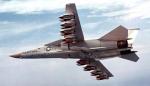
There were four stores hardpoints under each wing, for a total of eight, but four stores pylons were the usual fit in practice; the inner pair of stores pylons adjusted sweep with the wing, the outer pair did not, meaning the wing couldn’t be swept in flight if the outer pylons were fitted. There was also a weapons bay under the fuselage behind the cockpit, with the weapons bay put to various uses on different F-111 variants. In the F-111A, it could be used to accommodate an M61 Vulcan 20mm Gatling cannon, with a drum containing more than 2,000 rounds of ammunition. It could also be used to store twin long-range fuel tanks with a total capacity of 2,214 liters (585 US gallons), though they were rarely used.
The F-111A’s Mark I avionics suite included as the primary sensor system the General Electric (GE) AN/APQ-113 radar, a multimode system with some air-to-air capability for self-defense. It shared the nose radome with a Texas Instruments AN/APQ-110 TFR system, with two little hemispherical antennas flanking the base of the AN/APG-113 radar dish. The primary navigation system was an AN/AJQ-20A inertial navigation system (INS), complemented by a TACAN radio navigation beacon receiver. Defensive countermeasures included chaff-flare dispensers, a radar warning receiver (RWR) and a noise / deception jammer. Of course, the avionics suite also included radios and an identification friend or foe (IFF) system.
The stores pylons were stressed to each carry a maximum load of 2,265 kg (5,000 lb), but that didn’t really imply a total practical warload of 9,070 kg (20,000 lb). In the F-111’s initial operational actions, a typical warload for a short-range mission was six 225kg (500lb) general-purpose bombs on each pylon using multiple ejector racks (MERs), for a total of 24 bombs and a total warload of 5,400 kg (12,000 lb). For a long-range strike mission, a typical warload was twelve 340kg (750lb) bombs on the inboard pylons, possibly with external tanks on the outer pylons; cluster bombs could be carried instead of general purpose bombs. The F-111A could also carry nukes, typically the B61 tactical nuclear weapon, for example with two in the weapons bay.
All the pylons were capable of carrying external tanks, which were invariably streamlined low-drag 2,271-liter (600-US gallon) tanks. It is actually a little unusual, though not rare, to find photos of F-111s carrying external tanks, since the aircraft’s hefty fuel capacity gave it fairly good range without them.
The F-111A didn’t have an excess of engine power, but flying at altitude in clean configuration with the wings swept back it was very fast, over Mach 2, the top speed being more limited by airframe tolerance than by propulsion and aerodynamics. Operationally, the F-111A usually didn’t break Mach 1, cruising with wings extended and then sweeping them back for a low-level run at high subsonic speed, flying at altitudes less than 300 m (1,000 ft), and running in to the target area at altitudes of less than 100 m (330 ft). The F-111A could actually well exceed Mach 1 at low level, producing a shockwave that would leave ruin in its wake, a tactic that was never adopted because of its complete lack of discrimination.
141 F-111As, not counting the 18 developmental machines, were built for the USAF Tactical Air Command (TAC), with final delivery in August 1969, 42 F-111As were later converted to EF-111A countermeasures aircraft. Six F-111As were sent to Takhli Air Force Base in Thailand under the Combat Lancer program to begin combat missions in March 1968. The colors adopted for the aircraft consisted of a disruptive pattern of brown and two shades of green on top, with white on the bottom; later the bottom would be painted black, judged more suitable because the F-111 was generally a night fighter. F-111s would serve in variations on disruptive camouflage schemes through most of their career with the Air Force.
Combat Lancer did not go well. Three F-111As were lost on missions within four weeks; by the end of April 1968 the type had been withdrawn from combat, pending investigation and resolution of the problems that had caused the losses. The problems were resolved through a modification program codenamed Harvest Reaper, and in September 1972 48 F-111As were sent into combat as part of the Linebacker and Linebacker II air campaigns. For all the difficulties, the type finally seemed to be achieving its potential, with the F-111As performing low-level pinpoint strikes on heavily-defended targets. The F-111As performed more than 4,000 sorties over seven months, with the loss of six aircraft, an acceptable loss rate. They streaked in so fast that the enemy didn’t know they were under attack until the bombs went off.
A number of variants followed the F-111A, featuring a confusing sequence of variant designations. The F-111E, which despite its designation was the direct successor of the F-111A, was basically similar to the F-111A, with the Mark I avionics system and the TF30-P-3 engines, but significantly featured improved inlets, as well as more intake area and more separation from the fuselage. 94 F-111Es were built, with most of them spending their service career flying for TAC out of Upper Heyford AFB in the UK.
The F-111D was in principle a step up from the F-111E, featuring uprated TF30-P-9 engines with 87.2 kN (8,900 kgp / 19,600 lbf) afterburning thrust, stronger landing gear, and a generally revised avionics system. 96 F-111Ds were built, but the machine was simply too ambitious, attempting to accomplish feats that were a generation ahead of time. In fact, the reason for the out-of-sequence production of the F-111E was because development of the F-111D stretched out badly, and so the Air Force obtained F-111Es as an interim solution. The F-111D also proved troublesome in operation. Avionics systems were given running updates to improve operational reliability. Most F-111Ds served with the USAF 27th Tactical Fighter Wing at Cannon AFB, New Mexico, until their retirement in late 1992.
The last and most satisfactory of the USAF’s tactical Aardvarks was the F-111F, which featured TF30-P-100 engines with 111.2 kN (11,335 kgp / 25,000 lbf) thrust each, about a third more powerful than the early TF30-P-3 engines, and a Mark IIB avionics suite derived from that of the FB-111A. The TF30-P-100s were regarded as the first really acceptable variants of the engine, not merely providing plenty of thrust but also more reliable than earlier variants. The F-111F was unique among USAF F-111 variants in carrying the AN/AVQ-26 Pave Tack targeting pod, fitted in the F-111F weapons bay. It was used for targeting laser-guided bombs. The F-111F could also carry two 900kg (2,000lb) GBU-15 glide bombs.
106 F-111Fs were built, the last delivered in 1976, being the final new-construction F-111 machines produced. Initial deliveries of the F-111F were to Mountain Home AFB in Idaho, but from 1977 to 1992 these aircraft operated from Lakenheath in the UK. They were generally fitted for attack carrying the Pave Tack pod; four 900kg (2,000lb) or smaller Paveway laser-guided bombs (LGB) on the underwing pylons; and two AIM-9 Sidewinder AAMs for self-defense, mounted on pylons fitted to the side of the outboard main stores pylon on each wing. The Vulcan cannon was removed from F-111s still fitted with it.
UK-based F-111s served with distinction in Operation El Dorado Canyon, the US retaliation raid on Libya for the bombing of a Berlin discotheque by Libyan operatives. The operation took place on 14-15 April 1986, performing precision attacks with LGBs. 20 F-111Es, 24 F-111Fs, and five EF-111As were committed to the operation. The F-111Es were kept in reserve, with the F-111Fs performing the strikes, hitting their targets just after midnight, and dropping a total of 54 tons (60 tonnes) of munitions. One F-111F was lost to Libyan air defenses in the attack.
F-111s also played an important role in the first Gulf War in 1991, with three F-111F tactical fighter squadrons and parts of a fourth deployed to Taif Air Base in Saudi Arabia, plus a number of F-111Es sent to operate out of Incirlik in Turkey. Four EF-111As were sent to Taif as well. The Aardvarks flew a large number of sorties, being credited with the destruction of hundreds of Iraqi vehicles and artillery pieces. They also carried the new GBU-28 «bunker-buster» LGB, which proved devastating in selective attacks on Iraqi command centers. None of the F-111s were lost in combat.
After the conflict, the F-111s were finally repainted in overall gray colors more typical of Air Force machines like the F-15 Eagle, but by that time the F-111 was nearing the end of the road. Given the defense drawdown of the early 1990s in the wake of the end of the Cold War, the F-111 was judged redundant to needs after the first Gulf War, with the strike machines retired by 1995.
The FB-111A, mentioned earlier, was the USAF Strategic Air Command (SAC) variant. The Air Force had been looking around for a successor to the Boeing B-52, with the successor eventually emerging as the Rockwell B-1B, but the path was complicated and protracted, and so the F-111 was seen as the basis for an interim strategic bomber solution. On consideration of proposals submitted from 1963, SAC authorized development of the FB-111A as a minimally-modified version of the F-111A in 1965.
The single FB-111A developmental machine performed its initial flight in 1967, leading to initial flight of a production FB-111A on 13 July 1968 and introduction to operational service in 1972. The FB-111A was difficult to distinguish from other F-111 variants, differing most visibly in the use of long-span wings as used on the F-111B naval fighter. There were plenty of less visible differences, however, including stronger landing gear as per the F-111D, as well as enhanced brakes unique to the variant, and uprated TF30-P-7 engines with 89.6 kN (9,140 kgp / 20,150 lbf) each.
The FB-111A was fitted for the strategic nuclear strike mission, using free-fall nuclear weapons or the Boeing AGM-69 Short Range Attack Missile (SRAM). For short-range missions, the FB-111A could carry four SRAMs, one on each underwing pylon, but for long-range missions, the FB-111A would carry two SRAMs in the weapons bay and use the four wing pylons for external tanks.
The FB-111A featured Mark IIB avionics with some custom items added to support the strategic mission, such as a star tracker navigation system, a satellite communications receiver; and an automatic stores release system, replacing the manual stores release system used on other F-111 variants.
A total of 76 production FB-111A machines was built, not counting the single developmental aircraft. Introduction of the Rockwell B-1B bomber in the late 1980s eliminated the need for the FB-111A, and so 51 of them were modified to handle conventional weapons for tactical combat operations, being redesignated F-111G; the modification program included a degree of general avionics upgrade. Initial redeliveries of F-111Gs were in 1989; in practice, they were used mostly for training. All had been finally retired from USAF service by 1995.
While the US Air Force was the only American armed service to fly the F-111 operationally, the F-111 was also operated by the US National Aeronautics & Space Administration (NASA), with at least six flown by the NASA Dryden Center in California from 1967 to roughly 1990.
During the Vietnam War, the Tactical Air Command had relied on the Douglas EB-66 Skywarrior for the electronic warfare (EW) role, but by the early 1970s the EB-66s were clearly too weary to carry on much longer. The nasty losses taken by the Israelis during the 1973 Yom Kippur War from the latest generation of Soviet surface-to-air missiles (SAM) was a wakeup call to TAC. A new EW aircraft had to be acquired as quickly as possible.
The Navy’s excellent EA-6B Prowler and its Eaton/AIL AN/ALQ-99 EW system represented a well-developed solution, but TAC felt the Prowler’s speed and range were inadequate, and didn’t want to support an aircraft type not in USAF inventory. The idea then came up that retired F-111As could be fitted with the AN/ALQ-99 system. A few analyses and tests demonstrated the idea was practical, and on 26 December 1974, the Air Force awarded Grumman a contract to modify two F-111As accordingly as EF-111A aircraft.
An F-111A fitted with a ventral fairing for aerodynamic tests performed the first test flight for the program on 15 December 1976. The first prototype performed its initial flight from Grumman’s facility on Long Island on 10 March 1977, fitted with all the fairings for the production aircraft. A total of 42 EF-111A Ravens AKA Spark Varks was produced by modification of retired F-111As, with introduction to service late in 1981, and the last delivered in December 1985. The total included the two machines used for development, which were then brought up to operational spec and fielded.
The Ravens originally retained the old TF30-P-3 engines of the F-111A, but featured improved AN/APQ-160 attack radar and AN/APQ-110 terrain-following radar in the nose for flight navigation. The real change, of course, was the AN/ALQ-99E Tactical Jamming System (TJS). The TJS included ten jamming modules and five digitally-tuned signals receivers, all carried in the weapons bay, with a long «canoe» fairing on the bottom to accommodate the jammer transmitting antennas.
A prominent fairing was mounted on top of the tailfin to accommodate the receiving antennas — the antenna arrangement giving a field of view over all four quadrants around the aircraft — supplemented by a blade antenna on each side of the fuselage under the wing. There was also a small teardrop receive antenna mounted on the top of each wingroot extension for the AN/ALR-64(V)-4 threat warning system. All weapons systems avionics were removed. Empty weight increased by about 10%, but it didn’t matter since the EF-111A didn’t carry a warload. External fuel tanks and datalink pods could still be hauled on the stores pylons.
Most of the EF-111As were based at Mountain Home AFB in Idaho, serving with the 390th (earlier 388th) Electronic Countermeasures Squadron (ECS), but 13 were based with the 42nd ECS at RAF Upper Heyford in the UK, which operated F-111 strike variants. They generally flew in overall light gray colors. From 1986, the EF-111As were refitted with more powerful TF30-P-9 engines. From 1989, they were fitted with new avionics including improved radar systems, capability to support a Global Positioning System satellite navigation network receiver, and new digital processors, cockpit displays, and communications kit.
The Air Force hoped to keep the EF-111A in service well into the 21st century; a program to update the jamming systems was initiated in 1991, but funding cuts during the 1990s forced the USAF to change plans, and the last EF-111As were retired on 1 April 1998.
The US was enthusiastic about the prospects of the F-111 in the early years of development, with consideration of export sales. The British government was interested enough in the concept to scrap development of their own comparable low-level strike aircraft, the BAC TSR-2, which was seen as too expensive, and order a Briticized version of the F-111 for the Royal Air Force (RAF) designated the F-111K. 50 F-111Ks were to be obtained by the RAF, including 4 TF-111K trainers. Unfortunately, schedules slipped out, costs ballooned, and the F-111K gradually became too expensive as well, leading to cancellation of the program. The RAF ended up settling for a version of the Royal Navy’s Blackburn Buccaneer shipboard strike aircraft, which in some compensation provided outstanding service over a career lasting decades.
As a result, the only export user of the F-111 was Australia, which needed a replacement for their aging English Electric Canberra attack aircraft. The first of an initial batch of 24 F-111Cs was delivered in 1973. The F-111C was an expensive solution, but the Royal Australian Air Force (RAAF) needed a highly capable strike aircraft capable of operating over the long expanses of the South Pacific; the F-111 fit the bill.
The F-111C was essentially an F-111A fitted with the longer wings of the FB-111A and the stronger undercarriage of the F-111D. Four ex-USAF F-111As were later obtained by Australia as attrition replacements, with the aircraft refurbished and brought up to F-111C standard, and in the 1990s the RAAF also acquired 15 retired F-111Gs to keep their fleet up to strength. The Aussie F-111 fleet received substantial upgrades in service.
While the F-111Cs were delivered in disruptive «jungle camouflage» colors, in the early 1990s they were repainted in a tidier overall gray color. The Aussie F-111s had unique weapons fits, including carriage of the AGM-84 Harpoon antiship missile and the Israeli Popeye glide bomb.
When Australia led a peacekeeping force into East Timor in 1999 to restore order after a fractious independence vote, the RAAF used their RF-111Cs to keep track of Indonesian Defense Force movements and to locate bands of refugees hiding in the hills. The last Aussie F-111 machines were finally retired in late 2010.
FUENTES Y REFERENCIA – SOURCES & REFERENCE
airvectors.net
©jmodels.net
 jmodels.net
Debe estar conectado para enviar un comentario.