

| DATOS TÉCNICOS | TECHNICAL DATA |
| TIPO:Interceptor. | TYPE:Interceptor. |
| TRIPULANTES:1 | CREW:1 |
| ENVERGADURA:9,3 m. | SPAN:30.6 ft. |
| LONGITUD:5,7 m. | LENGTH:18.8 ft. |
| ALTURA:2,5 m. | HEIGHT:8.2 ft. |
| SUPERFICIE ALAR:19,6 m². | WING AREA:211 ft². |
| PESO EN VACÍO:1.905 kg. | EMPTY WEIGHT:4,200 lb. |
| MOTOR:Un motor cohete Hellmuth Walter Kommanditgesellschaft HWK 109-509A-2 de dos propelentes líquidos de 14.71 kN (3,307 lbf.) de empuje máximo y 980 N (220 lbf.) de empuje mínimo, totalmente variable. | ENGINE:One Hellmuth Walter Kommanditgesellschaft HWK 109-509A-2 bi-propellant liquid-fuelled rocket motor developing 14.71 kN (3,307 lbf.) thrust maximum; 980 N (220 lbf.) minimum, fully variable. |
ARMAMENTO:
|
ARMAMENT:
|
| VELOCIDAD MÁX.:900 km/h. a todas las altitudes. | MAX. SPEED:900 km/h. (560 mph.) at all altitudes. |
| TECHO:12.000 m. | CEILING:39,000 ft. |
| ALCANCE:100 km. | RANGE:62 ml. |
| PRIMER VUELO:1 de septiembre de 1941. | FIRST FLIGHT:1 September 1941. |
| VERSIONES:14 | VERSIONS:14 |
| CONSTRUIDOS:En torno a 370. | BUILT:Around 370. |
En tres cuartos de siglo de guerra aérea, ha habido muy pocas ocasiones en que una nación haya entrado en combate con un avión tan avanzado en concepto que sus enemigos al principio no sabían cómo abordarlo. El Me 163 era muy pequeño, ágil y casi tan rápido como la mayoría de sus oponentes. Con alivio, los Aliados descubrieron que tendía a aparecer solo en cantidades muy pequeñas, claramente tenía poca autonomía y su efectividad no era impresionante. De hecho, dos fueron derribados antes de que el modelo hubiera obtenido un solo éxito en combate.
La historia comenzó en 1926 cuando el Dr. Alexander Lippisch construyó su primer planeador sin cola. Durante la siguiente década, Lippisch construyó muchos aviones sin cola y también se involucró en la propulsión de cohetes, por lo que no fue una gran sorpresa cuando, en 1937, la sección de investigación del RLM (Ministerio del Aire alemán) le pidió que diseñara un avión para probar un nuevo motor cohete destinado a aviones tripulados, el Walter I-203, de 3,92 kN. (882 lbf.) de empuje. Este operaba con una mezcla de dos líquidos que reaccionaban violentamente si se mezclaban: T-stoff, que consistía principalmente en peróxido de hidrógeno concentrado, y Z-stoff, una solución de permanganato de calcio en agua. Con propulsores tan reactivos se decidió diseñar el fuselaje en metal y, como el DFS (el Instituto Alemán de Investigación de Planeadores) donde trabajaba Lippisch no estaba equipado para la tarea, se subcontrató la construcción del fuselaje a Heinkel.
Al final, Heinkel nunca construyó el fuselaje de metal, pero sí construyó el He 176 propulsado por cohetes, cuya pésima actuación en junio de 1939 casi provocó la pérdida de interés en cualquier avión cohete. Fue un Lippisch muy frustrado quien, a principios de 1939, dejó la DFS y se asoció con Messerschmitt. En Ausgburg, Willy Messerschmitt mostró un gélido desinterés, pero a Lippisch se le permitió continuar con su propio equipo, con estrictas medidas de seguridad, y a fines de 1939 decidió que su avión de investigación preliminar, el DFS 194 totalmente de madera y al que se le podría adaptar un cohete en lugar del motor de pistón previsto. La máquina fue llevada a principios de 1940 a Karlshagen, el aeródromo de prueba en Peenemunde, donde se instaló el cohete I-203. El 3 de junio de 1940, el famoso piloto de planeadores Heini Dittmar realizó un exitoso primer vuelo y reportó un excelente manejo. Posteriormente esta endeble máquina, diseñada para llegar a 300 km/h., alcanzó los 547 km/h. en vuelo nivelado, y también demostró fantásticas subidas empinadas.
La empresa Walter ya había desarrollado el motor II-203b con una potencia nominal de 7,36 kN. (1.653 lb.) para ayudar a los aviones pesados a despegar, y estaba trabajando en una unidad aún más potente. Lippisch recibió instrucciones de diseñar un interceptor de ascenso rápido para usar el último motor, la escasa autonomía no era un problema para un avión de defensa de objetivos que podía permanecer en el suelo hasta que los bombarderos enemigos estuvieran casi encima. Se le asignó la designación Me 163B, siendo el Me 163A una serie de seis prototipos que estaban propulsados por el II-203b modificado.
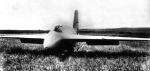
El primer Me 163, con el código de fábrica KE+SW, se completó sin el motor en Lechfeld en marzo de 1941, y se sometió de inmediato a un programa de pruebas como planeador, remolcado por un Messerschmitt Bf 110. Dittmar nuevamente quedó embelesado en el manejo, ya que el avión era un planeador tan bueno que constantemente se negaba a aterrizar, e invariablemente casi se salía del campo. El vuelo inaugural con motor tuvo lugar en Karlshagen el 13 de agosto de 1941, cuando el avión alcanzó los 800 km/h. El 2 de octubre de 1941, Dittmar alcanzó los 1004 km/h., casi acercándose a la velocidad del sonido y superando en 250 km/h. el récord mundial oficial de velocidad.
La investigación posterior condujo a un ala modificada con grandes ranuras fijas sobre el borde de ataque exterior, lo que hizo que la aeronave no entrara en tonel sin control, aunque la entrada en pérdida siguió siendo severa. Básicamente, el Me 163A difícilmente podría haber sido más simple, pero causó un sinfín de problemas y accidentes catastróficos. El concepto del planeador de Lippisch hacía que pareciera normal despegar de una plataforma rodante, desechada una vez en el aire, y aterrizar sobre un patín. De hecho, las dificultades de pilotaje eran inmensas. Si el avión no estuviera parado contra el viento, giraría y posiblemente volcaría, siendo inútil el timón a bajas velocidades. Cualquier bache en la superficie de la pista provocaba un despegue prematuro o un rebote al aterrizar. Este hecho combinado con una plataforma rodante sin suspensión podía causar daño en la columna a cualquier piloto y, al agitar las sustancias químicas propulsoras, una eventual explosión del avión.
Los líquidos eran tan inestables para el gran motor R II-211, que para conseguir mayor control se hizo necesario reemplazar el Z-stoff por el C-stoff (solución de hidrato de hidracina en alcohol metílico). Aunque las pruebas de los motores provocaron explosiones en dos ocasiones, se siguió trabajando en los seis prototipos Me 163A, diez aviones de preserie Me 163A-0 y 70 unidades de preserie del interceptor Me 163B, que recibió el nombre de Komet. Durante 1941, la muerte de Ernst Udet, un entusiasta partidario del proyecto, la irrelevancia de un interceptor tan pequeño en el esfuerzo de guerra de Alemania en ese momento y el ineficaz bombardeo de Alemania, que todavía se realizaba principalmente por la noche, hizo que el proyecto tuviera una baja prioridad. Además, Walter seguía teniendo graves y peligrosos problemas en los motores.
A principios de 1943, se formó en Karlshagen una escuadrilla de prueba especial para el Me 163B, el Erprobungskommando 16, bajo el mando del Hauptmann Wolfgang Späte. Peenemunde fue arrasada por la RAF y la unidad fue trasladada a Bad Zwischenahn. Este fue el centro de la mayoría de los vuelos del Komet durante el año siguiente, y los Aliados tuvieron noticia del avión a partir de fotografías de reconocimiento a gran altura tomadas en diciembre de 1943. Para entonces, el programa se había retrasado aún más por un bombardeo. La fábrica de Messerschmitt en Regensburg fue duramente golpeada el 17 de agosto de 1943, y gran parte del lote de preproducción fue destruido. Sin embargo, la producción principal se distribuiría por toda Alemania bajo el control de Klemm Technik. El ensamblaje final se realizaba en un centro secreto de la Selva Negra y luego se enviaba por ferrocarril a la base de pruebas de vuelo en Lechfeld.
Este gigantesco plan de producción sufrió muchos problemas adicionales y el flujo de aviones no comenzó a llegar a Lechfeld hasta febrero de 1944. El interceptor de producción se designó Me-163B-1a. La aeronave estaba muy refinada como resultado de la prolongada experiencia con variantes anteriores, pero no se había hecho nada para solucionar el terrible peligro de explosión, que era más probable por la plataforma rodante y el patín de aterrizaje.
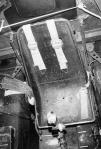
El ala era más pequeña y simple que las del avión precursor. La estructura de madera era simple, con dos largueros muy espaciados y una capa de tela como recubrimiento por lo general de 8 mm. de espesor. En la parte externa de los bordes de fuga estaban las únicas superficies de control, aparte del timón: grandes elevones manuales cubiertos de tela que se usaban tanto para cabeceo como para balanceo. El pequeño fuselaje era de aleación ligera, cubierto principalmente con paneles desmontables para acceder al interior. El elemento más grande era el depósito de T-stoff de 1.040 litros de capacidad, que llenaba el espacio entre la cabina y el motor. Otros depósitos de T-stoff más pequeños rellenaban cada lado de la cabina. El C-stoff estaba alojado en dos depósitos de 170 litros entre los largueros de las alas y dos tanques de 73 litros en los bordes de ataque.
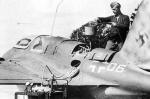
El motor, que en producción se denominó HWK Tipo 509A-1, tenía una sola cámara alimentada a través de dos tubos largos y rectos desde el grupo de turbobombas ubicado aproximadamente en línea con el borde de salida del ala. Antes de cada vuelo, todo el sistema tenía que drenarse y enjuagarse con cuidado, usando grandes cantidades de agua. El motor se ponía en marcha con T-stoff alimentado desde un depósito de arranque separado en la parte superior del fuselaje trasero, mientras que un motor eléctrico ponía en marcha las turbobombas. Los tanques estaban presurizados, y una vez que la alimentación llegaba a las turbobombas, los líquidos se suministraban a alta presión, quemándose espontáneamente al contacto en la cámara. Todo el fuselaje y el motor se podían desmontar fácilmente. Aunque tosco en comparación con las unidades posteriores, el Tipo 509A suponía un logro notable y, aunque superaba los 2,13 m. de largo, pesaba poco más de 100 kg.
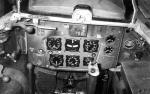
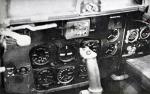
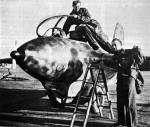
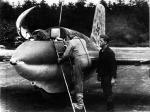
La cabina era cómoda, aunque no había ningún sistema disponible para la presurización más que una simple entrada en la parte delantera. La cubierta era una moldura de plexiglás endeble, con bisagras en el lado derecho y con poca capacidad para resistir el granizo o los pájaros a las velocidades que podía alcanzar el Komet. La carlinga estaba protegida en el morro y el panel trasero, pero el asiento no era del nuevo tipo de eyección y era imposible salir del avión a altas velocidades. El morro estaba lleno de radios y otros elementos, incluido el generador impulsado por una pequeña hélice. El armamento constaba de dos cañones (uno en la raíz de cada ala entre los largueros). La mayoría de los primeros Komets con armamento tenían dos cañones de alta velocidad MG 151/20 de 20 mm., pero el armamento de producción estándar eran cañones MK 108 de 30 mm., alimentado con 60 proyectiles y alojados sobre el tanque principal de T-stoff. Las botellas de aire comprimido amartillaban los cañones, además de ser empleada por la mayoría de los dispositivos de energía auxiliar a bordo, incluida la activación del sistema hidráulico de las aletas. El patín de aterrizaje se plegaba hidráulicamente en el despegue, junto con la rueda de cola orientable. Al retraer el patín, se liberaba automáticamente la carretilla de ruedas, pero esta solía rebotar y estrellarse contra la aeronave o incluso engancharse en la parte delantera del patín.
Mediante un aprendizaje arduo, la Luftwaffe perfeccionó sus procedimientos operativos del Me 163B. Se esparcía agua por todas partes durante el reabastecimiento de combustible o la puesta en marcha. Los pilotos y el personal de tierra usaban trajes especiales de asbesto no orgánico. Ningún avión de combate ha exigido nunca tanto a sus operadores. El aterrizaje en particular exigía una aproximación con el motor parado a 210 km/h. en un punto exacto, sin oportunidad para un segundo intento.
Por lo tanto, los primeros pilotos seleccionados estaban por encima del promedio, y después del entrenamiento inicial volando un planeador con alas recortadas, pasaban a planeos remolcados en el Me 163A, luego empleaban el Me 163A con lastre de agua, el Me 163A con motor, y finalmente al Me 163B. Los Komets de serie fueron aceptados por la Luftwaffe a partir de mayo de 1944.
El primer enfrentamiento con el enemigo fue llevado a cabo por I/JG 400, bajo el mando del Oberleutnant Robert Olejnik. La unidad se formó a partir de Erprobungskommando 16 en Zwischenahn en mayo de 1944 y fue equipada con aviones a fines de julio en Brandis. El primer enfrentamiento importante tuvo lugar el 28 de julio de 1944 cuando seis Komets despegaron para interceptar a 596 B-17 que se dirigían al complejo petrolero de Leuna-Merseburg. No se anotaron derribos, principalmente debido a las altas velocidades de aproximación.
El siguiente gran enfrentamiento se produjo el 16 de agosto de 1944, cuando cinco Komets se enfrentaron a 1.096 bombarderos de la USAAF que no habían recibido instrucciones de evitar Brandis. Uno fue derribado por un artillero de cola y un segundo anotó impactos en un B-17 y luego fue destruido por un P-51 Mustang. Pero, el 24 de agosto, el Feldwebel Siegfried Schubert destruyó dos B-17 y otros Komets abatieron otros dos bombarderos. Tal éxito no se repetiría. La creciente flota de Komets nunca dio un golpe decisivo, en gran parte debido a la dificultad de apuntar con precisión en el breve tiempo de disparo disponible. Para superar esto, se ideó el equipo especial SG 500, con diez cañones verticales a lo largo de las raíces de las alas con proyectiles 50 mm. que se disparaban automáticamente cuando el Komet pasaba rápidamente bajo su objetivo. El SG 500 tuvo éxito en las pruebas, pero solo se usó en combate una vez antes del final de la guerra.
Hubo muchas ideas para desarrollar el Komet, como la versión mejora denominada Me 163D/Ju 248/Me 263, que tenía un tren de aterrizaje adecuado y un motor con cámaras de combustión separadas. La mejor evaluación general del Me 163 es que el 80 por ciento de las pérdidas ocurrieron durante el despegue o el aterrizaje, el 15 por ciento se debieron a la pérdida de control en una inmersión o incendio en el aire y el 5 por ciento restante fueron pérdidas en combate. En 1945, con unos 300 en servicio en primera línea, solo el I/JG 400 pudo enfrentarse al enemigo. Reclamó 9 bombarderos pero sus pérdidas fueron de 14 aviones.








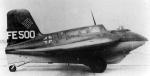
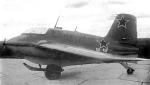
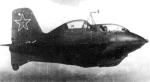





In three-quarters of a century of air warfare there have been only very few occasions when a nation has gone into battle with an aircraft so advanced in concept that its enemies did not at first know how to tackle it. The Me 163 was very small, agile and nearly as fast as most of its opponents. With relief, the Allies found that it tended to appear only in very small numbers, it clearly had a brief flight endurance, and its effectiveness was not impressive. Two were actually shot down before the type had scored a single combat success.
The story started in 1926 when Dr Alexander Lippisch built his first tailess glider. Over the next decade Lippisch built many tailless aircraft and also became involved with rocket propulsion, so it was not great surprise when, in 1937, he was asked by the research section of the RLM (German air ministry) to design an aircraft to test a new rocket motor intended for manned aeroplanes, the Walter I-203, rated at 3.92 kN. (882 lb.) thrust. This operated on a mixture of two liquids which reacted violently if allowed to meet: T-stoff, consisting mainly of concentrated hydrogen peroxide, and Z-stoff, a solution of calcium permanganate in water. With such reactive propellants it was decided to design the fuselage in metal and, as the DFS (the German glider research institute) where Lippisch worked was not equipped for the task, the fuselage construction was sub-contracted to Heinkel.
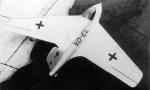
In the event, Heinkel never built the metal fuselage, but did build the rocket-propelled He 176, whose abysmal showing in June 1939 almost caused loss of interest in any rocket aircraft. It was a very frustrated Lippisch who, early in 1939, left the DFS and teamed up with Messerschmitt. At Ausgburg, Willy Messerschmitt showed frosty disinterest, but Lippisch was allowed to carry on with his own team, in strict security, and in late 1939 decided that his preliminary research aircraft, the all-wood DFS 194, could in fact be flown by the rocket and not by the intended small piston engine. The machine was taken in early 1940 to Karlshagen, the test airfield at Peenemunde, where the I-203 rocket was installed. On 3 June 1940 famed glider pilot Heini Dittmar made a successful first flight, reporting superb handling. Later this flimsy machine, designed for 300 km/h. (186 mph.), reached 547 km/h. (340 mph.) in level flight, and also demonstrated fantastic steep climbs.
Suddenly, it was all systems go. The Walter company had by this time developed the II-203b motor rated at 7.36 kN. (1,653 lb.) to assist heavy aircraft to take off, and was working on a still more powerful unit. Lippisch was instructed to design a fast-climb interceptor to use the latter motor, the short flight endurance being no problem to a target-defence aircraft which could stay on the ground until enemy bombers were almost overhead. The designation Me 163B was allocated, the Me 163A being a series of six prototypes to be powered by the II-203b modified as a permanently installed main engine.
The first Me 163, with factory letters KE+SW, was completed except for its motor at Lechfeld in March 1941, and was at once put through a programme of trials as a glider, towed off by a Messerschmitt Bf 110. Dittmar again was enraptured at the handling, but the aircraft was such a good glider it consistently refused to land, and invariably almost went off the far side of the field. The maiden flight under power took place at Karlshagen on 13 August 1941, when the aircraft reached 800 km/h. (497 mph.). On 2 October 1941, Dittmar reached 1004 km/h. (624 mph.), almost approaching the speed of sound and beating by 250 km/h. (155 mph.) the official world speed record.
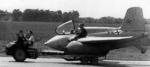
Subsequent research led to a modified wing with large fixed slots over the outer leading edge, which rendered the aircraft spin-proof, although the stall remained severe. Basically, the Me 163A could hardly have been simpler, but one feature was to endure into the production Me 163B and cause endless problems and catastrophic accidents. The Lippisch glider background made it seem normal to take off from a wheeled dolly, jettisoned once airborne, and to land on a sprung skid. In fact the piloting difficulties were immense. If the aircraft was not dead into the wind it would slew around and possibly overturn, the rudder being useless at low speeds. Any bump in the surface caused premature take-off or a bounce on landing; this combined with the totally unsprung dolly to cause spinal damage to any pilot, and, by shaking up the propellants, the occasional devastating explosion.
So tricky were the liquids that for the big R II-211 motor, which was made fully controllable, the Z-stoff was replaced by C-stoff (hydrazine hydrate solution in methyl alcohol). Although testing of the motors caused explosions on two occasions, work went ahead on the six Me 163A prototypes, and ten Me 163A-0 pre-production aircraft, and 70 pre-production versions of the Me 163B interceptor, which was given the name Komet. During 1941, Ernst Udet’s death, an enthusiastic supporter of the project, the irrelevance of such a small interceptor in Germany’s war effort at that moment and the ineffectual bombing of Germany, which was still mainly carried out by night, made the project have a low priority. Furthermore, Walter continued to have severe and dangerous motor problems.
In early 1943 a special Me 163B test squadron, the Erprobungskommando 16, was formed at Karlshagen under Hauptmann Wolfgang Späte. Peenemunde was raided by the RAF and the unit was moved to Bad Zwischenahn. This was the centre for most Komet flying for the next year, and the aircraft became known to the Allies from high-flying reconnaissance photographs taken in December 1943. By this time the programme had been further delayed by a raid. The Messerschmitt factory at Regensburg was heavily hit on 17 August 1943, many of the pre-production batch being destroyed. The main production, however, was to be dispersed throughout Germany under the control of Klemm Technik, with final assembly at a secret Black Forest centre and then guarded rail shipment to the flight-test base at Lechfeld.
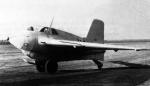
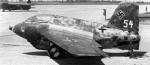
This giant production plan suffered many firther problems, and the flow did not begin to arrive at Lechfeld until February 1944. The production interceptor was designated Me-163B-1a. The aircraft was very refined as a result of the prolonged experience with earlier variants, but nothing had been done to cure the terrible danger of explosion, which was more likely by the dolly and landing skid.
The wing was smaller and simpler than those of the precursor aircraft. The wooden structure was simple, with two widely spaced spars and skin of fabric-covered ply usually 8mm. (0.31in.) thick. Outboard on the trailing edge were the only control surfaces, other than the rudder: large manual fabric-covered elevons used for both pitch and roll. The small fuselage was light alloy, covered mainly with detachable panels to gain access to the densely packed interior. The larget item was the T-stoff tank of 1040-litre capacity, which filled the space between the cockpit and the motor. Smaller T-stoff tanks filled each side of the cockpit. The C-stoff was housed in two 170-litre tanks between the wing spars and two 73-litre tanks in the leading edges.
The motor, which in production was called the HWK Type 509A-1, had a single chamber fed via two long straight pipes from the turbopump group located roughly in line with the trailing edge of the wing. Before each flight the entire system had to be drained and flushed with care, using vast amounts of water. The motor was started with T-stoff fed from a separate starter tank in the top of the rear fuselage, while an electric motor cranked up the turbopumps. The tanks were pressurized, and once the feed reached the turbopumps, the liquids were supplied under high pressure, combusting sponteneously on contact in the chamber. The entire fuselage and motor could be readily be detached. Altough crude compared to later units, the Type 509A was remarkable achievement and although over 2.13 m. (7 ft.) long, weighed little over 100 kg. (220 lb.).
The cockpit was confortable, although there was no system available for pressurisation other than a plain ram inlet at the front. The canopy was a flimsy plexiglas moulding, hinged on the right side and with little ability to resist hail or birds at the speeds the Komet could attain. Nose and back armor was provided, but the seat was not of the new ejection type and it was impossible to get out at high airspeeds. The nose was full of radio and other items, including the generator driven by a small windmill propeller. Armament comprised two cannon (one in the root of each wing between the spars). Most early armed Komets had the high-velocity 20mm. MG 151/20, but the standard production armament was the 30mm. MK 108, fed with 60 rounds housed above the main T-stoff tank. Compressed-air bottles cocked the guns, and gas pressure served most of the onboard auxiliary power services, including energising the flap hydraulics. The landing skid was hydraulically retracted on take-off, along with the neat steerable tailwheel. Retracting the skid automatically released the wheeled dolly, but this had a habit of bouncing up and smashing into the aircraft or even hooking on the front of the skid.
By learning in the most painful way, the Luftwaffe refined its Me 163B operating procedures and sloshed water everywhere during refuelling or ground running. Pilots and ground personnel wore specal suits of non-organic asbestos. No combat aircraft has ever demanded so much of its operators. Landing in particular demanded a dead-stick approach at 210 km/h. (130 mph.) on an exact point, with no opportunity for a second attempt.
Thus, early selected pilots were above average, and after initial experience flying a clipped-wing version of the Habicht glider they progressed to towed glides in the Me 163A, then glides in water-ballasted Me 163As, then powered flights in the Me 163A, and finally to the Me 163B. Production Komets were accepted by the Luftwaffe from May 1944.
The first enemy engagement was carried out by I/JG 400, under Oberleutnant Robert Olejnik and formed from Erprobungskommando 16 at Zwischenahn in May 1944 and finally equipped with aircraft in late July, at Brandis. The first major engagement was on 28 July 1944 when six Komets got airborne to interfere with 596 B-17s heading for the Leuna-Merseburg oil complex. No hits were scored, mainly because high closing speeds.
The next major engagement came on 16 August 1944, when five Komets took on 1,096 USAAF bombers which had not been instructed to avoid Brandis. One was downed by a tail gunner and a second scored hits on a B-17 and was later destroyed by a P-51 Mustang. But, on 24 August, Feldwebel Siegfried Schubert destroyed two B-17s, and other Komets bagged two others. Such success was not to be repeated. Never did the growing armada of Komets strike a telling blow, largely because the difficulty of aiming accurately in the brief firing time available. To overcome this, the SG 500 special equipment was devised, with ten vertical barrels along the wingroots firing 50mm. projectiles upwards triggered automatically as the Komet flashed past its target. The SG 500 did well in tests, but was only used in combat once before the German collapse.
There were many ideas for improved Komets, including a far better version, the Me 163D/Ju 248/Me 263, which had a proper landing gear and a motor with main and cruise thrust chambers. The best overall assessment of the Me 163 is that 80 per cent of Komet losses occurred during take-off or landing, 15 per cent were due to loss of control in a dive or fire in the air and the remaining 5 per cent were losses in combat. In 1945, with some 300 in front-line service, only I/JG 400 was able to engage the enemy. It claimed 9 bombers but lost 14 aircraft in doing so.
FUENTES Y REFERENCIA – SOURCES & REFERENCE
David Donald (ed.), Warplanes of the Luftwaffe. Combat Aircraft of Hitler’s Luftwaffe 1939-1945, Barnes & Noble Books, 2000.
©jmodels.net
 jmodels.net
Debe estar conectado para enviar un comentario.