
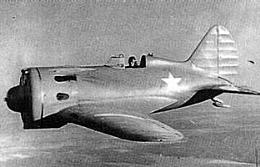
| DATOS TÉCNICOS (I-16 Tipo 24) |
TECHNICAL DATA (I-16 Type 24) |
| TIPO:Caza. | TYPE:Fighter. |
| TRIPULANTES:1 | CREW:1 |
| ENVERGADURA:9 m. | SPAN:29.6 ft. |
| LONGITUD:6,13 m. | LENGTH:20.1 ft. |
| ALTURA:3,25 m. | HEIGHT:10.8 ft. |
| SUPERFICIE ALAR:14,5 m². | WING AREA:156 ft². |
| PESO EN VACÍO:1.490 kg. | EMPTY WEIGHT:3,285 lb. |
| MOTOR:Un motor radial de 9 cilindros Shvetsov M-63 sobrealimentado de 1.100 hp. (820 kW) con hélice bipala de paso variable. | ENGINE:One Shvetsov M-63 9-cylinder supercharged air-cooled radial engine developing 1,100 hp. (820 kW) with 2-bladed variable-pitch propeller. |
ARMAMENTO:
|
ARMAMENT:
|
| VELOCIDAD MÁX.:489 km/h. a 3.000 m. | MAX. SPEED:304 mph. at 9,800 ft. |
| TECHO:9.700 m. | CEILING:31,800 ft. |
| ALCANCE:700 km. con depósitos auxiliares. | RANGE:430 ml. with drop tanks. |
| PRIMER VUELO:30 de diciembre de 1933. | FIRST FLIGHT:30 December 1933. |
| VERSIONES:27 | VERSIONS:27 |
| CONSTRUIDOS:Alrededor de 10.292 (cazas y entrenadores). | BUILT:Around 10,292 (fighters and trainers). |
Mientras Polikarpov estaba desarrollando el I-152 a partir del I-15 original, su OKB (Departamento de Diseños Especiales) también estaba desarrollando un derivado monoplano para presentar la última tecnología aeronáutica. El trabajo en el prototipo de un caza monoplano comenzó a mediados de 1933, y la máquina realizó su primer vuelo el 30 de diciembre, con el piloto Valery Chkalov a los mandos. Aunque el desarrollo se realizó sin un requisito de la VVS (Fuerza Aérea Roja), los funcionarios quedaron lo suficientemente impresionados como para realizar pedidos de producción para el avión, que había sido designado I-16 un mes antes. Se mostró al mundo en el desfile del Primero de Mayo de 1935 en Moscú, como símbolo del poder soviético.
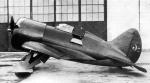
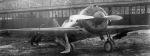
El I-16 tenía un gran parecido con los famosos aviones de carreras estadounidenses Granville Brothers («GeeBee»): un monoplano de ala baja con forma de barril literalmente construido alrededor de un motor radial, en el prototipo un M-22. El avión era de construcción mixta, fuselaje de madera con revestimiento de madera contrachapada, larguero de ala de aleación de acero, revestimiento de aleación de duraluminio en el centro y los bordes delanteros del ala y recubrimiento de tela en el exterior de las alas. Había una sola ametralladora ShKAS de 7,62 mm. en cada ala, justo por fuera del tren principal y disparando fuera del arco de la hélice, mientras que el asiento del piloto estaba blindado. Todas las superficies de control de vuelo tenían marcos de aleación de aluminio y revestimientos de tela; los alerones recorrían la mayor parte del borde de fuga del ala y podían usarse como flaps.
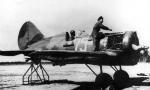
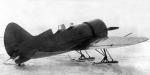
La cabina estaba completamente cerrada, la cubierta se deslizaba hacia adelante, con una mira telescópica en el centro. Había una pequeña puerta que se abría hacia abajo para facilitar la entrada o salida de la cabina; en las primeras máquinas, la puerta estaba en el lado izquierdo, en la mayoría de la producción había una puerta en ambos lados. El tren principal era retráctil, el piloto giraba una manivela para pivotarlos desde las alas hacia el fuselaje. Los I-16 a veces estaban equipados con esquís para operaciones en invierno. Aunque el tren de aterrizaje de esquí inicialmente no era retráctil, el esquí retráctil se desarrolló más tarde. La intención de la versión de producción era usar el motor Wright Cyclone / Shvetsov M-25. El segundo prototipo empleó un Cyclone importado. Las pruebas revelaron algunos problemas, en particular con la instalación del motor Cyclone, por lo que los I-16 Tipo 4 de producción inicial usaban el motor M-22, y pronto fueron reemplazados en la línea de producción por el Tipo 5 con motor M-25. El motor impulsaba una hélice de paso variable de dos palas.
En su presentación, el I-16 con motor M-25 era el caza de serie más rápido del mundo, con una excelente velocidad de ascenso y una velocidad de balanceo nítida, aunque no era tan ágil como el I-152. El I-16 no se consideraba una buena montura para pilotos inexpertos, ya que respondía al umbral de inestabilidad, pero se cuenta que el «Ishak (Burro)», como se le llamaba por la similitud de esa palabra con la pronunciación rusa de «I-16», tenía características de giro exageradas. Parece que los pilotos de la VVS sospecharon del giro del I-16 al principio, pero las pruebas exhaustivas mostraron que no era tan problemático y se proporcionaron reglas sobre cómo salir de los toneles cuando ocurrieran. Sin embargo, era difícil entrar o salir de la cabina, y hacer girar el tren de aterrizaje era un trabajo laborioso.
Junto con la producción de cazas, se introdujo un entrenador biplaza desarmado impulsado por el M-22, el Tipo 4 UTI-2, con alrededor de cien construidos. Fue rápidamente reemplazado en producción por el Tipo 15 UTI-4, más o menos lo mismo, excepto que con un motor M-25. Se construyeron alrededor de 1.800 UTI-4. Los entrenadores UTI-4 de producción tenían tren de aterrizaje fijo.
El Tipo 10 se introdujo a fines de 1936. Esta variante presentaba el motor M-25A más potente y dos ametralladoras de 7,62 mm. ShKAS añadidas, montadas en la parte superior del morro que disparaban a través de la hélice. La cubierta deslizante hacia adelante, que había resultado engorrosa en la práctica, fue reemplazada por un parabrisas fijo y una cabina abierta, mientras que la mira telescópica fue reemplazada por una mira en la cabina. La producción posterior del Tipo 10 contó con el motor M-25V mejorado. Algunas fuentes llaman a los Tipo 10 con el M-25A Tipo 6, pero parece un claro error.
El Tipo 12 era un Tipo 5 con los dos cañones laterales reemplazados por un cañón ShVAK de 20 mm., dando un armamento total de dos cañones y dos ametralladoras. El Tipo 12 y otros modelos del I-16 con el mismo armamento se conocían, al menos informalmente, como «I-16P», donde «P» significaba «pushyechniy (cañón)». El Tipo 12 parece haber sido construido en paralelo con el Tipo 10. El Tipo 17, introducido en 1939, era un Tipo 10 con la misma actualización de armamento, el Tipo 17 se construyó en mayor número que el Tipo 12. El cañón impuso una leve penalización de ascenso y velocidad.
La adición de armamento más pesado, así como armadura, significó que el I-16 sufriera un «arrastre de peso», y las variantes mejoradas del motor M-25 no pudieron mantener el ritmo. A partir de 1939, el I-16 se consideró obsoleto, pero dado que los cazas de próxima generación no iban a estar disponibles en un futuro cercano, se siguió trabajando para equipar el I-16 con motores más potentes.
El Tipo 18 se introdujo en 1939, con las cuatro ametralladoras de 7,62 mm. del Tipo 10, más el motor Shvetsov M-62, un M-25 mejorado con un sobrealimentador de dos velocidades, proporcionando 600 kW (800 hp.), y una radio. El motor más potente apenas mejoraba la autonomía, por lo que se introdujo un Tipo 20 con el único refinamiento significativo en los dos depósitos desechables debajo de las alas conformados en forma de bañera. También se introdujo una variante I-16P con armamento de ametralladora / cañón denominada Tipo 27.
El Shvetsov M-62 condujo al radial M-63 mejorado de 670 kW (900 hp). El Tipo 20 se actualizó a este motor y se designó como Tipo 24, entrando en producción en 1940. Se construyó una variante I-16P como Tipo 28. La introducción del M-63 en realidad no mejoró mucho el rendimiento, principalmente debido a una falta de coincidencia con la hélice, pero también por varias deficiencias menores del diseño, lo que llevó a la variante de producción final del I-16, el Tipo 29, con varios refinamientos. Un cambio significativo en el Tipo 29 fue eliminar los cañones laterales y, en su lugar, agregar una ametralladora UBT de 12,7 mm. (calibre 0,50) en el morro, que disparaba a través del arco de la hélice junto con las ametralladoras ShKAS. El Tipo 29 también podría llevar seis cohetes RS-82 debajo de las alas, junto con los tanques auxiliares subalares.
La producción del I-16 finalizó en 1941. Durante la vida útil del I-16, también hubo varios aviones experimentales únicos basados en él, como una variante de ataque a tierra fuertemente blindada. La producción total del I-16 fue de más de 7.000 cazas y casi 1.900 entrenadores, una cantidad de ellos suministrada a los nacionalistas chinos.
Si bien es tentador pensar que el monoplano I-16 era más avanzado que la serie del biplano I-15, ambas series fueron desarrollos más o menos paralelos y tuvieron carreras de combate más o menos parejas.
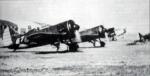
Después de que estallara la Guerra Civil española en 1936, el dictador soviético Josef Stalin decidió ayudar al gobierno republicano, aunque a un precio pagado en oro. Cientos de I-16 fueron enviados a España en el otoño de 1936, entrando rápidamente en combate, intimidando a los pilotos italianos y alemanes que apoyaban la causa nacionalista, que en ese momento dependían de los biplanos Fiat CR-32 y Heinkel He 51 respectivamente.
Los nacionalistas llamaron al I-16 «Rata«, mientras que los republicanos lo llamaron «Mosca«. El combate reveló algunas deficiencias en la aeronave, lo que exigió mejoras estructurales y mayor blindaje, y el armamento ligero demostró ser un inconveniente particular e impulsó la introducción del Tipo 10 de cuatro cañones. Irónicamente, el I-15bis/I-152 demostró ser superior al I-16 en algunos aspectos, lo cual es una de las razones por las que los soviéticos tardaron en abandonar la configuración del caza biplano. A medida que las variantes I-16 mejoradas entraron en producción, se enviaron a España, en un intento de mantenerse al día con la introducción del nuevo y mejorado caza alemán Bf 109. Los pilotos soviéticos generalmente pudieron defenderse, pero no pudieron evitar la derrota final de los republicanos el 1 de abril de 1939.
Mientras tanto, a partir de 1937, los I-16 se suministraron en cantidad a los chinos nacionalistas en su lucha contra los invasores japoneses. El avión estaba pilotado, al menos en parte, por pilotos soviéticos. En el verano de 1939, los soviéticos se enfrentaron directamente con los japoneses en un gran enfrentamiento en la frontera con Mongolia, en las cercanías de Khalkin Gol. Aunque Khalkin Gol fue una gran victoria para los soviéticos, de ninguna manera fue barata. Los Polikarpov fueron el pilar de las fuerzas de combate de la VVS en el enfrentamiento y sufrieron mucho. Estaba claro al final del choque, si no lo había sido antes, que los cazas Polikarpov estaban obsoletos, que se necesitaba algo mejor. Una distinción del I-16 en este conflicto fue el primer uso en combate del cohete RS-82.
Cuando la Alemania nazi invadió la URSS el 22 de junio de 1941, los I-16 estaban obsoletos. Muchos fueron destruidos en el suelo en el bombardeo del primer día. El I-16 se usó en apoyo cercano, pero también en combate aéreo. Si bien el I-16 había sido comparable con los primeros modelos del Bf 109 que se encontraron en España, claramente estaba rezagado en capacidad con respecto a la serie Bf 109F de segunda generación y el Focke-Wulf Fw 190 posterior. También las tácticas inflexibles de la VVS ocasionaron grandes pérdidas.
Había tal desesperación entre los defensores que hubo muchos casos de pilotos de I-16 que embistieron a los bombarderos enemigos. Los pilotos que sobrevivieron adquirieron mejores tácticas y, en manos de un piloto que entendiera las debilidades y fortalezas del I-16, podía ser un peligroso adversario para los pilotos alemanes. Aunque mucho más lento que un Bf 109, el I-16 era resistente y ágil, lo que lo hacía difícil de dañar y letal para cualquier alemán que fuera lo suficientemente tonto como para participar en un combate de giros con él. Algunos pilotos de la VVS acumularon un número considerable de derribos con el I-16.
El I-16 también demostró su valía en el papel de ataque a tierra, utilizando cohetes y bombas pequeñas junto con su armamento. En una aplicación particularmente atrevida, después de los experimentos anteriores a la guerra, hasta el otoño de 1941, se utilizaron bombarderos anticuados Tupolev Tu-3 como «portaaviones voladores», con un I-16 debajo de cada ala. Los Tu-3 transportaban a los cazas, configurados como cazabombarderos, para luego liberarlos. Los I-16 realizaban ataques de bombardeo en picado y, con suerte, regresaban a la base por sus medios. Sin embargo, desde el primer día de la guerra en el Este, el I-16 ya vivía más allá de su tiempo. La mayoría de los I-16 quedaron fuera de servicio en el verano de 1943.
Los alemanes y los aliados del Eje que luchaban en el Este capturaron algunos. Los finlandeses aparentemente usaron I-16 capturados en combate, aunque esta historia no está del todo clara. Los finlandeses llamaron al I-16 «Siipiorava (Ardilla Voladora). Varios cazas Polikarpov han sido restaurados y vuelan en exhibiciones aéreas en el siglo XXI.


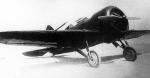
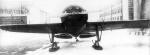
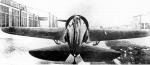







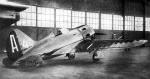
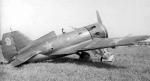


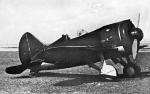


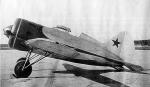
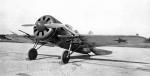



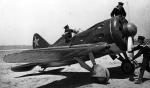


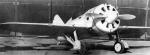


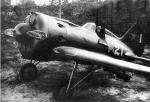








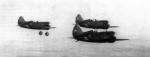
While Polikarpov was developing the I-152 from the original I-15, his OKB (Department of Special Designs) was also developing a monoplane derivative, to feature the latest aircraft technology. Work on the prototype of a monoplane fighter began in mid-1933, with the machine performing its first flight on 30 December, pilot Valery Chkalov at the controls. Although development had been performed without a VVS (Red Air Force) requirement, officials were impressed enough to place production orders for the aircraft, given the service designation of I-16, a month before. It was displayed to the world in a flyover of Moscow on May Day, 1935, as a symbol of Soviet power.
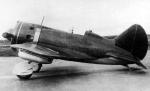
The I-16 had a broad resemblance to the famous American Granville Brothers («GeeBee») air racers: a low-wing, barrel-shaped monoplane literally built around a radial engine, in the prototype an M-22. The aircraft was of mixed construction, wooden fuselage with plywood skinning, steel alloy wing spar, duraluminum alloy skinning on the center and leading edges of the wing, fabric covering outboard on the wings. There was a single ShKAS 7.62-mm. machine gun in each wing, just outboard of the main gear and firing outside the prop arc, while the pilot seat was armored. All flight control surfaces had aluminum alloy frames and fabric skins; the ailerons ran most of the trailing edge of the wing and could be used as flaps.
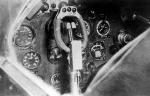
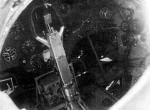
The cockpit was fully enclosed, the canopy sliding forward, with a telescopic gunsight in the center. There was a small door that hinged downward to ease getting in or out of the cockpit; in early machines, the door was on the left side, in most production there was a door on both sides. The main gear was retractable, the pilot spinning a crank to pivot them from the wings in towards the fuselage. I-16s were sometimes fitted with skis for winter operations, the ski landing gear initially being non-retractable, though retractable ski gear was developed later. The intent for the production version was to use the Wright Cyclone / Shvetsov M-25, with the second prototype using an imported Cyclone. Trials revealed some problems, notably with the Cyclone engine installation, so early production Type 4 I-16s used the M-22 engine, being soon replaced on the production line by Type 5 M-25 machines. The engine drove a two-bladed variable-pitch propeller.
At its introduction, the M-25-powered I-16 was the fastest production fighter in the world, with an excellent climb rate and a crisp roll rate, though it was not as agile as the I-152. The I-16 was not regarded as a good mount for inexperienced pilots, being responsive to the threshold of unstable, but tales that the «Ishak (Donkey)», as it was called because of the similarity of that word to the Russian pronunciation of «I-16», had vicious spin characteristics are said to be exaggerated. It seems VVS pilots were suspicious of the I-16 spin’s characteristics at first, but extensive spin trials showed it was not all that troublesome, and provided rules for how to get out of spins when they did occur. It was, however, hard to get in or out of the cockpit, and cranking in the landing gear was a laborious pain.
Along with fighter production, an unarmed two-seat trainer powered by the M-22, the Type 4 UTI-2, was introduced, with about a hundred built. It was quickly replaced in production by the Type 15 UTI-4, much the same, except with an M-25 engine, about 1,800 UTI-4s being built. Production UTI-4 trainers had fixed landing gear.
The Type 10 was introduced in late 1936, this variant featuring the more powerful M-25A engine and two more 7.62-mm. ShKAS machine guns, mounted in the top of the nose and firing through the prop arc; the forward-sliding canopy, which had proven clumsy in practice, was replaced by a fixed windscreen and open cockpit, while the telescopic gunsight was replaced by a cockpit gunsight. Later Type 10 production featured the uprated M-25V engine. Some sources call Type 10s with the M-25A the Type 6, but that sounds like an error.
The Type 12 was a Type 5 with the two wing guns replaced by 20-mm. ShVAK cannon, giving total armament of two cannon and two machine guns. The Type 12 and other I-16 types with the same armament were at least informally known as «I-16P», where «P» stood for «pushyechniy (cannon)». The Type 12 seems to have been built in parallel with the Type 10. The Type 17, introduced in 1939, was a Type 10 with the same armament upgrade, the Type 17 being built in greater numbers than the Type 12. The cannon imposed a slight climb and speed penalty.
The addition of heavier armament, as well as armor, meant the I-16 suffered from «weight creep», and the uprated M-25 engine variants failed to keep pace. From 1939, the I-16 was seen as obsolescent, but since next-generation fighters weren’t going to be available in the near future, work went ahead to fit the I-16 with more powerful engines.
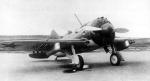
The Type 18 was introduced in 1939, featuring the four 7.62-mm. machine guns of the Type 10, plus the Shvetsov M-62 engine, an improved M-25 with a two-speed supercharger, providing 600 kW (800 hp.), and a radio. The more powerful engine cut into range, so a Type 20 was introduced, the only significant refinement being provisions for two jettisonable tub-shaped conformal underwing tanks. An I-16P variant with machine gun / cannon armament was introduced as the Type 27.
The Shvetsov M-62 led to the improved and uprated M-63 radial, with 670 kW (900 hp.). The Type 20 was upgraded to this engine and designated Type 24, going into production in 1940. An I-16P variant was built as the Type 28. The introduction of the M-63 did not actually improve performance much, mostly due to a mismatch with the propeller but also because of various minor deficiencies of the design, leading to the final I-16 production variant, the Type 29, with various refinements. One significant change in the Type 29 was to delete the wing guns, instead adding a UBT 12.7-mm. (0.50-caliber) machine gun in the nose, firing through the propeller arc along with the ShKAS machine guns. The Type 29 could also carry six RS-82 rockets under the wings, along with the auxiliary underwing tanks.
Production of the I-16 ended in 1941. During the I-16’s production life, there were also various one-off experimental aircraft based on it, such as a heavily-armored ground attack variant. Total production of the I-16 is given as over 7,000 fighters and almost 1,900 trainers, a quantity of them being supplied to the Nationalist Chinese.
While it is tempting to think of the monoplane I-16 as more advanced than the biplane I-15 series, as noted above the two series were more or less parallel developments, and they had roughly parallel combat careers.
After the Spanish Civil War broke out in 1936, Soviet dictator Josef Stalin decided to aid the Republican government, though at a price, paid in gold. Hundreds of I-16s were dispatched to Spain in the fall of 1936, quickly seeing combat, intimidating Italian and German fliers supporting the Nationalist cause, who at the time were reliant on Fiat CR-32 and Heinkel He 51 biplanes respectively.
The Nationalists called the I-16 the «Rata (Rat)», while the Republicans called it the «Mosca (Fly)». Combat revealed some deficiencies in the aircraft, demanding structural improvements and increased armor, with light armament proving a particular drawback and driving the introduction of the four-gun Type 10 I-16. Ironically, the I-15bis / I-152 proved superior to the I-16 in some respects, which is one of the reasons the Soviets were slow to give up on the biplane fighter configuration. As improved I-16 variants went into production, they were sent to Spain, in an attempt to keep up with the introduction of the new and much improved German Bf 109 fighter. Soviet pilots were generally able to hold their own, but they could not prevent the ultimate defeat of the Republicans on 1 April 1939.
In the meantime, from 1937 the I-16s were supplied in quantity to the Nationalist Chinese in their fight with Japanese invaders, the aircraft being at least partly flown by Soviet pilots. In the summer of 1939, the Soviets had it out directly with the Japanese in a major clash on the Mongolian border, in the vicinity of the Khalkin Gol. Although Khalkin Gol was a major victory for the Soviets, it was by no means a cheap one; the Polikarpovs were the mainstay of VVS fighter forces in the clash, and suffered heavily. It was clear by the end of the clash, if it hadn’t been before, that the Polikarpov fighters were obsolescent, that something better was needed. One distinction of the I-16 in the clash was first combat use of the RS-82 rocket.
By the time Nazi Germany invaded the USSR on 22 June 1941, the I-16s were obsolescent. Many were destroyed on the ground in the first-day blitz. The I-16 was used in close-support, but also in air combat. While the I-16 had been comparable to the early-model Bf 109s encountered in Spain, it was clearly lagging in capability behind the second-generation Bf 109F series and the later Focke-Wulf Fw 190. Inflexible VVS tactics also resulting in high losses of I-16s.
There was such an element of desperation among the defenders that there were many cases of I-16 pilots actually ramming enemy bombers. The pilots who survived acquired better tactics, and in the hands of a pilot who understood the I-16’s weaknesses and strengths, it could be a dangerous adversary for German pilots. Although well slower than a Bf 109, the I-16 was sturdy and agile, making it hard to hit, and lethal to any German who was foolish enough to get into a turning contest with it. Some VVS pilots racked up considerable numbers of kills with the I-16.
The I-16 also proved its worth in the ground-attack role, using rockets and small bombs along with its gun armament. In one particularly daring application, following up prewar experiments, into the fall of 1941, antiquated Tupolev Tu-3 bombers were used as «flying aircraft carriers», with an I-16 under each wing. The Tu-3s hauled the fighters, configured as fighter-bombers, to then release them, the I-16s then performing dive-bombing attacks, and hopefully return to base on their own power. However, from the first day of the war in the East, the I-16 was living beyond its time. Most I-16s had been phased out of service by the summer of 1943.
The Germans and German Axis allies fighting in the East captured a number of Polikarpov fighters. The Finns apparently used captured I-16 machines in combat, though the story is obscure. Amusingly, the Finns called the I-16 the «Siipiorava (Flying Squirrel). A number of Polikarpov fighters have been restored to an airworthy condition, to fly in airshows in the 21st century.
FUENTES Y REFERENCIA – SOURCES & REFERENCE
airvectors.net
Ugolok Neba
©jmodels.net
 jmodels.net
Debe estar conectado para enviar un comentario.