

| DATOS TÉCNICOS (B.E.2c con motor RAF 1a) |
TECHNICAL DATA (B.E.2c with RAF 1a engine) |
| TIPO: Avión de reconocimiento, bombardero ligero, caza nocturno y patrulla costera. | TYPE: Reconnaissance, light bomber, night fighter, trainer, coastal patrol aircraft |
| TRIPULANTES: 2 | CREW: 2 |
| ENVERGADURA: 11,28 m. | SPAN: 37 ft. |
| LONGITUD: 8,31 m. | LENGTH: 27.3 ft. |
| ALTURA: 3,39 m. | HEIGHT: 11.15 ft. |
| SUPERFICIE ALAR: 34,5 m². | WING AREA: 371 ft². |
| PESO EN VACÍO: 621 kg. | EMPTY WEIGHT: 1,370 lb. |
| MOTOR: Un motor V-8 RAF 1a de 90 hp (67 kW) con hélice de madera de 4 palas de paso constante. | ENGINE: One RAF 1a V-8 air-cooled piston engine developing 90 hp (67 kW) driving a 4-bladed wooden fixed-pitch propeller. |
ARMAMENTO:
|
ARMAMENT:
|
| VELOCIDAD MÁX.: 116 km/h a 2.000 m. | MAX. SPEED: 72 mph at 6,500 ft. |
| TECHO: 3.000 m. | CEILING: 10,000 ft. |
| ALCANCE: 3 horas 15 minutos de vuelo. | RANGE: 3 hours 15 minutes in flight. |
| PRIMER VUELO: 1 de febrero de 1912. | FIRST FLIGHT: 1 February 1912. |
| VERSIONES: 12 | VERSIONS: 12 |
| CONSTRUIDOS: Alrededor de 3.500 (B.E.2). | BUILT: Around 3,500 (B.E.2). |
La Royal Aircraft Factory de Farnborough (Inglaterra) no estaba destinada originalmente a diseñar aviones, sino que su principal propósito era reparar aviones diseñados por empresas “establecidas”.
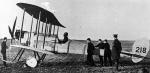
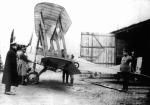
El entonces duque de Westminster presentó un Voisin al Ministerio de Guerra y, en abril de 1911, este fue enviado a Farnborough para su reparación. Habiendo “reconstruido” previamente un monoplano Blériot para producir un extraño biplano de configuración propulsora canard, el diseñador pricipal de la fábrica, Geoffrey DeHavilland, “reconstruyó” el Voisin para producir el B.E. 1, B.E. significa Bleriot (o sea, biplano tractor) Experimental. Poco quedó del Voisin del duque aparte de su motor Wolsey V-8 refrigerado por agua, que ahora impulsaba un biplano elegante, aunque de aspecto frágil, con distintivas alas elípticas y lo que ahora consideramos un diseño de biplano convencional. Anunciado como el “Aeroplano en la sombra del Ejército”, el avión formó la base del posterior B.E.2.
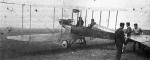
Como producto de la Royal Aircraft Factory, cuyo superintendente era uno de los jueces, el B.E.2 no pudo competir en las pruebas militares de 1912, que ganó el ya anacrónico Cody «Cathedral«. Pero el B.E.2 sí asistió a ellas y se utilizó para transportar periodistas y funcionarios hacia y desde los lugares de prueba, demostrando un grado de fiabilidad y practicidad que no compartían la mayoría de los aviones en competencia. Ya se habían pedido cuatro B.E.2 (a Vickers) y el diseño se adoptó formalmente para el nuevo Royal Flying Corps (RFC) cuando quedó claro que era mucho más adecuado que el Cody, ganador de la competición.
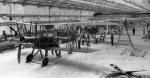
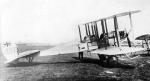
Prácticamente todos los B.E.2 de producción fueron construidos por contratistas, y la versión inicial se denominó B.E.2a. Todos, excepto los primeros, tenían alas de envergadura igual con una nueva sección de perfil aerodinámico y con incidencia reducida. Se construyeron alrededor de 100 para formar la columna vertebral del RFC antes de la guerra, equipando también al real Servicio Aéreo Naval y prestando servicio en India y Australia. Antes de que comenzara el conflicto, el B.E.2a realizó muchos vuelos pioneros de larga distancia y sus pilotos comenzaron a desarrollar una verdadera doctrina de aviación militar. Varios fueron a Francia al estallar la guerra y el Escuadrón Nº 4 utilizó uno para volar la primera misión de guerra del RFC.
El B.E.2b era básicamente similar al modelo inicial, aunque tenía una cubierta de cabina elevada que ofrecía a la tripulación una mayor protección contra los elementos. Aunque estaban desarmados por lo general, algunos B.E.2b estaban equipados con soportes de bombas, y ciertos observadores volaban con un rifle o una pistola con los que podían disparar a los aviones enemigos. Hasta entonces, los aviones enemigos habían sido recibidos con un gesto de la mano, y luego ignorados antes de que alguien comenzara a lanzar piedras. Un piloto de B.E.2b, el Teniente William Rhodes-Moorhouse del Escuadrón Nº II, ganó la primera Cruz Victoria del Aire, después de regresar con su avión tras un ataque con bombas en una estación de tren en Courtrai, a pesar de sufrir heridas que finalmente resultaron fatales. La mayoría de los primeros B.E.2 ya se habían retirado a finales de agosto de 1915. Un puñado de B.E.2b siguieron en uso en funciones de entrenamiento hasta el Armisticio.
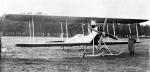
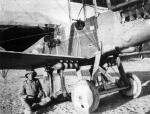
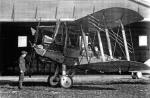
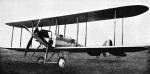
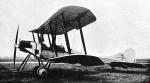
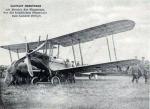
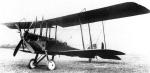
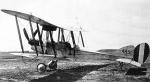
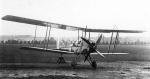
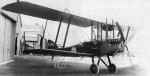
El B.E.2c era en muchos aspectos un diseño nuevo a pesar de su designación. El avión recibió una nueva aleta de cola triangular, un plano de cola rectangular grande, mayor diedro y nuevos planos escalonados con alerones modernos que reemplazaron el antiguo sistema de control “de alabeo».
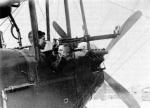
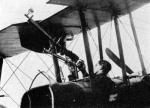
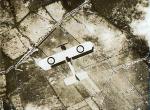
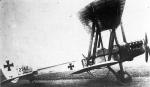
El nuevo modelo comenzó a llegar a los escuadrones de primera línea en Francia a principios de 1915, donde su docilidad y estabilidad fueron inicialmente bien recibidas. Con el B.E.2c, los esfuerzos para armar al observador en el asiento delantero alcanzaron su cenit. Inicialmente, el cañón estaba instalado en un soporte montado en el borde de la carlinga, a la que pronto se añadieron protectores de alambre para evitar que el observador disparara a pedazos de su propio avión. Más tarde se idearon montajes más sofisticados, incluido un montaje fijo para un cañón que disparaba hacia adelante pero en diagonal fuera del disco de la hélice, para ser empleado por el piloto. Pero el B.E.2c estable y sin ametralladoras demostraría ser un blanco fácil para los monoplanos Fokker que comenzaron a aparecer, y para los biplanos Albatros que los siguieron en servicio. En servicio, los B.E.2c fueron equipados con una variedad de motores y recibieron una serie de mejoras. Pero nada podía disimular su deficiencia esencial y, a medida que las bajas comenzaron a acumularse, los B.E.2 pronto fueron retirados de las unidades en Francia, reemplazados principalmente por R.E.8.
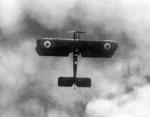
Pero esto no marcó el final de la carrera de combate del B.E.2. En los cielos ingleses, libres de interferencias de los exploradores enemigos, el B.E.2 se empleó en la defensa del territorio nacional. La estabilidad del avión y sus características de manejo predecibles y dóciles lo hicieron especialmente adecuado para el uso como caza nocturno. El 2 de septiembre de 1916, un B.E.2c pilotado por el Teniente William Leefe Robinson del escuadrón N.º 39 derribó un dirigible enemigo sobre Hertfordshire. El dirigible cayó en llamas observado por muchos londinenses, lo que le valió al piloto una Cruz Victoria.
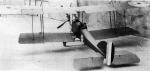
El B.E.2 permaneció en uso hasta el final de la guerra, más tarde como entrenador. Algunos fuselajes sobrantes del B.E.2 se acoplaron a dirigibles de clase SS como barquillas.
El B.E.2d tenía controles duales (toda una innovación, incluso para un avión de entrenamiento), mientras que las nuevas alas y superficies de cola dieron como resultado los modelos B.E.2e, el B.E.2f y el B.E.2g de control dual. Se construyeron más B.E.2 que cualquier otra variante, pero pocos se mantuvieron después del Armisticio, y pronto desapareció. Pocos se matricularon en el registro civil, ya que los DH.4 y los Bristol Fighter más modernos estaban disponibles con la misma facilidad.
Hay un puñado de B.E.2 supervivientes en museos, y varias réplicas, aunque ninguna está en condiciones de vuelo actualmente.















The Royal Aircraft Factory at Farnborough (England) was not originally supposed to design aircraft, its principal purpose being to repair aircraft designed by ‘established’ companies.
The then-Duke of Westminster presented a Voisin to the War Office, and in April 1911, this was sent to Farnborough for repair. Having previously ‘reconstructed’ a Blériot monoplane to produce a bizarre canard pusher biplane, the factory’s resident designer, Geoffrey DeHavilland, ‘reconstructed’ the Voisin to produce the B.E. 1, B.E. signifying Bleriot (meaning tractor biplane) Experimental. Little of the Duke’s Voisin was retained apart from its V-8 water-cooled Wolsey engine, which now powered a graceful, if fragile-looking, biplane with distinctive elliptical wings and what we now think of as conventional biplane layout. Billed as the ‘Army Silent Aeroplane’, the aircraft formed the basis of the later B.E.2.
As a product of the Royal Aircraft Factory, whose superintendant was one of the judges, the B.E.2 was not allowed to compete in the 1912 Miltary Trials, which were won by the already anachronistic Cody ‘Cathedral’. But the B.E.2 did attend, and was used to ferry press-men and officials to and from the trials sites, demostrating a degree of reliability and practicality not shared by most of the competing aeroplanes. Four B.E.2s had already been ordered (from Vickers) and the design was formally adopted for the new Royal Flying Corps (RFC) when it became clear how much more suitable it was than Cody’s competitor winner.
Virtually all production B.E.2s were built by contractors, and the initial version was designated B.E.2a. All but the earliest had equal-span wings with a new aerofoil section, and with reduced incidence. About 100 were built and these formed the backbone of the pre-war RFC, also equipping the Royal Naval Air Service and serving in India and Australia. Before the conflict began, the B.E.2a performed many ground-breaking, long-distance flights, and its pilots began to develop a real military aviation doctrine. Several went to France on the outbreak of war, and No.4 Squadron used one to fly the RFC’s first wartime mission.
The B.E.2b was basically similar to the initial model, though it had a raised cockpit decking which afforded the crew greater protection from the elements. Usually unarmed, some B.E.2bs were equipped with bomb racks, and some observers flew with a rifle or pistol with which they could take ‘pot-shots’at enemy aircraft. Until then, enemy aircraft had been greeted with a wave, then ignored before someone began throwing stones. A B.E.2b pilot, Lt William Rhodes-Moorhouse of No.II Squadron, won the first ever Air Victoria Cross, after bringing his aircraft home after a bombing attack on a railway station at Courtrai, despite sustaining injuries which eventually proved fatal. Most early B.E.2s had been withdrawn by the end of August 1915. A handful of B.E.2bs remained in use in the training role until the Armistice.
The B.E.2c was in many respects a new design, despite its designation. The aircraft gained a new triangular tailfin, a massive rectangular tailplane, and new staggered mainplanes with increased dihedral and modern ailerons replacing the old ‘wing-warping’ control system.
The new type began reaching frontline squadrons in France in early 1915, where its docility and stability were initially welcomed. With the B.E.2c efforts to arm the observer in the front seat reached their zenith. Initially the gun was fitted on a spike mounted on the cockpit rim, to which wire guards were soon added to prevent the observer from shotting bits off his own aircraft. Later more sophisticated mountings were devised, including a fixed mounting for a gun firing forward but diagonally outside the propeller disc, to be aimed by the pilot. But the stable, undegunned B.E.2c would prove to be a sitting duck for the Fokker monoplane scouts which began to appear, and for the Albatros biplanes which followed them into service. In service, B.E.2cs were fitted with a variety of engines, and gained a number of improvements. But nothing could disguise their essential inadecuacy, and as the casualties began to mount, the B.E.2s were soon withdrawn from units in France, replaced mainly by R.E.8s.
But this did not mark the end of the B.E.2’s combat career. In English skies, free from interference from enemy scouts, the B.E.2 was pressed into service in the home defence role. The aircraft’s stability and predictable, docile handling characteristics made it specially well-suited to night fighter use. On 2 September 1916, a B.E.2c flown by Lt William Leefe Robinson of No.39 Squadron downed an enemy airship over Hertfordshire. This fell in flames, watched by many Londoners, winning the pilot a Victoria Cross.
The B.E.2 remained in use until the end of the war, latterly in the training role. Some redundant B.E.2 fuselages were attached to SS-class airships as ‘cars’.
The B.E.2d had dual controls (quite an innovation, even for a training aircraft) while new wings and tail surfaces produced the B.E.2e, B.E.2f and dual-control B.E.2g. More B.E.2s were built than any other variant, but few were retained after the Armistice, and the B.E.2 soon disappear. Few were put on the civil register, since more modern DH.4s and Bristol Fighters were available just as easily.
There is a bunch of surviving B.E.2 in museums, and a number of replicas, though none are currently flying.
FUENTES Y REFERENCIA – SOURCES & REFERENCE
Royal Aircraft Factory BE.2 WWI Workhorse. World Military Aircraft, File 245. Bright Star Publishing
Ugolok Neba
©jmodels.net
 jmodels.net
Debe estar conectado para enviar un comentario.