

| DATOS TÉCNICOS (Su-47) |
TECHNICAL DATA (Su-47) |
| TIPO: Avión experimental y demostrador de tecnología. | TYPE: Experimental aircraft and technology demonstrator |
| TRIPULANTES: 1 | CREW: 1 |
| ENVERGADURA: 16,7 m. | SPAN: 54.9 ft. |
| LONGITUD: 22,6 m. | LENGTH: 74.2 ft. |
| ALTURA: 6,4 m. | HEIGHT: 21 ft. |
| SUPERFICIE ALAR: 56 m². | WING AREA: 600 ft². |
| PESO EN VACÍO: 18.000 kg. | EMPTY WEIGHT: 39,700 lb. |
| MOTOR: Dos motores turbofán de poscombustión Soloviev D-30F11 de 93,1 kN (9.480 kgp) de empuje con salidas de vectorización de empuje bidimensionales y tridimensionales en pruebas. Empuje en seco de 153 kN (15.422 kgp) con posquemador. | ENGINE: Two Soloviev D-30F11 afterburning turbofan engines, 93.1 kN (20,900 lbf) thrust each engines with 2-dimensional and 3-dimensional thrust-vectoring nozzles planned for testing. Dry, 153 kN (34,000 lbf) with afterburner. |
| ARMAMENTO: – | ARMAMENT: – |
| VELOCIDAD MÁX.: 2.200 km/h. | MAX. SPEED: 1,400 mph. |
| TECHO: 18.000 m. | CEILING: 59,000 ft. |
| ALCANCE: 3.300 km (1.800 mn) | RANGE: 2,100 mi (1,800 nmi) |
| PRIMER VUELO: 25 de septiembre de 1997. | FIRST FLIGHT: 25 September 1997. |
| VERSIONES: 1 | VERSIONS: 1 |
| CONSTRUIDOS: 1 | BUILT: 1 |
Durante la década de 1980, la Oficina de Diseño de Sukhoi (OKB) exploró posibles sucesores del exitoso caza pesado Su-27 Flanker de la organización. Desde finales de la década, el trabajo se centró en el Su-37, un caza de ataque con planos delanteros canard y ala delta en forma de flecha acodada, con un solo motor y tomas de aire bajo las raíces de las alas. Llevaría un gran armamamento en soportes subalares, aunque también tendría un rendimiento adecuado para defenderse por sí solo en el combate aire-aire. Hubo un considerable interés en el Su-37, pero debido al colapso de la Unión Soviética, el programa nunca llegó a ninguna parte. La designación Su-37 se reutilizó más tarde para un derivado del Su-27.
En paralelo con el trabajo en el Su-37, la Oficina de Diseño de Sukhoi investigó un caza de superioridad aérea de próxima generación, centrándose en un diseño de ala en flecha invertida originalmente designado como S-22. Se sabía que la configuración de flecha invertida proporcionaba ventajas en eficiencia aerodinámica, manejo y maniobrabilidad. Sin embargo, nunca se había utilizado mucho, porque imponía demasiado peso a las alas, lo que significaba que tendrían que ser reforzadas en gran medida, lo que aumentaba el peso total y eliminaba la ventaja del diseño. La disponibilidad de materiales compuestos sugirió a los ingenieros de Sukhoi que finalmente se había vuelto práctico construir un caza con este diseño.
Aunque el gobierno soviético decidió centrarse en el caza de quinta generación de Mikoyan OKB, que conduciría al MiG 1.44, se permitió a Sukhoi OKB continuar las investigaciones en paralelo. El diseño del S-22 había demostrado ser impracticable y, en ausencia de un requisito, de todos modos era un fracaso, por lo que los ingenieros de Sukhoi pasaron a un caza naval en flecha invertida similar, el S-32. Con el colapso de la URSS, el programa del S-32 se volvió incierto. Sukhoi OKB decidió centrarse en un demostrador relativamente simple, el S-37, basado en el S-32, y ver qué pasaba a partir de ahí.
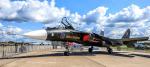
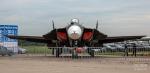
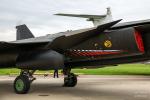
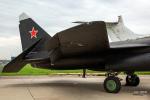
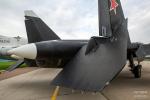
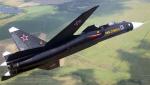
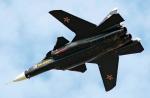
Al parecer, el S-37 tenía aproximadamente el mismo tamaño que el Su-27 y se basaba en componentes del Su-27, incluidos el fuselaje delantero, el tren de aterrizaje y las aletas de cola. Sin embargo, el S-37 se diferenciaba sustancialmente del Su-27 por las alas en flecha invertida, que presentaban un barrido del borde de ataque de 20 grados. El ala tenía un flap de una pieza en el interior y un alerón en el exterior en el borde de salida del ala, además de un flap de borde de ataque colgante. El S-37 también tenía planos delanteros canard móviles delante de las alas. La disposición de la cola presentaba planos de cola móviles y aletas de cola gemelas con timones. El S-37 iba a estar propulsado inicialmente por dos reactores Solovyov D30F-11 con postcombustión, derivados de los motores D30F-6 utilizados en el interceptor Mikoyan MiG-31, y que proporcionaban 93,1 kN (9.480 kgp) cada uno, para pasar a los motores AL-41F más potentes con escapes de empuje vectorial cuando estuvieran disponibles. Los motores se alimentaban mediante entradas de motor semicirculares a lo largo de los lados del fuselaje delantero. El demostrador no estaría equipado con un equipo de combate completo y estaría desarmado, aunque tenía un compartimiento de armas en el vientre. El S-37 era un avión inherentemente inestable que se mantenía en vuelo controlado mediante un sistema fly-by-wire. El Berkut era tan grande que sus alas se plegaban para permitirle caber en los hangares rusos.
Se encargaron dos prototipos, aunque solo se construyó uno. El Berkut (Águila Dorada), como se le apodó, realizó su vuelo inicial el 25 de septiembre de 1997, con el piloto de pruebas Igor Votintsev a los mandos. Se exhibió al público en el salón aeronáutico MAKS de Moscú en agosto de ese año.
Aunque la organización Sukhoi promovió una versión de producción del S-37 denominada Su-47, el Berkut nunca pasó de la fase de demostración. Sí hizo apariciones en el salón aeronáutico MAKS en 2001, 2003 y 2005, pero para entonces, el interés se había trasladado a lo que se convertiría en el Sujoi Su-57, y el S-37 se utilizó para pruebas de subsistemas del Su-57.
Mientras que la OKB de Sukhoi trabajaba en los cazas de ala en flecha invertida S-22 y luego S-32 en la década de 1980, la organización también realizó estudios de diseño para un caza con este diseño monomotor más pequeño en la línea del S-37. No se sabe mucho al respecto, la única información publicada son fotos de modelos de pruebas en túneles de viento, y no parece haber llegado muy lejos.









During the 1980s, the Sukhoi OKB explored possible follow-ons to the organization’s successful Su-27 Flanker heavy fighter. From late in the decade work focused on the Su-37, a strike fighter with canard foreplanes and cranked-arrow delta wing, with a single engine and intakes under the wing roots. It would carry a heavy warload on underwing pylons, though it would also have adequate performance to take care of itself in air-to-air combat. There was considerable interest in the Su-37, but due to the collapse of the Soviet Union, the program never went anywhere. The Su-37 designation was reused later for an Su-27 derivative.
In parallel with work on the Su-37, the Sukhoi OKB investigated a next-generation air-superiority fighter, focusing on a forward swept wing (FSW) design originally designated the S-22. The FSW configuration was known to provide advantages in aerodynamic efficiency, handling, and maneuverability; it had never seen much use, however, because it imposed too much on the wings, meaning they would have to be heavily reinforced, raising weight and eliminating the advantage of the scheme. The availability of composite materials suggested to Sukhoi engineers that it had finally become practical to build an FSW fighter.
Although the Soviet government decided to focus on the Mikoyan OKB’s fifth-generation fighter effort, which would lead to the MiG 1.44, the Sukhoi OKB was allowed to continue investigations in parallel. The S-22 design had proved unworkable, and in the absence of a requirement was a nonstarter anyway, so Sukhoi engineers went on to a derivative FSW naval fighter, the S-32. With the collapse of the USSR, the S-32 program became uncertain; the Sukhoi OKB decided to focus on a relatively simple demonstrator, the S-37, based on the S-32, and see where things went from there.
As it emerged, the S-37 was about the same size as the Su-27, and leveraged off Su-27 assemblies including the forward fuselage, landing gear, and tailfins. The S-37 of course differed substantially from the Su-27 with the forward-swept wings, which featured a leading-edge sweep of 20 degrees. The wing had a one-piece flap inboard and an aileron outboard on the trailing edge of the wing, plus a drooping leading-edge flap. The S-37 also had all-moving canard foreplanes ahead of the wings. The tail arrangement featured all-moving tailplanes, and twin tailfins with rudders.
The S-37 was to be powered at the outset by two Solovyov D30F-11 afterburning bypass jets, derived from the D30F-6 engines used on the Mikoyan MiG-31 interceptor, and providing 93.1 kN (9,480 kgp / 20,900 lbf) each, to move up to more powerful AL-41F engines with thrust-vectoring exhausts when they became available. The engines were fed by semicircular engine intakes along the sides of the forward fuselage. The demonstrator would not be fitted with full combat kit and would be unarmed, though it did have a weapons bay in the belly. The S-37 was an inherently unstable aircraft that was kept in controlled flight using a fly-by-wire system. The Berkut was so large that its wings folded to allow it to fit into Russian hangars.
Two prototypes were ordered, though only one was built. The Berkut (Golden Eagle), as it was nicknamed, performed its initial flight on 25 September 1997, with test pilot Igor Votintsev at the controls. It put on a display for the public at the Moscow MAKS airshow in August.
Although the Sukhoi organization promoted a production Su-47 version of the S-37, the Berkut never went beyond the demonstration phase. It did put in appearances at the MAKS airshow in 2001, 2003, and 2005; by that time, interest had moved on to what would become the Sukhoi Su-57, with the S-37 used for tests of Su-57 subsystems.
While the Sukhoi OKB was working on the S-22 and then the S-32 FSW fighters in the 1980s, the organization also performed design studies for a smaller, single-engine FSW fighter along the lines of the S-37. Not much is known about it, the only released information being photos of wind-tunnel test models, and it doesn’t appear to have gone very far.
FUENTES Y REFERENCIA – SOURCES & REFERENCE
airvectors.net
Ugolok Neba
©jmodels.net
 jmodels.net
Debe estar conectado para enviar un comentario.