
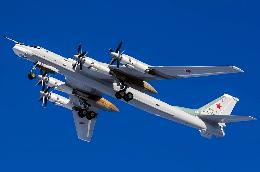
| DATOS TÉCNICOS (Tu-95MS) |
TECHNICAL DATA (Tu-95MS) |
| TIPO: Bombardero estratégico pesado. | TYPE: Strategic heavy bomber. |
| TRIPULANTES: 6-7 | CREW: 6-7 |
| ENVERGADURA: 50,1 m. | SPAN: 164.4 ft. |
| LONGITUD: 46,2 m. | LENGTH: 151.7 ft. |
| ALTURA: 12,12 m. | HEIGHT: 39.9 ft. |
| SUPERFICIE ALAR: 310 m². | WING AREA: 3,300 ft². |
| PESO EN VACÍO: 90.000 kg. | EMPTY WEIGHT: 198,416 lb. |
| MOTOR: Cuatro motores turbohélices Kuznetsov NK-12 de 15.000 hp (11.000 kW) con hélices de velocidad constante y contrarrotación de 8 palas. | ENGINE: Four Kuznetsov NK-12 turboprop engines developing 15,000 hp (11,000 kW) driving 8-bladed contra-rotating fully feathering constant-speed propellers. |
ARMAMENTO:
|
ARMAMENT:
|
| VELOCIDAD MÁX.: 925 km/h. | MAX. SPEED: 575 mph. |
| TECHO: 13.716 m. | CEILING: 45,000 ft. |
| ALCANCE: 15.000 km. (8.100 mil. náut.). | RANGE: 9,300 ml (8,100 nml). |
| PRIMER VUELO: 12 de noviembre de 1952. | FIRST FLIGHT: 12 November 1952. |
| VERSIONES: 24 | VERSIONS: 24 |
| CONSTRUIDOS: Más de 500. | BUILT: Over 500. |
Durante la Segunda Guerra Mundial, la Fuerza Aérea Soviética se organizó como una arma aérea táctica, centrada en el apoyo en el campo de batalla. Los únicos medios de bombardeo estratégico que poseía eran un puñado de bombarderos cuatrimotores Petlyakov Pe-8, más o menos comparables al Short Stirling británico.
Al final del conflicto, los estadounidenses habían desarrollado y utilizado la bomba atómica; El dictador soviético Josef Stalin se había mantenido al tanto del programa de desarrollo a través de espías en Estados Unidos y estaba decidido a impulsar la construcción de una bomba atómica soviética para seguir el ritmo de los estadounidenses. Por supuesto, una bomba atómica tenía un uso limitado sin los medios para lanzarla, por lo que Stalin también impulsó el desarrollo de un bombardero de largo alcance. En 1944, dos OKB (oficinas de diseño experimental) soviéticas, dirigidas por Vladimir Myasishchev y Andrei Tupolev, recibieron la orden de generar diseños preliminares para dicho bombardero. Utilizaron el avanzado Boeing B-29 Superfortress estadounidense como punto de partida.
Sin embargo, el trabajo en los nuevos diseños resultó problemático, por lo que se tomó la decisión de que el OKB de Tupolev aplicara ingeniería inversa al B-29, ya que tres de ellos habían aterrizado en Siberia después de haber sido dañados en ataques contra Japón, y ponerlo en producción. . El vuelo inicial de la copia del B-29, denominado Tu-4, tuvo lugar en 1947, y la OTAN asignó al modelo el nombre de informe Bull. Se construyeron cientos de ellos hasta 1953. Con la detonación de la primera bomba atómica soviética en 1949, la Unión Soviética tenía la opción nuclear y, con el Tu-4, los medios para lanzarla.
El problema era que no había forma de transportar armas nucleares soviéticas a los Estados Unidos continentales, ya que el alcance era extremo para un Tu-4, incluso suponiendo un viaje de ida, lo que se consideró como una opción, y la tripulación supuestamente se lanzaría al mar después de un ataque y sería recuperada por un submarino. Se realizaron otros trabajos para dotar al Tu-4 de capacidad de reabastecimiento de combustible en vuelo, aunque sólo unos pocos fueron equipados con un equipo para tal fin.
Obviamente, la Unión Soviética necesitaba un bombardero con un alcance mucho mayor, y tanto el OKB Myasishchev como el Tupolev tenían la tarea de desarrollar dicho avión. El OKB de Myasishchev ideó el M-4 propulsado por turborreactor, al que se le asignó el nombre clave de la OTAN de Bison. No tuvo mucho éxito, en particular no cumplió con las especificaciones de alcance vital y solo se construyó en cantidades modestas.
El Tupolev OKB consideró varias opciones, siendo la más obvia simplemente mejorar el Tu-4. El resultado fue la construcción de un prototipo Tu-80, que todavía se parecía mucho a un B-29, excepto notablemente por una cabina escalonada. También presentaba un ala y un fuselaje alargados, con un mayor tanque de combustible que le daba aproximadamente un tercio más de alcance que el Tu-4. Eso no ere suficiente, y el programa del Tu-80 fue cancelado meses antes del vuelo inicial del prototipo el 1 de diciembre de 1949. El prototipo se conservó para trabajos de prueba.
La atención se centró en un aparato mejorado, el Tu-85, que era superficialmente similar al Tu-80, pero aún más grande, en particular con un ala sustancialmente mayor y con aproximadamente el doble de alcance que el Tu-4. El vuelo inicial del primero de los dos prototipos tuvo lugar el 9 de enero de 1951. Parecía ser todo lo que se esperaba de un bombardero de largo alcance y se aprobó la producción en serie. Sin embargo, las autoridades tomaron nota luego de las pérdidas sufridas por los B-29 estadounidenses sobre Corea del Norte contra los modernos aviones de combate Mikoyan MiG-15. La conclusión fue que un B-29 mejorado simplemente no podría sobrevivir contra defensas aéreas bien preparadas, por lo que el Tu-85 fue cancelado a su vez.
Obviamente se necesitaba algo más radical. El Tupolev OKB ya había estado considerando un diseño tan avanzado, esencialmente un Tu-85 con alas en flecha y propulsión turborreactor o turbohélice. En el análisis detallado, ganaron los turbohélices, y el nuevo avión, el Tu-95, estará propulsado por cuatro potentes turbohélices Kuznetsov TV-2 con hélices contrarrotativas. El TV-2 se basaba en un diseño alemán, el Junkers 109-022, que nunca llegó a producirse, con diseñadores alemanes trabajando para los soviéticos en el proyecto. En su madurez, este motor se convertiría en el turbohélice más potente construido en el siglo XX.
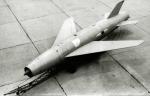
El vuelo inicial del primer prototipo Tu-95 tuvo lugar el 12 de noviembre de 1952, propulsado por motores preliminares TV-2F. Desafortunadamente, el 11 de mayo de 1953, el prototipo se estrelló, matando a cuatro tripulantes, pero siete lograron salvarse. Una investigación inicial sugirió que uno de los motores había fallado debido a una fabricación defectuosa del avión.
Sin embargo, estudios posteriores indicaron que uno de los turbohélices tenía un problema con el engranaje reductor que provocó un incendio. Dada la gran potencia del motor, construir un engranaje reductor que pudiera soportar la carga era problemático y se habían producido fallas de este tipo en las pruebas.
Un segundo prototipo despegó el 16 de febrero de 1955. El Tu-95 ya había sido aprobado para su producción en ese momento y una fábrica en Kuibyshev estaba trabajando en un lote de producción inicial, y las dos primeras máquinas de producción se lanzaron en agosto. El Tu-95 se mostró al mundo en un sobrevuelo en la exhibición aérea anual de Tushino cerca de Moscú ese año, y los observadores occidentales lo encontraron extremadamente interesante, sospechando con razón que la URSS finalmente había obtenido un bombardero estratégico con verdadero alcance intercontinental.
El hecho de que el Tu-95 utilizara propulsión por hélice parecía extraño, ya que pocos eran conscientes del alto rendimiento del avión, siendo uno de los aviones propulsados por hélice más rápidos en alcanzar el pleno servicio operativo. La OTAN le asignó el nombre de Bear.
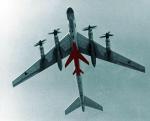
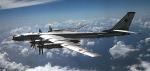
Sólo se construyó un puñado de Tu-95 de producción inicial, la producción pasó rápidamente al Tu-95M ligeramente mejorado y todos los Tu-95 se actualizaron a dicho estándar. El modelo entró en servicio operativo formal en 1957. Una vez que se introdujeron variantes posteriores del Tu-95, la OTAN modificó el nombre del Tu-95/95M a Bear-A.
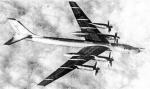
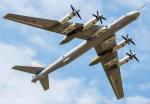
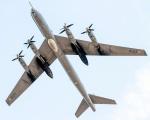
El Tu-95M era de construcción totalmente metálica, hecho principalmente de aleación de aluminio para aviones con algunas piezas de magnesio. El avión presentaba alas en flecha montadas en el medio con cuatro motores turbohélice, un empenaje en flecha, y tren de aterrizaje triciclo. Había un compartimento presurizado delante y detrás, separados por el compartimento de bombas y una sección trasera de equipo no presurizado.
El barrido del borde de ataque del ala era de 37 grados hacia la góndola exterior del motor, y luego disminuía a 35 grados, mientras que todas las superficies de la cola tenían un barrido del borde de ataque de 40 grados. Había flaps en el interior y alerones de tres secciones en el exterior de cada ala. El Tu-95 de producción inicial estaba equipado con turbohélices NK-12, siendo esta designación la de producción del TV-2, proporcionando la asombrosa cifra de 8.950 kW (12.000 ehp) cada uno. El Tu-95M contaba con el motor NK-12M, que ofrecía la misma potencia pero con mejoras técnicas. Cada motor impulsaba una hélice contrarrotativa con cuatro palas totalmente reversibles y muy eficaces para reducir la carrera de aterrizaje. Cada góndola de motor contaba con un sistema de extinción de incendios y cortafuegos.
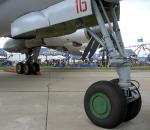
El tren de morro direccionable de dos ruedas se retraía hacia atrás, mientras que el tren principal de cuatro ruedas, organizado en una disposición de 2×2, se plegaba hacia atrás dentro de las góndolas internas del motor, volteándose durante la retracción. Había un parachoques debajo de la cola para proteger el avión de los golpes de cola durante el despegue. Se utilizó deshielo eléctrico para las superficies de vuelo, las hélices y el parabrisas, aunque las entradas del motor utilizaban deshielo de aire caliente.
Todos los pertrechos ofensivos se llevaban internamente en el compartimento de bombas de dos secciones. Una carga de armamento típica era de 5 toneladas, aunque la carga máxima era de 20 toneladas. Junto con armamento nuclear, el Tu-95M podía transportar combinaciones de bombas convencionales. Los artefactos más pequeños eran bombas de 250 kilogramos, y se podían transportar 45 de ellos, normalmente para una misión de ataque a un aeródromo. La guía se realizaba mediante un sistema de puntería por radar con una mira óptica de respaldo. El Tu-95M fue optimizado para la misión de ataque nuclear, por lo que la bodega de bombas contaba con calefacción y climatización, ya los depósitos nucleares exigían un poco de mimo. El acristalamiento de la cabina tenía visores para proteger a la tripulación de la deflagración nuclear.
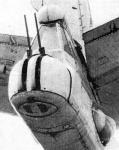
Había tres posiciones de armas defensivas, en forma de una barbeta controlada a distancia encima y debajo del fuselaje trasero, además de una posición de cola tripulada. La barbeta dorsal era retráctil. Las dos barbetas eran dirigidas por tres artilleros, uno en una cúpula detrás de la cabina y otro en una ventana tipo ampolla a cada lado del fuselaje trasero debajo del plano de cola. Las tres posiciones llevaban dos cañones automáticos AM-23 de 23 mm, con un almacén total de municiones de 2.500 proyectiles.
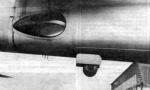
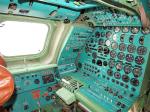
La aviónica incluía radios, ayudas por radio para la navegación, un transpondedor de identificación amigo o enemigo (IFF) y un radar de navegación y bombardeo Rubidy-MM en un carenado debajo del morro, que estaba acristalado para los navegantes. Se instaló una cámara de película debajo del fuselaje, principalmente para evaluar los daños de las bombas. Los compartimentos de la tripulación tenían calefacción y ventilación, aunque no tenían aire acondicionado. Había diez tripulantes, y la tripulación de cabina incluía un piloto y un copiloto, dos navegantes, un ingeniero de vuelo, un operador de radio/artillero y un operador de contramedidas electrónicas (ECM).
La tripulación de la sección de cola estaba formada por tres artilleros. La tripulación de cabina accedía a la aeronave a través de una escotilla en el pozo del tren de morro, mientras que la tripulación de cola entraba por una escotilla debajo de la cola. El avión estaba equipado con varias salidas de emergencia, una de las cuales tenía un tobogán para evitar que la tripulación sufriera daños al salir. Había dos balsas salvavidas inflables para amerizar en el mar.
Parece que el Tu-95 gustaba en general a sus tripulantes y al personal de tierra, al menos una vez que se resolvieron los errores; Uno de los primeros problemas fue que el sistema de ajuste de la hélice se activaba manualmente, lo que hacía que su uso fuera complicado, lo que provocó un accidente fatal al comienzo del servicio del Bear. En consecuencia, se desarrolló rápidamente un sistema automatizado de ajuste. En climas fríos, el aceite tendía a congelarse en los motores mientras el avión estaba en la pista, lo que requería procedimientos complicados para mantener el aceite líquido. Finalmente, el problema se resolvió creando una mezcla de aceite a baja temperatura.
En su madurez, el Tu-95 se manejaba bien, era muy resistente y relativamente sencillo de mantener y por ello tendría una tasa de accidentes envidiablemente baja. Hubo dudas sobre la falta de asientos eyectables y el peligroso inconveniente de las salidas del avión. Dado su gran tamaño, rodar en la pista podría resultar problemático. La propulsión turbohélice provocaba altos niveles de ruido y fatiga de la tripulación. El Bear en sus diversos modelos se volvería muy familiar para las fuerzas navales occidentales cuando estos grandes aviones surcaban los océanos.
Al Tu-95M le siguió una versión modestamente mejorada, el Tu-95MA, cuyo cambio principal fue un ajuste en las góndolas del motor. En la década de 1980, los Tu-95 supervivientes de la primera generación se convirtieron en entrenadores Tu-95U quitando los sistemas de armas y sellando la bodega de bombas. Estos aviones podían reconocerse por una franja roja delante de la cola.
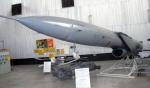
La principal estrategia soviética para hacer frente a defensas aéreas más fuertes era conseguir misiles que permitieran a un bombardero destruir un objetivo desde una distancia relativamente segura. Desde el principio hubo interés en utilizar el Bear como portamisiles de reserva, y desde 1955 se trabajó en la modificación de un Tu-95M para transportar el misil Kh-20 (OTAN AS-3 Kangaroo). El avión modificado realizó su primer vuelo a principios de 1956. El «complejo» de misiles/portamisiles se denominó Kometa-20 o simplemente K-20, por lo que el bombardero modificado se denominó Tu-95K.
El Kh-20 era un gran cohete de combustible líquido, transportado debajo del fuselaje. Un Tu-95M fue modificado como prototipo del Tu-95K, y realizó su primer vuelo en su nueva forma a principios de 1956. El bombardero presentaba un morro modificado, sin el cristal frontal y un carenado prominente en la parte inferior del morro para el radar Yad (NATO Crown Drum) utilizado para dirigir el misil Kh-20. El bombardero tenía que seguir el objetivo para guiar el misil hacia él. El Tu-95K entró en servicio en 1960. Una vez que la OTAN lo identificó, le asignó el nombre de Bear-B.
El misil Kh-20 limitaba el alcance del bombardero. La solución propuesta era repostar combustible en el aire. Inicialmente, la idea fue implementar el esquema de reabastecimiento de combustible utilizado en el bombardero Tupolev Tu-16, pero no funcionó, por lo que el Tu-95K fue equipado con una sonda de morro para el reabastecimiento con manguera y embudo de los cisterna Myasishchev M-3 Bison. El resultado fue conocido como Tu-95KD, donde «D» significaba «Dalniy» (“Alcance«). Se construyeron un total de 70 a 80 Tu-95K/KD, y la mayoría de los Tu-95K se actualizaron a las especificaciones Tu-95KD. En la década de 1970, algunos Tu-95K que no fueron actualizados se convirtieron en entrenadores Tu-95KU, similares al Tu-95U.
Durante la década de 1960, muchos Tu-95KD fueron mejorados con nueva aviónica, y se les dio la designación de Tu-95KM, donde la «M» significaba efectivamente «Modernizado». El Tu-95KM se parecía exactamente al Tu-95KD, excepto por un carenado en forma de lágrima a cada lado del fuselaje trasero para el sistema de medidas de vigilancia electrónica (ESM) SRS-6 Rhomb-4A, utilizado para localizar objetivos a partir de sus emisiones de radio y radar. El misil Kh-20 también fue actualizado a la especificación mejorada Kh-20M. La OTAN asignó al Tu-95KM el nombre de informe de Bear-C.
El misil Kh-20 era subsónico, por lo que estaba claramente atrasado a finales de la década de 1960. Desde principios de la década se había estado trabajando en un arma mucho más potente, el Kh-22, un misil supersónico mucho más capaz que la OTAN designaría AS-4 Kitchen. Se inició el trabajo para desarrollar una versión de portaaviones apropiada del Tu-95, que surgiría como el Tu-95K-22.
Se modificó un Tu-95KM como prototipo. El avión modificado se parecía mucho al Tu-95KM, pero presentaba sistemas de aviónica y orientación actualizados, con los cañones de cola eliminados y reemplazados por equipo de contramedidas electrónicas. El Tu-95K-22 en realidad podría transportar tres misiles Kh-22, uno en el vientre como el Kh-20, más uno debajo de cada ala en un soporte, aunque parece que los tres misiles eran una carga inusual. El vuelo inicial del prototipo se realizó en 1975, aunque las pruebas llevaron mucho tiempo. El primer lanzamiento del Kh-22 se produjo en 1981 y el modelo no alcanzó el servicio operativo hasta 1987. La flota de Tu-95K-22 estaba compuesta por aviones de nueva construcción y actualizaciones de Tu-95KM. La OTAN le dio a la variante el nombre clave de Bear-G.
Algunos Bear-G estaban equipados con una cápsula de muestreo de aire fuera de borda debajo de cada ala para recolectar la lluvia radioactiva de la atmósfera como misión secundaria. Algunos Tu-95K-22 también fueron equipados para transportar tres contenedores de bombas externos para un ataque convencional. La carga era de 45 bombas de 250 kilogramos y su misión principal era el ataque a aeródromos.
A finales de la década de 1950, se comenzó a trabajar en un misil antibuque avanzado para lanzamiento desde submarinos o buques de superficie, que surgió como P-6 (OTAN SS-N-3). Era un arma sofisticada, pero tenía una limitación importante: tenía que ser guiada por una plataforma remota hasta el objetivo, por lo que los submarinos y buques de superficie no podían utilizar el P-6 para realizar ataques más allá del horizonte.
El Tu-95, con su larga resistencia, parecía muy adecuado para realizar vigilancia marítima y luego, una vez que había detectado objetivos, dirigir misiles P-6 contra ellos. El trabajo en una versión apropiada del avión comenzó en 1959, con la nueva variante denominada Tu-95RT, donde «RT» podría interpretarse libremente como «sistema de reconocimiento/puntería». Por cierto, esa era la designación del sistema, ya que la variante del avión en sí se denominó Tu-95RC.
Se modificó un Tu-95M como prototipo sin armas ofensivas, siendo los cambios principales la instalación de un radar de vigilancia en el compartimiento de bombas, la instalación de un sistema de enlace de datos de control de misiles Rubidy-MM en lugar del radar debajo del morro, lo que dio los Tu-95RT una configuración distintiva de «doble burbuja» y la instalación de un sistema de retransmisión de comunicaciones, marcado por carenados de antena en las puntas del plano de cola.
El vuelo inicial del avión en su nueva forma fue en septiembre de 1963. Sin embargo, lograr que todos los equipos electrónicos funcionaran correctamente resultó problemático y el sistema no se declaró operativo hasta 1966. Los aviones de producción presentaban equipos Rhomb-4 ESM, con los carenados en forma de lágrima en el fuselaje trasero como en el Tu-95KM.
Una vez que la OTAN tuvo conocimiento de los Tu-95RT, se le dio el nombre de informe Bear-D. El avión se convirtió en un espectáculo común para las fuerzas navales occidentales mientras merodeaban por los océanos en busca de objetivos potenciales. Si se tratara de un combate de tiro, una plataforma de lanzamiento de un submarino o un buque de superficie dispararía una salva de tres o cuatro misiles P-6 contra objetivos identificados por un Tu-95RT. El avión simplemente mantendría los objetivos iluminados por el radar, y las imágenes del radar se transmitirían a los operadores en la plataforma de lanzamiento, quienes ajustarían el rumbo de los misiles transmitiendo las correcciones del rumbo a través de los Tu-95RT.
Aproximadamente en paralelo con el desarrollo de los Tu-95RT, los soviéticos trabajaron en una variante de reconocimiento estratégico del Tu-95. El esfuerzo se centró en un derivado del Tu-95M con cambios mínimos, con un amplio conjunto de cámaras en el compartimiento de bombas y además de equipo de inteligencia electrónica (ELINT). Se construyeron cuatro Tu-95RM como conversiones de Tu-95M, y el primero voló con su nueva forma en 1961. Tres de los cuatro estaban equipados con sondas de reabastecimiento de combustible en vuelo.
El Tu-95RM sigue siendo una de las variantes de Bear más oscuras, en parte debido al pequeño número de unidades construidas y en parte a su apariencia anodina. Se parecía mucho a un Bear-A original, excepto por adiciones como la sonda de morro y carenados ESM como los del Bear-C a lo largo del fuselaje trasero. La OTAN asignó al Tu-95RM el nombre clave de Bear-E. Estas máquinas sirvieron hasta la década de 1980 y luego se convirtieron en entrenadores Tu-95U.
En 1963, se comenzó a trabajar en el OKB de Tupolev en un derivado del Tu-95 para la función de guerra antisubmarina (ASW) de largo alcance, que sería operado por la aviación naval. La variante naval, que se denominaría Tu-142, se basó en los Tu-95RT, pero la aviónica se actualizó considerablemente, con el nuevo sistema construido alrededor del radar de búsqueda Berkut (Águila Dorada) desarrollado para el Ilyushin Il-38 antisubmarino. El primero de los tres prototipos realizó su vuelo inicial el 18 de julio de 1968, seguido del segundo en septiembre. Los aviones estuvieron disponibles para evaluación operativa en 1970, y el Tu-142 entró en servicio con la Marina en 1972. La OTAN le asignó el nombre clave de Bear-F.
El sistema de combate del Tu-142 era elaborado, con el radar Berkut complementado por un sistema ELINT, un sistema de detección de infrarrojos y un sistema receptor de sonoboyas. Se mantuvo un compartimiento de bombas, ubicado detrás del carenado del radar, para transportar sonoboyas, torpedos guiados, cargas de profundidad o minas. Hubo cambios sustanciales en el fuselaje. El fuselaje delantero se estiró 1,7 metros para ampliar la cabina, en parte para ayudar a acomodar los sistemas de combate del avión y en parte para mejorar la comodidad de la tripulación en patrullas largas. La cabina de vuelo se elevó para mejorar el campo de visión.
El tren de aterrizaje principal estaba diseñado para permitir operaciones desde pistas de aterrizaje en mal estado, principalmente para apoyar despliegues en el extranjero en estados clientes soviéticos en África y otros lugares, donde los aeródromos probablemente no estuvieran acondicionados. Después de algunas consideraciones, se tomó la decisión de utilizar bogies de engranaje principal de tres ejes y doce ruedas. Se amplió la cuerda del ala y se instalaron flaps de dos secciones. Se eliminaron las torretas dorsal y ventral, aunque se conservó la torreta de cola. Los motores eran la última variante del NK-12MV, que proporcionaba 11.035 kW (14.800 ehp), un salto de más del 29% con respecto al NK-12M anterior.
No es de extrañar que, una vez puesto en servicio, el complicado Tu-142 demostrara deficiencias. El manejo dejaba mucho que desear y la aviónica no era fiable. Los problemas de manejo se debían principalmente al peso excesivo. Se abandonó el requisito para operar en aeródromos no acondicionados, y después de la producción inicial, el pesado tren principal de doce ruedas fue reemplazado por unidades de cuatro ruedas similares a las del Tu-95, pero reforzadas. Se abandonaron los carenados de motor internos extendidos y los flaps más grandes.
Los problemas de aviónica se solucionaron en parte eliminando el escáner de infrarrojos, que había demostrado ser ineficaz, y simplificando el sistema ECM. Esta variante también incluía literas para que la tripulación pudiera descansar un poco en las largas patrullas. No se especificó ningún nuevo nombre clave, aunque la OTAN designó los aviones actualizados como Bear-F Mod 1, ya que eran visiblemente diferentes de las primeras máquinas de producción.
Aunque inicialmente la producción del Tu-142 se realizó en la fábrica de Kuibyshev, el plan a largo plazo era trasladarlo a la fábrica estatal número 60 en Taganrog, en el suroeste de Rusia. La producción inicial en Taganrog fue del Tu-142M, que se parecía mucho al Tu-142 de producción tardía, con algunos ligeros cambios como máximo. Al parecer, la OTAN pudo notar la diferencia y lo designó Bear-F Mod 2.
En servicio operativo, el sistema de combate del Tu-142 no demostró ser muy eficaz en operaciones antisubmarinas, lo que llevó a una modificación de la aviónica. La principal mejora fue un sistema de sonoboyas explosivas, en el que se lanzaban sonoboyas seguidas de una carga explosiva, con un sistema de procesamiento en el avión que clasificaba los ecos para identificar la ubicación de un submarino.
La aviónica también se actualizó a una configuración mucho más sofisticada, denominada Korshun-K, «Korshun«, con un detector de anomalías magnéticas (MAD) montado de manera poco convencional en la parte trasera del punta de la aleta vertical, un radar de visión lateral, un radar de búsqueda muy mejorado y sistemas avanzados de procesamiento y control.
Aunque se voló un prototipo inicial en 1975, solucionar los errores llevó mucho tiempo y el Tu-142MK no entró en servicio hasta 1979. La OTAN le asignó el nombre clave de Bear-F Mod 3. India adquirió ocho aparatos de este tipo con la aviónica ligeramente reducida en la década de 1980, siendo estos aviones designados Tu-142ME. Fueron los únicos Bear exportados. Posteriormente fueron renovados y actualizados por la compañía rusa Beriev, y vueltos a entregar nuevamente en 2011. Fueron retirados en 2017, después de haber sido reemplazados por el avión de patrulla marítima Boeing P-8I Poseidón.
Un puñado de Tu-142MK se construyeron como aviones de retransmisión de comunicaciones submarinas, desenrollando una larga antena de arrastre desde una plataforma debajo del vientre para transmitir y recibir señales de baja frecuencia que podían penetrar a través del agua. Estos aparatos, denominados Tu-142MR, tenían un distintivo radomo en el morro en forma de dedal en lugar del acristalamiento y un carenado como el del sistema MAD en la aleta trasera, pero montado hacia adelante en lugar de hacia atrás. La OTAN les dio el nombre de Bear-J.
Al Tu-142MK le siguió a finales de la década de 1980 el Tu-142MZ, que no sólo llevaba un conjunto de aviónica de combate Korshun-KN-N mejorado, sino también motores NK-12MA aún más potentes y eficientes en combustible, con una potencia de 11.185 kW. (15.000 CV). El NK-12MA también incluía generadores eléctricos más pesados para soportar los sistemas a bordo. La OTAN le asignó el nombre clave de Bear-F Mod 4.
El Tu-142MK presentaba un distintivo carenado de antena en forma de «grano» en la parte delantera del acristalamiento del morro, así como una nueva torreta de cola, derivada de la desarrollada para el bombardero Tu-22M Backfire, con dos cañones GSh-23 gemelos. La torreta estaba armada así con cuatro cañones. Si bien la torreta de cola estaba un poco anticuada en ese momento, los soviéticos desarrollaron proyectiles de bengala y señuelos de 23 mm, lo que permitía emplear la torreta como un sistema de contramedidas en sí misma. Se eliminaron las burbujas de observación a cada lado de la cola.
El Tu-142 era una plataforma antisubmarina extremadamente capaz, con largo alcance, buena carga de armamento y aviónica de combate altamente sofisticada. Pasó gran parte de la Guerra Fría sembrando la denominada “brecha Groenlandia-Islandia-Reino Unido» con sonoboyas para tratar de detectar submarinos de la Armada de los EE. UU. que podrían ser una amenaza para los submarinos de misiles de la Armada Roja, con los F-15 Eagle de la USAF operando desde Islandia con un ojo puesto en los Tupolev. Los Tu-142 también operaron desde Cuba, vigilados de cerca por los estadounidenses, y desde Angola.
Debido a su complejidad, el Tu-142 era relativamente caro de operar y difícil de mantener, por lo que el peso de las misiones antisubmarinas soviéticas de largo alcance recayó en el Ilyushin Il-38, a pesar de que sólo tenía aproximadamente la mitad del alcance. Se utilizaron algunos Tu-142 para pruebas de motores y de otro tipo con la denominación de Tu-142LL. Los Tu-142 todavía permanecen en servicio en el ejército ruso, aunque parece que en pequeñas cantidades.
Durante la década de 1970, los soviéticos se interesaron mucho en las nuevas tecnologías de misiles de crucero desarrolladas por Estados Unidos y comenzaron a trabajar en su propia contraparte, que surgiría como el Kh-55 (OTAN AS-15 Kent). Tenía una similitud general con el misil de crucero naval Tomahawk de EE. UU., parecido a un torpedo con alas rectas desplegables, aletas traseras desplegables en disposición cruzada y propulsión turbofán.
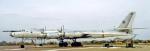
Aunque el Bear había estado fuera de producción desde 1969, fue concebido también como avión embarcado, y a finales de la década de 1970 se empezó a trabajar para modificar el Tu-142 en consecuencia. Una máquina de pruebas, el Tu-95M-5, fue modificada a partir de un Tu-95M para probar tecnologías apropiadas, y esta máquina realizó su vuelo inicial en 1978. Un prototipo de portamisiles de crucero Tu-142MS Kh-55 realizó su primer vuelo en 1979. La variante entró en producción en 1981, después de haber sido denominada de manera algo confusa como Tu-95MS, y entró en servicio en 1983. Cuando la OTAN se enteró de la variante, se le asignó el nombre clave de Bear-H.
El Tu-95MS presentaba aviónica moderna para respaldar su armamento y operaciones, con un morro modificado para acomodar su radar Obzor-MS y otros sistemas. Estaba propulsado por motores NK-12MA y tenía la torreta de cola modernizada con dos cañones GSh-23 utilizados en el Tu-142MZ. Se construyeron dos versiones del Tu-95MS. El Tu-95MS-6, con sistema de lanzamiento de misiles Osina y 6 misiles de crucero Kh-55 montados en un lanzador giratorio en la bahía de bombas, y el Tu-95MS-16, con misil Sprut («Pulpo«). sistema de lanzamiento, el lanzador de la bodega de bombas, además de soportes para diez más, dos en un soporte interior y tres en un soporte exterior. Los Tu-95MS-16 también llevaon el misil de crucero Kh-55SM mejorado. Además, contaban con sistemas modernizados de comunicaciones y autodefensa y una nueva turbina en la unidad de energía auxiliar (APU).
La diferencia entre las dos versiones se volvió irrelevante después del Tratado de Limitación de Armas Estratégicas de la década de 1980. La producción del Tu-95MS continuó en Taganrog hasta 1983, cuando se transfirió nuevamente a la planta de Kuibyshev. El último Bear se terminó en 1992, tras la producción de 261 máquinas, incluidas 88 variantes del Tu-95MS.
Después de la caída de la URSS, 40 Bear permanecieron en Kazajstán y fueron intercambiados con Rusia por aviones de combate tácticos más prácticos. Ucrania tenía 25, y tres de los más nuevos se vendieron a Rusia. Los Tu-142MZ, Tu-95MS y Tu-142MR siguen en servicio.
La única misión del Bear fue transportar misiles de crucero. Desde 2019 la flota se está actualizando al estándar Tu-95MSM, con un nuevo radar multimodo Novella NV1.021, un conjunto de navegación más actualizado, además de un conjunto de contramedidas modernizado y turbohélices NK-12 MPM actualizados con nuevos accesorios. Parece que las clasificaciones de potencia no cambiarán, pero los nuevos motores serán más confiables y fáciles de mantener, y finalmente admitirán el misil de crucero Kh-50.
A pesar de su largo servicio, el Tu-95 no entró en combate hasta 2015, cuando los bombarderos Tu-95MS llevaron a cabo misiones en apoyo del gobierno sirio, lanzando misiles de crucero para atacar a grupos rebeldes. Al parecer, también han lanzado misiles de crucero contra Ucrania en la guerra de 2022. Según los últimos informes, 60 Bear-H todavía están en servicio con las fuerzas rusas.







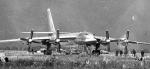

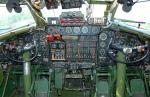


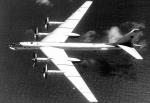
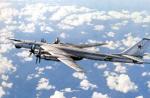













During World War II, the Soviet Red Air Force was organized as a tactical air arm, focused on battlefield support; the only strategic bombing assets possessed by the service were a handful of Petlyakov Pe-8 four-engine bombers, roughly comparable to the British Short Stirling.
By the end of the conflict, the Americans had developed and used the atomic bomb; Soviet dictator Josef Stalin had been kept up-to-date on the development program through Red spies in the US, and was determined to push the construction of a Soviet atom bomb to keep pace with the Americans. Of course, an atomic bomb was of limited use without the means of delivering it, and so Stalin also pushed for the development of a long-range bomber. In 1944, two Soviet OKBs (experimental design bureaus), those run by Vladimir Myasishchev and Andrei Tupolev, were ordered to generate preliminary designs for such a bomber. They used the advanced US Boeing B-29 Superfortress as a starting point.
Work on the new designs proved troublesome, however, and so the decision was made for the Tupolev OKB to reverse-engineer the B-29 itself, three of them having landed in Siberia after being damaged in raids against Japan, and put it into production. Initial flight of the B-29 copy, designated the Tu-4, was in 1947, with NATO assigning the type the reporting name Bull. Hundreds of them were built up to 1953. With the detonation of the first Soviet atomic bomb in 1949, the Soviet Union had the nuclear option, and with the Tu-4 the means to deliver it.
The problem was that there was no way to deliver Soviet nuclear weapons to the continental United States, the range being extreme for a Tu-4 even assuming a one-way trip, which was considered as an option, the crew supposedly to ditch at sea after a strike and be recovered by submarine. Other work was done to give the Tu-4 an inflight refueling capability, though only a few were ever fitted with inflight refueling kit.
Obviously, the Soviet Union needed a bomber with much longer range, and both the Myasishchev and Tupolev OKBs were tasked with development of such a machine. The Myasishchev OKB came up with the turbojet-powered M-4, which was assigned the NATO reporting name of Bison; it was not highly successful, in particular falling far short on the vital range specification, was only built in modest quantity.
Various options were considered by the Tupolev OKB, the most obvious being simply to improve the Tu-4. The result was construction of a prototype of the Tu-80, which still looked much like a B-29, except notably for a stepped cockpit; it also featured a stretched wing and fuselage, with increased fuel tankage giving it about a third more range than the Tu-4. That wasn’t good enough, and the Tu-80 program was canceled months before the initial flight of the prototype on 1 December 1949. The prototype was retained for trials work.
Focus had shifted to a further improved machine, the Tu-85, which was superficially similar to the Tu-80, but still larger, in particular with a substantially enlarged wing, and with about twice the range of the Tu-4. Initial flight of the first of two prototypes was on 9 January 1951. It seemed to be all that was expected of a long-range bomber, and series production was approved. However, the authorities then took note of the losses suffered by American B-29s over North Korea against modern Mikoyan MiG-15 jet fighters. The conclusion was that a souped-up B-29 simply could not survive against well-prepared air defenses, and so the Tu-85 was canceled in turn.
Obviously something more radical was required. The Tupolev OKB had already been considering such an advanced design, essentially a Tu-85 with swept wings and either turbojet or turboprop propulsion. On detail analysis, turboprops won out, with the new aircraft, the Tu-95, to be powered by four powerful Kuznetsov TV-2 turboprops driving contra-rotating propellers. The TV-2 was based on a German design, the Junkers 109-022, that never reached production, with German designers working for the Soviets on the project. In maturity, this engine would become the most powerful turboprop built in the 20th century.
Initial flight of the first Tu-95 prototype was on 12 November 1952, powered by preliminary TV-2F engines. Unfortunately, on 11 May 1953, the prototype crashed, with four crew killed but seven managing to bail out. An early investigation suggested that one of the engines had fallen off due to defective manufacture of the aircraft.
However, further study indicated that one of the turboprops had a problem with the reduction gear that led a fire, given the sheer power of the engine, building reduction gear that could handle the load was troublesome, and there had been such failures in tests.
A second prototype took to the air on 16 February 1955. The Tu-95 had already been approved for production by that time and a factory in Kuibyshev was working on an initial production batch, with the first two production machines rolled out in August. The Tu-95 was displayed to the world in a fly-over at the annual Tushino airshow near Moscow that year, with Western observers finding it extremely interesting, rightly suspecting that the USSR had finally obtained a strategic bomber with true intercontinental range.
The fact that the Tu-95 used propeller propulsion seemed backwards, few being aware of the aircraft’s high performance, it being one of the fastest prop-powered aircraft to reach full operational service. NATO assigned it the reporting name of Bear.
Only a handful of initial-production Tu-95 machines was built, production quickly moving on to the slightly improved Tu-95M, and all the Tu-95s upgraded to Tu-95M standard. The type entered formal operational service in 1957. Once later variants of the Tu-95 were introduced, NATO modified the reporting name of the Tu-95/95M to Bear-A.
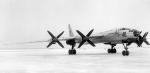
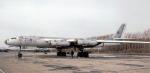
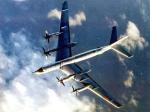
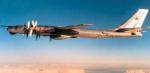
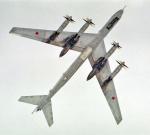
The Tu-95M was of all-metal construction, made mostly of aircraft aluminum alloy with some use of magnesium parts. The aircraft featured mid-mounted swept wings with four turboprop engines; a swept tail assembly; and tricycle landing gear. There was a pressurized compartment forward and rear, separated by the bomb bay and a rear unpressurized equipment section.
Leading-edge sweep of the wing was 37 degrees out to the outer engine nacelle, then decreasing to 35 degrees, while the tail surfaces all had a leading-edge sweep of 40 degrees. There were flaps inboard and three-section ailerons outboard on each wing. The initial production Tu-95 was fitted with NK-12 turboprops, NK-12 being the production designation for the TV-2, providing a staggering 8,950 kW (12,000 ehp) each, with the Tu-95M featuring the NK-12M engine, providing the same power ratings but with technical improvements. Each engine drove a contra-rotating propeller with four blades on each prop stage; the blades were fully reversible, highly effective at reducing landing roll. Each engine nacelle featured a fire extinguisher system and firewalls.
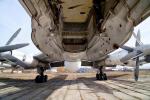
The two-wheel steerable nose gear retracted backward, while the four-wheel main gear, organized in 2×2 bogey arrangement, retracted backward into the inner engine nacelles, flipping over during retraction. There was a bumper under the tail to protect the aircraft from tail strikes on takeoff. Electrical deicing was used for flight surfaces, props, and windscreen, though the engine inlets used hot-air deicing.
All offensive stores were carried internally in the two-section bomb bay. A typical warload was 5 tonnes (5.5 tons), though the maximum warload was 20 tonnes (22 tons). Along with nuclear stores, the Tu-95M could carry combinations of conventional bombs, with the smallest stores carried being 250-kilogram (550-pound) bombs, 45 such bombs could be hauled, typically for an airfield attack mission. Bomb-aiming was by a radar targeting system with a backup optical sight. The Tu-95M was optimized for the nuclear strike mission, and so the bomb bay featured heating and climate control, nuclear stores demanding a bit of babying. The cockpit glazing, incidentally, featured blast visors to protect the crew from nuclear flash.
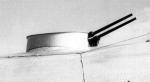
There were three defensive gun positions, in the form of a remote-controlled barbette above and below the rear fuselage, plus a manned tail position. The dorsal barbette was retractable; the two barbettes were directed by three gunners, one in a dome behind the cockpit, one each in a blister window on each side of the rear fuselage under the tailplane. All three gun positions were armed with twin AM-23 23-mm automatic cannon, with the overall ammunition store being 2,500 rounds.
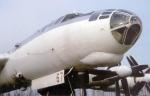
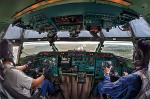
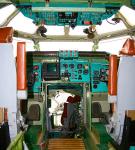
Avionics included radios, radio navigation aids, identification friend or foe (IFF) transponder, and a Rubidy-MM bombing-navigation radar mentioned above in a fairing under the nose, which was glazed for use by the navigators. A film camera was fitted under the fuselage, primarily for bomb damage assessment. The crew compartments were heated and ventilated, though not air-conditioned. There were ten crew, with the cockpit crew including a pilot and copilot, two navigators, a flight engineer, a radio operator / gunner and an electronic countermeasures (ECM) operator
The tail-section crew consisted of three gunners. The cockpit crew got into the aircraft through a hatch in the nose gear bay, while the tail crew got in through a hatch below the tail. The aircraft was fitted with a number of emergency exits, with one of the cockpit exits featuring a slide to keep the crew from taking a nasty fall. There were two inflatable life rafts for ditching at sea.
It appears that the Tu-95 was generally liked by aircrew and ground crew, at least once the bugs were worked out; one early problem was that the prop feathering system was manually activated, which made it clumsy to use, leading to a fatal landing accident at the outset of the Bear‘s service. An automated prop feathering system was quickly developed in consequence. In cold weather, oil tended to freeze up in the engines while the aircraft was sitting on the runway, requiring troublesome procedures to keep the oil liquid; eventually the problem was solved by coming up with a low-temperature oil blend.
In maturity, the Tu-95 handled well, was very sturdy, and relatively straightforward to maintain; it would have an enviably low accident rate. There were misgivings over the lack of ejection seats, and the associated dangerous inconvenience of bailing out of the aircraft; given its large size, taxiing it on the runway could be troublesome. It might seem that the turboprop propulsion resulted in high noise levels and crew fatigue. The Bear in its various guises would become very familiar to Western naval forces as the big aircraft prowled the oceans.
The Tu-95M was followed by a modestly-improved version, the Tu-95MA, the major change being a tweak to the engine nacelles. In the 1980s, the survivors of the first-generation Tu-95 machines were converted into Tu-95U trainers by removing the weapon systems and sealing the bomb bay shut; these machines could be recognized by a red stripe forward of the tail assembly.
The primary Soviet strategy for dealing with stronger air defenses was to move towards stand-off missiles that would allow a bomber to destroy a target from a relatively safe distance away. There had been interest from early on in using the Bear as a stand-off missile carrier, with work from 1955 on modifying a Tu-95M to carry the Kh-20 (NATO AS-3 Kangaroo) missile, with the modified aircraft performing its first flight at the beginning of 1956. The missile / missile carrier «complex» was designated Kometa-20 or just K-20, and so the revised bomber was designated the Tu-95K.
The Kh-20 was a big liquid-fueled rocket vehicle, carried semi-externally under the fuselage and extended out into the airstream for launch. A Tu-95M was modified as the prototype of the Tu-95K, performing its first flight in its new form at the beginning of 1956. The revised bomber featured a modified nose, with the front glazing eliminated and a prominent fairing wrapped around the bottom of the nose for the Yad radar (NATO Crown Drum) used to direct the Kh-20 missile, the bomber had to track the target in order to guide the missile into it. The Tu-95K was accepted into service in 1960; once it became known to NATO, it was assigned the reporting name of Bear-B.
The Kh-20 missile was «draggy» of course, and cut into the bomber’s range. The solution was midair refueling. Initially, the idea was to implement the «wingtip to wingtip» refueling scheme used on the Tupolev Tu-16 bomber; that didn’t work out, so the Tu-95K was instead fitted with a nose probe for hose and drogue refueling from Myasishchev M-3 Bison tankers. The result was known as the Tu-95KD, with «D» standing for «Dalniy» or «Range«. A total of from 70 to 80 Tu-95K/KD machines was built, with most of the Tu-95Ks updated to Tu-95KD specification. In the 1970s, a few Tu-95Ks that weren’t updated were converted to a trainer configuration, the Tu-95KU, along the lines of the Tu-95U.
During the 1960s, many Tu-95KD machines were upgraded with new avionics, being given the revised designation of Tu-95KM, with the «M» effectively standing for «Modernized«. The Tu-95KM looked exactly like Tu-95KD except for a teardrop fairing one each side of the rear fuselage for the SRS-6 Rhomb-4A electronic surveillance measures (ESM) system, used to locate targets from their radio and radar emissions. The Kh-20 missile was also upgraded to the improved Kh-20M specification. NATO assigned the Tu-95KM the reporting name of Bear-C.
The Kh-20 missile was subsonic, and so it was clearly behind the times by the late 1960s. Work had been going on since early in the decade on a much more potent stand-off weapon, the Kh-22, a much more capable supersonic missile that NATO would designate AS-4 Kitchen. Work was initiated on developing an appropriate carrier version of the Tu-95, which would emerge as the Tu-95K-22.
A Tu-95KM was modified as a prototype. The revised aircraft looked much like the Tu-95KM, but featured updated targeting and avionics systems, with the tail guns deleted and replaced by ECM gear. The Tu-95K-22 could actually carry three Kh-22 missiles, one in the belly as with the Kh-20, plus one under each inner wing on a pylon, though it appears three missiles was an unusual fit. Initial flight of the prototype was in 1975, though trials proved time-consuming, the first Kh-22 launch only occurring in 1981 and the type not reaching operational service until 1987. The Tu-95K-22 fleet consisted of both new-build aircraft and upgrades from Tu-95KM machines. NATO gave the variant the reporting name of Bear-G.
Some Bear-Gs were fitted with an air sampling pod outboard under each wing to collect radioactive fallout from the atmosphere as a secondary mission. Some Tu-95K-22 machines were also kitted up to carry three external bomb containers for conventional attack, the warload being 45 250-kilogram (550-pound) bombs, the primary mission being airfield attack.
In the late 1950s, work began on an advanced anti-ship missile for submarine or surface vessel launch, which emerged as the P-6 (NATO SS-N-3). It was a sophisticated weapon, but it had one significant limitation: it had to be guided by a remote platform all the way to the target, and so submarines and surface vessels could not use the P-6 to perform over the horizon attacks.
The Tu-95, with its long endurance, seemed well-suited for performing maritime surveillance and then, once it had spotted targets, directing P-6 missiles against them. Work began on an appropriate version of the aircraft in 1959, with the new variant designated Tu-95RTs, where «RTs» could be loosely interpreted as «reconnaissance / targeting system«. Incidentally, that was the system designation, the aircraft variant by itself being referred to as the Tu-95RC.
A Tu-95M was modified as the prototype carrying no offensive weapons, the primary changes being the installation of a surveillance radar in the bomb bay, the installation of a Rubidy-MM missile-control datalink system in place of the undernose radar, which gave the Tu-95RTs a distinctive «double bubble» configuration and the installation of a communications relay system, marked by antenna fairings at the tailplane tips.
Initial flight of the aircraft in its new form was in September 1963. Getting all the electronics gear working right proved troublesome, however, and the system was not declared operational until 1966. Production aircraft featured Rhomb-4 ESM gear, with the teardrop fairings on the rear fuselage as per the Tu-95KM.
Once NATO became aware of the Tu-95RTs, it was given the reporting name Bear-D. It became a common sight for Western naval forces as it prowled the oceans in search of potential targets. If it came to a shooting match, a submarine or surface vessel launch platform would fire a salvo of three or four P-6 missiles at targets identified by a Tu-95RTs; the aircraft would simply keep the targets illuminated by radar, with the radar imagery passed back to operators on the launch platform, who would adjust the course of the missiles by relaying the course corrections back through the Tu-95RTs.
Roughly in parallel with the development of the Tu-95RTs, the Soviets worked on a strategic reconnaissance variant of the Tu-95. The effort focused on a minimum-change derivative of the Tu-95M, with an extensive camera suite in the bomb bay and addition of electronic intelligence (ELINT) gear. Four Tu-95RM machines were built as conversions of Tu-95M machines, with the first flying it its new form in 1961. Three of the four were fitted with inflight refueling probes.
The Tu-95RM remains one of the most obscure Bear variants, partly due to the small numbers built, partly due to its nondescript appearance. It looked pretty much like a stock Bear-A, except for additions such as the nose probe and ESM fairings like those of the Bear-C along the rear fuselage. NATO assigned the Tu-95RM the reporting name of Bear-E; these machines served into the 1980s, to then be converted into Tu-95U trainers.
In 1963, work began at the Tupolev OKB on a derivative of the Tu-95 for the long-range antisubmarine warfare (ASW) role, to be operated by the AVMF. The naval variant, to be designated Tu-142, was based on the Tu-95RTs, but of course the avionics suite was considerably updated, with the new system built around the Berkut (Golden Eagle) search radar developed for the Ilyushin Il-38 sub-hunter. The first of three prototypes performed its initial flight on 18 July 1968, followed by the second in September. Aircraft were available for operational evaluation in 1970, with the Tu-142 going into service with the AVMF in 1972. NATO assigned it the reporting name of Bear-F.
The combat system for the Tu-142 was elaborate, with the Berkut radar complemented by an ELINT system, an infrared detection system, and a sonobuoy receiver system. A bomb bay was retained, positioned behind the radar fairing, to carry sonobuoys, homing torpedoes, depth charges, or mines. There were substantial changes to the airframe. The forward fuselage was stretched by 1.7 meters (5 feet 7 inches) to permit a larger cockpit, partly to help accommodate the aircraft’s combat systems and partly to improve crew comfort on long patrols. The flight deck was raised to improve field of view.
The main landing gear was designed to permit operations from rough airstrips, mainly to support overseas deployments to Soviet client states in Africa and other locales where airfields were likely to be undeveloped. After some consideration, the decision was made to use three-axle, twelve-wheel main gear bogies. Wing chord was extended and two-section flaps were fitted. The dorsal and ventral turrets were deleted, though the tail turret was retained. Powerplants were the latest NK-12MV variant, providing 11,035 kW (14,800 ehp), a jump of over 29% from the preceding NK-12M.
Not too surprisingly, once introduced into service, the complicated Tu-142 demonstrated shortcomings. Handling left something to be desired and the avionics suite was unreliable. Handling problems were mostly due to excessive weight; the rough-field requirement, which was never very realistic to begin with, was abandoned and so after early production, the heavy twelve-wheel main gear was replaced with four-wheel units similar to those of the Tu-95, but reinforced. The extended inboard engine fairings and larger flaps were abandoned.
The avionics problems were partly addressed by deleting the infrared scanner, which had proven ineffective, and simplifying the ECM system. This variant also included bunks for the crew so they could get some rest on long patrols. No new reporting name was specified, though NATO designated the updated machines as Bear-F Mod 1, since they were visibly different from early production machines.
Although initially Tu-142 production was at the Kuibyshev factory, the plan was over the longer run to switch it to State Factory Number 60 in Taganrog in southwestern Russia. Initial production at Taganrog was of the Tu-142M, which was much like the late production baseline Tu-142 with a few slight changes at most. NATO was apparently able to tell the difference, designating it Bear-F Mod 2.
In operational service, the Tu-142’s combat system did not prove highly effective in ASW operations, leading to a reconsideration of the combat avionics suite. The main improvement was an explosive sonobuoy system, in which sonobuoys were dropped followed by an explosive charge, with a processing system on the aircraft sorting out the echoes to pinpoint a sub’s location.
The avionics suite was also generally upgraded to a much more sophisticated configuration, designated the Korshun-K, «Korshun» meaning «kite«, as in a small hawk, with a magnetic anomaly detector (MAD) mounted somewhat unconventionally on the rear of the tip of the tailfin; a side-looking radar system; a much-improved search radar; and advanced processing / control systems.
Although an initial prototype was flown in 1975, working out the bugs proved time-consuming and the Tu-142MK didn’t enter service until 1979. NATO assigned it the reporting name of Bear-F Mod 3. India obtained eight such machines with slightly downgraded avionics in the 1980s, these aircraft being designated Tu-142ME; these were the only Bears to be exported. They were later refurbished and updated by the Russian Beriev organization, the first machine being redelivered in 2011. They were retired in 2017, having been replaced by the Boeing P-8I Poseidon maritime patrol aircraft.
A handful of Tu-142MK machines was built as submarine communications relay aircraft, reeling out a long trailing antenna from a rig under the belly to transmit and receive low-frequency signals that could penetrate through water. These machines, designated Tu-142MR, a distinctive thimble nose radome in place of the nose glazing and a fairing like that of the MAD system on the tailfin, but mounted forward instead of to the rear. NATO gave them the reporting name of Bear-J.
The Tu-142MK was followed in turn in the late 1980s by the Tu-142MZ, which not only provided an improved Korshun-KN-N combat avionics suite, but still more powerful and fuel-efficient NK-12MA engines, rated at 11,185 kW (15,000 ehp). The NK-12MA also featured heftier electric generators to support onboard systems. NATO assigned the reporting name of Bear-F Mod 4.
The Tu-142MK featured a distinctive «pimple» antenna fairing on the front of the nose glazing, as well as a new tail turret, derived from that developed for the Tu-22M Backfire bomber, with twin two-barreled GSh-23 cannon, meaning the turret bristled with four barrels. While a tail turret was a bit antiquated by that time, the Soviets developed 23-mm chaff and flare rounds, allowing the tail turret to be used as a countermeasures system in itself. The observation blisters on each side of the tail were deleted.
The Tu-142 was an extremely capable ASW platform, with long range, good warload, and highly sophisticated combat avionics. It spent much of the Cold War seeding the «Greenland-Iceland-UK Gap» with sonobuoys to try to spot US Navy hunter-killer submarines that could be a threat to Red Navy missile submarines, with USAF F-15 Eagles operating from Iceland keeping an eye on the Tupolevs. The Tu-142s also operated out of Cuba, with the Americans keeping a close eye on them, and from Angola.
Due to its complexity, the Tu-142 was relatively expensive to operate and difficult to maintain, and so the burden of Soviet long-range ASW duties fell on the Ilyushin Il-38, even though it only had about half the range. A few Tu-142 machines were used for engine and other trials, in some cases being designated Tu-142LL. Tu-142s still remain in service with the Russian military, though it seems in small numbers.
During the 1970s, the Soviets became very interested in the new cruise missile technologies being developed by the USA, and began work on their own counterpart, which would emerge as the Kh-55 (NATO AS-15 Kent). It had a general similarity to the US Tomahawk naval cruise missile, resembling a torpedo with pop-out straight wings, pop-out tailfins in a cross arrangement, and turbofan propulsion.
Although the Bear had been out of production since 1969, it was envisioned as one of the carrier aircraft, with work beginning in the late 1970s on modifying the Tu-142 accordingly. A trials machine, the Tu-95M-5, was modified from a Tu-95M to test out appropriate technologies, with this machine performing its initial flight in 1978. A prototype Tu-142MS Kh-55 cruise missile carrier performed its first flight in 1979. The variant went into production in 1981, having been somewhat confusingly redesignated Tu-95MS, and entered service in 1983. When NATO got wind of the variant, it was assigned the reporting name Bear-H.
The Tu-95MS featured modern avionics to support its weaponry and operations, with a modified nose to accommodate its Obzor-MS radar and other systems. It was powered by NK-12MA engines, and had the modernized tail turret with twin GSh-23 cannon used on the Tu-142MZ. Two versions of the Tu-95MS were built. The Tu-95MS-6, with the Osina (Aspen) missile-launch system, and 6 Kh-55 cruise missiles mounted on a rotary launcher in the bomb bay, and the Tu-95MS-16, with Sprut (Octopus) missile-launch system, the bomb bay launcher, plus pylons for ten more, two on an inboard pylon, three on an outboard pylon. The external stores are of course «draggy», and cut into range. The -16 machines also supported the improved Kh-55SM cruise missile; in addition, they had modernized communications and self-defense systems, plus a new auxiliary power unit (APU) turbine.
The difference became irrelevant following the Strategic Arms Limitation Treaty of the 1980s, when the external pylons were removed. Production of the Tu-95MS continued at Taganrog to 1983, when production was transferred back to the Kuibyshev plant. The last Bear was rolled out in 1992, following production of 261 machines, including 88 Tu-95MS variants.
After the fall of the USSR, 40 Bears remained in Kazakhstan, being traded back to Russia for more practical tactical combat aircraft. Ukraine had 25, with three of the newest sold back to Russia. The Tu-142MZ, Tu-95MS, and Tu-142MR remain in service.
The Bear‘s only mission became cruise-missile carriage. From 2019, the fleet is being upgraded to Tu-95MSM standard, featuring a new Novella NV1.021 multimode radar, a further updated navigation suite, plus a modernized countermeasures suite, updated NK-12 MPM turboprops with new props. It appears the power ratings won’t change, but the new engines will be more reliable and maintainable, and finally support of the Kh-50 cruise missile.
Despite its lengthy service, the Tu-95 didn’t see combat until 2015, when Tu-95MS bombers conducted missions in support of the Syrian government, launching cruise missiles to perform strikes on rebel groups. They also apparently launched cruise missiles against Ukraine in the 2022 war. At last notice, 60 Bear-Hs were still in service with Russian forces.
FUENTES Y REFERENCIA – SOURCES & REFERENCE
airvectors.net
Ugolok Neba
©jmodels.net
 jmodels.net
Debe estar conectado para enviar un comentario.