
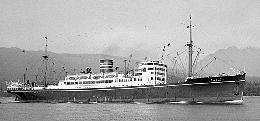
| DATOS TÉCNICOS | TECHNICAL DATA |
| TIPO:Transatlántico y buque hospital. | TYPE:Ocean liner and hospital ship. |
| CONSTRUCTOR:Yokohama Dock Co. (Yokohama, Japón). | BUILDER:Yokohama Dock Co. (Yokohama, Japan). |
| BOTADURA:30 de septiembre de 1929. | LAUNCHED:30 September 1929 |
| DESPLAZAMIENTO:11.622 TRB. | DISPLACEMENT:11,622 GRT. |
| ESLORA:163,3 m. | LENGTH:535.9 ft . |
| MANGA:20,1 m. | BEAM:65.11 ft. |
| PUNTAL:12,50 m. | DRAUGHT:41.01 ft. |
| VELOCIDAD MÁX.:18,5 nudos (34,3 km/h.). | MAX. SPEED:18.5 knots (21.3 mph.). |
PROPULSIÓN:
|
PROPULSION:
|
| AUTONOMÍA:18.700 mil. náut. (34.632 km.) a 15 nudos (27,78 km/h.). | RANGE:18,700 nm. (21,519 ml.) at 15 knots (17.26 mph.). |
| CAPACIDAD:331 pasajeros. | CAPACITY:331 passengers. |
| CONSTRUIDOS:3 (Clase Hikawa Maru). | BUILT:3 (Hikawa Maru class). |
El Hikawa Maru se construyó para el servicio de pasajeros en la línea Japón-Seattle, en la que realizaba viajes regulares hasta justo antes del estallido de la Guerra del Pacífico. Tenía dos barcos gemelos: el Hiye Maru y el Heian Maru. Entre los pasajeros distinguidos que transportó el Hikawa Maru se encontraban el príncipe y la princesa japoneses Takamatsu y Charlie Chaplin.
A medida que la guerra mundial se presentía, el gobierno japonés requisó el Hikawa Maru y lo envió a Vancouver y Seattle para evacuar a los ciudadanos japoneses de los Estados Unidos. Regresó a su puerto de origen de Yokohama el 18 de noviembre de 1941. Luego fue equipado como buque hospital de la Armada.
El Hikawa Maru sobrevivió tres veces tras ser dañado por minas navales. El primer incidente ocurrió el 3 de octubre de 1942 al ingresar al puerto de Surabaya en Java. Fue reparada en puerto y partió el 10 de octubre. El segundo tuvo lugar el 15 de julio de 1944 cuando una mina magnética le dañó frente a las Islas Carolinas. Se detuvo en Davao (Filipinas) del 19 al 26 de julio, donde se inspeccionaron los daños y el 1 de agosto llegó a Yokosuka para su reparación. El tercero fue el 17 de febrero de 1945 cuando salía del puerto de Singapur. Su popa chocó con una mina en el estrecho de Singapur, pero regresó a puerto y fue reparado. En marzo y abril, el astillero de Mitsubishi en Yokohama le hizo más reparaciones, y del 21 de junio al 4 de julio estuvo en dique seco en Maizuru. Fue el único gran transatlántico de pasajeros de Japón que no resultó hundido durante la guerra.
Después de la guerra, continuó en servicio como barco hospital y se utilizó para repatriar a los militares japoneses. En 1947 fue acondicionado como buque de carga y pasajeros y puesto en servicio regular en rutas nacionales. A continuación, se utilizó en rutas internacionales y, en agosto de 1951, se colocó nuevamente en servicio regular en las líneas de Seattle, Nueva York y Europa. Después de una remodelación adicional en 1953, reanudó el servicio en Seattle Line como el único transatlántico de pasajeros de Japón, con una capacidad de 276 pasajeros acomodados en 82 camarotes.
En octubre de 1960, después de haber estado en servicio durante 30 años, el Hikawa Maru regresó de Seattle y Vancouver a Kobe y, finalmente, a Yokohama, donde fue amarrado y se retiró del servicio. Durante su vida, realizó 254 travesías del Pacífico y transportó un total de más de 25.000 pasajeros.
Desde su jubilación, se ha mantenido en sus amarres en el puerto de Yokohama, donde está abierto al público. Se ha convertido en una vista familiar para muchas personas locales y fue designada como Propiedad Cultural Relevante nacional en 2016.
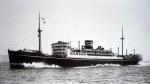

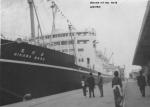


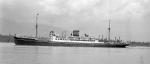


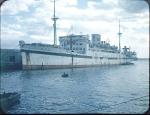

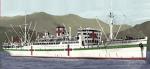


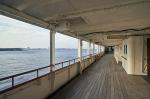


Hikawa Maru was built for passenger service on the Japan-Seattle Line, on which she made regular sailings until just before the outbreak of the Pacific War. She had two sister ships: the Hiye Maru and the Heian Maru. Distinguished passengers carried by the Hikawa Maru included Japanese Prince and Princess Takamatsu and Charlie Chaplin.
As war clouds gathered, Hikawa Maru was requisitioned by the Japanese government and sent to Vancouver and Seattle to evacuate Japanese nationals from the United States. She returned to her home port of Yokohama on 18 November 1941. She was then fitted as a Navy hospital ship.
Three times Hikawa Maru survived being damaged by mines. The first was on 3 October 1942 while entering port at Surabaya, Java. She was repaired in port and departed on 10 October. The second was on 15 July 1944 when a magnetic mine damaged her off the Caroline Islands. She stopped in Davao in the Philippines on 19–26 July where her damage was inspected and on 1 August she reached Yokosuka for repairs. The third was on 17 February 1945 when she was leaving the Port of Singapore. Her stern struck a mine in the Singapore Strait but she returned to port and was repaired. In March and April the Mitsubishi dockyard at Yokohama made further repairs on her, and from 21 June to 4 July she was drydocked at Maizuru. She survived as Japan’s only large passenger liner to avoid being sunk during the war.
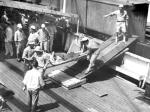
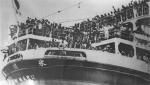
After the war, she continued in service as a hospital ship, and was used to repatriate Japanese servicemen. In 1947, she was refitted as a cargo-passenger ship and put into regular service on domestic routes. Next, she was used as a tramp ship on international routes, and in August 1951, she was again placed in regular service on the Seattle, New York, and Europe Lines. After a further remodeling in 1953, she resumed service on the Seattle Line as Japan’s only transpacific passenger liner, with a capacity of 276 passengers accommodated in 82 cabins.
In October 1960, having been in service for 30 years, Hikawa Maru returned from Seattle and Vancouver to Kobe, and finally to Yokohama, where she was moored and retired from service. During her lifetime, she made 254 Pacific crossings and carried a total of more than 25,000 passengers.
Since her retirement, she has been kept at her moorings in Yokohama port, where she is open to the public. She has become a familiar sight to many local people, and was designated as a nationally Important Cultural Property in 2016.
FUENTES Y REFERENCIA – SOURCES & REFERENCE
nyk.com
©jmodels.net
 jmodels.net
Debe estar conectado para enviar un comentario.