
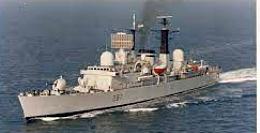
| DATOS TÉCNICOS | TECHNICAL DATA |
| TIPO:Destructor de misiles guiados. | TYPE:Guided-missile destroyer. |
| CONSTRUCTOR:Swan Hunter, Tyne and Wear (Gran Bretaña). | BUILDER:Swan Hunter, Tyne and Wear (UK). |
| BOTADURA:24 de abril de 1975. | LAUNCHED:24 April 1975. |
| DESPLAZAMIENTO:4.820 toneladas. | DISPLACEMENT:4,820 tonnes. |
| ESLORA:125 m. | LENGTH:410 ft. |
| MANGA:14,3 m. | BEAM:47 ft. |
| PUNTAL:5,8 m. | DRAUGHT:19 ft. |
| VELOCIDAD MÁX.:30 nudos (56 km/h.). | MAX. SPEED:30 knots (34.52 mph.). |
PROPULSIÓN:
|
PROPULSION:
|
ARMAMENTO:
|
ARMAMENT:
|
SENSORES:
|
SENSORS:
|
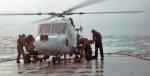
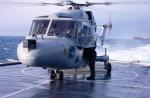
| AVIACIÓN EMBARCADA:Un helicóptero Lynx HMA8. | EMBARKED AIRCRAFT:One Lynx HMA8 helicopter. |
| TRIPULACIÓN:287–312 | CREW:287–312 |
| CONSTRUIDOS:14 (Clase Sheffield). | BUILT:14 (Sheffield Class). |
La clase de destructores Tipo 42 (o Clase Sheffield) se construyó para llenar el vacío dejado por la cancelación del gran destructor Tipo 82. Estaba destinado a cumplir la misma función, con sistemas similares en un casco más pequeño y rentable. Aunque a menudo se describe como obsoleto, el Tipo 42 aún demostró ser efectivo contra las amenazas de misiles modernos durante la Guerra del Golfo de 1991.
Los barcos del Lote 1 se botaron entre 1975 y 1979 e incluían el HMS Sheffield (D80), el HMS Birmingham (D86), el HMS Cardiff (D108), el HMS Coventry (D118), el HMS Newcastle (D87) y el HMS Glasgow (D88).
El HMS Newcastle con el HMS Glasgow, el HMS Sirius, el HMS Phoebe, y el RFA Olmeda se desplegaron en las Islas Malvinas en agosto de 1982, patrullando y actuando como piquetes de radar hasta que el sistema de radar en tierra estuvo operativo. El 12 de mayo de 1992, el Newcastle se desplegó con el grupo Orient ’92 formado por el HMS Invincible, HMS Boxer, HMS Norfolk y RFA Olwen en el Lejano Oriente. Durante este tiempo participó en ejercicios conjuntos en el Estrecho de Malaca y realizó visitas diplomáticas a Seychelles, Singapur, Hong Kong, Japón y Filipinas. Regresó el 27 de noviembre de 1992. En 1993, el Newcastle realizó ejercicios en los fiordos del norte de Noruega durante el ejercicio Battle Griffin ’93 y asumió funciones de escolta en la Flota (Fleet Ready Escort). El 8 de septiembre de 1993 se desplegó para funciones de vigilancia en las Islas Malvinas. En el camino, hizo escala en Abiyán (Costa de Marfil) y pasó la Navidad y el Año Nuevo en las áreas de patrullaje de las Islas Malvinas y sus alrededores. Fue relevado por la fragata HMS Scylla de la clase Leander y regresó al Reino Unido a través de los canales de la Patagonia, haciendo escala en Valparaíso, Callao y Puerto España con una parada para repostar en Ponta Delgada (Azores) antes de regresar a Portsmouth el 8 de abril de 1994. El resto de 1994 fue empleado en mantenimiento y formación en navegación. Realizó una reparación en Rosyth en julio de 1995. En su camino hacia el norte, el Newcastle hizo una última visita a la ciudad de su nombre.
En noviembre de 1997, el Newcastle se dirigió al Caribe para asumir funciones de patrulla en las Indias Occidentales. Este despliegue se ocupó principalmente de las operaciones antinarcóticos y embarcó un Destacamento de la Guardia Costera de los EE.UU. (LEDET) bajo el mando del Distrito 7 de la Guardia Costera de los EE.UU. en Miami. A lo largo de los ocho meses del despliegue de la operación WIGS, el Newcastle brindó asistencia al Gobernador y al pueblo del Territorio Británico de Ultramar de Montserrat tras una devastadora erupción volcánica. El Newcastle volvió a entrar en la Base Naval de Portsmouth el 10 de julio de 1998.
En 1999, el destructor escoltó al portaaviones Invincible durante la Guerra de Kosovo, en la que el Invincible lanzó ataques contra objetivos serbios. El Newcastle participó en el Despliegue de la Patrulla del Atlántico de seis meses en 2002. Durante este despliegue, visitó Sierra Leona para mostrar el compromiso continuo del Reino Unido con ese país. A pesar de la especulación de que cuatro destructores Tipo 42 serían dados de baja o pasados a la reserva, el Newcastle se desplegó en el Mediterráneo en enero de 2004 para un período de servicio de 7 meses.
En julio de 2004 se anunció, como parte de la revisión Delivering Security in a Changing World, que el Newcastle sería dado de baja en enero de 2005. Fue por fin dado de baja el 1 de febrero de 2005 y colocado en reserva inactiva. Mientras estaba atracado en Fareham Creek, fue canibalizado en gran medida para mantener en funcionamiento a los restantes destructores Tipo 42. El 21 de noviembre de 2008 el Newcastle partió por última vez de Portsmouth hacia Aliağa (Turquía) tras el remolcador Lore.


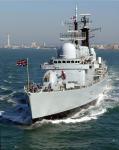
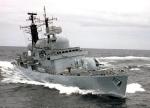
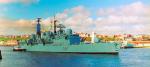
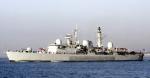
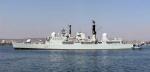
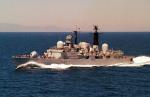
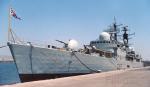
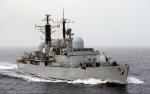
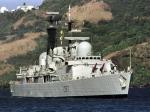
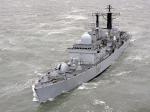
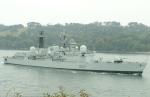
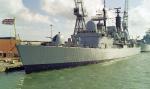
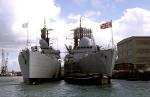
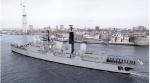
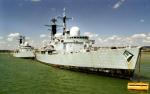
The Type 42 destroyer class (or Sheffield Class) was built to fill the gap left by the cancellation of the large Type 82 destroyer. It was intended to fulfil the same role, with similar systems on a smaller and more cost-effective hull. Although often described as obsolete, the Type 42 still proved effective against modern missile threats during the 1991 Gulf War.
The ships in Batch 1 were launched between 1975 and 1979 and included the HMS Sheffield (D80), HMS Birmingham (D86), HMS Cardiff (D108), HMS Coventry (D118), HMS Newcastle (D87) and HMS Glasgow (D88).
HMS Newcastle with HMS Glasgow, HMS Sirius, HMS Phoebe, RFA Olmeda deployed to the Falkland Islands in August 1982, patrolling and acting as radar pickets until the shore based radar system was operational. On 12 May 1992, Newcastle deployed with the Orient ’92 group HMS Invincible, HMS Boxer, HMS Norfolk and RFA Olwen to the Far East. During this time she partook in joint exercises in the Malacca Straits and carried out diplomatic visits to the Seychelles, Singapore, Hong Kong, Japan and the Philippines. She returned on 27 November 1992. In 1993, Newcastle undertook exercises in the northern fjords of Norway during Exercise Battle Griffin ’93 and undertook Fleet Ready Escort duties. On 8 September 1993 she deployed for Southlant duties as Falkland Islands Guardship. En route, she called in at Abidjan, Cote d’Ivoire and spent Christmas and New Year in and around the Falkland Island patrol areas. She was relieved by the Leander Class Frigate HMS Scylla and returned to UK via the Patagonian Canals, calling in at Valparaiso, Callao and Port of Spain with a fuelling stop at Ponta Delgada (Azores) before returning to Portsmouth on 8 April 1994. The rest of 1994 was spent in maintenance and navigation training. She paid off into refit in Rosyth in July 1995. On her way north, Newcastle made a final goodwill visit of this commission to the city of her name.
In November 1997, Newcastle made her way to the Caribbean to assume duties as West Indies guard ship. This deployment was concerned primarily with counter narcotics operations and saw the ship embark a US Coast Guard Law Enforcement Detachment (LEDET) under the command of US Coast Guard District 7 in Miami. Throughout the eight months of the «WIGS» deployment Newcastle rendered assistance to the Governor and people of the British Overseas Territory of Montserrat following a devastating volcanic eruption. Newcastle re-entered Portsmouth Naval Base on 10 July 1998.
In 1999, Newcastle escorted the aircraft carrier Invincible during the Kosovo War, in which Invincible launched attacks on Serbian targets. Newcastle took part in six-month Atlantic Patrol Deployment in 2002. During this deployment, she visited Sierra Leone to display the continuing UK commitment to that country. Despite speculation that four Type 42s would be either decommissioned or mothballed, Newcastle deployed to the Mediterranean in January 2004 for a 7-month tour of duty.
It was announced in July 2004, as part of the Delivering Security in a Changing World review, that Newcastle would be decommissioned in January 2005. Newcastle was decommissioned on 1 February 2005 and placed into inactive reserve. Whilst sitting out at Fareham Creek she was cannibalised heavily to keep the remaining Type 42 destroyers running. On 21 November 2008 Newcastle left Portsmouth for the last time for Aliağa (Turkey) under tow of the tug Lore.
FUENTES Y REFERENCIA – SOURCES & REFERENCE
Wikipedia
seaforces.org
©jmodels.net
 jmodels.net
Debe estar conectado para enviar un comentario.