
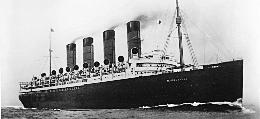
| DATOS TÉCNICOS | TECHNICAL DATA |
| TIPO:Transatlántico. | TYPE:Ocean liner. |
| CONSTRUCTOR:Swan Hunter & Wigham Richardson, Northumberland (Reino Unido). | BUILDER:Swan Hunter & Wigham Richardson, Northumberland (UK). |
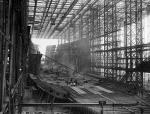
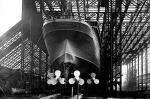
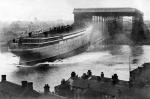
| BOTADURA:20 de septiembre de 1906. | LAUNCHED:20 September 1906. |
| DESPLAZAMIENTO:44.610 toneladas. | DISPLACEMENT:44,610 tons. |
| ESLORA:240,8 m. | LENGTH:790 ft. |
| MANGA:26,8 m. | BEAM:88 ft. |
| PUNTAL:10,1 m. | DRAUGHT:33 ft. |
| VELOCIDAD MÁX.:25 nudos (46 km/h.). | MAX. SPEED:25 kn. (29 mph.). |
PROPULSIÓN:
|
PROPULSION:
|
| TRIPULACIÓN:802 (+2.165 pasajeros). | CREW:802 (+2,165 passengers). |
| CONSTRUIDOS:2 | BUILT:2 |
El RMS Mauretania, uno de los buques más exitosos de Cunard, , brindó servicio transatlántico durante más de 28 años, muchos de ellos ostentando el récord del cruce transatlántico más rápido, el codiciado Blue Riband.
Botado en 1906, el Mauretania, junto con su gemelo Lusitania, fueron la respuesta de Cunard a los exitosos supertransatlánticos alemanes de la época, los barcos de la clase Kaiser. Con White Star, la otra línea naviera británica adquirida por JP Morgan de Estados Unidos, Cunard respondió con dos buques propulsados por turbinas. El Mauretania y el Lusitania fueron los barcos más grandes y rápidos de su época. Aunque otros barcos superaron rápidamente al Mauretania en tamaño, su velocidad fue legendaria y mantuvo el récord hasta que el SS Bremen lo superó en 1929. A diferencia del Lusitania, el Mauretania sobrevivió a la Primera Guerra Mundial y navegó por los mares durante otra década después de la guerra.
En 1902, Cunard y el gobierno británico habían llegado a un acuerdo para construir dos supertransatlánticos con una velocidad de servicio garantizada de no menos de 24 nudos. El gobierno británico debía prestar 2.600.000 libras esterlinas para la construcción de los barcos, a un tipo de interés del 2,75%, a devolver en veinte años, con la estipulación de que los barcos podrían convertirse para su uso en tiempos de guerra si fuera necesario. Además, el Almirantazgo dispuso que Cunard recibiera 150.000 libras esterlinas adicionales al año para operar el servicio de correo marítimo (Royal Mail).
El Mauretania y el Lusitania eran barcos muy similares con diferencias entre ellos, pero fueron construidos casi al mismo tiempo. Ambos fueron diseñados por el conocido arquitecto naval de Cunard, Leonard Peskett, en los astilleros Swan Hunter y John Brown trabajando a partir de planos para un barco con una velocidad de servicio estipulada de 24 nudos en clima moderado. Aunque la configuración original de Peskett en 1902 era que el Mauretania fuera un transatlántico de tres chimeneas, ya que originalmente se había planeado que tuviera motores alternativos instalados. Con los planes finalizados y habiendo recibido una subvención del gobierno, Cunard ordenó la construcción de su nuevo transatlántico y el barco comenzó sus días con la colocación de su quilla el 18 de agosto de 1904.
El transatlántico fue bautizado y botado el 20 de septiembre de 1906. Durante sus pruebas de velocidad hubo fuertes vibraciones, aunque había alcanzado una velocidad máxima de poco más de 25 nudos. Por lo tanto, cuando regresó al astillero, el Mauretania requirió un trabajo considerable, como fortalecer las secciones de popa y rediseñar las hélices antes de que pudiera entrar en servicio, ya que las mejoras habían reducido considerablemente las vibraciones. Fue entregado a Cunard el 11 de noviembre de 1907.
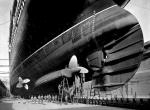
El barco quemaba entre 850 y 1.000 toneladas de carbón al día, dependiendo de su velocidad de desplazamiento. Cuando navegaba a toda velocidad, daba el equivalente a 76.000 CV. En 1908 se decidió volver a colocarlo en dique seco y sustituir sus hélices de tres palas. Estos nuevas hélices, fabricadas especialmente para el buque, eliminaron por completo todas las vibraciones a bordo.
Con su tripulación de 812 personas y completamente abastecido y preparado para su viaje inaugural a Nueva York, el RMS Mauretania partió de Liverpool el 16 de noviembre de 1907, bajo el mando del capitán John Pritchard. En el viaje de regreso del 30 de noviembre al 5 de diciembre de 1907, capturó el Blue Riband por realizar el cruce más rápido del Atlántico hacia el este, navegando a una velocidad media de 23,69 nudos. Batió este récord ocho veces hacia el este y una vez hacia el oeste. Su mejor momento se produjo del 20 al 25 de agosto de 1924, cuando navegó desde Ambrose Light House (Nueva York) hasta Cherburgo (3.198 millas náuticas, 5.923 km.) en 5 días, 1 hora y 49 minutos, a una velocidad media de 26,25 nudos.
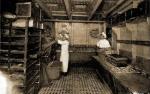
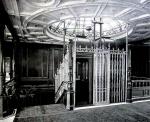
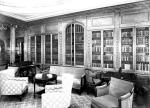
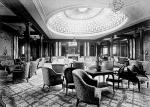
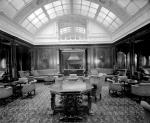
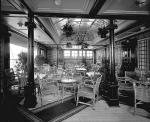
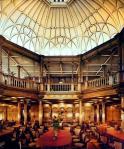
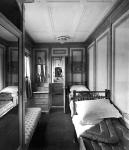
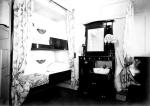
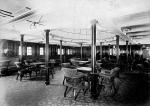
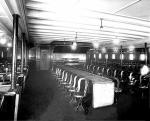
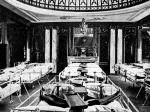
El Mauretania fue diseñado para satisfacer los gustos eduardianos. Así, sus interiores representaban lo mejor que el dinero podía comprar en el mismo momento en que Gran Bretaña se esforzaba por recuperar la supremacía en el comercio del Atlántico Norte frente a Alemania. Sus interiores fueron diseñados por el arquitecto Harold Peto y sus salas fueron equipadas por dos casas de diseño notables y conocidas, Ch. Mellier & Sons y Turner and Lord, quienes utilizaron veintiocho tipos diferentes de madera, junto con mármol, los mejores tapices y una gran cantidad de valiosos muebles. Fueron necesarios 300 carpinteros durante dos años para tallar las magníficas decoraciones interiores.
El 1 de agosto de 1914, el Mauretania zarpó de Liverpool en su viaje hacia el oeste. Cuatro días después recibió instrucciones inalámbricas para dirigirse a toda velocidad a Halifax (Nueva Escocia). El barco había sido construido especialmente para permitir el montaje de cañones de 6 pulgadas para servir como crucero auxiliar en tiempos de guerra. Sin embargo, continuó prestando servicios en la ruta del Atlántico hasta octubre, cuando fue requisado por el Gobierno según el compromiso con Cunard Company.
Sin embargo, nunca fue empleado como crucero auxiliar. Se había demostrado que el uso de grandes buques mercantes armados como buques de guerra era un error. Por lo tanto, el Mauretania quedó paralizado hasta la campaña de los Dardanelos y se encontró una oportunidad para utilizarlo. Una vez preparado, en mayo de 1915, el Mauretania realizó su primer viaje como buque de transporte de tropas desde Southampton con 3.182 soldados a bordo, con destino a la base aliada de Mudros, en la isla griega de Lemnos, en el mar Egeo.
Trágicamente, el 7 de mayo de 1915, su barco casi gemelo, el Lusitania, que transportaba pasajeros a través del Atlántico hasta Liverpool, fue trágicamente torpedeado frente al Old Head de Kinsale (Irlanda) y se hundió con la pérdida de 1.198 pasajeros.
En agosto de 1915, el Mauretania había realizado tres viajes a Mudros, transportando a 10.391 oficiales y hombres. Fue en el Mediterráneo donde el barco estuvo a punto de compartir el destino con su barco hermano. Su comandante, el capitán Daniel Dow, vio la estela de un torpedo acercándose a la proa de estribor e instantáneamente giró el timón del barco con fuerza hacia babor. El torpedo falló por un estrecho margen de aproximadamente 1,5 m.
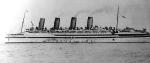
El transatlántico más rápido del mundo recibió otra remodelación y se convirtió en un barco hospital. Para este papel estaba pintado de blanco con chimeneas de color ante y tenía una gruesa banda verde alrededor del barco con tres grandes emblemas médicos de la Cruz Roja a cada lado. Después de haber acogido a todos los que debían volver a casa y haber atendido los casos urgentes, regresó a Inglaterra con 2.307 sanitarios y 6.298 enfermos y heridos. Continuó como buque hospital hasta el 25 de enero de 1916, cuando se le retiró todo el equipo hospitalario para ser reactivado nueve meses después.
El Mauretania fue transformado una vez más para convertirse en un buque de transporte de tropas y en octubre y noviembre de 1916 se dirigió a Halifax, y desde allí hizo dos viajes a Liverpool, transportando a unos 6.000 oficiales y soldados como parte de la contribución de Canadá a la lucha en el Somme.
Ciertamente, su servicio de guerra aún no había terminado, ya que cuando Estados Unidos declaró la guerra a Alemania en abril de 1917, una vez más fue comisionado como buque de transporte de tropas, pero esta vez para llevar tropas estadounidenses a Francia.
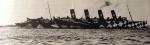
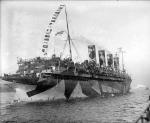
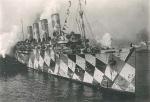
A partir de marzo de 1918, recibió dos formas de camuflaje „deslumbrante”, un tipo de esquema de color abstracto diseñado por Norman Wilkinson en 1917 en un esfuerzo por confundir a los barcos enemigos. El primer esquema de camuflaje, aplicado a principios de marzo de 1918, era curvilíneo y mostraba amplias áreas de color oliva con negros, grises y azules. El segundo esquema, aplicado en julio de 1918, consistía principalmente en varios azules y grises oscuros con algo de negro.
Su trabajo continuó durante siete meses reforzando constantemente el frente occidental con divisiones de tropas estadounidenses. Continuamente llegaban al barco noticias actualizadas de la guerra mientras se encontraba en alta mar, y de la misma manera recibió la bienvenida noticia del Armisticio. A partir de entonces siguió una época muy diferente para el Mauretania, ya que comenzó a repatriar soldados norteamericanos a sus hogares. El 27 de mayo de 1919, finalmente se le dio de baja en la Marina y fue devuelto a Cunard.
Habiendo sido restaurado nuevamente como transatlántico de pasajeros, el RMS Mauretania finalmente regresó a sus servicios transatlánticos el 21 de septiembre de 1919. Debido a su apretada agenda, no pudo detener sus servicios para realizar una extensa reparación que había sido programada para 1920.
En julio de 1921, debido a un incendio, Cunard Line se vio obligada a retirarlo del servicio y le realizó la revisión que tanto necesitaba. Lo enviaron de regreso a Swan Hunter & Wigham Richardson en el río Tyne (Inglaterra). Mientras estaba allí, pasó de quemar carbón a quemar petróleo, porque obviamente Cunard era plenamente consciente de las innumerables ventajas del petróleo como combustible, además también se hicieron las reparaciones obvias y también se cerró su cubierta inferior. El barco volvió a sus funciones habituales en marzo de 1922.
Después de la conversión de sus calderas, aunque la velocidad de servicio del barco había mejorado algo y ahora quemaba sólo 750 toneladas de petróleo cada 24 horas, en lugar de las 1.000 toneladas de carbón anteriores, no operaba a las velocidades de antes de la guerra. En una travesía en 1922, el barco logró una velocidad media de sólo diecinueve nudos. Cunard decidió que las turbinas del barco, en su momento revolucionarias pero ahora envejecidas, obviamente necesitaban desesperadamente una revisión. Así, en 1923, se inició una importante remodelación en Southhampton y se desmantelaron sus turbinas. Sin embargo, a mitad de la reforma, los trabajadores del astillero se declararon repentinamente en huelga y todos los trabajos se paralizaron y no habría retorno al trabajo durante mucho tiempo. Así, Cunard rápidamente hizo otros arreglos y lo remolcó a Cherburgo (Francia), donde se completaron los trabajos en otro astillero. En mayo de 1924, el barco volvió a prestar servicio en el Atlántico y a realizar cruceros ocasionales fuera de temporada.
Se decidió que en 1928 el RMS Mauretania recibiría una modernización integral y sus interiores recibirían un nuevo diseño. Al año siguiente, el transatlántico alemán Bremen batió su récord de velocidad, alcanzando los 28 nudos. El 27 de agosto de 1928, Cunard permitió que su barco hiciera un último intento de quitarle el récord al nuevo transatlántico alemán. Lo sacaron de servicio y sus motores se ajustaron para producir más potencia y dar mayor velocidad. Durante dos horas mantuvo una velocidad de 26 nudos, pero lamentablemente no fue suficiente, ya que el Bremen era simplemente mucho más potente y tecnológicamente avanzado que el envejecido Mauretania. Aunque no venció a su rival alemán, el barco perdió sólo por un estrecho margen después de décadas de mejoras en el diseño y superó todos sus marcas de velocidad anteriores tanto en dirección este como oeste.
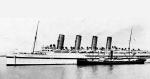
En 1930, con la Gran Depresión y nuevos competidores en el servicio del Atlántico, el Mauretania solo hacía cruceros de seis días desde Nueva York a Halifax. Luego, el barco comenzó a realizar cada vez más cruceros en el Mediterráneo, las Indias Occidentales y las Bahamas. Si bien estos eran populares entre los estadounidenses que deseaban escapar de la «Prohibición», el Mauretania, por diseño, estaba en realidad mal equipado para tales entornos. Para reducir los efectos del calor, Cunard decidió que sería mejor pintarlo completamente de blanco, tarea que se completó en junio de 1933.
Cuando Cunard Line se fusionó con White Star Line en 1934, el Mauretania, junto con el Olympic, el Homeric y otros transatlánticos envejecidos, se consideraron excedentes para las necesidades y debían ser retirados del servicio en un futuro próximo. Cunard decidió retirar el Mauretania del servicio tras realizar su última travesía desde Southampton el 30 de junio de 1934, que resultó ser el mismo día en que Cunard Line y White Star Lines se fusionaron.
Durante su último viaje alcanzó una velocidad media de 24 nudos, lo que seguía siendo una velocidad notable para este viejo transatlántico que ahora atravesaba sus últimos días. Después de dos cruceros más a las Indias Occidentales, regresó a Southampton el 2 de octubre de 1934. Con la competencia del RMS Queen Mary, que entraría en servicio en 1936, el venerable Mauretania estaba ahora demasiado anticuado y quedó internado en Southampton. A finales de marzo de 1935 Cunard-White Star decidió oficialmente ponerlo en el mercado.
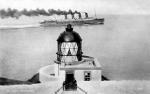
Pronto apareció un comprador y el barco fue vendido el 3 de abril de 1935 por la empresa de desguaces Metal Industries Ltd de Glasgow. Sin embargo, todos sus elementos y accesorios fueron subastados en los muelles de Southampton el 14 de mayo de 1935. El 3 de julio llegó al Firth of Forth y se trasladó a Rosyth (Escocia) donde sería desmantelado.
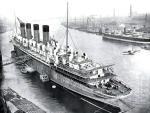
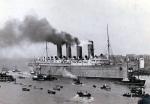


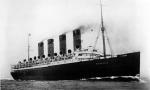
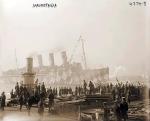
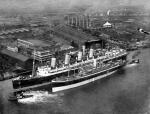
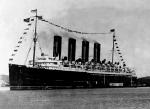
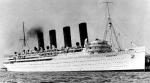
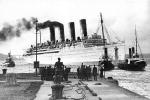
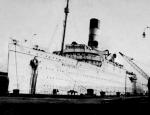
One of Cunard’s most successful liners, the RMS Mauretania provided transatlantic service for over 28 years, many of them holding the record for the fastest transatlantic crossing, the coveted Blue Riband.
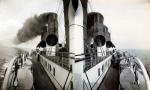
Launched in 1906, the Mauretania, alongside sister ship Lusitania, were Cunard’s answer to the successful German superliners of the day, the Kaiser Class ships. With White Star, the other British shipping line acquired by JP Morgan of the US, Cunard answered with two turbine powered superliners. The Mauretania and Lusitania were the largest and fastest ship of their day. Although other ships quickly surpassed the Mauretania in size, her speed was legendary and remained the record holder until the SS Bremen overtook the Mauretania in 1929. Unlike her older and smaller sister Lusitania, the Mauretania survived WWI and went on to sail the seas for another decade after the war.
By 1902, Cunard and the British Government had reached an agreement to build two super liners with a guaranteed service speed of no less than 24 knots. The British Government was to loan £2,600,000 for the construction of the ships, at an interest rate of 2.75%, to be paid back over twenty years, with a stipulation that the ships would be able to be converted for wartime use if required. In addition the Admiralty arranged for Cunard to be paid an extra £150,000 per year to operate the Royal Mail.
The Mauretania and the Lusitania were very similar ships with differences between them, but they were built at almost the same time. Both were designed by the well known Cunard naval architect Leonard Peskett, with Swan Hunter and John Brown shipyards working from plans for an ship with a stipulated service speed of 24 knots in moderate weather. Although Peskett’s original configuration in 1902, was for the Mauretania to be a three-funnel liner, as originally it had been planned for her to have reciprocating engines installed. With plans finalised and having received a Government subsidy, Cunard ordered their new liner to be built and the ship began its days with the laying of her keel on August 18, 1904.
The ocean liner was christened and launched on September 20, 1906. During her speed trials there was significant vibration, whilst she had achieved maximum speed of just over 25 knots. Thus when back at the yard the Mauretania required considerable work to be done, such as strengthening aft sections and redesigned propellers before she was able to enter service, as the change had reduced the vibration greatly. She was delivered to Cunard on November 11, 1907.
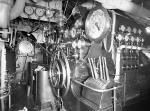
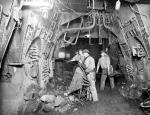
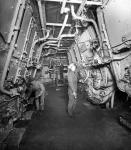
The ship burned 850 to 1,000 tons of coal per day, depending upon its travelling speed. When running at full speed she boasted the equivalent of 76,000 hp. In 1908 it was decided to place her back into dry dock and replace her three bladed screws. These new screws which had been especially made for her, completely eliminated all past vibrations on board.
Having been fully manned with a crew of 812 and fully stocked and made ready for her maiden voyage to New York, RMS Mauretania departed Liverpool on November 16, 1907, under the command of Captain John Pritchard. On the return voyage from November 30 to December 5, 1907, she captured the Blue Riband for the fastest eastbound crossing of the Atlantic, having sailed at an average speed of 23.69 knots. She broke this record eight times eastward and once westward. Her best took place from 20 to 25 August 1924, when she sailed from Ambrose Light House (New York) to Cherbourg (3,198 nautical miles, 5,923 km.) in 5 days, 1 hour and 49 minutes, at an average of 26.25 knots.
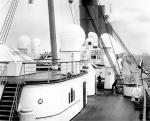
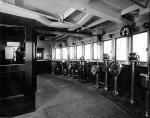
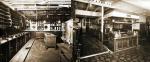
The Mauretania was designed to suit Edwardian tastes. Thus her interiors represented the very best that money could buy at the very time when Britain was striving to regain supremacy in the North Atlantic commercial trade from Germany. Her interiors were designed by architect Harold Peto and her public rooms were designed and fitted out by two-well known and notable design houses, Ch. Mellier & Sons and Turner and Lord who used twenty-eight different types of timbers, along with marble, the finest of tapestries, and a host of the best of furnishings. It took 300 woodworkers two years to carve the magnificent interior decorations.
On August 1, 1914, the Mauretania sailed from Liverpool on her westward voyage. Four days later she received wireless instructions to make with all speed for Halifax (Nova Scotia). The ship had been specially built to permit the mounting of 6-inch guns for service as an auxiliary cruiser in time of war. She continued, however, to serve the Atlantic route until October, when she was requisitioned by the Government in accordance with the Cunard Company’s undertaking.
However, she was never used as an auxiliary cruiser. The use of large armed merchantmen as war vessels had been proved to be a mistake. The Mauretania was therefore laid up until the Dardanelles campaign and thus an opportunity was found for her to be used. Having been made ready, in May 1915 the Mauretania made her first voyage as a troopship from Southampton with 3,182 troops on board, bound for the Allied base of Mudros, on the Greek island of Lemnos in the Aegean Sea.
Tragically on May 7, 1915, her very similar sister ship Lusitania, which was carrying passengers across the Atlantic to Liverpool, was tragically torpedoed off the Old Head of Kinsale (Ireland), and she was sunk with the loss of 1,198 passengers.
By August 1915 the Mauretania had made three voyages to Mudros, carrying 10,391 officers and men. It was in the Mediterranean that the shipcame within a narrow margin of sharing the fate of her sister ship. For her commander, Captain Daniel Dow, saw the track of an approaching torpedo on the starboard bow and he instantly turned the ship’s wheel hard to port and the torpedo missed by a narrow margin of about 5 ft.
The world’s fastest liner received another refit as she now became a hospital ship. For this role she was painted white with buff funnels and had a thick green band around the ship and three large medical Red Cross emblems on each side. After she had taken on board all those who were to go home and attended to the urgent cases, she went back to the carrying 2,307 medical staff and 6,298 sick and wounded. She continued as a hospital ship until January 25, 1916, and she was paid off and her hospital equipment was all removed and she was again laid up until she would be reactivated nine months later.
Mauretania was once again altered to become a troopship and in October and November 1916 she headed to Halifax, and she made two voyages from there to Liverpool, carrying some 6,000 officers and men as part of Canada’s contribution to the struggle on the Somme.
Her war duty was certainly not yet over, for when the USA declared war on Germany in April 1917, she was once again commissioned as a troopship but this time she was used to bring American troops to France.
Commencing in March 1918, she received two forms of dazzle camouflage, a type of abstract colour scheme designed by Norman Wilkinson in 1917 in an effort to confuse enemy ships. The first camouflage scheme, applied early in March 1918, was curvilinear in nature and largely broad areas of olive with blacks, greys and blues. The second scheme, applied by July 1918, was mostly several dark blues and greys with some black.
Her work continued for seven months steadily reinforcing the Western front with divisions of American troops. Continual news updated of the wars were flashed to the ship whilst she was on the high seas, and it was in the same manner she received the welcome news of the Armistice. Thereafter followed a very different time for the Mauretania as she then commenced to return service men from the past war zones to their homes. On May 27, 1919, the Muretania was finally paid off and she was handed back to Cunard.
Having been restored to being a passenger liner again, RMS Mauretania finally returned to her transatlantic services on September 21, 1919. But due to her very busy schedule, she was unable to halt her services in order to have an extensive refit that had been scheduled for 1920.
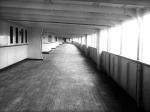
In July 1921, due to an outbreak of a fire, Cunard Line was forced to remove her from service and gave that much needed overhaul. They sent her back to Swan Hunter & Wigham Richardson on the River Tyne (England). Whilst there she was converted from coal burning to oil burning, for obviously Cunard had been fully aware of the countless advantages of oil as a fuel, in addition the obvious repairs were also made and her promenade was also enclosed. The ship returned to her regular duties in March 1922.
After her conversion to oil burning, although the ship’s service speed had somewhat improved and it now burned only 750 short tons of oil per 24 hours, compared to 1,000 short tons of coal previously, it was not operating at her pre-war service speeds. On one crossing in 1922 the ship managed an average speed of just nineteen knots. Cunard decided that the ship’s once revolutionary, but now aging turbines were obviously in desperate need of an overhaul. Thus in 1923, a major refitting was begun at Southhampton and her turbines were dismantled. However, halfway through the overhaul, shipyard workers suddenly went on strike and all work was halted and there would be no return for a very long time. Thus Cunard rapidly made other arrangements and had her towed to Cherbourg (France), where the work was completed at another shipyard. In May 1924, the ship returned to service in the Atlantic, and the occasional off season cruises.
Ii was decided that in 1928 the RMS Mauretania would receive a comprehensive internal modernisation with her interiors receiving a new design. In the next year her long standing speed record was broken by the German liner Bremen having achieved a speed of 28 knots. On August 27, 1928, Cunard permitted their ship to have one final attempt to recapture the record from the newer German liner. She was taken out of service and her engines were adjusted to produce more power to give a higher service speed; however for two hours a speed of 26 knots was maintained, but sadly it was not enough, as the Bremen was simply far more powerful and technologically advanced than the ageing Mauretania. Even though she did not beat her German rival, the ship lost by just a fraction after decades of design improvements and she did beat all her own previous speed records both east and westbound.
In 1930, with a combination of the Great Depression and newer competitors on the Atlantic service the Mauretania became a dedicated cruise ship operating six day cruises from New York to Halifax. Then the ship began to operate more and more cruises in the Mediterranean, the West Indies, and the Bahamas. While these were popular with Americans desiring to escape ‘Prohibition’, the Mauretania by design was in reality ill-equipped for such environments. To reduce the effects of heat Cunard decided it would be best to paint her all white and that was completed in June 1933.
When Cunard Line merged with White Star Line in 1934, the Mauretania, along with Olympic, Homeric, and other aging ocean liners, were deemed surplus to requirements and were due to be withdrawn from service in the near future. Cunard decided to withdraw the Mauretania from service and following her final passenger sailing from Southampton on June 30, 1934, which just happened to be the very day that Cunard Line and White Star Lines merged.
During her final voyage she averaged a speed of 24 knots, which was still a remarkable speed for this old liner now in her final days. After two further cruises to the West Indies, she returned to Southampton on October 2, 1934. With the competition of the RMS Queen Mary, which would enter service in 1936, the venerable Mauretania was now just too outdated and she was laid up in Southampton and late in March 1935, Cunard-White Star officially decided to place her on the market.
A buyer soon came on scene and the ship was purchased on April 3, 1935 by the ship breaker Metal Industries Ltd of Glasgow. However, all her fixtures and fittings were auctioned off at Southampton Docks on May 14, 1935. On July 3, she reached the Firth of Forth and she moved to Rosyth (Scotland) where she would be dismantled.
FUENTES Y REFERENCIA – SOURCES & REFERENCE
greatoceanliners.com
ssmaritime.com
©jmodels.net
 jmodels.net
Debe estar conectado para enviar un comentario.