
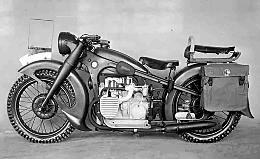
| DATOS TÉCNICOS | TECHNICAL DATA |
| TIPO:Motocicleta militar. | TYPE:Military motorbike. |
| TRIPULANTES:1-3 | CREW:1-3 |
| ANCHURA:90 cm. | WIDTH:35 in. |
| LONGITUD:2,10 m. | LENGTH:83 in. |
| ALTURA:94 cm. | HEIGHT:37 in. |
| PESO:185 kg. (sin sidecar) | WEIGHT:408 lb. (without sidecar) |
| MOTOR:Un motor bóxer de 1 o 2 cilindros de 18 hp. a 3.400 rpm. (1 carburador) o 20 hp. a 4.000 rpm. (2 carburadores). | ENGINE:One BMW 1- or 2-cylinder boxer engine providing 18 hp. at 3,400 rpm. (1 carburetor) or 20 hp. at 4,000 rpm. (2 carburettors). |
| AUTONOMÍA:254 km. | RANGE:158 ml. |
ARMAMENTO:
|
ARMAMENT:
|
MUNICIÓN:
|
AMMO:
|
| VELOCIDAD MÁX.:110 km/h. (un carburador), 120 km/h. (dos carburadores). | MAX. SPEED:68 mph. (one carburettor), 74 mph. (two carburettors). |
| VERSIONES:1 | VERSIONS:1 |
| CONSTRUIDOS:Mś de 36.000 (hasta 1942). | BUILT:Over 36,000 (up to 1942). |
La motocicleta R12 fue utilizada por el ejército alemán a finales de la década de 1930 y 1940 para la entrega de comunicaciones y tareas de reconocimiento. Durante este período, estos vehículos rápidos demostraron ser siempre fundamentales en la velocidad requerida por la guerra relámpago. BMW entregaría 36.000 R12 al ejército alemán hasta mayo de 1941, lo que la convertiría en la motocicleta más producida hasta ese momento. A pesar de su número, el modelo finalmente fue reemplazado por la serie R75 a partir de 1942 en adelante. A lo largo de las líneas de producción de BMW, la propia R12 reemplazó a la R4 de 1932, que eran motocicletas civiles compradas para uso militar.
Los bastidores de las motocicletas BMW de la década de 1920, al menos aquellos equipados con sidecar, demostraron ser propensos a fracturarse debido a sus soldaduras de conexión simples. Por ello, se inició la investigación de un nuevo cuadro que eventualmente condujo a un diseño completamente nuevo, la serie R11. El marco revisado se construyó como dos canales separados de chapa estampada con remaches que conectaban las dos mitades durante el montaje. Este diseño ayudó al bastidor a aceptar el peso y la tensión inherente impuesta por el transporte de un sidecar. Para propulsar la R11, BMW ideó una línea potente de motores de 750 cc que comprendían una versión de 16 hp. y otra de 28 hp. con válvulas (OHV). De estos dos motores nacieron los modelos R11 touring y R16 sport. Se diseñaron nuevas horquillas telescópicas durante la primera parte de la década de 1930 que ayudaron a renovar los modelos R11 y R16 en 1935. También se instaló una nueva caja de cambios manual de 4 velocidades y dio origen a las respectivas designaciones de modelo R12 y modelo R17.
En 1935 la R12 fue seleccionada por el ejército alemán para dotar sus unidades de reconocimiento y seguridad. En 1936, la soldadura con arco eléctrico estaba cobrando fuerza y BMW utilizó la tecnología para abordar sus problemas de estrés en las articulaciones y hacer una máquina más robusta cuando se empleaba un sidecar, lo que ayudó a que la serie R12 (y su hermana R17) fuera un éxito comercial.
La R12 del ejército alemán estaba equipada con un motor BMW de 2 cilindros y 4 tiempos de 745 cc, de entre 18 y 20 hp. a 3.400 a 4.000 rpm. A pesar de la débil potencia, el motor daba la necesaria para transportar el chasis de la motocicleta y su sidecar sin motor opcional. Se podía llevar a un pasajero sobre el guardabarros de la rueda trasera en un asiento opcional colocado directamente detrás y ligeramente por encima del conductor. De lo contrario, esta posición podría reservarse para transportar suministros en un estante opcional simple. Las alforjas se podían enganchar a los lados del guardabarros trasero. Un faro redondeado iluminaba el área por delante para las operaciones al amanecer/anochecer. La característica de la marca era el guardabarros de las ruedas, los manillares horizontales rectos, las ruedas de radios múltiples y el asiento del conductor ancho y plano con muelles.
Cuando estaba en servicio con la Wehrmacht, la R12 era empleada para transmitir mensajes de un punto a otro mientras también se utilizaba como un elemento de reconocimiento rápido. Demostró ser un instrumento de campaña sólido, rápido y relativamente fiable. Sin embargo, el lodo y la nieve densos no tardaron en causar estragos en los componentes de la motocicleta, lo que obligó al ejército alemán a continuar con la búsqueda de una motocicleta exclusivamente militar. La adición de un sidecar aumentó el número de pasajeros a tres personas y podría ofrecer un apoyo ligero en el campo de batalla al montar una ametralladora MG34 o MG42 de 7,92 mm. en un soporte especial en la parte frontal del sidecar. Las motocicletas conformaron regimientos de infantería motorizados especializados en la Wehrmacht y proporcionaron un impacto crítico en las primeras fases de la guerra relámpago, donde la velocidad y la fuerza abrumadora coordinada eran esenciales para cualquier victoria. La serie R12, por lo tanto, entró en servicio con el ejército alemán en todos los frentes importantes hasta ese punto de la guerra, desde la lucha en los desiertos de África hasta el frío gélido del Frente del Este.
La R12 finalmente fue reemplazada por la serie BMW R75. La R75 era una motocicleta militar especialmente diseñada como tal, con sidecar totalmente motorizado (incluida calefacción) que mejoraba la función y el alcance de la R12 original. La R75 comenzó a reemplazar a las R12 a lo largo de 1942, pero nunca alcanzaría las cifras de producción de la legendaria R12.
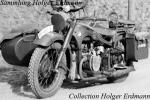
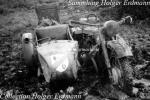
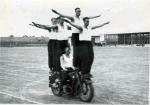
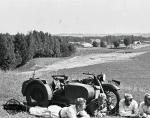


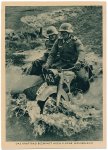









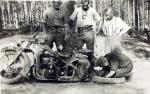
The R12 was utilized by the German Army throughout the late 1930s and 1940s for communications delivery and reconnaissance duty. During this period, such fast vehicles proved ever-critical to the speed required in the blitzkrieg. BMW would deliver 36,000 R12s to the ranks of the German Army by May of 1941, making the R12 BMWs most-produced motorcycle up to that point. Despite its reach, the type was eventually replaced in German Army service by the military-minded R75 series from 1942 onwards. Along the BMW production lines, the R12 itself replaced the R4 of 1932, the R4 being civilian motorcycles purchased for military use.
BMW motorcycle frames of the 1920s, at least those equipped with the sidecars, proved prone to fracture from their simple connection welds. As such, research began on a new frame that eventually led to an all-new motorcycle design, the R11 series. The revised frame was constructed as two separate channels from stamped sheet metal with rivets connecting the two halves during assembly. The new formation helped the frame accept the weight and inherent stress imposed by the carrying of a sidecar. To power the R11, BMW devised an all-powerful line up of 750cc engines consisting of a 16-hp. version as well as a 28-hp. overhead valve (OHV) version. From these two engines were born the R11 touring and R16 sports models. New telescopic forks were devised during the early part of the 1930s and helped to revamped the R11 and R16 models in 1935. A new 4-speed, hand-shifted gearbox was also fitted and gave birth to the respective model designations R12 and R17.
That same year, the R12 was selected for production by the German Army to staff its reconnaissance and security ranks. By 1936, electric arc welding was gaining steam and BMW utilized the technology to address their joint stress problems to make for a more robust machine when employing a sidecar, helping to make the R12 series (and its R17 sister) a commercial success.
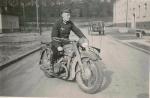
The German Army R12 was fitted with a BMW 2-cylinder, 4-stroke engine of 745cc, delivering 18 to 20 hp. at 3,400 to 4,000rpm. Despite the weak output, the engine delivered the needed power to haul the motorcycle frame and its optional unpowered sidecar as required. A passenger could be carried over the rear wheel fender on an optional seat positioned directly behind and slightly above the driver. Otherwise this position could be reserved for carrying supplies on a simple optional rack system. Saddlebags could be hitched to the sides of the rear fender. A rounded headlamp illuminated the area ahead for dawn/dusk operations. Characteristic of the brand was its wheel mud covers, straight horizontal handle bars, multi-spoke wheels and its broad, flat sprung driver’s seat.
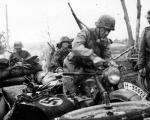
When in service with the Wehrmacht, the R12 was called upon to relay messages from point to point while also utilized as a fast reconnaissance element. She proved a solid, speedy and relatively reliable battlefield instrument. However, heavy mud and snow were quick to wreak havoc on the critical working components of the motorcycle, forcing the German Army to continue its search for a dedicated replacement system. The addition of a sidecar increased ridership to three persons (the typical operating number for German motorized sidecar elements during the war) and could offer light battlefield support by mounting either a MG34 or MG42 series 7.92mm. general purpose machine gun on a special mount along the sidecar front facing. Motorcycles formed specialized motorized infantry regiments for the Wehrmacht and provided a critical punch in the early phases of the blitzkrieg where speed and coordinated overwhelming force was essential to any victory. The R12 series, therefore, went on to see service with the German Army along ever major front to that point in the war, from fighting in the deserts of Africa to the frigid cold of the East Front.
The R12 was eventually superseded in the German ranks by the BMW R75 series. The R75 was a purpose-built military motorcycle with fully-powered sidecar (including heating) that improved upon the frame, function and scope of the original R12. The R75 began replacing R12s during 1942 but she would never reach the production figures of the legendary R12.
FUENTES Y REFERENCIA – SOURCES & REFERENCE
militaryfactory.com
©jmodels.net
 jmodels.net
Debe estar conectado para enviar un comentario.