

| DATOS TÉCNICOS (GAZ-69) |
TECHNICAL DATA (GAZ-69) |
| TIPO: Vehículo todoterreno. | TYPE: Off-road vehicle. |
| TRIPULANTES: 1 (+8 pasajeros) | CREW: 1 (+8 passengers) |
| ANCHURA: 1,85 m. | WIDTH: 6.08 ft. |
| LONGITUD: 3,85 m. | LENGTH: 12.58 ft. |
| ALTURA: 2,03 m. | HEIGHT: 6.66 ft. |
| PESO: 1.535 kg. | WEIGHT: 3,384 lb. |
| MOTOR: Un motor de gasolina GAZ-69 de cuatro cilindros (2,1 litros) de 55 hp (41 kW). | ENGINE: One 4-cylinder 2.1 L GAZ-69 petrol engine providing 55 hp (41 kW). |
| AUTONOMÍA: – | RANGE: – |
VELOCIDAD MÁX.:
|
MAX. SPEED:
|
| VERSIONES: – | VERSIONS: – |
| CONSTRUIDOS: Más de 600.000 (Todos los modelos). | BUILT: More than 600,000 (All variants). |
Los primeros bocetos del futuro GAZ-69 fueron realizados por G.M. Wasserman en 1944. El minucioso trabajo de diseño comenzó en 1946, también bajo su dirección. Pero no fue hasta el 21 de abril de 1947 cuando el Ministerio de Industria del Automóvil y de Tractores ordenó oficialmente a la planta de automóviles de Gorki que comenzara a trabajar en la creación de un nuevo vehículo todoterreno. El 30 de junio del mismo año, la Dirección de Artillería del Ejército Rojo emitió los requisitos tácticos y técnicos para el vehículo, que fue designado por los militares como ATK-L, siglas de «tractor de artillería de ruedas ligero». Según las exigencias, un tractor ligero debía poder arrastrar remolques (piezas de artillería de batallón) de hasta 800 kg, y también estaba destinado al transporte de municiones, ametralladoras pesadas, morteros de 82 mm y sus servidores. Sin remolque, podría emplearse como como vehículo de mando, comunicaciones y reconocimiento.
A diferencia del GAZ-67B, que tenía un motor GAZ-MM de baja velocidad y alto par, el GAZ-69 recibió un motor con un par relativamente pequeño. El embrague y la caja de cambios de tres velocidades (con relaciones de transmisión modificadas) también fueron tomados del vehículo civil GAZ M-20 Pobeda, mientras que el diseño suponía que la gama de potencia de este último aumentaría mediante el uso de una caja de transferencia de dos etapas. Como resultado, en comparación con el GAZ-67B, el nuevo modelo poseía una gama más amplia de fuerza de tracción.
Los componentes del GAZ-69 no eran realmente nuevos, ya que las juntas universales, los frenos hidráulicos de las ruedas, el mecanismo de dirección y los amortiguadores traseros provenían del Pobeda y los ejes motrices se tomaron prestados del GAZ-67B. El freno de mano era el del GAZ-51, así como los dispositivos de control y los accesorios de iluminación. Gracias a este enfoque, la producción fue significativamente más barata y, posteriormente, se simplificó el suministro de repuestos a la flota del país.
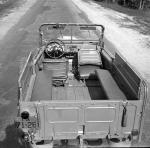
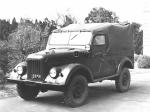
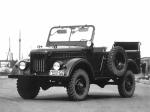
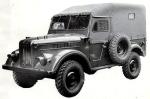
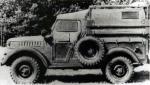
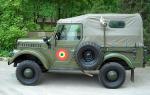
En comparación con el GAZ-67B, la capacidad de carga y pasajeros del GAZ-69 era mayor, ya que el nuevo automóvil podía transportar hasta 8 personas. El compartimento trasero de la carrocería tenía dos bancos longitudinales para tres personas cada uno y, cuando estaba plegado, se convertía en un plataforma de carga de hasta 500 kg. Además, el GAZ-69 fue diseñado incluso para transportar a un herido en una camilla de ambulancia. Para ello, el respaldo del asiento del pasajero delantero se inclinaba hacia adelante, la camilla se instalaba en los soportes del pasamanos del pasajero y en la parte trasera del automóvil, mientras que el asistente médico se sentaba en el banco del lado izquierdo. El coche recibió un toldo de lona con laterales sujetos con clips y la rueda de repuesto, para liberar el máximo espacio de carga posible, se fijó normalmente en el exterior de la carrocería, detrás de la puerta del conductor, y se colocaron ganchos de remolque en el parachoques delantero. Cuando se plegaba el toldo, el parabrisas quedaba completamente plano sobre los soportes del capó y fijado con ganchos especiales.
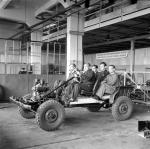
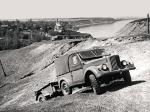
El primer automóvil (llamado «E-I» en los documentos) de la serie experimental GAZ-69-76 se construyó en octubre de 1947. En febrero de 1948, se construyeron dos copias más y, a finales de año, se entregó un cuarto vehículo. Las pruebas en fábrica, con recorridos de 12.500 kilómetros en cada uno de los prototipos participantes en ellas, finalizaron en junio de 1948 y demostraron que el vehículo cumplía en general los requisitos tácticos y técnicos formulados por el Ejército. El peso en vacío era de 1.363 kg y con carga completa de 2.110 kg. Las propiedades de tracción resultaron ser muy buenas: el 69,9% del peso total sin remolque y el 50,7% con remolque, pero la velocidad máxima era de sólo 75 km/h debido a la baja potencia específica. El ángulo de ascenso en terreno seco alcanzaba los 34° (23° con remolque). Podía atravesar carreteras con una capa de barro de hasta 0,25 m y vadear hasta 0,7 m.
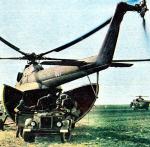
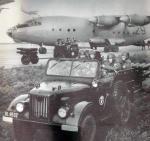
En marzo de 1950, el GAZ-69 fue probado para el transporte aéreo en planeadores Ts-25 y Yak-14, así como aviones TU-2 e IL-12. También en la primavera de 1950 se realizaron pruebas comparativas con el GAZ-67B, que mostraron que el consumo mínimo de combustible en carretera era de 10,9 litros a los 100 kilómetros gracias a un motor más económico. Al mismo tiempo, el consumo de combustible todoterreno aumentó significativamente, acercándose mucho al rendimiento del GAZ-67B. Sin embargo, en términos de tracción, desempeño dinámico y permeabilidad, los primeros prototipos del GAZ-69 aún no tenían ventajas significativas sobre el GAZ-67B.
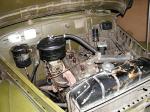
En total se construyeron 12 prototipos del GAZ-69, uno de ellos recorrió 172.000 kilómetros sin reparación, una cifra elevada para aquella época. Durante el proceso de puesta a punto del coche, la potencia del motor se incrementó hasta 55 CV en el quinto prototipo. El motor recibió un nuevo enfriador de aceite y un ventilador de seis aspas para reducir la posibilidad de sobrecalentamiento. Se corrigieron las relaciones de transmisión en la transmisión y la caja de cambios fue reemplazada por una caja de cambios sincronizada GAZ-12.
La velocidad máxima aumentó a 90 km/h, mientras que la mínima era de sólo 3,6 km/h (con remolque, 3 km/h), y la velocidad media en un camino rural embarrado de 20-25 km/h (15-20 km/h con remolque). Al mismo tiempo, el consumo de combustible en carretera se redujo a 10,4 litros (11,9 litros con remolque).
En términos de comodidad, el GAZ-69 se acercaba a los automóviles de esa época, con puertas de metal en lugar de los faldones de lona del GAZ-67B, un calentador interior instalado regularmente (aunque el calentador suministraba aire caliente mediante un ventilador eléctrico solo a los parabrisas, mientras que el conductor y el pasajero recibían aire caliente sólo cuando el coche estaba en movimiento, por eso hacía frío en la cabina en invierno), limpiaparabrisas eléctricos y una caja de cambios sincronizada que mejoraba significativamente las condiciones de vida en el habitáculo.
La apariencia del GAZ-69, su peso y dimensiones también sufrieron algunos cambios antes de su producción en masa. El peso aumentó en 60 kg, la longitud aumentó en 30 mm, el ancho en 35 mm y la altura en 60 mm.
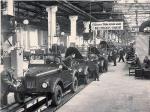
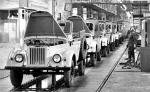
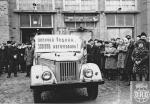
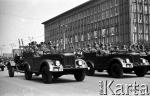
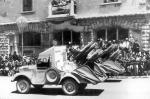
En julio-septiembre de 1951, tres GAZ-69 modificados y un GAZ-69A pasaron las pruebas estatales y se recomendaron para la producción. En general, después de pequeñas modificaciones, el coche estuvo listo para la producción en 1951, pero su desarrollo se retrasó. Se cree que la razón principal fue la urgente puesta a punto y la introducción en producción del anfibio NAMI-011, creado por el equipo de NAMI sobre la base del obsoleto GAZ-67B. El 25 de agosto de 1953 salieron de la línea de montaje los primeros GAZ-69 y el 7 de noviembre del mismo año participaron en el tradicional desfile en la Plaza Roja de Moscú. A finales de 1953 se habían fabricado 302 unidades. A partir de la primavera de 1954, comenzaron a entregarse los primeros lotes del GAZ-69 y GAZ-69A.
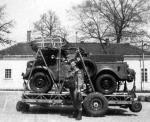
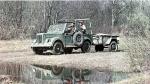
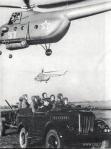
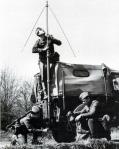
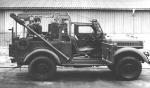
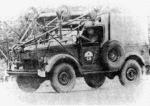
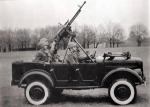
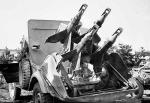
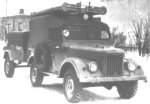
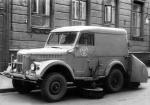
El automóvil tuvo mucho éxito y rápidamente adquirió demanda. En el ejército soviético servían como vehículos de mando o se usaban como tractores para armas pequeñas. Además, se instalaron estaciones de radio en el GAZ-69, se montaron equipos de reconocimiento químico y de radiación, detectores de minas e incluso misiles ATGM Shmel. En la economía nacional, el GAZ-69 sirvió como transporte para silvicultores, geólogos, médicos rurales y personal de granjas colectivas. Se produjeron también pequeños lotes de versiones de policía y bomberos, así como barredoras T-5. El GAZ-69 incluso funcionó durante varios años en las estaciones polares SP-3 y SP-4.
Debido a la gran necesidad de un automóvil de este tipo en el país, fue necesario ampliar la producción de la familia GAZ-69. Dado que las capacidades de GAZ eran muy limitadas, en 1954 se inició la producción en la planta de automóviles de Ulyanovsk. En diciembre de 1954, se montó en UAZ un lote inicial de seis GAZ-69. A partir de 1955, la Planta de Automóviles de Gorki comenzó a suministrar a UAZ componentes para el montaje de automóviles en cantidades cada vez mayores. De hecho, en el periodo 1955-1956, la producción de GAZ-69 y GAZ-69A se realizó en paralelo en ambas fábricas.
Los GAZ-69 producidos en la planta de automóviles de Gorki no se exportaron. Las entregas de exportación en la planta de UAZ comenzaron en 1959. Sin embargo, la producción del vehículo se inició también en Rumania en la planta de IMM en Kampulung en 1957, así como en la planta de Dykchon en Corea del Norte a partir de 1962 con el nombre de Kaengsaeng. Ambos coches se fabricaron sobre la base de la documentación técnica enviada por los soviéticos.
La versión rumana recibió la designación IMS-57 y se diferenciaba del GAZ-69 por un motor Ford de 50 CV, producido en la misma planta, así como por una carrocería algo alargada y más sencilla. En todo lo demás, la versión rumana era totalmente similar al GAZ-69 ruso. En menos de tres años de producción, se entregaron 2.000 copias del IMS-57. Luego, tomando como base la carrocería del GAZ-69, los rumanos crearon un nuevo modelo. La potencia del motor se incrementó hasta los 55 CV y se incorporó una nueva caja de cambios de cuatro velocidades con sincronizadores en las tres etapas superiores, ejes tipo banjo soldados y estampados propios y amortiguadores telescópicos. El modelo recibió la designación M59 y se fabricó entre 1959 y 1964. En 1964, se introdujo una nueva versión, llamada IMS M461. Tenía un motor nuevo de 77 CV y se fabricó hasta 1975. Rumania incluso intentó suministrar este modelo a los mismos mercados a los que se exportaba el GAZ-69, pero, a pesar del diseño más moderno, las ventas fueron relativamente pequeñas debido a su peor calidad.
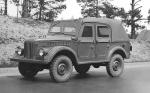
Convencidos de que no sería necesario volver a modificar la exitosa plataforma de carga y pasajeros que suponía el GAZ-69, los diseñadores se propusieron crear una versión económica nacional del todoterreno. El vehículo de cuatro puertas y cinco plazas (cuya carrocería recibió el índice interno de fábrica «77») fue construido en mayo de 1951 y durante julio-septiembre del mismo año pasó las pruebas estatales junto con el GAZ-69. Se diferenciaba del homólogo del ejército por la distribución de la cabina y la ubicación de algunos elementos estructurales. Detrás de los asientos delanteros había un «sofá» de tres plazas al que los pasajeros podían acceder a través de las puertas traseras. En consecuencia, la rueda de repuesto, ubicada fuera de la puerta del conductor en el GAZ-69, se movió al piso del espacioso maletero, para la cual había mucho espacio detrás de los asientos traseros.
En lugar de los dos depósitos de combustible del GAZ-69, se decidió instalar sólo uno de 60 litros, que se colocó debajo del banco trasero. El toldo no era extraíble, como en las versiones de pasajeros y carga, pero se podía plegar.
Como resultado de todos los cambios, esta versión civil del GAZ-69, que recibió la designación oficial GAZ-69A, resultó ser 10 cm más estrecha que su homólogo de carga y pasajeros, 11 cm más bajo y 10 kg más pesado sin carga.
Junto con el GAZ-69, la producción del GAZ-69A se transfirió a la planta de automóviles de Ulyanovsk desde 1955. De hecho, en el período 1955-1956 la producción de ambos modelos se llevó a cabo en paralelo en las plantas de GAZ y UAZ. En 1956, GAZ detuvo la producción de la familia GAZ-69, después de terminar 16.382 GAZ-69 y 20.543 GAZ-69A entre 1953 y 1956. En UAZ, la producción del GAZ-69A continuó hasta 1973.










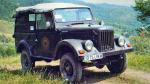


The first sketches of the future GAZ-69 were made by G.M. Wasserman back in 1944, and close design work began in 1946, also under his leadership. But only on April 21, 1947, the Ministry of the Automobile and Tractor Industry officially instructed the Gorky Automobile Plant to begin work on the creation of a new all-terrain vehicle. On June 30 of the same year, the Artillery Directorate of the Red Army, issued the tactical and technical requirements for the car (it was designated by the military as ATK-L – “light wheeled artillery tractor”). According to the requirements, a light tractor should have been able to tow trailers (battalion artillery systems) weighing up to 800 kg, and was also intended for the transportation of ammunition, heavy machine guns, 82-mm mortars and their combat crews. Without a trailer, the car was planned to be used as a command, communications, and reconnaissance vehicle.
Unlike the GAZ-67B , which had a low-speed high-torque GAZ-MM engine, the GAZ-69 received an engine with a relatively small torque. The clutch and three-speed gearbox (with modified gear ratios) were also borrowed from the GAZ M-20 Pobeda civil car, while the power range of the latter was supposed to be increased through the use of a two-stage transfer case. As a result, in comparison with the GAZ-67B, the new model provided a wider range of tractive effort.
The GAZ-69 components were not really new, as the universal joints, hydraulic wheel brakes, steering gear and rear shock absorbers were used from the Pobeda and drive axles were borrowed from the GAZ-67B. The handbrake was borrowed from the GAZ-51 as well as the control devices and lighting fittings. Thanks to this approach, production was significantly cheaper and, subsequently, the supply of spare parts to the country’s fleet was simplified.
Compared to GAZ-67B, the load and passenger capacity of the GAZ-69 were higher, the new car could carry up to 8 people, the rear body compartment had two longitudinal benches for three people each, and, when folded, it became a cargo platform for up to 500 kg. In addition, the GAZ-69 was even designed to transport one wounded on an ambulance stretcher. For this, the back of the front passenger seat leaned forward, the stretcher was installed on the mounts on the passenger handrail and on the rear side of the car, with the medical attendant sitting on the left side bench. The car received a canvas awning with clip-on door sides, and the spare wheel, in order to free up the maximum possible cargo space, was regularly attached outside the body behind the driver’s door and tow hooks were provided on the front bumper. When the awning was folded, the windshield was completely reclined onto the hood brackets and fixed with special hooks.
The first car (called “E-I” in the documents) of the GAZ-69-76 experimental series was built by October 1947. By February 1948, two more copies were built, and by the end of the year a fourth sample was delivered. Factory tests, with some 12.500 kilometers for each of the prototypes participating in them, were completed by June 1948 and showed that the vehicle generally met the tactical and technical requirements formulated by the military. The empty weight was 1,363 kg and 2,110 kg fully loaded. The traction properties of the car turned out to be very good: 69.9% of the total weight without a trailer and 50.7% with a trailer, but the maximum speed was only 75 km/h due to the low specific power of the car. The angle of ascent on dry terrain reached 34° (23º with a trailer). It could cross roads with a layer of mud up to 0.25 m and ford up to 0.7 m.
In March 1950, the GAZ-69 was tested for air transport in Ts-25 and Yak-14 gliders and TU-2, IL-12 aircraft. Also in the spring of 1950, comparative tests were carried out with the GAZ-67B, which showed that the minimum fuel consumption on road was 10.9 liters per 100 kilometers due to a more economical engine. At the same time, off-road fuel consumption increased significantly, closely approaching the performance of the GAZ-67B . However, in terms of traction, dynamic performance and cross-country ability, the first prototypes of the GAZ-69 did not yet have significant advantages over the GAZ-67B.
In total, 12 prototypes of the GAZ-69 were built, one of them running 172,000 kilometers without repair, a large figure for those times. In the process of fine-tuning the car, the engine power was increased to 55 hp on the fifth prototype. The engine received a new oil cooler and a six-blade fan to reduce the chance of overheating. Gear ratios in the transmission were corrected, and the gearbox was replaced by a synchronized GAZ-12 gearbox.
The maximum speed increased to 90 km/h, while the minimum was only 3.6 km/h (with a trailer, 3 km/h), and the average speed along a muddy country road was 20-25 km/h (15-20 km/h with a trailer). At the same time, fuel consumption on the road decreased to 10.4 liters (11.9 liters with a trailer).
In terms of comfort, the GAZ-69 came close to the cars of that time, with metal doors instead of canvas aprons in the GAZ-67B, a regularly installed interior heater ( though the heater supplied warm air using an electric fan only to the windshield, and the driver and passenger received warm air only when the car was moving, for this reason it was cold in the cabin in winter), electric wipers and a synchronized gearbox that significantly improved the living conditions in the cabin.
The appearance of the GAZ-69 and its weight and dimensions also underwent some changes before mass-production. The weight was increased by 60 kg, the length increased by 30 mm, the width by 35 mm, and the height by 60 mm.
In July-September 1951, three modified GAZ-69 samples and one GAZ-69A passed state tests and were recommended for production. In general, after minor modifications, the car was ready for production in 1951, but its development was delayed. It is believed that the main reason was the urgent fine-tuning and introduction into production of the amphibian NAMI-011, created by the NAMI team on the basis of the outdated GAZ-67B. Only on August 25, 1953, the first GAZ-69s left the assembly line, and on November 7 of the same year they participated in the traditional parade of the Red Square in in Moscow. By the end of 1953, 302 cars had been produced. Starting in the spring of 1954, the first batches of GAZ-69 and GAZ-69A began to be delivered.
The car turned out to be very successful and very quickly became in demand, in the Soviet Army they served as command vehicles or were used as tractors for small guns. Also, radio stations were installed on the GAZ-69, chemical and radiation reconnaissance equipment, mine detectors, and even Shmel ATGMs were mounted. In the national economy, the GAZ-69 served as a transport for foresters and geologists, rural doctors and collective farms staff. Police and firefighter versions as well as T-5 sweepers were produced in small batches. The GAZ-69 even operated for several years at the polar stations SP-3 and SP-4.
Due to the great need for such a car in the country, it was necessary to expand the production of the GAZ-69 family. Since GAZ capabilities were severely limited, production was started at the Ulyanovsk Automobile Plant in 1954 . In December 1954, an initial batch of six GAZ-69s was assembled at UAZ. Starting in 1955, the Gorky Automobile Plant supplied kits for assembling cars to UAZ in an ever-increasing quantity through cooperation. In fact, in the period 1955-1956. production of GAZ-69 and GAZ-69A ran in parallel in both factories.
The GAZ-69s produced at the Gorky Automobile Plant were not exported. Export deliveries began at the UAZ plant only in 1959. But the production of the Gorky jeep was launched in Romania in 1957 at the IMM plant in Kampulung, and in 1962 in North Korea at a plant in Dykchon under the name Kaengsaeng. Both cars were manufactured on the basis of technical documentation sent by the Soviets.
Romanian version received the designation IMS-57 and differed from the GAZ-69 in a 50 hp Ford engine, produced at the same plant, as well as a somewhat elongated and simpler body. For all other units, the Romanian version was fully consistent with the Russian GAZ-69. In less than three years of production, 2,000 copies of the IMS-57 were delivered. Then, taking the body of the GAZ-69 as a basis, the Romanian created a new model. The engine power was increased to 55 hp and there was a new four-speed gearbox with synchronizers on the three higher stages, its own stamped-welded banjo-type axles and telescopic shock absorbers. The model received the M59 designation and was produced from 1959 to 1964. In 1964, a new version, called IMS M461 was introduced. This had a new 77hp engine and was manufactured until 1975. Romania even tried to supply this car to the same markets to which the GAZ-69 was exported, but, despite the more modern design, sales were relatively small due to the worse quality of the car.
Convinced that the successful platform of the cargo-passenger GAZ-69 would not have to be redrawn, the designers set about creating a national economic version of the jeep. The four-door five-seater phaeton (whose body received the internal factory body index «77») was built in May 1951 and during July-September of the same year passed State tests along with the GAZ-69. It differed from the army counterpart in the cabin layout and the location of some structural elements. Behind the front seats there was a three-seater «sofa», which passengers could get to through the rear doors. Accordingly, the spare wheel, located outside the driver’s door in the GAZ-69, moved to the floor of the spacious trunk, for which there was plenty of space behind the back of the rear seats.
Instead of the two fuel tanks in the GAZ-69, it was decided to install just one 60-liter tank, which fitted under the rear bench. The awning was made not removable, as on the passenger-and-cargo versions, but it could be folded.
As a result of all the changes, the civil version of the GAZ-69, which received the official designation GAZ-69A, turned out to be 10 cm narrower than its cargo-passenger counterpart, 11 cm lower and 10 kg heavier without load.
Along with the GAZ-69, production of the GAZ-69A was transferred to the Ulyanovsk Automobile Plant since 1955. In fact, in the period 1955-1956 production of both models was carried out in parallel at the GAZ and UAZ plants. In 1956, GAZ stopped production of the GAZ-69 family, after finishing 16.382 GAZ-69s and 20.543 GAZ-69As from 1953 to 1956. At UAZ, production of the GAZ-69A continued until 1973.
FUENTES Y REFERENCIA – SOURCES & REFERENCE
denisovets.ru
gaz69.org
©jmodels.net
 jmodels.net
Debe estar conectado para enviar un comentario.