
| DATOS TÉCNICOS | TECHNICAL DATA |
| TIPO: Cañón anticarro autopropulsado. | TYPE: Self-propelled anti-tank gun. |
| TRIPULANTES: 4 | CREW: 4 |
| ANCHURA: 2,98 m. | WIDTH: 9.9 ft. |
| LONGITUD: 6,24 m. | LENGTH: 20.6 ft. |
| ALTURA: 2,09 m. | HEIGHT: 6.10 ft. |
| PESO: 27,5 t | WEIGHT: 30.3 short tons. |
| MOTOR: Un motor diésel V8 MUT MB 837 Aa de 500 hp (368 kW). | ENGINE: One 29.4 L MTU MB 837 Aa V8 water-cooled multi-fuel diesel engine developing 500 hp (368 kW). |
| AUTONOMÍA: 385 km. | RANGE: 239 mi. |
ARMAMENTO:
|
ARMAMENT:
|
MUNICIÓN:
|
AMMO:
|
| BLINDAJE: 10-50 mm. | ARMOR: 0.39–1.97 in. |
| VELOCIDAD MÁX.: 70 km/h. | MAX. SPEED: 43.5 mph. |
| VERSIONES: 3 | VERSIONS: 3 |
| CONSTRUIDOS: 770 | BUILT: 770 |
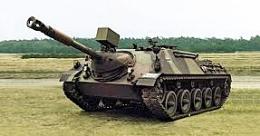
En 1960, el viejo carro M47 Patton con cañón de 90 mm seguía siendo un arma potente. A la espera de su sustitución en el Bundeswehr, se decidió reutilizarlo en los cazacarros de fabricación alemana. El diseño general era parecido al del exitoso Jagdpanzer IV de la Segunda Guerra Mundial. Se elaboraron especificaciones y se transmitieron a tres fabricantes, los alemanes Hanomag y Henschel y el suizo MOWAG, que produjeron prototipos. Después de las pruebas, solo Hanomag y Henschel continuaron con la preproducción. Construyeron otro par de prototipos, equipados con el cañón anticarro Rheinmetall BK 90/L40 de fabricación alemana, derivado del cañón anticarro patentado por los EE. UU. El desarrollo continuó hasta 1965, cuando el Kanonenjagdpanzer, también llamado Jagdpanzer Kanone 90, fue aceptado para el servicio en el Bundeswehr.
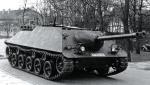
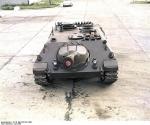
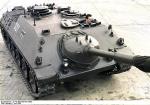
Básicamente, el KnJgPz-90 estaba basado en el cazacarros de la guerra mundial, derivado a su vez del Panzer IV. Sin embargo, sólo el blindaje inclinado era en su mayor parte copiado de él. Todo lo demás, desde el chasis, suspensiones, motor y transmisión, armamento y dispositivos de puntería, control de tiro, etc. eran genuinos. El casco era más largo, pero más estrecho y ligero que el del vehículo original. El blindaje frontal no tenía 80 sino 50 mm de espesor (pero equivalentes a 80 mm) también en los lados, y 10 mm en la parte inferior y el techo, la cubierta del motor y el blindaje trasero. El mantelete permitía un giro de 15° y una elevación/depresión de -8° a +15°.
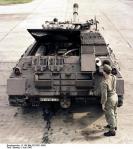
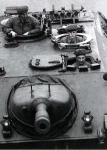
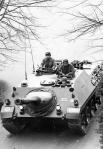
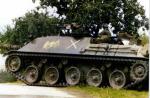
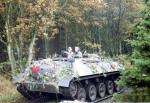
El blindaje superior del casco estaba escalonado en el compartimento trasero del motor. El conductor se sentaba a la derecha, con una escotilla sobre él, y había un periscopio secundario a la izquierda del cañón. Había una escotilla secundaria detrás del conductor y la cúpula del comandante en la parte trasera, a la izquierda del compartimento de combate. El tren de transmisión constaba de cinco ruedas de carretera dobles suspendidas independientemente sobre brazos de torsión, con tres rodillos de retorno, piñón de transmisión trasero y rueda guía delantera.
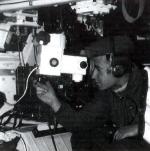
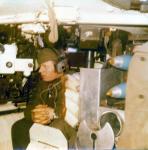
Tenía una ametralladora coaxial en el mantelete y una segunda montada externamente en el segundo anillo de la escotilla. El cañón principal llevaba 51 proyectiles y la munición de 7,62 mm para las ametralladoras era de 4.000 cartuchos. El KnJgPz-90 tenía protección NBQ y estaba equipado con un sistema de visión y puntería por infrarrojos.
El pedido de 770 unidades se fue fabricado entre Henschel (385) y Hanomag (385), que se entregaron entre 1965 y 1967. El ejército belga recibió 80 Kanonenjagdpanzer ligeramente modificados en 1975, que sirvieron hasta finales de los años 80.
Este vehículo se consideró un éxito, debido a su bajo perfil y su movilidad superior, en comparación con el alto perfil de la serie M47/48 Patton. Sin embargo, cuando la URSS presentó su T-64 y más tarde el T-72, el KnJgPz-90 se consideró obsoleto. Los fabricantes propusieron que se le pusiera un nuevo cañón de 105 mm, pero en 1983 se decidió convertir 163 de ellos en portadores de misiles anticarro guiados Raketenjagdpanzer Jaguar 2, que disparaban misiles TOW guiados por cable mucho más efectivos. Estos vehículos también recibieron modificaciones adicionales, como un blindaje espaciado y perforado. Algunos otros se derivaron como Beobachtungspanzer (sin el cañón principal) para guiar unidades de mortero. Los vehículos regulares fueron gradualmente desmantelados y puestos en reserva. Los últimos estuvieron en servicio activo con la Heimatschutztruppe (Fuerzas de Seguridad Nacional) en 1990.







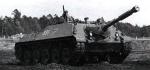




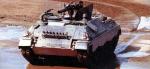


By 1960, the M47 Patton old 90 mm was still a potent weapon. Pending replacement in the Bundeswehr, it was decided to reuse it in German-made tank-hunters. General design tended to be close to the very successful WWII era Jagdpanzer IV. Specifications were made and transmitted to three manufacturers, the German Hanomag and Henschel and Swiss MOWAG which produced prototypes. After trials, only Hanomag and Henschel were retained for pre-production. They built another pair of prototypes, equipped with the German-built Rheinmetall BK 90/L40, derived from the US patented antitank gun. Development went on until 1965 when the Kanonenjagdpanzer, also called Jagdpanzer Kanone 90, was accepted for service in the Bundeswehr.
Basically, the KnJgPz-90 was indeed closely based on the wartime tank-hunter, which was derived from the Panzer IV. However, this was only superficially as the sloped armor was mostly copied from it. Everything else, from the chassis, suspensions, engine and transmission, armament and targeting devices, fire control, etc. were genuine. The hull was longer, but narrower and lighter than the original vehicle. The frontal armor was not 80 but 50 mm in thickness (still around a 80 mm equivalent) also on the sides, and 10 mm on the bottom and roof, engine deck and rear plating. The mantlet allowed a 15° traverse and -8° to +15° elevation/depression.
The hull upper armor was stepped on the rear engine compartment. The driver sat on the right, with a hatch above him, and there was a secondary periscope at the left of the gun. There was a secondary hatch behind the driver, and a commander cupola to the rear, left of the fighting compartment. The drivetrain consisted of five doubled-roadwheels independently sprung on torsion arms, with three return rollers, rear drive sprocket and front idler.
One machine-gun was coaxial in the mantlet, the other was externally mounted on the second hatch ring. The main gun carried 51 rounds 4000 were stored for both 7.62 mm machine-guns. The KnJgPz-90 was protected NBC and fitted with infrared vision and targeting system.
The 770 order was placed between Henschel (385) and Hanomag (385) delivered between 1965 and 1967. The Belgian Army received 80 slightly modified Kanonenjagdpanzer in 1975, which served until the late 1980s.
This vehicle was considered a success, due to its low profile and superior mobility, compared to the high profile of the M47/48 Patton series. However, by the time USSR unveiled its T-64 and later T-72, the KnJgPz-90 was considered obsolete. The manufacturers proposed it was up-gunned with the latest 105 mm, but in 1983 it was decided to convert 163 of these as Raketenjagdpanzer Jaguar 2 anti-tank guided missile carriers, firing TOW wire-guided missiles, far more effective. These vehicles also received extra modifications like spaced and perforated armor. A few others were derived as Beobachtungspanzer (without the main gun) to guide mortar units. The regular vehicles were gradually phased and put in reserve. The last were in active commission with the Heimatschutztruppe by 1990.
FUENTES Y REFERENCIA – SOURCES & REFERENCE
tank-afv.com
wikipedia.org
©jmodels.net
 jmodels.net
Debe estar conectado para enviar un comentario.