
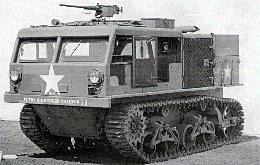
| DATOS TÉCNICOS | TECHNICAL DATA |
| TIPO: Tractor de artillería. | TYPE: Artillery tractor. |
| TRIPULANTES: 1 (+11) | CREW: 1 (+11) |
| ANCHURA: 2,46 m. | WIDTH: 8.07 ft. |
| LONGITUD: 5,33 m. | LENGTH: 17.48 ft. |
| ALTURA: 2,51 m. | HEIGHT: 8.23 ft. |
| PESO: 14,2 toneladas. | WEIGHT: 31,400 lb. |
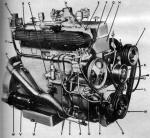
| MOTOR: Un motor de gasolina Waukesha 145GZ OHV I6 de 210 hp (157 kW). | ENGINE: One Waukesha 145GZ OHV I6 gasoline engine developing 210 hp (157 kW). |
| AUTONOMÍA: 160 km. | RANGE: 100 ml. |
ARMAMENTO:
|
ARMAMENT:
|
| VELOCIDAD MÁX.: 56 km/h. | MAX. SPEED: 35 mph. |
| VERSIONES: 4 | VERSIONS: 4 |
| CONSTRUIDOS: 5.811 (Todos los modelos). | BUILT: 5,811 (All variants). |
Estados Unidos tenía una de las mejores artillería del mundo al estallar la Segunda Guerra Mundial. Sin embargo, dada la velocidad de la guerra mecanizada, estas armas serían inútiles si no pudieran seguir el ritmo del resto del ejército para brindar su apoyo. Para garantizar que la artillería de campaña no se quedara atrás, se introdujo el High Speed Tractor (HST) M4.
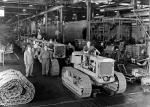
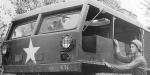
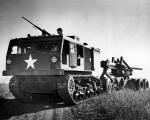
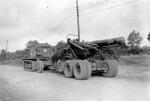
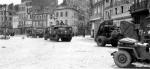
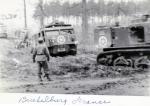
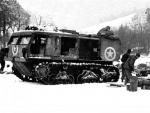
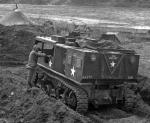
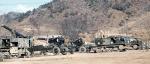
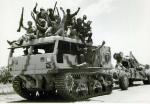
Aprobado para el servicio en 1942, el M4 HST fue diseñado por Allis-Chalmers Corporation, que tenía experiencia en la construcción de tractores agrícolas antes de la guerra. El M4 HST se construyó sobre el chasis del carro ligero M2 y se utilizó como principal tractor de los cañones pesados del ejército estadounidense. Capaz de remolcar el Cañón Antiaéreo M1 de 90 mm, el Cañón M1 “Long Tom” de 155 mm o el Obús M1 de 8 pulgadas, el M4 HST era un vehículo versátil y potente.
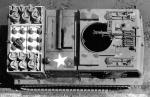
Además del arma que remolcaba, el M4 HST transportaba un conductor, un equipo de once hombres y municiones para el arma almacenadas en contenedores situados en la parte trasera del vehículo. Aunque no estaba diseñado para el combate directo, como todos los vehículos estadounidenses en ese momento, estaba armado con una ametralladora antiaérea M2 de calibre .50 para su autodefensa. Gracias a su peso ligero de 18 toneladas, el M4 HST podía alcanzar una velocidad máxima en carretera de alrededor de 56 km/h. Los tractores con número de serie M4-1 al M4-300 llevaban dobles ruedas en los rodillos de retorno de las cadenas, mientras que los numerados a partir del M4-301 sólo tenían una rueda en cada rodillo.
Además del modelo base M4, había dos variantes: el M4C, que poseía un compartimiento para la tripulación de menor espacio para acomodar más contenedores de municiones, y el M4A1, que tenía orugas y suspensión más anchas, lo que aumentaba su flotación y hacía que ejerciera menos presión sobre el suelo. El M4A2 apareció en 1954, cuando Bowen-McLaughlin reconstruyó y mejoró varios tractores M4 debido a la escasez del nuevo tractor de carga M8.
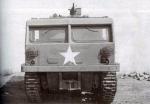
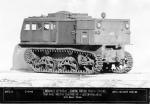
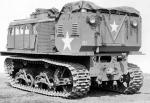
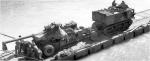
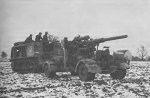
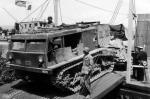
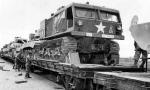
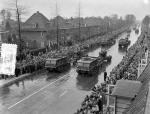
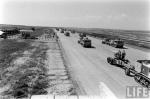
The United States had some of the best artillery in the world at the time of the Second World War. However, with the rapid nature of mechanized warfare, these guns would be useless if they could not keep pace with the rest of the army in order to provide fire support. In order to make sure the Field Artillery Branch was not left behind, the M4 High Speed Tractor (HST) was introduced.
Approved for service in 1942, the M4 HST was designed by the Allis-Chalmers Corporation, who had experience building agricultural tractors before the war. The M4 HST was built on the chassis of the M2 Light Tank and was used as the main prime mover for the heavy guns of the U.S. Army. Able to tow the 90mm Gun M1 anti-aircraft weapon, the 155mm Gun M1 “Long Tom” or the 8 Inch Howitzer M1, the M4 HST was a versatile and powerful vehicle.
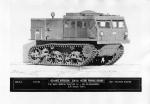
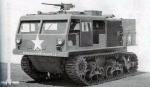
Alongside the gun it was towing, the M4 HST would carry its driver, a gun crew of eleven men, and ammunition for the gun stored in bustle bins on the rear of the vehicle. Though not expected to partake in direct combat, like all American vehicles at the time it was armed with a .50 M2 anti-aircraft machine gun for self-defense purposes. Thanks to its light weight of 18 tons, the M4 HST could achieve a top road speed of around 35 miles per hour. Tractors with serial numbers M4-1 to M4-300 were assembled with dual-wheel track return rollers, while tractors with serial numbers M4-301 and up featured single-wheel return rollers.
In addition to the base M4 model, there were two variants; the M4C which decreased the size of the gun crew compartment in order to fit more ammunition racks, and the M4A1, which had wider tracks and suspension, increasing its floatation and making it exert less pressure on the ground. The M4A2 appeared in 1954, when Bowen-McLaughlin rebuilt and upgraded a number of the M4-series high speed tractors due to tight inventory of the newer cargo tractor M8.
FUENTES Y REFERENCIA – SOURCES & REFERENCE
museumofamericanarmor.com
afvdb.50megs.com
©jmodels.net
 jmodels.net
Debe estar conectado para enviar un comentario.