
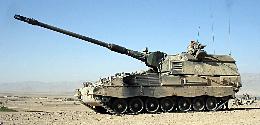
| DATOS TÉCNICOS | TECHNICAL DATA |
| TIPO: Cañón autopropulsado. | TYPE: Self-propelled gun. |
| TRIPULANTES: 5 | CREW: 5 |
| ANCHURA: 3,6 m. | WIDTH: 11.10 ft. |
| LONGITUD: 11,7 m. | LENGTH: 38.5 ft. |
| ALTURA: 3,1 m. | HEIGHT: 10.2 ft. |
| PESO: (Combate) 55,8 toneladas. | WEIGHT: (Combat) 61.5 short tons. |
| MOTOR: Un motor MTU 881 Ka-500 de 986 hp (736 kW). | ENGINE: One MTU 881 Ka-500 developing 986 hp (736 kW). |
| AUTONOMÍA: 420 km. | RANGE: 260 mi. |
ARMAMENTO:
|
ARMAMENT:
|
MUNICIÓN:
|
AMMO:
|
| BLINDAJE: 14,5 mm. | ARMOR :0.57 in. |
VELOCIDAD MÁX.:
|
MAX. SPEED:
|
| VERSIONES: 4 | VERSIONS: 4 |
| CONSTRUIDOS: Más de 360. | BUILT: More than 360. |
El desarrollo del Panzerhaubitze 2000 (o PzH 2000) comenzó en 1987. Surgió del programa internacional SP70, que fue cancelado en la década de 1980 debido a problemas de financiación. El prototipo del PzH 2000 se completó en 1993. Inicialmente el ejército alemán planeó encargar un total de 1.254 nuevos obuses autopropulsados, pero en 1996, debido al fin de la Guerra Fría, se firmó un contrato de sólo 185 unidades. Los primeros sistemas se entregaron al ejército alemán en 1998. Los países usuarios del PzH 2000 son Croacia (12), Grecia (25), Italia (68), Lituania (21), Países Bajos (57) y Qatar (24). Este sistema de artillería entró en acción en Afganistán. En 2022, Alemania y Países Bajos entregaron 12 de estos sistemas de artillería a Ucrania para defenderse de la invasión rusa. Italia también entregó entre 3 y 6 obuses a Ucrania. Estos fueron ampliamente utilizados contra las fuerzas rusas. En el mismo año, Alemania aprobó la venta de 100 obuses PzH 2000 adicionales a Ucrania. Sin embargo, las entregas pueden tardar varios años en completarse. En 2023, Alemania encargó otros 10 obuses PzH 2000.
El PzH 2000 está equipado con un obús de 155 mm/L52. El vehículo tiene un sistema de carga totalmente automático con sistema de gestión de municiones. El PzH 2000 es compatible con la munición estándar de 155 mm de la OTAN. El alcance máximo de disparo es de 30 km con proyectil HE-FRAG (Gran Explosivo Fragmentario) estándar y de 40 km con proyectil con carga compensadora. Utilizando un proyectil sudafricano asistido por cohete VLAP se pueden alcanzar los 56 km. Muchos otros obuses realizan disparos iniciales y ajustan sus cañones en función de los datos proporcionados por los observadores avanzados. Este no es el caso del PzH 2000. Este obús es muy preciso. Puede bombardear las coordenadas recibidas de inmediato y no es necesario que los observadores de artillería corrijan el fuego.
Es compatible con los proyectiles de artillería guiados SMArt 155 alemanes. Se lanzan de la misma manera que los proyectiles de artillería ordinarios. La autonomía máxima es de 27,5 km. Se trata de municiones de largo alcance diseñadas para destruir tanques y vehículos blindados hostiles. El proyectil SMArt 155 contiene dos submuniciones autónomas. Uno de ellos tiene sensor de infrarrojos mientras que el otro tiene sensor de radar. Una vez en la zona objetivo, estas submuniciones son expulsadas y desplegadas en paracaídas. Cada submunición desciende en espiral sobre el área buscando objetivos. Una vez que se detecta el vehículo objetivo, la submunición detona. El objetivo es destruido por un perforante que se crea mediante la explosión. Estas submuniciones impactan en los techos de las torretas, donde el blindaje es relativamente fino. Los proyectiles guiados SMArt 155 son conocidos en el servicio militar alemán con las designaciones DM702 y DM702A1.
La velocidad máxima de disparo es de 9 proyectiles por minuto. Puede lanzar 3 proyectiles en 10 segundos. Este obús es capaz de disparar impactos simultáneos de múltiples rondas (MRSI). En el cargador se guardan un total de 60 proyectiles.
El cañón del arma tiene una vida útil estimada de 4.500 proyectiles con carga completa. Sin embargo, en 2022-2023, un PzH 2000 ucraniano disparó alrededor de 20.000 proyectiles sin reemplazar el cañón.
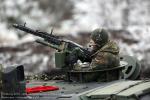
Este sistema de artillería tiene un tiempo de reacción rápido. Puede detener brevemente su avance y abrir fuego contra los objetivos designados. No se requiere ninguna preparación especial. Además, la tripulación no tiene que abandonar el vehículo para preparar el arma para disparar. Una vez completada la misión de disparo, el PzH 2000 puede abandonar su posición de disparo en segundos y volver a desplegarse en otra ubicación. El PzH 2000 recibe los datos del objetivo a través de un enlace de datos. El arma se coloca automáticamente utilizando los datos de control de fuego. El armamento secundario consiste en una ametralladora de 7,62 mm montada en el techo.
El blindaje frontal del PzH 2000 proporciona protección contra proyectiles de 14,5 mm. También dispone de protección contra disparos de armas cortas y esquirlas de artillería. Si es necesario, se puede instalar blindaje reactivo. El PzH 2000 también está equipado con sistemas automáticos de extinción de incendios y protección NBQ.
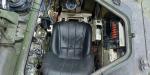
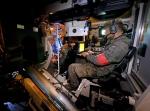
El vehículo tiene una tripulación de cinco personas, entre ellas el comandante, el artillero, dos cargadores y el conductor. Los enfrentamientos contra objetivos pueden ser llevados a cabo por una tripulación de dos hombres. Los cargadores se emplean sólo cuando falla el cargador automático.
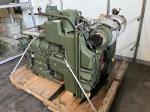
El chasis del PzH 2000 utiliza algunos componentes del carro de combate principal Leopard 2. Este sistema de artillería está propulsado por el motor diésel sobrealimentado MTU MT 881 Ka-500 de 1.000 CV. El PzH 2000 también está equipado con una unidad de energía auxiliar que alimenta todos los sistemas cuando el motor principal está apagado.
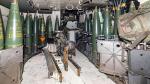
La recarga la realizan dos soldados. Los proyectiles se recogen automáticamente desde la parte trasera del vehículo y se guardan en el cargador automático. Los proyectiles y las cargas asociadas se reponen en 12 minutos.
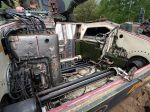
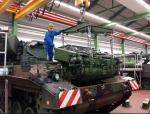
El uso en Ucrania reveló que estos obuses alemanes requieren un mantenimiento intensivo. Ucrania opera varios obuses occidentales modernos, como el CAESAR francés, el Krab polaco y el Zuzana 2 eslovaco y el relativamente moderno M109A5 estadounidense. De todos, los PzH 2000 alemanes fueron los primeros que dejaron de disparar después de un uso intensivo en combate y requirieron mantenimiento para continuar funcionando.
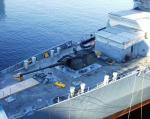
El armamento del PzH 2000 ha sido adaptado a diferentes sistemas de armamento. El MONARC (Modular Naval Artillery Concept) es un estudio sobre el montaje de la torreta en un buque de guerra. Fue probada en la cubierta de la fragata Hamburgo de la clase Sachsen.
El obús autopropulsado AGM (Artillery Gun Module) de 155 mm es una variante modificada del PzH 2000. Fue desarrollado como complemento de este cuando se carece de armamento más pesado, la situación lo recomienda o cuando su producción resulta demasiado cara. Este sistema de artillería es operado por una tripulación de dos hombres. Es una alternativa mucho más ligera, pero ofrece el mismo rendimiento. El primer prototipo se montó en un chasis con orugas del M270 MLRS, aunque la torreta AGM no tripulada puede integrarse en otros chasis o incluso utilizarse como una unidad independiente. El AGM es aerotransportable.
El obús autopropulsado Donar de 155 mm es un desarrollo adicional del módulo de cañón de artillería, basado en el chasis con orugas ASCOD 2 IFV. El Donar está dirigido principalmente a clientes extranjeros.
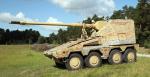
El vehículo Boxer RCH 155 es otra integración del módulo del cañón basado en un vehículo blindado de transporte de personal Boxer 8×8. Este sistema de artillería conserva las características y parámetros de rendimiento del PzH 2000. Fue introducido en 2014 y las primeras pruebas tuvieron lugar ese mismo año.


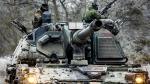
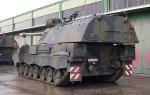
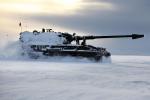
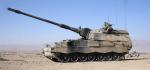
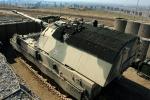
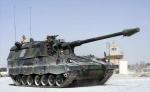
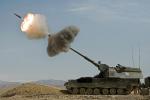
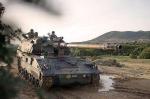
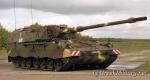
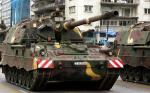


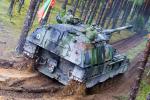
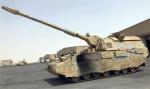



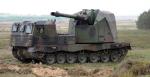

Development of the Panzerhaubitze 2000 (or PzH 2000) began in 1987. It evolved from the international SP70 programme, which was cancelled in the 1980s due to funding problems. The prototype of the PzH 2000 was completed in 1993. Initially the German Army planned to order a total of 1,254 new self-propelled howitzers, however in 1996, due to the end of Cold War, a contract was signed for only 185 artillery systems. First systems were delivered to the German Army in 1998. Export operators of the PzH 2000 are Croatia (12), Greece (25), Italy (68), Lithuania (21), Netherlands (57), and Qatar (24). This artillery system saw action in Afghanistan. In 2022 Germany and Netherlands delivered 12 of these artillery systems to Ukraine in order to defend against the Russian invasion. Italy also delivered 3-6 PzH 2000 howitzers to Ukraine. These were widely used against the Russian forces. During the same year Germany approved the sale of 100 additional PzH 2000 howitzers to Ukraine. However deliveries might take several years to complete. In 2023 Germany ordered 10 additional units.
The PzH 2000 is fitted with a 155 mm/L52 howitzer. The vehicle has a fully-automatic loading system with ammunition management system. The PzH 2000 is compatible with standard NATO 155 mm ammunition. Maximum range of fire is 30 km with standard HE-FRAG shell and 40 km with base bleed shell. Using a South African VLAP rocket-assisted shell a range of 56 km can be achieved. Many other howitzers make initial shots and adjust their guns depending on the data provided by forward observers. This is not the case with the PzH 2000. This howitzer is highly accurate. It can shell given coordinates straight away and there is no need for fire correction from artillery observers.
This howitzer is compatible with German SMArt 155 guided artillery shells. These are launched in the same manner as ordinary artillery shells. The maximum range is 27.5 km. These are long-range fire-and-forget munitions designed to destroy hostile tanks and armored vehicles. The SMArt 155 shell contains two autonomous submunitions. One of them has infrared sensor while the other has a radar sensor. Once in the target area these submunitions are ejected and deploy parachutes. Each submunition corkscrews down over the target area, scanning for targets. Once the target vehicle is detected submunition detonates. The target is destroyed by an explosively formed penetrator, which is created by the blast. These submunitions strike turret roofs, where armor is relatively thin. The SMArt 155 guided shells are known in German army service under the DM702 and DM702A1 designations.
Maximum rate of fire is 9 shells per minute. It can launch 3 shells within 10 seconds. This howitzer is capable of Multiple Round Simultaneous Impact (MRSI) firing. A total of 60 shells are stowed in the magazine.
The gun barrel has a rated service life of 4,500 shells at full charge. However in 2022-2023 a Ukrainian PzH 2000 howitzer has reportedly fired around 20,000 shells without the barrel replacement.
This artillery system has rapid reaction time. It can briefly stop from traveling and open fire against the designated targets. No special preparation is required. Also crew do not have to leave the vehicle to prepare the howitzer for firing. Once the firing mission is complete, the PzH 2000 can leave its firing position in seconds and redeploy to another location. The PzH 2000 receives target data via datalink. The gun is automatically laid using the fire control data. Secondary armament consists of a roof-mounted 7.62 mm machine gun.
Front armor of the PzH 2000 provides protection against 14.5 mm rounds. All-round protection is against small arms fire and artillery shell splinters. Explosive reactive armor can be fitted if necessary. The PzH 2000 is also fitted with automatic fire suppression and NBC protection systems.
The PzH 2000 has a crew of five, including commander, gunner, two loaders and driver. Target engagements can be carried out by a crew of two men. Loaders are employed only when autoloader fails.
The chassis of the PzH 2000 uses some components of the Leopard 2 main battle tank. This artillery system is powered by the MTU MT 881 Ka-500 supercharged diesel engine, developing 1,000 hp. The PzH 2000 is also fitted with auxiliary power unit, powering all systems, when the main engine is turned off.
The PzH 2000 is reloaded by two operators. Shells are automatically picked up from the back of the vehicle and stowed in the autoloader’s magazine. Shells and associated charges are replenished within 12 minutes.
Operational use in Ukraine revealed that these German howitzers require intensive maintenance. Ukraine operates various modern Western howitzers, such as the French CAESAR, Polish Krab and Slovak Zuzana 2 and American relatively modern M109A5. Out of the lot, German PzH 2000 howitzer were the first ones that stopped firing after extensive use in combat and required servicing in order to continue operation.
Some trials have been carried out to adapt the PzH 2000 turret to different weapon systems. The MONARC (Modular Naval Artillery Concept) was a study about mounting the turret on a naval ship. It was mounted on the deck of Hamburg, a Sachsen class frigate.
The AGM (Artillery Gun Module) 155 mm self-propelled howitzer is a modified variant of the PzH 2000. It was developed as a supplement to the PzH 2000 where heavier weaponry is not available, recommendable or too expensive. This artillery system is operated by a crew of two men. It is significantly lighter alternative to the PzH 2000, but provides the same performance. First prototype was mounted on a tracked chassis of the M270 MLRS, though the unmanned AGM turret can be integrated on various other chassis, or even used as a standalone unit. The AGM is air-transportable.
The Donar 155 mm self-propelled howitzer is a further development of the Artillery Gun Module, based on ASCOD 2 IFV tracked chassis. The Donar is mainly aimed at the export customers.
The Boxer RCH 155 is another integration of the Artillery Gun Module, based on a Boxer 8×8 armored personnel carrier. This artillery system retains features and performance parameters of the PzH 2000. It was introduced in 2014. Initial firing trials took place during the same year.
FUENTES Y REFERENCIA – SOURCES & REFERENCE
militarytoday.com
©jmodels.net
 jmodels.net
Debe estar conectado para enviar un comentario.