

| DATOS TÉCNICOS | TECHNICAL DATA |
| TIPO: Vehículo anfibio. | TYPE: Amphibious vehicle. |
| TRIPULANTES: 1 | CREW: 1 |
| ANCHURA: 1,80 m. | WIDTH: 5.11 ft. |
| LONGITUD: 4,77 m. | LENGTH: 15.8 ft. |
| ALTURA: 1,91 m. | HEIGHT: 6.3 ft. |
| PESO: 1.660 kg. | WEIGHT: 3,660 lb. |
| MOTOR: Un motor Adler de gasolina de 4 tiempos y 6 cilindros de 55 hp (41 kW). | ENGINE: One Adler 6-cylinder 4-stroke gasoline engine providing 55 hp (41 kW). |
| AUTONOMÍA: – | RANGE: – |
VELOCIDAD MÁX.:
|
MAX. SPEED:
|
| VERSIONES: 4 | VERSIONS: 4 |
| CONSTRUIDOS: Unos 800. | BUILT: About 800. |
En 1935, Hans Trippel comenzó a diseñar prototipos de vehículos anfibios todoterreno. En 1936, se estableció una fábrica en Hamburgo para la producción en serie de dichos vehículos.
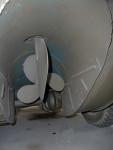
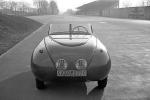
En lugar de una suspensión comercial provista de una carrocería flotante, Trippel diseñó una carrocería aerodinámica con forma de tubo en la que se ajustó la tecnología del vehículo. El Schwimmwagen SG 6 resultante estaba destinado a un uso civil, como expediciones, pero desde el principio estuvo claro que la producción del vehículo solo podría ser rentable si clientes militares solicitaban pedidos de grandes cantidades. El primer pedido de 20 vehículos fue para la Wehrmacht. Esta versión del SG 6 se fabricó entre 1937 y 1940.
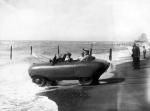
A finales de septiembre de 1938, el Trippel SG 6 se utilizó en una campaña publicitaria desde Hamburgo hasta Nápoles y luego en una travesía de 28 km hasta la isla de Capri.
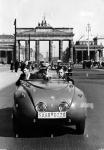
A petición del mando militar se construyó la versión SG 6 Pionier con un interior ampliado para transportar hasta 16 soldados. Esta variante militar del Schwimmwagen se fabricó entre 1939 y 1943.
En 1940, Trippel revisó la aerodinámica y mejoró los detalles de la versión civil del SG 6, dando como resultado el SG 6 Colonial Pioneer, pero solo se fabricaron unos pocos debido a la guerra.
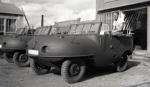
Tras el desarrollo de las características de navegación del modelo Colonial Pioneer, también se revisó la versión militar del Schwimmwagen. Se eliminaron las dos puertas y se mejoró el control de daños. La producción de este vehículo comenzó en 1941 con la designación SG 6/41 en las instalaciones de Bugatti en Molsheim, en Alsacia. Con el estallido de la guerra en septiembre de 1939, Bugatti cesó la fabricación de vehículos de lujo caros y, tras la caída de Francia en junio de 1940, el 12 de agosto de 1940 Bugatti firmó un contrato de arrendamiento con la fábrica Trippel para trasladar la sede de esta última a Molsheim.
A partir de 1942 se fabricó una versión del SG 6 con techo plegable. A partir de 1943 se canceló la producción del SG 6 y en 1944 se sustituyó por el Volkswagen Schwimmwagen Typ 166, mucho más ligero y también más barato de fabricar. En total se fabricaron unos 800 SG 6 Schwimmwagen.
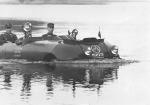
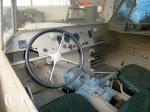
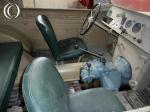

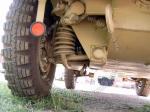


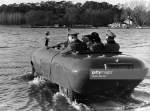

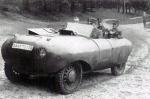
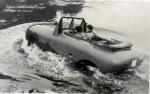




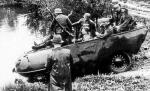

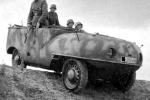
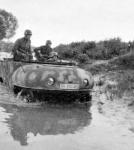


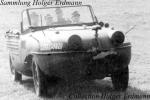

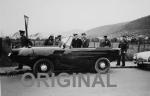
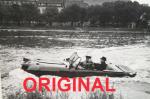
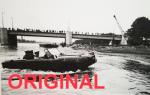
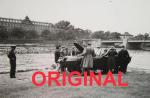


In 1935 Hans Trippel began to design all-terrain amphibious vehicle prototypes. In 1936 a factory was established in Hamburg for the mass-production of such vehicles.
Instead of a commercial suspension provided with a buoyant vehicle body, Trippel designed a streamlined, tub-shaped body into which the vehicle technology was fitted. The resulting Schwimmwagen SG 6 was intended for civilian use such as expeditions, but from the outset it was clear that the production of the vehicle could only be economical if military customers would order the amphibious vehicles in larger numbers. The first order of 20 vehicles went to the Wehrmacht. This version of the SG 6 was manufactured from 1937 to 1940.
At the end of September, 1938, the Trippel SG 6 was used on an advertising drive from Hamburg to Naples and then across the 28 km (17 mi) water route to the island of Capri.
At the request of the military, the SG 6 Pionier version was built with an enlarged interior for transporting up to 16 soldiers. This military variant of Schwimmwagen was manufactured from 1939 to 1943.
In 1940, Trippel revised the streamlining and enhanced the detailing of the civilian version of the SG 6, resulting in the SG 6 Colonial Pioneer, but only a few were made because of the war. Following the development of the swimming characteristics of the Colonial Pioneer model, the military version of the Schwimmwagen was also revised. The two doors were removed and the damage control improved. Production of this vehicle began in 1941 under the designation SG 6/41 at the Bugatti works in Molsheim in Alsace. With the outbreak of war in September 1939, Bugatti ceased the manufacture of expensive luxury vehicles and after the fall of France in June 1940, Bugatti, on August 12, 1940 signed a lease agreement with the Trippel-works, to move the latter’s headquarters to Molsheim.
From 1942, a version of the SG 6 with a folding roof was manufactured. From 1943, the production of SG 6 was cancelled, and in 1944 replaced by the Volkswagen Schwimmwagen Type 166 which was much lighter and also cheaper to manufacture. A total of about 800 SG 6 Schwimmwagen were produced.
FUENTES Y REFERENCIA – SOURCES & REFERENCE
wikipedia.org
diariodelosclasicos.com
kfzderwehrmacht.de
gettyimages.es
fahrzeuge-der-wehrmacht.de
armedconflicts.com
©jmodels.net
 jmodels.net
Debe estar conectado para enviar un comentario.