
| DATOS TÉCNICOS (Fi 167A-0) |
TECHNICAL DATA (Fi 167A-0) |
| TIPO:Bombardero torpedero. | TYPE:Torpedo bomber. |
| TRIPULANTES:2 | CREW:2 |
| ENVERGADURA:13,5 m. | SPAN:44.3 ft . |
| LONGITUD:11,4 m. | LENGTH:37.5 ft. |
| ALTURA:4,8 m. | HEIGHT:15.9 ft. |
| SUPERFICIE ALAR:45,5 m². | WING AREA:490 ft². |
| PESO EN VACÍO:2.806 kg. | EMPTY WEIGHT:6,186 lb. |
| MOTOR:Un motor en línea V-12 invertida Daimler-Benz DB 601B de 1.100 hp. (820 kW) con una hélice de tras palas de paso variable. | ENGINE:One Daimler-Benz DB 601B V-12 inverted liquid-cooled piston engine developing 1,100 hp. (820 kW) with a 3-bladed variable-pitch propeller. |
ARMAMENTO:
|
ARMAMENT:
|
| VELOCIDAD MÁX.:325 km/h. | MAX. SPEED:202 mph. |
| TECHO:8.200 m. | CEILING:26,900 ft. |
| ALCANCE:1.300 km. (700 mil. náut.). | RANGE:810 ml. (700 naut. ml.). |
| PRIMER VUELO:12 de noviembre de 1937. | FIRST FLIGHT:12 November 1937. |
| VERSIONES:2 | VERSIONS:2 |
| CONSTRUIDOS:14 | BUILT:14 |
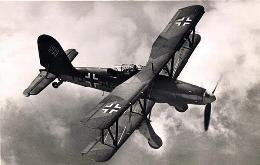
Para cumplir con el requisito de un avión de reconocimiento/bombardero torpedero biplaza embarcado, tanto Arado como Fieseler presentaron propuestas al RLM (Reichsluftfahrtministerium, Ministerio del Aire del Reich). Se construyeron prototipos de ambos aviones, pero las pruebas realizadas a finales de 1938 pronto demostraron que el Ar 195 de Arado no podía cumplir los requisitos, mientras que el Fieseler Fi 167 V1 no sólo podía cumplir sino superar considerablemente las especificaciones. En configuración, el diseño de Fieseler era un biplano de alas plegables de dos bahías, principalmente de construcción metálica pero con algo de recubrimiento de tela, tren de aterrizaje con rueda de cola fija con patas principales altas y desechables, una unidad de cola reforzada convencional y un motor Daimler Benz DB 601. La tripulación de dos hombres estaba alojada en tándem debajo de una larga cubierta diseñada para permitir la operación en la parte trasera de una ametralladora sobre un soporte pivotante.
Al igual que el Fi 156, el nuevo avión de Fieseler tenía características excepcionales a baja velocidad, logradas en este caso porque ambas alas incorporaban listones de borde de ataque automáticos de envergadura completa y el ala inferior tenía flaps de borde de salida de gran área. Su efecto, unido a la sustentación de las alas del biplano, permitía que el avión descendiera lentamente y casi en vertical con total control.
El Fi 167 estaba destinado a servir a bordo del portaaviones alemán Graf Zeppelin, botado el 8 de diciembre de 1938, y tras la finalización de un segundo prototipo (Fi 167 V2) se construyó un lote de preproducción de 12 aviones Fi 167A-0. Estos diferían poco de los prototipos, pero incorporaban algunas mejoras consideradas después de las pruebas de servicio, incluida la adición de un bote auxiliar para dos personas.
Cuando se detuvo la construcción del Graf Zeppelin, en junio de 1940, la función para la que había sido diseñado el Fi 167 ya no existía. Sin embargo, se esperaba que cuando se reanudara la construcción, también continuaría la fabricación del Fi 167. No fue el caso, ya que en 1942, cuando se dio la orden de reanudar la construcción del portaaviones, se decidió que una versión del Ju 87 cumpliría ampliamente con los requisitos y no se fabricaron más ejemplares del Fi 167.
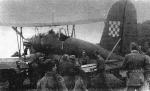
La unidad Erprobungsstaffel 167 se creó en el verano de 1940 para realizar evaluaciones en Holanda. Se llevaron a cabo una serie de pruebas, incluidas las de varios esquemas de camuflaje sobre el mar. La unidad permaneció allí hasta principios de 1943, cuando los Fi 167 fueron dispersados: tres a una unidad de pruebas del tren de aterrizaje y el resto a Rumanía.
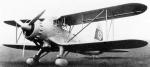
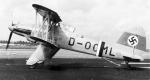


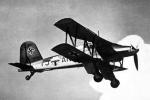


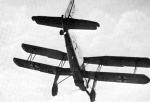

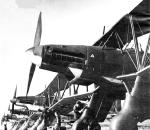

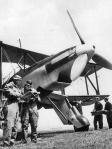



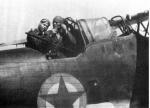

To meet a requirement for a ship-based two-seat torpedo bomber/reconnaissance aircraft, both Arado and Fieseler submitted proposals to the RLM (Reichsluftfahrtministerium, Ministry of Aviation). Prototypes of both aircraft were built, but testing in late 1938 soon showed that Arado’s Ar 195 could not meet the requirements, whereas the Fieseler Fi 167 V1 could not only meet but considerably exceed the specification. In configuration the Fieseler design was a two-bay foldable-wing biplane, primarily of metal construction but with some fabric covering, fixed tailwheel landing gear with tall jettisonable main units, a conventional braced tail unit and a Daimler Benz DB 601 engine. The two-man crew was accommodated in tandem beneath a long canopy that was designed to allow for operation at the rear of a machine-gun on a pivoted mount.
As with the Fi 156, Fieseler’s new aircraft had exceptional low speed characteristics, achieved in this case by both wings incorporating full-span automatic leading-edge slats, and the lower wing having large area trailing-edge flaps. Their effect, allied with the lift of the biplane wings, made it possible for the aircraft to sink slowly and almost vertically under complete control.
The Fi 167 was intended for service aboard the German aircraft-carrier Graf Zeppelin, launched on 8 December 1938, and following the completion of a second prototype (Fi 167 V2) a preproduction batch of 12 Fi 167A-0 aircraft was built. These differed little from the prototypes, but incorporated some refinements considered after service testing, including the addtion of a two-man dinghy.
When construction of the Graf Zeppelin was stopped, in June 1940, the role for which the Fi 167 had been designed no longer existed. However, it was expected that when construction was resumed, manufacture of the Fi 167 would also go ahead; this was not to be the case for when, in 1942, orders were given for construction of the aircraft-carrier to be resumed, it was decided that a version of the Ju 87 would amply meet the requirements, and no further examples of the Fi 167 were built.
Erprobungsstaffel 167 was stablished in the summer of 1940 for a series of evaluations, based in Holland. A number of tests were undertaken, including those of various overwater camouflage schemes. The unit remained there until early 1943, when the Fi 167 were dispersed: three to an undercarriege testing unit and the rest to Romania.
FUENTES Y REFERENCIA – SOURCES & REFERENCE
David Donald, Warplanes of the Luftwaffe. Combat Aircraft of Hitler’s Luftwaffe 1939-1945, Barnes & Noble Books, 1994.
©jmodels.net
 jmodels.net
Debe estar conectado para enviar un comentario.