
| DATOS TÉCNICOS (P.24A-C) |
TECHNICAL DATA (P.24A-C) |
| TIPO:Caza monoplaza. | TYPE:Single-seat fighter. |
| TRIPULANTES:1 | CREW:1 |
| ENVERGADURA:10,719 m. | SPAN:35.2 ft. |
| LONGITUD:7,5 m. | LENGTH:24.7 ft. |
| ALTURA:2,69 m. | HEIGHT:8.10 ft. |
| SUPERFICIE ALAR:19,9 m². | WING AREA:193 ft². |
| PESO EN VACÍO:1.328 kg. | EMPTY WEIGHT:2,928 lb. |
|
MOTOR:Un motor radial de 14 cilindros Gnome-Rhône 14Kfs de 725 hp. (534 kW) con hélice tripala Gnome-Rhône de paso variable. |
ENGINE:One Gnome-Rhône 14Kfs 14-cylinder air-cooled radial piston engine providing 725 hp. (534 kW) with a 3-bladed Gnome-Rhône variable-pitch propeller. |
ARMAMENTO:
|
ARMAMENT:
|
| VELOCIDAD MÁX.:410 km/h. a 4.500 m. | MAX. SPEED:250 mph. at 14,764 ft. |
| TECHO:9.000 m. | CEILING:30,000 ft. |
| ALCANCE:700 km. | RANGE:430 ml. |
| PRIMER VUELO:Mayo de 1933. | FIRST FLIGHT:May 1933. |
| VERSIONES:12 | VERSIONS:12 |
| CONSTRUIDOS:184 (Todos los modelos). | BUILT:184 (All variants). |
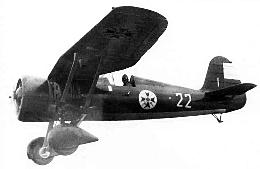
El diseño del PZL P.24 fue desarrollado en los Talleres Estatales de Aviación bajo la dirección del ingeniero Wsevolod Jan Jakimiuk, quien después de la muerte del ingeniero Z. Puławski continuó el trabajo de construcción de los cazas «P». Fue un desarrollo posterior del avión PZL P.11, en el que se introdujeron cambios importantes. El avión estaba equipado con el último motor Gnôme-Rhône 14Kds de 14 cilindros y dos coronas con una potencia de 534 kW (725 hp) y estaba destinado únicamente a la exportación. Una parte importante de los gastos corrió a cargo de la compañía francesa Gnôme-Rhône. El primer prototipo PZL P.24/I estuvo listo a principios de 1933 y voló en mayo de 1933. El segundo prototipo PZL P.24/II voló en marzo de 1934. Inicialmente, tenía un motor Gnôme-Rhône 14Kds, per luego se le instaló un Gnôme-Rhône 14Kfs. El 28 de junio de 1934, Bolesław Orliński estableció un récord de velocidad para aviones de combate con motor radial de 414 km/h. en el PZL P.24/II. El P.24/II, en adelante conocido como Super P.24, fue reconocido como el avión militar más rápido del mundo.
El modelo despertó gran interés. En el verano de 1934, se le instalaron dos cañones Oerlikon tipo F de 20 mm. en el fuselaje. En esta versión, después de ajustar el motor, el P-24/II alcanzaba una velocidad de 421 km/h. El avión se exhibió en el Salón Aeronáutico Internacional de París en 1934, donde obtuvo un gran reconocimiento. PZL recibió pedidos de Turquía, Bulgaria, Rumania, Grecia, Yugoslavia y, más tarde, de Estonia y Hungría. Después de las pruebas en IBTL, Bolesław Orliński realizó una gira publicitaria en enero y febrero de 1936 en los países balcánicos. PZL P.24/II permaneció en Turquía después de las demostraciones y pruebas de vuelo. En 1936 se firmaron contratos con Bulgaria para el suministro de 12 P.24 y con Turquía para el suministro de 40 aviones completos y 20 (otras fuentes dicen 50 aviones) en piezas para ensamblar.
La versión PZL P.24, significativamente diferente de los prototipos anteriores, debía dirigirse a la producción. En la primavera de 1936, se construyó el tercer prototipo PZL P.24/III, que utilizaba un fuselaje significativamente mejorado tomado del PZL P.11c. El motor era un Gnôme-Rhône 14Kfs. Del P.11c, el nuevo P.24/III difería en el motor, el armamento, la cubierta de la cabina y los carenados del tren de aterrizaje. El avión se exhibió en el 15º Salón Aeronáutico de París en noviembre de 1936 con el nombre publicitario Super P.24 bis. El avión se ofreció en cuatro versiones: P-24, P-24A, P-24B y P-24C, que difierían en armamento.
La variante turca, designada originalmente como P.24D y denominada PZL.24A en el contrato de entrega, finalmente recibió la designación de dos versiones con diferente armamento: P.24A (14 aviones) y P.24C (26 aviones). La primera serie de 5 P.24C estuvo lista en septiembre de 1936 y el pedido completo de 40 P.24 se completó en la primera mitad de 1937. Según el contrato, la producción con licencia del PZL se inició en TFK (Tayyare Fabricasi Kayserii) en Cesarea (Kayseri). El primer avión P.24A voló el 29 de mayo de 1937, y los últimos 20 se completaron en la primera mitad de 1938. Entraron en servicio en 1937 para equipar las escuadrillas 21, 22, 42 y 43. El avión realizó tareas de patrulla y fueron utilizado para el entrenamiento en unidades. Los últimos P.24 se retiraron en 1943. Actualmente, un PZL P-24 se encuentra en el Museo de Aviación de Estambul.
Para Bulgaria, se produjo un lote de 12 PZL P.24B, que se fabricó en noviembre y diciembre de 1936. Se les apodó «Jastreb» (Halcón). A partir de 1937, equiparon la 1ª Escuadrilla de Cazas del 1er Escuadrón Aéreo Mixto. En julio de 1940, 11 P.24 fueron transferidos a la 3ª Escuadrilla del Escuadrón de Instructores de Vuelo del Estado Mayor, y en 1942 estaban en el 2º Regimiento de Cazas. A mediados de 1944, todos ellos fueron destruidos en el aeródromo como consecuencia de los bombardeos aliados.
Los húngaros habían mostrado interés en comprar de 10 a 30 aviones de combate en la versión turca PZL P.24D con armamento adaptado a los requisitos de la Fuerza Aérea Húngara. Sin embargo, la transacción no se llevó a cabo. En mayo de 1935, el Comando Aéreo Yugoslavo sugirió ofrecer a Yugoslavia un caza PZL P.24 equipado con un motor Lorraine Dietrich Petrel 12 HD.RS. La parte polaca propuso desarrollar un proyecto para el caza PZL P.28. Desde España en julio de 1936 se recibió un pedido del gobierno de la República Española para la entrega de 15 PZL P.11 o PZL P.24. En octubre de 1936, llegó una consulta de los nacionalistas sobre la compra de 20 P.24, mientras que en diciembre de 1936, las fuerzas del general Franco ofrecieron suministrar equipos soviéticos capturados, especialmente carros de combate, a cambio de 12 P.24. Ninguno de estos pedidos lleǵó a realizarse.
En noviembre de 1936, los rumanos firmaron un contrato para el suministro de 5 aviones en la fábrica IAR de Brasov (Rumania). Se fabricó un lote de 5 P.24E en PZL-WP en el verano de 1937. La producción con licencia de 25 P.24E se inició en Brasov en 1938 y finalizó en 1939. En ese momento, el proyecto del caza rumano IAR-80 se estaba desarrollando en IAR. El diseño de la parte trasera del fuselaje con el empenaje, la instalación del motor y el equipamiento de la cabina procedían del PZL P.24E. Este moderno monoplano de ala baja con tren de aterrizaje retráctil fue más tarde el equipo básico de las unidades de caza de la Fuerza Aérea Rumana. A partir de 1938, los PZL P.24E equiparon las escuadrillas 61, 62, 63, y más tarde solo la 61 y 62. Ambos escuadrones participaron en la guerra contra la URSS, en las batallas de Besarabia y durante el sitio de Odessa. A principios de 1942 fueron trasladados a segunda línea, donde sirvieron como aviones de entrenamiento. En 1944, solo había 19 PZL P.24E, que se esperaba emplear para hostigar incursiones nocturnas.
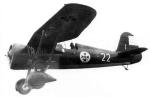
Grecia realizó un pedido de 36 P.24 con el último motor Gnôme-Rhône 14N07 de 713 kW (970 hp). El prototipo (PZL P.24H) voló en junio de 1937. La Fuerza Aérea Griega determinó que 6 aviones estarían armados con 2 cañones y 2 ametralladoras, y 30 con 4 ametralladoras. El prototipo P.24H también se incluyó en la entrega. Las versiones de serie se etiquetaron de acuerdo con el armamento como P.24F y P.24G La producción comenzó en la segunda mitad de 1937 y se completó en mayo de 1938. Ese año se formaron tres escuadrillas de caza con ellos: 21, 22 y 23. En el momento de la invasión italiana de Grecia, solo estaban disponibles 24 P.24 operativos. Las primeras batallas con aviones italianos fueron libradas por aviones del escuadrón 22 el 1 de noviembre de 1940 sobre Tesalónica (Grecia). Los italianos sufrieron una derrota en Grecia, y solo la intervención de Alemania el 6 de abril de 1941 inclinó la balanza de la lucha del lado de las potencias del Eje. En ese momento, los P.24 equipaban las escuadrillas 22 y 23. El último P.24G voló el 23 de abril de 1941 a Creta y luego a Egipto. Las unidades equipadas con P.24 destruyeron alrededor de 40 aviones italianos y alemanes. Varios P.24F/G dañados cayeron en manos de los agresores. Uno capturado por los italianos se utilizó para vuelos de patrulla.
En abril de 1938, el ingeniero. Wsiewołod Jakimiuk desarrolló el diseño de la versión PZL P.24J con el motor Gnôme-Rhône 14NO1. El uso del motor 14NO1 requirió una reconstrucción completa del fuselaje. La Fuerza Aérea Griega estaba interesada en la entrega de 24 cazas de esta versión. El pedido más avanzado fue la entrega del prototipo P.24J para la Fuerza Aérea de Bulgaria, que quería adquirir 12 aviones. Después de que la parte búlgara renunciase a la transacción, el prototipo iba a ser donado, pero la entrega no llegó a realizarse por la invasión alemana de Polonia en septiembre de 1939 no se completó. Fue capturado por los alemanes en Okęcie (Polonia) y probablemente desmantelado en los primeros meses de la ocupación.
En el otoño de 1937, se consideró la compra de 50 cazas PZL P.24H (que no debe confundirse con el prototipo para Grecia) para la Fuerza Aérea Polaca. La aeronave debía recibir motores Gnôme-Rhône 14N07 con una potencia de 699-714 kW (950-970 hp.) y una velocidad de 430 km/h. Gnôme-Rhône se ofreció a suministrar 70 motores. Con su uso, era posible construir alrededor de 60 cazas (más motores de repuesto), para retirar los PZL P.7a y PZL P.11a de las unidades de primera línea. La entrega no se completó por falta de fondos. La Fuerza Aérea Polaca también consideró, como una de las alternativas, pedir el PZL P.24 para el período de transición de 1939-1940.
En 1939, la fábrica de PZL llevó a cabo conversaciones sobre el suministro de 120 P.24 a Finlandia, Estonia, Grecia, Yugoslavia y Hungría. Se esperaba que la mayoría de ellas llegaran a buen término y las entregas se realizarían en 1940.
En total, se produjeron 184 PZL P.24 en PZL y con licencias en IAR (Rumanía) y TFK (Turquía). El P.24 fue el avión más famoso del mundo de la familia de cazas creada por Puławski.

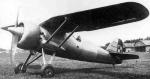

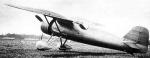
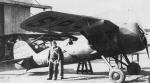
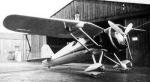




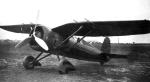


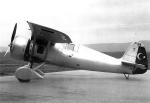
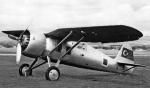
The design of the PZL P.24 aircraft was developed at the State Aviation Works under the direction of Eng. Wsevolod Jan Jakimiuk, who after the death of Eng. Z. Puławski continued construction work on «P» fighters. It was a further development of the PZL P.11 aircraft, in which major changes were introduced. The aircraft was equipped with the latest Gnôme-Rhône 14Kds 14-cylinder twin-star engine with 534 kW (725 hp) and was intended for export only. A significant part of the expenses was taken by the French label Gnôme-Rhône. The first PZL P.24/I prototype was ready in early 1933 and flew in May 1933. The second PZL P.24/II prototype flew in March 1934. Initially, it had a Gnôme-Rhône 14Kds engine, later changed to Gnôme-Rhône Rhone 14Kfs. On June 28, 1934, Bolesław Orliński set a speed record for fighter aircraft with a radial engine of 414 km/h. on the PZL P.24/II. The P.24/II, henceforth known as the Super P.24, was recognized as the world’s fastest military aircraft.
The construction aroused great interest. In the summer of 1934, two Oerlikon type F 20mm. cannons were installed on the airframe. In this version, after adjusting the engine, the P-24/II reached a speed of 421 km/h. The aircraft was exhibited at the International Air Show in Paris in 1934, where it won great recognition. PZL received inquiries from Turkey, Bulgaria, Romania, Greece, Yugoslavia, and later Estonia and Hungary. After the trials at IBTL, Bolesław Orliński made an advertising rally on it in January and February 1936 to the Balkan countries. PZL P.24/II remained in Turkey after the demonstrations and flight tests. In 1936, contracts were signed: with Bulgaria for the supply of 12 P.24s, and with Turkey for the supply of 40 complete aircraft and 20 (other sources say 50 aircraft) in parts for assembly.
The PZL P.24 version, significantly different from the previous prototypes, was to be directed to production. In the spring of 1936, the third PZL P.24/III prototype was built, which used a significantly improved airframe taken from the PZL P.11c. The drive was a GR 14Kfs engine. From the P.11c, the new P.24/III differed in powerplant, armament, cockpit canopy and undercarriage fairings. The aircraft was exhibited at the 15th Paris Air Show in November 1936 with the advertising name Super P.24 bis. The aircraft was offered in four versions: P-24, P-24A, P-24B and P-24C, differing in armament.
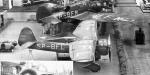
The Turkish variant, originally designated P.24D, and named PZL.24A in the delivery contract, eventually received the designation of two versions with different armament: P.24A (14 aircraft) and P.24C (26 aircraft). The first series of 5 P.24Cs was ready in September 1936, and the entire order for 40 P.24s was completed in the first half of 1937. According to the contract, license production of the PZL was launched at TFK (Tayyare Fabricasi Kayserii) in Caesarea (Kayseri). The first P.24A aircraft was flown on May 29, 1937, and the last 20 were completed in the first half of 1938. They entered service in 1937 to equip squadrons 21, 22, 42 and 43. The aircraft performed patrol duty and were used for training in units. The last P.24s were withdrawn from use in 1943. Currently, one PZL P-24 is in the Aviation Museum in Istanbul.
For Bulgaria, a batch of 12 PZL P.24B were produced, which was made in November and December 1936. They were named «Jastreb» (Hawk). From 1937, they were the equipment of the 1st Fighter Squadron in the 1st Mixed Air Squadron. In July 1940, 11 P.24s were transferred to the 3rd Squadron of the Staff Flight Instructors Squadron, and in 1942 they were in the 2nd Fighter Regiment. In mid-1944, all of them were destroyed at the airfield as a result of Allied bombing.
The Hungarians had shown interest in purchasing 10 to 30 fighter aircraft in the Turkish version PZL P.24D with armament adapted to the requirements of the Hungarian Air Force. However, the transaction did not go through. In May 1935, the Yugoslav Air Command suggested offering Yugoslavia a PZL P.24 fighter equipped with a Lorraine Dietrich Petrel 12 HD.RS engine. The Polish side proposed to develop a project for the PZL P.28 fighter. From Spain in July 1936, an order was received from the government of the Spanish Republic for the delivery of 15 PZL P.11 or PZL P.24. In October 1936, an inquiry came from the Nationalists regarding the purchase of 20 P.24s, while in December 1936, General Franco’s forces offered to supply captured Soviet equipment, especially tanks, in exchange for 12 P.24s. None of these orders were fulfilled.
In November 1936, the Romanians signed a contract for the supply of 5 aircraft in the IAR factory in Brasov (Romania). A batch of 5 P.24E was made in PZL-WP in the summer of 1937. License production of the 25 P.24Es was launched in Brasov in 1938 and ended in 1939. At that time, a project of a native IAR-80 fighter was being developed at IAR, in which the rear of the fuselage with the empennage, engine installation and cabin equipment came from PZL P.24E. This modern low-wing monoplane with retractable landing gear was later the basic equipment of fighter squadrons of the Romanian Air Force. From 1938, the PZL P.24Es were the equipment of squadrons 61, 62, 63, and later only 61 and 62. Both squadrons were involved in the war against the USSR, taking part in the battles in Bessarabia and during the siege of Odessa. At the beginning of 1942, they were moved to the second line, where they served as training aircraft. In 1944, there were only 19 PZL P.24Es, which were planned to be used for harassing night raids.
Greece placed an order for 36 P.24s with the latest 713 kW (970 hp.) Gnôme-Rhône 14N07 engine. The prototype (PZL P.24H) was flown in June 1937. The Greek Air Force determined that 6 aircraft would be armed with 2 cannons and 2 machine guns, and 30 with 4 machine guns. The P.24H prototype was also included in the delivery. The serial versions were labelled according to the armament P.24F and P.24G Production started in the second half of 1937 and was completed in May 1938. In 1938, three fighter squadrons were formed from them: 21, 22 and 23. At the time of Italy’s invasion of Greece, only 24 operational P.24s were available. The first battles with Italian planes were fought by planes of the 22nd squadron on November 1, 1940 over Thessaloniki (Greece). The Italians suffered a defeat in Greece, and only the intervention of Germany on April 6, 1941 tipped the scales of the fight to the side of the Axis powers. At that time, P.24s equipped squadrons 22 and 23. The last P.24G flew on April 23, 1941 to Crete, and later to Egypt. Squadrons equipped with P.24s destroyed about 40 Italian and German aircraft. Several damaged P.24F/Gs fell into the hands of the aggressors. One captured by the Italians was used for patrol flights.
In April 1938, Eng. Wsiewołod Jakimiuk developed the design of the PZL P.24J version with the Gnôme-Rhône 14NO1 engine. The use of the 14NO1 engine required a thorough reconstruction of the hull. The Greek Air Force was interested in the delivery of 24 fighters in this version. The most advanced course was the delivery of the P.24J prototype for the Bulgarian Air Force, which wanted to purchase 12 aircraft. After the Bulgarian side resigned from the transaction, the prototype was to be donated, but by September 1939 it was not completed. It was taken over by the Germans at Okęcie (Poland) and probably scrapped in the first months of the occupation.
In the autumn of 1937, the purchase of 50 PZL P.24H fighters (not to be confused with the prototype for Greece) for the Polish Air Force was considered. The aircraft were to receive Gnôme-Rhône 14N07 engines with a power of 699-714 kW (950-970 hp.) and a speed of 430 km/h. Gnôme-Rhône offered to supply 70 engines. With their use, it was possible to build about 60 fighters (plus spare engines), to withdraw the PZL P.7a and PZL P.11a aircraft from front-line units. The delivery was not completed due to lack of funds. The Polish Air Force also considered, as one of the alternatives, ordering the PZL P.24 for the transition period of 1939-1940.
In 1939, the PZL factory conducted talks regarding the supply of 120 P.24s to Finland, Estonia, Greece, Yugoslavia and Hungary. It was expected that most of them would come to fruition and deliveries were to be made in 1940.
184 PZL P.24s were produced in PZL and under IAR and TFK licenses. The P.24 was the most famous aircraft in the world from the family of Puławski fighter aircraft.
FUENTES Y REFERENCIA – SOURCES & REFERENCE
Ugolok Neba
samolotypolskie.pl
©jmodels.net
 jmodels.net
Debe estar conectado para enviar un comentario.