
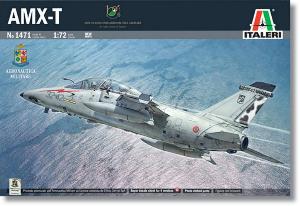
De un vistazo – Quick look
MATERIAL Y PIEZAS
MEDIA & PARTS:
- Plástico inyectado (111 piezas), plástico transparente (6 piezas), fotograbado (12 parts).
- Injected plastic (111 parts), clear plastic (6 parts), photo-etched (12 parts).
CALCAS – DECALS:
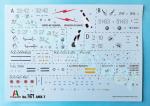
- Impresas por Cartograf. Escarapelas italianas, marcas de unidad, cinturones y numerosos estarcidos para el avión y el armamento. Aspecto fino y brillante. Sin excesivo soporte. Bien impresas.
- Printed by Cartograf. Italian roundels, unit markings, belts and plenty of stencils for the aircraft and the armament. Thin and glossy appearance. No excess of carrier. Well printed.
OPCIONES – OPTIONS:
- TA-11 AMX-T. MM55051. Aeronautica Militare Italiana. 101º Gruppo O.C.U. (Operational Conversion Unit). 32º Stormo. Amendola AB (Foggia, Italia). Junio de 2006.
- TA-11 AMX-T ACOL. MM55049. Aeronautica Militare Italiana. 132º Gruppo. 51º Stormo. Istrana AB (Treviso, Italia). Febrero de 2020.
- TA-11 AMX-T. MM55037. Aeronautica Militare Italiana. 132º Gruppo. 3º Stormo. Kleine-Brogel AB (Bélgica). 1998.
- TA-11 AMX-T. MM55045. Aeronautica Militare Italiana. 14º Gruppo. 2º Stormo. Rivolto AB (Udine, Italia). Octubre de 2001.
INSTRUCCIONES – INSTRUCTIONS:
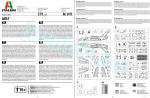
- Folleto de tamaño A5 y 16 páginas impreso en color. Contiene una breve historia del avión, un plano de piezas con numeración, una lista de colores con equivalencias en código Federal Standard y pinturas acrílicas de Italeri, 17 capítulos de montaje y 4 páginas de perfiles. Se incluye una hoja aparte que corrige una errata en el montaje. Claras y bien impresas.
- 16-page A5 booklet printed in color. It contains a short history of the aircraft, a numbered parts plan, a list of colors with matches in Federal Standard codes and Italeri acrylic paints, 17 assembly chapters and 4 pages of profiles. A separate sheet to correct a mistake in assembly is included. Clear and well printed.
LO MEJOR – THE BEST:
- Carlingas. Detalle superficial en las alas y el fuselaje.
- Cockpits. Nice surface detail on wings and fuselage.
LO PEOR – THE WORST:
- Escasa variedad en los acabados de pintura.
- Lack of variety in paint finishes.
VALORACIÓN – CONCLUSION:
- Reedición con cambios del AMX monoplaza, que es la primera maqueta en plástico de este avión. El montaje es apto para modelistas iniciados y el detalle realmente notable. Recomendable a los aficionados a los aviones militares modernos.
- Reissue with some changes of the one-seat AMX, which is the first plastic kit of this aircraft. Assembly looks suitable for average modellers and detail is really nice. Recommended to modern jets fans.

La maqueta
Italeri ha lanzado la primera maqueta en plástico del AMX en la escala 1/72. Extraña que la marca italiana haya tardado tanto en reparar en este avión que emplean las fuerzas aéreas de su país desde hace mucho tiempo, pero finalmente ha llegado. Esta edición complementa a la primera, dedicada al AMX monoplaza y, como aquella, solo contiene versiones italianas. Dentro de un tiempo tal vez veamos alguna edición con versiones brasileñas, aunque este modelo tiene algunas diferencias externas con el italiano y por ello la futura maqueta no podría ser una copia exacta de esta.
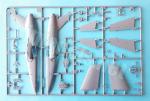
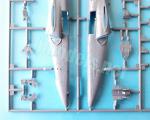
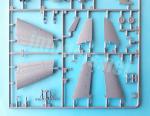
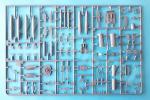
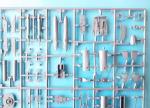
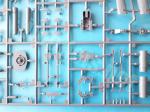
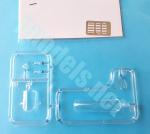
La caja de esta segunda edición trae dos bastidores de piezas un bastidor transparente, una pequeña plancha de fotograbados, la hoja de calcas y las instrucciones. El aspecto de este nuevo molde es excelente y limpio, con gran definición en pequeños detalles tanto internos como externos. Las piezas no tienen defectos aparentes ni rebabas y las marcas de eyector está situadas en zonas invisibles. En cambio, sí hay bastantes piezas con cilindros del expulsor que limpiar.
Los diversos paneles, accesos y otros detalles de las superficies de las alas y el fuselaje me parece muy bien realizados. Muestran una combinación de líneas grabadas, remachadas, o ambas a la vez, que le dan a la maqueta un aspecto notable, pese a que su tamaño no destaca especialmente.
A lo largo del montaje hay algunas opciones para el modelo actualizado AMX-T ACOL. La mayoría de las alternativas son pequeños detalles, aunque también tenemos la posibilidad de incluir en esta modernización una cápsula de reconocimiento situada bajo el fuselaje, heredada de los antiguos Starfighter de Italia, que no es exclusiva de esta actualización realmente.
La maqueta reproduce el entrenador avanzado biplaza del avión de ataque a tierra Alenia-Aermamacchi-Embraer AMX, operado desde 1989 por las fuerzas aéreas de Italia y Brasil. El modelo AMX-T es plenamente operativo y tiene parecidas capacidades de combate a las del AMX, que tomó parte en operaciones militares en diversos conflictos, como Libia, los Balcanes y Afganistán. A partir de 2005 los AMX y AMX-T de ambos países fueron actualizados con nuevos sistemas GPS. El programa de modernización recibió el nombre de ACOL (Adeguamento delle Capacità Operative e Logistiche). Actualmente, los AMX siguen operativos con la Fuerza Aérea Brasileña y están siendo reemplazados por el F-35 Lightning II en la Aeronautica Militare.
Carlinga
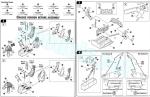
El montaje comienza en las dos carlingas por separado. El despiece es similar, con la diferencia de la base, el panel de instrumentos y el panel trasero. Las bases están moldeadas con las consolas laterales, que tienen los instrumentos muy pequeños, pero bien definidos. Lo mismo ocurre con los paneles de instrumentos. El delantero posee una calca para detallarlo parcialmente, y en ambos los indicadores y botones muestran un gran detalle. Los asientos vienen separados en tres piezas y provistos de cinturones de calca. El detalle también me parece notable. Finalmente, los paneles traseros están detallados con dispositivos y conductos.
Una vez pegados al interior del fuselaje, que no tiene marcas visibles a los lados, y cerrado este, hay que añadir las cubiertas del instrumental de ambos paneles, que están detalladas con pantallas HUD y en pieza separada en el caso del panel delantero.
La cubierta está dividida en dos secciones y puede colocarse abierta. Las piezas son relativamente finas, tampoco mucho, pero están bien detalladas por fuera y poseen un panel transparente entre ambos puestos.
Fuselaje
Las mitades están moldeadas con el plano de cola vertical sin el timón y huecos para detallar las tomas laterales, la salida de la tobera y los pozos del tren de aterrizaje. El detalle externo es realmente bueno y uno no sabe si Italeri se ha dejado algo por el camino. El grabado de los paneles es limpio y bien ejecutado y el remachado de la parte posterior muy convincente para esta escala.
La punta del cono del morro es opcional, con forma un poco más roma en el AMX-T ACOL. La carena del cañón giratorio tipo Gatling está bien perfilada y la salida de los tubos representada en una pieza añadida. La parte inferior y lateral del morro lleva varias pequeñas aletas, sensores y una toma añadidos, entre ellas la antena ECM, cuyo montaje está rectificado en la hoja adjuntada a las instrucciones. También hay varias piezas simulando más dispositivos en la parte superior del fuselaje y en la zona trasera. El carenado de las tomas está detallado con algunos pequeños paneles de fotograbado.
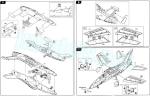
Antes de unir las mitades hay que abrir agujeros en el lado derecho a la altura de la carlinga para incluir posteriormente la sonda de repostaje, así como tener montados los pozos, de los que escribiré más abajo. Igualmente hay que emplazar la salida de la tobera, separada en un cilindro en dos mitades longitudinales y la salida del tubo detallada. Por último, hay que situar en el interior las dos paredes de los conductos de las tomas, unidos en su extremo interior por otra pieza transversal que muestra en relieve el ventilador del motor. Las entradas de las tomas están exentas y divididas en tres piezas, con el borde aparte y bien perfilado.
Alas y cola
Las alas están separadas en mitades que tienen los flaps y alerones moldeados en las piezas superiores. El detalle externo es muy notable y está bien grabado. Las caras superiores muestran líneas grabadas, mientras que las inferiores están sobre todo finamente remachadas. Las superficies de control están bien marcadas, incluidos los deflectores situados sobre las alas.
Los estabilizadores muestran un panelado fino y limpio, con los timones bien definidos. La aleta vertical tiene la punta moldeada completa en el lado derecho y muestra la luz de navegación de cola, el sistema de contramedidas electrónicas y la antena VHF, estos últimos alojados en un carenado. También hay dos aletas simétricas a cada lado para la versión ACOL. El timón vertical viene separado.
Bajo las alas hay cuatro puntos de anclaje que añadir, detallados con sus propias calcas, más dos rieles separados para los misiles Sidewinder de punta de ala. La carga comprende dos depósitos auxiliares, divididos en mitades con aletas aparte, dos misiles Sidewinder y dos bombas guiadas por láser, que por su aspecto y tamaño deben ser GBU-10. El armamento está bien moldeado. Las bombas así como el contenedor de reconocimiento por infrarrojos llevan calcas. Las instrucciones señalan este contenedor en el modelo ACOL, pero es usable en cualquier AMX italiano.
Tren de aterrizaje
Los tres pozos de las ruedas deben ensamblarse y pegarse dentro del fuselaje antes de unir sus mitades. El de la rueda delantera está parcialmente detallado por dentro. La pata, que está bien detallada, es de una pieza con la mitad de la horquilla de la rueda separada. La rueda tiene el neumático liso y un detalle simple en la llanta. Hay dos tapas finas para el pozo. La delantera puede colocarse cerrada, posición habitual si el avión está en tierra.
Los pozos del tren principal tienen un alojamiento común separado por un panel entre ellos. Las caras internas está muy bien detalladas, así como las patas. Estas poseen los brazos de retracción aparte y luces transparentes. Las ruedas muestran un detalle con gran nitidez en las llantas. Las tapas están bien perfiladas con abultamiento hacia afuera y están grabadas con una rejilla de ventilación.
Calcas
La hoja está impresa por Cartograf. Contiene escarapelas italianas, marcas de unidad, cinturones y numerosos estarcidos para el avión y el armamento. Los motivos presentan aspecto fino y brillante, no contienen excesivo soporte y están muy bien impresos, como suele suceder con el fabricante.
Instrucciones
Se presentan en un folleto de tamaño A5 y 16 páginas impreso en color. Contiene una breve historia del avión, un plano de piezas con numeración, una lista de colores con equivalencias en código Federal Standard y pinturas acrílicas de Italeri, 17 capítulos de montaje y 4 páginas de perfiles. Se incluye una hoja aparte que corrige una errata en el montaje. El montaje y las referencias de color son claros.
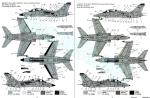
Como de costumbre, Italeri complementa las instrucciones en la cara trasera de la caja, que muestra en color perfiles de las cuatro opciones de acabado y una lista de pinturas.
Los acabados muestran cuatro aparatos italianos pintados casi de idéntica forma y no ofrecen variedad salvo un poco en las calcas, aunque una búsqueda no muy profunda en internet nos ofrece muchos aparatos con libreas conmemorativas realmente atractivas.
Valoración
Afortunadamente Italeri se ha acordado de este avión del que solo teníamos modelos de resina hasta ahora. Además, el molde puede dar más de sí en el futuro si la marca decide sacar también el modelo brasileño, que tiene algunos cambios respecto a este, como dije anteriormente.
En mi opinión lo mejor es el detalle superficial y la carlinga, simple pero bien detallada a este tamaño. Por el contrario, los acabados son bastante anodinos, pero eso no es culpa de Italeri, que bastante tiene con hacer su trabajo.
La maqueta no parece difícil de armar para un modelista iniciado y creo que les gustará a los aficionados a los aviones militares modernos.◊

The kit
Italeri launched the first plastic model of the AMX in 1/72 scale last year. It is strange the company has overlooked this aircraft that has been used by the Italian air forces for a long time, but it has finally arrived. This release complements the first one, dedicated to the single-seat AMX and, like that, only includes Italian versions. In a future we may see a boxing with Brazilian versions, although this variant has some external differences with the Italian AMXs and therefore the model could not be an exact copy of this one.
The box comes with two sprues of parts, a clear sprue, a small photo-etched plate, the decal sheet and the instructions. The appearance of this new tooling is excellent and clean, with great definition in small details both internal and external. Parts have no apparent blemishes or flash, and pin marks are located in non visible spots. On the other hand, there are quite a few parts with ejector pips to clean up.
The various panels, hatches and other details on the wings and fuselage surfaces look very well done. They show a combination of recessed, riveted lines, or both at the same time, which give the kit an outstanding appearance despite the fact that its size does not particularly stand out.
Throughout the build there are a few options for the updated AMX-T ACOL variant. Most of the alternatives are small details, although we also have the possibility of including a reconnaissance pod under the fuselage, which was already used by the former Italian Starfighters and is not really exclusive to the ACOL.
The kit reproduces the two-seat advanced trainer of the Alenia-Aermamacchi-Embraer AMX ground attack aircraft, operated since 1989 by the Italian and Brazilian air forces. The AMX-T variant is fully operational and has similar combat capabilities to those of the AMX. This ground attack aircraft took part in military operations in various conflicts, such as Libya, the Balkans and Afghanistan. Starting in 2005, the AMX and AMX-T of both countries were updated with new GPS systems. The modernization program was named ACOL (Adeguamento delle Capacità Operative e Logistiche). Currently, the AMXs remain operational with the Brazilian Air Force and are being replaced by the F-35 Lightning II in the Aeronautica Militare.
Cockpit
Assembly begins in the two cockpits separately. The breakdown is similar, with the difference in the base, the instrument panel and the rear panel. The bases are molded with the side consoles, which have very small but well-defined instruments. The same goes for the instrument panels. The front has a decal to partially detail it, and the dials and switches show great detail in both parts The seats come separated into three pieces and provided with decal belts. Detail also looks really nice. Finally, the rear panels are detailed with instruments and ducts.
Once the cockpit is attached to the fuselage, which has no visible marks on the sidewalls, and the fuselage is closed, the covers of both instrument panels are added. These are detailed with HUD screens.
The canopy is divided into two sections and can be placed open. The pieces are relatively thin, but they are well detailed on the outside and have a clear panel between both cockpits.
Fuselage
The halves are molded with the vertical tailplane without the rudder and gaps to detail the side intakes, nozzle outlet and landing gear wells. External detail is so good that one doesn’t know whether Italeri has left something out. Recessed panels are clean and sharp and rivet lines look convincing for this scale.
The nose cone tip is optional, a bit blunter in the AMX-T ACOL. The fairing of the Gatling-type cannon is well profiled with the muzzles in a separate part. The lower and side nose surfaces have several small fins, sensors and an additional intake, including the ECM antenna, whose assembly is rectified in the sheet attached to the instructions. There are also several pieces simulating more devices in the upper and rear fuselage. The intake fairings are detailed with some small photo-etched panels.
Before joining the halves, holes are drilled on the right fuselage to glue the refueling probe on a later assembly stage, as well as the wheel wells. Also, the exhaust duct is installed then. It is separated in a cylinder with a detailed muzzle. Finally, the two walls of the intake ducts are attached inside the fuselage. The walls are joined to an interior transverse piece with the engine fan molded on. The side air intakes are divided into three pieces, one of them being a thinly shaped intake surround.
Wings and tail
The wings are separated into halves with the flaps and ailerons molded on the uppers. The uppers show engraved lines, while the lower sides are mostly finely riveted. Control surfaces are nicely engraved, including the wing spoilers.
The stabilizers show thin panels with well-defined rudders. The vertical fin has the tip molded on the right fuselage side and shows the tail navigation light, the ECM system and the VHF antenna, this one inside a fairing. There are also two symmetrical fins on each side for the ACOL version. The vertical rudder comes separately.
Under the wings there are four hardpoints detailed with their own decals, plus two separate rails for the wingtip Sidewinder missiles. The underwing load includes two auxiliary tanks, divided into halves with separate fins, two Sidewinder missiles and two laser-guided bombs, which look like GBU-10s. The weapons are nicely molded. The bombs as well as the infrared reconnaissance pod have decals. Instructions show this pod only for the ACOL, but it is usable in any Italian AMX.
Undercarriage
The three wheel wells are assembled and glued inside the fuselage before joining the halves. The front well is partially detailed inside. The leg, which is well detailed, is one piece with the wheel half fork. The wheel has a smooth tire and a simple detail on the hub. There are two thin covers for the well. The front can be placed closed, which is usual if the aircraft is on the ground.
The main gear wells have a common housing separated by a panel. The internal sides are very well detailed, as well as the legs. These have separate retraction arms and clear lights. The wheels show very sharp detail on the hubs. The covers are well profiled with the outward bulges and the vents are nicely engraved.
Decals
The sheet is printed by Cartograf. It contains Italian cockades, unit markings, seatbelts and plenty of stencils for the aircraft and weapons. The decals have a thin and glossy appearance, do not have excessive support and are very well printed, as usual in the manufacturer.
Instructions
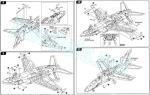
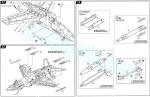
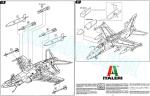
They come in a 16-page, A5-size booklet printed in color. It contains a brief history of the aircraft, a parts diagram, a list of colors with equivalents in the Federal Standard code and Italeri acrylic paints, 17 assembly chapters and 4 pages of profiles. A separate sheet is included correcting a mistake in the assembly. Assembly and color references are clear.
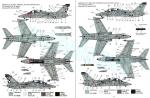
Once more Italeri supplements the instructions on the back of the box, which shows color profiles of the four finishing choices and a list of paints.
The finishes show four Italian machines painted in a dull grey and there is only some variety in the decals, although a not very in-depth search on the Internet offers us many alternatives with really attractive commemorative liveries.
Conclusion
Fortunately Italeri has remembered this aircraft which was only represented in modelling by resin kits until now. The new tool might be more prolific in the future if the brand decides to release Brazilian variants, which have some changes compared to this one, as said above.
In my opinion the assets in this model are surface detail and the cockpit, simple but well detailed considering the small scale. On the contrary, paint finishes are quite dull and lack variety, but that is not Italeri’s fault, which have more than enough doing their job.
The model does not seem difficult to assemble for an average modeler and I think fans of modern military aircraft will like it.◊
Publicado – Published: 5 / 2024
©www.jmodels.net
 jmodels.net
Debe estar conectado para enviar un comentario.