
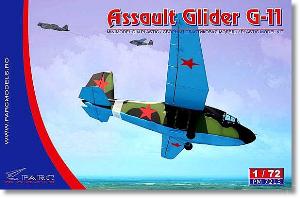
De un vistazo – Quick look
MATERIAL Y PIEZAS
MEDIA & PARTS:
- Plástico inyectado (33 piezas), plástico transparente (5 piezas).
- Injected plastic (33 parts), clear plastic (5 parts).
CALCAS – DECALS:
- Estrellas soviéticas de dos tipos, numerales y algunos estarcidos. Aspecto mate no muy fino. Buena saturación de color y exceso de soporte.
- Two types of Soviet stars, numbers and some stencils. Matte and not very thin appearance. Good color saturation and too much carrier film.
OPCIONES – OPTIONS:
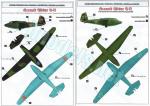
- Gribovsky G-11. Red 3. Red Air Force. 1st School of Glider Pilots. Podmoscovie (Russia), 1943.
- Gribovsky G-11. Red Air Force. Yugoslavia, 1944.
INSTRUCCIONES – INSTRUCTIONS:
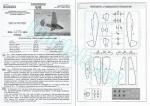
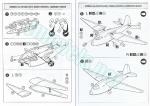
- Folleto de formato A5 de 4 páginas impreso en blanco y negro. Contiene un sumario histórico y técnico sobre el planeador, un plano numerado de piezas y 6 secuencias de montaje. Una hoja separada del mismo tamaño impresa en color muestra perfiles y códigos de pintura genéricos.
- 4-page A5 leaflet printed in black and white. Contains a historical and technical summary about the glider, a numbered parts plan and 6 assembly stages. A separate sheet of the same size printed in color shows profiles and generic paint codes.
LO MEJOR – THE BEST:
- Montaje sencillo.
- Ease of assembly.
LO PEOR – THE WORST:
- Alas y cola gruesas y mal detalladas. Tren de aterrizaje frágil.
- Thick wings and tail planes with lack of surface detail. Brittle undercarriage.
VALORACIÓN – CONCLUSION:
- Con un moldeado grueso, contundente y escaso, sólo es apta para quienes deseen ponerle su trabajo para adecentarla a partir de lo que ofrece la caja.
- With a thick and sparse molding, it is only suitable for scratchbuilders who want to improve it from what the box offers.

La maqueta
El molde de esta maqueta es original de la desconocida marca rusa Politechnika y ha pasado también por AER Moldova y Eastern Express antes de que Parc Models la volviese a poner en circulación con sus instrucciones y calcas.
Dentro de la caja hay tres bastidores de piezas, uno de ellos transparente, la hoja de calcas y las instrucciones. El plástico es rígido y tiene un aspecto contundente y grueso. Hay rebabas en algunas piezas (asiento, pedales, ruedas, huecos del fuselaje) y pocas marcas de eyector en el interior del fuselaje que el modelista precavido limpiará al menos en la parte delantera.
El montaje tiene una apariencia simple por el número de piezas y el escaso detalle interno y externo. De las instrucciones parece entenderse que la única alternativa de montaje es colocar las puertas de acceso a la bodega de carga abiertas. Las opciones de pintura permiten elegir entre un aparato con numeral 3 rojo con camuflaje en la parte superior y otro aparato pintado únicamente de verde por arriba.
Revisión
Los lados internos del fuselaje no tienen ningún detalle. El suelo de la carlinga y de la bodega está moldeado de una pieza. La carlinga dispone de un asiento, la palanca de control y unos pedales bastante malos. El panel de instrumentos es demasiado corto porque sólo muestra tres indicadores en relieve, en lugar de los cinco del panel real. En la bodega hay bancos laterales de distinta capacidad en los traseros y delanteros. Estas piezas tienen los soportes separados y muestran los listones de las bases simulados en relieve.
El parabrisas es grueso y tiene el bastidor de los paneles acristalados en relieve bien definido. Las ventanillas laterales tienen la forma correcta y están bien posicionadas en el fuselaje, pero las piezas son muy gruesas y distorsionadas. Poseen rebajes para encajarlas en los huecos del fuselaje. Las puertas de acceso a la bodega, que eran desmontables en el G-11, vienen separadas y sin detalle alguno. Las piezas son demasiado anchas y el hueco aparece abierto un poco por debajo de donde debería estar. Esto es importante al colocar el suelo interno, porque al ser grueso, su lado es visible si se coloca la puerta abierta.
Las mitades del fuselaje no poseen vástagos para alinearlas. Están moldeadas con las superficies verticales de cola. No hay paneles grabados salvo uno en el morro, pero este sin mucha nitidez ni finura. En la parte superior e inferior faltan los paneles de las salidas de emergencia y en el morro la pértiga de enganche al remolcador.
Las alas, gruesas y rígidas, están divididas en mitades. Carecen del detalle estructural situado en la parte exterior, desde el refuerzo hacia las puntas. Los alerones están grabados sin mucha finura y les faltan los contrapesos. Además, las superficies, que deberían parecer enteladas, son completamente planas. Los refuerzos están moldeados en su sitio, aunque parecen un tanto anchos.
Los estabilizadores carecen de finura y los timones aparecen de nuevo planos y sin los contrapesos. Las piezas van insertadas con lengüetas en el fuselaje. Las superficies verticales, unidas al fuselaje, presentan idénticos defectos.
El tren de aterrizaje tiene un aspecto frágil. Está compuesto por dos soportes de las ruedas y un brazo amortiguador separado. La posición de la pata de cada rueda está marcada de forma endeble en el fuselaje y la del brazo ni siquiera eso. Las ruedas son muy abultadas y puede que demasiado grandes. El neumático no está bien marcado y las llantas son desiguales, con diferente diámetro en cada rueda. El patín de cola es lo único que se parece mucho más a su contraparte real.
La hoja de calcas lleva impresas estrellas soviéticas de dos tipos, un juego de numerales y algunos estarcidos. Las calcas tienen aspecto mate y no muy fino. La saturación de color es buena, pero el soporte excesivo y necesita ser recortado.
El folleto de instrucciones tiene un formato A5 y consta de cuatro páginas impresas en blanco y negro. Contiene un sumario histórico y técnico sobre el planeador, un plano numerado de piezas y seis secuencias de montaje. Una hoja separada del mismo tamaño impresa en color muestra perfiles y códigos de pintura genéricos.
Valoración
La maqueta ofrece un detalle muy básico que sólo puede convenir a quien desee mejorarla a partir de lo que hay. En especial, la ausencia del mínimo relieve estructural en las alas y superficies de control es un defecto de origen que no es fácil de solucionar, a menos que se tengan habilidades poco comunes para el modelado. En lo demás, el modelista con recursos puede lograr que este G-11 sui generis se parezca un tanto más al real.
No parece que este planeador tan desconocido vaya a tener una maqueta de plástico actualizada a medio plazo. Así que mejor consolarse porque la elección está entre esto y nada.◊


The kit
The original tooling was produced by the obscure Russian brand Politechnika and the kit was also reissued by AER Moldova and Eastern Express before Parc Models, which included new instructions and decals in this release.
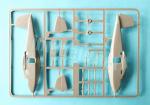
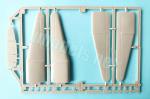
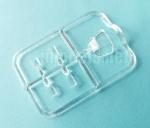
Inside the box are three sprues of parts, one of them containing the clear parts, the decal sheet, and the instructions. Plastic is rigid and has a solid, thick feel. There is flash on some parts (seat, pedals, wheels, fuselage doors and windows) and a few pin marks inside the fuselage, which the cautious modeler will clean, at least on the front.
Assembly appears simple due to the number of parts and the limited internal and external detail. From the instructions, it seems that the only assembly option is to leave the cabin doors open. Paint choices allow you to choose between an aircraft with a red number 3 and camouflage on the upper fuselage, and another one painted green over blue.
Review
The fuselage sidewalls lack any detail. The cockpit and cabin floors are molded as a single piece. The cockpit includes a seat, a control stick, and rather poor pedals. The instrument panel is too short, showing only three raised gauges instead of the five on the actual panel. The cabin has side benches of varying capacities in the front and rear. These parts have separate supports and show raised base slats.
The windshield is thick but has a well-defined raised frame. The side windows are the correct shape and well-positioned on the fuselage, but the parts are very thick and distorted. They have recesses to fit them into the fuselage gaps. The cabin doors, which were removable on the G-11, come separately without any detail. The parts are too wide, and the fuselage opening looks slightly lower than it should be. This is important when installing the interior floor, because the floor sides are visible when the doors are open.
The fuselage halves lack alignment pins and are molded with the vertical tailplanes. There are no engraved panels except for one on the nose, but this is not very sharp. The emergency exit panels are missing from the top and bottom, and the towbar from the nose.
The thick, rigid wings are divided into halves. They lack the structural detail on the outer surface, from the joint strips to the tips. The ailerons are roughly engraved and lack the mass balances. The surfaces, which should appear fabric-covered, are completely flat. The wing joint strips are molded in place, although they seem a bit wide.
The stabilizers lack refinement, and the rudders appear flat again, without the mass balances. The parts are inserted into the fuselage using tabs. The vertical surfaces, molded with the fuselage, have the same flaws.
The landing gear looks fragile. It consists of a wheel strut and a separate arm. The position of each wheel leg is poorly marked on the fuselage, and the arm’s is even less so. The wheels are very bulky and perhaps too large. The tire has no detail and the rims are uneven, with different diameter on each wheel. The tail skid is the only part that closely resembles its real counterpart.
The decal sheet includes two types of Soviet stars, two numbers, and some stencils. The decals have a matte finish and are not very thin. Color saturation seems good, but the carrier film is excessive and needs trimming.
The A5 instruction leaflet consists of four pages printed in black and white containing a historical and technical summary of the glider, a numbered parts diagram, and six assembly sequences. A separate sheet of the same size printed in color shows profiles and generic paint codes.
Conclusion
The kit offers very basic detail, which will only benefit those who wish to improve what’s already there. In particular, the lack of even minimal structural detail on the wings and control surfaces is a fundamental flaw that isn’t easy to remedy unless one enjoys exceptional modeling skills. Otherwise, a modeler with resources can make this unique G-11 look somewhat more like the real thing.
It doesn’t seem likely that this obscure glider will receive an updated plastic kit anytime soon. So, it’s best to take comfort in the fact that the choice is between this or nothing.◊
Publicado – Published: 12 / 2025
©www.jmodels.net
 jmodels.net
Debe estar conectado para enviar un comentario.