
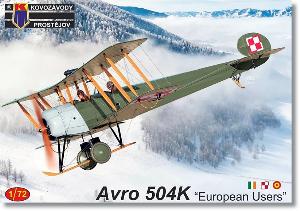
De un vistazo – Quick look
MATERIAL Y PIEZAS
MEDIA & PARTS:
- Plástico inyectado (75 piezas), acetato (2 piezas).
- Injected plastic (75 parts), acetate (2 parts).
CALCAS – DECALS:
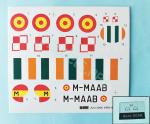
- Escarapelas españolas, polacas e irlandesas, marcas de cola y matrículas. Apariencia brillante y fina, bien saturadas de color y con ligero exceso de soporte.
- Spanish, Polish and Irish markings, tail markings and codes. This and glossy appearance, color-saturated, a bit of carrier film around most of them.
OPCIONES – OPTIONS:
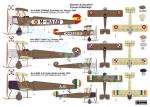
- Avro 504K. M-MAAB. Aeronáutica Española. 1920.
- Avro 504K. Polish Air Force. 1923.
- Avro 504K.A.III. Irish National Army. 1922.
INSTRUCCIONES – INSTRUCTIONS:
- Hoja A4 doblada formando 4 páginas impresas en blanco y negro. Contiene un sumario histórico sobre el avión, una tabla de colores con equivalencias de esmaltes de Humbrol, 12 capítulos de montaje y perfiles para arriostrar el modelo. La cara posterior de la caja muestra perfiles en color con las terminaciones de pintura más una lista breve de colores.
- 4-page folded A4 sheet printed in black and white. It shows a historical summary about the aircraft, a color chart with Humbrol enamels matches, 12 assembly chapters and profiles to rig the model. The back side of the box shows profiles in color with the painting choices and a short list of colors to paint.
LO MEJOR – THE BEST:
- Buen detalle general. Carlinga.
- Nice overall detail. Cockpit.
LO PEOR – THE WORST:
- Nula variedad en las terminaciones de pintura.
- Lack of variety in paint finishes.
VALORACIÓN – CONCLUSION:
- Oportuna reaparición de un avión ausente del mercado muchos años y con grandes posibilidades para terminarlo en múltiples libreas. Aunque se trata de una edición limitada con montaje no apto para noveles, el detalle es bueno en general, en especial en la carlinga.
- Timely reappearance of this aircraft, missing in the 1/72 scale for many years and with possibilities to finish it in multiple liveries. Though a short-run kit not suitable for beginners, detail is quite good, especially in the cockpit.

La maqueta
El patio modelístico que sigue los aviones en las escalas pequeñas se vió un tanto alterado el año pasado por la aparición de este Avro 504K de Kovozávody Prostějov (KP en adelante), ya que en la escala 1/72 la única maqueta de plástico sencilla de encontrar y no tanto de hacer (bien) era la de Airfix, un molde de la década de los 60 y que la marca británica lleva ya 20 años sin reeditar. También Amodel tiene varias maquetas desde hace muchos años, algunas de la versión rusa U-1. Dice la web de Scalemates que la maqueta de KP es un molde de AZ Model que este sello no ha llegado a lanzar. Con tantos fabricantes asociados en el conglomerado checo del plástico, vaya usted a saber.
La maqueta es otra edición limitada, apta para modelistas expertos, del mismo estilo que las que KP viene creando en los últimos años. Este molde lleva ya seis ediciones diferentes, la última con versiones propiamente británicas y otra de ellas con flotadores. Los bastidores y las instrucciones son idénticos en estas cajas y todo indica que la única diferencia está en las calcas. La caja contiene dos bastidores de piezas, una lámina de acetato, la hoja de calcas y las instrucciones.
Las piezas tienen un buen modelado para este tipo de maqueta. Se aprecian muy escasas rebabas en ellas y solamente hay dos marcas de eyector en el interior de la carlinga que afectan marginalmente al detalle.
En general las hechuras son bastante buenas y mejor acabadas que en otras ocasiones, aunque el montaje no aparenta tanta bondad por el tipo de maqueta, el hecho de tratarse de un biplano y, sobre todo, por la profusión de cables entre los planos de las alas y el tren de aterrizaje si se quiere arriostrar el modelo.
Esta edición no tiene ninguna variedad en los acabados de pintura porque los tres aviones muestran colores idénticos. Sin embargo, tal vez gracias a la sempiterna maqueta de Airfix, hay un buen número de calcas en el mercado para hacer versiones de algunos de las decenas de operadores de este avión. Concretamente de América Central y del Sur se pueden encontrar calcas de Guatemala, Perú, Brasil y Chile.
Revisión
La carlinga tiene un aspecto bastante realista. El único inconveniente es eliminar dos gruesas marcas de eyector positivas a los lados del fuselaje situadas sobre la estructura interna, a la que sólo afectan parcialmente, pero hay que limpiarlas para poder instalar el panel de instrumentos delantero.
El montaje se inicia por el bastidor del suelo, detallado con dos buenos asientos, las palancas y los pedales. Los paneles de instrumentos tienen los indicadores marcados con limpieza. Por delante de la carlinga hay que colocar el depósito de combustible, provisto de pequeños vástagos para pegarlo a las mitades del fuselaje y un panel sobre el que se sitúa el motor posteriormente. Los parabrisas son dos piezas de acetato, que parecen demasiado grandes a simple vista.
El fuselaje tiene un detalle sencillo pero reproducido con nitidez. Las superficies externas poseen líneas en relieve reproduciendo la estructura interna desde la parte posterior de la carlinga hacia el puro de cola, mientras que la parte delantera lleva dos paneles de acceso al motor con las tomas de aire del carburador grabadas. A los lados se nota una precisa representación de las costuras del entelado, los estribos de acceso a la carlinga y los puntos donde se deben situar los cables de los timones.
El motor tiene un aspecto bastante decente con escasos restos de rebabas que limpiar. La hélice también tiene algunas rebabas en las palas, que son finas y parecen tener la torsión correcta. La pieza carece de eje. El capó del motor viene en una sola pieza fina que muy probablemente no hará falta modificar para ajustarla sobre el motor.
Las alas vienen en dos piezas. El plano inferior va encajado en la zona ventral del fuselaje. La representación del entelado y la estructura interna es bastante aseada y se aprecian finísimas líneas de costura sobre el costillaje. Los alerones están marcados con limpieza aunque las bisagras son gruesas y abultadas. A diferencia de otras maquetas, esta vez KP se ha esmerado con las marcas donde situar los soportes de las alas, que son finos. En cambio, falta el tubo pitot.
Sobre el plano superior tenemos la opción de situar una ametralladora de aspecto pasable en su afuste o bien un depósito auxiliar. Los perfiles del lado posterior de la caja no los muestran, pero el depósito se puede apreciar en la ilustración frontal. El plano inferior lleva dos patines delgados en forma de arco en los extremos.
Las superficies de cola están simplemente separadas en dos piezas. La recreación de la estructura interna en ambas tiene escaso relieve, menor aún en el plano vertical. Los timones de profundidad están marcados con menor nitidez que en las alas y las bisagras tienen idéntica poca definición.
El tren de aterrizaje principal está compuesto de dos soportes con los amortiguadores, el eje y las ruedas. Estas piezas tienen buena factura, pero las llantas podían estar mejor grabadas, especialmente por fuera. Con todo, las formas son correctas y llevan también la válvula de llenado de los neumáticos. Para añadir el patín central hay dos soportes de diferente longitud por delante y detrás de las ruedas. El tren posterior es un patín de tres piezas.
Al tratarse de un molde polivalente, los bastidores contienen esquíes y flotadores. Para las versiones que emplean los flotadores hay una aleta de compensación por delante del timón vertical y una pieza que reemplaza al patín de cola.
La hoja de calcas lleva impresas escarapelas españolas, polacas e irlandesas, marcas de cola y matrículas. Los motivos presentan apariencia brillante y fina, están bien saturados de color y muestran un ligero exceso de soporte a su alrededor.
El folleto de instrucciones consiste en una hoja de formato A4 doblada con cuatro páginas impresas en blanco y negro. Contiene un sumario histórico sobre el avión, una tabla de colores con equivalencias de pinturas esmalte de Humbrol, doce capítulos de montaje y perfiles para arriostrar el modelo. La cara posterior de la caja muestra perfiles en color con las terminaciones de pintura más una lista breve de colores.
Las alternativas de montaje están bien diferenciadas para las versiones con esquíes, flotadores o ruedas. Desgraciadamente, las vistas explosionadas son demasiado pequeñas y profusas, lo que hace el montaje, especialmente de la carlinga, un tanto fastidioso de seguir. Tampoco es sencillo colocar los tensores, aunque los perfiles que sirven de guía poseen más tamaño y claridad.
Las tres alternativas de pintura representadas en la caja lucen idénticos colores que consisten en verde oscuro para las superficies superiores y color de lienzo sin pintar en las inferiores.
Valoración
Hacía mucho tiempo que los modelistas de esta escala no contaban con un Avro 504 desde que Airfix dejó de reeditar su viejísima maqueta. El nuevo molde de KP tiene bastante mejor aspecto de lo usual en la marca y luce un detalle convincente tanto en la carlinga como en las superficies de las alas y el fuselaje. También es otro aliciente el hecho de que la maqueta incluya esquíes y flotadores, para los que deseen hacer versiones distintas con calcas apropiadas. Con tantos países que emplearon este avión, no será difícil encontrar algo distinto a lo que propone KP en esta edición.
Naturalmente, el montaje necesita cierta experiencia y bastante tiento con las riostras, por cual no debe ser un buen primer plato para los recién llegados a los biplanos.
Por otra parte, se echa de menos diversidad en los acabados porque al modelista no le queda otra en esta caja que escoger a partir de las calcas. Por otra parte, se echa de menos diversidad en los acabados porque al modelista no le queda otra en esta caja que escoger a partir de las calcas. Además de esto, creo que la marca podría imprimir unas instrucciones bastante mejores, con pasos de montaje más grandes y claros.◊

The kit
Followers of the 1/72 scale aircraft kits were somewhat shaken up last year by the release of a new tool Avro 504K from Kovozávody Prostějov (KP hereafter). In this scale the only plastic kit easily available, but no so easy to build (well), was the aging Airfix offer, which the brand hasn’t reissued in the last 20 years or so. Amodel also released several kits a while back, some of them of the Russian U-1 variant. The Scalemates website says that the tool is in fact an AZ Model project never released by the company. With so many associated manufacturers in the Czech plastic conglomerate, one never knows for sure under which brand the next kit will be released and reboxed.
This is another short run, and so aimed at expert modelers, in the same style as those KP have been releasing in past years. So far we have six different boxings, the latest with WWI British aircraft and there is another one including floatplane variants. The sprues and instructions are identical in these boxes with the only difference being in the decals.
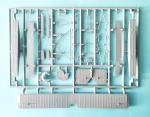
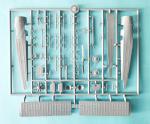
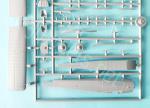
The box contains two sprues of parts, an acetate sheet, the decal sheet, and the instructions. Parts are well moulded for the type of kit. Little flash is visible, and there are only two ejector marks inside the cockpit marginally affecting detail.
Overall, detail is quite good and better rounded off than on other occasions, although assembly will not be that easy due to the type of kit, the fact that it is a biplane, and, above all, the profusion of wires between the wing planes and the landing gear if rigging is going to be reproduced.
This box has no variety in the paint finishes as the three optional aircraft display identical liveries. However, most probably thanks to the old Airfix kit, there are a number of decals on the market for the dozens of operators of this aircraft. Specifically from Central and South America, decals from Guatemala, Peru, Brazil and Chile can be found.
Review
The cockpit has a fairly realistic appearance. The only drawback is removing two thick positive ejector marks on the fuselage sides just in front of the raised structural detail. They only partially affect it, but anyway they should be cleaned to install the forward instrument panel.
Assembly begins with the floor frame, detailed with two good seats, the levers, and the pedals. The instrument panels have cleanly engraved gauges. Forward of the cockpit is the fuel tank, fitted with tiny pins to attach it to the fuselage halves, and a panel to attach the engine. The windscreens are two acetate pieces that look too large at first glance.
The fuselage has simple but clean surface detail. There are raised lines reproducing the internal structure from the rear of the cockpit to the tail cone, while the forward section has two engine access panels with engraved carburetor air intakes. On the sides, there is a sharp representation of the fabric seams, the footholds and the attaching points of the rudder wires.
The engine looks quite decent, with minimal flash to clean. The propeller also has some flash on the blades, but these are thin and seem to have the correct twist. The shaft is missing. The engine cowling comes in a single, thin piece that most likely won’t need to be modified to fit over the engine.
The wings come in two pieces. The lower plane is fitted into the fuselage belly. The fabric and internal structure are fairly neat, and very thin stitching lines can be seen on the ribbing. The ailerons are neatly engraved, although the hinges are chunky. Unlike other kits, KP has taken great care to drill the holes to install the wing supports. These are thin but the pitot tube is missing.
On the upper plane, we have the option of attaching a machine gun in its mount or an auxiliary tank. The profiles printed on the back side of the box don’t show any of them, but the tank can be seen in the boxart illustration. The lower plane is provided with two thin, arc-shaped skids.
The tail surfaces are simply separated into two pieces. The reproduction of the internal structure in both is a bit shallow, even less so on the vertical rudder. The elevators are less clearly marked than on the wings, and the hinges are equally poor.
The main landing gear consists of two struts including the shock absorbers, an axle, and the wheels. These are well moulded, but the rims could have been better engraved, especially on the outside. However, the shapes are correct and the tire filler valve is reproduced. To add the center skid, there are two struts of different lengths in front of and behind the wheels. The rear gear is a three-piece skid.
Being a versatile tool, the sprues also contain skis and floats. For the versions that use floats, there is a fillet in front of the vertical rudder and a fairing instead of the tail skid.
The decal sheet features Spanish, Polish, and Irish cockades, tail markings, and registers. They have a glossy, thin appearance, are color-saturated and show slight surplus carrier film around them.
The instruction leaflet consists of a folded A4 sheet with four pages printed in black and white. It contains a historical summary of the aircraft, a color chart with Humbrol enamel paint matches, twelve assembly chapters, and profiles for bracing the model. The back of the box shows the paint finishes in color profiles plus a basic color list.
Assembly alternatives are clearly differentiated for versions with skis, floats, or wheels. Unfortunately, the exploded views are too small and busy, making assembly a bit annoying to follow, mostly in the cockpit. Rigging doesn’t look easy either but the profiles provided as a guide are larger and clearer.
The three paint alternatives represented on the box feature identical colors, consisting of dark green for the upper surfaces and unpainted linen for the lower surfaces.
Conclusion
It’s been a long time since 1/72 modelers had an Avro 504, especially since Airfix stopped reboxing its age-old kit. This new-tool KP kit fills this gap and has nice detail both inside the cockpit and on the wings and fuselage. Another incentive is the fact that the kit includes skis and floats for those who want to build different variants with appropriate decals. With so many countries using this aircraft, it won’t be difficult to find something different from what KP offers in this release.
This said, assembly needs some experience and a fair amount of skill with the wire rigging, so it shouldn’t be a good first course for biplane newcomers.
One misses more diversity in the paint finishes as the modeler has no alternative in this kit but to choose from the decals. Added to this, I think KP could print better instructions with larger and clearer assembly steps.◊
Publicado – Published: 7 / 2025
©www.jmodels.net
 jmodels.net
Debe estar conectado para enviar un comentario.