
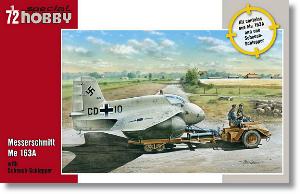
De un vistazo – Quick look
MATERIAL Y PIEZAS
MEDIA & PARTS:
- Me 163A: Plástico inyectado (42 piezas), plástico transparente (1 pieza), resina (5 piezas), fotograbado (29 piezas), acetato (1 pieza).
- Scheuch-Schlepper & remolque: Plástico inyectado (28 piezas), resina (7 piezas), fotograbado (7 piezas).
- Me 163A: Injected plastic (42 parts), clear plastic (1 part), resin (5 parts), photo-etched (29 parts), acetate (1 part).
- Scheuch-Schlepper & trailer: Injected plastic (28 parts), resin (7 parts), photo-etched (7 parts).
CALCAS – DECALS:
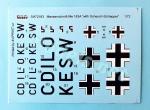
- Impresas por Aviprint. Cruces alemanas de dos tipos, esvásticas y matrículas de dos tamaños. Apariencia fina y brillante. Sin exceso de soporte.
- Printed by Aviprint. Two types of German crosses, svastikas and registers in two sizes. Thin and glossy appearance. No excess of carrier.
OPCIONES – OPTIONS:
- Messerschmitt Me 163A V-10. W. Nr. 163 0000008/CD+IO. Lufwaffe 13/JG400. Udetfeld (Polonia). Aparato pilotado por el Tte. A. Niemeyer.
- Messerschmitt Me 163A V-7. W. Nr. 163 0000004/CD+IL. Peenemünde (Alemania).
- Messerschmitt Me 163A V-4. W. Nr. 163 0000001/KE+SW. Peenemünde (Alemania).
- Messerschmitt Me 163A V-10. W. Nr. 163 0000008/CD+IO. Lufwaffe 13/JG400. Udetfeld (Poland). Aircraft flown by Lt. A. Niemeyer.
- Messerschmitt Me 163A V-7. W. Nr. 163 0000004/CD+IL. Peenemünde (Germany).
- Messerschmitt Me 163A V-4. W. Nr. 163 0000001/KE+SW. Peenemünde (Germany).
INSTRUCCIONES – INSTRUCTIONS:
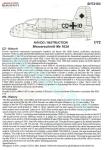
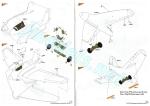
- Folleto A5 de 12 páginas impresas en color. Contiene dos sumarios históricos, dos planos numerados de piezas, 8 secuencias de montaje para el avión y 10 para el tractor más tres páginas de perfiles. Claras y bien impresas.
- 12-page A5 booklet printed in color containing two historical summaries, two parts plans, 8 assembly chapters for the aircraft and 10 for the tractor plus three pages of profiles. Clear and well printed.
LO MEJOR – THE BEST:
- Buen detalle general, especialmente en la carlinga y tractor. Calcas.
- Nice overall detail, especially inside the cockpit and on the tractor. Decals.
LO PEOR – THE WORST:
- No muy apta para el modelista sin mucha experiencia y habilidades.
- Not very suitable for the modeller without much experience and skills.
VALORACIÓN – CONCLUSION:
- Edición mejorada sobre la original con nuevas piezas y la inclusión del vehículo que le da más aliciente. Montaje asequible en general, salvo el tractor y la carlinga, pero no la hace recomendable a modelistas poco experimentados.
- Improved release with new parts and the tractor, which is a nice bonus. Suitable build except for the cockpit and vehicle, but not recommendable to unexperienced modellers.

La maqueta
Procede de un molde original de los años 90 de la casa filial Cóndor/MPM, a la que Special Hobby ha complementado con algunas piezas de resina de cosecha propia. Para darle más realce tanto a la maqueta como a la propia edición, la caja trae en esta ocasión (no así en una reedición posterior, SH72334) el pequeño tractor Scheuch con el remolque de transporte y dos colchones de aire como amortiguadores sobre los que colocar el aparato.
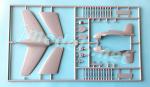
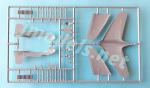
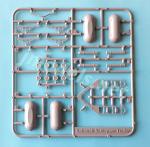
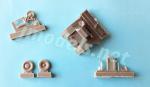
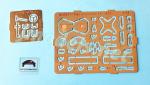
La maqueta completa contiene dos bastidores de plástico (uno para el avión y otro para el remolque), una pieza transparente suelta, dos planchas de fotograbado, varios bebederos de resina, la mayor parte de ellos destinados al tractor, una pequeña lámina de acetato, la hoja de calcas y las instrucciones.
Las piezas de plástico están moldeadas sin imperfecciones y limpias, salvo por algunos cilindros del expulsor. Las líneas de paneles aparecen grabados con precisión y limpieza. Las piezas de resina también muestran gran nitidez, salvo en el chasis del tractor, donde se aprecian algunas rebabas que no presentarán mayor inconveniente si se limpian con cuidado.
Las alternativas de montaje consisten en montar o no el tren de despegue, según simulemos el avión en tierra o sobre el remolque, y la presencia bajo cada ala de dos planchas de soporte para los cohetes R4M en el V-7 y V-10 que no se emplean en esta maqueta, a diferencia de la edición de Cóndor/MPM. También podemos optar por poner la cubierta de la carlinga abierta (lo correcto es hacia detrás), aunque las instrucciones no lo proponen.
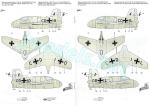
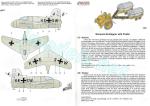
Las terminaciones incluyen tres de los diez Me 163A fabricados (V-4, V-7 y V-10) y empleados como aviones de prueba y entrenamiento del Me 163B. El V-4 fue el avión que realizó los primeros vuelos de pruebas con motor y en el que Heini Dittmar consiguió en 1941 una marca mundial de velocidad no oficial de 1.004 km/h, no superada en pruebas oficiales hasta 1947.
Carlinga
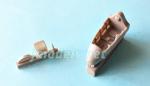
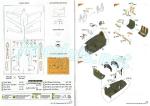
La carlinga y el interior del morro de la maqueta están reproducidos en una sola pieza de resina. Los lados de la carlinga muestran buen detalle estructural así como el panel blindado tras el asiento. El panel de instrumentos lo forman un soporte de resina, los instrumentos de acetato y el frontal de fotograbado. El detalle interno incluye algunos pequeños instrumentos laterales, los pedales, el asiento con arneses de fotograbado y la palanca, todos ellos de resina y fotograbado.
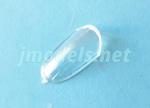
La cubierta transparente es de una pieza y muestra un fino grabado en los montantes de la estructura. La pieza viene suelta y es delgada, por ello podemos pegarla abierta para mostrar el interior, como he dicho antes.
Fuselaje y alas
El fuselaje está separado en mitades moldeadas con la aleta y el timón vertical de cola, además de las raíces alares. La zona ventral de carlinga a cola está unida a las mitades inferiores de las alas, mientras las superiores vienen aparte.
Las alas están detalladas con bisagras de fotograbado en los elevones, el tubo Pitot y paragolpes cerca de las puntas. El timón de cola también tiene bisagras y el actuador representados en fotograbados. La salida del cohete propulsor está correctamente carenada y hueca en su extremo.
El tren de despegue se compone de cinco piezas más las ruedas de plástico, que poseen un detalle bueno en las llantas y las bandas de rodadura lisas. El patín de cola es una pieza de plástico separada y un poco gruesa.
La maqueta incluye 24 cohetes subalares R4M y sus soportes de lanzamiento en piezas de plástico. Estas armas fueron probadas en un único Me 163A, precisamente el V-10 de esta edición, según las instrucciones. En su lugar las caras inferiores de las alas incluyen dos placas de fotograbado lisas y aplicables tan solo al V-7 y V-10.
Tractor y remolque
El chasis, el morro y los guardabarros del tractor están reproducidos juntos en una pieza de resina, que incluye también los faros y una rejilla frontal nítidamente reproducida. Las demás piezas (palancas, asiento, columna de dirección) son del mismo material, excepto el volante y los asideros laterales de fotograbado. Las ruedas tienen un detalle excelente tanto en las llantas como en la banda de rodadura. La maqueta incluye también la rueda posterior de apoyo con el soporte, pero en su lugar emplearemos un enganche para el remolque.
La plataforma de transporte es toda de plástico. Comprende un bastidor completo, soportes separados con ocho ruedas por lado, dos cilindros de aire comprimido en mitades y dos flotadores dispuestos de idéntica forma, con la superficie superior aplanada para colocar el avión. La separación de los cilindros deja un poco que desear, pero en conjunto el remolque es bastante bueno.
Calcas
La hoja está impresa por Aviprint y ofrece cruces alemanas de dos tipos, esvásticas separadas en mitades y matrículas de dos tamaños (fuselaje y alas). Los motivos tienen apariencia fina y brillante sin exceso de soporte.
Instrucciones
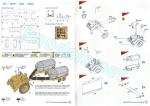
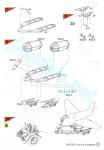
Un folleto con formato A5 de 12 páginas impresas en color contiene dos sumarios históricos (avión y tractor), dos planos numerados de piezas, ocho secuencias de montaje para el avión y diez para el tractor más tres páginas de perfiles. Las secuencias de construcción son claras, aunque no muestran las posibilidades de montaje que la maqueta puede ofrecer salvo en un caso.
Los acabados muestran tres prototipos (V-4, V-7 y V-10) pintados en RLM02 con la única diferencia en el V-10, que tiene el morro y parte de los bordes de ataque moteados en RLM74.
Valoración
Como suele suceder, Special Hobby ha mejorado la maqueta original con nuevas piezas y el añadido del Scheuch-Schlepper, que le da mayor aliciente. El montaje es más delicado en la carlinga del avión por el tamaño y en el tractor por las resinas, pero no debería hacerse muy cuesta arriba para el modelista con experiencia en el uso de distintos materiales.
Una hoja de calcas bien impresa y unas instrucciones claras y correctamente editadas, al uso del fabricante, avalan una edición recomendable al modelista ya probado en maquetas de serie limitada.◊

The kit
This is a rebox of a previous Condor/MPM release from the 1990s that Special Hobby have renewed with some resin parts of their own. As a bonus to round off both the kit and the edition itself the box includes the small Scheuch tractor with a transport trailer carrying two air cushions to place the aircraft. The tractor is not present in the following rebox of Special Hobby Me 163A kit (SH72334).
The box contains two plastic sprues (one for the aircraft and another for the trailer), a loose clear canopy, two photo-etched frets, several resin parts, most of them intended for the tractor, a small acetate sheet, the decals and the instructions.
Plastic parts are moulded without blemishes and come clean, except for some ejector nodules. Panel lines are cleanly engraved. Resin parts are also very sharp, except on the tractor chassis, where there is some flash that will not be difficult to clean up if done carefully.
Assembly alternatives include adding or not the take-off trolley, depending on whether we wish to show the aircraft on the ground or the trailer, and the addition of two underwing racks for the R4M rockets in the V-7 and V-10 that are not used here, unlike the Condor/MPM kit. We can also choose to show the canopy open (towards the rear is the correct way) though the instructions do not show this.
Paint finishes include three out of the ten Me 163As built (V-4, V-7 and V-10) and used as test and training aircraft for the Me 163B. The V-4 was the first engined aircraft tested and the one to achieve an unofficial world speed record of 623 mph in 1941 with Heini Dittmar at the controls. The record was not beaten in official tests until 1947.
Cockpit
The cockpit and the nose interior are moulded in a single resin piece. The cockpit sides show nice structural detail as well as the armoured panel behind the seat. The instrument panel is made up of a resin base, acetate instruments and a photo-etched front. Internal detail includes some small side instruments, the pedals, the seat with photo-etched harnesses and the control stick, all of which are resin and photo-etched.
The canopy is one thin piece showing a finely engraved frame with the choice to pose it open, as said above.
Fuselage and Wings
The fuselage is separated in halves moulded with the tailfin, vertical rudder and the wing roots. The belly from below the cockpit to the tail cone comes attached to the lower wing halves with the upper sides of wings apart.
The wings are detailed with photo-etched hinges on the elevons, a pitot tube and bumpers near the wing tips. The tail rudder also has hinges and a linkage in photo-etched parts. The rocket outlet is faired and hollowed.
The landing gear is made up of five pieces plus the plastic wheels, which have good detail on the hubs and smooth treads. The tail skid is separate and looks a bit thick.
The kit includes 24 R4M underwing rockets and their rails in plastic parts. These weapons were tested on a single Me 163A, precisely the V-10 included in this release according to the instructions. Instead, the lower wing surfaces are detailed with two flat photo-etched plates only applicable to the V-7 and V-10.
Tractor and trailer
The tractor’s chassis, nose and fenders are moulded in a resin piece which also includes the headlights and a sharp front grille. The other parts (levers, seat, steering column) are of the same material, except for the steering wheel and the photo-etched side handles. The wheels have excellent detail both on the hubs and the tread. The kit also includes the rear wheel with the support, but we will use a hitch for the trailer instead.
The trailer is all plastic. It comprises a flatbed, separate supports with eight wheels per side, two compressed air cylinders in halves and two inflatable air cushions provided in the same way, with the upper surface flattened to set the aircraft. The breakup in the air bottles leaves a little to be desired, but overall the trailer looks fine.
Decals
The sheet is printed by Aviprint and shows German crosses of two types, swastikas separated into halves and registrations in two sizes for the fuselage and wings. Decals have a thin and glossy appearance without excessive carrier.
Instructions
A 12-page A5 booklet printed in colour contains two historical summaries (jet and tractor), two numbered parts plans, eight assembly sequences for the aircraft and ten for the tractor plus three pages of profiles. Construction sequences are clear, although they do not show the construction alternatives the kit can offer except in one case.
Paint finishes include three aircraft (V-4, V-7 and V-10) painted in overall RLM02 with the only difference being the V-10, which has the nose and part of the leading edges mottled in RLM74.
Conclusion
As usual, Special Hobby have improved the original kit with new parts and the addition of the Scheuch-Schlepper which gives greater appeal to the release. Assembly is more delicate inside the cockpit due to its size and in the tractor due to the resin pieces, but it should not be difficult for the modeller with experience in the use of different media.
A well-printed decal sheet added to the clear and correctly edited instructions, as is usual in the manufacturer, guarantee a recommendable kit to the modeller seasoned in short runs.◊
Publicado – Published: 9 / 2024
©www.jmodels.net
 jmodels.net
Debe estar conectado para enviar un comentario.