
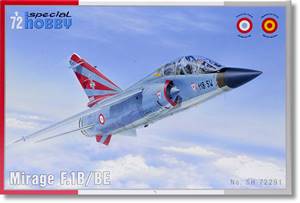
De un vistazo – Quick look
MATERIAL Y PIEZAS
MEDIA & PARTS:
- Plástico inyectado (142 piezas), plástico transparente (23 piezas), resina (4 piezas).
- Injected plastic (42 parts), clear plastic (23 parts), resin (4 parts).
CALCAS – DECALS:
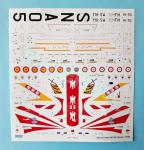
- Impresas por Cartograf. Escarapelas francesas y españolas, marcas conmemorativas, matrículas, paneles de instrumentos y numerosos estarcidos. Aspecto fino y brillante, con buen registro y colores saturados. Sin soporte excedente.
• Printed by Cartograf. French and Spanish roundels, special markings, registers, instrument panels and plenty of stencils. Thin and glossy appearance, in register and colour-saturated. No excess of carrier.
OPCIONES – OPTIONS:
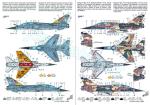
- Mirage F.1B. 118-SW. Nº 502 Escadron de Reconnaissance 2/33 “Savoie”. BA 118 Mont de Marsan. Junio de 2014.
- Mirage F.1B. 30-FH. Nº 515 Escadron de Chasse 3/30 “Lorraine”. BA-112. Reims. Septiembre de 1991.
- Mirage F.1BE. 14-70. Matrícula Militar C.14-27. Ejército del Aire. Ala de Caza Nº 14. Escuadrón 142. Base Los Llanos. 1988.
INSTRUCCIONES – INSTRUCTIONS:
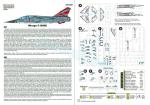
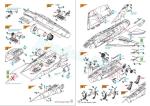
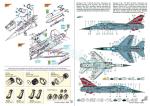
- Folleto de tamaño A5 de 8 páginas impreso en color en papel satinado. Contiene un resumen histórico sobre el avión, un plano numerado de piezas, una lista de colores con pinturas equivalentes de Gunze Sangyo, 12 pasos de montaje y tres páginas de perfiles. Claras.
- 8-page A5 booklet printed in color on glossy paper. It contains a historical summary about the aircraft, a list of colours with matches in Gunze Sangyo paints, 12 assembly steps and three pages of profiles. Clear.
LO MEJOR – THE BEST:
- Buen detalle general. Montaje aparentemente sencillo. Calcas.
- Nice overall detail. Apparently easy to build. Decals.
LO PEOR – THE WORST:
- Unos arneses hubiesen redondeado el interior.
- The missing seat belts would have rounded off the cockpits.
VALORACIÓN – CONCLUSION:
- La maqueta más actual de este caza, con versiones conmemorativas. La escasez de mejoras no impiden su buen detalle y facilitan el montaje a los menos diestros.
- The most updated kit of this fighter so far. The lack of aftermarkets do not hinder its good detail and make assembly easier for the less skilled.

La maqueta
Desde hace muchos años casi ninguna gran marca ha pasado por alto el Mirage F1 en la escala 1/72. Airfix, Heller, ESCI y Hasegawa sacaron hace mucho tiempo sus propios moldes, mientras que Revell sólo ha hecho reediciones de otros fabricantes. Curiosamente, Italeri prefirió el Mirage 2000 y dejó a un lado el molde de ESCI. La última en llegar en 2016 con otro molde diferente fue Special Hobby, cuyas caja son las que tienen más variedad de variantes y nacionalidades para este avión.
En esta ocasión la marca le dedicó la edición al modelo biplaza de entrenamiento F1B con calcas específicas conmemorativas para dos F1B del Armée de l’Air y un F1BE del Ejército del Aire español cuya caja contiene seis bastidores de plástico gris, un bastidor transparente, cuatro piezas de resina, una extensa hoja de calcas y las instrucciones.
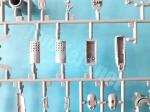
A primera vista, el molde muestra gran limpieza y las piezas muy buen moldeado. Una inspección más cuidadosa encuentra las usuales líneas de molde en pocas piezas, un par de marcas de eyector leves a cada lado de la carlinga trasera, que pueden no ser muy visibles por la posición del suelo y el panel trasero, y nódulos de eyector en la tobera interna y las tomas de aire que resultan extrañamente grandes y con seguridad no tan sencillas de eliminar como de costumbre.
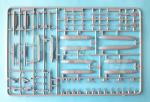
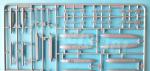
Como el molde es compartido por otros modelos del F1 y en esta caja se reproducen aparatos no preparados para el combate, nos va a sobrar casi un bastidor entero compuesto por depósitos auxiliares de combustible, misiles R.550 Magic, Matra Super 530 y lo que parecen bombas guiadas por láser GBU-12 Paveway II.
Carlinga
Se compone de dos bases en forma de bañera, con los pedales y los instrumentos representados en las piezas. Los paneles de instrumentos muestran detalle tanto grabado como en relieve y están complementados con calcas. El panel delantero tiene además un visualizador superior separado. Las palancas son idénticas, pero no así los mamparos traseros que van pegados por detrás de las bases. Los asientos estás despiezados longitudinalmente en tres secciones y están bien representados. Según las instrucciones, hay que añadirlos al final del montaje.
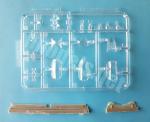
Las dos cubiertas de las carlingas se distribuyen en cinco piezas más un brazo de apertura aparte en la delantera. Aunque las piezas no son demasiado finas, me parecen aceptables por su transparencia y el detalle grabado en ellas.
En general, el interior muestra un detalle notable, a falta de unos arneses para completarlo y de limpiar las marcas en la carlinga trasera. Además, se podrá apreciar desde el exterior ya que podemos situar las cubiertas en posición abierta.
Fuselaje
Está separado en mitades grabadas con líneas limpias y buena definición en los múltiples paneles y accesos. Antes de pegar las mitades hay que añadir el pozo de la rueda delantera, parcialmente detallado en el fondo, así como el tubo de salida del motor, separado en tras piezas. Todas ellas contiene un buen detalle interior, aunque las aletas del escape, sin ser malas, no pueden competir con unas de resina.
Una vez cerrado el fuselaje, el cono frontal se detalla con varios tubos Pitot, una aleta y el faro de aterrizaje transparente en la parte inferior, y la sonda de combustible, que en el F1B es un dispositivo simulado para entrenar el repostaje en vuelo. Esta pieza es únicamente aplicable a uno de los aparatos franceses y se extrae de un cono de proa sobrante de los bastidores. El tubo del indicador de velocidad del extremo anterior viene moldeado en una de las mitades del fuselaje.
La zona central del fuselaje cuenta con piezas exentas para los aerofrenos, muy bien detallados y reproducidos en posición plegada, y las tomas de aire laterales, que tienen bordes finos y los semiconos de la entrada bien perfilados. La parte posterior tiene las aletas ventrales aparte y un lanzador de señuelos aplicable solamente al F1BE español. El alojamiento de paracaídas de freno está bien marcado en las dos mitades del fuselaje.
En la zona ventral tenemos la opción en el F1BE de añadir un soporte con un depósito auxiliar dividido en mitades y con aletas a cola separadas.
Alas y cola
Las alas tienen las líneas de paneles, las aletas marginales, alerones y en especial el ranurado de las aletas muy bien definidos. Las superficies inferiores están separadas y encastradas en las superiores. Ambas cuentan con lengüetas para pegarlas al fuselaje con el diedro necesario, por lo que podemos despreocuparnos de medir ángulos al unirlas. En las caras inferiores hay que tapar diversos agujeros para los soportes de armamento que las versiones de esta caja no llevan. Las luces de las puntas están bien marcadas, pero en el caso del aparato español hay que suprimir un par de luces adicionales y añadir dos raíles de lanzamiento de misiles en las puntas. Estos últimos son de resina.
En los bastidores encontraremos hasta tres aletas verticales de cola. La aplicable en este caso muestra los paneles, accesos y el timón muy bien definidos, al igual que la bisagra del timón, las carenas de las antenas delantera y trasera, y la antena VOR, que es una pieza aparte. Los planos verticales de la cola vienen separados en piezas finas y correctamente grabadas.
Tren de aterrizaje
El delantero comprende la pata detallada con la suspensión y dos ruedas de buje marcado con el gato de retracción delantero separado. La tapa del pozo es fina y tiene el interior detallado.
El tren principal lo forman dos patas con los amortiguadores definidos y el brazo lateral fino unido en cada pieza más dos ruedas en cada lado. Las ruedas muestran ligeras líneas de molde en el neumático, pero el buje está bien grabado por ambas caras. Las tapas están divididas en dos secciones delgadas y con escaso detalle interno.
Calcas
La hoja está impresa por Cartograf. Contiene escarapelas francesas y españolas, marcas conmemorativas, matrículas, paneles de instrumentos y numerosos estarcidos con aspecto fino y brillante, buen registro y colores saturados. Los motivos carecen de soporte excedente.
Instrucciones
Consisten en un folleto de tamaño A5 de ocho páginas impreso en color en papel satinado que contiene un resumen histórico sobre el avión, un plano numerado de piezas, una lista de colores con pinturas equivalentes de Gunze Sangyo, 12 pasos de montaje y tres páginas de perfiles. Las secuencias de montaje son claras.
Los aparatos franceses están pintados en librea de superioridad aérea (gris azul oscuro, gris claro). El avión español (F.1BE, denominado CE-14 en el Ejército del Aire) lleva un camuflaje de tres colores en la parte superior (arena, marrón y verde oscuro) similar o el mismo que llevaban antes de recibir el gris normativo posterior en todas las superficies.
Valoración
Special Hobby ha producido la maqueta más actualizada de este avión en la escala pequeña. En esta oportunidad la edición no contiene gran número de piezas de mejora, pero salvo unos imprescindibles arneses la maqueta tiene el detalle y las piezas necesarias para sacar de ella un modelo atractivo y bastante fiel al referente real.
El montaje no debe ser difícil para quienes ya han hecho otros reactores anteriormente y la variedad de acabados me parece suficiente para contentar a los que busquen terminaciones poco comunes.◊

The kit
For many years, almost no major brand has overlooked the Mirage F1 in the 1/72 scale. Airfix, Heller, ESCI and Hasegawa released their own first kits a long time ago, while Revell has only reboxed some of them. Curiously, Italeri preferred the Mirage 2000 and left aside the ESCI tool at this scale. The last to arrive in 2016 with a different kit was Special Hobby, whose boxes include the widest range of variants and nationalities for this aircraft.
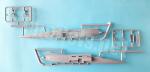
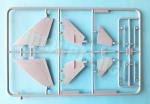
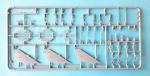
This time the company dedicated the release to the F1B two-seater training variant with specific commemorative decals for two F1Bs of the Armée de l’Air and an F1BE of the Spanish Air Force. The box contains six grey plastic sprues, a clear sprue, four resin parts, an extensive decal sheet and the instructions.
At first glance the sprues look quite clean and parts are very well moulded. A closer inspection reveals the usual seam lines on a few parts, a couple of shallow pin marks on either side of the rear cockpit, which may not be very visible due to the position of the floor and rear bulkhead, and ejector nodules on the inner nozzle and air intakes which are unusually large and certainly not as easy to clean up as usual.
As the tooling is shared by other releases and this kit reproduces non-combat ready aircraft, we will have almost a whole sprue left over, consisting of auxiliary fuel tanks, R.550 Magic and Matra Super 530 missiles and what looks GBU-12 Paveway II laser-guided bombs.
Cockpit
This consists of two tub-shaped bases, with the pedals and console instruments molded on the parts. The instrument panels show both engraved and raised detail and gadgets are rendered in decals. The front panel also has a separate HUD display. The levers are identical, but not the rear bulkheads which are glued behind the tubs. The seats are broken down lengthwise into three sections and are well represented. According to the instructions they are attached at the end of assembly.
The two clear canopies are arranged in five pieces plus a separate opening arm at the front. Although pieces are not too thin, they seem acceptable due to their transparency and the detail engraved on them.
In general, the interior shows remarkable detail with only the missing seat belts and the cleanup of the marks present on the rear cockpit to round it off. In addition, it will be possible to see it from the outside since we can attach the canopies in the open position.
Fuselage
The halves show clean engraved lines and good definition in the multiple panels and accesses. Before gluing the halves together, the front wheel well, which comes partially detailed on the inner floor, as well as the aft fuselage air duct are added. This is separated into three pieces. All of them have nice interior detail, although the nozzle fins, though not bad, cannot beat the sharpness of a resin replacement.
Once the fuselage is closed, the front cone is detailed with several Pitot tubes, a fin, a clear landing light and the fuel probe, which on the F1B is a simulated device to train in-flight refueling. This piece is only applicable to one of the French aircraft and is provided by a spare nose cone from the sprues. The front probe is molded on one of the fuselage halves.
The central fuselage has separate parts for the air brakes, nicely detailed and reproduced in the folded position, and the side air intakes, which have thin edges and well-profiled half-cones in the inlet. The rear fuselage has separate ventral fins and a decoy launcher only applicable to the Spanish F1BE. The brake parachute housing is well represented on both fuselage halves.
Also in the F1BE, we have the option to include a pylon for the auxiliary tank, which is divided in halves with separate tail fins.
Wings and tail
The wings have the panel lines, leading edges, ailerons and especially the perforated spoiler panels finely engraved. The lower surfaces are separated and fitted into the upper ones. Both sides have tabs for fueselage attachment with the necessary dihedral, so we do not need to worry about measuring angles when joining them. As the aircraft in this box do not carry underwing weapons, we need to fill several holes on the wings lower sides. The lights on the tips are sharply rendered, but in the case of the Spanish aircraft, a couple of additional lights need to be removed and two resin missile launch rails added to the tips.
The sprues contain three different tail fins. The one applicable here shows the panels, accesses and the rudder very well defined, as well as the rudder hinge, the fairings of the front and rear antennas, and the VOR antenna, which is a separate piece. The tailplanes come separated in thin and nicely engraved pieces.
Undercarriage
The front landing gear comprises a leg detailed with the suspension, two small wheels plus a separate front retraction jack. The well door is thin and has a fairly detailed innner side.
The main gear consists of two legs with defined shock absorbers, a fine side arm attached to each piece and two wheels on each side. The wheels show slight seam lines on the tyre, but the hub is well engraved on both sides. The covers are divided into two thin sections with little internal detail.
Decals
The sheet is printed by Cartograf. It contains French and Spanish cockades, commemorative markings, registers, the instrument panels and stencils. All of them have a thin and glossy appearance, good registration and saturated colours. They are also free from surplus carrier.
Instructions
They consist of an 8-page A5 booklet printed in colour on glossy paper containing a historical summary of the aircraft, a numbered parts plan, a colour list with equivalent Gunze Sangyo paints, 12 assembly steps and three pages of profiles. Assembly sequences are clear.
The French aircraft are painted in air superiority livery (dark blue-grey / light grey). The Spanish aircraft (F.1BE, CE-14 in the Ejército del Aire) wears a three-colour (sand, brown and dark green) camouflage on the upper surfaces similar or the same as the one used before the standard overall grey they had later.
Conclusion
Special Hobby has produced the most up-to-date kit of this aircraft in the small scale. This time, the release does not contain a large number of upgrade parts, but except for the essential harnesses, the kit has the detail and the necessary parts to build a very attractive model out of the box.
Assembly should not be difficult for those who have already finished other jets before and the variety of paint schemes combined with the decals seems enough to please those looking for unusual finishes.◊
Publicado – Published: 11 / 2024
©www.jmodels.net
 jmodels.net
Debe estar conectado para enviar un comentario.