
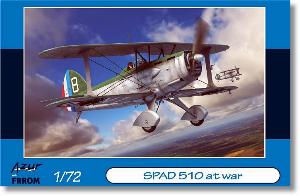
De un vistazo – Quick look
MATERIAL Y PIEZAS
MEDIA & PARTS:
- Plástico inyectado (36 piezas), plástico transparente (2 piezas).
- Injected plastic (36 parts), clear plastic (2 parts).
CALCAS – DECALS:
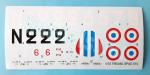
- Escarapelas y marcas de cola francesas, matrículas, el panel de instrumentos, numerales y algunos estarcidos. Apariencia fina y bien impresas.
- French roundels and tail markings, registers, instrument panel, numbers and some stencils. Apparently thin and well printed.
OPCIONES – OPTIONS:
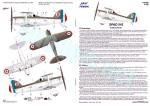
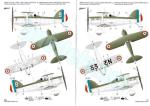
- Blériot-SPAD S.510. Nº 9. 8 blanco. Dépot d’Instruction de l’Aviation Polonaise. Lyon-Corbas (Francia). Mayo de 1940.
- Blériot-SPAD S.510. Nº 44. 14 banco. 3éme escadrille GARC II/561. Le Havre-Octeville (Francia). Noviembre de 1939.
- Blériot-SPAD S.510. Nº 56. 6 rojo. Centro de Entrenamiento de Cazas. Montpelier (Francia). Junio de 1940.
INSTRUCCIONES – INSTRUCTIONS:
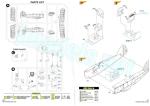
- Folleto de tamaño A5 de 12 páginas impreso en color. Contiene una breve historia del avión, un plano numerado de piezas, una lista de colores con referencias de pinturas de Gunze Sangyo, 13 capítulos de armado y tres páginas de perfiles. Claras y bien impresas.
- 12-page A5 booklet printed in color. It contains a short history of the aircraft, a numbered parts diagram, a list of colors with Gunze Sangyo paint matches, 13 assembly chapters and three pages of profiles. Clear and well printed.
LO MEJOR – THE BEST:
- Interior detallado. Superficies de las alas y planos de cola.
- Nice cockpit. Structural detail on wings and tailplanes.
LO PEOR – THE WORST:
- Ruedas unidas a las carenas. Montaje delicado en los soportes intermedios y el tren de aterrizaje.
- Wheels molded with the fairings. Brittle assembly on cabane struts and landing gear.
VALORACIÓN – CONCLUSION:
- Nuevo molde de un avión olvidado y sin maquetas anteriores de plástico. En general está muy bien detallada y no debe tener grandes dificultades para el modelista de cierta experiencia.
- New-tool kit of a forgotten type without previous plastic kits. Very nicely detailed overall, it should not pose a difficult build to modellers with some experience.

La maqueta
Este es otro avión bastante olvidado, al menos fuera de Francia. Los motivos son fáciles de adivinar: uno es que apareció justo en el momento en el que los biplanos, dominantes en la Primera Guerra Mundial y las posguerra, iban a dejar paso a los aviones monoplanos, y el otro es que los rápidos avances en el periodo de rearme previo al siguiente conflicto mundial lo dejaron obsoleto y relegado a misiones secundarias. Si en el catálogo de la aviación mundial no figura precisamente en el cuadro de honor histórico, ya puede uno figurarse lo que ha sido hasta ahora en el modelismo.
Del SPAD 510 sólo había unas escasas maquetas de resina hasta que Azur FRROM lo ha rescatado con un nuevo molde que cuenta con dos cajas por ahora. Si se repite la pauta que hemos observado antes en otras casos, a no mucho tardar la marca filial Special Hobby lanzará algunas cajas más de esta destacable maqueta.
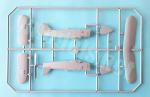
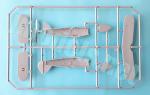
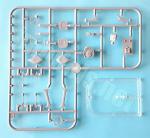
La caja contiene dentro de una bolsa sellada dos bastidores de piezas grises, un bastidor transparente, la hoja de calcas y el libreto de instrucciones. Tanto las calcas como las piezas transparentes tienen sus propios embalajes. El despiece me parece bastante bien pensado y no hay simplificaciones relevantes en el detalle, con la excepción de las ruedas unidas a las carenas y en los pedales de la carlinga.
El plástico está bien moldeado y las piezas muestran escasas líneas de molde, algunos cilindros de eyector y ausencia de marcas evidentes. La reproducción de las superficies enteladas es realmente destacable para esta escala y la simulación de la estructura de los planos está conseguida con gran sutileza. Creo que ni el modelista más exigente le podría poner inconvenientes, pero vaya usted a saber, con lo que hay por ahí fuera.
La única opción de montaje es específica para una de las opciones de pintura, a la que hay que fabricarle unos escapes diferentes. La forma y dimensiones de este añadido están bien representados en las instrucciones. La maqueta reproduce un Blériot-SPAD 510, el último caza biplano de la Fuerza Aérea francesa, que poseía una parte del fuselaje de duraluminio, mientras que todos los planos estaban entelados. La Fuerza Aérea llegó a contar con unos 60 aparatos entre 1935 y 1939, aunque solo poseía menos de 40 en servicio al estallar la guerra mundial, la mayoría de ellos empleados como entrenadores en Argelia. Durante el periodo conocido como Guerra Falsa las dos escuadrillas que aún operaban este caza fueron encargadas de proteger zonas de retaguardia y no tomaron parte en los combates posteriores, siendo desguazados sus aviones tras el Armisticio.
Carlinga
El detalle interno no es excepcional, pero es más que suficiente para lo poco que se verá desde fuera. Consiste en un suelo con los pedales unidos en la zona delantera, una base para el asiento, de buena factura, la palanca de control, un panel trasero y otro delantero detallados, más un panel intermedio con un hueco para acceder a los pedales sobre el que está reproducido el panel de instrumentos. Una calca simula los indicadores. Los lados del fuselaje están limpios de marcas y contienen algunos instrumentos y líneas que plasman al menos parte de la estructura tubular.
Tras pegar las mitades del fuselaje, se añade el parabrisas y la mira del piloto. El primero es algo grueso, pero la estructura está plasmada con finura, mientras que la mira es una pieza diminuta y transparente. El reposacabezas está moldeado en mitades junto con las mitades del fuselaje.
Fuselaje y motor
Las dos partes del fuselaje están moldeadas con el motor y los planos verticales de cola, aunque las dos caras del timón están unidas en la pieza derecha. Las líneas de panel están plasmadas con finura y limpieza y el detalle de la parte delantera incluye unos diminutos escapes bien definidos, más de las salidas de ventilación del motor moldeadas con nitidez. Las tomas laterales bajo el capó también están bien perfiladas. Ni los escapes ni las tomas están abiertos.
Las piezas separadas del fuselaje comprenden el tubo Venturi en un lado, el mástil trasero, y en la zona inferior el estribo del piloto, un par de soportes de bombas, además de una pequeña toma de refrigeración bajo el capó.
Del motor solo tenemos la cara frontal separada. La pieza tiene muy buena definición en la rejilla inferior así como en el panel de ventilación superior, ambos con texturas distintas. La hélice está unida al buje, pero la pieza no muestra la línea de separación entre ambos. El eje es demasiado corto, aunque acaso suficiente si no pretendemos que gire. Las palas son finas y sus cuerdas están perfiladas. Como ya he indicado, una de las opciones de pintura lleva unos escapes diferentes que debe fabricar el modelista. La pieza en cuestión muestra los tubos alargados y unidos a un fino colector.
Alas y cola
Los planos inferiores son piezas separadas, mientras que los superiores están fabricados en una sola pieza. Las superficies inferiores poseen lengüetas muy cortas para insertarlos en el fuselaje. El detalle del entelado es suave, congruente y en mi opinión tiene el relieve justo para la escala de este avión. Los tres planos llevan los timones marcados y las bisagras definidas en las caras inferiores. El plano superior muestra las luces de navegación y el inferior las carenas del armamento abultadas en la cara de arriba.
Moldeadas aparte, hay varios elementos que añadir en los planos inferiores, como los dos tubos Pitot y las ametralladoras MAC 1934, que cuentan en sus carenas con ranuras para expulsar los casquillos. El plano superior solo tiene un mástil de antena separado.
Los soportes externos de las alas son de una pieza, están bien perfilados y contienen pequeñas lengüetas que les dan, junto a su anchura, aún mayor consistencia a la unión de ambos planos. Los soportes intermedios en forma de N son delicados, pero cuentan con una pequeña base en el fuselaje y agujeros bien marcados en el plano superior.
Los estabilizadores y el timón vertical muestran el mismo detalle en el recubrimiento que he descrito para las alas. Los timones y sus aletas están bien grabados. Los planos horizontales tiene igualmente cortas lengüetas para pegarlos al puro de cola.
Tren de aterrizaje
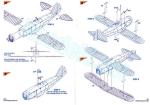
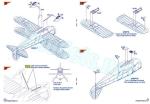
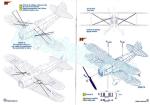
Es bastante simple y, además del pequeño patín de cola, cuenta con dos soportes perfilados y las carenas moldeadas con las ruedas en su interior. Las patas únicamente tienen dos puntos de unión a las alas y son demasiado anchas, por lo que la inestabilidad está asegurada. Los tirantes de refuerzo que la evitan debe fabricarlos el modelista. Las instrucciones señalan acertadamente que las piezas deberían ser metálicas, y no simplemente varillas de plástico. El folleto también nos informa con claridad del diedro necesario para las patas, lo mismo que el de las alas. También contiene perfiles para arriostrar la maqueta.
Calcas
La hoja muestra escarapelas y marcas de cola francesas., matrículas, el panel de instrumentos, numerales y algunos estarcidos. Las calcas tienen aspecto fino y una impresión correcta.
Instrucciones
Están impresas a color en un folleto de tamaño A5 de 12 páginas que contiene una breve historia del avión, un plano numerado de piezas, una lista de colores con referencias de pinturas de Gunze Sangyo, 13 capítulos de ensamblaje y tres páginas de perfiles. Las vistas explosionadas son precisas, así como las indicaciones para realizar las piezas de construcción propia y las vistas para colocar los tensores de las alas.
En la pintura no hay variedad, ya que las tres opciones poseen la misma librea, salvo pequeñas variaciones en los numerales de cola y en el color de las matrículas situadas bajo las alas.
Valoración
Azur FRROM ha rescatado este caza del olvido y lo ha hecho con una maqueta bien lograda, con un detalle general muy notable y sin grandes dificultades de montaje para los que tengan alguna experiencia con este tipo de ediciones. No es poco para ser la primera de plástico que tenemos.
Es probable que el modelista interesado en aviones como el Heinkel He 51 o el Polikarpov I-15 también pueda estarlo por este oscuro Blériot-SPAD 510, ya que a la postre se trata de aviones de época, tipo y características análogas. Es igualmente muy posible que esta edición no sea la última que veamos si Special Hobby continúa reeditando las maquetas de la filial Azur FRROM con calcas diferentes. El tiempo dirá.◊

The kit
This is another forgotten aircraft, at least outside France,. The reasons of the oblivion seem easy to guess: one is that the type appeared in a time when biplanes, dominant in the First World War and the post-war period, were giving way to monoplane aircraft, and the other is that during the rapid rearmament prior to WWII it became obsolete and was relegated to secondary tasks. If the type doesn’t have an important place in the catalog of world aviation, one can just imagine what it has meant in the modelling world.
There were only a few resin kits of the SPAD 510 until Azur FRROM rescued it in a new tooling with two boxings released so far. If things roll as usual with Azur, it won’t be long before Special Hobby rebox this remarkable kit.
The content of the box arrives inside a self-sealing bag containing two sprues of grey parts, a clear frame, the decal sheet and the instruction booklet. Both the decals and the clear pieces have their own packaging. Parts breakdown looks quite well thought out and there are no relevant simplifications in detail, with the exception of the wheels attached to the fairings and the cockpit pedals.
Plastic is well molded and parts show few seam lines, some ejector cylinders, and no evident pin marks. The reproduction of the canvas surfaces on wings and tail is outstanding with the structural detail subtly molded. The most demanding modeller should not complain about it, but who knows, with so many oddballs lurking out there.
The only assembly alternative refers to one of the paint options. This shows different exhausts that are scratchbuilt by the modeller. The shape and dimensions of these pieces are clearly shown in the instructions.
The kit represents the last biplane fighter of the French Air Force, which had a part of the fuselage made of duralumin, while all the wings were fabric-covered. The Air Force operated around 60 aircraft between 1935 and 1939, but there were only less than 40 in service at the outbreak of WWII, most of them used as trainers in Algeria. During the period known as the Phoney War, the two squadrons that still operated this fighter were in charge of protecting rear areas and did not take part in combat, their planes being scrapped after the Armistice.
Cockpit
Cockpit detail is not exceptional, but it is more than enough for what it will be seen from the outside. It consists of a floor with the pedals molded in place, a seat attached on a raised base, the control column, two pieces for engraved rear and front bulkheads, plus an intermediate bulkhead showing the instrument panel and a gap to reach the pedals. A decal simulates the gadgets. The fuselage sidewalls are clean from marks and show some instruments and raised lines reproducing at least a part of the tubular structure.
After gluing the fuselage halves, the windshield and pilot’s sight are added. The first is a bit thick, but the structure is finely rendered, while the sight is a tiny and transparent piece. The headrest is molded with the fuselage halves.
Fuselage and engine
The two fuselage halves are molded with the cowling and the vertical stabilizer with both sides of the rudder on the right half. Panel lines are rendered with finesse and are clean. Detail on the cowling includes tiny, well-defined exhausts, plus sharply molded engine vents. The side intakes under the cowling are also well defined. Neither the exhausts nor the intakes are open.
The fuselage is provided with the Venturi tube on one side, the rear mast, and the pilot’s step, a pair of sway braces on the belly (no bomb is provided), plus a small cooling intake under the hood.
The cowling front side is separate with very good definition in the lower grille and in the upper ventilation panel, both molded with different textures. The propeller is attached to the hub, but the part does not show an engraved line between the two. The shaft is too short, but maybe enough if we do not want the propeller to rotate. The blades are thin and the angles profiled. As said, one of the paint options has different exhausts that the modeller must scratchbuild. The piece in question shows longer pipes attached to a thin collector.
Wings and tail
The lower wings are separate pieces, while the upper ones are made in one piece. The lower surfaces have very short tabs for fuselage attachment. Detail of the canvas is smooth, consistent and subtle for the scale. The three surfaces have engraved ailerons and defined hinges on the lower faces. The upper wing shows the navigation lights and the lower wings have the machine guns bulges molded on the upper sides.
Several elements are provided as separate pieces, such as the two Pitot tubes and the MAC 1934 machine guns, which have the ammo chutes engraved on the fairings. The upper wing only has another antenna mast.
The interplane struts come in one piece, are nicely faired and contain small tabs that give them, along with their width, even greater stability to the join of both planes. The N-shaped cabane struts are brittle, but have a small base molded on the fuselage and open holes on the upper plane.
The stabilizers and vertical rudder show the same fabric detail described for the wings. The rudders and the trim tabs are well engraved. The tailplane is also attached with tabs to the tail cone.
Undercarriage
It is quite simple and, in addition to the small tail skid, it has two faired struts and spats molded with the wheels. The wide main wheel struts only have two small attachment points to the wings, so instability is assured. The reinforcing braces must be scratchbuilt. The instructions wisely indicate the pieces should be metal, and not just plastic rods. The booklet also shows the correct dihedral for the legs and wings. It also contains profiles to rig the model.
Decals
The sheet contains French roundels and tail markings, registers, the instrument panel, numbers and some stencils. Decals look fine, color-saturated and correctly printed.
Instructions
They are printed in color in a 12-page A5 booklet containing a brief history of the aircraft, a numbered parts plan, a color list with Gunze Sangyo paint references, 13 assembly chapters, and three pages of profiles. The exploded views are precise, as are the directions to scratchbuild parts and the diagrams for rigging the model.
There is no variety in the paint, since the three options have the same livery of khaki green over aluminium, except for small variations in the tail numbers and the color of the underwing registers.
Conclusion
It’s good Azur FRROM have rescued this fighter from oblivion and produced a kit which is overall nicely detailed and have no major assembly difficulties for those who have some experience with short runs. It’s not little for the first offer in plastic we have.
The modeller interested in aircraft such as the Heinkel He 51 or the Polikarpov I-15 is also likely to have a taste for the overlooked Blériot-SPAD 510, after all they are aircraft from a similar period, type and characteristics. This release may not be the last one we see if Special Hobby continues to reissue the Azur FRROM kits with different decals. Time will tell.◊
Publicado – Published: 4 / 2024
©www.jmodels.net
 jmodels.net
Debe estar conectado para enviar un comentario.