
De un vistazo – Quick look
MATERIAL Y PIEZAS
MEDIA & PARTS:
- Plástico inyectado (29 piezas).
- Injected plastic (29 parts).
CONTENIDO – CONTENT:
- Cuatro figuras completas más una figura representada sólo con hombros y cabeza.
- Four complete figures plus a figure with only shoulders and head.
INSTRUCCIONES – INSTRUCTIONS:
- Impresas en la cara trasera de la caja. Muestra dibujos de las figuras montadas con la numeración de las piezas y códigos de pinturas de AK-Interactive. Las pinturas aparecen con ejemplos de color en el lateral de la caja.
- Printed on the back side of the box. This shows pictures of the assembled figures with parts numbers and codes in AK-Interactive paint range. Color chips are also printed on the box side.
LO MEJOR – THE BEST:
- Molde limpio con buen modelado y definición en los detalles.
- Clean tooling with a nice modelling and definition in detail.
LO PEOR – THE WORST:
- Poses de desfile con poca variedad e inconvenientes para adaptarlas a la representación de cualquier escena.
- Parade poses with little variety and drawbacks to use them to represent any scene.
VALORACIÓN – CONCLUSION:
- Tal vez sean las mejores figuras de soldados chinos modernos de plástico que tengamos en esta escala por ahora. Incluso con la rigidez en las poses, no deben ser difíciles de adaptar a cualquier vehículo blindado de los muchos aparecidos en los últimos tiempos.
- These may be the best 1/35 Chinese modern soldiers we have by now. Despite the stiff poses, they should not be difficult to adapt to any PLA AFV kit from the panoply released in the last times.

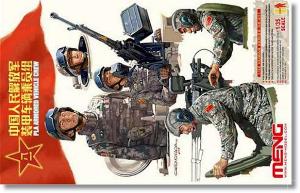
En 2017 Meng Model lanzó esta caja de figuras de soldados chinos actuales, una adición oportuna al menguado catálogo que hay en plástico en la escala 1/35. Hasta el presente sólo Dragón (PLA Hong Kong Garrison Force, referencia 3026), Bronco Models (cuatro cajas de soldados desfilando en el 60º Aniversario de la República Popular China) y Trumpeter (PLA Tank Crew, referencia 00431) han editado algunas cajas sobre este tema. Dado el número creciente de maquetas de vehículos chinos modernos en esta escala, parece bastante poco, pero seguramente veremos aumentar esa cantidad en el futuro.
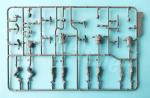
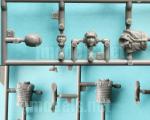
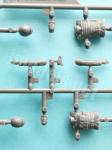
La caja contiene un único bastidor con 29 piezas de buen modelado que carecen de rebabas, deformaciones y líneas de molde evidentes. Con estos elementos se pueden montar cuatro figuras de cuerpo entero y una reproducida solamente con la cabeza y los hombros.
La fecha de la edición de Meng es importante para dilucidar el tipo de uniforme que visten estos carristas. Se trata del denominado Tipo 07, por el año de su introducción en el Ejército chino, que actualmente ya ha sido sustituido por el Tipo 19 y el 21. El Tipo 07 seguía un patrón aproximadamente idéntico en todos sus variantes salvo en las mezclas de color del camuflaje, adaptado a la zona geográfica o ambiente donde las unidades pueden operar. En la caja de Meng las figuras llevan dos de esos camuflajes, concretamente el diseñado para zonas áridas y desierto, así como el denominado universal, específico para terreno semiurbano y que es el genérico en las fuerzas armadas chinas.
Pintar con un mínimo realismo estos patrones en esta escala (o en cualquiera) no es nada sencillo. Ciertamente existen fabricantes, como la marca francesa FFSMC Productions, que proporcionan calcas con representaciones muy acertadas del unitorme Tipo 07, pero el problema de las calcas no es tanto su calidad como la dificultad de adaptarlas a los contornos y pliegues de las prendas. Además, son fáciles de romper y pueden llegar a cubrir pequeños detalles como costuras o insignias, por ejemplo. Está claro que el modelista debe elegir entre pintar o colocar calcas. Personalmente, prefiero pintar (mal) estas figuras a colocar (peor) las calcas.
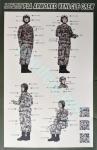
Los carristas con uniformes para zonas áridas y desierto son tres. El primero está separado con la cabeza y el casco separados, el torso y las caderas unidas, más las piernas y los brazos también aparte. El único complemento es una pistola reproducida en su funda y colocada a la derecha del vientre. La pose es rígida, en posición de firmes como corresponde a un desfile o revista, con la cabeza ligeramente ladeada a la derecha. El casco muestra las gafas de conducción y su correa con buena definición. Los rasgos faciales son nítidos y los carrillos están moldeados con el barboquejo del casco. El uniforme en la zona del torso lleva un chaleco reforzado con tiras paralelas en relieve nítido y lo que parece un bolsillo para la munición de la pistola en el lado izquierdo. El cinturón también se aprecia claramente. En las piernas lleva un bolsillo vertical en cada una y las botas me parecen bien representadas. El brazo derecho luce la insignia nacional cosida al hombro. Lo peor es el detalle liso y sin forma en las palmas de las manos, pero ya que no se van a ver al estar pegadas al pantalón, se puede pasar por alto.
El segundo carrista está despiezado de manera análoga, pero es un poco diferente en la pose y el uniforme. El casco, cinturón, tronco, piernas y la posición de la cabeza son similares a los de la figura anterior, aunque los brazos simulan asir un arma emplazada en la torre del vehículo. La cara tiene rasgos faciales distintos. Viste un chaleco de carrista con bolsillos de munición de diferente tamaño y muy bien definidos sobre el pecho. En este caso las manos tienen detalle por ambos lados y luce la misma insignia nacional encima del hombro derecho.
También con uniforme de ambiente árido / desértico aparece la figura del conductor, que consta solamente de casco, cabeza y hombros. Obviamente está diseñada para adaptarla a la escotilla abierta del vehículo y su pose es rígida. El casco y barboquejo es igual a los anteriores, la cara tiene rasgos propios y del uniforme sólo se aprecia el cuello con claridad.
Las otras dos figuras están pintadas en la caja con la variante del uniforme universal, de camuflaje más claro debido a su base gris azulada. Una está en pie con pose de desfile con los brazos en actitud de manejar un arma y la otra parece algo más relajada, en posición sentada sujetando la tapa de la escotilla del vehículo. Ambas poseen la cabeza, tronco, brazos y piernas por separado. Las cabezas están tocadas con el gorro de carrista chino Tipo 69/79, muy similar al ruso TSh-4 de la Segunda Guerra Mundial, con tres crestas sobre la cabeza y auriculares incorporados en las carrilleras. Una de las figuras lo lleva abrochado con barboquejo y la otra sin él. Las caras poseen rasgos distintos. Sus uniformes no llevan chaleco y tienen bolsillos sin botones sobre el pecho y las caderas. Los pantalones son iguales, con bolsillos laterales, y las botas están bien definidas. Los hombros muestran inignias nacionales, aunque los bolsillos de las mangas no están destacados.
Instrucciones
La guía de montaje y pintura está impresa a color en la cara posterior de la caja. Muestra dibujos de las figuras montadas con la numeración de las piezas y códigos de pinturas de AK-Interactive. Las pinturas aparecen con ejemplos de color en el lateral de la caja.
Valoración
Como decía arriba, aún tenemos escasas figuras de plástico de soldados chinos actuales y desgraciadamente las ediciones son poco productivas en su mayor parte, ya que los representan en hieráticas poses de parada carentes de atractivo y encaje en escenas distintas. Este es precisamente el único inconveniente que le veo a la caja de Meng.
Dejando a un lado este aspecto, las figuras merecen la pena por su moldeado y detalles. Creo que pueden adaptarse sin mucha dificultad a cualquier vehículo blindado de los muchos que los fabricantes han ido produciendo en los últimos años.◊

In 2017, Meng Model released this box of contemporary Chinese soldier figures, a welcome addition to the reduced 1/35 plastic catalog. To date, only Dragon (PLA Hong Kong Garrison Force, reference 3026), Bronco Models (four boxes of soldiers parading in the 60th National Day), and Trumpeter (PLA Tank Crew, reference 00431) have released boxes on this topic. Given the growing number of modern Chinese AFV kits in this scale, this seems quite unbalanced, but we’ll surely see that number increase in the future.
The box contains a single sprue with 29 well-modeled parts that are free from flash, blemishes or evident seam lines. With these pieces we can build four full-body figures and one half figure with only the head and shoulders.
The date of Meng’s release is important in elucidating the type of uniform worn by these tankers. This is the Type 07, named after the year of its introduction in the Chinese Army, which has now been replaced by the Type 19 and 21. The Type 07 followed a roughly identical pattern with different camouflage color schemes adapted to the geographic area or environment where the units may operate. In this boxing the figures wear two of these camouflages, specifically the one designed for arid / desert areas, as well as the so-called universal camouflage, specific for semi-urban terrain and the generic one used by the Chinese armed forces.
Painting these figures with some realism in this scale (or any other) is not easy. Certainly, there are manufacturers, such as the French FFSMC Productions, that provide decals with very accurate representation of the Type 07 unitorm, but the problem with decals is not so much their quality as the difficulty of adapting them to the contours and folds of the garments. Furthermore, they are easy to tear and can hide small detail such as seams or badges, for example. Clearly, the modeller’s choice is between painting or applying decals. Personally, I prefer painting these figures (poorly) to applying decals (worse).
The box includes three tankers in arid / desert uniforms. The first figure comes with the head and helmet separated, the torso and hips in one piece, and the legs and arms also apart. The only complement is a pistol in its holster to the right of the belly. The pose is rigid, at attention, suitable for a parade or review, with the head looking slightly to the right. The helmet shows the goggles and strap with good definition. The facial features are clear, and the cheeks are molded with the helmet’s chin strap. The uniform on the torso is a vest molded with sharp parallel padding and what seems to be a pistol ammo pocket on the left side. The belt is also clearly visible. The uniform have a vertical pocket on each leg, and the boots seem well represented. The right arm bears the national flag sewn on the shoulder. The most striking feature is the smooth, shapeless detail on the palms of the hands, but since they won’t be visible as they are placed on the trousers, this can be ignored.
The second tanker figure is broken up similarly, but his pose and uniform are slightly different. The helmet, belt, torso, legs, and head position are similar to those of the previous figure, although the arms appear to be holding a weapon mounted on the vehicle’s turret. The face has distinct facial features. He wears a tanker vest with clearly defined ammo pouches of different size on the chest. In this case, the hands are detailed on both sides, and he wears the same national badge on his right shoulder.
Also wearing an arid/desert environment uniform is the driver figure, consisting only of a helmet, head, and shoulders. It is obviously designed to fit a vehicle’s open hatch, and the pose is stiff. The helmet and chinstrap are the same as those described before. The face has its own features, and only the neck of the uniform is clearly visible.
The other two figures are painted on the box in the universal uniform variant, with a lighter camouflage due to the light blue-gray base. One is standing in a parade pose with its arms in the position of handling a weapon, while the other appears somewhat more relaxed, sitting and holding the vehicle’s hatch cover. Both have separate heads, torso, arms, and legs. They wear a Chinese Type 69/79 tanker helmet, very similar to the Russian TSh-4 from World War II, with three ridges on the head and headphones inside the flaps. One of the figures wears it fastened with a chinstrap. The faces have distinct features. Their uniforms lack a vest and have unbuttoned pockets on the chest and hips. The trousers are the same, with side pockets, and the boots are well-defined. The shoulders are detailed with national badges and the sleeve pockets are not prominent.
Instructions
The assembly and painting guide is printed in color on the back of the box. It shows drawings of the assembled figures with part numbers and AK-Interactive paint codes. Additional paint chips are shown in color on the side of the box.
Conclusion
As mentioned, we still have very few 1/35 plastic figures of modern Chinese soldiers, and unfortunately, most of the releases are not very productive, as they depict them in hieratic, motionless poses that lack appeal and are not easy to fit in a wide range of sceneries. This is precisely the only drawback I see with Meng’s box.
This aside, the figures are useful for their molding quality and detail. I also think they can be adapted without much difficulty to the panoply of Chinese 1/35 AFV kits that manufacturers have released in recent years.◊
Publicado – Published: 5 / 2025
©www.jmodels.net
 jmodels.net
Debe estar conectado para enviar un comentario.