
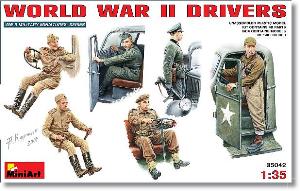
De un vistazo – Quick look
MATERIAL Y PIEZAS
MEDIA & PARTS:
- Plástico inyectado (50 piezas).
- Injected plastic (50 parts).
CONTENIDO – CONTENT:
- 1 conductor norteamericano, 1 soldado británico, 1 soldado alemán, 1 oficial alemán, 2 soldados rusos.
- 1 US soldier, 1 British soldier, 1 German soldier, 1 German officer, 2 Russian soldiers.
INSTRUCCIONES – INSTRUCTIONS:
- Una hoja con un plano numerado de piezas, las figuras impresas en la cara trasera de la caja más una tabla de colores con equivalencias de varias marcas de pintura.
- A sheet containing a numbered parts plan, figures printed on the back side of the box plus a color chart with matches in several paint brands.
LO MEJOR – THE BEST:
- Fácil montaje. Buen modelado en general. Adaptables a diferentes ejércitos, vehículos, escenas y periodos de tiempo.
- Easy to build. Nice overall detail. Suitable for different armies, vehicles, settings and war periods.
LO PEOR – THE WORST:
- Líneas de molde.
- Seam lines.
VALORACIÓN – CONCLUSION:
- Sencillas de montar, con poses naturales y realistas, no desmerecerán en cualquier escena con un vehículo. Aunque el equipo es mínimo, en general mejora el realismo de la mayoría de ellas en lo esencial.
- Easy to assemble and sculpted with natural, realistic poses, these figures will enliven virtually any vehicle. Though equipment is minimal, the items included enhance realism in most of them.

Contenido de la caja
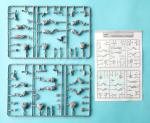
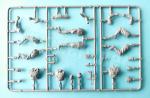
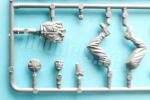
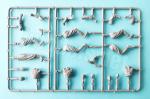
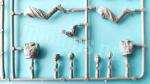
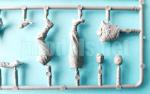
Dentro de la caja encontramos dos bastidores con un total de 50 piezas más un plano numerado impreso en una pequeña hoja que permiten montar seis figuras de cuatro ejércitos: dos soldados rusos, uno británico, uno norteamericano y dos alemanes, uno de ellos un oficial para añadir un poco de variedad.
Las piezas están bien moldeadas y no tienen rebabas ni marcas. Hay líneas de molde muy finas en lugares habituales como los lados de los torsos, las piernas, pies y brazos, sencillas de limpiar en su mayor parte. El plástico es el usual en la marca, un poco blando, flexible y fácil de trabajar.
La reproducción de los uniformes con los detalles del equipo y complementos moldeados sobre las figuras me parecen bastante buenos y generalmente bien conseguidos, al igual que la textura de las prendas. Las cabezas y sus tocados están separados en todos los casos. Salvo una, las caras muestran expresiones serias y algunas incluso concentradas.
El montaje es bastante sencillo ya que las figuras están despiezadas en sus elementos principales de forma sensata. Algunas figuras llevan equipo adicional moldeado aparte, pero no es numeroso. Las poses me parecen muy naturales y permiten integrar a los conductores en diferentes situaciones, tanto con el vehículo en cuestión parado como en movimiento. Además, dos de ellas aparecen en pie fuera del vehículo, lo que demuestra que MiniArt ha estudiado bien cómo darles más aprovechamiento.
Figuras
El conductor británico consta de ocho piezas y posa sentado conduciendo un vehículo con volante. Las piernas están moldeadas con las caderas. Además de las extremidades, torso y cabeza, lleva una boina y una pistola enfundada en piezas aparte. El uniforme de verano parece corresponder al empleado en la etapa final de la guerra en Europa. La parte superior muestra el cinturón, los correajes y las hombreras con buena definición para ser de plástico, sin embargo carece de las cartucheras que se aprecian en la caja. La gorra muestra una insignia en la parte frontal. Los pantalones tienen las costuras y bolsillos definidos, las polainas y las botas bien marcadas más las hebillas moldeadas con cierta nitidez.
El soldado norteamericano contiene ocho piezas con la gorra y una pistola enfundada atravesada sobre el pecho como piezas separadas. Aparece representado en pie con las manos apoyadas en el vehículo en actitud de subir o bajar de él. Viste ropa de faena con gorra, camisa, mono de trabajo y botas con polainas. El mono está mejor reproducido en la parte superior, donde se aprecian las correas y hebillas que en la inferior, que solo cuenta con un bolsillo trasero. La correa de la pistola está representada con realismo, con cierta tirantez por el peso del arma. Esta tiene buena definición dentro de su funda y no debe ser difícil de adaptar al cuerpo. El rostro es de los mejores de la caja por sus facciones bien perfiladas. En cambio, me gustan menos las líneas de molde sobre las botas, que obligan a perder algo del detalle al limpiarlas.
El conductor alemán tiene siete piezas incluida la gorra de campaña (Feldmütze) separada. La pose lo muestra sentado en un vehículo con una mano en el volante y el brazo opuesto extendido en el gesto de abrir o cerrar la puerta. La forma angulada del torso, por estar sentado y estirando un brazo parece bien conseguida. Viste uniforme de verano y botas de campaña sin adiciones en forma de cartucheras, bolsas, etc. Los detalles del uniforme son sencillos, pero se aprecian bien los bolsillos, botones y la hebilla del cinturón. Las piernas, moldeadas con las caderas, tienen buen detalle en las telas y la factura de los bolsillos inferiores de la guerrera. Las botas están bien definidas y sus arrugas son realistas.
El oficial alemán está separado en once piezas que incluyen la gorra de servicio con visera (Schirmmütze), una ametralladora MP40, una pistola enfundada, unos prismáticos y una cartera portadocumentos al cinto, todas piezas separadas. La pose lo muestra en pie situado sobre un pescante y asido a un vehículo con la ametralladora en una mano. La posición corporal es algo rígida, pero consecuente por el lugar que ocupa, sin espacio para adoptar otra más relajada. Esta figura puede ponerse tanto en un vehículo parado como en movimiento, siempre que no circule a gran velocidad, claro. Viste uniforme de campaña que puede valer para cualquier periodo y frente de la Guerra Mundial. La gorra no está mal de formas pero el detalle de las insignias no es nítido. La guerrera posee buen detalle en las hombreras, botones, bolsillos, correa y hebilla e incluso en la Cruz de Hierro que luce. Los prismáticos están diseñados para colgar del cuello y las correas se ven bien definidas, aunque si se desea pleno realismo, es mejor hacer unas que puedan pegarse a los prismáticos. La cadera y las piernas están unidas en dos piezas. Los pantalones lucen las clásicas “alas” laterales y las costuras están bien marcadas. Las botas también me parecen correctas. Los complementos están bien moldeados y se aprecian detalles como el gatillo y mango de la MP40, aunque la mira no es del todo buena porque es difícil de replicar a este tamaño con plástico. Las correas de cierre de la cartera y la funda de la pistola se ven definidas.
Uno de los conductores rusos es adaptable a un vehículo con volante, ya que su mano reposa sobre él. Se compone de ocho piezas incluida la gorra separada. El brazo izquierdo tiene dos alternativas para situarlo bien apoyado en la ventanilla en posición relajada o bien apoyado en el volante, de este modo podemos incluirlo tanto en un vehículo parado como en movimiento. El rostro con bigote muestra el gesto irónico que vemos en la caja. Viste gymnastiorka de verano con hombreras que puede corresponder con la guerrera empleada de 1943 en adelante. Los detalles de la guerrera muestran botones, condecoraciones y hombreras perfilados. Las arrugas de los pantalones son un poco exageradas, aunque llevan costuras visible y las botas parecen convincentes.
El segundo conductor ruso se puede emplear en un vehículo con palancas (carro de combate o tractor) ya que sus manos están asiendo sus extremos. Se divide en siete piezas incluyendo la gorra aparte. Aparece sentado con las manos en las palancas y los pies aparentemente en los pedales. Viste gymnastiorka de verano con las mismas características de la figura anterior y una condecoración. El cinturón no es igual de bueno que en el primer caso, aunque los pantalones parecen algo mejores y las botas igualmente aceptables. Las manos son lo peor, ya que costará adaptarlas al vehículo en cuestión por no venir separadas ni ahuecadas.
Instrucciones
La caja incluye un hoja con un plano numerado de piezas. Las figuras están impresas en color en la cara trasera de la caja que también incluye una tabla de colores con equivalencias de Vallejo, Testors, Tamiya, Humbrol, Revell y Mr Color.
De todas estas marcas que MiniArt se ha molestado en incluir, la única gama que me parece bien adaptada a la pintura de figuras es la acrílica de Vallejo, aunque esto depende de los resultados que a cada modelista le puedan dar otras diferentes.
Valoración
Este es un conjunto de figuras bastante versátil con buena calidad en el moldeado más los habituales peajes que impone el plástico en forma de líneas de molde por limpiar, aunque en este caso no son excesivas. Las figuras son adaptables a casi cualquier vehículo y escena. Creo que muestran la suficiente variedad en las poses, que no pueden ser demasiado originales ni atrevidas por la función para la que están diseñadas. Son sencillas de armar para cualquier modelista y por lo general contienen un equipo mínimo que las realza en lo esencial.◊

Box content
Inside the box we find two sprues with a total of 50 pieces plus a numbered plan printed on a small sheet that allows you to build six figures from four armies: two Russian soldiers, one British, one American and two Germans, one of them an officer for a little variety.
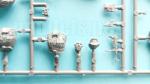
The pieces are well molded and have no flash or marks. There are very thin seam lines in the usual spots such as the sides of the torsos, legs, feet and arms, most of them easy to clean. Plastic is usual in the brand, a little soft, flexible and easy to sand.
The reproduction of the uniforms with the details of the personal equipment and accessories seems quite good and generally correctly rendered and the same happens with the texture of the clothes. The heads and the caps are separated in all cases. Except for one, the faces show serious expressions and some even concentrated.
Assembly is quite simple as the figures are broken down into their main elements in a sensible way. Some figures have additional personal equipment in separate pieces, but it is not numerous. The poses seem very natural and allow the drivers to be integrated into different scenes, both with the vehicle stationary and in motion. In addition, two of them stand outside the vehicle, which shows that MiniArt has studied well how to make the most of them.
Figures
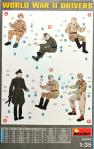
The British driver is an eight-piece figure, shown sitting in a vehicle provided with a steering wheel. The legs are molded with the hips. In addition to the limbs, torso and head, he wears a beret and a holstered pistol in separate pieces. The summer uniform seems to correspond to that used in the final stages of the war in Europe. The upper part shows the belt, straps and shoulder pads with good definition for plastic, but lacks the ammo poaches we can see in the boxart. The cap shows a badge on the front. The trousers have defined seams and pockets, the leggins and boots are well marked and the buckles are molded raised.
The American soldier comprises eight pieces, with the cap and a holstered pistol hanging across the chest as separate pieces. He is shown standing with his hands on the vehicle while getting in or out of it. He wears work clothes with a cap, shirt, overalls and boots with leggings. The overalls are better reproduced on the upper part, where the straps and buckles are more evident, than on the lower part, which only has a rear pocket. The pistol strap is realistically represented with the weight of the weapon. It has good definition inside the holster and should not be difficult to adapt to the body. The face is one of the best in the box due to the well-defined features. On the other hand, seam lines on the boots will probably make some detail to be lost after clean-up.
The German driver has seven pieces including the separate field cap (Feldmütze). The pose shows him sitting in a vehicle with a hand on the steering wheel and the opposite arm extended while opening or closing the door. The angled shape of the torso, due to being seated with one arm stretching out, seems nicely depicted. He wears a summer uniform and field boots without any separate personal equipment. Details on the uniform are simple, but the pockets, buttons and belt buckle can be clearly seen. The legs, molded with the hips, have good detail in the fabric of the trousers and the lower pockets of the jacket. The boots are well defined and the wrinkles are realistic.
The German officer is separated into eleven pieces, including a peaked service cap (Schirmmütze), an MP40 machine gun, a holstered pistol, binoculars and a map case on his belt, all separate pieces. The pose shows him standing on a running board and holding on to a vehicle with the machine gun in one hand. The body position is somewhat stiff, but consistent with the position where he is standing, with no room for a more relaxed pose. This figure can be placed in a stationary or moving vehicle, as long as it is not travelling at high speed, of course. He wears a field uniform that can be set in any period and front of the World War. The cap is not badly shaped but the detail of the insignia is not sharp. The tunic has good detail on the shoulder straps, buttons, pockets, belt and buckle and even on the Iron Cross that he wears. The binoculars are designed to hang from the neck and the straps look well defined, although if you want full realism, it is better to make replacements that can be attached to the binoculars. The hips and legs are joined in two pieces. The riding breeches have the classic side flares and the seams are well marked. The boots also seem correct. The accessories are well molded and details such as the MP40 trigger and handle are visible, although the sight is not very good as it is difficult to render in plastic. The closing straps on the map case and pistol holster look sharp.
One of the Russian drivers is adaptable to a vehicle with a steering wheel, since his hand rests on one. It is made up of eight pieces including a separate cap. The left arm has two alternatives to place it either resting on the window in a relaxed position or resting on the steering wheel, so we can include it both in a stationary vehicle or in motion. The face with a moustache shows the ironic gesture that we can see on the boxart. He wears a summer gymnastiorka with shoulder straps that may correspond to the one worn from 1943 onwards. Details of the tunic show raised buttons, medals and shoulder straps. The wrinkles on the trousers are a bit overdone, although they have visible seams and the boots look realistic.
The second Russian driver can be used in a tank or tractor since his hands hold both levers. He is divided into seven pieces including a separate cap. He drives the vehicle with his feet apparently on the pedals. He wears a summer gymnastiorka with the same features as in the previous figure and an award. The belt is not as good as in the other figure, although the trousers seem somewhat better and the boots equally acceptable. The hands will be difficult to adapt to the vehicle as they are not separate or hollowed.
Instructions
The box includes a sheet with a numbered parts plan. The figures are printed on the back side of the box with a color chart showing matches in Vallejo, Testors, Tamiya, Humbrol, Revell and Mr Color paint ranges.
Of all the brands that MiniArt includes, I think the only paints really suitable for painting figures are Vallejo acrylics but, as the saying goes, different strokes for different folks.
Conclusion
This is a fairly versatile set of figures with good quality in the molding plus the usual tolls that plastic sets in the form of seam lines to clean up. Fortunately, they are not too many. The figures are adaptable to almost any vehicle and scene. I think they show enough variety in the poses, which cannot be too original or daring due to the role for which they are intended. They are easy to assemble for any modeller and generally contain minimal personal equipment that enhances them in the essentials.◊
Publicado – Published: 12 / 2024
©www.jmodels.net
 jmodels.net
Debe estar conectado para enviar un comentario.