
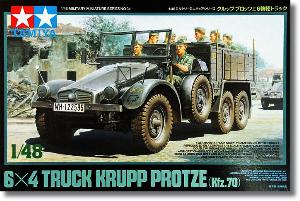
De un vistazo – Quick look
MATERIAL Y PIEZAS
MEDIA & PARTS:
- Plástico inyectado (86 piezas), plástico transparente (1 pieza), metal (1 pieza), tornillos metálicos (4 piezas). Incluye 8 figuras (38 piezas).
- Injected plastic (86 parts), clear plastic (1 part), metal (1 part), screws (4 parts). 8 figures included (38 parts).
CALCAS – DECALS:
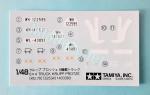
- Tres juegos de matrículas y marcas tácticas. Apariencia fina, sin exceso de soporte. Bien impresas.
- Three sets of number plates and tactical markings. Apparently thin, no excess of carrier film. Well printed.
OPCIONES – OPTIONS:
- Krupp Protze (Kfz.70). WH-122595. 6ª División Panzer. 4º Regimiento de Francotiradores. 7ª Compañía. Rusia. Julio de 1941.
- Krupp Protze (Kfz.70). WH-147621. 7ª División Panzer. 6º Regimiento de Francotiradores. 9ª Compañía. Rusia. Junio de 1941.
- Krupp Protze (Kfz.70). WH-122595. 6th Panzer Division. 4th Sniper Regiment. 7th Company. Russia. July 1941.
- Krupp Protze (Kfz.70). WH-147621. 7th Panzer Division. 6th Sniper Regiment. 9th Company. Russia. June 1941.
INSTRUCCIONES – INSTRUCTIONS:
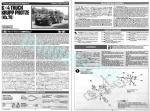
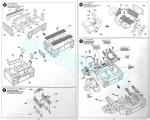
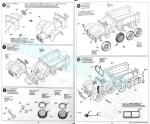
- Folleto doblado de 10 páginas impreso en blanco y negro. Contiene una introducción histórica sobre el vehículo, una lista de colores con equivalencias en pinturas de Tamiya, 13 secuencias de montaje y 2 páginas de perfiles. Claras.
- 10-page folded brochure printed in black and white. It shows a historical introduction about the vehicle, a list of colors with Tamiya paints cross references, 13 assembly chapters and 2 pages of profiles. Clear.
LO MEJOR – THE BEST:
- Montaje en apariencia sencillo. Detalle decente en general.
- Apparently an easy build. Overall decently detailed.
LO PEOR – THE WORST:
- Chasis metálico con escaso detalle. Poca variedad en las poses de las figuras y acabados.
- Barely detailed metallic chassis. Little variety in figures and paint finishes.
VALORACIÓN – CONCLUSION:
- La única maqueta del Kfz. 70 en la escala por ahora. Apta para cualquier modelista, con múltiples mejoras para los que deseen sacarle más partido.
- Only 1/48 kit of the Kfz. 70 by now. Suitable for any modeller, with a bunch of aftermarkets available for detailers.

La maqueta
El Krupp Protze ha estado desde sus inicios en la colección de vehículos militares de Tamiya a escala 1/48. Nada extraño si se considera la popularidad de este pequeño camión entre los aficionados y también el hecho de que la marca lo ha mantenido en su catálogo a 1/35 durante décadas. Al igual que en la escala grande, en la pequeña tenemos las dos versiones del Protze, tanto la de transporte de tropas (Kfz. 70) como la de tractor de artillería para el cañón anticarro PaK 36 (Kfz. 69).
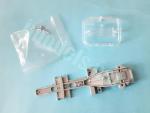
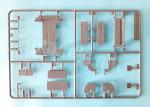
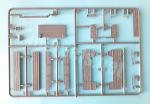
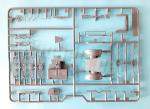
La caja contiene seis bastidores de piezas grises, dos de ellos repetidos que contienen las figuras, un bastidor transparente, el chasis de metal, las calcas y las instrucciones. Las piezas están bien moldeadas, sin deformaciones, rebabas ni cilindros del expulsor, excepto en el parabrisas. Hay marcas de eyector sobre los paneles laterales de la cabina y también en los lados internos de la caja de transporte, pero son muy leves y no debe resultar difícil disimularlas.
Como en otras maquetas iniciales de esta serie, Tamiya incluye el bastidor del vehículo y parte del detalle del chasis en una sola pieza metálica para simular el peso, con el inconveniente de tener que usar cianocrilato para unir las piezas de plástico a este. Y al igual que en otras ocasiones, el fabricante compensa el detalle que se pierde con lo que se gana en el montaje. Por otro lado, esta edición no ha escatimado en el número de figuras que se incluyen para dar mayor realismo al acabado final, definiendo la función principal de este Kfz. 70 como transporte de tropas.
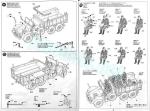
El montaje está claramente secuenciado y comienza por los detalles añadidos al chasis, continúa por la caja de transporte, luego aparece la construcción de la cabina, y finalmente la carrocería delantera, en un proceso que parece bastante fácil de seguir y que facilita mucho la pintura.
Chasis, suspensión y ruedas
La pieza metálica del chasis está muy poco detallada por la cara inferior, donde se aprecian las ballestas delanteras, la parte inferior del motor, la sección central del tubo de escape con el silenciador y una caja de respeto en el lado izquierdo con cinchas de sujeción, así como los estribos de la cabina. Sobre esta pieza hay que añadir el eje delantero unido a la barra de dirección, la bifurcación inicial del tubo de escape, el lado inferior del depósito de carburante, una pieza transversal que hará de soporte de las ruedas de repuesto, los ejes y suspensión traseros y, por último, el tramo final del tubos de escape y el gancho de remolque.
La suspensión trasera consiste en dos ejes con sendas piezas de refuerzo superpuestas unidas por dos soportes con muelles horizontales. El ensamblaje va unido al chasis mediante dos tornillos pasantes enroscados en la parte inferior de la caja de transporte. Con estos tornillos se evita un uso excesivo del cianocrilato y a la vez se simplifica mucho el montaje.
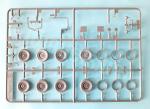
Como ya es costumbre en Tamiya, las ruedas están moldeadas en dos partes, con una pieza en cada una que incluye los neumáticos y la cara externa de las llantas, y otra de forma anular para los bordes de la llanta, excepto en las ruedas de repuesto que carecen del anillo interno. Los neumáticos muestran una banda de rodadura convincente, aunque presentan ligeras líneas de molduras que se pueden eliminar con lija suave.
Cabina y carrocería delantera
El suelo de la cabina se proporciona en una pieza que reproduce también los dos asientos así como el suelo y la cubierta de la caja de cambios. Esta pieza va atornillada al chasis metálico, pero las cabezas de los tornillos se disimulan al cubrirlas ciertas piezas de plástico bajo el vehículo. Tanto el suelo como los asientos están adecuadamente texturizados. Sobre la caja de cambios hay tres finas palancas.
El panel trasero muestra el respaldo de los asientos aparte y los lados está detallados en la cara exterior con las cubiertas de las ruedas de repuesto. Estas van insertadas en el eje transversal pegado anteriormente sobre el chasis metálico. El volante y el salpicadero van colocados en la pieza delantera del morro. El segundo tiene algunos indicadores en fino relieve. El parabrisas está unido al marco en una pieza transparente representada con los limpiaparabrisas en relieve.
El morro está separado en tres piezas. La primera muestra la cubierta del tapón de combustible, la segunda es el capó unido a los guardabarros delanteros y la tercera es la rejilla frontal, que reproduce la tapa del sistema de arranque a manivela y la aletas de ventilación, que son algo simples aunque pasables. El capó carece de los pestillos de cierre y, aunque está la muesca del lado izquierdo delantero para salvar la biela que conecta el engranaje de la columna de dirección con la barra estabilizadora, este engranaje no se reproduce. El paragolpes frontal está unido a la placa de matrícula.
El detalle separado de la zona delantera comprende los faros, unidos a los soportes y las lentes de conducción nocturna separadas, el engranaje externo de la dirección del volante, el soporte del banderín de mando, los gálibos, los indicadores de giro, una caja de respeto y un pequeño depósito auxiliar sobre las cubiertas de las ruedas de repuesto, más dos fusiles Kar 98k estibados sobre los estribos. También se incluye una lata de combustible compuesta de tres piezas cuya ubicación aparece dentro de la caja en las instrucciones.
Caja de transporte
La caja de transporte la forman ocho piezas más los guardabarros separados. La representación de la estructura de madera no está mal, si bien es demasiado lisa excepto en los asientos. Tamiya se ha comido casi todos los remaches de los herrajes tal vez debido a su exiguo tamaño en esta escala, y las bisagras resultan muy simples.
El lado trasero tiene la matrícula moldeada en la pieza y la puerta trasera puede mostrarse abierta al venir separada. La parte superior está detallada con los soportes del toldo plegados en una pieza y los lados externos muestran diversas herramientas (palas, hachas y un pico) en piezas separadas de buena factura, además de dos planchas enmaderadas supletorias superpuestas en ambas bandas. Los guardabarros son de una pieza, con los faldones separados. El grosor de estas piezas parece razonable para la escala.
Al igual que la parte delantera, la caja va unida al chasis mediante dos tornillos metálicos que también sujetan los ejes traseros, como señalé antes.
Figuras
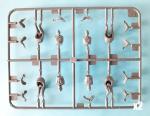
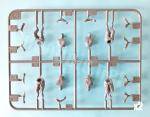
La maqueta incluye las figuras del conductor, acompañante y seis soldados sentados en la parte trasera. Para simplificar la fabricación, Tamiya las proporciona en dos bastidores idénticos y separadas en cuatro piezas cada una, que comprenden los brazos, la cabeza unida al torso y la cadera a las piernas. Todas muestran idéntico uniforme y están tocadas con la típica Feldmütze m38 sin visera.
Lo que realmente proporciona una mínima variedad en las poses, tampoco mucha, son los brazos y algo menos la posición de la cabeza. Los brazos llevan las mangas del uniforme bajadas o enrolladas. Esto último, además del tipo de uniforme, nos va a hacer imposible colocar el vehículo en un ambiente invernal, y menos aún en Rusia. Al estar moldeadas en dos bastidores idénticos, las facciones de los ocupantes son como los de tres parejas de gemelos, por suerte el tamaño ayudará a disimular la contingencia. Uno no quiere pensar lo que hubiese ocurrido de ser mayor la escala, pero siempre queda el viejo recurso de pintar, por ejemplo, bigotes y barbas para diferenciar.
Los detalles de los uniformes no son malos para ser de plástico ya que la indumentaria se aprecia con claridad, por ejemplo los botones, bolsillos y cinturones, por ello me parece que estas figuras bien pueden emplearse con la maqueta, pese a los inconvenientes .
Calcas
La hoja de calcas sólo muestra tres juegos de matrículas y marcas tácticas. Su apariencia es fina y no tienen exceso de soporte. La impresión es buena, como de costumbre en el fabricante.
Instrucciones
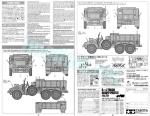
Se presentan en un folleto doblado de diez páginas impreso en blanco y negro con una introducción histórica sobre el vehículo, una lista de colores con equivalencias en pinturas de Tamiya, trece secuencias de montaje y dos páginas de perfiles. El montaje se ve adecuadamente secuenciado y es sencillo de seguir.
Las versiones de pintura no son variadas y se restringen a dos vehículos empleados en Rusia en 1941 y por tanto pintados en gris. En este aspecto es evidente que Tamiya no se calentó mucho la cabeza, aunque hay un tercer acabado invernal en color que aparece en el lado de la caja.
Valoración
Las dos maquetas de Tamiya son las únicas del Krupp Protze en esta escala intermedia por el momento. Como en otras ocasiones, la casa japonesa tomó la delantera a otras que han pasado por alto este conocido vehículo y lo hizo, como tiene por costumbre, detallando lo esencial y simplificando el montaje.
Puede que el chasis metálico y sus tornillos no sea lo más atractivo para algunos por su excesiva simplicidad, pero también es justo reconocer que el detalle es más que decente en otros aspectos, la carrocería y la cabina básicamente, y no desmerece al montaje, que es lo bastante sencillo para la mayoría de modelistas. Afortunadamente, para quienes piensen en sacarle todo el partido a esta maqueta hay varias mejoras disponibles en el mercado, tanto de resina como de fotograbado.◊

The kit
The Krupp Protze has been in Tamiya’s 1/48 scale AFV catalogue from the beginning. This is not surprising considering the popularity of this little truck and also the fact that the manufacturer has kept it in their 1/35 range for decades. As in the larger scale, the 1/48 collection also includes the two versions of the Protze, both the troop transport (Kfz. 70) and the artillery tractor for the PaK 36 anti-tank gun (Kfz. 69).
The box contains six sprues of grey parts, two of them containing the figures are doubled, a clear sprue, the metal chassis, the decals and the instructions. Parts are well moulded, with no blemishes, flash or ejector pips except on the windscreen. There are ejector marks on the cab and cargo tray side panels, but they are very shallow and should not be difficult to fill.
As in other early kits of this series, Tamiya provide the vehicle frame and part of the chassis detail in a single metal piece to simulate weight, with the drawback of having to use cyanoacrylate to glue plastic pieces. Also as usual, the manufacturer compensates for the lost detail with ease of assembly. On the other hand, this release has not spared the number of figures included to add further realism to the final finish, thus defining the main role of this Kfz. 70 as troop transport.
Assembly is clearly sequenced and begins with some pieces added to the chassis, continues with the cargo tray, then comes the cab construction, and finishes in the front bodywork. The process looks quite easy to follow and that will surely make painting much easier.
Chassis, suspension and wheels
The metal chassis piece has very little detail on the underside. The piece shows the front leaf springs, the engine lower part, the middle legth of the exhaust pipe including the muffler, a spare box with fastening straps on the left side as well as the cab running boards. There are separate pieces for the front axle attached to the steering bar, the exhaust pipe forked outlet, the lower side of the fuel tank, a cross piece to insert the spare wheels, the rear axles and suspension and, finally, the exhaust tailpipe plus the tow hook.
The rear suspension consists of two axles with two reinforcement pieces joined by two pieces showing the volute suspension springs. The subassembly is attached to the chassis by means of two screws behind the cargo tray, this way we avoid the use of CA glue and at the same time construction is greatly simplified.
As in other kits released from Tamiya, the wheels are molded in two parts, with one piece containing the tires and the outer rim side, and another for the rim edges, except for the spare wheels, which lack the inner ring. The tires show a convincing tread pattern, although they do have slight seam lines that can be removed with smooth sandpaper.
Cab and front body
The cab floor is provided in one piece which also includes the two seats as well as the floor and gearbox cover. This piece is screwed to the metal chassis, but the screw heads are hidden by plastic pieces under the vehicle. Both the floor and the seats are appropriately textured. The three levers to be attached on the gearbox are thin pieces.
The rear panel shows a separate backrests and the sides are detailed on the outer face with the spare wheel covers. The wheels are inserted into the transverse axle previously glued onto the metal chassis. The steering wheel and dashboard are placed on the front bulkhead. The latter has some finely raised gadgets. The clear windscreen is molded with the frame and the raised wipers.
The nose is separated into three pieces. The scuttle panel shows the fuel cap cover, the second is the bonnet attached to the front fenders and the third is the front grille, which reproduces the crank-start cover and the grilles, which look a bit simple but are passable. The bonnet lacks the latches and, although detail shows the notch on the front left side for the rod connecting the steering column gear to the sway bar, this gear is not included. The front bumper is separate and comes molded with the number plate.
Separate detail of the front area includes the headlights with separate night driving lenses, the external steering wheel gear, the pennant holder, the width and turn indicators, a spare box, a small auxiliary tank on the spare wheel covers, plus two Kar 98k rifles stowed on the running boards. Also included is a three-piece fuel can which the instructions show inside the tray.
Cargo bed
It is made up of eight pieces plus the separate fenders. Rendition of the wood planks is not bad, although it is too smooth except on the seats. Tamiya have omitted almost all the rivets from the metal fittings perhaps due to their small size in this scale, and the hinges are very simple.
The rear side has the number plate moulded on the piece and the rear door comes apart allowing you to show it open if you wish. The top is detailed with a piece for the folded tarp holders and the outer sides show several tools (shovels, axes and a pickaxe) in separate nice pieces, plus two extra wooden planks fitted on both sides. The fenders are in one piece, with the mudflaps separated. Thickness of these pieces looks reasonable for the scale.
The cargo bed is attached to the chassis by means of two metal screws that also fasten the rear axles, as said before.
Figures
The kit includes the figures of the driver, passenger and six soldiers sitting in the cargo tray. To simplify manufacturing, Tamiya provides them on two identical sprues and separated into four pieces each. Each figure comprises the arms, the head moulded with the torso and the hips joined to the legs. They all have the same uniform and wear the typical Feldmütze m38.
What really provides a minimal variety in the poses, not too much either, are the arms and a bit less the position of the head. The arms have the uniform sleeves either lowered or rolled up. This as well as the summer uniform will make it impossible to set the vehicle in a winter scene, and even less so in Russia. Being molded on two identical sprues, the crew facial features look those of three pairs of twins, but luckily the size will help to conceal this. One does not want to think what would have happened if the scale had been larger, but we always have the old resource of painting, for example, moustaches and beards to make things a tad different. Uniform details are not bad for plastic as some items can be clearly seen, for example the buttons, pockets and belts, so I think these figures can be used with the kit, despite the said drawbacks.
Decals
The decal sheet only shows three sets of plates and tactical markings. They are thin in appearance and do not have surplus carrier film. Printing is good, as usual in the manufacturer.
Instructions
They are printed in a 10-page folded brochure printed in black and white. It shows a historical introduction about the vehicle, a list of colors with Tamiya paints cross references, 13 assembly chapters and two pages of profiles. Assembly is clearly sequenced and easy to follow.
Paint versions are not varied, being restricted to two vehicles used in Russia in 1941 and therefore painted in grey. In this sense it is evident that Tamiya did not squeeze their own brains too much, though there is a third paint finish on the box top side showing a vehicle in winter camouflage.
Conclusion
The two Tamiya boxes are the only Krupp Protze kits in the 1/48 scale for the time being. As on other occasions, the Japanese manufacturer took the lead over others who have overlooked this well-known vehicle and did so by detailing the essentials and simplifying assembly.
The metal chassis and the screws may not be the most attractive thing for some due to their excessive simplicity, but it is also fair to acknowledge detail is more than decent in other aspects, basically the body and the cabin, and it does not affect assembly, which is simple enough for most modellers. Fortunately, there are several aftermarkets available both in resin and photo-etched for those who may wish to get the most out of this kit.◊
Publicado – Published: 8 / 2024
©www.jmodels.net
 jmodels.net
Debe estar conectado para enviar un comentario.