
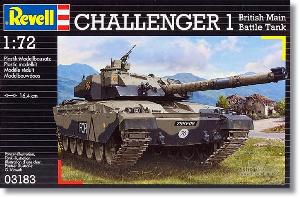
De un vistazo – Quick look
MATERIAL Y PIEZAS
MEDIA & PARTS:
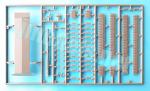
- Plástico inyectado (129 piezas).
- Injected plastic (129 parts).
CALCAS – DECALS:
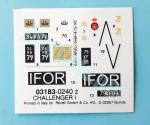
- Marcas tácticas y de IFOR, insignias de unidad y matrículas. Finas y bien impresas.
- Tactical and IFOR markings, unit badges, number plates. Thin and well printed.
OPCIONES – OPTIONS:
- 17/21 de Lanceros. Ejército Británico del Rhin. Ejercicio Iron Hammer (Alemania), 1988.
- Húsares Reales de la Reina. IFOR. Bosnia-Herzegovina, 1996.
- 17/21 Lancers. British Army of the Rhine. Exercise Iron Hammer (Germany), 1988.
- The Queen’s Royal Hussars. IFOR. Bosnia and Herzegovina, 1996.
INSTRUCCIONES – INSTRUCTIONS:
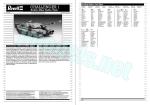
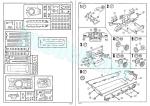
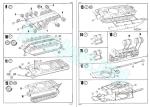
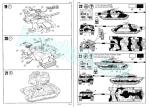
- Folleto A4 de 12 páginas impreso en blanco y negro. Contiene una breve historia del vehículo, una lista de colores con códigos de pintura equivalentes, un plano numerado de piezas, 21 secuencias de montaje y perfiles. Muy claras.
- 12-page A4 brochure printed in black and white. It shows a short history of the vehicle, a list of colors with paint codes, a numbered parts plan, 21 assembly sequences and profiles. Very clear.
LO MEJOR – THE BEST:
- Buen detalle general. Las escotillas del comandante y conductor pueden mostrarse abiertas. Montaje sin dificultad aparente.
- Nicely detailed overall. Commander’s and driver’s hatches can be posed open. Apparently an easy build.
LO PEOR – THE WORST:
- Contenedores de estiba en la torre. Lanzafumígeros.
- Turret stowage bins. Smoke dischargers.
VALORACIÓN – CONCLUSION:
- Detalle y facilidad de montaje andan equilibrados en esta maqueta, apta para cualquier aficionado a los vehículos más recientes.
- Detail and ease of assembly are on a par in this kit, which looks suitable for any modern armour fan.

La maqueta
No hay mucho donde elegir para hacer un Challenger I en la escala 1/72 a día de hoy, pero seguramente alguna marca de las que ahora se estilan haciendo maquetas militares de este tamaño (pongamos Takom, Vespid, Meng y por el estilo), se fijará en este vehículo a no mucho tardar. Además del molde de Revell, también hay otro de Trumpeter. No conozco el del fabricante chino sino por fotos y ambos me parecen muy parejos en detalle y despiece. La principal diferencia es que Trumpeter ofrece el tren de rodaje parcialmente unido a las cadenas, salvo las ruedas externas.
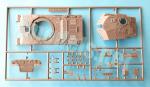
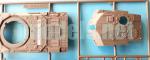
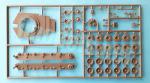
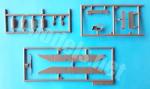
La maqueta sobre la que escribo es la última, por el momento, de las varias ediciones que Revell ha lanzado desde finales de los años 90. Una de ellas incluye 48 figuras de soldados británicos modernos para darle aún más aliciente al modelo. La maqueta está despiezada en cinco bastidores, pero tres de ellos son pequeños y contienen entre 6 y 3 piezas solamente. La caja incluye también las calcas y las instrucciones, como de costumbre.
La calidad del molde y la facilidad de montaje me parecen bien equilibradas en esta maqueta. El detalle en casi todas las zonas del vehículo es muy bueno, destacando la cubierta del casco, la torre, las ruedas externas del tren de rodaje, el cañón y las cadenas. Las piezas están correctamente moldeadas, no poseen marcas y solo hay algunos cilindros de salida del eyector que limpiar.
No hay opciones de montaje y únicamente dos opciones de pintura, que son más o menos las habituales que Revell ha venido ofreciendo en ediciones anteriores, donde prácticamente en todos los casos ha incluido vehículos presentes en diferentes ejercicios militares, o bien integrados en fuerzas de pacificación internacionales (SFOR, KFOR, o IFOR como en este caso).
Suspensión, cadenas y parte inferior del casco
La zona inferior del casco está separada en cuatro piezas, ya que la plancha inferior delantera viene unida al fondo. La pieza inferior no tiene detalle y en la plancha delantera tenemos dos ganchos de remolque, más otras dos piezas que simulan el mecanismo de ajuste de las cadenas. Falta, sin embargo el evidente ojal de remolque que puede verse en imágenes del Challenger I en Bosnia y otros lugares cuando no estaba tapado por el blindaje adicional. Los detallistas lo tendrán fácil porque la pieza no es difícil de replicar.
Lo lados del casco están detallados con los diferenciales de las ruedas tractoras, la amortiguación de los ruedas, los brazos de las ruedas tensoras y los cilindros de los rodillos de retorno, aunque sus ruedas son piezas separadas. El detalle de la amortiguación aparece demasiado unido e irreal a la plancha, pero al colocar el tren de rodaje y añadirle además los faldones laterales, poco o nada se va a notar. Las tractoras y tensoras son dobles y muestran buen detalle, especialmente en la rueda externa. Los dientes de las tractoras están bien definidos pese a su diminuto tamaño. Las ruedas internas del tren de rodaje están moldeadas con los brazos de suspensión, mientras que las externas muestran un detalle bastante correcto en la llanta.
Las cadenas están divididas en tramos y eslabones para contornear las tractoras y tensoras. El detalle de los eslabones por ambos lados es bueno y los dientes no son muy prominentes, sino más bien algo pequeños para su tamaño real.
La plancha trasera del casco incluye las pilotos de conducción y tiene varias piezas separadas para los soportes de los depósitos auxiliares, un par de eslabones de repuesto y otras tres piezas que no sé distinguir. Los depósitos están separados en mitades con las correas y enganches de sujeción bien definidos.
Parte superior del casco
Terminada la parte inferior del casco y completadas las cadenas, el montaje pasa ahora a la parte superior, que está reproducida en una sola pieza. Esta incluye los guardabarros delanteros, con los faldones de vinilo parcialmente marcados, y el hueco de la escotilla del conductor, que tiene la tapa separada y el visor moldeado tras el hueco de acceso. El detalle de la superficie de la cubierta es muy bueno, mostrando gran profusión de accesos, bisagras, las rejillas nítidamente marcadas, herramientas, cajas de respeto y las tapas de relleno de los depósitos de combustible. El anillo de la torre muestra un rebaje bastante profundo en su contorno.
La parte delantera del casco cuenta con piezas exentas para los faros, reproducidos con nitidez para el tamaño, así como la barra de ajuste de las cadenas. Faltan los retrovisores y los extintores manuales, pero en realidad no siempre se ven instalados en las imágenes de este carro, especialmente cuando han intervenido en operaciones exteriores.
Los lados muestran los cables de remolque separados y los faldones aparte, que Revell ha tenido la previsión de afinar, biselando el contorno. Las piezas muestran los estribos abiertos y algunos pequeños enganches casi imperceptibles.
Torre
Está separada en tres piezas: la base, la plancha trasera y una pieza que incluye los lados, el techo y la parte frontal. En el interior solo hay que instalar la base del cañón, reproducida en una pieza corta con muñones, que van ajustados a una cuna realizada ad hoc y que permite elevar o deprimir el arma. El tubo del cañón es de una pieza con la envoltura térmica bien definida. La boca viene abierta y en pieza aparte. Incorpora el dispositivo reflectante denominado MRS (Muzzle Reference System) que permite corregir el disparo si se produce alteraciones en el tubo debidas al calor o a otras causas.
La plancha delantera de la torre dispone de dos ojales de suspensión, los lanzadores de fumígeros, bastante mal definidos, la apertura nítida de la ametralladora coaxial y una cesta de estiba moldeada de una pieza con la rejilla cegada y replicada en relieve por las caras exteriores. Este contenedor, lo mismo que la cesta de estiba lateral, es sin lugar a dudas lo peor de la maqueta, ya que el plástico, y menos aún a este tamaño, no puede reproducir fielmente la textura de la malla. La maqueta ganará mucho si el modelista la reemplaza por una fina malla de fotograbado, por ejemplo.
Los lados de la torre están detallados con la barbeta cerrada de la mira TOGS, contenedores de estiba y el sistema NBQ en la parte trasera. Finalmente, el techo muestra la cúpula del comandante con tapa exenta y detallada con el anillo de periscopios, que están bien marcados y llevan los pequeños motores de los limpiaparabrisas moldeados en el techo de la torre. La pieza también contiene la mira y, por separado, una ametralladora bastante aceptable y sus contenedores de munición. Por delante de la cúpula aparece la mirilla del artillero abierta y, a un lado, la escotilla del cargador, que en este caso está cerrada. La torre incluye las bases de las antenas, pero las instrucciones no indican cómo fabricarlas porque no las muestran.
Calcas
La pequeña hoja contiene marcas tácticas y de la IFOR, insignias de unidad y matrículas. Los motivos muestran apariencia fina y están bien impresas.
Instrucciones
Están impresas en un folleto de tamaño A4 de 12 páginas en blanco y negro. Contiene una breve historia del vehículo, una lista de colores con códigos de pintura equivalentes de la gama de Revell, aunque este extremo no se menciona, un plano numerado de piezas, 21 secuencias de montaje y perfiles. Las vistas explosionadas son muy claras y no tienen dificultades, pero omiten las antenas de la torre.
Las opciones de pintura muestran colores similares (verde oliva claro y negro), pero con patrones diferentes. El primer vehículo estuvo destacado en el British Overseas Army (BOAR) en la década de los años 80, mientras que el segundo tomó parte en la Fuerza de Implementación (IFOR) presente en Bosnia-Herzegovina en 1996.
Valoración
Sin que carezca de elementos ausentes o por mejorar, la maqueta aún se mantiene en buena forma y posee gran paridad entre el detalle y la facilidad de montaje. Creo que gustará a los aficionados a los vehículos modernos y, para hacerla incluso más actual, se le podría dar un tiento como vehículo empleado por Ucrania en el actual conflicto en ese país.◊




The kit
There is not much to choose from to build a Challenger I in the 1/72 scale today, but surely some of the brands that are now popular with military models of this size (such as Takom, Vespid, Meng and the like), will release this vehicle before too long. In addition to the Revell tooling, there is also another one from Trumpeter. I know this latter only from Internet pics, but both look similar in detail and parts breakup, with the main difference being the running gear partially attached to the tracks in Trumpeter’s kits.
The kit I review here is the last, so far, of the several boxings Revell have released since the late 90s. One of them includes 48 figures of modern British soldiers to give some more appeal to the finished model. The kit comes in 5 sprues, but three of them are small and only contain between 6 and 3 pieces. The box also includes the decals and instructions, as usual.
The quality of the moulding and ease of assembly seem well balanced in this kit. Detail in almost all areas of the vehicle is very good, especially on the engine deck, the turret and the gun. Parts are correctly molded, there are no pin marks and only a few ejector pips to clean up.
There are no assembly options and only two paint choices, which are more or less the usual ones Revell have been offering in previous boxes, where in most cases they have included vehicles present in different military exercises or integrated in international peacekeeping forces, such as the SFOR, KFOR, or IFOR as in this case.
Suspension, tracks and lower hull
The lower hull is separated into four pieces with the front lower plate molded with the bottom side. The lower piece is flat and the front plate is detailed with two tow hooks and the track adjustment devices. Missing, however, is the obvious towing bollard that can be seen in images of the Challenger I in Bosnia and elsewhere when it was not covered by additional armor. Detailers will have an easy task because the piece is not difficult to copy.
The hull sides are detailed with the drive wheel differentials, wheel dampers, idler wheel arms and return roller cylinders, although the rollers are separate pieces. The dampers are unrealistically molded on the plate, but after adding the road wheels and the side skirts, little or nothing will be noticed. The sprockets and idlers are double and show good detail, especially on the external wheel. The sprocket teeth are well defined despite their tiny size. The inner wheels in the running gear are molded with the suspension arms, while the outer ones show a fairly correct detail on the rim.
The tracks are molded in lengths and links to contour the sprockets and idlers. Detail is quite good on both sides and the teeth are not very prominent, but rather a little small compared to their actual size.
The rear hull plate includes the lights and has several separate pieces for the auxiliary tank supports, a couple of spare links, and three other pieces that I can’t identify. The fuel tanks are separated in halves with well-defined straps and fasteners.
Upper hull
Once the lower hull part is finished and the tracks installed, now assembly moves on to the upper hull, which is molded in one piece. This includes the front fenders, with partially engraved vinyl skirts, and the driver’s hatch, which has a separate cover and the periscope rendered behind the hatch. Surface detail on the hull deck is very good, showing lots of registers, hinges, clearly defined grillles, tools, spare boxes and fuel tank filler caps. The turret ring shows a fairly deep recess around it.
The hull front features separate parts for the headlights, nicely rendered, as well as the spanner handle. The mirrors and hand-held fire extinguishers are missing, but in fact they are not always seen installed in the images of this tank, especially when they were involved in foreign operations.
The sides have pieces for the tow cables and the skirts, which Revell have wisely refined by beveling the contour. The pieces show the footholds open and some tiny brackets.
Turret
It is separated into three pieces: the base, the back plate and a piece that includes the sides, roof and front. Inside the turret is the gun cradle to fit the short barrel base provided with trunnions that allow the weapon to be raised or depressed. The gun barrel is one piece with the thermal shroud and fume extractor well defined. The muzzle is open and molded in a separate piece including the MRS mirror, a device which helps checking the barrel to prevent overheating.
The front turret plate has two lifting eyes, the smoke dischargers, rather poorly defined, the opening of the coaxial machine gun and the camouflage net bin rendered in a piece with the mesh molded raised on the outer sides. This bin, like the side stowage bin, is clearly the worst part of the kit as plastic cannot render the mesh texture. The kit will improve a lot if the modeler can replace it with a thin photo-etched mesh, for example.
The turret sides are detailed with a closed TOGS sight barbette, additional stowage bins and the rear NBC system. Finally, the roof shows the commander’s cupola with a separate and detailed cover with the ring of periscopes, which are well defined and have the small windshield wiper motors molded on the roof. The piece also contains the sight and, separately, a fairly decent machine gun and the ammo boxes. In front of the cupola is an open gunner’s sight and, to one side, the loader’s hatch, which is molded closed in this case. The turret includes the antenna bases but the instructions do not show how to make the aerials.
Decals
The small sheet contains tactical and IFOR markings, unit badges and number plates. The items show fine appearance and are well printed.
Instructions
They are printed on a A4 12-page brochure printed in black and white containing a short history of the tank, a list of colors with equivalent paint codes from Revell range, though this is not mentioned, a numbered parts plan, 21 assembly sequences and profiles. The exploded views are very clear and quite easy to follow, but they leave out the antennas on the turret.
Paint options show similar colors (light olive green and black) but with different patterns. The first is a vehicle from the British Overseas Army (BOAR) in the 1980s, while the second took part in the Implementation Force (IFOR) deployed in Bosnia-Herzegovina in 1996.
Conclusion
Despite having a few missing and improvable parts, the kit is still in good shape and shows a balance between detail and ease of assembly. I think it will like fans of modern vehicles, who could even finish it as one of the tanks used by Ukraine in the current conflict in that country.◊
Publicado – Published: 4 / 2024
©www.jmodels.net
 jmodels.net
Debe estar conectado para enviar un comentario.