
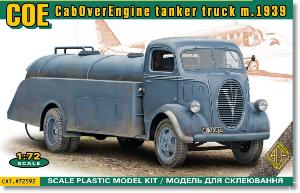
De un vistazo – Quick look
MATERIAL Y PIEZAS
MEDIA & PARTS:
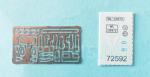
- Plástico inyectado (124 piezas), fotograbado (21 piezas).
- Injected plastic (124 parts), photo-etched (21 parts).
CALCAS – DECALS:
- Un juego de matrículas de la Luftwaffe, indicadores del salpicadero y logotipos de Ford. Aspecto brillante y fino, sin demasiado soporte.
- Luftwaffe number plates, dashboard gauges and Ford logos. Thin and glossy finish without excess carrier film.
OPCIONES – OPTIONS:
- COE (CabOverEngine) camión de repostaje modelo 1939. Luftwaffe. Europa Central, 1941. Probablemente capturado en Noruega.
- COE (CabOverEngine) refueler truck m. 1939. Luftwaffe. Central Europe, 1941. Truck most probably captured in Norway.
INSTRUCCIONES – INSTRUCTIONS:
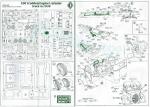
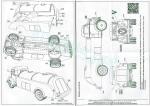
- Folleto de 4 páginas en formato A4 impreso en verde y negro. Contiene un plano numerado de piezas, 12 secuencias de montaje y una hoja de perfiles. Las referencias de color son genéricas.
- 4-page A4 brochure prionted in green and white. Contains a numbered parts plan, 12 assembly sequences and a page of profiles. Paint colors are generic.
LO MEJOR – THE BEST:
- Tema inusual. Molde bastante limpio con buen detalle general.
- Unusual topic. Clean tool with overall nice detail.
LO PEOR – THE WORST:
- Ausencia de piezas para los cristales. Puertas cerradas.
- Lack of clear parts for windows and windshield. Doors molded closed.
VALORACIÓN – CONCLUSION:
- Primera maqueta de este camión en plástico, sin dificultades aparentes en el montaje o la pintura para el modelista con experiencia. Ideal para emplearlo junto a aviones en esta escala.
- First kit of this truck in plastic, with no apparent difficulties in building and painting for the experienced modeler. It can be a nice touch to include next to 1/72 aircraft.

La maqueta
ACE sabe encontrar vehículos inéditos o muy poco vistos en plástico y por eso este Ford COE no podía escapársele. Esta es la primera versión del nuevo molde lanzado en 2024, un camión de transporte de combustible para aviones. La segunda, aún no puesta a la venta cuando escribo esta revisión, pero anunciada en el sitio web del fabricante, es una versión de carga general.
La caja contiene tres bastidores de piezas de plástico, una pequeña plancha de fotograbados, una mínima hoja de calcas y las instrucciones. Dos de los bastidores contienen piezas comunes para las dos versiones que aludía anteriormente y el restante las piezas del depósito de combustible. ACE ha mejorado bastante la limpieza de sus moldes con el tiempo, y en este caso las piezas se presentan sin marcas y con escasas rebabas. Otra diferencia respecto a maquetas de hace años es que las piezas poseen en su gran mayoría bebederos bien separados de los bastidores, lo que evita desperfectos y errores al cortarlas.
La edición está destinada a modelistas con alguna experiencia en maquetas de serie limitada, principalmente por la presencia de piezas de fotograbado muy pequeñas. Algunos elementos son muy finos y no es sencillo sacarlos de los bastidores sin habilidad. El montaje en apariencia no es difícil y sigue una secuencia lógica que se inicia por el bastidor, continúa con la cabina y termina con el depósito en la parte trasera.
La pintura, que únicamente propone un vehículo pintado de gris, como los de las escasas imágenes conservadas de este camión al servicio de los alemanes, y la adición de las pocas calcas necesarias no deben plantear problemas.
Revisión
El bastidor está moldeado en un a pieza fina que incluye el motor simulado en su mitad inferior situado bajo la cabina con la caja de cambios aparte. La pieza tiene algunos travesaños separados que se añaden al inicio del montaje, lo mismo que el tubo de escape dividido en dos tramos, muy fino, recto y moldeado con el silenciador. El bastidor incluye un tubo de escape adicional, mucho más largo y de forma irregular que no es pertinente en esta maqueta. La transmisión trasera consta de un eje auxiliado por dos soportes a los lados en forma de V unidos al eje trasero. Este es de una pieza con la mitad del diferencial aparte. Las ballestas traseras son dobles y tienen un detalle pasable y finas líneas de molde que limpiar.
El eje delantero está complementado por otras dos barras de torsión laterales, la barra estabilizadora y los brazos de la suspensión. La parte frontal del bastidor del chasis dispone de un fino travesaño de fotograbado que se debe arquear ligeramente para pegarlo y añadir los dos ganchos de remolque del mismo material. Una plantilla para doblar el travesaño con la forma adecuada habría sido muy útil de haberla incluido las instrucciones. Una vez colocadas estas tres piezas, se puede añadir el paragolpes delantero.
En contraste con otras maquetas anteriores, ACE incluye ruedas de plástico para este Ford. Las delanteras están separadas en dos piezas, la externa lleva la llanta y el neumático y la trasera sólo la llanta. El detalle de la llanta exterior muestra los huecos y la corona de tuercas central muy bien definidos. La rueda de repuesto tiene idéntico despiece, pero no se emplea en esta versión. Las ruedas traseras son dobles. El par interno se monta lo mismo que las ruedas delanteras, mientras que el par externo tiene el neumático separado de la llanta, que es diferente a la del tren delantero, pero igualmente bien definida. Todos los neumáticos muestran la banda de rodadura mínimamente marcada y finas líneas de molde. Cada rueda va pegada con vástagos situados en los extremos de los ejes.
El interior de la cabina está dispuesto sobre un suelo doble sobre el que van pegados las palancas y asientos con las bases y respaldos separados. En el centro aparece la cubierta de acceso al motor en varias piezas. El panel delantero va unido por delante del suelo y contiene los pedales moldeados en la pieza y el salpicadero aparte. Hay dos calcas para los indicadores principales del panel y una pieza que simula la guantera. La columna de la dirección y el volante, algo grueso, se añaden por debajo del salpicadero. El bastidor del parabrisas está unido a una sección corta del morro. Todos los cristales de la cabina hay que fabricarlos con la ayuda de plantillas a tamaño real impresas en las instrucciones.
El techo, el panel posterior y los lados de la cabina, que incluyen las puertas, el morro y el hueco de las ruedas delanteras son piezas exentas. Las molduras, donde proceden, están decentemente representadas, aunque las manetas de las puertas no están muy definidas por su tamaño. Las puertas no pueden mostrarse abiertas al venir unidas a una parte de la carrocería. La parte frontal del morro muestra la parrilla de forma ovalada muy bien definida.
El detalle externo incluye los guardabarros delanteros y los estribos, el retrovisor y los faros, con lentes separadas pero no transparentes, los limpiaparabrisas de fotograbado así como el tubo de llenado de combustible.
El depósito de combustible trasero está separado en cinco piezas. La inferior lleva los arcos de los guardabarros traseros para añadírselos encima. La parte superior incluye también el panel trasero, que está detallado con las puertas del compartimento de controles de la bomba cerradas y dos tapas superiores de acceso, la posterior detallada con dos conductos. También hay que pegar cuatro conductos unidos por una base en la parte inferior trasera del depósito. Las piezas laterales muestran sendos compartimentos cerrados. El lado delantero dispone de cuatro pequeños soportes horizontales que dan estabilidad a la carrocería trasera. El montaje termina con el añadido del paragolpes y las pequeñas luces traseras así como la placa de matrícula de fotograbado. La placa delantera, de idéntico material, no aparece en el montaje pero debe ir colocada sobre el lado derecho del paragolpes.
La hoja de calcas es muy pequeña y tan solo contiene un juego de matrículas de la Luftwaffe, dos indicadores del salpicadero, logotipos de Ford y una V prominente sobre la parrilla delantera, como se aprecia en la ilustración de la caja, que la toma a su vez de una foto real de este camión. Los motivos tienen un acabado fino y brillante sin exceso de soporte.
Las instrucciones están impresas en blanco y verde en un folleto de cuatro páginas de formato A4 que contiene un plano numerado de piezas, doce secuencias de montaje y una hoja de perfiles. El montaje está claramente representado a buen tamaño al igual que la identificación de las piezas. Los colores tienen referencias genéricas y sólo aparecen los de algunos elementos como las luces traseras o las bandas blancas en los guardabarros. Se supone que la carrocería y el depósito deben ir en gris RAL 7021 como aparecen en la caja.
Valoración
ACE ha tenido buen ojo de traernos este raro camión con el que no contábamos hasta ahora, que yo sepa. Para el modelista ducho, ni el montaje ni la pintura de la maqueta deben tener dificultades excesivas, lo que supone un aliciente añadido a un vehículo muy apropiado para emplearlo en escenas o dioramas en la escala pequeña.◊

The kit
ACE has a knack for finding and kitting rare or unseen plastic vehicles, and this Ford COE couldn’t escape their attention. This is the first boxing of the new tool released in 2024, a fuel tanker truck. The second release, not yet available at the time of writing but announced on the manufacturer’s website, is a general cargo version.
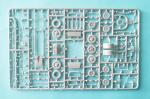
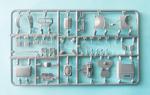
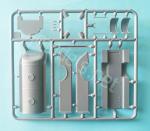
The box contains three sprues of plastic parts, a small photo-etched fret, a small decal sheet, and the instructions. Two of the sprues contain parts common to both versions mentioned above, and the third contains the fuel tank parts. ACE have significantly improved their tools over time, and in this case, parts are free from marks and only have minimal flash. Another difference compared to older kits is that most of the parts have the gates well separated from the sprues, preventing damage to parts.
This edition is intended for modelers with some experience in short-run kits, mainly due to the presence of very small photo-etched parts. Some elements are very delicate and not easy to take out from the sprues without skill. Assembly appears to be straightforward and follows a logical sequence, starting with the chassis, continuing with the cab, and finishing with the fuel tank. The paint job, which only offers an overall gray version of the vehicle, as seen in the few surviving photographs of this truck in German service, and the application of the few necessary decals should not pose any problems.
Review
The chassis is molded as a thin piece that includes the engine in its lower half, located under the cab, with the gearbox apart. The piece has some separate crossmembers that are added at the start of assembly, as is the exhaust pipe, which is divided into two lengths, very thin, straight, and molded with the muffler. The chassis includes an additional, much longer, and irregularly shaped exhaust that is not applicable to this kit. The rear transmission consists of a shaft with two V-shaped torsion arms on the sides attached to the rear axle. This is a single piece with a separate half in the differential. The rear leaf springs are double and have passable detail and fine seam lines that need some cleanup.
The front axle is complemented by two additional side torsion bars, the sway bar, and the suspension arms. The front of the chassis frame has a thin photo-etched crossmember that needs to be slightly bent to attach it in place and has two separate tow hooks made of the same material. A template for bending the crossmember into the correct shape would have been very useful if it had been included in the instructions. Once these three pieces are in place, the front bumper can be added.
In contrast to other previous kits, ACE provide plastic wheels for this kit. The front wheels are separate into two pieces: the outer piece includes the rim and tire, while the inner rim comes separately. The detail of the outer rim shows the gaps and the central nut ring very clearly defined. The spare wheel has the same parts breakdown, but it is not used in this version. The rear wheels are double. The inner pair is built the same way as the front wheels, while the outer pair has the tire separate from the rim, which is different from the front counterpart but equally well-defined. All the tires show a softly engraved tread pattern.
The cab interior is arranged on a double floor to which the levers and seats are attached. The seats comprise separate bases and backrests. The engine access cover is located between the seats and comes in several pieces. The front panel contains the pedals molded on the piece and a separate dashboard. There are two decals for the main gauges and a piece that simulates the glove compartment. The steering column and the somewhat thick steering wheel are added below the dashboard. The windshield frame is attached to a short section of the front body. The modeler needs to provide all the cab windows using the full-size templates printed in the instructions.
The roof, rear panel, and cab sides, including the doors, front end, and front wheel arches are separate parts. The body moldings, where needed, are decently represented, but the door handles are not very well defined due to their size. The doors cannot be shown open as they are attached to the body. The vehicle front is a separate piece featuring a clearly defined oval grille.
External details include the front fenders and running boards, the rearview mirror and headlights (with separate but not clear lenses), photo-etched windshield wipers, and the fuel filler.
The rear fuel tank is separated into five pieces. The lower piece includes the rear wheel arches for attaching the fenders on top. The upper piece also includes the rear panel, which is detailed with closed doors in the pump control compartment and two upper filler covers. The rear filler is detailed with two ducts. Four ducts joined by a base are also glued to the lower rear of the tank. The side body pieces show two closed compartments. The front side has four small horizontal supports that provide stability to the rear body. Assembly is completed with the addition of the bumper, the small tail lights, and a photo-etched license plate. The front plate, made of the same material, is not shown in the instructions but should be attached on the right side of the bumper.
The small decal sheet only contains a set of Luftwaffe plates, two dashboard gauges, Ford logos and a noticeable V placed on the front grille as the boxart shows, which is copied from a historical picture of this truck in German hands. The decals have a thin and glossy appearance without too much carrier film.
The instructions are printed in green and white on a 4-page brochure containing a numbered parts plan, twelve assembly sequences and a page of profiles. Assembly steps as well as parts identification are very clearly shown. Color references are generic and only identified in the rear lights and the white stripes on the mudguards. The body and tank are supposed to be painted German grey (RAL 7021) as in the artbox.
Conclusion
ACE has hit the nail in releasing this rare truck, which, as far as I know, we hadn’t seen in plastic before. For the experienced modeler, neither the assembly nor the painting of the kit should be troublesome. This is an extra incentive for a vehicle that is very suitable for use in scenes or dioramas in this scale.◊
Publicado – Published: 11 / 2025
©www.jmodels.net
 jmodels.net
Debe estar conectado para enviar un comentario.