
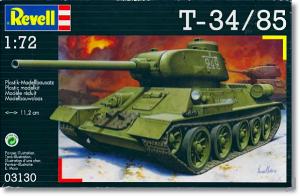
De un vistazo – Quick look
MATERIAL Y PIEZAS
MEDIA & PARTS:
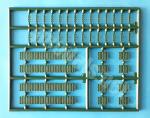
- Plástico inyectado (135 piezas).
- Injected plastic (135 parts).
CALCAS – DECALS:
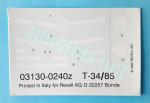
- Numerales y marcas de identificación aérea. Bien impresas.
- Numbers and markings for aerial identification. Well printed.
OPCIONES – OPTIONS:
- T-34/85. 25ª Brigada Blindada de la Guardia. 2ª Cuerpo Blindado de la Guardia. 3er Frente Bieolorruso. Prusia Oriental, 1945.
- T-34/85. 55ª Brigada Blindada de la Guardia. 7º Cuerpo Blindado. Berlín, abril de 1945.
- T-34/85. 25th Guards Armored Brigade. 2nd Guards Armored Corps. 3rd Bielorussian Front. East Prussia, 1945.
- T-34/85. 55th Guards Armored Brigade. 7th Armored Corps. Berlin, April 1945.
INSTRUCCIONES – INSTRUCTIONS:
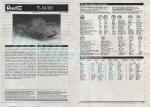
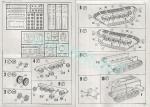
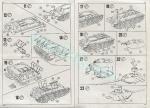
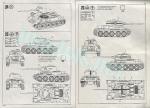
- Folleto vertical de tamaño A5 y 12 páginas impreso en blanco y negro. Contiene una breve introducción histórica sobre el vehículo, una lista de colores identificados con códigos de pintura, un plano numerado de piezas, 23 secuencias de montaje y 2 páginas de perfiles. Muy claras.
- 12-page A5 vertical leaflet printed in black and white. It shows a historical summary about the vehicle, a list of colors identified with paint codes, a numbered parts plan, 23 assmbly steps and 2 pages of profiles. Very clear.
LO MEJOR – THE BEST:
- Muy buen detalle general. Sencillez de montaje. Tapas de las escotillas separadas. Tren de rodaje.
- Nicely detailed overall. Easy build. Separate hatch covers. Running gear.
LO PEOR – THE WORST:
- Por señalar algo, carece de textura en la torre y casco.
- Just to note something, it lacks texture on the turret and superstructure.
VALORACIÓN – CONCLUSION:
- Muy bien detallada y fácil de montar. Excelente maqueta para modelistas de cualquier nivel.
- Nicely detailed and easy to build. Excellent kit for modellers with different modelling skills.

La maqueta
Poco se ha prodigado esta maqueta desde su aparición hace cosa de un par de décadas. Revell la aprovechó en un par de ocasiones para incluirla en una caja con infantería siberiana (así reza la caja) y en un diorama sobre la Batalla de Stalingrado. Después de esto, sólo ha aparecido en una ocasión con un cambio de instrucciones y parcialmente de calcas.
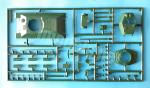
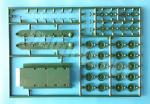
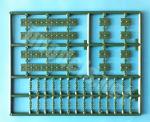
La caja incluye tres bastidores de piezas de color verde botella, una hoja de calcas pequeña y las instrucciones. A primera vista la maqueta da la impresión de no tener complicaciones en el montaje y muestra un detalle bastante bueno, Las piezas no tienen defectos y están limpias de rebabas, prácticamente listas para usar, con la excepción de algunos puntos de salida del eyector presentes en cuatro de ellas.
Revell ha retratado bastante bien para esta escala el Modelo 1945, denominado así aunque entró en servicio ya en 1944. Algunas de las características singulares del modelo que vamos a encontrar en la maqueta son los perfiles de algunas superficies de la torre y, sobre todo, las ruedas del tren de rodaje. Ambos los describiré en su lugar.
Casco y tren de rodaje
El casco está dividido en tres piezas. La barcaza incluye la plancha frontal inferior. La plancha posterior está separada y muestra el carenado de la transmisión bien resuelto. También están adecuadamente detallados los enganches por separado. La parte superior del casco corresponde a la superestructura, que está moldeada con la plancha frontal, la trasera y los guardabarros, cuya zona delantera tiene forma cuadrada. Los traseros vienen bien separados de modo que pueden ser modificados con facilidad si queremos simular deterioro o pérdida.
En mi opinión, uno de los mejores detalles de esta maqueta es el poder montar y pintar el tren de rodaje aparte del casco si lo deseamos. Los lados del casco reales son dos piezas superpuestas a la barcaza detalladas con el hueco de los amortiguadores y los brazos de la suspensión, todos irrealmente reproducidos en la misma posición, pero esto simplifica el montaje a la vez que facilita que el modelo asiente bien. Estos lados aparte permiten montar todas las ruedas y cadenas de cada lado, pintarlas y envejecerlas para luego añadirlas al casco.
Las ruedas tractoras y tensoras vienen dobles, detalladas con los huecos y los bujes bien definidos y limpios. Las ruedas de rodaje son del tipo denominado informalmente “tela de araña completa”, con doce orificios grandes para aligerar peso en la llanta, más otros en igual número y más pequeños situados alrededor del buje. Estos últimos no están reproducidos, aunque podemos pasar este detalle, dada la dificultad de copiarlos a este tamaño. Las ruedas también se caracterizan por los doce radios de refuerzo, detalle que también refleja la maqueta, aunque parecen un poco menos marcados de lo que deberían estar. Los bujes están moldeados con las ruedas y parecen un poco pequeños. Las bandas de caucho están bien señaladas e incluso llevan las minúsculas hendiduras por el lado externo.
Las cadenas muestran muy buen detalle, especialmente por la cara externa. El lado interno tiene los dientes de los eslabones bien definidos. A esta escala es casi una nimiedad señalar el modelo de cadena debido al tamaño, pero se puede señalar que el dibujo exterior carece del hueco central en los eslabones.
Superestructura
El detalle de la parte superior del casco es muy bueno, faltando sólo un poco de textura en las superficies. El glacis está detallado con dos enganches, la ametralladora y su mantelete en una pieza, un tramo de cadenas de repuesto y la escotilla del conductor con su visor. Estos dos últimos vienen en la pieza. El filo inferior del glacis lleva una pieza superpuesta de refuerzo en la unión de las dos planchas frontales.
La plancha trasera cuenta con dos escapes, que están separados de los protectores blindados, aunque los conductos no están abiertos. La tapa de acceso a la transmisión está bien marcada y detallada con finos remaches.
Las rejillas de la cubierta del motor están bien representadas, con textura fina y diferente para las más retrasadas, y además cuentan con dos pequeñas asas a los lados de la cubierta. Por delante aparece el hueco de la torre, cuyo anillo lleva también algún detalle grabado en derredor.
El detalle a los lados de la superestructura incluye los depósitos auxiliares, formados por dos mitades más dos caras, provistos de soportes separados. Además, tenemos varias cajas de respeto, más asas finas, enganches, el faro y la bocina, un serrucho y el cable de arrastre situado sobre el guardabarros derecho.
Torre
Se compone de dos mitades con dos paneles separados situados por debajo del mantelete. El resalte situado justo al lado de la cúpula y las superficies aplanadas de los lados nos indican de nuevo que el carro es del Modelo 1945. La unión de la torre con el chasis es la usual mediante pestañas moldeadas en la base de la torre. De nuevo, lo único que se echa en falta es la textura de fundición de las superficies.
Los lados de la torre están detallados con asas. La cúpula lleva los visores bien marcados, el periscopio y la escotilla separada. También está separada la escotilla del cargador, lo que resulta útil para colocar figuras en ambos puestos si lo deseamos. En la parte posterior vemos las pequeñas cúpulas del sistema de ventilación y por delante los periscopios auxiliares.
El mantelete viene de una pieza con el orificio de la ametralladora coaxial y la base del cañón. La pieza incluye dos pequeños muñones a los lados que permiten encajarla en los soportes moldeados en la base de la torre. Esto permite el alza o depresión del cañón. El tubo del cañón es de una pieza. Muestra algunas ligeras líneas de molde, pero la forma y la longitud parecen correctas. La boca no viene horadada.
Calcas
La pequeña hoja sólo contiene numerales y líneas blancas de identificación aérea. Los motivos están bien impresos y son finos. Sospecho que pueden ser de Cartograf o Zanchetti, aunque Revell únicamente las identifica como hechas en Italia.
Instrucciones
Están impresas en un folleto vertical de tamaño A5 y doce páginas impreso en blanco y negro. Contiene una breve introducción histórica sobre el vehículo, una lista de colores identificados con códigos de pintura de Revell, un plano numerado de piezas, 23 secuencias de montaje y dos páginas de perfiles. Los pasos de construcción son muy claros. El folleto es un poco engorroso de usar ya que está impreso en vertical con formato horizontal y además no está grapado.
Las terminaciones no son muy distintas, ambos carros pintados de verde con marcas distintas. Uno de ellos muestra líneas sobre y a los lados de la torre para identificación desde el aire.
Valoración
Revell se tomó esta maqueta muy en serio y no se ha obviado nada en cuanto a detalle. Si acaso, lo único que se echa de menos es la textura del blindaje sobre las superficies del casco y torre. Pero este detalle menor, que además se puede representar sin gran dificultad, no debe descartar esta magnífica y sencilla maqueta.
Creo que se puede lograr un buen modelo sólo con lo que viene en la caja, pero los que deseen aún más mejoras tienen fotograbados de Part y Eduard para esta maqueta. También existe un juego de resina de CMK que permite convertir este T-34/85 en versiones sirias y egipcias.◊

The kit
This kit has not been reboxed much since it was released a couple of decades ago. Revell included it in a box with Siberian infantry (that’s what the box says) and in a diorama about the Battle of Stalingrad. After this, it has only appeared once with updated instructions and a little change of decals.
The box includes three frames of bottle green parts, a small decal sheet, and the instructions. At first glance the kit gives the impression of having no difficulties in assembly and shows quite good detail. The parts have no blemishes and are flash-free, almost ready to use, with the exception of some plastic nodes present on four of them.
Revell have accurately rendered a so-called T-34/85 Model 1945 although it entered service in 1944. Some of the unique characteristics of the model that we are going to find in the kit are the profiles of some turret surfaces and, above all, the road wheels. I will describe both below.
Hull and running gear
The chassis is divided into three pieces. The tub includes the lower front plate. The rear plate is separated and shows a well detailed transmission bulges. The separate towing hooks are also adequately defined. The upper part of the hull corresponds to the superstructure, which is molded with the front and rear plates and the fenders, which are of the square type. The rear fenders are molded with a clear gap with the superstructure so that they can be easily modified if we want to simulate deterioration or loss.
In my opinion, one of the best details of this kit is that it allows to assemble and paint the running gear apart from the hull if we wish. The actual hull sides are two pieces matching the tub detailed with shock absorber recesses and the suspension arms, these unrealistically reproduced in the same position, but this simplifies assembly while making it easier for the model to sit evenly on any surface. These separate sides allow you to build, paint and weather all the wheels and tracks and then attach them to the hull tub.
The sprocket and idler wheels are doubled and detailed with well-defined and clean holes and hubs. The road wheels are of the type informally called “complete spider web”, with twelve large holes to lighten weight on the rim, plus others in the same number but smaller located closer around the hub. The small holes are not rendered, but I think we can overlook this detail, given the difficulty of molding them so close to the hub at this scale. The wheels also have the correct twelve reinforcing spokes depicting a Model 1945. These look a bit shallower than they should be. The hubs are molded on the wheels and seem a little small. The rubber bands are well marked and even have tiny realistic indentations on the outside.
Tracks show very good detail, especially on the outside. The inner side has well-defined teeth on the appropiate links. At this scale it is almost trivial to identify the track model, but it can be noted that the exterior pattern lacks the central gap in the links.
Superstructure
The detail on the hull top is very good, with just some cast texture missing on the surfaces. The glacis is detailed with two tow hooks, the machine gun and the mantlet in one piece, a section of spare tracks and the driver’s hatch with the visor. These last two are molded on the piece. The lower glacis edge has an overlapping reinforcement between the two front plates.
The rear plate has two exhausts, which are separated from the armored covers, although the tail pipes are not open. The transmission access cover is well marked and detailed with fine rivets.
The engine deck grilles and louvres are well represented, with a fine and different texture for the grilles, and they also have two small handles on the sides of the deck. In front of these there is the turret ring with some engraved detail around it.
Detail on the superstructure sides includes the auxiliary tanks, comprising two halves plus front and rear sides and provided with separate supports. In addition, we have several spare boxes, more thin handles, hitches, the headlight and horn, a saw and the tow cable attached on the right fender.
Turret
It is made up of two halves with two separate panels located below the mantlet. The small lip located right next to the cupola and the flattened surfaces on the sides are again correct for the tank model rendered. The join of the turret with the chassis is the usual one using molded flanges molded on the turret base. Again, the only thing missing is the cast texture of the surfaces.
The sides of the turret are detailed with more handles. The cupola has open visors, the periscope and a separate hatch. The loader’s hatch also comes apart, which is useful for placing figures in both if we wish. Behind them we can see the small domes of the ventilation system and the auxiliary periscopes in front.
The mantlet comes in one piece with the coaxial machine gun opening and the barrel base. The piece includes two small trunnions on the sides to fit into the brackets molded on the turret lower piece. This allows the elevation or depression of the barrel. The barrel tube is one piece. It shows some slight seam lines, but the shape and length look correct. The muzzle is not opened.
Decals
The small sheet only contains numbers and white lines for air identification. Decals are well printed and thin. I suspect they may be from Cartograf or Zanchetti, although Revell only identifies them as made in Italy.
Instructions
They are printed on a 12-page A5 vertical brochure printed in black and white. It contains a brief historical introduction to the vehicle, a list of colors identified with Revell paint codes, a numbered parts plan, 23 assembly sequences and two pages of profiles. The construction steps are very clear. The boolet is a bit cumbersome to use as it is printed in portrait with a landscape format and is not stapled.
Paint finishes are not very different, both vehicles being painted overall green with different markings. One of them shows lines on the turret roof and sides for identification from the air.
Conclusion
Revell took this kit very seriously and almost nothing has been left out in terms of detail. If anything, the missing cast texture on the hull and turret surfaces. This should not be a deal breaker for this outstanding kit as it can be done without great difficulty.
I think it will build into an excellent kit from the box. For those wishing even more detail there are PE sets from both Part and Eduard for this kit. There is also a resin conversion from CMK to build a more modern T-34/85 in Syrian and Egyptian versions.◊
Publicado – Published: 10 / 2023
©www.jmodels.net
 jmodels.net
Debe estar conectado para enviar un comentario.