
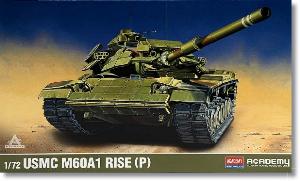
De un vistazo – Quick look
MATERIAL Y PIEZAS
MEDIA & PARTS:
- Plástico inyectado (181 piezas).
- Injected plastic (181 parts).
CALCAS – DECALS:
- Chevrones blancos y negros, líneas y dos pequeños rótulos. Aspecto fino y brillante. Sin exceso de soporte.
- Black and white chevros, lines and two small labels. Thin and glossy appearance. No excessive carrier film.
OPCIONES – OPTIONS:
- M60A1. US Forces in Europe. 1990s.
- M60A1. US Army. Unknown unit. Operation Desert Storm. 1991.
- M60A1. US Marines. 2nd Marine Division. 8th Tank Battalion. 1991.
INSTRUCCIONES – INSTRUCTIONS:
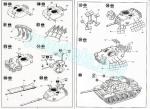
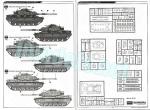
- Folleto A5 doblado formando 8 páginas impresas en blanco y negro. Contiene una tabla de colores con equivalencias en varias marcas de pintura, 40 pasos de montaje, una página de perfiles y un plano numerado de piezas. Vistas explosionadas claras y sencillas de seguir.
- 8-page A5 folded brochure printed in black and white. It contains a table of colors with matches in several paint ranges, 40 assembly steps, a page of profiles and a numbered parts plan. Exploded views are clear and easy to follow.
LO MEJOR – THE BEST:
- Aparente sencillez de montaje. Molde limpio. Buen detalle general (tren de rodaje, blindaje reactivo, cúpula). Escotillas separadas en la torre.
- Apparent ease of assembly. Clean tooling. Overall nicely detailed (running gear, tracks, ERA tiles, cupola). Separate turret hatches.
LO PEOR – THE WORST:
- Cañón en mitades y no posicionable. Algunas piezas infradimensionadas.
- Not moveable gun with barrel molded in halves. Some underscaled pieces.
VALORACIÓN – CONCLUSION:
- Reedición del buen molde de Revell, que aún se mantiene en forma respecto a maquetas más recientes.
- Reboxing of the nice Revell kit, still quite in shape compared to more recent releases.

La maqueta
Academy acaba de sacar una nueva edición del M60 en la escala pequeña. El molde no es propio, sino tomado de la reedición que Ace Corporation hizo de la maqueta del M60A1 de Revell. Por tanto, todo lo bueno y lo menos bueno de la edición de la casa alemana está también en esta.
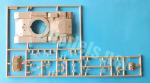
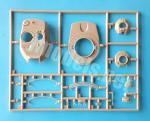
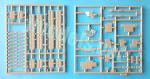
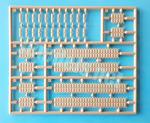
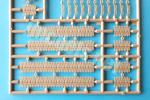
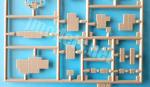
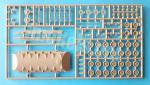
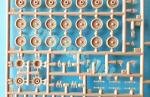
La caja contiene cinco bastidores con un total de alrededor de 180 piezas, las calcas y las instrucciones. Uno de los bastidores carece de las piezas que Revell hizo para su maqueta del M60A3 que no son aplicables en esta. Las piezas están libres de defectos del moldeado y carecen de rebabas. Tampoco hay marcas de eyector visibles. El detalle externo está en general bien conseguido, destacando las cadenas, la suspensión, el tren de rodaje, las placas del blindaje ERA, así como las cubiertas de los manteletes del cañón y la ametralladora.
Considerando las piezas en los bastidores y las instrucciones, la maqueta aparenta tener un montaje sencillo salvando algunas zonas algo más delicadas, como las cadenas o la cesta posterior de la torre. Las únicas opciones de montaje son la posibilidad de mostrar las escotillas de la torre y el visor del comandante abiertos o cerrados.
El modelo que Academy ha representado en esta maqueta, y que Revell lanzó en 2007 con la única denominación de M60 A1 with ERA (referencia 03168), es un M60A1 equipado con el conjunto de mejoras llamado en siglas RISE (Reliability Improvement Selected Equipment, Equipo Selecccionado de Mejora de la Confiabilidad). Las mejoras respecto a modelos anteriores incluyen un nuevo motor Continental, nuevo sistema eléctrico, cadenas del modelo T142 con almohadillas de goma, mejoramiento en la estabilización del cañón y un filtro de aire de carga superior. La abreviatura (P), de Passive, responde a los progresos añadidos a finales de 1978, entre las que estaban los dos lanzadores de fumígeros M239 con granadas de fósforo que enmascaraban la signatura térmica del carro al enemigo.
Casco, suspensión y tren de rodaje
La parte inferior del casco vienen realizada de una sola pieza salvo una sección a cada lado que contiene los cilindros de los rodillos de retorno. Los lados delantero y trasero del casco están detallados con ganchos de remolque aparte. El lado trasero del casco tiene una pieza superpuesta moldeada con las rejillas de ventilación del motor, las luces traseras y el gancho de pivote con su placa base.
La suspensión y amortiguación están realizadas como si se tratase de una escala más grande y por ello cuentan con brazos, amortiguadores y las cubiertas de los diferenciales en piezas separadas. Las ruedas tractoras están divididas en mitades con un cilindro de dos piezas intermedio para ajustar los dientes de la cadena. El detalle externo de la tractora es bastante bueno, pero los dientes parecen algo pequeños, un detalle que suele poder disimularse bien en esta escala. Las ruedas tensoras son idénticas a las del resto del tren de rodaje. Las ruedas son dobles, pero sólo tienen detalle pasable las exteriores. Los rodillos de retorno también están separados y detallados por su cara exterior. El tamaño, sin embargo, me parece algo pequeño comparado con los reales.
Cadenas
Están reproducidas en tramos y eslabones para contornear las ruedas tractoras y tensoras. Los tramos están limpios de marcas por ambos lados y tienen bien definidos tanto los dientes como las zapatas de goma externas.
Superestructura
La parte superior del casco está realizada en una pieza que incluye los guardabarros, que no son demasiado finos y llevan la parte delantera de caucho simulada con cierta caída simulando la textura del material. El detalle a los lados y en la cubierta del motor es bastante bueno, resaltando las numerosas cajas de respeto y las rejillas de ventilación del motor.
La parte delantera cuenta con la escotilla del conductor, desafortunadamente cerrada, y sus periscopios, dos ojales de elevación, y un fino conducto de salida sobre el guardabarros derecho que semeja la salida del calentador de la tripulación. Los faros parecen algo pequeños comparados con imágenes del M60A1 real y los protectores aparecen unidos en una pieza con los soportes delanteros de los guardabarros. Los protectores son un poco gruesos debido a las limitaciones del plástico a esta escala.
La parte trasera cuenta con el retén de transporte del cañón, dos ojales de izado y la caja exterior del interfono.
Las placas de blindaje reactivo están bien detalladas con las tuercas de ajuste y algunas de ellas cuentan también con soportes situados en agujeros abiertos previamente en el casco y guardabarros. Los agujeros están marcados en la cara inferior de la superestructura.
Torre
Está moldeada en dos piezas con la base separada. La parte interna superior muestra agujeros para abrir los anclajes del blindaje ERA. El techo está detallado con la gran bisagra de la escotilla del cargador, una base de antena, la tapa del ventilador, varios ojales de izado y lo que parece el receptáculo para enchufar el cable del reflector situado sobre el cañón, que en esta maqueta no se ha incluido. También hay una pieza que representa el tope plegable para la ametralladora de la cúpula. El tope servía para impedir que se disparara sobre el foco emplazado sobre el mantelete.
Los lados de la torre, además del blindaje reactivo, cuentan con los visores del telémetro separados, los lanzadores de granadas de humo y los soportes de la cesta de la parte posterior. La cesta es delicada de montar porque se compone de piezas finas con soportes separados. Obviamente, la malla que la recubre no ha sido posible reproducirla a esta escala.
El mantelete es de una pieza con buen detalle en la textura del forro y muescas para situar las placas de blindaje reactivo situadas por encima de la base del cañón. La pieza cuenta también con el orificio de la mira del artillero y la ametralladora coaxial. Desgraciadamente, la pieza no permite el alza o la depresión del cañón. El tubo del cañón está dividido en mitades sin la funda térmica e incluye el evacuador de humos y la boca aparte y horadada.
La cúpula del comandante está despiezada como la torre, con una base que permite girarla. Los visores perimetrales están marcados un poco tenuemente pero son pasables y el periscopio está abierto con la tapa separada. La funda del mantelete de la ametralladora está bien texturizada y el tubo del cañón es bastante fino. La tapa de la escotilla es una pieza separada aunque es plana por su cara interior y no tiene detalle.
Calcas
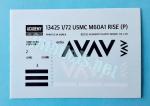
La hoja tan solo contiene chevrones blancos y negros, líneas y dos pequeños rótulos. Los motivos muestran aspecto fino y brillante. Carecen de exceso de soporte. Las instrucciones no indican dónde debemos colocar los chevrones, así que queda al albur del modelista ponerlos o no, y en su caso consultar imágenes.
Instrucciones
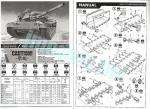
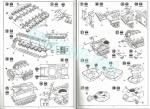
Están impresas en un folleto de tamaño A5 doblado formando 8 páginas impresas en blanco y negro. Contiene una tabla de colores con equivalencias en pinturas de Humbrol, Gunze Sangyo, Lifecolor, Testor, Revell, Vallejo y AK Interactive, 40 pasos de montaje, una página de perfiles y un plano numerado de piezas. Las vistas explosionadas son claras y sencillas de seguir.
Las opciones de pintura proporcionan cierta variedad de elección y corresponden a vehículos norteamericanos de inicios de los 90. Entre ellas aparecen dos carros con tono arena, uno de ellas situado en la Guerra del Golfo, y un tercero con camuflaje localizado en Alemania por esas fechas.
Valoración
La fortuna, o el capricho de las marcas, ha querido que el lanzamiento de la maqueta de Academy coincida este año con el nuevo molde y doble maqueta de Takom (M60A1 w/ ERA y M60A3) que tiene muchas mejoras respecto a la de Revell, aunque el despiece del casco y el tren de rodaje es bastante parecido.
En cualquier caso, esta maqueta de Academy (Revell) aún mantiene el tipo y continúa siendo una buena opción para montar un M60 bastante lucido a esta escala. Pese a la diferencia de edad, creo que no tiene tanto que envidiar a las nuevas de Takom, salvo en el cañón y algunos detalles muy concretos logrados gracias al avance experimentado en la tecnología del plástico en los últimos años.◊

The kit
Academy have just released a new edition of the M60 in the small scale. It is not a new-tool kit, but a reboxing from the Ace Corporation’s copy of Revell M60A1 kit from 2007. Therefore, the pros and cons of the original Revel kit are also present in this reissue.
The box contains five sprues with a total of around 180 pieces, the decals and the instructions. One of the sprues lacks parts that Revell made for their M60A3 kit that are not applicable here. The parts are free from blemishes and flash. There are no visible ejector pin marks either. External detail is overall nicely done, especially the tracks, suspension, running gear, ERA armor tiles, as well as the gun and machine gun mantlet canvas.
Considering the pieces on the sprues and the instructions, the kit seems to have a simple assembly, except for some more delicate areas, such as the tracks or the rear turret stowage basket. The only assembly choices are to pose the turret hatches and the commander’s visor open or closed.
The model that Academy have rendered in this kit, and that Revell launched in 2007 with the label M60 A1 with ERA (reference 03168), is an M60A1 tank equipped with the set of improvements called RISE (Reliability Improvement Selected Equipment). These changes from previous models included a new Continental engine, a new electrical system, T142 tracks with rubber pads, improved barrel stabilization, and a top-loading air filter. The abbreviation (P), for Passive, corresponds to the changes added in late 1978, among which were the two M239 smoke launchers with phosphorus grenades that masked the tank’s thermal signature from the enemy.
Hull, suspension and running gear
The lower hull is moulded in one piece except for a section on each side containing the return roller cylinders. The front and rear hull sides are detailed with separate tow hooks. The hull rear side has an overlapped piece molded with the engine grilles, tail lights, and the pintle hook with the base plate.
The suspension is made as if this were a kit in a larger scale and therefore we find separate suspension arms, snubbers and differential covers in separate pieces. The drive wheels are moulded in halves with a two-piece cylinder in between to adjust the track teeth. External detail on the sprockets is quite good, but the teeth seem a bit small, a detail that can be easily hidden in this scale. The idler wheels are identical to the rest of the road wheels. The wheels are double, but only the outer ones have passable detail. The return rollers are also separated and detailed on the outside. The size, however, seems a little small compared to the real thing.
Tracks
They are moulded in lengths and links to contour the sprockets and idlers. The sections are clean from pin marks on both sides and have well defined teeth and external rubber pads.
Superstructure
The superstructure is made in one piece that includes the fenders, which are not too thin and have a rubber front section with simulated texture. Detail on the sides and engine deck is quite good, especially on the spare boxes and engine grilles.
The front shows the driver’s hatch, which is moulded closed, and the periscopes, two lifting eyes, and a thin exhaust duct over the right fender that resembles the crew heater outlet. The headlights look a bit small compared to images of a real M60A1 and the guards are joined in one piece with the front fender supports. The guards are a little thick due to the limitations of plastic at this scale.
The rear part has a separate travel lock for the gun, two lifting eyes and the outer intercom box.
The reactive armor tiles are well detailed with defined nuts and some of them also have mounts inserted in holes on the hull and fenders. The holes are marked on the superstructure underside.
Turret
It is molded in two pieces with a separated rotating base. The upper internal side shows pre-drilled holes to attach the ERA armor mounts. The roof is detailed with a large loader’s hatch hinge, an antenna base, the ventilator cover, several lifting eyes and what looks the receptacle for plugging in the searchlight, which is not included in this kit. There is also a piece that represents the folding bar for the cupola machine gun. The bar prevented firing to the searchlight located just behind the mantlet.
The turret sides, in addition to the reactive armor, are detailed with separate rangefinder sights, smoke grenade launchers, and the rear stowage basket mounts. The basket is delicate to assemble because it is made up of thin pieces with separate supports. Obviously, the mesh covering the basket is missing being quite tiny to be rendered in plastic at this scale.
The mantlet is one piece with good detail in the canvas texture and has notches to locate the ERA tiles above the gun barrel. The piece is also provided with the gunner’s sight and the coaxial machine gun muzzle. Unfortunately, the piece does not allow to rise or depress the gun barrel. The gun barrel is divided in halves without the thermal shroud and includes the smoke evacuator and a separate muzzle which comes hollowed.
The commander’s cupola is broken down as the turret, with a base that allows it to be rotated. The sights are marked a little faintly but are passable, and the periscope is moulded open with the lid in a separate piece. The machine gun mantlet is well textured and the barrel tube is quite thin. The hatch cover is a separate piece although it is flat on the inside and has no detail.
Decals
The sheet only contains black and white chevrons, lines and two small labels. The items show thin and glossy appearance and lack excess carrier film. Instructions do not indicate where we should place the chevrons, so it is up to the modeller to use them or not.
Instructions
They are printed on an 8-page A5 size folded brochure printed in black and white. It contains a color chart with paint equivalents from Humbrol, Gunze Sangyo, Lifecolor, Testor, Revell, Vallejo and AK Interactive, forty assembly steps, a page of profiles and a numbered parts plan. The exploded views are clear and easy to follow.
Paint options provide some variety and correspond to US vehicles from the early 1990s. Among them are two tanks painted overall sand, one of them present in Operation Desert Storm, and a third painted in NATO camouflage located in Germany at that time.
Conclusion
Fortune, or the whim of companies, has wanted the Academy release to coincide with the new Takom kits (M60A1 w/ ERA and M60A3) in the same year. These new-tool kits have many improvements compared to Revell’s, although the hull and running gear breakup is quite similar.
In any case, it is good news Academy have released this kit again as it looks still quite in shape and continues to be a good choice to build a nice M60 at this scale. Despite the difference in age, I think this release is not so much behind Takom’s new offering, except for the barrel and some details better rendered thanks to the advances in plastic moulding technology in recent years.◊
Publicado – Published: 11 / 2023
©www.jmodels.net
 jmodels.net
Debe estar conectado para enviar un comentario.