
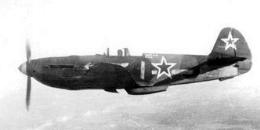
| DATOS TÉCNICOS | TECHNICAL DATA |
| TIPO:Caza. | TYPE:Fighter. |
| TRIPULANTES:1 | CREW:1 |
| ENVERGADURA:9,2 m. | SPAN:30.2 ft. |
| LONGITUD:8,5 m. | LENGTH:27.11 ft. |
| ALTURA:2,39 m. | HEIGHT:7.84 ft. |
| SUPERFICIE ALAR:14,85 m². | WING AREA:159.8 ft². |
| PESO EN VACÍO:2.105 kg. | EMPTY WEIGHT:4,641 lb. |
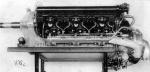
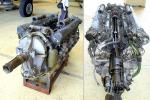
| MOTOR:Un motor en línea Klimov VK-105PF2 V-12 de 1.290 hp (960 kW) con hélice tripala de paso constante. | ENGINE:One Klimov VK-105PF2 V-12 liquid-cooled piston engine providing 1,290 hp (960 kW) with 3-bladed constant-speed propeller. |
ARMAMENTO:
|
ARMAMENT:
|
| VELOCIDAD MÁX.:646 km/h a 41.100 m. | MAX. SPEED:401 mph at 13,500 ft. |
| TECHO:10.400 m. | CEILING:34,100 ft. |
| ALCANCE:550 km (300 mn). | RANGE:340 mi (300 nmi). |
| PRIMER VUELO:28 de febrero de 1943 (Yak-1M). | FIRST FLIGHT:28 February 1943 (Yak-1M). |
| VERSIONES:12 | VERSIONS:12 |
| CONSTRUIDOS:4.848 | BUILT:4,848 |
El Yak-3 original, inicialmente designado I-30 y ofrecido junto con el I-26 como diseño alternativo, realizó su primer vuelo el 12 de abril de 1941. Este aparato se parecía en general al I-26, pero era de construcción totalmente metálica y tenía un ala con diedros en los paneles exteriores. Al igual que el primer Yak-1, contaba con un cañón ShVAK de 20 mm que disparaba a través del cono de la hélice y dos ametralladoras ShKAS de 7,62 mm en el morro, pero también estaba equipado con un cañón ShVAK en cada ala. Estaba propulsado por un motor Klimov M-105P.
El primero de los dos prototipos estaba equipado con un ala con slats para mejorar el manejo y el rendimiento en rutas cortas. El segundo prototipo tenía un ala de madera sin slats para simplificar la producción. El segundo prototipo se estrelló durante las pruebas de vuelo y fue dado de baja. Aunque existían planes para poner en producción el Yak-3, la escasez de aluminio para aviación y la presión de la invasión nazi llevaron a abandonar el trabajo en el primer Yak-3 a finales del otoño de 1941.
Durante aproximadamente el mismo periodo, la oficina de Yakovlev también trabajó en un caza de gran altitud, inicialmente denominado I-28 y posteriormente Yak-5. Realizó su primer vuelo el 1 de diciembre de 1940. El I-28/Yak-5 era similar al I-26/Yak-1, con la principal diferencia de que el I-28 estaba equipado con un motor Klimov M-105PD con un sobrealimentador avanzado optimizado para un rendimiento a gran altitud. El motor resultó problemático, por lo que el proyecto del I-28 se abandonó casi al mismo tiempo que el del Yak-3 original. La OKB continuaría experimentando con el concepto del caza de gran altitud, pero utilizando otras variantes de la línea de cazas Yak.
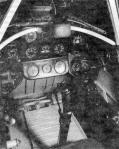
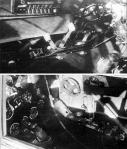
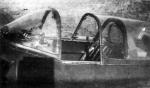
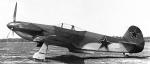
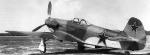
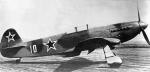
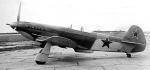
Nunca hubo un Yak-5 operativo, pero la designación Yak-3 se recicló y se aplicó a una variante del caza Yak de gran éxito. El segundo Yak-3 no era realmente un avión nuevo, sino una evolución continua del Yak-1. El motor previsto era el nuevo Klimov M-107, que proporcionaba más de 1.120 kW (1.500 hp). Sin embargo, el M-107 sufrió problemas de desarrollo, por lo que se mantuvo el Klimov M-105PF. Los cambios más significativos en el Yak-3 fueron una envergadura más corta; una nueva cubierta con mejor visibilidad panorámica; y un sistema modificado de refrigeración de aceite. Los primeros Yak-3 de producción contarían con el mismo cañón ShVAK de 20 mm y la misma ametralladora Berezin de 12,7 mm que el Yak-1B, pero la producción posterior incorporaría un cañón ShA-20M de 20 mm mejorado, además de dos cañones Berezin de 12,7 mm en el morro.
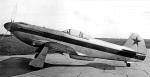
Se construyeron dos prototipos, denominados Yak-1M (M significa Modifikatsirovany, Modificado). Las pruebas de vuelo comenzaron a principios de 1943 y el rendimiento de la nueva variante resultó aún más impresionante de lo previsto. Alcanzaba una velocidad de 680 km/h a 3,7 km de altitud y poseía una agilidad excepcional a baja altitud.
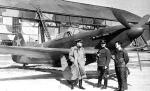
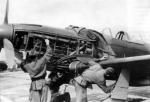
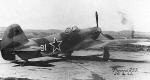
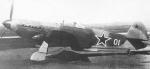
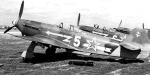
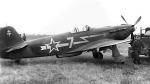
El Yak-1M entró en producción con ligeras modificaciones como Yak-3 en octubre de 1943, y las primeras entregas tuvieron lugar en marzo de 1944. Para el verano de 1944, el modelo llegaba en grandes cantidades a las unidades de primera línea de la Fuerza Aérea Roja. Los pilotos estaban muy entusiasmados con el modelo, ya que representaba una auténtica amenaza para los Focke-Wulf Fw 190A y los Messerschmitt Bf 109G de la Luftwaffe. El Yak-3 fue uno de los cazas más pequeños y ligeros desplegados por cualquier combatiente durante la guerra, y su alta relación potencia-peso le proporcionó un excelente rendimiento. Podía superar fácilmente a sus adversarios, aunque, como muchos aviones de alto rendimiento, podía ser peligroso en el despegue y el aterrizaje.
En las últimas etapas de producción, el Yak-3 estaba equipado con un armamento de tres cañones ligeros B-20 de 20 mm. Se construyeron casi 600 de estos aparatos, la mayoría después de la guerra, y se denominaron Yak-3P (P de Pushka, Cañón). Hubo varias variantes especializadas del Yak-3 que nunca pasaron de la fase de prototipo, como el Yak-3T, con un cañón Nudelman-Suranov NS-37 de 37 mm que disparaba a través del eje de la hélice, con la cabina desplazada hacia atrás para acomodar el arma; el Yak-3PD, un caza de gran altitud; el Yak-3RD, equipado con un cohete propulsor de combustible líquido RD-1 GHSH montado en la cola; o el único Yak-3M-82 construido, equipado con el motor radial Shvetsov M-82 de dos coronas y 14 cilindros, empleado en el caza La-5, y cuyo primer vuelo tuvo lugar en mayo de 1945.
La producción del Yak-3 se interrumpió en 1946. Se construyeron 4.848 unidades en total, de las cuales 737 se entregaron después de la guerra. Continuaría siendo empleado vuelo durante algunos años en la posguerra, tanto por la VVS como por los franceses, yugoslavos, albaneses y polacos.
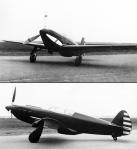
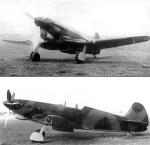
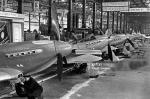
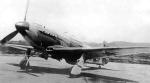
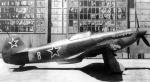
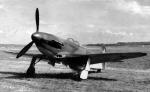
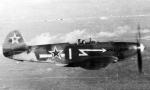
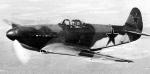
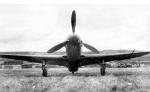
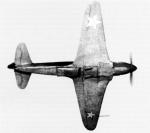
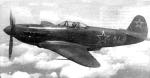
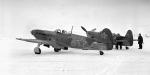
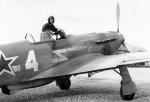
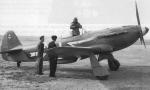
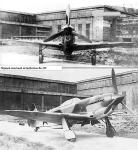
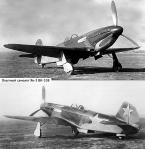
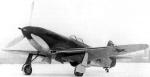
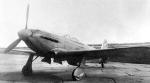
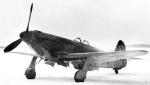
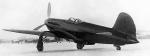
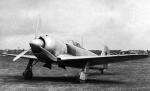
The original Yak-3, which was originally designated I-30 and offered along with the I-26 as an alternate design, made its first flight on 12 April 1941. This machine generally resembled the I-26, but was of all-metal construction and had a wing with dihedral on the outer panels. Like the early Yak-1, it had a ShVAK 20mm cannon firing through the prop spinner and twin ShKAS 7.62mm machine guns in the nose, but was also fitted with a ShVAK cannon in each wing. It was powered by a Klimov M-105P engine.
The first of two prototypes was fitted with a slatted wing to improve handling and short-field performance. The second prototype had a wooden wing without slats, in order to simplify production. The second prototype crashed during flight tests and was written off. Although there were plans to put the Yak-3 into production, the scarcity of aviation aluminum and the pressure of the Nazi invasion led to abandoning work on the first Yak-3 in the late fall of 1941.
During roughly the same timeframe, the Yakovlev bureau also worked on a high-altitude fighter, initially designated the I-28 and then Yak-5. It performed its first flight on 1 December 1940. The I-28 / Yak-5 was similar to the I-26 / Yak-1, the main difference being that the I-28 was fitted with a Klimov M-105PD engine with an advanced supercharger optimized for high-altitude performance. The engine proved troublesome, with the I-28 effort being abandoned about the same time as the original Yak-3 effort. The OKB would continue to tinker with the high-altitude fighter concept, but using other variants in the Yak fighter line.
There never was an operational Yak-5, but the Yak-3 designation was recycled and applied to a highly successful Yak fighter variant. The second Yak-3 was not really a new aircraft, instead being a continued evolution of the Yak-1. The powerplant was intended to be the new Klimov M-107 engine, providing over 1,120 kW (1,500 hp). However, the M-107 suffered development problems, and so the Klimov M-105PF was retained. The most significant changes in the Yak-3 were a shorter wingspan; a new canopy with better all-round visibility; and a modified oil cooler scheme. Early production Yak-3s would have the same single 20mm ShVAK cannon and Berezin 12.7mm machine gun as the Yak-1B, but later production would have an improved ShA-20M 20mm cannon, plus two Berezin 12.7mm guns in the nose.
Two prototypes were built, designated Yak-1M, with the M standing for Modifikatsirovany (Modified). Flight tests began in early 1943 and the performance of the new variant proved even more impressive than had been anticipated. The new variant was capable of 680 km/h at 3.7 km altitude (422 mph at 12,140 ft) and had marvelous agility at low altitude.
The Yak-1M was ordered into production with minor changes as the Yak-3 in October 1943, with first rollouts in March 1944. The type was being delivered in quantity to the Red Air Force frontline units by the summer of 1944. Air Force pilots were extremely enthusiastic about the type, since it was a real threat to the Luftwaffe Focke-Wulf Fw 190A and Messerschmitt Bf 109G. The Yak-3 was one of the smallest and lightest major combat fighters fielded by any combatant during the war, and its high power-to-weight ratio gave it excellent performance. It could easily out-turn its adversaries, though like many «hot» aircraft, it could be a dangerous handful on take-off and landing.
In late production, the Yak-3 was fitted with an armament of three lightweight B-20 20mm cannon. Almost 600 of these machines were built, mostly after the war, and designated Yak-3P, where P stood for Pushka (Cannon). There were a number of specialized variants of the Yak-3 that never went beyond the prototype stage, such as the Yak-3T with a Nudelman-Suranov NS-37 37mm cannon firing through the prop hub, with the cockpit moved back to accommodate the weapon; the Yak-3PD, a high-altitude fighter; the Yak-3RD, fitted with a tail-mounted RD-1 GHSH liquid-fuel booster rocket; or the single Yak-3M-82 built, which was fitted with the Shvetsov M-82 two-row 14-cylinder radial engine, used on the La-5 fighter, and first flown in May 1945.
Yak-3 production was shut down in 1946. 4,848 were built in all, with 737 of them delivered after the war. They would continue to be flown for a few years in the postwar period by the VVS, as well as the French, Yugoslavians, Albanians, and Poles.
FUENTES Y REFERENCIA – SOURCES & REFERENCE
airvectors.net
Ugolok Neba
valka.cz
massimotessitori.altervista.org
aviadejavu.ru
©jmodels.net
 jmodels.net
Debe estar conectado para enviar un comentario.