
| DATOS TÉCNICOS | TECHNICAL DATA |
| TIPO:Avión de reconocimiento. | TYPE:Reconnaissance aircraft. |
| TRIPULANTES:2 | CREW:2 |
| ENVERGADURA:11,9 m. | SPAN:39.1 ft. |
| LONGITUD:8,25 m. | LENGTH:27.1 ft. |
| ALTURA:3,5 m. | HEIGHT:11.6 ft. |
| SUPERFICIE ALAR:37,5 m². | WING AREA:404 ft². |
| PESO EN VACÍO:900 kg. | EMPTY WEIGHT:1,984 lb. |
| MOTOR:Un motor en línea de seis cilindros Benz Bz.IV de 220 hp (160 kW). | ENGINE:One Benz Bz.IV six-cylinder water-cooled in-line piston engine providing 220 hp (160 kW). |
ARMAMENTO:
| ARMAMENT:
|
| VELOCIDAD MÁX.:190 km/h. | MAX. SPEED:120 mph. |
| TECHO:5.500 m. | CEILING:18,000 ft. |
| ALCANCE:750 km. | RANGE:466 mi. |
| PRIMER VUELO:1916 | FIRST FLIGHT:1916 |
| VERSIONES:1 | VERSIONS:1 |
| CONSTRUIDOS:70-100 | BUILT:70-100 |
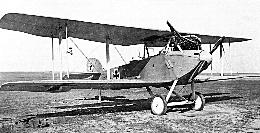
AGO había agotado el potencial de la configuración de hélice propulsora con sus diseños C.I, C.II y C.III. Para lograr un mejor rendimiento y crear un diseño que pudiera venderse a la Fliegertruppe (Fuerza Aérea Alemana), dominada por Prusia, AGO optó por la configuración de hélice tractora.
El resultado fue el AGO C.IV, un diseño innovador de construcción convencional que ofrecía mucha más velocidad y ascenso que los aviones de hélice propulsora que lo precedieron.
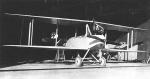
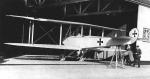
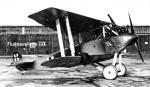
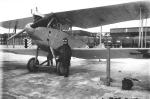
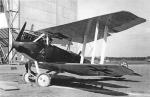
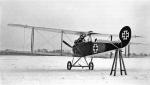
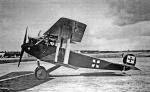
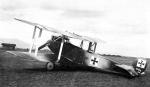
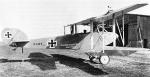
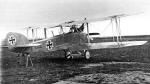
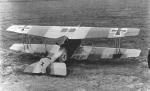
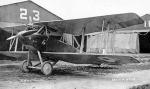
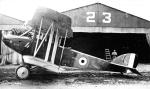
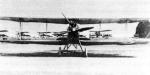
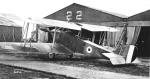
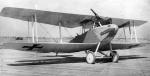
El AGO C.IV se distinguía fácilmente de otros biplazas por su ala de perfil cónico pronunciado. La mayoría de los aviones de la Primera Guerra Mundial tenían alas sin conicidad de planta rectangular para facilitar su fabricación. Sin embargo, la resistencia inducida (resistencia generada por la sustentación) depende de la forma del ala, y los cálculos teóricos indican que una planta de ala elíptica minimiza la resistencia inducida. Un ala de planta elíptica es difícil de fabricar. Sin embargo, se puede aproximar mediante una planta de ala cónica, que es una solución de compromiso.
El ala cónica tiene menos resistencia que un ala rectangular, pero es más difícil de construir. Presenta mayor resistencia aerodinámica que un ala elíptica, pero es más fácil de construir.
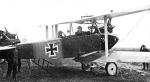
El C.IV resultante, con motor Benz Bz.IV de 220 hp, era más rápido que la mayoría de los aviones de reconocimiento biplaza. Su diseño se caracterizó por líneas limpias y una aerodinámica relativamente estilizada para la época. La combinación de buena potencia, líneas despejadas y una planta alar cónica le proporcionaba una buena velocidad y capacidad de ascenso para su tiempo. Era mucho más rápido que el C.I que AGO había estado construyendo y contaba con la configuración de ala tractora preferida por la Fliegertruppe. AGO parecía haber encontrado la fórmula, y el C.IV se encargó en grandes cantidades a partir de junio de 1916.
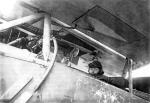
El diseño del AGO C.IV comenzó a finales de 1915. Otra característica innovadora del C.IV era la ausencia de un puntal de refuerzo delantero interno, lo que proporcionaba un mejor campo de tiro entre las alas para el observador. AGO recibió la patente n.º 299.149 por esta innovación el 7 de octubre de 1915, mientras diseñaba el C.IV.
El prototipo del AGO C.IV voló a principios de 1916 y demostró de inmediato un buen rendimiento. En las pruebas realizadas el 21 de mayo, el prototipo alcanzó los 4.000 m de altitud en 32 minutos, un tiempo excelente para la época. Esto animó a la Idflieg (Inspección de Tropas Aéreas) a encargar 24 aeronaves en junio de 1916. Los archivos contemporáneos de la Idflieg denominaban al AGO C.IV como tipo C ligero. Fue, por lo tanto, un precursor de la posterior clase CL.
Las pruebas se completaron a mediados de junio. Los ensayos revelaron la necesidad de reforzar las alas, y tras dos refuerzos de los herrajes metálicos se logró la resistencia requerida.
Se realizó un pedido de 10 aeronaves a la Waggonfabrik Josef Rathgeber AG, con sede en Múnich, para incorporarla a la producción de aeronaves, tan necesaria en ese momento. Inicialmente, el pedido era para el Rathgeber C.I, pero posteriormente se le cambió la designación a AGO C.IV(Rat) cuando la Idflieg racionalizó las designaciones de las aeronaves. Sin embargo, estas aeronaves nunca se entregaron y las piezas se convirtieron en repuestos.
Schutte-Lanz, conocida principalmente por la fabricación de dirigibles como competidora de Zeppelin, disponía de capacidad de producción adicional. Para entonces, los dirigibles estaban perdiendo popularidad y los Zeppelines, superiores, podían satisfacer la demanda. Ninguno de los diseños de aeronaves de Schutte-Lanz fue seleccionado para su producción, por lo que la Idflieg les encargó 250 aeronaves AGO C.IV(Schul) para aprovechar su capacidad de producción. El volumen del pedido indicaba el interés de la Idflieg en el C.IV.
En diciembre de 1916, el AGO C.IV llegó al frente. Los pilotos, acostumbrados a la estabilidad y fiabilidad del AGO C.I, esperaban que el C.IV combinara estas cualidades con un rendimiento significativamente mejorado. Sin embargo, pronto se vieron decepcionados. Tan pronto como el C.IV entró en servicio, se produjo una serie de fallos en el fuselaje durante el aterrizaje. No obstante, este problema se corrigió rápidamente en enero y las entregas continuaron.
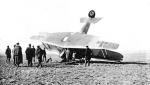
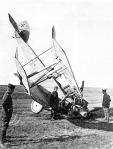
A medida que las tripulaciones acumulaban más horas de vuelo en el C.IV, las muertes por deslizamiento lateral aumentaron de forma alarmante. El AGO C.IV fue inmovilizado a finales de abril a la espera de la investigación y solución del problema de los controles de vuelo.
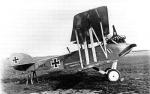
El prototipo original del C.IV y los aviones de producción solo tenían alerones en el ala superior y carecían de aleta fija. Como resultado de los accidentes, los controles de vuelo del C.IV se modificaron por completo para mejorar sus características de vuelo. Se instalaron alerones en todas las alas y se añadió una aleta vertical fija a la cola. Además, casi todos los aviones entregados por AGO después del número de serie 8950/16 y todos los construidos por Schutte-Lanz contaban con un puntal de refuerzo adicional entre los puntales exteriores del ala. La Idflieg también probó el AGO C.IV 1521/17 equipado con un sistema de refuerzo convencional de dos secciones. El primer C.IV construido por Schutte-Lanz se sometió a pruebas los días 7 y 8 de mayo de 1917, durante las cuales los herrajes metálicos del ala volvieron a fallar y tuvieron que ser reforzados. Aunque fueron autorizados para el combate, pocos C.IV construidos por Schutte-Lanz llegaron al frente.
La configuración de ala cónica proporcionaba un buen rendimiento, pero contribuía al problema del control de vuelo, y la tecnología de la época no era suficiente para optimizar la aerodinámica del ala y lograr una buena estabilidad. En la mayoría de las alas de planta rectangular, los diseñadores «eliminaron» el ángulo de incidencia en las puntas para asegurar que el ala entrara en pérdida primero en la raíz, contrarrestando su tendencia a entrar en pérdida primero en las puntas donde se ubicaban los alerones, lo que garantizaba que el piloto mantuviera el control de los alerones durante la recuperación de la pérdida.
Tras el regreso al frente del modelo modificado entre mayo y junio, el C.IV tuvo un éxito moderado, pero no fue bien recibido por las tripulaciones. La continua resistencia de los pilotos y los problemas de control de vuelo llevaron a la Idflieg a inmovilizar el C.IV nuevamente el 7 de septiembre de 1917 y cancelar la producción. El AGO C.IV fue el último diseño de AGO en entrar en producción.
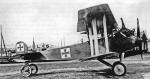
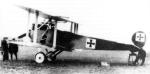
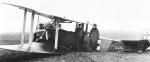
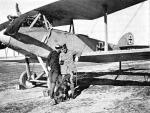
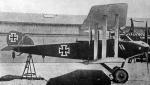
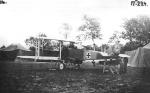
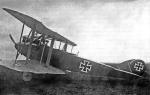
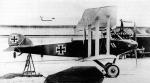
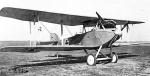
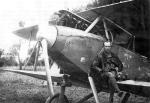
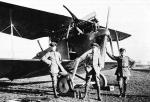
AGO had exhausted the potential of the pusher configuration with its C.I, C.II, and C.III designs. To achieve better performance and to create a design that could be sold to the Prussian-dominated Fliegertruppe (German Air Force), AGO turned to the tractor configuration.
The result was the AGO C.IV, an innovative design of conventional construction that offered much better speed and climb than the pushers that preceded it.
The AGO C.IV was most easily distinguished from other two-seaters in having a sharply-tapered wing planform. Most WWI aircraft had untapered wings of rectangular planform for ease of manufacturer. However, the induced drag (drag induced by lift) depends on the wing planform, and theoretical calculations indicate that an elliptical wing planform minimizes induced drag. An elliptical planform wing is difficult to manufacture. However, it can be approximated by the tapered wing planform, which is a compromise.
The tapered wing has less drag than a rectangular wing but is harder to build. It has more drag than an elliptical wing but is easier to build.
The resulting C.IV with 220 hp Benz Bz.IV engine was faster than most two-seat reconnaissance airplanes. It was carefully designed to have clean lines and be relatively streamlined for the time. The combination of good power, uncluttered lines, and tapered wing planform gave it good speed and climb for its time. It was much faster than the C.I that AGO had been building, and had the tractor configuration preferred by the Fliegertruppe. AGO appeared to have found the formula, and the C.IV was ordered in quantity starting in June 1916.
Actual design of the AGO C.IV had started in late 1915. Another innovative feature of the C.IV was the lack of a forward, inboard bracing strut to provide a better field of fire forward between the wings for the observer. AGO was given Patent No. 299,149 for this innovation on Oct. 7, 1915, as they were designing the C.IV.
The AGO C.IV prototype flew in early 1916 and immediately demonstrated good performance. In trials flown on May 21 the prototype reached 4,000 m altitude in 32 minutes, fast for the time. This encouraged the Idflieg (Inspektion der Fliegertruppen, Inspectorate of Flying Troops) to order 24 aircraft in June 1916. Contemporary Idflieg files referred to the AGO C.IV as the so-called light C-type. It was thus a precursor of the later CL-class.
Type-testing was completed in mid-June. The testing revealed the need to wing strengthening, and after two reinforcements of the metal wing fittings the required strength was achieved.
An order for 10 aircraft was given to the Munich-based Waggonfabrik Josef Rathgeber AG to bring that company into much-needed aircraft production. Initially the order was for the Rathgeber C.I but was later re-designated the AGO C.IV(Rat) when the Idflieg rationalized aircraft designations. However, these aircraft were never delivered and the parts were reduced to spares.
Spare production capacity was available at Schutte-Lanz, best known for its airship manufacture as a competitor to Zeppelin. By this time airships were losing favor and the superior Zeppelins could fill requirements. None of Schutte-Lanz’s own aircraft designs were selected for production and the Idflieg ordered 250 AGO C.IV(Schul) aircraft from them to utilize their space production capacity. The size of the order indicated Idflieg’s interest in the C.IV.
In December 1916 the AGO C.IV arrived at the front. The pilots, who had been used to the stable and reliable AGO C.I were anticipating the C.IV to combine these qualities with significantly improved performance. However, they were soon disappointed. As soon as the C.IV went into service, a rash of fuselage failures occurred during landing. However, this problem was quickly corrected in January and deliveries continued.
As the crews logged increasing flight time on the C.IV, fatalities due to side-slipping increased alarmingly. The AGO C.IV was grounded at the end of April pending investigation and solution of the flight-control problem.
The original C.IV prototype and production aircraft had ailerons on the upper wing only and did not have a fixed fin. As a result of the accidents the flight controls of the C.IV were extensively redesigned to improve its flight characteristics. Ailerons were fitted to all wings and a fixed vertical fin was added to the tail. In addition, most all the aircraft delivered by AGO after serial 8950/16 and all built by Schutte-Lanz had an additional bracing strut between the outer wing struts. The Idflieg also tested AGO C.IV 1521/17 fitted with conventional two-bay bracing. The first Schutte-Lanz-built C.IV was type-tested on May 7-8, 1917, during which the metal wing fittings failed again and had to be reinforced. Cleared for combat, few Schutte-Lanz built C.IVs reached the front.
The tapered wing planform gave good performance but contributed to the flight-control problem and the technology of the time was not adequate to ‘tune’ the wing’s aerodynamics for good stability. With most rectangular planform wings, the designers ‘washed out’ the angle of incidence at the wingtips to ensure the wing stalled first at the wing root, countering its tendency to stall first at the tips where the ailerons were located, ensuring the pilot retained aileron control during stall recovery.
After the modified C.IV was returned to the front in the May-June timeframe, the C.IV was moderately successful but was unpopular with aircrews. Continuing pilots’ resistance and flight-control problems caused the Idflieg to ground the C.IV again on September 7, 1917 and cancel production. The AGO C.IV was the last AGO design to be placed in production.
FUENTES Y REFERENCIA – SOURCES & REFERENCE
flyingmachines.ru
Ugolok Neba
©jmodels.net


Debe estar conectado para enviar un comentario.