
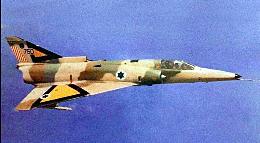
| DATOS TÉCNICOS (Kfir C7) | TECHNICAL DATA (Kfir C7) |
| TIPO:Cazabombardero. Avión de combate polivalente. | TYPE:Fighter-bomber. Multirole combat aircraft. |
| TRIPULANTES:1 | CREW:1 |
| ENVERGADURA:8,22 m. | SPAN:27 ft. |
| LONGITUD:15,65 m. | LENGTH:51.4 ft. |
| ALTURA:4, 55 m. | HEIGHT:14.11 ft. |
| SUPERFICIE ALAR:34,8 m². | WING AREA:375 ft². |
| PESO EN VACÍO:7.414 kg. | EMPTY WEIGHT:16,345 lb. |
| MOTOR:Un motor turbojet General Electric J79-J1E fabricado por IAI Bedek de 52,9 kN (5.384 kgf) de empuje en seco y 79,62 kN (8.504 kgf) con posquemador. | ENGINE:One IAl Bedek-built General Electric J79-J1E turbojet, 52.9 kN (11,900 lbf) thrust dry, 79.62 kN (17,900 lbf) with afterburner. |
ARMAMENTO:
| ARMAMENT:
|
| VELOCIDAD MÁX.:2,440 km/h por encima de 11.000 m. | MAX. SPEED:1,520 mph above 36,000 ft. |
| TECHO:17.680 m. | CEILING:58,010 ft. |
| ALCANCE:1.000 o 670 km (540 o 360 mi.n.) dependiendo de su configuración como atacante o interceptor. | RANGE:620 or 420 mi, 540 or 360 nmi) depending on if in attack or interceptor configuration. |
| PRIMER VUELO:Junio de 1973. | FIRST FLIGHT:June 1973. |
| VERSIONES:12 | VERSIONS:12 |
| CONSTRUIDOS:Más de 220. | BUILT:More than 220. |
Dassault desarrolló el Mirage 5 a petición de los israelíes. Cuando el gobierno francés impidió la entrega del avión a Israel y suspendió el apoyo a la flota israelí de Mirage IIICJ, los israelíes simplemente fabricaron el Mirage 5 por su cuenta, sin licencia, utilizando especificaciones de fabricación obtenidas por la inteligencia israelí. Detrás de este asunto se esconde una compleja historia de intrigas que no elimina del todo la sospecha de que Dassault ayudó discretamente a los israelíes, mientras el gobierno francés hacía la vista gorda. De ser así, nadie ha podido demostrarlo.
El Nesher (Águila) era una copia exacta del Mirage 5, salvo por el uso de algunos componentes de aviónica israelíes; un asiento eyectable Martin-Baker cero-cero; y la posibilidad de utilizar una gama más amplia de misiles aire-aire, incluido el misil israelí de búsqueda de calor Shafir. El primer prototipo del Nesher de Israel Aircraft Industries (IAI) realizó su primer vuelo en septiembre de 1969, y las entregas de producción al Hey’l Ha’Avir (Fuerza Aérea Israelí) comenzaron en 1972. Estos aviones tuvieron un buen desempeño durante la Guerra de Yom Kippur/Ramadán de 1973, logrando más de cien derribos.
En total, se construyeron 51 cazas Nesher y 10 aviones de entrenamiento biplaza Nesher. La mayoría de estos aviones fueron reacondicionados y exportados a Argentina entre 1978 y 1982, bajo el nombre de «Dagger». Argentina recibió 35 cazas monoplaza Dagger A y 4 aviones de entrenamiento biplaza Dagger B. Los últimos ejemplares fueron retirados en 2015.
La producción del Nesher se interrumpió para dar paso a una versión mejorada del Mirage que se había estado planificando en paralelo, en la que el motor Atar sería reemplazado por un motor General Electric J79 de fabricación israelí, el mismo que se utilizaba en los cazas estadounidenses F-104 Starfighter y F-4 Phantom. El J79 proporcionaba un empuje en seco de 49 kN (5000 kgp) y un empuje con postcombustión de 83,4 kN (8500 kgp).
El J79 se instaló por primera vez en un Mirage III de fabricación francesa, que realizó su primer vuelo en octubre de 1970. A este avión de prueba le siguió un prototipo mejorado en junio de 1973, con el nombre de Raam (Rayo). Al parecer, IAI construyó varios aviones basados en el Mirage III y equipados con motores J79 con el nombre de Barak (Relámpago), que participaron en la guerra de Yom Kippur de 1973, pero para sacar el máximo partido al nuevo motor fue necesario modificar la estructura del avión.
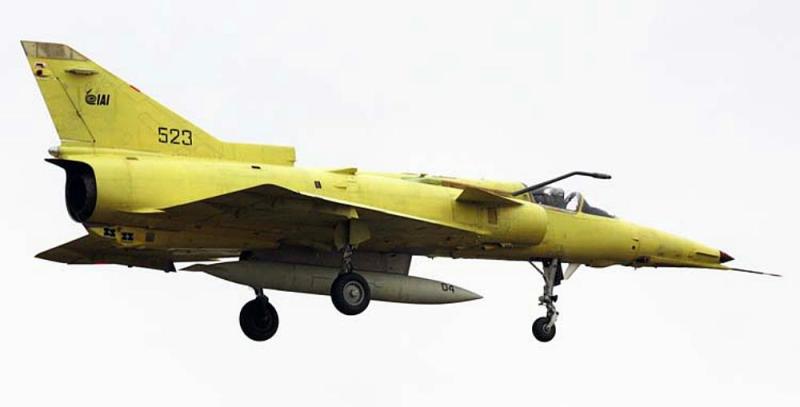
Las entregas de producción de una versión optimizada del Mirage con motor J79, denominada Kfir-C1 (Cachorro de León), comenzaron en abril de 1975. El Kfir-C1 se parecía superficialmente al Mirage 5, salvo por una distintiva entrada de aire dinámico en la base delantera de la cola para proporcionar la refrigeración adicional que requería el motor J79.
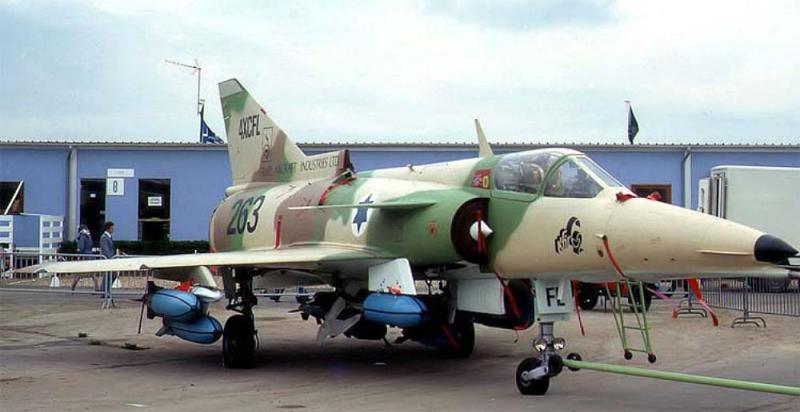
Solo se entregaron 27 cazas Kfir-C1, que fueron reemplazados por el mejorado Kfir-C2. El Kfir-C2 presentaba varias mejoras en la aerodinámica tradicional del Mirage. Contaba con estrechas aletas en la punta del morro, alerones delanteros fijos desmontables y un ala exterior extendida con forma de diente de perro. Estas mejoras aerodinámicas otorgaron al Kfir una mayor maniobrabilidad en combate, redujeron la distancia de aterrizaje y despegue, y mejoraron su manejo a baja velocidad.
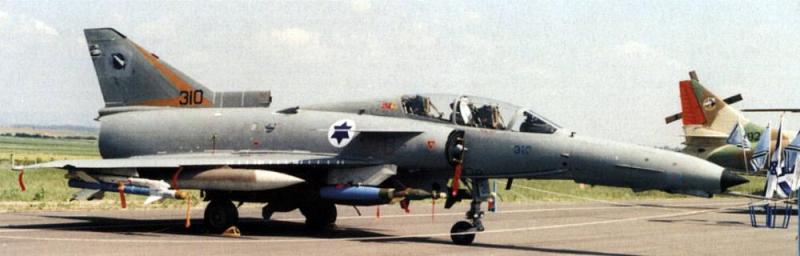
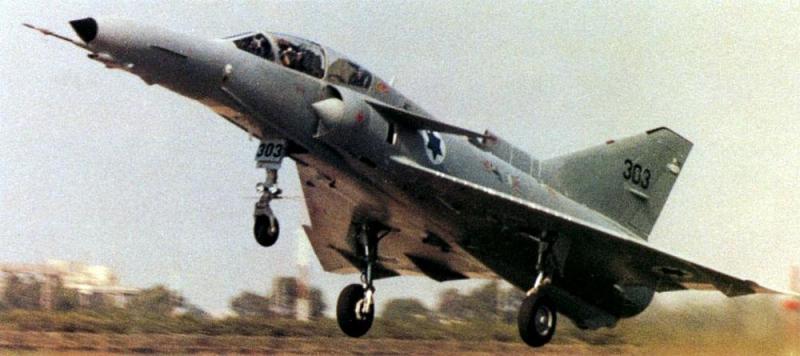
Todos los Kfir-C1, excepto dos, fueron actualizados a la configuración Kfir-C2, aunque con alerones delanteros más pequeños debido a problemas estructurales. Se construyeron 185 Kfir-C2, incluyendo varios entrenadores biplaza Kfir-TC2. Las versiones de entrenamiento tienen un aspecto muy peculiar, ya que poseen un morro extendido que alberga la aeronave, desplazada por el segundo asiento, y este morro estaba notablemente inclinado hacia abajo para ofrecer una visibilidad razonable desde la cabina. El resultado era una apariencia de morro grande, algo cómica.
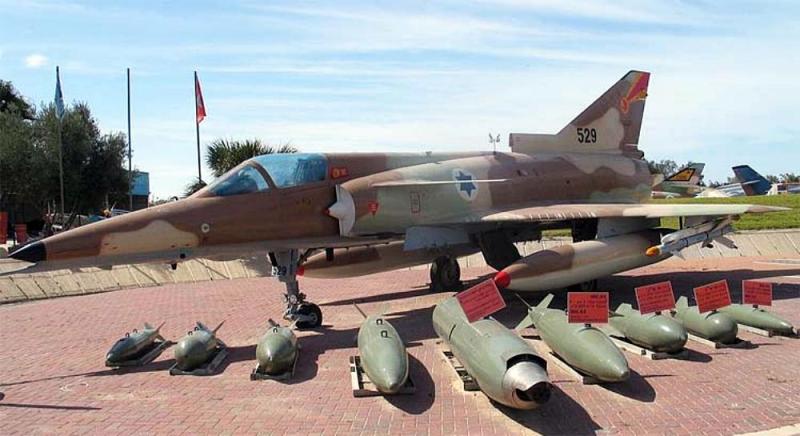
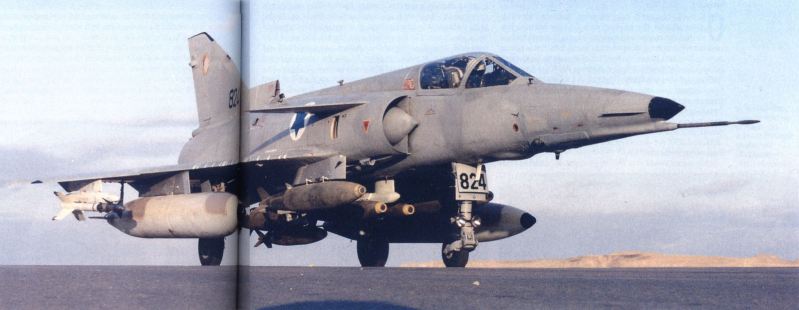
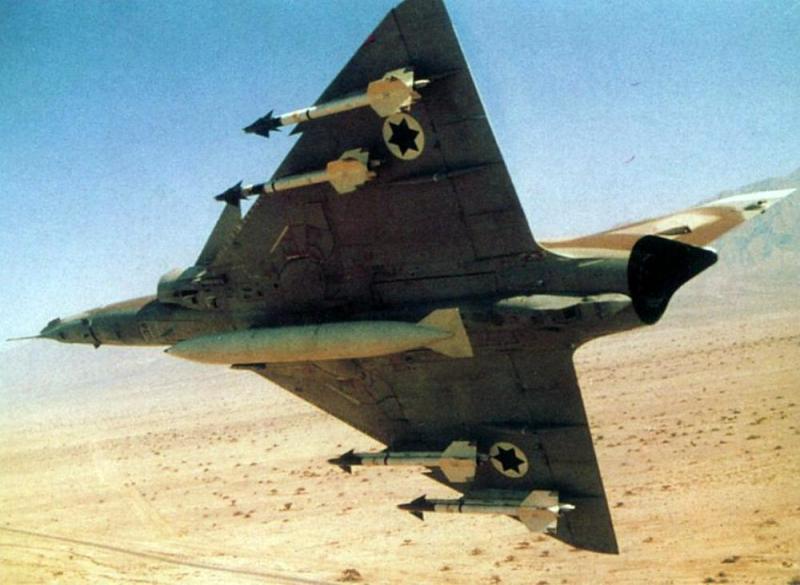
Los Kfir de producción final, entregados a finales de la década de 1980, contaban con nueve soportes para armamento, aviónica mejorada más otras mejoras, y fueron designados Kfir-C7 y Kfir-TC7. Los Kfir portaban armamento de fabricación israelí, como los misiles de búsqueda de calor Shafir II y Python 3, y armamento de fabricación estadounidense, como los misiles aire-tierra Maverick y los misiles antirradar Shrike.
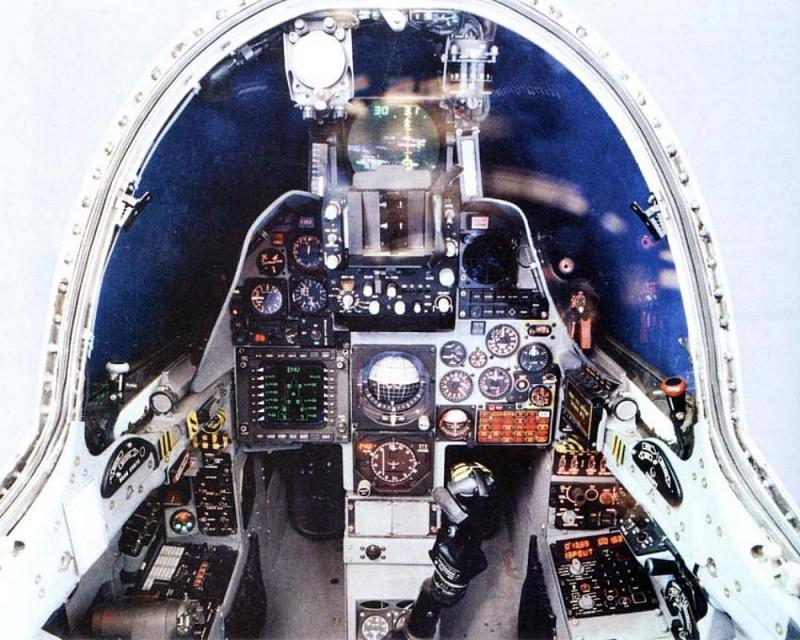
En 1991, IAI presentó una versión mejorada del Kfir-C2, conocida como Nammer (Tigre), para el mercado de exportación. Este avión tenía un fuselaje ligeramente alargado. Aviónica moderna, incluyendo pantallas multifunción (MFD) y controles HOTAS (Hands on Throttle and Stick), y la capacidad de albergar un turborreactor SNECMA Atar 9K-50 o un turbofán GE-Volvo F404/RM12. Aparentemente, el uso del motor J79 impuso restricciones de exportación estadounidenses sobre ese tipo, lo que molestó a los israelíes, por lo que optaron por una configuración de motor diferente. Además del habitual cañón doble de 30 mm, el Nammer tenía nueve pilones de carga y podía transportar hasta 6,25 toneladas de carga externa. También contaba con provisiones para reabastecimiento en vuelo.
No hubo interesados en el Nammer como tal, pero IAI no se dio por vencida y ofreció el Kfir-C10/TC10 como una mejora, con un moderno radar multimodo israelí Elta EL/M-2021B, dos pantallas multifunción (MFD), sistema HOTAS, un moderno sistema de contramedidas y compatibilidad con las municiones guiadas más recientes. También existía el Kfir-C12/TC12, muy similar excepto por la ausencia del nuevo radar. En 2013, IAI anunció una actualización mejorada denominada Kfir Block 60, cuyo elemento central era el radar multimodo de matriz activa Elta EL/M-2032. La compañía contaba con una reserva de 50 fuselajes almacenados en buen estado para modernizar.
Los Kfir fueron retirados del servicio israelí durante la década de 1990, y la mayoría fueron transferidos a usuarios extranjeros tras su reacondicionamiento. Las exportaciones incluyeron 10 cazas Kfir-C2 y 2 aviones de entrenamiento Kfir-TC2 suministrados a Ecuador en 1983. Los Kfir ecuatorianos participaron en un enfrentamiento fronterizo con Perú en 1995.
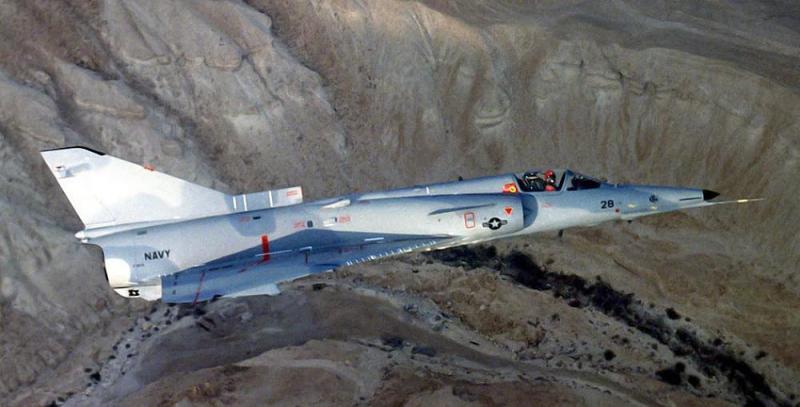
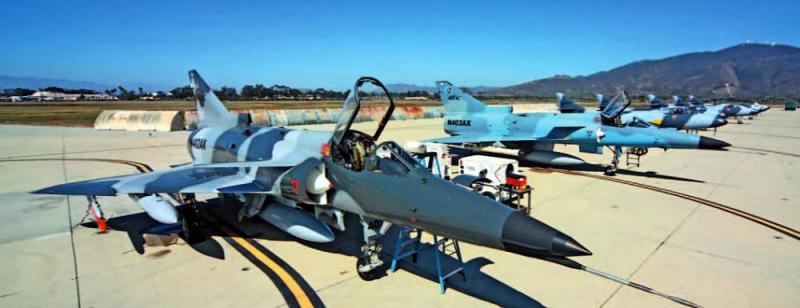
La Armada y el Cuerpo de Marines de los Estados Unidos emplearon 25 Kfir-C1 modernizados, arrendados entre 1985 y 1989, para simular el entrenamiento denominados F-21A. La US Airborne Tactical Advantage Company (ATAC), que proporciona servicios de entrenamiento como adversario para las fuerzas armadas estadounidenses, también adquirió seis Kfir.
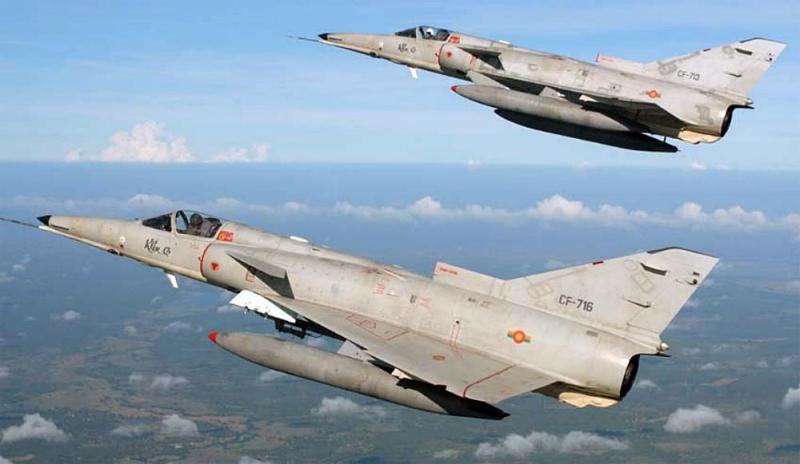
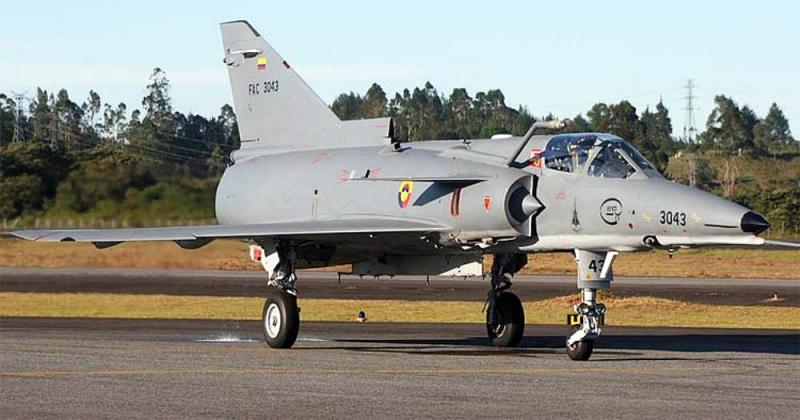
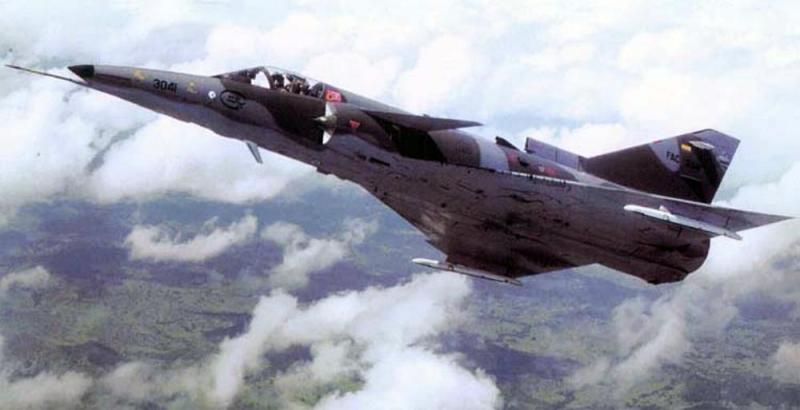
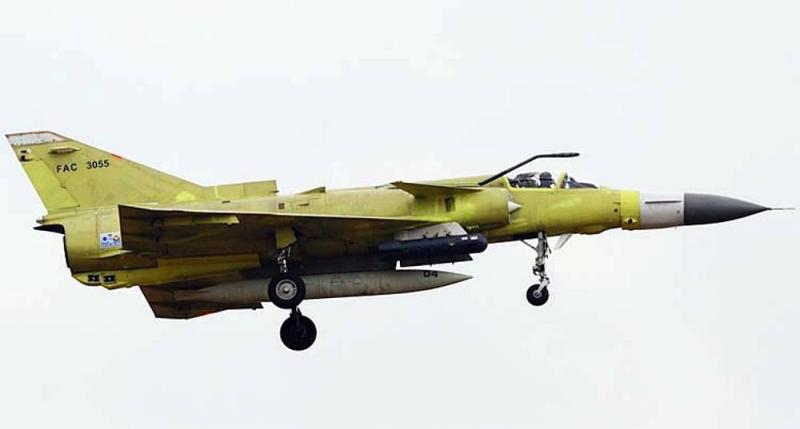
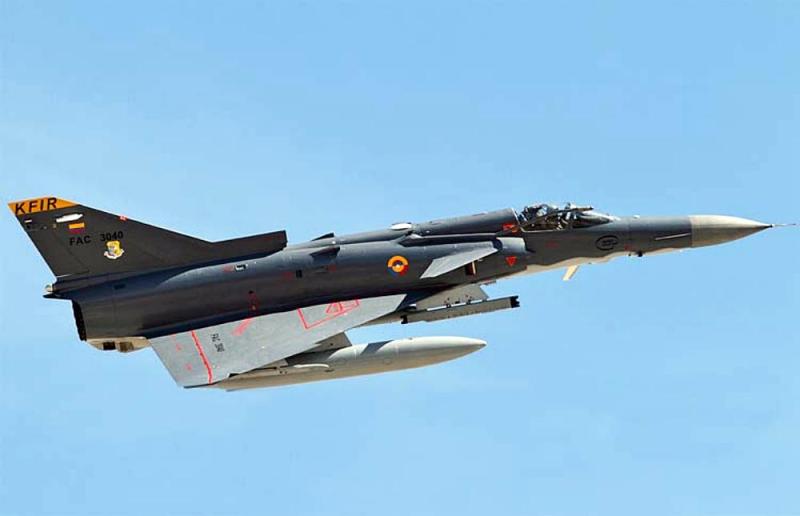
Colombia adquirió 12 Kfir-C2 y un avión de entrenamiento Kfir-TC2, cuyas entregas comenzaron en 1989. En 2008 se encargó otro lote de 13 Kfir retirados, los cuales, junto con los 11 Kfir colombianos ya existentes, se actualizaron a las especificaciones Kfir-C10, Kfir-C12 y Kfir-TC12, con aviónica modernizada. Estaban equipados con el armamento israelí más moderno y recibieron mejoras progresivas. Los Kfir colombianos realizaron ataques aéreos contra grupos insurgentes de las FARC durante la prolongada guerra civil colombiana. Fueron retirados del servicio en 2022.
A mediados de la década de 1990, Sri Lanka adquirió un total de diez Kfir-C2, cuatro Kfir-C7 y un avión de entrenamiento Kfir-TC2. Estas aeronaves se utilizaron contra los insurgentes Tigres Tamiles, y dos de ellas fueron destruidas en tierra en 2001 durante una incursión de este grupo.
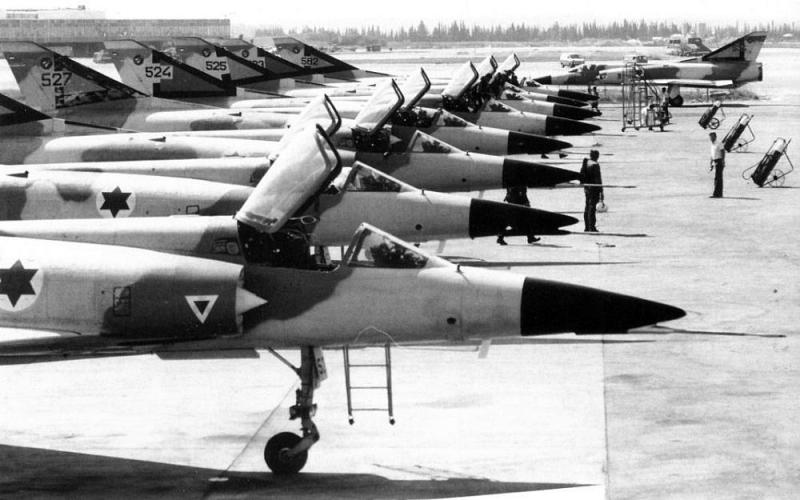
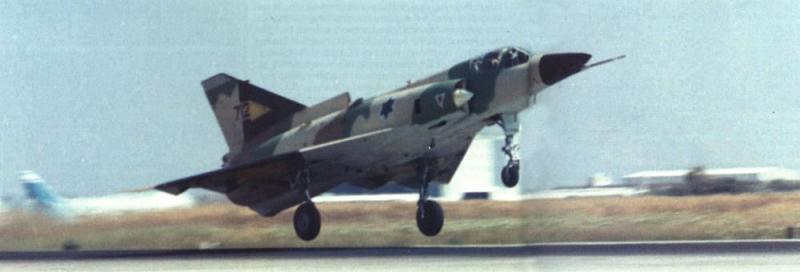
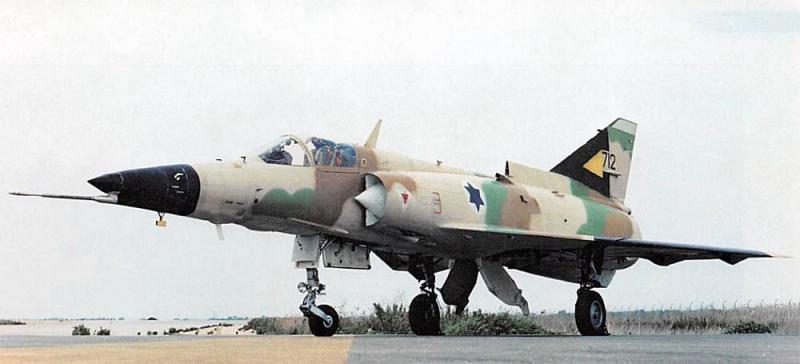
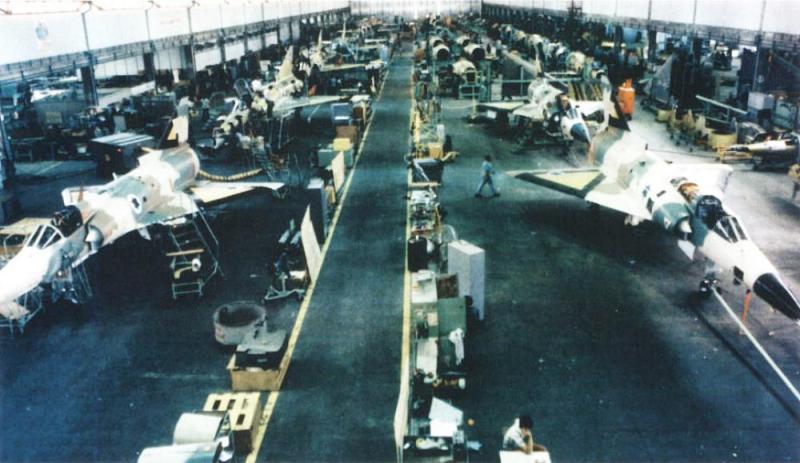
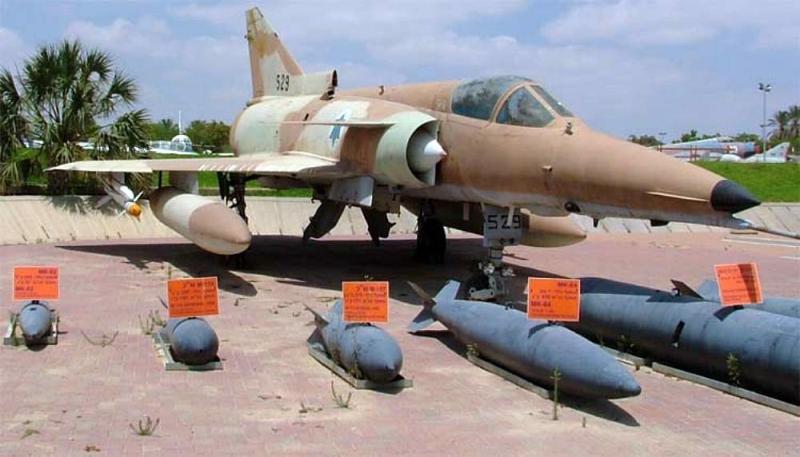
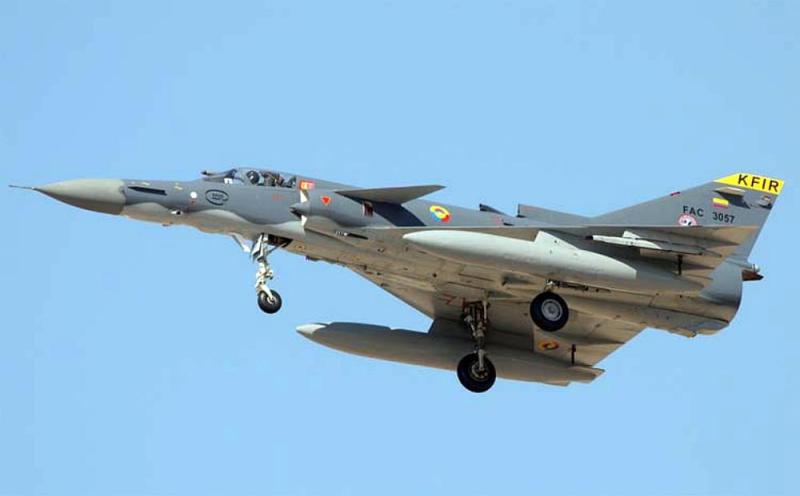
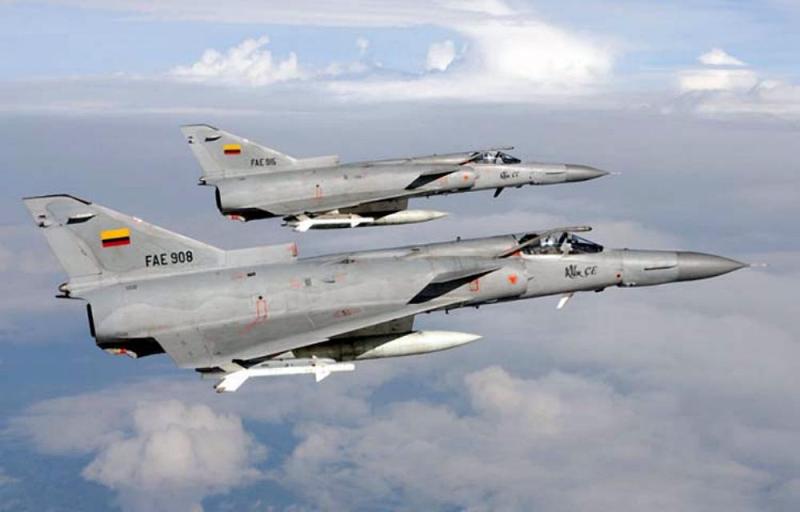
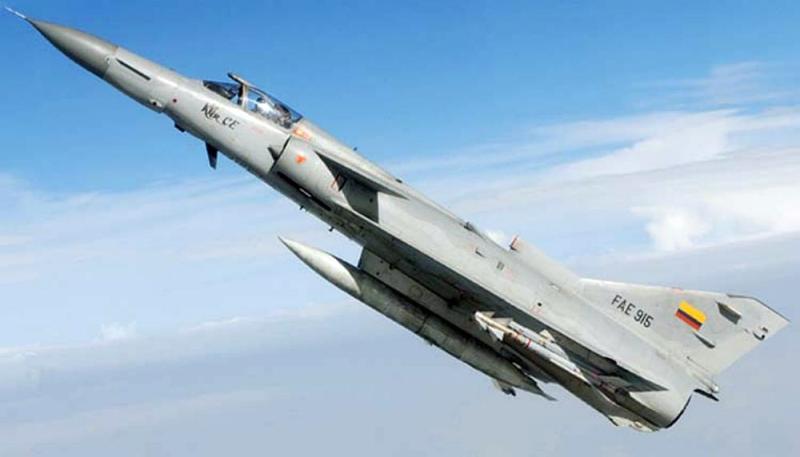
Dassault had developed the Mirage 5 at the request of the Israelis. When the French government prevented the aircraft from being delivered to Israel and cut off support for the Israeli’s existing Mirage IIICJ fleet, the Israelis simply produced the Mirage 5 themselves without a license, using manufacturing specs obtained by Israeli intelligence. There is an elaborate cloak-and-dagger story behind this exercise that doesn’t quite eliminate the suspicion that the Israelis were very discreetly helped by Dassault in this effort, the French government turning a blind eye to the whole matter. If so, nobody’s ever been able to prove a thing.
The Nesher (Eagle) was a complete copy of the Mirage 5, except for the use of some Israeli avionics; a Martin-Baker zero-zero ejection seat; and provisions for a wider range of AAMs, including the Israeli Shafir heat-seeking missile. The first Israel Aircraft Industries (IAI) Nesher prototype flew in September 1969, with production deliveries to the Hey’l Ha’Avir beginning in 1972. These aircraft performed well during the 1973 Yom Kippur / Ramadan War, claiming over a hundred kills.
51 Nesher fighters and 10 Nesher two-seat trainers were built in all. Most of these aircraft were refurbished and exported to Argentina between 1978 and 1982, under the name «Dagger». The Argentinians received 35 Dagger A single-seat fighters and 4 Dagger B two-seat trainers. The last of them were retired in 2015.
Nesher production was terminated to make way for an improved Mirage derivative that had been in planning in parallel, in which the Atar engine was to be replaced with an Israeli-built General Electric J79 engine, the same engine used on the American F-104 Starfighter and F-4 Phantom fighters. The J79 provided a dry thrust of 49 kN (5,000 kgp / 11,100 lbf) and an afterburning thrust of 83.4 kN (8,500 kgp / 18,750 lbf).
The J79 was first fitted to a French-built Mirage III, flying in October 1970. This test aircraft was followed by an improved prototype in June 1973, with the name Raam (Thunderbolt). Apparently a number of Mirage III-based J79-powered aircraft were built by IAI under the name Barak (Lightning) and participated in the 1973 Yom Kippur war, but making the most of the new engine meant airframe changes.
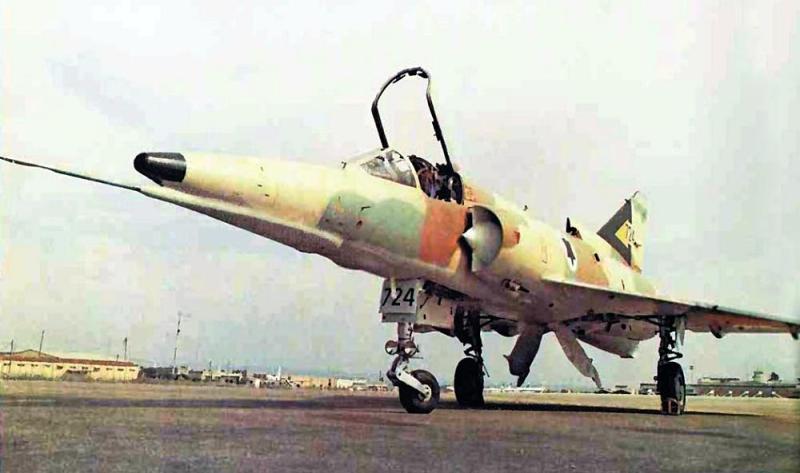
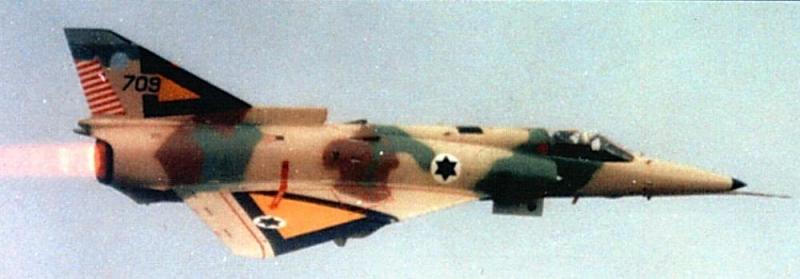
Production deliveries of an optimized J79-powered Mirage derivative, under the name Kfir-C1 (Lion Cub), began in April 1975. The Kfir-C1 superficially resembled a Mirage 5, except for a distinctive ram air inlet at the front base of the tail to provide added cooling required by the J79 engine.
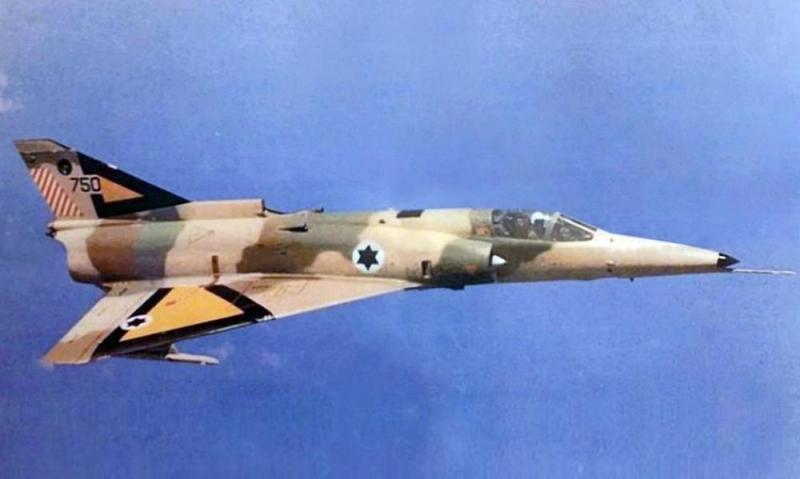
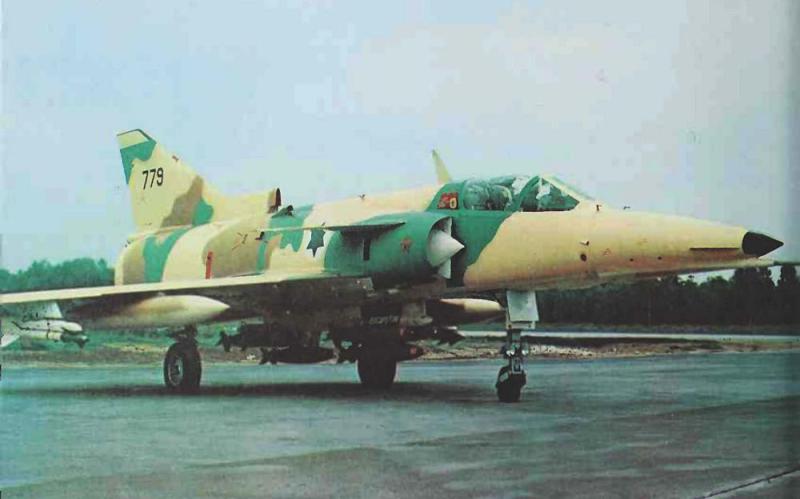
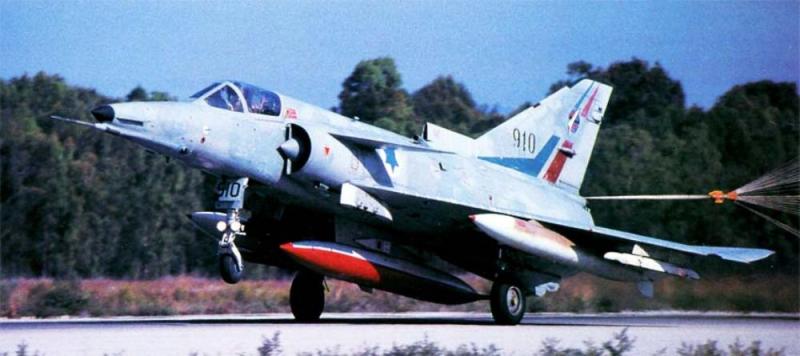
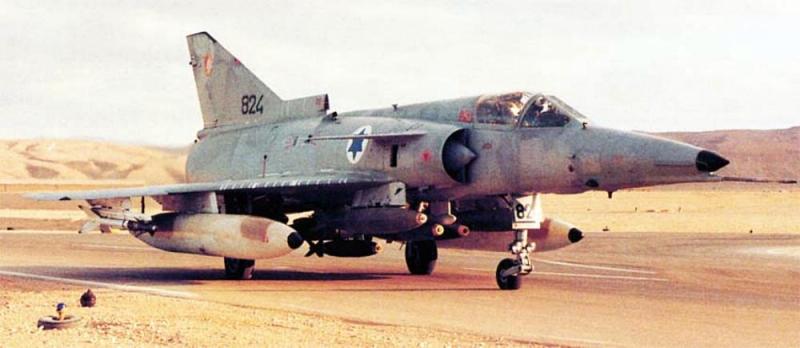
Only 27 Kfir-C1 fighters were delivered, to be replaced by the improved Kfir-C2. The Kfir-C2 had a number of enhancements to traditional Mirage aerodynamics. It featured narrow strakes along the tip of the nose; fixed detachable canards; and an extended dogtooth outer wing. The aerodynamic improvements gave the Kfir better combat maneuverability, reduced landing and take-off distance, and improved low-speed handling.
All but two of the Kfir-C1s were upgraded to the Kfir-C2 configuration, though they used smaller canards because of structural issues. 185 Kfir-C2s were built, including a number of Kfir-TC2 two-seat trainers. The trainer versions are very unusual looking, since they have an extended nose containing avionics displaced by the second seat, and the nose was noticeably drooped to give a reasonable cockpit view. The result was a somewhat comical big nose appearance.
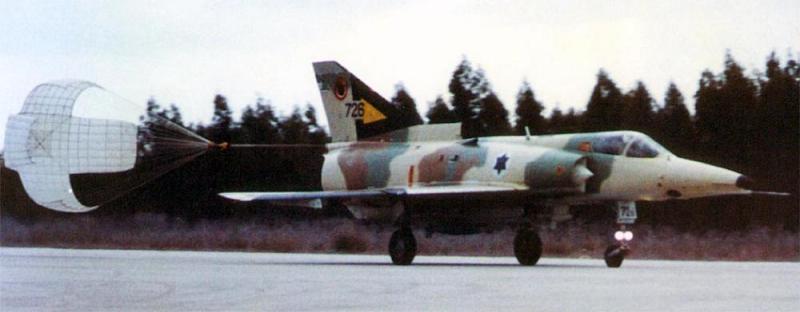
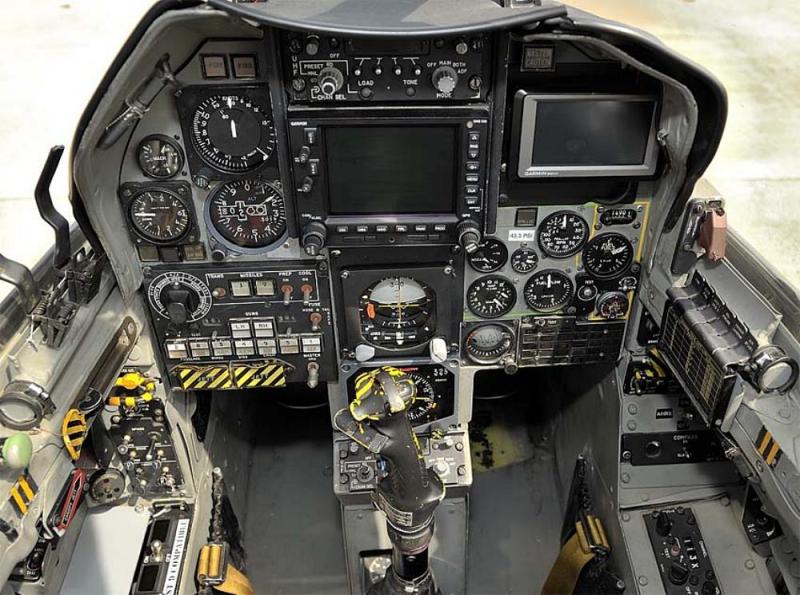
Final production Kfirs, delivered in the late 1980s, featured nine stores pylons, upgraded avionics, and other refinements, and were designated Kfir-C7 and Kfir-TC7. The Kfirs carried Israeli-built weapons, such as the Shafir II and follow-on Python 3 heat-seeking missiles, and US-built weapons, such as Maverick air-to-ground and Shrike anti-radar missiles.
In 1991, IAI introduced an upgraded Kfir-C2, known as the Nammer (Tiger), for the export market. This aircraft had a slightly stretched fuselage; modern avionics, including multifunction displays (MFDs) and hands on throttle and stick (HOTAS), controls, and the ability to accommodate either a SNECMA Atar 9K-50 turbojet or a GE-Volvo F404 / RM12 turbofan. Apparently the use of the J79 engine led to American export restrictions on the type that the chafed on the Israelis, so they went to a different engine fit. Along with the usual twin 30mm cannon, the Nammer had nine stores pylons and could carry up to 6.25 tonnes (13,800 pounds) of external stores. It also had provision for in-flight refueling.
There were no takers for the Nammer as such, but IAI didn’t give up, offering the Kfir-C10/TC10 as an upgrade, with a modern Israeli Elta EL/M-2021B multimode radar, twin MFDs, HOTAS, a modern countermeasures suite, and compatibility with the latest guided munitions. There was also a Kfir-C12/TC12, much the same except without the new radar. In 2013, IAI announced a further improved Block 60 Kfir update, the centerpiece being the Elta EL/M-2032 multimode active-array radar, with the company having a stockpile of 50 mothballed airframes in good condition to upgrade.
Kfirs were withdrawn from Israeli service during the 1990s, most being passed on to foreign users after refurbishment. Export sales included 10 Kfir-C2 fighters and 2 Kfir-TC2 trainers supplied to Ecuador in 1983. Ecuadorian Kfirs fought in a border clash with Peru in 1995.
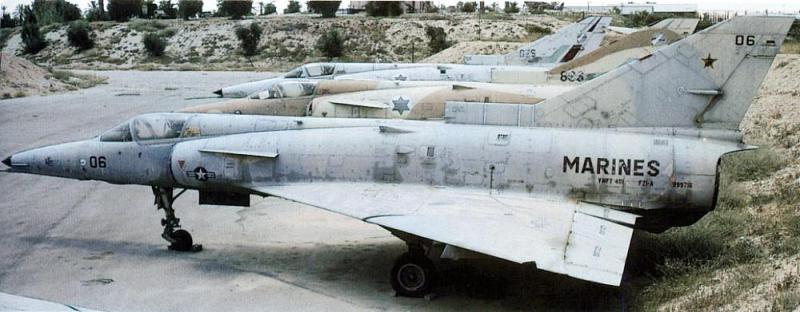
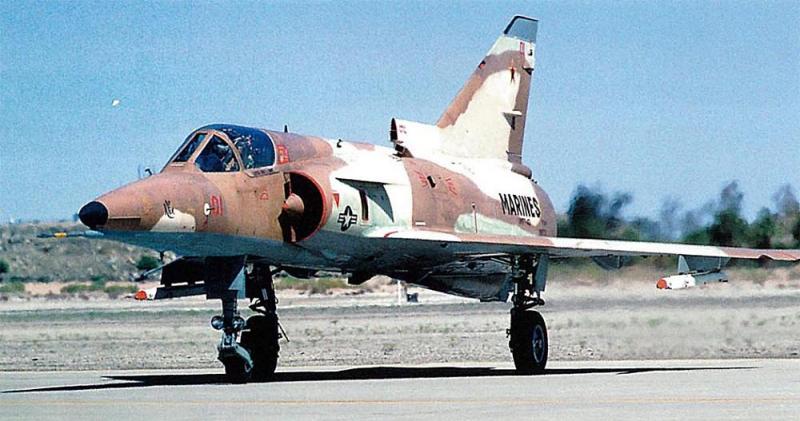
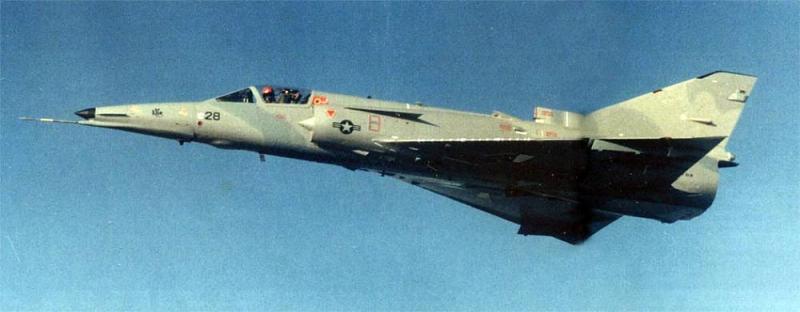
The US Navy and the US Marine Corps employed 25 of the upgraded Kfir-C1s leased from 1985 to 1989 to act as F-21A aggressor aircraft for training. Six Kfirs were also obtained by the US Airborne Tactical Advantage Company (ATAC), which provides adversary training services for the US military.
Colombia procured 12 Kfir-C2s and 1 Kfir-TC2 trainer, being delivered from 1989. Another batch of 13 mothballed Kfirs was ordered in 2008, with these and 11 existing Colombia Kfirs updated to Kfir-C10, Kfir-C12, and Kfir-TC12 spec, with modernized avionics. They carried the latest Israeli weaponry and have been given incremental upgrades. Colombian Kfirs performed air strikes on FARC insurgent groups in the course of Colombia’s long-running civil war. They were retired in 2022.
From the mid-1990s Sri Lanka obtained what would be a total of ten Kfir-C2s, four Kfir-C7s, and one Kfir-TC2 trainer. These aircraft were used against the Tamil Tiger insurgency, with two destroyed on the ground in 2001 in a Tiger raid.
FUENTES Y REFERENCIA – SOURCES & REFERENCE
airvectors.net
Ugolok Neba
aviadejavu.ru
©jmodels.net


Debe estar conectado para enviar un comentario.