
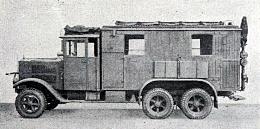
| DATOS TÉCNICOS (L3 H 163) | TECHNICAL DATA (L3 H 163) |
| TIPO: Camión medio todoterreno. | TYPE: Middle off-road truck. |
| TRIPULANTES: 1 | CREW: 1 |
| ANCHURA: 2,50 m. | WIDTH: 8.20 ft. |
| LONGITUD: 7,40 m. | LENGTH: 24.27 ft. |
| ALTURA: 3,20 m. | HEIGHT: 10.49 ft. |
| PESO: 5.700 kg. | WEIGHT: 12,566 lb. |
MOTOR:
| ENGINE:
|
AUTONOMÍA:
| RANGE:
|
VELOCIDAD MÁX.:
| MAX. SPEED:
|
| VERSIONES: 15 | VERSIONS: 15 |
| CONSTRUIDOS: Alrededor de 2.800 (Todos los modelos). | BUILT: Around 2,800 (All variants). |
En 1926, el Reichswehr comenzó a reflexionar sobre el futuro equipamiento del ejército alemán. La motorización general, que las fuerzas armadas de otras naciones también buscaban desde el final de la Primera Guerra Mundial, se consideraba un aspecto importante de posibles guerras futuras. Los camiones todoterreno, capaces de transportar cargas pesadas hacia y desde el campo de batalla, aún no estaban disponibles en el Ejército Imperial ni se fabricaban en Alemania. Sin embargo, antes y durante la Primera Guerra Mundial, ya se había adquirido experiencia con vehículos de la clase estándar de 3 toneladas.
Krupp contaba con un vehículo de 6 ruedas con una carga útil de 4 toneladas, el L4, que satisfaría las futuras necesidades militares. El Reichswehr formuló requisitos más precisos para dicho vehículo y los comunicó a los fabricantes alemanes de vehículos comerciales. Las especificaciones requerían un camión de tres ejes con una carga útil de 3000 kg, gran altura libre al suelo, ejes traseros motrices y buena tracción. Según la descripción del Reichswehr, la clase se denominaba «camiones todoterreno medianos (o)», donde «o» significaba convencional, es decir, de diseño industrial.
La primera empresa en responder al requerimiento fue Henschel en 1928 con el Henschel Tipo 33. Poco después, Krupp presentó su nuevo tipo L3 H 63, desarrollado a partir del L4. Büssing-NAG presentó su Tipo III GL 6 alrededor de 1932/33, y finalmente Mercedes diseñó su tipo LG 3000 hacia 1935/36. Todos los fabricantes recibieron pedidos para esta clase de camiones.
Sin embargo, dado que los modelos de Krupp y Henschel fueron los primeros disponibles y no se preveía un próximo conflicto a corto plazo, ambos modelos se sometieron a pruebas exhaustivas. Curiosamente, la Deutsche Reichsbahn (Ferrocarriles Alemanes) también participó en las pruebas.
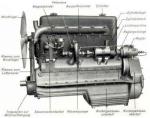
El primer modelo del L3 H 63 contaba con el motor Krupp M 11 de 75 CV. Solo se entregaron pequeñas cantidades de este primer modelo a la Reichswehr entre 1928 y 1930.
En 1931 se revisó el diseño del camión. El motor se modificó a un Krupp M 12 de 90 CV y el ejército también exigió un freno neumático, que se instaló parcialmente en sustitución del anterior freno hidráulico. Esta versión modificada se produjo entre 1931 y 1935, fabricándose aproximadamente 375 vehículos. Su característica más distintiva era la presencia de dos grandes compuertas de ventilación en el capó y un parachoques estandarizado.
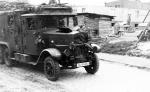
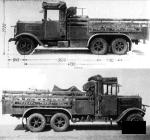
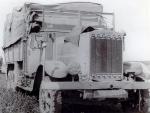
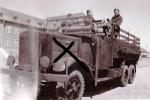
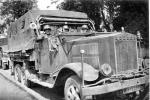
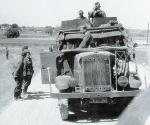
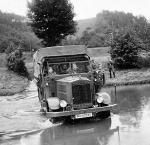
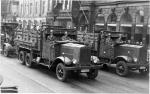
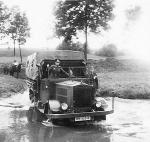
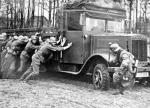
Entre 1936 y 1938, el modelo Krupp L3 H163 experimentó cambios fundamentales. El número 1 añadido al 163 indica que se trata de la primera variante de la serie. El motor se sustituyó por el Krupp M 12a de 100 CV. Se incorporó una nueva caja de cambios, el sistema de frenos neumáticos Knorr se introdujo de serie y se mejoró la suspensión de las ruedas. Con 2.496 unidades fabricadas, el L3 H 163 fue el modelo más producido.
Si bien los vehículos Krupp estuvieron disponibles desde sus inicios, su producción no alcanzó la misma magnitud que la de los modelos de otros fabricantes. Sin embargo, como era de esperar en un vehículo de esta época, el número de variantes creadas durante el periodo previo a la guerra fue elevado.
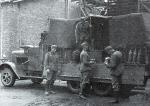
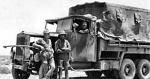
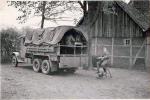
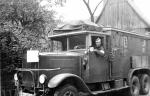
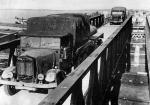
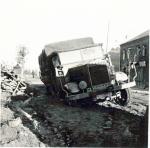
El mittlere geländegängige Lastkraftwagen, offen (o), o camión todoterreno mediano abierto (comercial), se utilizaba para el transporte de carga y soldados. Era el vehículo base de la serie. Este mismo modelo se utilizaba para transportar cocinas de campaña, carros de cable y equipos para la construcción de líneas telefónicas y de cable de campaña. Estas variantes, similares al modelo base, no recibieron un número Kfz específico en el sistema alemán de designación de vehículos.
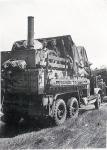
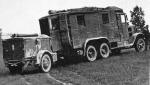
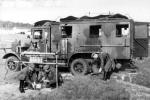
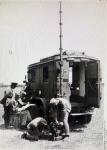
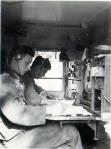
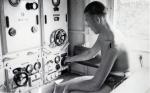
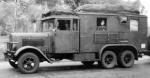
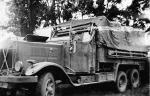
Sin embargo, las variantes con plataformas de carga modificadas recibieron designaciones diferentes. El Kfz 72 era una versión dedicada a las comunicaciones telefónicas y de radio con una superestructura trasera con ventanas y puertas. El Funkbetriebskraftwagen, vehículo motorizado de operación de radio, tenía dos mástiles de radio en la parte trasera de la carrocería.
El schwerer Vermessungstruppkraftwagen (Kfz. 73) mit Fahrgestell des m. gl. Lkw. (o), vehículo motorizado pesado de escuadrón de reconocimiento (Kfz. 73), era utilizado por los observadores de artillería. El Kfz. 73 fue adquirido a finales de la década de 1920 y principios de la de 1930.
El Nebelkraftwagen (Kfz. 91) mit Fahrgestell des m. gl. Lkw. (o) era el vehículo de mortero de humo (Kfz. 91). Era un vehículo especial de las Nebeltruppe, las tropas de combate químico del Ejército.
Algunas variantes del Kfz sobre el chasis L3 H 63 o 163 fueron utilizadas exclusivamente por la Luftwaffe. Existían dos versiones del Flakmesstruppkraftwagen (Kfz. 74) mit Fahrgestell des m. gl. Lkw. (o), vehículo motorizado de reconocimiento antiaéreo (Kfz. 74). Estos vehículos transportaban diferentes componentes del Kommandogerät 36, un sistema analógico de control de tiro antiaéreo empleado por la Luftwaffe.
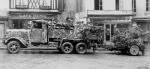
El raro Triebwerkkraftwagen (Kfz. 75) mit Fahrgestell des m. gl. Lkw. (o), o vehículo motorizado para motores de aeronaves (Kfz. 75), llevaba una grúa en la plataforma para montar o desmontar motores de aeronaves. Este número de Kfz. fue cancelado poco después.
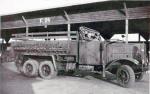
Parece ser que el Landebahnleuchtkraftwagen (Kfz. 353), una versión de iluminación de pistas, se utilizó en cantidades muy limitadas. Transportaba uno o dos focos en la plataforma. El Bildkraftwagen (Kfz. 354) fue utilizado por los escuadrones de reconocimiento de la Luftwaffe, y el camión cisterna de combustible Betriebsstoffkesselkraftwagen (Sd. Kfz. 5), con una capacidad de 3.600 litros, no pasó de la fase de prototipo.
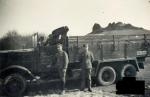
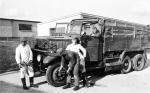
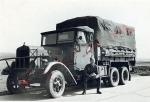
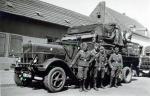
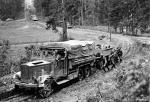
In 1926, the Reichswehr began reflections on the future equipment of the German army. The general motorization, which the armed forces of other nations have also been striving for since the end of the First World War, was considered an important aspect of possible future wars. Off-road trucks, which could move heavy loads to and from the battlefield, were not yet available in the Imperial Army, and they were not yet produced in Germany. Before and during the First World War, experience had already been gained with subsidy trucks and the vehicle class of the standard 3 tonner.
Krupp had a 6-wheeled vehicle with a 4 ton payload with the L4, which would meet the future wishes of the military. The Reichswehr formulated more precise requirements for such a vehicle and gave this description to the German commercial vehicle manufacturers. The specification required a three-axle truck with a 3,000 kg payload, high ground clearance, driven rear axles and good traction. From the description in the Reichswehr, the class was called «medium off-road trucks (o)», whereby «o» stood for conventional, i.e. an industrial design.
The first company to respond to the requirement was Henschel in 1928 with the Henschel Type 33. Shortly afterwards, Krupp presented its new type L3 H63, which had been developed from the L4. Büssing-NAG presented its Type III GL 6 about 1932/33, and finally Mercedes designed its type LG 3000 around 1935/36. All manufacturers received orders for this truck class.
However, since the models from Krupp and Henschel were the first available and the next conflict was not expected too soon, both models went through comprehensive tests. Interestingly, the Deutsche Reichsbahn was also included in the testing.
The first model of the L3 H 63 had the 75hp Krupp M 11 engine. Only small quantities of the Krupp L3 H63 early model were delivered to the Reichswehr from 1928 to 1930.
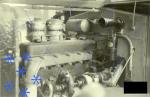
In 1931 the truck design was revised. The engine was modified to a 90hp Krupp M 12 and the military also demanded an air pressure brake, which was then partly installed instead of the previous oil pressure brake. This modified version was produced between 1931 and 1935, with about 375 vehicles manufactured. The most distinct feature was the presence of two large ventilation dampers on the bonnet and a standardised bumper.
From 1936 to 1938, there were some fundamental changes to the model with the Krupp L3 H 163. The supplemented number 1 in 163 stands for the first variant of the series. The engine was changed to the 100hp Krupp M 12a. A new gearbox was used, the Knorr pneumatic braking system was introduced as standard and it also had an improved wheel suspension. With 2,496 examples, the L3 H163 was the most built vehicle type.
Although Krupp’s vehicles were available early, they were not manufactured to the same extent as the models of the other manufacturers. However, as expected for an early vehicle, the number of variants created during the pre-war period was high.
The mittlere geländegängige Lastkraftwagen, offen (o) or medium cross-country lorry, open (commercial) was used for transportation of cargo and soldiers. It was the base vehicle in the series. This same model was used to transport field kitchens, cable carts and field cable and telephone lines construction. These variants, similar to the base model were not given a specific Kfz number in the German vehicle designation system.
However, variants with modified cargo beds received different designations. The Kfz 72 was a version dedicated to telephone and radio communications with a rear superstructure with windows and doors. The Funkbetriebskraftwagen, radio operating motor vehicle, had two radio masts on the rear of the body.
The schwerer Vermessungstruppkraftwagen (Kfz. 73) mit Fahrgestell des m. gl. Lkw. (o), heavy survey squad motor vehicle (Kfz. 73), was used by artillery observers. The Kfz. 73 was procured in the late 1920s and early 1930s.
The Nebelkraftwagen (Kfz. 91) mit Fahrgestell des m. gl. Lkw. (o) was the Nebeltruppe, smoke mortar motor vehicle (Kfz. 91). It was a special vehicle of the Nebeltruppe (the Army’s chemical combat troops).
Some of the Kfz variants on the L3 H 63 or 163 chassis were exclusively used by the Luftwaffe. There were two versions of the Flakmesstruppkraftwagen (Kfz. 74) mit Fahrgestell des m. gl. Lkw. (o), anti-aircraft survey party motor vehicle (Kfz. 74). These vehicles transported different elements of the Kommandogerät 36, an analogic anti-aircraft fire control system employed by the Luftwaffe.
The rare Triebwerkkraftwagen (Kfz. 75) mit Fahrgestell des m. gl. Lkw. (o), or aircraft engine motor vehicle (Kfz. 75), carried a crane on the platform to mount or dismount aircraft engines. This Kfz. number was cancelled after a short time.
It seems the Landebahnleuchtkraftwagen (Kfz. 353), a runway lighting version was used in very limited numbers. It carried one or two spotlights on the flatbed. The Bildkraftwagen (Kfz. 354) was used by recce squadrons of the Luftwaffe and the fuel tanker Betriebsstoffkesselkraftwagen (Sd. Kfz. 5) with a capacity of 3,600 litres did not go beyond prototypes.
FUENTES Y REFERENCIA – SOURCES & REFERENCE
bushmakow.com
kfzderwehrmacht.de
wikipedia.org
autogallery.org.ru
worldwarphotos.info
©jmodels.net


Debe estar conectado para enviar un comentario.