
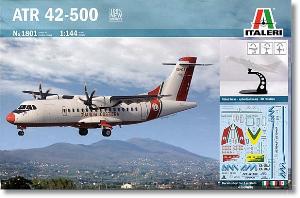
De un vistazo – Quick look
MATERIAL Y PIEZAS
MEDIA & PARTS:
- Plástico inyectado (55 piezas), plástico transparente (6 piezas). Incluye peana (3 piezas).
- Injected plastic (55 parts), clear plastic (6 parts). Stand included (3 parts).
CALCAS – DECALS:
- Impresas por Cartograf. Líneas, marcas del fuselaje y las alas, rótulos identificativos y matrículas. Aspecto fino y muy brillante. Nítidas, con buen registro y colores saturados.
- Printed by Cartograf. Fuselage and wings lines and markings, labels and registers. Thin and very shiny appearance. Sharp, with good register and saturated colors.
OPCIONES – OPTIONS:
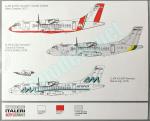
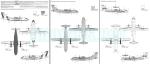
- ATR-42-500 “Surveyor”. Guardia Costiera (Italian Coast Guard). Roma Ciampino, 2011.
- ATR-42-500 “Surveyor”. Guarda di Finanza (Financial Police). Pratica di Mare, 2014.
- ATR-42-500. Aeromar. Mexico City, 2015.
INSTRUCCIONES – INSTRUCTIONS:
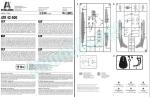
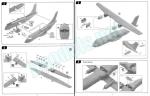
- Folleto plegado de 10 páginas impreso en blanco y negro. Contiene una breve introducción sobre el avión, un plano de piezas numerado, una lista de colores con equivalencias de pinturas en el código Federal Standard y de acrílicos de Italeri, 8 secuencias de montaje y 3 páginas de perfiles.
- 10-page folded leaflet printed in black and white containing a short introduction to the aircraft, a numbered parts plan, a list of colors with matches in the Federal Standard code and Italeri acrylic paints, 8 assembly stages and 3 pages of profiles.
LO MEJOR – THE BEST:
- Montaje sencillo. Detalle general, incluida la carlinga. Variedad de versiones y acabados.
- Easy build. Overall detail including cockpit. Varied versions and paint finishes.
LO PEOR – THE WORST:
- Ausencia de algunas piezas para la variante “Surveyor” (ver texto).
- Some missing pieces for the “Surveyor” variant (see text).
VALORACIÓN – CONCLUSION:
- Interesante para el modelista de escala pequeña. Aparente fácil montaje, carlinga más detallada de lo habitual y terminaciones diferentes y atractivas. Italeri ya tarda en reeditarla.
- Interesting kit for the small scale modeller. It looks an easy build with a detailed cockpit and includes varied and attractive paint finishes. Italeri should reissue it one of these days.

La maqueta
Italeri no es una marca que suela prodigarse en hacer maquetas a escala 1/144 y las que tuvo hace tiempo en su catálogo de aviones eran pocas y mayoritariamente reediciones de otras de Dragón, por eso cuando apareció este ATR-42 causó un tanto de sorpresa. Es raro que a estas alturas desde 2015 la casa italiana no le haya dado una vuelta a esta maqueta que, en principio, parece que iba a tener continuaciones con calcas de FEDEX y Air Wales. Al menos eso pone en la web de Scalemates.
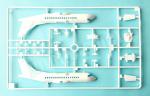
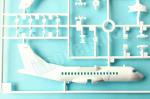
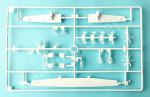
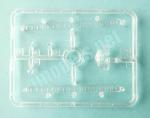
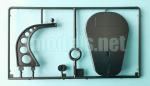
La caja trae dos bastidores de piezas blancas, un bastidor transparente y otro bastidor negro con las tres piezas de la peana. Esta es una maqueta sin exceso de elementos y en apariencia nada difícil de montar. Esto viene facilitado por la limpieza del molde, sin deformaciones, marcas evidentes ni rebabas. Sólo hay algunos cilindros de eyector que limpiar en algunas piezas. Los paneles están grabados en las superficies de las alas y el fuselaje con finura y limpieza, aunque para un avión relativamente pequeño como este resultan un poquito profundos en esta escala.
La única alternativa de construcción del modelo consiste en mostrar el tren de aterrizaje cerrado o abierto, a tal fin se proporcionan tapas alternativas para los pozos.
Aunque la maqueta se presenta como ATR-42-500, las versiones de los Guardacostas y la Policía de Finanzas italianas son en realidad dos de los tres ATR-42-400 “Surveyor” (modelo configurado para patrulla marítima) adquiridos por Italia. Esto importa poco, ya que el aspecto exterior del modelo -400 y -500 es muy parecido en general y más aún en esta escala, pero hay un par de detalles ausentes en la maqueta que el modelista medio puede rehacer sin demasiada dificultad. Los mencionaré más tarde.
Carlinga e interior
Para lo que suele ser acostumbrado en esta escala se puede afirmar que Italeri ha escatimado muy poco detalle en la carlinga. Toda ella viene en una pieza que comprende el suelo, el mamparo trasero, el panel con los instrumentos vagamente reproducidos, los asientos, las bases de las palancas y la consola central. El único pero son un par de pequeños rechupes del plástico sobre los asientos que no creo que se aprecien desde el exterior. Los lados internos del habitáculo son lisos y carecen de marcas. El parabrisas viene en una pieza que se inserta en el hueco que dejan las mitades del fuselaje. La pieza es gruesa y tiene los montantes de los cristales moldeados con demasiado relieve.
La cabina de pasaje no está reproducida y lo único que hay que añadir son las ventanillas laterales, moldeadas en relieve sobre dos hileras que se pegan en los rebajes grabados en el interior del fuselaje. Pese al tamaño, las piezas son aceptablemente transparentes y su gran desventaja la comprobaremos cuando llegue el turno de enmascararlas para pintar, tediosa tarea que no se podrá evadir. Para el modelo de patrulla marítima “Surveyor” es necesario replicar las burbujas laterales de observación situadas justo en la antepenúltima ventanilla de cada lado.
Por lo demás, sólo hay que añadir los pozos en el interior antes de cerrar el fuselaje. El pozo delantero tiene dos piezas alternativas, una de ellas con las tapas cerradas y la otra sin detalle en el interior. El pozo trasero es de una pieza y muestra los lados internos limpiamente detallados con líneas en relieve. Las instrucciones no indican la adición de lastre dentro del morro, pero es aconsejable ponérselo.
Fuselaje
Las mitades del fuselaje incluyen tanto el capotaje del tren principal como las superficies verticales de cola. La zona dorsal también muestra el encastre de las alas en relieve con un rebaje central para insertarlas. Como mencionaba antes, los paneles del fuselaje así como los de los accesos y compuertas están grabados con finura, especialmente sobre el capotaje inferior, donde son profusos pero convincentes.
Una de las mitades contiene las aletas VHF sobre el dorso y la zona ventral trasera. Las fotos del modelo ATR-42 MP “Surveyor” muestran otras aletas adicionales sobre y debajo del fuselaje que la maqueta no trae, pero que pueden añadirse sin mucha dificultad. Sin embargo, Italeri sí ha incluido la luz de navegación del puro de cola en una pieza transparente.
Alas, motores y cola
Las alas se dividen en dos superficies inferiores y una superior. Los paneles en estas superficies están grabados con buena definición. La mitad superior contiene una parte mínima del encastre de las góndolas mientras que las inferiores tienen moldeadas el resto. Las góndolas muestran de forma correcta la salida ovalada y abierta de los escapes. Los escapes son piezas aparte bien ahuecadas y perfectamente terminadas con extremos de perfil biselado. Las puntas están detalladas con las luces de navegación en piezas transparentes, dos pequeñas aletas y los contrapesos carenados de los alerones. Las mitades inferiores incluyen las bisagras de los flaps, cuatro por ala, por separado.
Los motores vienen en mitades con un eje añadido en medio para la hélice. Las piezas muestran tanto la toma inferior abierta como diversas tomas y salidas a los lados reproducidas con nitidez. Las hélices vienen unidas al buje y las palas muestra una torsión muy realista comparadas con las fotos de este avión. Aunque finas, en la maqueta no lo son tanto como en la realidad.
De las superficies de cola sólo los estabilizadores, insertados mediante lengüetas, viene separados. Los timones están bien grabados, en especial el vertical. La aleta vertical tiene varios detalles en relieve, como la antena VOR, y su timón el carenado de la aleta por ambas caras como ocurre en los estabilizadores. Italeri sólo olvidó la pequeña luz anticolisión en la parte superior del timón vertical.
Tren de aterrizaje
Para simular el modelo en vuelo no hay más que cerrar el pozo delantero con las tapas unidas en una pieza y los pozos traseros con sus respectivas compuertas separadas en dos piezas laterales y una central que lleva grabadas las ruedas en el exterior. La peana no es bonita que digamos aunque sí práctica. Está formada por una base, un soporte y una pieza engastada en una rótula que permite mover el modelo en diferentes ángulos. Lógicamente, los agujeros para insertar esta pieza los habremos taladrado antes de pegar las mitades del fuselaje.
El tren desplegado delantero está formado por una pata con algo de detalle en la amortiguación y un brazo extensor separado. Las ruedas son dobles, con definición aceptable tanto en los neumáticos como en las llantas. Las puertas del pozo también vienen separadas y detalladas con las bisagras y brazos de apertura.
Cada pata del tren trasero va unida a una base pegada próxima a las compuertas dobles del pozo. La pieza muestra buena definición en el amortiguador y está complementada por un brazo retractor aparte. Las ruedas me parecen buenas para esta escala, con un detalle muy nítido, especialmente en las llantas externas. Además de las compuertas laterales, hay que añadir un panel central situado sobre la mitad de ambos pozos.
Calcas
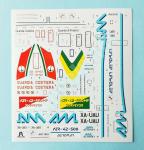
La hoja está impresa con gran calidad por Cartograf. Contiene diversas líneas y marcas tanto para el fuselaje como las alas, variados rótulos identificativos (incluidos los de la base de la peana) y matrículas. Las calcas poseen un aspecto fino y muy brillante con adecuada nitidez y registro.
Instrucciones
El folleto plegado de diez páginas impreso en blanco y negro contiene una breve introducción sobre el avión, un plano de piezas numerado, una lista de colores con equivalencias de pinturas en el código Federal Standard y de acrílicos de Italeri, ocho secuencias de montaje realizadas mediante diseño asistido por ordenador (CAD) y tres páginas de perfiles. La cara trasera de la caja muestra tres perfiles con las diversas opciones de pintura y los tres colores principales de cada librea.
Las versiones recogidas por Italeri, dos de cuerpos italianos y una civil, y los acabados de pintura son variadas, pero además el modelista tiene hoy múltiples juegos de calcas en el mercado para representar otras líneas aéreas que han empleado este avión.
Valoración
En el debe que se le puede pedir a la marca está el no haber incluido una pocas antenas y las ventanillas laterales del “Surveyor” que no le hubiesen supuesto ningún esfuerzo ofrecer como opciones, aunque bien es cierto que al modelista de cierta experiencia no le será muy difícil hacerlas.
Estoy seguro que Italeri no habrá olvidado esta maqueta y la volverá a lanzar al mercado con las mismas o diferentes versiones en algún momento. Desde luego, tanto por su sencillez de montaje y detalle como por la diferencia de acabados y versiones, merece realmente la pena.◊


The kit
Italeri does not usually release 1/144 aircraft kits today, tough their catalogue included a few items in the past, mostly reboxes of Dragon kits. So, when this new tool ATR-42 appeared, it was somewhat surprising. It’s strange the Italian manufacturer has not reissued it again since 2015. Apparently, it was going to be followed by other boxings with FEDEX and Air Wales decals, or so it says the information I found on the Scalemates website.
The box comes with two sprues of white parts, a clear sprue and a black frame with the three pieces for the stand. Parts count is not high and the kit clearly looks easy to build. Pieces are clean from flash and show no blemishes or pin marks, but some of them have ejector pips. Panels are engraved on the wing and fuselage surfaces with finesse and cleanliness, although for a relatively small aircraft like this, they seem a bit deep in this scale. The only assembly choice is to pose the landing gear closed or open. For this purpose, alternative well covers are provided.
Although Italeri launched it as an ATR-42-500, the Italian Coast Guard and Finance Police versions are actually two of the three ATR-42-400 «Surveyors» (configured for the maritime patrol role) procured by Italy. This is not very important here as the exterior appearance of the ATR-42-400 and -500 is quite similar, even more so in this small scale. However, those who wish to build a “Surveyor” must know there is a couple of details missing in the kit that the average modeler can easily provide. I’ll mention them later.
Cockpit and interior
For a standard 1/144 kit, the truth is that Italeri has spared very little detail in the cockpit. This comes in a single piece comprising the floor, the rear bulkhead, the panel with roughly rendered instruments, the seats, the control column dust covers, and the center console. The only drawback is a small sink on both seats that will be unnoticed from the outside. The cockpit sides are flat and clean from marks. The windshield comes in a single piece that fits into the fuselage gap. The piece is thick with raised lines between the windows.
The passenger cabin is empty and the only pieces to attach are the side windows, moulded raised on two clear plastic rows inserted into fuselage recesses. Despite the size, parts are reasonably transparent, and their major drawback will be revealed when it comes to mask them for painting, a tedious task that cannot be avoided. To build a «Surveyor» variant it is necessary to add the side observation bubbles located just inside the third-to-last window on each side.
For the rest, only the wells need to be added to the interior before closing the fuselage. The front well has two alternative pieces, one moulded with closed doors and the other with no interior detail. The rear well is a single piece and shows cleanly detailed inner sides with raised lines. The instructions do not indicate adding ballast inside the nose, but it seems advisable to do so.
Fuselage
The fuselage halves include both the main gear sponson fairings and the vertical tail surfaces. The dorsal profile shows a raised recess to attach the wings. As mentioned earlier, the panels, accesses and doors are finely engraved, especially on the lower sponsons, where they are extensive but convincing.
One of the halves contains the VHF fins on the dorsal and rear ventral area. Photos of the ATR-42 MP “Surveyor” show additional fins on and below the fuselage that are missing in the kit but these can be easily added. However, Italeri has included a clear piece for the tailcone light.
Wings, engines and tail
The wings are divided into two lower and one upper pieces. The nacelles are divided with a small panel moulded on the upper wing half and most of the nacelles on the lower halves. The nacelles correctly show the oval, open exhaust outlets. The exhausts are separate, well-hollowed pieces with correct chamfered pipes. The tips are detailed with the navigation lights in clear pieces, two small winglets, and the aileron horn balances. The lower halves include the flap hydraulic jacks, four per wing, separately.
The engines come in halves with the propeller shafts added in between the pieces. They show both the open lower air intake and several sharp intakes and outlets on the sides. The propellers are joined to the hubs and the blades show a very realistic twist compared with pictures of this aircraft. Tail surfaces include only the stabilisers as separate pieces. These are provided with tabs to insert them into slots on the fin. The rudders are cleanly engraved, especially the vertical one. The vertical fin has some raised detail, such as the VOR aerial, and the rudder tab shows the faired actuators on both sides, as is the case with the stabilizers. Italeri only forgot the small anti-collision light on the vertical rudder.
Undercarriage
To simulate the model in flight you simply close the front well with the covers joined in a single piece, and the rear wells with their doors separated in two parts and a middle piece including the wheels engraved on the surface. The stand isn’t exactly attractive, but it is practical. It consists of a base, a support, and a piece embedded in a ball joint that allows the model to be swivelled at different angles. Logically, the holes for inserting this piece are drilled before joining the fuselage halves.
The unfolded front landing gear consists of a leg with some detail in the shock absorbers and a separate extension arm. The wheels are double, with acceptable definition in both the tires and rims. The well doors are also separate and detailed with hinges.
Each main landing gear strut is moulded with a base attach beside the two-piece cover. The piece shows good definition in the shock absorbers and is complemented by a separate folding arm. The wheels look good for this scale, with very sharp detail, especially on the outer rims. In addition to the side covers, there is a central panel between the wells.
Decals
The sheet is printed with high quality by Cartograf. It contains several lines and markings for both the fuselage and wings, labels (including those for the stand), and registers. Decals have a thin, very glossy appearance with adequate sharpness and register.
Instructions
The ten-page folded leaflet printed in black and white contains a short introduction to the aircraft, a numbered parts plan, a list of colors with matches in Federal Standard paints and Italeri acrylics, eight assembly sequences in CAD graphics, and three pages of profiles. The back of the box shows three profiles of the different paint options and the main colors of each livery.
The versions chosen by Italeri, two Italian law enforcement organizations and an airline, and the paint finishes are varied, but the modeller also have plenty of decal sets on the market today for other airlines that have operated this aircraft.
Conclusion
The only drawback I can see in this kit are the missing antenna fins and the bubble windows for the “Surveyor” that could have been offered as options, but it is true these can be added by any average modeller.
I’m sure Italeri hasn’t forgotten this ATR-42 and will reissue it with the same or different decal versions at some point. Certainly, it’s truly worth it as the kit must be easy to build, is well detailed and the variety of paint finishes and versions are attractive.◊
Publicado – Published: 4 / 2025
©www.jmodels.net
 jmodels.net
Debe estar conectado para enviar un comentario.