
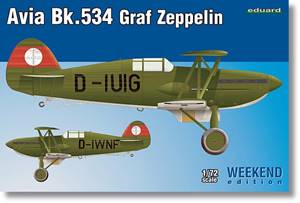
De un vistazo – Quick look
MATERIAL Y PIEZAS
MEDIA & PARTS:
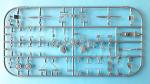
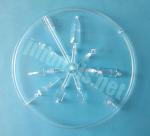
- Plástico inyectado (82 piezas), plástico transparente (8 piezas).
- Injected plastic (82 parts), clear plastic (8 parts).
CALCAS – DECALS:
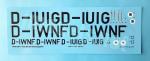
- Matrículas, esvásticas, indicadores del panel, arneses y algunos estarcidos. Aspecto mate y fino. Sin exceso de soporte. Bien impresas.
- Registers, swastikas, panel dials, belts and some stencils. Thin and matt appearance. No excess of carrier film. Well printed.
OPCIONES – OPTIONS:
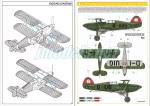
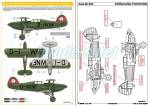
- Avia Bk.534. D-IUIG. N.º serie 592. Erprobungsstelle Travemünde. Travemünde (Alemania), 1940-1941.
- Avia Bk.534. D-IWNF. N.º serie 594. Erprobungsstelle Travemünde. Travemünde (Alemania), 1940-1941.
INSTRUCCIONES – INSTRUCTIONS:
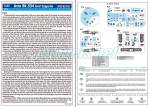
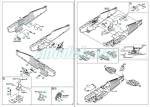
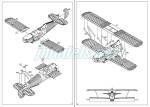
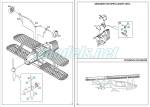
- Folleto de tamaño A5 de 12 páginas impreso en color sobre papel satinado. Contiene una referencia histórica sobre el avión, un plano numerado de piezas, una tabla de colores con equivalencias de pinturas de Gunze Sangyo, 14 secuencias de ensamblaje sin numerar, una guía para arriostrar el modelo, dos páginas de perfiles y una para colocar los estarcidos. Claras y bien impresas.
- A5 12-page booklet in color on satin paper. It contains a historical summary about the aircraft, a numbered parts diagram, a color chart with matches in Gunze Sangyo paints, 14 assembly chapters without numbers, a guide for rigging the model, two pages of profiles and an extra page for setting the stencils. Clear and well printed.
LO MEJOR – THE BEST:
- Buen detalle interior y exterior. Relativa (por biplano) sencillez de montaje. Instrucciones.
- Nice interior and exterior detail. Relatively easy build for a biplane. Instructions.
LO PEOR – THE WORST:
- Restos de expulsor en algunas piezas.
- Ejector pips on some parts.
VALORACIÓN – CONCLUSION:
- Notable maqueta de un avión poco usual. Gran detalle general, molde limpio y sencillo de montar comparado con otros biplanos. Recomendable a modelistas de cualquier nivel.
- Very nice kit of an unusual type. Outstanding overall detail, clean tooling and easier to build than most biplanes. Recommendable to modellers of any level of experience.

La maqueta
El Avia Bk.534 es la última versión que Eduard ha editado de este caza checo. Hace un tiempo escribí una revisión sobre la maqueta del Avia B.534 II. Serie (Eduard 7478) que tiene diferencias con la que analizo hoy, aunque desde luego el molde es idéntico y muchas de las piezas también lo son.
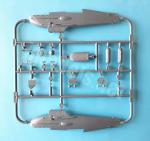
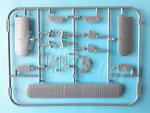
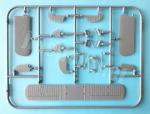
La caja contiene tres bastidores, un bastidor transparente, la hoja de calcas y el folleto de instrucciones, Las piezas y las instrucciones están envueltas en bolsas de cierre sellante. Las dos maquetas mencionadas son idénticas, salvo en las calcas, parcialmente en las instrucciones y también en la presencia de un bastidor que contiene el fuselaje, el cono de la hélice, el panel de instrumentos, un gancho de apontaje, la cubierta del motor y pocas piezas más, que son propias del Bk.534.
La calidad del plástico y el moldeo de las piezas son en ambos casos muy buenas. El detalle grabado y en relieve está limpio de imperfecciones y no contiene rebabas ni marcas de eyector que estorben el montaje. Como en la maqueta de la Serie II, hay múltiples cilindros de expulsor por eliminar de ciertos elementos que se harán un poco tediosos, pero no causarán más contratiempos.
A diferencia del muy parecido B.534 de la serie IV, este modelo debería haber llevado un cañón Oerlikon de 20 mm. que disparaba a través de la hélice. Diversos problemas hicieron que finalmente se armara este modelo con dos ametralladoras a los lados del fuselaje y otra adicional en lugar del propuesto cañón. También hay pequeñas, pero notorias diferencias en el fuselaje, como las dos tomas laterales del motor, la ausencia de la toma ventral de las versiones anteriores y, naturalmente, el perfil más elevado del fuselaje tras la carlinga, que empleaba una cubierta cerrada y deslizante. Todas estas diferencias están bien plasmadas en la maqueta.
Carlinga
Los lados de la carlinga están provistos de paneles que contienen el relieve estructural e instrumentos dispuestos sobre ellos. Antes de montar la carlinga, hay que incluir varias piezas en el alargado radiador ventral. Básicamente consisten en la entrada de la toma, que es opcional, así como el panel que cierra la salida.
El suelo contiene los pedales moldeados encima y la base del asiento del piloto, que cuenta con un cojín separado y cinturones de calca. El panel de instrumentos también es opcional, podemos elegir uno liso con los instrumentos de calca, o bien otro con los indicadores finamente reproducidos en relieve.
La cubierta transparente tiene piezas alternativas para ponerla cerrada en una pieza o abierta con tres piezas finas. La última sección contiene en su interior el reposacabezas del piloto.
Fuselaje y motor
El fuselaje es específico para esta versión y es parecido al del B.534, pero con las diferencias señaladas arriba. A las mitades del fuselaje solo les falta la cubierta del motor separada, que muestra varias pequeñas rejillas de ventilación bien definidas. La representación de los paneles grabados, así como del relieve estructural en la parte posterior es excelente. Las ametralladoras están claramente definidas en las troneras laterales y lo mismo ocurre con los abultamientos situados tras ellas, que muestran las diminutas salida de los casquillos con nitidez. Las tomas laterales de esta versión están bien marcadas y abiertas, lo mismo que los pequeños escapes situados bajo la cubierta.
Antes de pegar el fuselaje, hay que añadir el panel posterior situado tras el asiento y el mecanismo de despliegue del gancho de apontaje en la parte inferior de cola, que viene separado en dos piezas. Una vez unidas las mitades, podemos añadir el pequeño estribo de acceso del piloto.
La hélice va pegada entre el buje y la base posterior de este. El buje muestra en su centro la tronera abierta de la ametralladora. La hélice es fina y sus palas están limpias y finamente torsionadas.
Alas y cola
Los planos inferiores están separados en dos piezas. Las dos caras muestran un relieve estructural limpio y nítido, con las luces de navegación definidas y los puntos de unión de los soportes abiertos.
El plano superior es de una pieza y tiene un detalle idéntico a los anteriores, pero además el grabado de los alerones es notable y diferente por los dos lados. La sección central es lisa y está detallada con finura en ambas caras. Los puntos para situar los soportes están igualmente bien marcados.
Los soportes poseen buen perfil y su montaje no parece tener más dificultad que conseguir el diedro necesario en las planos inferiores para que el ajuste de las alas sea perfecto. Las instrucciones nos ofrecen una vista frontal del modelo con este diedro.
El empenaje viene separado del puro de cola y todas las superficies cuentan con timones separados. El detalle superficial en todas ellas es similar al de las alas. La aleta posee las luces de navegación bien definidas. Los soportes de los planos horizontales son finos y vienen por separado.
Tren de aterrizaje
El tren principal está despiezados en tres partes, con los ejes de la amortiguación situados en posición central. Las piezas están bien perfiladas y soportes van unidos directamente a las ruedas. Aunque el B.534 IV llevaba carenas en las ruedas, este Bk.534 capturado carecía de ellas, de acuerdo con las instrucciones. Las ruedas son bastante buenas y muestran los neumáticos bien marcados. El detalle de las llantas es sencillo, pero muestra la tapa de la válvula de llenado de aire.
El tren auxiliar está formado por una rueda unida a la pata, aunque la rueda era sustituida en ocasiones por un simple patín.
Calcas
La hoja contiene matrículas, esvásticas, los indicadores del panel, arneses y algunos estarcidos. Las calcas presentan aspecto mate y fino, sin exceso de soporte. Están bien impresas y no deben dar problemas al colocarlas.
Instrucciones
El folleto de instrucciones de 12 páginas tiene un tamaño A5 y está impreso en color sobre papel satinado. Contiene una referencia histórica sobre el avión, un plano numerado de piezas, una tabla de colores con equivalencias de pinturas de Gunze Sangyo, 14 secuencias de ensamblaje sin numerar, una guía para arriostrar el modelo, dos páginas de perfiles y una para colocar los estarcidos. Las secuencias de construcción son muy claras y las vistas detalladas de ciertas zonas son de gran ayuda.
En esta edición solo aparecen dos Bk.534 empleados por los alemanes para probar diverso equipamiento naval para el futuro Bf 109T, el caza destinado al portaaviones Graf Zeppelin. Los dos aviones llevaban matrículas civiles en el fuselaje y las alas, y al parecer se emplearon pintados aún en colores checos. El primero de ellos (D-IUIG) aparece también en la edición Profipack del B.534 IV. Serie.
Valoración
En la revisión anterior sobre el B.534 II terminaba diciendo que cualquier versión de este molde sería igualmente recomendable y, afortunadamente, no parece que ande muy equivocado al considerar este Bk.534 IV, cuyos detalles diferenciales están bien reproducidos y, tanto el detalle como el montaje, relativamente sencillo, también la convierten en una pieza digna de la vitrina para los aficionados a este tipo de aviones.◊

The kit
The Avia Bk.534 is the latest boxing Eduard have released of this Czech fighter. A while ago I wrote a review on the Avia B.534 II. Serie (Eduard 7478) that has some differences with the one I describe here, although most pieces are the same.
The box contains three sprues of parts, a clear sprue, the decal sheet and the instruction booklet. The parts and instructions come inside self-sealing bags. The differences between the two kits I have just mentioned are in the decals, most of the instructions and also in a new sprue containing the fuselage, the spinner, the instrument panel, an arrester hook, the engine deck and a few other pieces which are specific to the Bk.534.
The quality of molding is excellent and parts are correctly molded with no blemishes. Both the engraved and raised detail shows a nice definition and there is no flash or pin marks affecting assembly. As in the Series II kit, there are plenty of ejector pips to remove from some parts and this will be a bit tedious but easy to do.
Unlike the very similar B.534 of the IV series, this Bk.534 should have carried a 20 mm Oerlikon gun firing through the spinner. Various problems led to this variant finally being armed with two machine guns on the fuselage sides plus another one instead of the cannon. There are also small but noticeable differences in the fuselage, such as the two side engine intakes, the absence of the ventral intake adopted in previous variants and, naturally, a higher fuselage profile behind the cockpit to install a closed canopy instead of a windshield. All these differences are well rendered in the kit.
Cockpit
The sidewalls are provided with panels containing the internal structure with some instruments molded on them. Before assembling the cockpit, the ventral radiator is detailed with some parts, including the front shutters, which are molded in two alternative pieces, and a panel closing the radiator bath.
The floor contains the pedals molded on and a base for the pilot’s seat, which has a separate cushion and decal belts. The instrument panel is also optional, we can choose a smooth one with decal instruments, or another with finely raised gadgets.
The canopy also has alternatives to show it closed in one piece or open in three thin pieces. The last section contains the pilot’s headrest inside.
Fuselage and engine
The fuselage is specific for this version and similar to that of the B.534, but with the differences noted above. The fuselage halves have the engine deck molded apart. The piece is detailed with small, well-defined vents. Surface detail on the fuselage is rendered with engraved panels as well as an excellent raised structure in the rear section. The machine guns are clearly defined in the side ports and the same goes for the bulges behind them, which show tiny ammo chutes. The engine intakes of this variant are molded open, as are the small exhausts.
Before gluing the fuselage, a rear cockpit panel is added behind the seat and the landing hook gear inside the tail cone. Once the halves are joined, we can add the small entry step.
The propeller is placed between the spinner and the base plate. The spinner shows the open machine gun port in the middle. The propeller is thin and the blades are clean from flash and finely twisted.
Wings and tail
The lower wings are separated in two pieces. The two sides show a clean raised structure, with defined navigation lights and open holes to insert the wing struts.
The upper wing is in one piece with the same surface detail and cleanly engraved ailerons. The center section is smooth and detailed on both sides. The piece also shows clear-cut attachment points to insert the supports.
The supports have a nice profile and assembly only needs a correct dihedral in the lower wings to get a perfect fitting in boths wings. A front view of the assembly and the necessary dihedral is provided in the instructions to help with this.
The tail planes are provided as separate pieces. All of them also have the rudders apart. Surface detail is similar to that of the wings and the fin shows well-defined navigation lights. The tailplane struts are thin and come separately.
Undercarriage
The main undercarriage is divided into three parts, with the half-axle attached between the wheel struts. The pieces are well profiled and the wheels are glued right onto the struts. Although the B.534 IV had wheel fairings, this captured Bk.534 did not use them, according to the instructions. The wheels are quite good and show well marked tires. Detail of the hubs is simple, but includes the air fill valve.
The tailwheel is molded with the strut, although this variant was sometimes provided with a tail skid instead.
Decals
The sheet contains civil registers, swastikas, the panel gadgets, the harnesses and some stencils. Decals have a matte and fine appearance without excess support. They are well printed and should not cause problems when setting them.
Instructions
The 12-page A5 instruction booklet is printed in color on glossy paper. It shows a historical reference to the aircraft, a numbered parts plan, a color chart with Gunze Sangyo paint matches, 14 assembly sequences, a guide for rigging the model, two pages of profiles and one to set the stencils. Construction sequences are very clear and the detailed views are quite helpful.
The release only includes two Bk.534s used by the Germans to test naval equipment for the future Bf 109T, the fighter chosen for the aircraft carrier Graf Zeppelin. The two aircraft carried civilian registrations on the fuselage and wings, and were apparently still painted in Czech colours. The first of them (D-IUIG) is also included as an option in the Profipack edition of the B.534 IV. Series.
Conclusion
As I said in the previous B.534 II review, any variant of Eduard’s 1/72 B.534 can be recommended. Fortunately, I don’t seem to be quite wrong when considering this Bk.534 IV, which has its own different details well reproduced. The simple assembly for a biplane also makes it a significant kit for fans of this type of aircraft.◊
Publicado – Published: 5 / 2024
©www.jmodels.net
 jmodels.net
Debe estar conectado para enviar un comentario.