
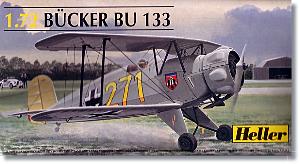
De un vistazo – Quick look
MATERIAL Y PIEZAS
MEDIA & PARTS:
- Plástico inyectado (30 piezas), plástico transparente (2 piezas).
- Injected plastic (30 parts), clear plastic (2 parts).
CALCAS – DECALS:
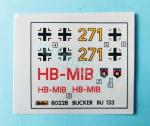
- Cruces alemanas, matrículas y marcas de unidad. Aspecto un poco grueso y brillante. Aparente buena saturación y nitidez. Sin exceso de soporte.
- German crosses, registers and unit badges. Thickish and glossy finish. Apparently good color saturation and sharpness. No excess carrier.
OPCIONES – OPTIONS:
- Bücker Bü 133. Luftwaffe. 271 Amarillo. JFS 2 (Escuela de Entrenamiento de Cazas). Zerbst (Alemania).
- Bücker Bü 133. HB-MIB. Aeroclub de Zúrich (Suiza), 1954.
- Bücker Bü 133. Luftwaffe. Yellow 271. JFS 2 (Fighter Training School). Zerbst (Germany).
- Bücker Bü 133. HB-MIB. Zurich Flying Club (Switzerland), 1954.
INSTRUCCIONES – INSTRUCTIONS:
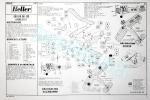
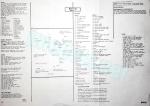
- Hoja de formato A4 impresa en blanco y negro. Contiene una referencia sobre el avión, dos vistas explosionadas de construcción del modelo, perfiles y una lista de pinturas sin referencia, pero los códigos son de Humbrol.
- A4 sheet printed in black and white. Contains a short summary about the biplane, two exploded view of the assembly, profiles and a list of paint codes with no reference, but they belong to Humbrol enamels.
LO MEJOR – THE BEST:
- Molde decente pese a la edad. Aparente fácil montaje.
- Decent tooling despite the time. Apparent ease of construction.
LO PEOR – THE WORST:
- Carlinga. Motor.
- Cockpit. Engine.
VALORACIÓN – CONCLUSION:
- Es evidente que necesita una actualización por su antigüedad, pero todavía es aprovechable por cualquier modelista con cierta mano para los biplanos.
- It obviously needs updating due to its age, but it is still buildable by any modeler with a few biplanes under his belly.

La maqueta
El Bü 133 de Heller, del que no ha habido muchas reediciones que digamos, lleva en la plaza del mundo desde 1976 y su última reencarnación llegó en esta caja a principios de los años 90. Desgraciadamente, en la escala 1/72 sólo tenemos la alternativa más reciente de RS Models, marca que ha producido varias cajas de serie limitada con el Bü 133 en solitario o bien emparejado con su medio hermano Bü 131.
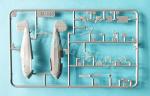
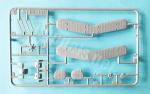
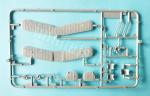
La caja trae dos bastidores de plástico gris, un pequeño bastidor transparente, las calcas y las instrucciones, que parece ser lo único alterado respecto a cajas anteriores. Las piezas están bien moldeadas y no presentan rebabas ni marcas visibles, así que la limpieza va a ser mínima. En general, tanto la estructura del fuselaje como los escasos paneles grabados en los timones tienen buen aspecto y parecen adecuados para esta escala, lo que añadido a la edad de la maqueta nos da una idea de los moldes tan modernos que hacía Heller hace más de 40 años, aunque hoy nos parezcan una filfa.
El montaje de la maqueta no aparenta dificultad para los que se hayan estrenado en los biplanos, sin embargo me da la sensación que el montaje del motor, capó y tren de aterrizaje es algo más delicado de lo que aparenta en las instrucciones.
Las alternativas para pintar el modelo son las mismas de otras cajas precedentes. Nos presentan un aparato alemán pintado de RLM 02 como se ve en la caja, o bien uno suizo civil pintado en color crema con el morro en rojo que tiene la única dificultad de realizar la decoración en punta a los lados del fuselaje.
Revisión
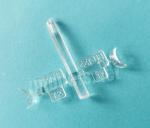
De la carlinga, la única pieza destacable es el panel de instrumentos, muy bien grabado para su tamaño. Hay también un suelo, un mamparo trasero sin detalle, una palanca y un asiento inservible con aspecto de trono faraónico. Los lados del fuselaje no tienen marcas ni tampoco detalle alguno. El parabrisas es fino y se puede usar, aunque no quede tan bien como una lámina de acetato. Otra cosa es pegarla, claro.
Las mitades del fuselaje contienen la pequeña rueda de cola, la deriva y el timón vertical. La estructura me parece bien reproducida. Sin embargo, el capó del motor no me gusta demasiado porque parece algo simple. El detalle del lado izquierdo muestra incluso el pequeño actuador del timón de cola, que no está representado en su totalidad.
El motor es malo por simple. La pieza muestra los cilindros sin más, si bien están limpios de rebabas, que son de las que más trabajo dan para limpiarlas. Los alzaválvulas vienen en una corona bastante pobre superpuesta al engranaje de la hélice. El cubremotor está separado en tres tramos y tiene los carenados de los cilindros algo pequeños y poco resaltados. Por debajo hay que añadir el tubo de escape, sin nada destacable, y por último la hélice, que es una pieza fina que apenas necesita limpieza con un eje bastante largo para pegar un rodamiento por detrás del motor.
Las alas están moldeadas de una pieza ambas. Las superficies me parecen decentemente detalladas, en un cierto punto medio entre pasarse y no llegar. Los flaps están bien grabados con finura y el plano superior incluye las aletas. Los flaps y los timones de profundidad carecen de sus evidentes bisagras que se aprecian en las fotos de este avión. Los soportes externos está separados en piezas finas con el tubo Pitot moldeado en uno de ellos. Los huecos para pegarlos en las alas están bien moldeados, afortunadamente. Los soportes intermedios son dos piezas también delgadas y correctamente formadas en N.
Los estabilizadores se pegan al fuselaje mediante pequeños vástagos gruesos. El detalle del empenaje es similar al de las alas, con timones bien grabados, los actuadores de las aletas muy pequeños pero visibles y la reproducción de la estructura sin excesos.
El tren de aterrizaje consta de dos patas con la estructura sutilmente plasmada, dos ruedas que desgraciadamente están unidas a los guardabarros, aunque son aprovechables, y las barras de amortiguación entre las patas que tienen el soporte central aparte. Seguramente, estas últimas no serán sencillas de pegar si antes no se han añadido las patas en posición correcta.
Las calcas comprenden cruces alemanas y suizas, matrículas y marcas de unidad. Su aspecto es un poco grueso y brillante. Tienen aparente buena saturación y nitidez sin exceso de soporte. La hoja carece de las habituales esvásticas para la cola.
La hoja de instrucciones tiene un formato A4 y está impresa en blanco y negro. Contiene una referencia sobre el avión, dos vistas explosionadas de construcción del modelo bastante ambiguas en algunos casos, perfiles y una lista de pinturas sin referencia, pero los códigos pertenecen a la gama esmalte de Humbrol. También se muestra el arriostraje del modelo de forma medianamente clara.
Ya he descrito arriba los colores de las opciones de pintura. Aquí sólo resta añadir que la identificación de ambas versiones, que las instrucciones no traen, la he podido conseguir de la web de Scalemates y de una búsqueda en Internet. Y para ser honesto con el lector, tengo que advertirle que las instrucciones que publico en esta página no son las de esta maqueta, sino las de otras cajas anteriores, pero valen igual. Al menos en lo que al profuso montaje se refiere.
Valoración
Tras casi medio siglo dando vueltas, está claro que la maqueta necesita un retiro y una actualización, por muy aprovechable que todavía pueda resultar. Con el Bü 133 se vuelve a cumplir el hecho insólito de que un avión tan conocido no tenga una maqueta más moderna de amplia tirada en cualquiera de las marcas populares.
Mientras no haya nada mejor, el modelista principiante y del común tendrá que seguir tirando de esta maqueta a la que el tiempo ha respetado bastante bien, para qué vamos a quejarnos. Los avanzados siempre pueden recurrir a la alternativa de RS Model, pero sospecho que no es plato de gusto para todos.◊

The kit
Heller Bü 133 hasn’t seen many reissues since it was first released in 1976. This box is the last release from the early 1990s. Unfortunately, in this scale we only have the more recent alternative kit from RS Models, a company that has produced several short-run Bü 133s alone or paired with its half-brother, the Bü 131.
The box contains two gray plastic sprues, a small clear sprue, the decals, and the instructions, which seem to be the only changes compared to previous releases. The parts are well-molded and have no flash or visible marks, so cleaning will be minimal. Overall, both the fuselage structure and the few engraved panels on the control surfaces look good and seem appropriate for this scale. This, combined with the age of the kit, gives us an idea of the very modern toolings Heller produced more than 40 years ago, even though they may seem a trifle to us today.
Assembling the kit doesn’t look difficult even for those new to biplanes; however, I get the feeling that building the engine, cowling, and landing gear is somewhat more delicate than the instructions suggest.
Paint choices are the same as in previous boxes. They offer a German aircraft painted RLM 02 as seen on the boxart, or a Swiss civilian version painted cream with a red nose, the only difficulty being the pointed decoration on the fuselage sides.
Review
Of the cockpit, the only outstanding part is the instrument panel, very well engraved for its size. There’s also a floor, a rear bulkhead with no detail, a control column, and a useless seat that looks like a pharao’s throne. The fuselage sides have no marks or any detail. The windshield is thin and usable, although it doesn’t look as good as an acetate piece.
The fuselage halves contain the small tailwheel, the rudder, and the vertical stabilizer. The structure seems well reproduced. However, I don’t like the engine cowling because it looks rather simple. The detail on the left side even shows the small rudder actuator, which isn’t fully represented.
The engine is poor due to its simplicity. The part shows the cylinders without much detail, though they are clean from flash, which are usually a bother to clean up. The engine tappets are provided on a rather poor ring attached on the propeller gear. The engine cowling is divided into three pieces and has rather small, flat cylinder fairings. Below it is the unremarkable exhaust pipe, and finally the propeller, a thin piece that requires minimal cleaning and has a long shaft for attaching a bearing behind the engine.
Both wings are molded as a single piece. The surfaces seem decently detailed, striking a balance between over- and under-detailing. The flaps are finely engraved, and the upper surface includes the fins. The flaps and elevators lack the obvious hinges visible in photos of this aircraft. The external struts are separated into thin pieces, with the Pitot tube molded on one of them. Fortunately, the attachment points on the wings are cleanly open. The cabane struts are also two thin pieces, molded in an N-shape. The stabilizers are attached to the fuselage using small, thick pins. Detail on the tailplanes is similar to that of the wings, with well-engraved rudders, very small but visible fin actuators, and a subtle rendition of the structure.
The landing gear consists of two legs with a subtly depicted structure, two wheels that are unfortunately attached to the fenders, although they are usable, and the leaf springs between the legs, which have a separate central strut. These last ones will likely not be easy to build if the legs haven’t been correctly positioned before.
The decals include German and Swiss crosses, registration numbers, and unit markings. They have a slightly thick and glossy appearance. They seem to have good saturation and sharpness without excessive carrier. The sheet lacks the swastikas for the tail.
The instruction sheet is A4 format and printed in black and white. It contains a short summary about the aircraft, two exploded views of the kit’s construction (somewhat ambiguous), profiles, and a paint list without references, but the codes belong to the Humbrol enamel range. The wing and tail bracing is also shown fairly clearly.
I’ve already described the paint options above. Here, I only need to add that I was able to identify the aircraft depicted in the instructions with the help of the Scalemates website and an Internet search. The instructions I publish in this review don’t belong to this particular kit, but to previous boxes. Anyway, they are still quite similar. At least as far as the assembly is concerned.
Conclusion
After nearly half a century in the market, it’s clear that the kit needs a retirement and an update, however buildable it may still be. The Bü 133 is once again an example of the unusual situation where such a well-known aircraft doesn’t have a modern, widely produced kit from any of the popular brands.
Until something better arrives, beginners and the average modeler will continue building this kit, which has aged remarkably well. Advanced modelers can always turn to the RS Model alternative, but I suspect it won’t appeal to everyone.◊
Publicado – Published: 11 / 2025
©www.jmodels.net
 jmodels.net
Debe estar conectado para enviar un comentario.