
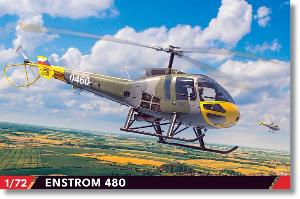
De un vistazo – Quick look
MATERIAL Y PIEZAS
MEDIA & PARTS:
- Plástico inyectado (17 piezas), plástico transparente (6 piezas), resina impresa en 3D (31 piezas), máscara adhesiva (14 unidades).
- Injected plastic (17 parts), clear plastic (6 parts), 3D printed resin (31 parts), adhesive mask (14 units).
CALCAS – DECALS:
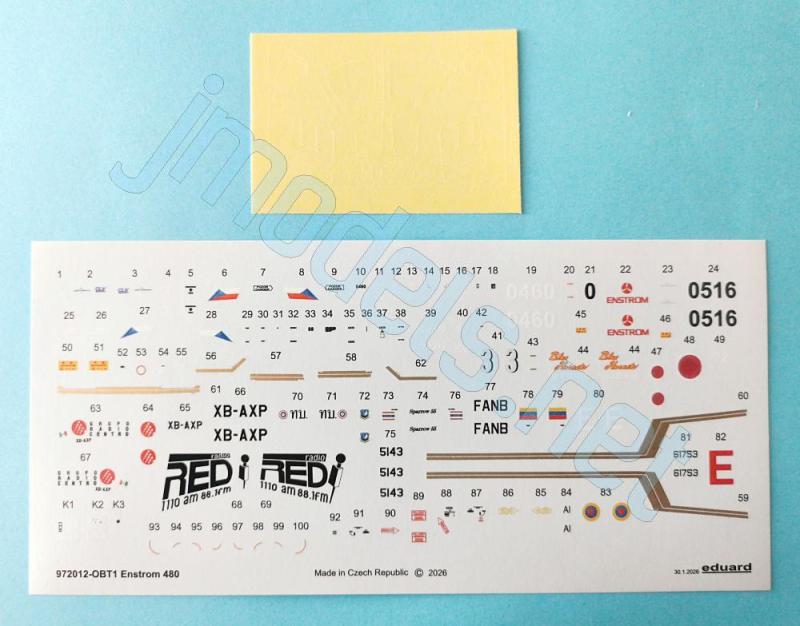
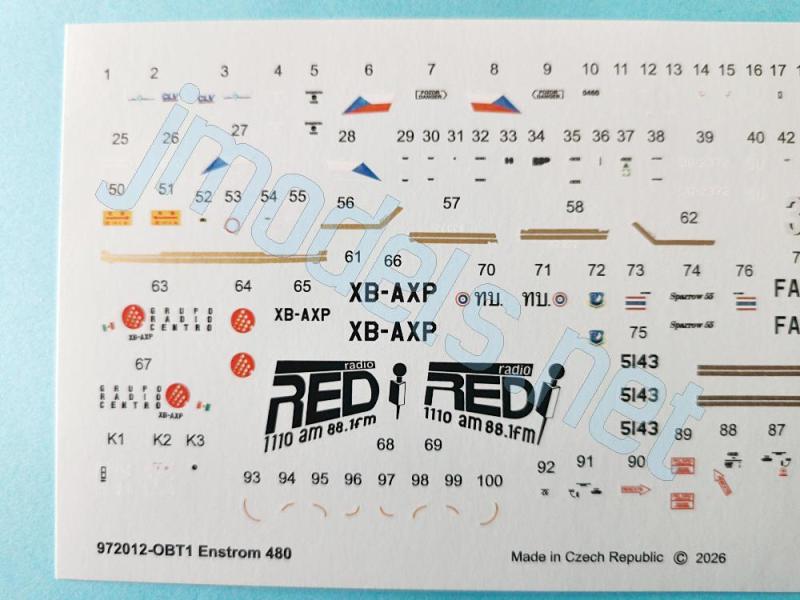
- Insignias nacionales y marcas comerciales, matrículas, numerales y numerosos estarcidos. Finas y con aspecto brillante. Buena nitidez y registro. Sin exceso de soporte.
- National and private markings, registratios, aircraft numbers and plenty of stencils. Thin and glossy finish. Good register and sharpness. No excess carrier.
OPCIONES – OPTIONS:
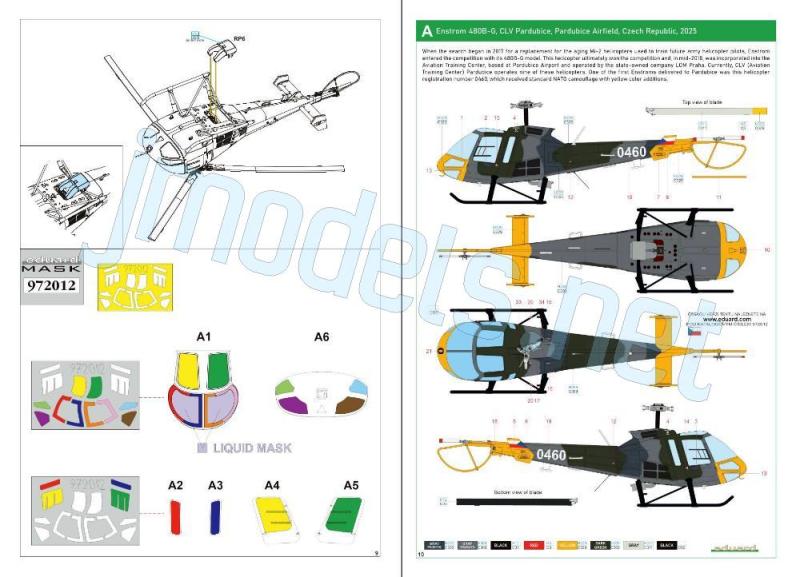
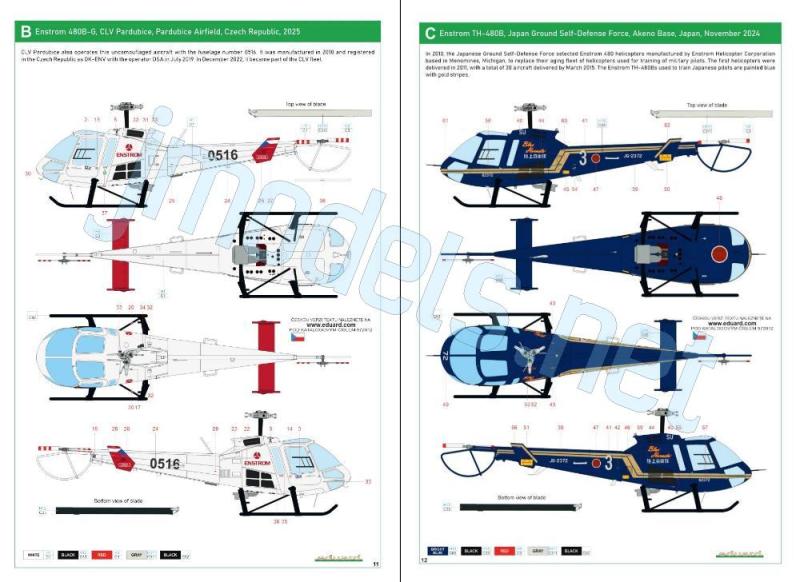
- Enstrom 480B-G. 0460. Czech Air Force. Flight Training Center Pardubice. Pardubice Airfield (Czech Republic), 2025. (Camouflaged aircraft).
- Enstrom 480B-G. 0516. Czech Air Force. Flight Training Center Pardubice. Pardubice Airfield. Czech Republic, 2025. (Uncamouflaged aircraft).
- Enstrom TH-480B. JG-2372. JGSDF. Akeno Base (Japan), 2024.
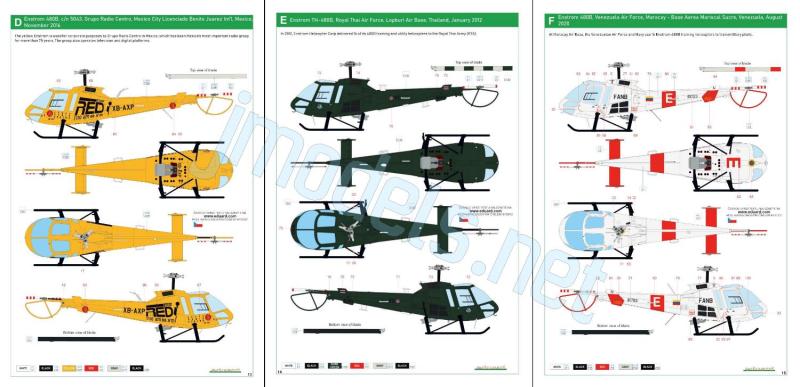
- Enstrom 480B. c/n 5043. Grupo Radio Centro. Aeropuerto Internacional Benito Juárez Ciudad de México (Méjico), 2016.
- Enstrom TH-480B. Royal Thai Air Force. Lopburi Air Base (Thailand), January 2012.
- Enstrom 480B. Venezuela Air Force. Base Aérea Mariscal Sucre. Maracay (Venezuela), August 2020.
INSTRUCCIONES – INSTRUCTIONS:
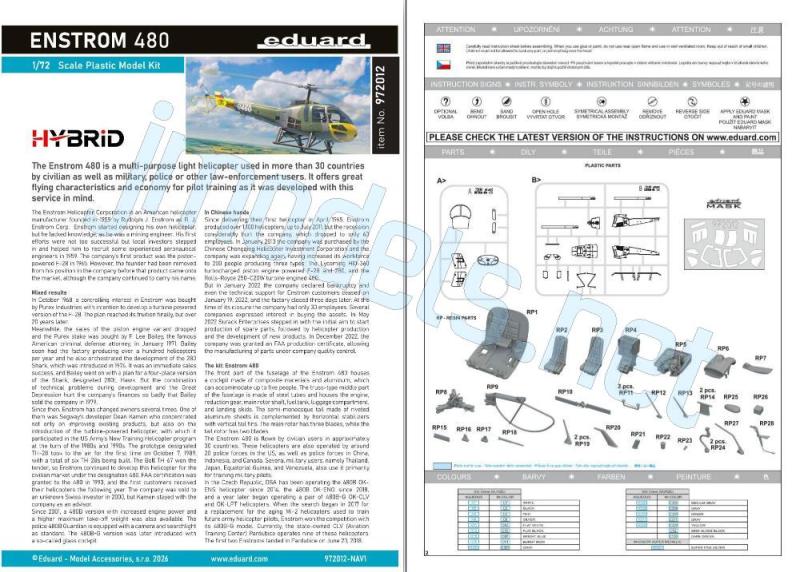
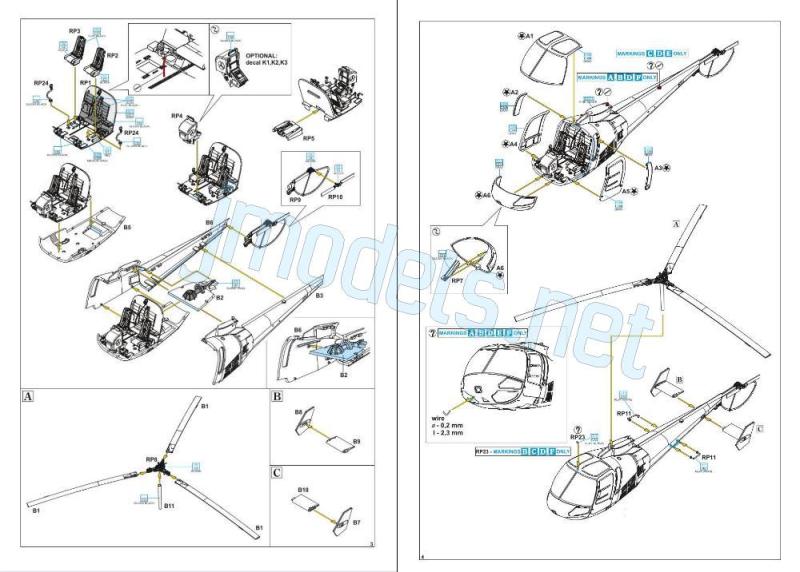
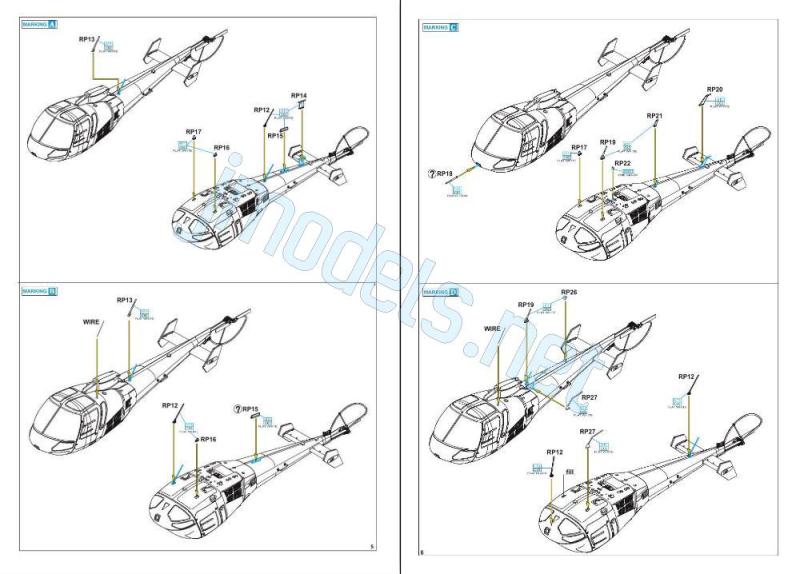
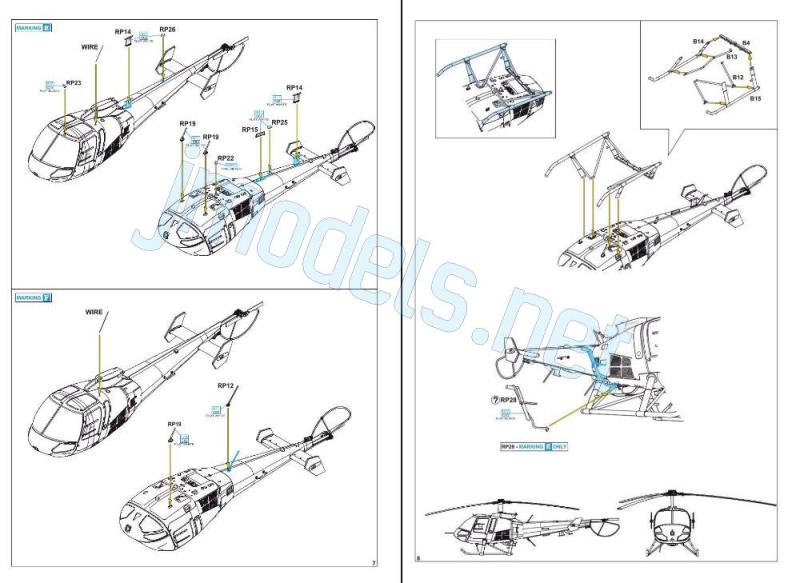
- Folleto A4 de 16 páginas impreso a color en papel cuché. Contiene una introducción histórica, un diagrama de piezas numerado, una tabla de colores con equivalencias de Gunze Sangyo, en torno a 15 secuencias principales de montaje sin numerar, un diagrama para identificar las máscaras, 6 páginas de perfiles y una página para tomar notas.
- 16-page A4 booklet printed in color on glossy paper. It contains a historical introduction, a numbered parts plan, a color chart with matches in Gunze Sangyo paints, some 15 unnumbered main assembly steps, a diagram to set the masks, 6 pages of profiles and a page for the modeler’s notes.
LO MEJOR – THE BEST:
- Presentación del producto. Instrucciones. Máscaras de pintura. Muy buen detalle general con múltiples acabados.
- Product presentation. Instructions. Paint masks. Very good overall detail with multiple finishes.
LO PEOR – THE WORST:
- Piezas diminutas y quebradizas.
- Tiny brittle parts.
VALORACIÓN – CONCLUSION:
- Es el primer helicóptero que Eduard lanza en la escala 1/72 y merece mucho la pena si se tienen las habilidades necesarias para una edición bastante especial en la serie Brassin Hybrid.
- It is the first helicopter Eduard have released in the 1/72 scale, and it is well worth it if you have the necessary skills for a rather special edition in the Brassin Hybrid series.

La maqueta
Es una reedición de la maqueta del Enstrom 480 aparecida a finales del año pasado (referencia 972011). En ella Eduard ha incluido más bebederos de resina y versiones de pintura con calcas ampliadas, una hoja de máscaras adhesivas y nuevas instrucciones. También la caja es nueva y más reconocible. Ambas cajas pertenecen a la novedosa serie del fabricante denominada Brassin Hybrid, por ello no es extraño encontrar más piezas de resina que de plástico. Estas dos maquetas son las primeras de un helicóptero que Eduard produce en la escala 1/72 y también la primera de plástico a cualquier tamaño. Hace muchos años la marca lanzó un Kayaba Ka-1 japonés de resina en este tamaño, pero se trata de un autogiro, no un helicóptero.
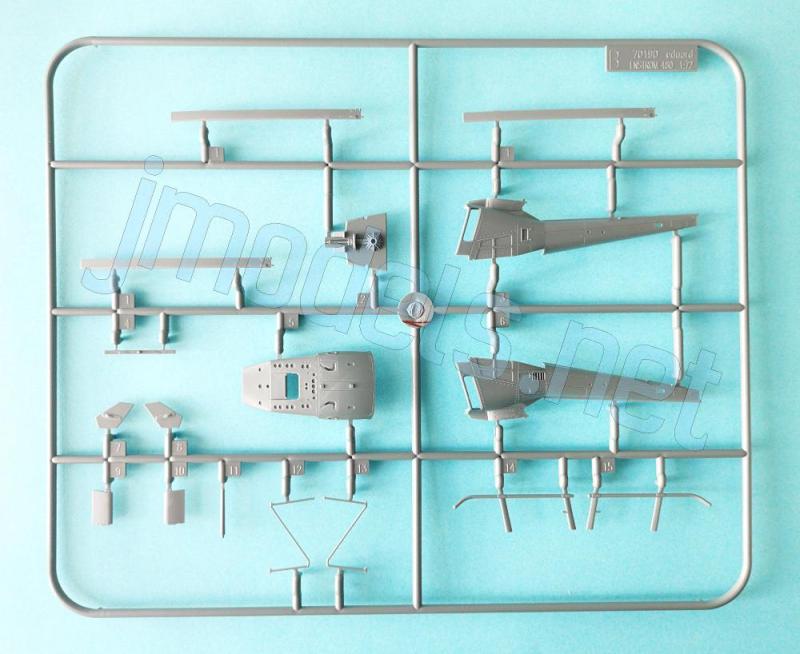
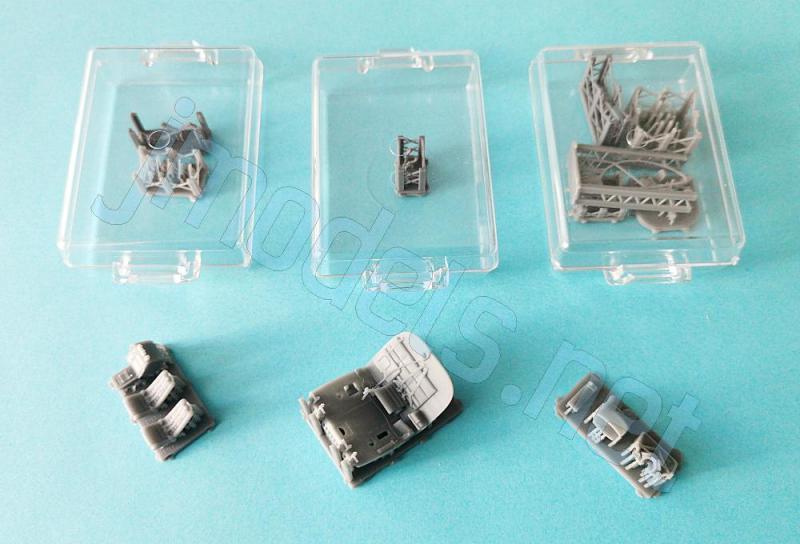
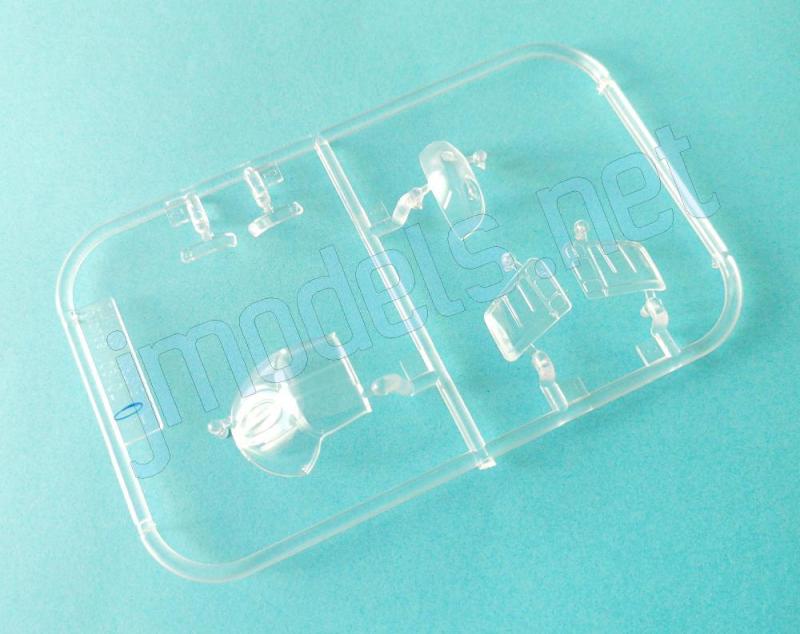
La caja contiene dos bastidores de plástico, uno de ellos transparente, once pequeños bebederos con piezas de resina, una hoja de máscaras adhesivas, las calcas y las instrucciones. Como es habitual, todas las piezas y las calcas están muy bien embaladas. Los bebederos que contienen las piezas más pequeñas están perfectamente protegidos en estuches de plástico, y estos a su vez contenidos en un delgada caja de cartón.
Las piezas están fabricadas sin defectos del molde ni rebabas o marcas de eyector. Las piezas de plástico reproducen principalmente el fuselaje, las palas y los patines del helicóptero, mientras que las de resina reflejan múltiples detalles menores internos y externos.
El modelo tiene ciertamente un tamaño pequeño, lo que unido a las diminutas y muy delicadas piezas de resina hacen que el montaje necesite de especial habilidad y cuidado. Más favorables a la hora de pintar parecen la diversidad de libreas militares y civiles que Eduard nos propone, la mayoría de ellas sin camuflaje y atractivas.
El Enstrom 480 fue diseñado a finales de los años 80 y realizó su primer vuelo en octubre de 1989. Su producción abarca de 1993 a hoy día. Es empleado por múltiples operadores privados, pero también está integrado en las fuerzas armadas y policiales de alrededor de una decena de países en roles de entrenamiento y vigilancia principalmente.
De las versiones fabricadas, la caja de Eduard ofrece los modelos TH-28, basado en el modelo de pistón 280FX, pero equipado con turbina y diseñado para misiones de patrulla y entrenamiento, y 480B, de mayor peso y capacidad de carga tras la carlinga que el Enstrom 480. Las versiones denominadas por Eduard B-G se refieren seguramente a la variante 480B Guardian, configurada para cuerpos policiales con una cámara frontal y un foco, ambos no incluidos en la maqueta.
Reseña
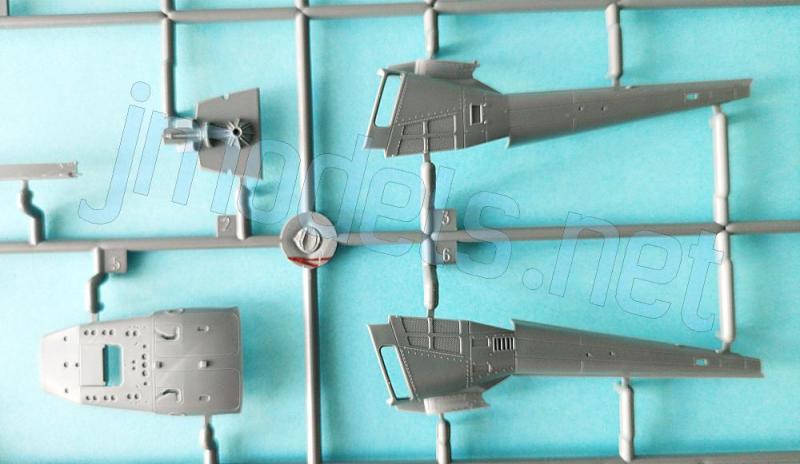
El fuselaje está separado en tres piezas, que consisten en dos mitades laterales y el fondo, descontando las piezas transparentes. Exteriormente estas piezas muestran un detalle muy nítido y bien reproducido, con especial relevancia en las rejillas laterales de refrigeración y diversos paneles grabados en la zona ventral.
La carlinga, dispuesta sobre el fondo del fuselaje, está configurada en todos los acabados con tres plazas y controles dobles para misiones de patrulla o entrenamiento. El interior es casi completamente de resina. El suelo y el mamparo trasero vienen en una sola pieza que reproduce también los pedales y el asiento posterior con sus arneses. Por separado tenemos los asientos, igualmente con los cinturones incluidos, el panel de instrumentos, con tres calcas opcionales distintas, y los controles. En la parte inferior externa del mamparo trasero tenemos otra pieza que parece simular una sección del conducto de la tobera, que luego completaremos con otra pieza excelente con la salida situada por fuera del fuselaje, ya que este helicóptero lleva el escape por debajo del fuselaje en lugar de por encima.
Antes de cerrar el fuselaje, se añaden una pieza de plástico con la base del rotor y parte del eje de transmisión de cola, además del rotor de cola, reproducido en dos piezas de resina: las palas por un lado y el patín de cola por otro. Este último es finísimo y es muy fácil partirlo.
El morro acristalado está reproducido en dos partes. Una de las piezas es la parte inferior delantera y en su interior hay que pegar una pieza de resina. Mal asunto. La cara externa lleva la luz de aterrizaje y los paneles de visión frontal marcados. La segunda pieza incluye el parabrisas y los paneles del techo, todos ellos bien definidos. Las dos piezas tienen un grosor razonable, pero es mejor aún en las puertas separadas (también transparentes) y las pequeñas ventanas laterales del compartimento de carga trasero. Las puertas están bien detalladas con las pequeñas ventanillas deslizantes, pero carecen de los tiradores, seguramente por su diminuto tamaño en esta escala. Eduard ha incluido una hoja de máscaras adhesivas para cubrir los transparentes al pintar. Buena falta van a hacer.
El rotor principal es de resina e incluye tanto la placa como las bisagras, donde se unen las palas de plástico separadas. Esta últimas son bastante finas y vienen ya ligeramente dobladas para simular su caída en reposo. Un acierto. El eje del rotor es una varilla de plástico introducida en la parte superior del fuselaje.
Los estabilizadores y aletas son de plástico. Las segundas poseen las luces de navegación correctamente definidas, pero opacas. Por otro lado, los patines de aterrizaje cuentan con una estructura de refuerzo con piezas en forma de Z muy fina y quebradiza.
Excepto los patines, que lógicamente se añaden al final, sólo queda pegar una multitud de antenas de diferentes hechuras por todo el fuselaje y la cola dependiendo de la versión que deseemos hacer. En ciertos casos, también hay que eliminar las luces de navegación dispuestas en la parte superior del carenado del motor y la cola. Estas antenas son todas de resina y requieren destreza para manipularlas, bien por su delgadez o bien por su tamaño.
La hoja de calcas muestra insignias nacionales y marcas comerciales, matrículas, numerales y numerosos estarcidos, todos ellos finos y con aspecto brillante. Poseen buena nitidez y registro sin exceso de soporte.
El manual de instrucciones tiene un formato A4 y consta de 16 páginas impresas a color en papel cuché. Contiene una introducción histórica, un diagrama de piezas numerado, una tabla de colores con equivalencias de Gunze Sangyo, en torno a quince secuencias principales de montaje sin numerar, un diagrama para identificar las máscaras, seis páginas de perfiles y una página donde tomar notas.
La diversidad de acabados es, en mi opinión, una de los aspectos positivos de la maqueta. Salvo el aparato checo, que luce camuflaje con morro y cola amarillos, las demás libreas son monocolores y más sencillas de pintar en principio.
Valoración
Es muy inusual que Eduard le dedique atención a los helicópteros, pero en este caso creo que ha acertado plenamente al elegir uno del que apenas teníamos una maqueta de resina en la misma escala.
Realmente no hay aspecto en esta maqueta que no esté a un nivel notable cuando menos, desde la presentación del producto, las instrucciones y calcas, que no por habituales en el fabricante se deben dejar de elogiar, el detalle especialmente bien logrado en este tamaño, y la variedad de acabados.
Todo esto es muy evidente nada más abrir la caja, pero también lo es el hecho de que, además de tratarse de un helicóptero de poco renombre y seguramente escasos entusiastas, las piezas de resina no hacen a la maqueta sencilla de montar por su número, tamaño y fragilidad, y esto también reduce su difusión a un público con pericia acreditada.◊

The kit
This is a re-release of the Enstrom 480 kit that appeared late last year (reference 972011). Eduard have included additional resin parts, expanded decal options, a sheet of adhesive masks, and new instructions. The box design is also new and more recognisable. Both kits belong to the manufacturer’s innovative «Brassin Hybrid» series, so it is not surprising to find more resin parts than plastic ones. This is the first helicopter kits Eduard have produced in the 1/72 scale, and indeed their first plastic Enstrom 480 in any scale. Many years ago, the brand released a resin Japanese Kayaba Ka-1 in this scale, but that was an autogyro, not a helicopter.
The box brings two plastic sprues (one of them containing the clear parts), eleven small resin gates, a sheet of adhesive masks, decals, and instructions. As usual, all the parts and decals are very well packaged. The gates containing most of the resin parts are perfectly protected within plastic cases, which are in turn inside a slim cardboard box.
Parts are free from molding blemishes, flash, or ejector pin marks. The plastic parts primarily make up the fuselage, rotor blades, and skids, while the resin bits capture a multitude of smaller internal and external details.
The model is certainly small in size; this, combined with the tiny, brittle resin parts, means assembly requires particular skill and care. The variety of military and civil liveries proposed by Eduard—most of them attractive and lacking complex camouflage—makes the painting stage a more appealing prospect.
The Enstrom 480 was designed in the late 1980s and made its maiden flight in October 1989; it has been in production from 1993 to the present day. It is used by numerous private operators but also serves in the armed forces and police agencies of around a dozen countries, primarily in training and surveillance roles.
Regarding the versions produced, the Eduard kit offers the TH-28—based on the piston-powered 280FX model but turbine-equipped and designed for patrol and training—and the 480B, which features a higher weight and greater cargo capacity behind the cockpit than the Enstrom 480. The versions designated «B-G» by Eduard almost certainly refer to the 480B Guardian variant, configured for police agencies with a nose-mounted camera and a spotlight—neither of which is included in the kit.
Review
The fuselage is split into three main components—two side halves and a bottom side—excluding the clear parts. Externally, these parts feature crisp, well-rendered detail, particularly the side cooling vents and various recessed panel lines on the underside.
The cockpit, attached on the bottom fuselage side, is configured with three seats and dual controls, suitable for patrol or training missions, in all the versions of the box. The interior is almost entirely resin. The floor and rear bulkhead come as a single piece that also includes the pedals and the rear seat with the harnesses. Separate parts are provided for the other seats (also with molded-on belts), the instrument panel (with a choice for three different decals), and the controls. Attached to the lower rear bulkhead is a part simulating a section of the exhaust duct; this is later completed by an excellent separate part for the exhaust outlet located outside the fuselage, as this helicopter’s exhaust is placed underneath the fuselage rather than on top.
Before closing the fuselage, a plastic part containing the rotor base and a section of the tail drive shaft is installed, along with the tail rotor assembly—reproduced in two resin pieces: the blades and the tail skid. The latter is extremely delicate and can be easily broken.
The glazed nose consists of two parts. One piece is the lower front section and has a resin part glued inside—a tricky step. The exterior features the landing light and forward vision panels. The second piece includes the windshield and roof panels, all well-defined. While both parts have a reasonable thickness, the separate clear doors and the small side windows of the rear compartment are even better in this sense. The doors are well-detailed, featuring small sliding windows, though they lack door handles—likely due to their tiny size at this scale. Eduard have included a sheet of paint masks to aid painting. They will certainly come in handy.
The main rotor is made of resin and includes both the swash plate assembly and the hinges where the separate plastic blades fit. The blades themselves are quite thin and come pre-bent to simulate the droop seen when they are stationary—a nice touch. The rotor mast is a plastic rod that inserts into the top of the fuselage.
The stabilizers and fins are made of plastic. The fins show correctly defined navigation lights, though these are solid. Meanwhile, the landing skids comprise a reinforcement structure with Z-shaped components that are very thin and fragile.
Aside from the skids—which are naturally attached last—the only remaining step is to glue on a multitude of antennas of various shapes across the fuselage and tail, depending on the specific version you choose to build. In some cases, the anti-collision lights located on the top of the engine cowling and tail are also removed. These antennas are all resin-cast and need skillful handling due to their thinness, small size, or both.
The decal sheet shows national and private markings, registrations, aircraft numbers and plenty of stencils printed with good register and sharpness. They have no surplus carrier.
The 16-page A4 instruction manual is printed in color on glossy paper. It contains a historical introduction, a numbered parts plan, a color chart with matches in Gunze Sangyo paints, some 15 unnumbered main assembly steps, a diagram to set the masks, six pages of profiles and a page for notes.
The diversity of paint finishes is, in my opinion, one of the highs of the release. Except for the Czech aircraft, which sports camouflage with a yellow nose and tail, the other liveries are monochrome and easier to paint at first sight.
Conclusion
It is very unusual for Eduard to pay attention to helicopters, but in this case I think they hit the nail in choosing one of which we only had a resin model in the same scale.
There really is no aspect of this kit that is not well executed and carefully designed, from the presentation of the product to the instructions and decals, which, despite being usual in the manufacturer, should not fail to be praised. Another asset is the variety of paint finishes.
All this is very evident as soon as you open the box, but so is the fact that, in addition to being a helicopter of little renown and surely few enthusiasts, the resin parts don’t make the kit easy to assemble or appealing to build due to their number, size and fragility, and this also reduces its diffusion only to expert modelers.◊
Publicado – Published: 9 / 2026
©www.jmodels.net


Debe estar conectado para enviar un comentario.