
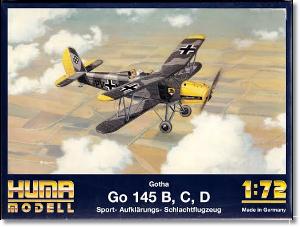
De un vistazo – Quick look
MATERIAL Y PIEZAS
MEDIA & PARTS:
- Plástico inyectado (37 piezas), plástico inyectado (3 piezas). Incluye 2 figuras.
- Injected plastic (37 parts), clear plastic (3 parts). Two figures included.
CALCAS – DECALS:
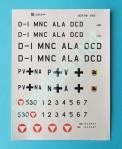
- Insignias alemanas y austriacas, numerales, matrículas civiles y militares, insignias de unidad y paneles de instrumentos. Aspecto grueso y brillante. Aparente saturación y registro correctos. Mucho exceso de soporte.
- German and Austrian markings, instrument panels, civil and military registers and unit badges. Thich and shiny appearance. Apparente correct register and saturation. Too much carrier film.
OPCIONES – OPTIONS:
- Gotha Go 145 A. D-IMNC. Luftwaffe.
- Gotha Go 145 B. D-IALA. Luftwaffe.
- Gotha Go 145 B. Black 530. Austrian Air Force.
- Gotha Go 145 D. D-IDCD. Luftwaffe.
- Gotha Go 145 C. PV+NA. Luftwaffe.
INSTRUCCIONES – INSTRUCTIONS:
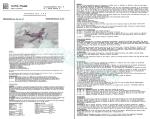
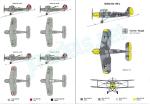
- Folleto A4 de cuatro páginas impreso en blanco y negro. Contiene una introducción histórica sobre el avión y 4 secuencias de montaje sin numerar. Una hoja complementaria del mismo tamaño e impresa en color muestra perfiles más una lista de colores genéricos y sus equivalencias en el código RLM.
- 4-page A4 brochure printed in black and white. It shows a historical introduction about the aircraft and 4 assembly sequences without numbers. A separate sheet printed in color shows profiles and a list of generic colors and the RLM code.
LO MEJOR – THE BEST:
- Montaje relativamente sencillo. Incluye todos las variantes del avión en una sola caja.
- Relative ease of assembly. All the main variants of the aircraft come in just one box.
LO PEOR – THE WORST:
- Carlinga escasa. Marcas en las alas y cola. Calcas.
- Sparse cockpit. Ejector marks on wings and tail. Decals.
VALORACIÓN – CONCLUSION:
- Maqueta antigua y descatalogada, pero nada desdeñable para hacer cualquiera de los modelos esenciales del Go 145. Requiere algunas pequeñas modificaciones y algo de práctica.
- An old and discontinued model kit, but by no means negligible for building any of the essential Go 145 variants. It needs some minor modifications and a bit of practice.

La maqueta
Huma Modell lanzó esta maqueta, como tantas otras, primero envuelta en plástico transparente y luego en una caja. Estas dos ediciones de los años 90 son las únicas de esta desaparecida marca. Sin embargo, en la escala 1/72 el fabricante que por el momento se lleva la palma es Kora Models, que lleva más de una decena de cajas de su propio molde de serie limitada. Kora ha abarcado todas las versiones de este biplano, incluida la versión española CASA 1145-L.
Esta edición contiene todas las variantes de este biplano alemán, por eso el título de la caja está incompleto. La maqueta también se puede terminar como un Go 145A, que es la versión de entrenador biplaza.
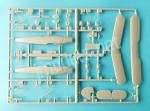
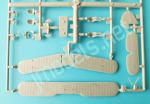
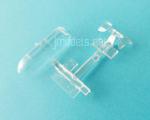
La caja contiene un bastidor con 37 piezas y dos pilotos más otro pequeño transparente, la hoja de calcas y las instrucciones. Las piezas están bien moldeadas con algunas marcas de eyector leves en las caras internas de las alas, la carlinga y la pieza de los estabilizadores. Afortunadamente, las de las alas y cola no arruinan el detalle del entelado y de esta manera son más sencillas de eliminar. También es fácil limpiar las mínimas rebabas de algunas piezas.
Las alternativas de montaje permiten montar la maqueta en diferentes configuraciones. El Go 145A lleva dos parabrisas y un pequeño carenado tras el puesto trasero; el modelo C, versión capacitada para llevar bombas, radio y ametralladora empleada por las unidades de ataque nocturno, tiene estos mismos elementos; el modelo B tiene un único parabrisas delantero y un carenado con ametralladora en el trasero para el entrenamiento artillero; y finalmente el D, otra versión de entrenamiento, posee una cubierta transparente sobre los dos puestos y carenas en las ruedas.
Las opciones de pintura no tienen mucha diferencia, ya que casi todas lucen el color RLM 02, excepto el Go 145C, que está camuflado.
Reseña
El interior de las carlingas es muy básico. Contiene un suelo común, dos asientos y sus palancas de control, además de dos gruesos paneles de instrumentos provistos de calcas. Para completar el interior hay dos figuras de pilotillos que no merecen la pena por su escasa definición.
Los parabrisas son bastante finos y la cubierta del modelo D tiene un grosor bastante decente y la estructura exterior bien marcada. Para la variante B tenemos un carenado fino que se adapta a las formas del fuselaje, pero tiene demasiada altura, un soporte, más la ametralladora moldeada con los tambores de munición, que no es fenomenal, aunque tampoco me parece la birria que solemos encontrar en esta escala.
Las mitades del fuselaje no contienen ni el frontal del motor ni las superficies verticales de cola. La parte delantera tiene una buena definición en los paneles del capó del motor, con pequeñas salidas y una toma lateral más dos finos escapes alargados. El panel donde se sitúan los escapes necesita un ligero rebaje antes de colocar las piezas. Estas no contienen los pequeños tubos de salida del motor como se ve en las instrucciones. Con unas pequeñas modificaciones se pueden parecer bastante más a los reales. Curiosamente, los bordes laterales del capó aparecen parcialmente separados del mismo, cuando lo normal en la mayoría de las maquetas es que se moldeen unidos al fuselaje, aunque estos necesitan ser afinados.
La pieza frontal del motor viene separada. Muestra los huecos de las tomas con nitidez y tras ellos hay una pieza que simula los cilindros, pero mal reproducidos. En cualquier caso, casi nada se verá de ellos. La hélice es fina, pero hay que limpiarle algunas rebabas de los bordes y Va introducida en su lugar mediante un pequeño cilindro con un rodamiento posterior que permite girarla. Las puntas son romas comparadas con las reales y las palas tienen menos anchura de lo debido.
La estructura del fuselaje por detrás del capó está muy bien reproducida y muestra los estribos de acceso grabados en la parte izquierda.
Las alas están moldeadas de una pieza. Huma tenía la costumbre de diferenciar las superficies enteladas mediante líneas finas grabadas con profusión sobre ellas que les da un aspecto rugoso. Habrá modelistas a quienes no les importe, y otros a los que desagrade, sin duda. Las superficies de control están bien grabadas en ambos planos. Los lados internos de cada plano tienes una marca de eyector que no arruinan el detalle al estar situadas entre dos costillas de la estructura y no deben ser dificultosas de rellenar.
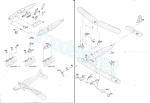
Las instrucciones nos indican los puntos donde deben colocarse las riostras de las alas y la cola así como los cables de control de los alerones, todos ellos marcados en su lugar, con lo cual el modelista se ahorra trabajo. Los soportes son finos y también sus puntos de unión están bien marcados sobre las superficies.
La cola está separada en dos piezas demasiado gruesas. La horizontal va pegada directamente sobre el puro de cola. Los timones están bien grabados, aunque la luz de navegación y la aleta del timón vertical están ausentes. La reproducción del entelado es muy gruesa y no tiene nada que ver con la del fuselaje. Tal vez se pueda remediar en parte con un lijado suave para rebajarla.
El montaje del tren de aterrizaje es un tanto delicado, ya que hay que alinear correctamente las delgadas ballestas de la amortiguación entre los puntales de las ruedas. Estos soportes parecen demasiado anchos y las fundas de la amortiguación muy grandes, ya que no se distinguían tanto del perfil de cada pata. Las ruedas son de una pieza. Las llantas están bien marcadas, pero su diámetro es menor del real y por tanto el neumático se ve muy grueso y naturalmente no tiene el dibujo transversal. Para el modelo Go 145B hay además un par de carenas bien representadas para las ruedas. El patín trasero es de una pieza.
La maqueta no incluye bombas para la versión de ataque nocturno ni tampoco los escapes alargados y dotados de apagallamas que empleaban los Go 145 de los denominados Nachtslachtgruppen.
La hoja de calcas contiene insignias alemanas y austriacas, numerales, matrículas civiles y militares, insignias de unidad y los paneles de instrumentos. No se incluyen las esvásticas de la cola. Las calcas tienen un aspecto grueso y brillante con una aparente saturación y registro correctos, sin embargo alrededor de ellas hay gran exceso de soporte y esto siempre es sospechoso. Más vale prevenirse, porque las calcas de Huma no son precisamente lo mejor de sus maquetas.
Las instrucciones están impresas en blanco y negro en un folleto de formato A4 de cuatro páginas que contiene una introducción histórica sobre el avión y cuatro secuencias de montaje sin numerar. Una hoja complementaria del mismo tamaño e impresa en color muestra perfiles más una lista de colores genéricos con su correspondiente equivalencia en el código RLM.
Las terminaciones van casi todas pintadas en gris RLM 02, incluido el avión austriaco. El Go 145C se sale del guión con su camuflaje compuesto de RLM 74, 75 y 04 por arriba más RLM 76 en las superficies inferiores. Todos los aviones de esta caja están documentados en fotos de su época.
Valoración
Pese a su relativa popularidad en su tiempo, el Go 145 es un avión muy inusual para el modelismo y la prueba es que en esta escala sólo hay un par de moldes de importancia, como los de Kora Models y Huma. Este último es ya carne del mercado de segunda mano.
Tal vez la única ventaja de Huma es que incluye todos los modelos principales de este avión en una sola caja. El fabricante alemán estudió bien el detalle diferenciador de cada versión, otra cosa es que atinase más o menos en la reproducción.
Ciertamente la maqueta necesita algunas mejoras, ineludibles unas y otras acaso no tan cruciales, por ejemplo en la carlinga. Lo necesario para sacarle partido está en la caja, desde luego. Sin duda esta edición la aprovechará mejor el modelista con un cierto bagaje e interés por estos biplanos tan versátiles y fuera de onda.◊

The kit
Huma Modell first released this model kit, like so many others, inside a plastic bag and later in a box. These two kits from the 1990s are the only ones from this now-defunct brand. However, the manufacturer currently having this aircraft in their catalogue is Kora Models. With more than a dozen reissues of their own limited-run tool. Kora has covered all versions of the Go 145, including the Spanish CASA 1145-L.
Huma kit contains all the main variants of this German biplane and the box title is incomplete, as the kit can also be finished as a Go 145A, the two-seat trainer version.
The box contains a sprue with 37 parts and two pilot figures, a small clear sprue, a decal sheet, and the instructions. Parts are well molded, with some minor ejection marks on the inner wing surfaces, the cockpit, and the horizontal tailplane piece. Fortunately, the marks on the wings and tail don’t spoil the detail of the fabric covering and are therefore easier to remove. The minimal flash present on some parts is also easy to clean up.
Assembly allows the model to be built in different configurations. The Go 145A has two windscreens and a small fairing behind the rear cockpit; the C model, a version capable of carrying bombs, a radio, and a machine gun used by night attack units, has these same features; the B model has a single front windscreen and a rear fairing with a machine gun for gunnery training; and finally, the D, another training version, has a clear canopy for both cockpits and wheel spats.
Paint options don’t vary much, as most of them are painted RLM 02, except for the Go 145C, which is camouflaged.
Review
The cockpit interior is very basic. They contain a common floor for both cockpits, two seats and their control sticks, plus two thick instrument panels with decals. Two pilot figures complete the interior, but they’re not worth using due to their poor detail.
The windscreens are quite thin, and the canopy of the D model has a decent thickness and a well-defined structure. The B variant has a thin fairing for the pivoting ring that fits the fuselage shape, but it’s too high. It also includes the separate mount and a machine gun molded with the ammo drums, which isn’t great, although it’s not the shoddy piece we often find in this scale.
The fuselage halves don’t include the engine front cowling or the vertical tail surfaces. The fuselage front section has good detail on the engine cowling panels, with small outlets, a side intake, and two thin, long exhaust pipes. The panel where the exhaust pipes are attached needs a slight sanding to lower the surface a bit before the parts are attached. The piece doesn’t have the small manifold pipes shown in the instructions. With a few minor modifications, the exhausts can be made to look much more like the real thing. Interestingly, the cowling side edges are partially open, whereas in most kits they are molded closed, although these do need some refinement.
The front engine side comes separately. It clearly shows the intake openings, and behind them is a piece that simulates the cylinders, but it’s poorly reproduced. Anyway, almost nothing of them will be visible. The propeller blades are thin, but there is some flash to clean up. The propeller is inserted into place by means of a small cylinder with a rear bearing that allows it to rotate. The tips are too rounded compared to the real ones, and the blades are narrower than they should be.
The fuselage structure behind the cowling is very well reproduced and shows the access steps engraved on the left side.
The wings are molded as one piece. Huma always rendered the distinct fabric-covered surfaces with thin engraved lines giving them a rough appearance. Some modelers won’t mind this, while others will surely dislike it. The control surfaces are well engraved on both wings. The inner sides of each wing have shallow ejector marks that don’t spoil detail, as they are in between structural ribs and shouldn’t be difficult to fill.
The instructions indicate the points where the wing and tail rigging, as well as the aileron control wires, should be placed; all of these are marked in place, saving the modeler a precious time. The wing struts are thin, and their attachment points are also open on the surfaces.
The tail is separated into two thick pieces. The horizontal planes are glued directly onto the tail. The rudders are well engraved, although the navigation light and the vertical rudder trim tab are missing. The fabric covering is very thick and doesn’t match that of the fuselage. Perhaps this could be partially improved with light sanding to make it less evident.
The landing gear assembly is somewhat tricky, as the thin suspension springs have to be correctly aligned between the wheel struts. These struts appear too wide, and the suspension bushings too large, as they were not easily distinguishable from the profile of each leg. The wheels are one-piece. The rims are not bad, but their diameter is smaller compared to the real counterparts, making the tire look very thick and, naturally, lacking the characteristic tread pattern. There is also a pair of nice wheel spats for the Go 145B. The tail skid is a single piece.
The kit does not include bombs for the night attack version, nor the extended exhausts with flame dampers used by the Go 145s of the so-called Nachtslachtgruppen (Night Attack Groups).
The decal sheet contains German and Austrian markings, serial numbers, civilian and military registrations, unit insignia, and instrument panels. The tail swastikas are not included. The decals have a thick, bright appearance with seemingly correct saturation and registration; however, there is too much carrier around them, which is always a red flag. It’s best to be cautious, as Huma decals are not exactly the best of their kits.
The instructions are printed in black and white on a four-page A4 booklet containing a historical introduction to the aircraft and four unnumbered assembly sequences. A supplementary sheet of the same size printed in color shows profiles and a list of generic colors with their corresponding matches in the RLM code.
The finishes are mostly painted in RLM 02 gray, including the Austrian aircraft. The Go 145C is an exception with its camouflage pattern consisting of RLM 74, 75, and 04 on the upper surfaces and RLM 76 on the undersides. All the aircraft in this box are documented in historical pictures.
Conclusion
Despite its relative popularity in its time, the Go 145 is a very unusual aircraft for modelers, as evidenced by the fact that there are only a couple of significant kits in this scale, such as those from Kora Models and Huma, this being now relegated to the secondhand market.
Perhaps the only advantage this old kit offers is to include all the main variants of this trainer in a single box. The German manufacturer carefully studied the differentiating detail of each version; whether they fully succeeded in reproducing them is another matter. The kit certainly needs some improvements, some unavoidable and others perhaps less crucial, for example, in the cockpit, but everything necessary to get the most out of the kit is included in the box.
This kit will surely be best appreciated by modelers with some experience and interest in these versatile and somewhat unusual biplanes.◊
Publicado – Published: 5 / 2026
©www.jmodels.net


Debe estar conectado para enviar un comentario.