
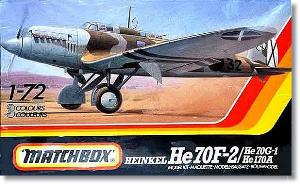
De un vistazo – Quick look
MATERIAL Y PIEZAS
MEDIA & PARTS:
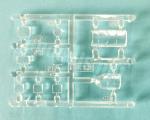
- Plástico inyectado (67 piezas), plástico transparente (9 piezas).
- Injected plastic (67 parts), clear plastic (9 parts).
CALCAS – DECALS:
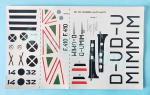
- Insignias nacionalistas españolas y húngaras, matrículas, insignias de unidad y marcas de cola y del fuselaje. Aspecto algo grueso y brillante. Aparente saturación de color, buen registro y exceso de soporte.
- Spanish Nationalist and Hungarian insignia, registers, unit badges and tail and fuselage markings. Thickish and bright aspect. Apparent good color saturation, correct register and excess of carrier.
OPCIONES – OPTIONS:
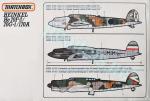
- He 70F-2. Aviación Nacional. Grupo 7-G-14. Vitoria, verano de 1937.
- Heinkel He 70G-1. Lufthansa. 1935-36.
- Heinkel He 170A. Real Fuerza Aérea Húngara. 1er Grupo Independiente de Reconocimiento de Largo Alcance. 2ª Escuadrilla.
- Heinkel He 70F-2. Spanish Nationalist Air Force. Grupo 7-G-14. Vitoria (Spain), summer 1937.
- Heinkel He 70G-1. Lufthansa. 1935-36.
- Heinkel He 170A. Royal Hungarian Air Force. 1st Independent Long-Range Reconnaissance Group. 2nd Squadron. Spring 1939.
INSTRUCCIONES – INSTRUCTIONS:
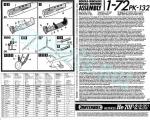
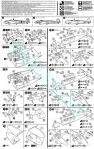
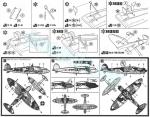
- Hoja doblada impresa en blanco y negro. Contiene un resumen histórico sobre el avión, una tabla de colores en varios idiomas, 20 secuencias de montaje y perfiles. La cara trasera de la caja muestra perfiles en color.
- Folded sheet printed in black and white. It contains a historical summary about the aircraft, a chart of colors in several languages, 20 assembly chapters and profiles. The back side of the box shows profiles in color.
LO MEJOR – THE BEST:
- Molde limpio. Aparente sencillez de montaje. Tres variantes en la misma caja, con alternativas de construcción y pintura.
- Clean tool. Apparent ease of assembly. Three different variants are included in the same box.
LO PEOR – THE WORST:
- Panelado. Motor radial. Necesita mejoras en determinados elementos y zonas.
- Panel lines. Radial engine. Some areas and small pieces need some refinement.
VALORACIÓN – CONCLUSION:
- Matchbox acertó en lo esencial incluyendo tres versiones distintas en la misma caja y caracterizándolas bastante bien en general. Sin embargo, la tecnología no le dio para refinar más el detalle menudo. Tiene aún alicientes suficientes para el modelista con ganas y habilidades que quiera sacarle partido.
- Matchbox got the essentials right by including three different versions in the same box and generally characterizing them quite well. However, technology didn’t allow for further refinement of the small detail. It still offers enough appeal for the enthusiastic and skilled modeler who wants to make the most of it.

La maqueta
Esta es una maqueta de las últimas series que Matchbox produjo antes de desaparecer. Tiene esas piezas moldeadas en tres colores que durante mucho tiempo fueron una característica de la marca. La edición es de finales de los años 80 y fue reeditada sólo en una ocasión en los 90 con idénticas versiones y nuevas instrucciones. Revell hizo la última copia bastante más tarde, en 2005. El molde posterior de ICM es el único en la escala 1/72 por el momento. No es mucho, que digamos.
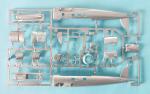
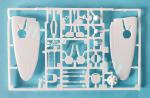
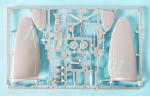
La caja contiene tres bastidores (blanco, gris y color metálico), un bastidor transparente, una amplia hoja de calcas y las instrucciones. El molde muestra bastante limpieza y sólo se observan mínimas líneas de molde en pocas piezas y algunas marcas de eyector muy leves en el interior de la carlinga. Casi todas las piezas de menor tamaño están moldeadas con excesivo grosor, lo que afecta a la definición de muchos detalles, que están claramente un poco por encima de la escala.
Las superficies de control de las alas y la cola están grabadas con cierta limpieza y demasiada anchura. Sin embargo los paneles de alas y fuselaje están representados mediante líneas muy finas en relieve. Tan finas, que en el fuselaje llegan a ser imperceptibles casi todas.
A simple vista la construcción del modelo no aparenta dificultades, pero no sería raro encontrarlas en algún momento en las zonas habituales, como son los encastres de las alas y el capó del motor al pegarlos al fuselaje. Una de las ventajas de esta antigua edición es que se pueden armar tres versiones diferentes del avión (F-2, G-1 y A, luego denominado K en Hungría), a diferencia de la maqueta de ICM, que incluye las dos primeras versiones en cajas distintas. Además, ICM parece no haber considerado la posibilidad de lanzar el interesante He 170A con motor radial. Obviamente, las alternativas de montaje están condicionadas por la versión que se escoja y que Matchbox tuvo buen cuidado en diferenciar. Los detalles de cada versión los describo más abajo.
Igualmente distintas son las opciones de pintura. El avión civil de Lufthansa tiene tres variaciones en su morro y los aviones militares llevan camuflajes con algunas disparidades pese a su semejanza en los colores.
Revisión
Los lados internos del fuselaje no tienen detalle, salvo las ventanillas laterales, comunes a todas las versiones. Las piezas son algo gruesas aunque transparentes y van insertadas en los huecos desde el interior. La ventanilla de observación ventral queda por debajo del suelo interno. Supongo que el avión civil no la llevaría, y por ello habría que tapar el hueco de las mitades del fuselaje.
El suelo es común para todas las versiones, al igual que los elementos de la carlinga de pilotaje, que dispone de un panel con los instrumentos de tamaño diminuto y fino relieve; los controles, sobredimensionados y unidos a una palanca auxiliar; dos asientos destinados al piloto y navegante; y un mamparo trasero.
La zona tras la carlinga puede equiparse con un asiento adicional para el artillero en las versiones militares, o bien con dos asientos corridos y enfrentados para el pasaje en el modelo civil. El asiento del ametrallador es similar a los de la carlinga, aunque debería ser más bien una banqueta plegable.
El techo del habitáculo interno está separado del fuselaje y dispone de dos piezas alternativas: el G-1 de Lufthansa lleva un techo carenado con el hueco de la pieza transparente de la carlinga en la parte delantera y el reposacabezas del piloto moldeado in situ, mientras que los aviones militares llevan, además de esto, la parte trasera cubierta por una pieza transparente abierta en la parte posterior para situar la ametralladora MG 15, una pieza sorprendentemente fina y no del todo desacertada, aunque mejorable. Las piezas transparentes son demasiado gruesas y la estructura está bien reproducida, pero con exceso de relieve. Las versiones militares llevan un mástil de antena sobre el techo, con una antena de gonio adicional en el avión español.
Además de la parte superior, las mitades del fuselaje llevan el motor exento. En este caso, los modelos F-2 y G-1 con motor en línea tienen el capó separado en tres piezas más la cara frontal, con el único detalle de las salidas laterales de ventilación poco nítidas y los escapes laterales en piezas separadas. Los escapes dejan un tanto que desear, al menos los tubos de salida se aprecian, pero son un tanto cortos. La hélice de dos palas, fina y bien perfilada, va montada sobre el frontal del motor con un retén y el buje separado. Debajo del capó está el radiador, corto y ancho, con la rejilla separada y un detalle burdo sobre ella.
El He 170A tiene el capó seccionado en dos mitades más el anillo frontal, donde se pega el motor, y sobre este una hélice tripala, similar a la anterior en detalle, más un buje de mayor tamaño también aparte. El motor es realmente malo, con unos cilindros de blando moldeado dispuestos sobre un disco. Los escapes van separados a los lados del capó y el radiador inferior es más alargado y abierto. La zona ventral del fuselaje lleva lo que parece una mira descentrada hacia la parte derecha.
Las superficies exteriores del fuselaje muestran líneas de paneles muy finas en relieve en la parte delantera y otras casi imperceptibles hacia la cola que serán aún menos evidentes tras pintar. En las fotos del He 70 no se ven claramente los paneles de la zona posterior del fuselaje, sino más bien superficies limpias y continuas, propias de su construcción de madera. En la zona del motor y fuselaje delantero se aprecian con algo más de claridad, aunque tampoco son abundantes. Las puertas de acceso (dos en la versión civil y una sola en la militar) no están marcadas.
Las mitades de las alas van encastradas en el fuselaje con vástagos que inusualmente están moldeados en este y no en las alas. Las superficies muestran líneas de paneles muy delgadas en relieve que son más nítidas y coherentes que las del fuselaje. Sin embargo, los flaps y alerones parecen grabados con demasiada anchura. El único elemento que añadir es el tubo Pitot. Las aberturas de los pozos son nítidas y la profundidad podría incluso ser aceptable para la escala, lo malo es que los lados quedan abiertos. Esta es una de las zonas que se pueden mejorar sin demasiada dificultad.
La cola lleva los estabilizadores y el timón vertical aparte. El timón tiene la aleta grabada sin finura y las superficies que resaltan la estructura interna son demasiado exageradas. Algo mejores son los timones de los estabilizadores, que muestran las superficies lisas, sin líneas de panel.
El tren de aterrizaje principal consta de una pata con el amortiguador sin definición, dos brazos de retracción y la compuerta separada en dos secciones. Acertadamente, Matchbox observó que la cubierta externa se plegaba sobre el ala en los modelos militares y no sobre la misma tapa interna, como en el G-1 civil. Las ruedas son bastante buenas, con neumáticos bien marcados y prácticamente sin líneas de molde en la banda de rodadura. La maqueta incluye también piezas para poder colocar los pozos cerrados y simular el avión en vuelo.
El tren auxiliar tiene doble alternativa. El F-2 español lleva un patín con el tirante de refuerzo delantero en la pieza, mientras que los otros dos aviones llevan una pata con la rueda carenada, aunque las fotos demuestran que ocasionalmente el He 70A húngaro no llevaba la carena.
Las calcas de la maqueta sobre la que escribo no presentan mal aspecto, pese a sus cuatro décadas casi cumplidas. La hoja contiene insignias nacionalistas españolas, húngaras, matrículas, insignias de unidad y marcas de cola y del fuselaje. Todas poseen un aspecto algo grueso y brillante, aparente saturación de color, buen registro y exceso de soporte que debe recortarse.
La hoja de instrucciones viene doblada e impresa en blanco y negro. Contiene un resumen histórico sobre el avión, una tabla de colores genéricos en varios idiomas, 20 secuencias de montaje y perfiles. La cara trasera de la caja muestra también perfiles en color. Curiosamente, la tabla de colores en idioma alemán especifica algunos de ellos en el código RLM.
Dejando a un lado el avión civil, pintado de aluminio y negro, pero con variaciones en el morro de colores azul claro, negro o metálico, las alternativas militares llevan camuflajes distintos para poner a prueba habilidades con la pintura. Ambas libreas no son inusuales, pero sí atractivas.
Valoración
La maqueta lleva muchos años condenada al mercado de segunda mano y siempre perderá al compararla con el molde más actual de ICM, aunque este fabricante nunca ha sacado el He 70A de motor radial. Con todo, Matchbox acertó al incluir tres versiones del avión en la misma caja y también hizo un buen trabajo para caracterizarlas en sus elementos diferenciadores, pese a que la tecnología que empleó ha quedado claramente desfasada hoy.
No creo que este molde sea descartable porque todavía puede tener bastantes alicientes para el modelista actual si está dispuesto a remangarse para hacerle algunas mejoras y refinamientos que le saquen mayor partido.◊

The kit
This is a kit from the last series Matchbox produced before going out of business. It shows the three-color molded parts that were a feature of the brand. This release dates from the late 1980s and was only reissued once in the 1990s with identical versions and new instructions. Revell produced the last copy we have senn much later, in 2005. The later ICM tooling is currently the only one in the 1/72 scale. It’s not much, to say the least.
The box contains three sprues (white, gray, and metallic), a clear sprue, a large decal sheet, and the instructions. The tool is fairly clean, with only minimal seam lines visible on a few parts and some very shallow ejector marks inside the cockpit. Almost all the smaller pieces are molded too thickly, which affects the definition of many details, which are clearly a bit over-scale.
The wing and tail control surfaces are engraved fairly cleanly but are too wide. However, the wing and fuselage panels are represented by very fine raised lines. So fine, in fact, that they are almost invisible on the fuselage.
At first glance, construction doesn’t appear difficult, but it wouldn’t be unusual to find some challenges in the usual areas, such as the wing joints and the engine cowling when attaching them to the fuselage. One of the advantages of this old kit is that three different versions of the aircraft can be assembled (F-2, G-1, and A, later designated K in Hungary), unlike ICM releases, with the first two versions in separate boxings. Furthermore, ICM seems not to have considered the possibility of releasing the interesting He 170A with a radial engine. Obviously, assembly options depend on the version we choose, which Matchbox took good care to differentiate. I describe the features of each variant below.
Paint choices are also quite different. Lufthansa’s airliner has a choice for three colors on its nose, and the military aircraft wear camouflage with some differences despite their similarity in colors.
Review
The inner fuselage sides have no detail, except for the side windows, which are common to all versions. The clear pieces are somewhat thick, although transparent, and are inserted in place from the inside. The ventral observation window is located below the internal floor. I assume the civilian version wouldn’t have it, and therefore the opening in the fuselage halves would have to be covered.
The floor is common to all variants, as are the elements of the cockpit, which includes a panel with tiny, finely raised instruments; oversized controls connected to an auxiliary lever; seats for the pilot and navigator; and a rear bulkhead.
The area behind the cockpit can be equipped with an additional gunner’s seat in military versions, or with two facing bench seats in the civilian model. The machine gunner’s seat is similar to those in the cockpit, although it should be a folding bench. The cockpit roof is provided separately and has two alternative versions: the Lufthansa G-1 has a faired roof with the opening for the canopy at the front and the pilot’s headrest molded in place, while the military aircraft also have a rear section covered by a glazed panel open at the back to accommodate the MG 15 machine gun, which is a surprisingly thin and not entirely inaccurate piece, though it could be improved. The clear panels are too thick, and the structure is well reproduced but looks too large. The military versions have an antenna mast on the roof, with an additional loop antenna on the Spanish aircraft.
Besides the cockpit roof, the fuselage halves have the cowling detached. In this case, the F-2 and G-1 models with inline engines have the cowling in three pieces plus the front side, with the only detail being the softly molded side vents and the separate exhausts. The exhausts leave something to be desired; at least the tail pipes are visible, but they are rather short. The thin, well-profiled, two-bladed propeller is added on the engine front. The hub is separate. Under the cowling is the short, wide radiator, with a separate grille rendered with a crude detail.
The He 170A has the cowling molded in halves plus the front ring, where the engine is attached. There is a three-bladed propeller similar in detail to the previous one, plus a larger, separate hub. The engine piece is poor, with softly molded cylinders molded on a disc. The exhaust pipes, located on the cowling sides, are separate, and the lower radiator is longer and open. The ventral fuselage features what seems to be an off-center gunsight, positioned towards the right.
The fuselage exterior surfaces show very fine, raised panel lines at the front and other almost invisible lines towards the tail cone, which will be even less evident after painting. Photos of the He 70 don’t clearly show the panels on the rear fuselage, instead revealing clean, continuous surfaces characteristic of its wooden construction. These panels are somewhat more clearly visible in the engine and forward fuselage area, although they are still not profuse. The access doors (two on the civilian version and only one on the military variants) are not engraved.
The wing halves are fitted into the fuselage with pins that are unusually molded on the fuselage rather than the wings. The surfaces have very thin, raised panel lines that are sharper and more consistent than those on the fuselage. However, the engraved flaps and ailerons look too wide. The only element molded apart is the thick Pitot tube. The well openings are crisp, and the depth could even be acceptable for the scale, but the sides are open and there is no detail inside. This is one of the areas in the kit that can be improved without too much difficulty.
The tail section comprises the stabilizers and vertical rudder separately. The rudder fin is crudely engraved, and the surfaces representing the tapered structure are overly exaggerated. The elevators are better and the stabilizers are molded smooth, without panel lines.
The main landing gear consists of a leg with a soft shock absorber, two retraction arms, and a cover separated into two pieces. Matchbox correctly noted that the outer cover folded over the wing on the military models and not over the inner cover, as on the civilian G-1. The wheels are quite good, with well-defined tires and virtually no seam lines to clean up on the treads. The kit also includes parts to attach the wheel wells closed and simulate the aircraft in flight.
The auxiliary landing gear has two options. The Spanish F-2 has a skid with the forward reinforcement brace in the piece, while the other two aircraft have a leg with a faired wheel, although photos show that the Hungarian He 70A occasionally did not have the fairing.
The decals in the kit I review here are still in good condition despite being almost four decades old. The sheet contains Spanish and Hungarian nationalist markings, registration numbers, unit badges, and tail and fuselage markings. They have a somewhat thick and glossy appearance, apparent color saturation, good registration, and excess carrier.
The instruction sheet comes folded and is printed in black and white. It contains a historical summary of the aircraft, a generic color chart in several languages, 20 assembly sequences, and profiles. The back of the box also shows color profiles. Interestingly, the German-language color chart specifies some of these colors using the RLM code.
Aside from the civilian aircraft, painted aluminum and black, but with variations on the nose in light blue, black, or metallic, the military alternatives feature different camouflage patterns to test painting skills. Both liveries are not unusual, but they look quite attractive.
Conclusion
You can only find this kit in the secondhand market. Comparison with the later ICM offer will always pale, even though this brand has never produced a radial-engined He 70A. Nevertheless, Matchbox was right to include three versions of the aircraft in the same box and also did a good job to provide their distinguishing features, despite the fact that the technology they used is clearly outdated today.
This is not a kit to be overlooked as it can still offer considerable appeal if the modeler is willing to roll up their sleeves and make some improvements and refinements to get the most out of it.◊
Publicado – Published: 3 / 2026
©www.jmodels.net
 jmodels.net
Debe estar conectado para enviar un comentario.