
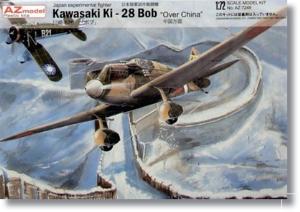
De un vistazo – Quick look
MATERIAL Y PIEZAS
MEDIA & PARTS:
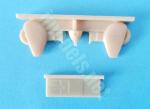
- Plástico inyectado (18 piezas), plástico vacuformado transparente (1 pieza), fotograbado (10 piezas), acetato (1 pieza) resina (4 piezas).
- Injected plastic (18 parts), vacformed clear plastic (1 part), photo-etched (10 parts), acetate (1 part), resin (4 parts).
CALCAS – DECALS:
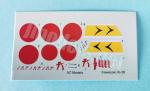
- Hinomarus de diferente tamaño, marcas de Sentai y marcas de victorias. Muy finas y brillantes. Saturadas de color y sin exceso de soporte transparente.
- Hinomarus in different sizes, Sentai tail markings and victory markings. Very thin and glossy. Color-saturated without too much carrier.
OPCIONES – OPTIONS:
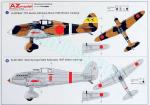
- Kawasaki Ki-28. 77º Sentai. 3º Chutai. China, 1939 (Marcas ficticias).
- Kawasaki Ki-28. Aparato del Capitán Tateo Kato. Inicios de 1937 (Marcas ficticias).
- Kawasaki Ki-28. 77th Sentai. 3rd Chutai. China, 1939 (Fictional markings).
- Kawasaki Ki-28. Aircraft flown by Capt. Tateo Kato. Early 1937 (Fictional markings).
INSTRUCCIONES – INSTRUCTIONS:
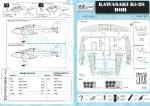
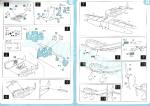
- Folleto de formato A5 y 4 páginas impreso en blanco, negro y azul. Contiene un plano numerado de piezas, 15 capítulos de montaje, dos perfiles y una tabla de pinturas de Agama y Gunze Sangyo. El lado trasero de la caja muestra perfiles de dos terminaciones con referencias de pintura de las marcas mencionadas.
- 4-page A5 leaflet printed in black, white and blue. It contains a numbered parts plan, 15 construction chapters, two profiles and a paint chart with Agama and Gunze Sangyo colors. The back side of the box shows two profiles and paints from the same brands.
LO MEJOR – THE BEST:
- Tema inusual. Carlinga detallada. Relativo fácil montaje (para ser de serie limitada).
- Unusual topic. Detailed cockpit. Apparent ease of assembly (for a short-run kit).
LO PEOR – THE WORST:
- Vaguedad de las instrucciones en ciertos pasos de montaje instrucciones. Ruedas unidas a las carenas. Palas de la hélice. Ausencia de tubo Pitot.
- Some vague assembly views on the instructions. Wheels molded with the spats. Propeller blades. Lack of Pitot tube.
VALORACIÓN – CONCLUSION:
- Es una suerte que AZ Models se acordase de esta avión tan desconocido, aunque no es una edición para el modelista no experto. Carlinga detallada y montaje sin demasiada dificultad en apariencia la hacen ideal para buscadores de rarezas y seguidores de la aviación japonesa.
- We are lucky AZ Models kitted this neglected aircraft, though the release is aimed at the expert modeller. Detail inside the cockpit and apparent ease of assembly makes it suitable for those looking for unusual models and Japanese aviation fans.

La maqueta
No es raro que no haya otra maqueta de este inusual avión en cualquier escala, ya que se trata de un modelo del que se fabricaron sólo dos prototipos para la competición que buscaba sustituir al Kawasaki Ki-10 como caza principal del Ejército japonés a finales de los años 30. Aunque el Ki-28 resultó más veloz, fue el más maniobrable Nakajima Ki-27 el elegido para pasar a la historia.
La maqueta fue editada por vez primera en 2006 en una caja que contenía tanto el prototipo como una supuesta versión de serie. Posteriormente, AZ Model sacó las dos versiones en cajas separadas, de las cuales esta contiene la que podría haber sido la versión de producción. Todo ficticio, lo mismo que los aviones que vemos pintados en el reverso de la caja.
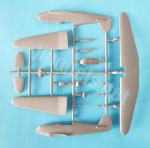
Como cualquier otra maqueta de AZ Models, esta es también de tirada limitada, pero con amplia representación de piezas de distintos materiales. Así, la caja trae un bastidor de piezas de plástico, dos bebederos de resina con cuatro piezas, la cubierta transparente de plástico vacuformado, una pequeña plancha de fotograbados, una pieza de acetato, las calcas y las instrucciones. He leído que esta maqueta incluye dos cubiertas, la suya propia y también la del prototipo. En mi maqueta sólo viene la primera. Salvo eso, las calcas y la caja, lo demás es idéntico para ambas versiones, incluidas las instrucciones.
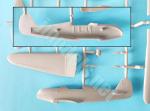
Las piezas de plástico están bien moldeadas, poseen una dureza media con tendencia a blanda y tienen ligeras rebabas en algunos bordes, especialmente en las alas y el fuselaje, sencillas de eliminar con lija suave. No hay marcas en lugares visibles, pero hay que limpiar necesariamente las marcas positivas presentes en el interior de las alas, ya que impiden unirlas. También hay marcas bajo la cubierta del motor y a los lados internos del fuselaje que merecen una limpieza innecesaria aunque sólo sea por su aspecto siniestro. En general, el molde muestra una apariencia limpia y cuidada. Las líneas de panel están grabadas con precisión y acierto.
Considerando el tamaño y el número de piezas, y dejando a un lado que se trata de una edición limitada, la maqueta no debería resultar un camino de espinas para el modelista experto. Las instrucciones no muestran ninguna alternativa de montaje.
Carlinga
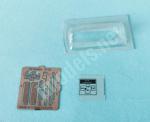
Los lados de la carlinga contienen una parte de la estructura interna en limpio y perfilado relieve con unos pocos instrumentos y la palanca de gases de fotograbado. El suelo es de resina y sobre él van pegados los pedales, la palanca de control y el asiento de plástico. El asiento tiene buenas hechuras y está detallado con arneses de fotograbado. De este mismo material es el panel de instrumentos, complementado con los instrumentos de acetato. Curiosamente, las instrucciones nos piden que resaltemos algunos indicadores en color azul, rojo y blanco. El modelista tiene que fabricar dos piezas de plástico cuyas medidas de alto y largo están en las instrucciones, pero no las de su grosor. Por la posición de estas piezas sobre el panel de instrumentos, podría tratarse de las culatas de las ametralladoras y una pista para esta conjetura es que se nos indica que deben pintarse de negro.
La cubierta vacuforme es de una pieza sin el hueco de ventilación sobre el techo y los lados que tenía la del prototipo. El detalle en relieve de la estructura me parece suficiente. La mira telescópica también ha de fabricarla el modelista con un fino tubo de plástico, aunque habría que añadirle el soporte y el ocular, además de taladrar el parabrisas.
Fuselaje y motor
Las mitades del fuselaje incluyen las superficies verticales de cola, las raíces alares y las de los estabilizadores. Carecen de la cubierta del motor, que viene reproducida hasta el límite con la hélice para moldear más fácilmente ese difícil perfil frontal plano en el centro y curvado a los lados.
Además de los paneles bien grabados, las piezas muestran algunos detalles moldeados en ellas tales como las ranuras de ventilación del motor y los extremos de los escapes, bien definidos pero no ahuecados. El haberlos reproducido en resina tal vez hubiese mejorado su aspecto, aunque no es malo. Por delante del parabrisas hay dos piezas con cierto abultamiento que parecen simular carenas de las ametralladoras.
La cubierta del motor contiene una toma de aire, una posible toma de combustible y los finos canales de las troneras bien definidos.
La zona ventral dispone de una toma bajo el morro con una rejilla de fotograbado en la entrada. Esta pieza viene ahuecada, pero hay que limpiarle una marca interna. El radiador, que era escamoteable en este avión, está situado bajo las alas. La pieza que lo representa es gruesa, pero tiene hueco suficiente para alojar dos rejillas de fotograbado en la entrada y la salida. La trasera lleva lo que parece un actuador del mismo material Las instrucciones no ayudan casi nada en su colocación y conviene estudiarlas bien en este punto.
La hélice tiene el buje de resina y las palas de plástico por separado. El buje tiene el trinquete de arranque, pero carece de eje y va pegado, según las instrucciones, directamente sobre el morro. Las palas son finas aunque demasiado planas, sin la torsión que se aprecia en las fotos de los dos prototipos.
Alas y cola
Las alas poseen el habitual despiece en dos mitades superiores y una inferior con coincidencia en las puntas. El diedro está bien conseguido y los paneles están grabados con finura y limpieza por las dos caras. Las superficies de control están bien grabadas y el relieve de la estructura entelada es muy tenue por arriba y más visible por abajo.
Entre las omisiones más notorias están las luces de navegación, si bien parece que los prototipos no las tenían, y el tubo Pitot, pero este puede fabricarse sin mucha dificultad.
Tren de aterrizaje
Las patas son de resina y están moldeadas con las ruedas. El hueco de cada rueda no está reproducido, aunque las piezas están limpias y bien grabadas con líneas finas. Las instrucciones tampoco son claras sobre el punto exacto en el que van pegadas a las alas y lo mismo ocurre con el patín de cola. Lo mejor es consultar fotos y planos.
Calcas
La hoja está bien impresa. Contiene básicamente hinomarus de diferente tamaño, marcas de Sentai y marcas de derribos. Las calcas tienen un aspecto muy fino y brillante, están saturadas de color y no muestran excesivo soporte.
Instrucciones
El folleto tiene un formato A5 y consta de cuatro páginas impresas en blanco, negro y azul. Contiene un plano numerado de piezas, 15 capítulos de montaje, dos perfiles y una tabla de pinturas de Agama y Gunze Sangyo. El lado trasero de la caja muestra perfiles de dos terminaciones con referencias de pintura de las marcas mencionadas.
Los dos aviones plasmados en la caja son ficticios, aunque los esquemas de camuflaje y las unidades son reales. El primero lleva un camuflaje tricolor usado en China con marcas de cola reales del 77º Sentai, mientras que el segundo es una réplica casi exacta del Ki-10-II que el as japonés Tateo Kato empleó en el mismo teatro de operaciones. Incluso las marcas de derribos y el kanji en la cola son idénticos.
Valoración
Es una suerte que al menos podamos contar con un par de maquetas de este raro avión, aunque claramente la edición está dirigida al modelista experto en el uso de diversos materiales.
La maqueta, obviando que es una edición limitada, no aparenta tener un montaje demasiado difícil por el número de piezas y por tratarse de un avión sin mucho porte. Desgaciadamente, la vaguedad en las instrucciones sigue siendo el talón de Aquiles del fabricante, que no hace propósito de enmienda.
Ojalá AZ Models reedite algún día esta maqueta para gozo de los buscadores de piezas infrecuentes y también para los muy seguidores de la aviación japonesa.◊

The kit
It is not surprising that there is no other kit of this unusual aircraft in any scale, as it was an aircraft built in only two prototypes for the competition to replace the Kawasaki Ki-10 as the main fighter of the Japanese Army in the late 1930s. Although the Ki-28 was faster, it was the more maneuverable Nakajima Ki-27 that was finally chosen to enter history.
The kit was first released in 2006 in a boxing containing both the prototype and a what-if production version. Later, AZ Model released the two versions in separate boxings. The one I review here contains what could have been the series production variant. Everything is fictional, just like the planes we see painted on the back of the box.
Like any other AZ Models kit, this one is also a short run with a range of parts made of different materials. The box contains a plastic sprue, two resin casting blocks with four parts, a vac-formed canopy, a small photo-etched fret, an acetate piece, the decals and the instructions. I have read this kit includes two canopies, one for each version, but my kit has only one. Apart from that, the decals and the box, the rest is identical for both versions, including the instructions.
Plastic parts are well molded, have a medium hardness but a bit on the soft side and slight flash on some parts, especially on the wings and fuselage. this will be easy to remove after some soft sanding. There are no marks in visible places, but the positive marks on the inside of the wings need to be cleaned up to attach the wing halves. There are also marks under the engine deck and on the inner fuselage sides that also deserve unnecessary cleanup if only for their sinister look. In general, the tool shows a clean appearance. Panel lines are thin and sharp.
Considering the size and number of parts and leaving aside this is a short run, the kit should not be a challenge for the experienced modeller. The instructions do not show any assembly alternatives.
Cockpit
The cockpit sides contain a part of the internal structure in clean, contoured raised frames with a few instruments and the throttle lever in a photo-etched piece. The floor is made of resin and the pedals, control lever and seat are plastic pieces. The seat is well made and detailed with photo-etched harnesses. The instrument panel is made of that same material, complemented by acetate gadgets. Curiously, the instructions call for painting some dials in blue, red and white. The modeller has to make two plastic pieces following the height and length provided in the instructions, but the thickness is missing. Given the position of these pieces above the instrument panel, they could be the machine gun butts and a hint for this guess is that they are painted black.
The vac-formed canopy is one piece without the cutout on the roof and sides used in the prototype. The raised detail of the structure looks fine. The telescopic sight is to be made by the modeller from a thin plastic rod, although the support and the eyecup should also be added. The windshield would also need to be drilled for more a more realistic look.
Fuselage and engine
The fuselage halves are molded with the vertical tail surfaces and the wing and stabilizer roots. They lack the engine deck, which is provided as one piece molded up to the propeller and this seems an easier way to render that difficult frontal shape flat in the middle and curved on the sides.
The halves show some details molded on, such as the engine gilles and the short exhaust pipes, well defined but not hollowed out. Though not bad, the exhausts could have been provided as resin parts. This would have improved their appearance. In front of the windscreen there are two bulged pieces probably representing machine gun fairings.
The separate engine deck contains an small air intake, a fuel filler (this is my guess) and the thin sharp gun troughs.
There is also an air intake under the nose with a photo-etched grille detailing the front of the piece. This piece comes hollowed out, but it has a raised mark inside to be cleaned up. The radiator, which was retractable in this aircraft, is located under the wings. The piece is thick, but has enough space to attach two photo-etched grilles on both ends. The rear one has what seems to be an actuator made of the same material. The instructions do not help much in the placement and should be studied carefully for this.
The propeller has a resin hub and separate plastic blades. The hub has the starting dog, but lacks the shaft and is glued, according to the instructions, directly onto the nose. The blades are thin but too flat, without the twisted shape that can be seen in pictures of the two prototypes.
Wings and tail
The wings have the usual breakup in two upper and one lower halves with matching wingtips. The dihedral is well done and the panels are finely and cleanly engraved on both sides. The control surfaces are well engraved and the raised fabric structure is very faint on the top surfaces and more visible below.
The navigation lights are missing, but pictures do not show, as far as I have checked, they had them, The Pitot tube is a clear omission, though it can be easily provided by the modeller.
Undercarriage
The spatted legs are resin pieces molded with the wheels. The hollow of each wheel is not reproduced, although the pieces are clean and well engraved with thin panel lines. The instructions do not make clear where they are attached to the wings and the same happens with the tail skid. It is best to check pictures and plans.
Decals
The sheet is well printed. It basically contains hinomarus in different sizes, Sentai markings and kill marks. The decals have a very thin and glossy appearance, are color-saturated and do not show excessive carrier.
Instructions
The A5 brochure consists of four pages printed in black, white and blue. It contains a numbered parts plan, 15 assembly chapters, two profiles and a chart showing Agama and Gunze Sangyo paints. The back side of the box shows profiles of two finishes with painting references from the brands mentioned.
The two aircraft depicted on the box are fictional, although the camouflage schemes and units are real. The first one wears a tricolour camouflage used in China with real tail markings of the 77th Sentai, while the second is a replica of the Ki-10-II that the Japanese ace Tateo Kato used in the same theatre of operations. Even the kill markings and kanji on the tail are identical.
Conclusion
It is fortunate that we can at least have a couple of kits of this rare bird, although the release is clearly aimed at the experienced modeller.
Apart from the fact that it is a short-run kit, it does not look too difficult to build as parts count is not very high and the aircraft itself is rather small. Unfortunately, the vague instructions continue to be the manufacturer’s Achilles heel and AZ Model does not seem to amend this flaw.
Hopefully AZ Models will one day reissue this kit for the enjoyment of those wishing to explore new rare birds and also for Japanese aviation fans.◊
Publicado – Published: 1 / 2025
©www.jmodels.net
 jmodels.net
Debe estar conectado para enviar un comentario.